
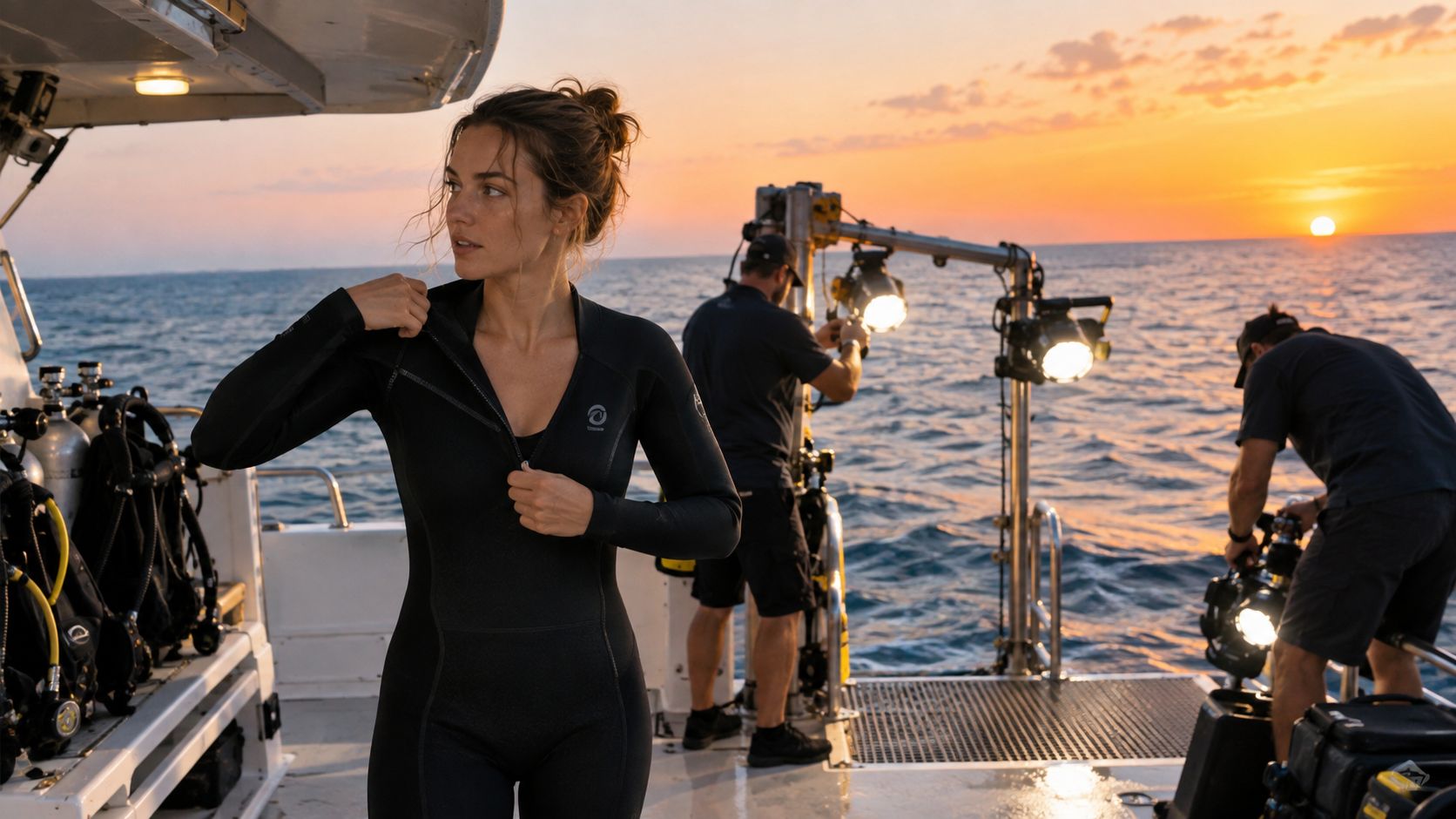
You're standing on the aft deck in a damp wetsuit, watching the crew lower lights over the platform while the Kona sunset fades behind the coast. You've probably read that manta rays glide within inches of snorkelers, but the practical questions are harder to answer. Can you stay comfortable in dark water? Will your child cope? Does the moon matter, or is that just tour marketing?
A manta ray night snorkel on the Big Island can be one of Hawaiʻi's most memorable wildlife encounters, but it isn't the right fit for everyone. The best trip depends less on a fancy boat than on calm conditions, sensible site selection, disciplined surface behavior, and an honest assessment of who should stay dry.
What a Manta Ray Night Snorkel on the Big Island Actually Is
The crew finishes rigging the lights, checks your mask, and points you toward a floating viewing station. You enter the water one at a time, hold the raft or light board, and float face-down while the illuminated plankton cloud gathers below. The mantas arrive because they're feeding, not because the crew has trained or baited them.
A manta ray night snorkel is a boat-based, surface-only wildlife experience. Lights attract plankton, and the plankton attract Hawaiian reef manta rays. The method is documented in Hawaiʻi snorkeling guidance, which explains why operators run the experience after dark rather than during the day.
Kona became the center of this activity through a combination of coastal development, resident mantas, and reliable feeding conditions. Local accounts trace the first recorded encounter to 1979 at the former Kona Surf Hotel, with dive operators expanding the experience in 1992 and the activity becoming a regular tourism product by the early 2000s, as described in this history of Kona manta night snorkeling.
Why Kona has such a dependable encounter
Kona's coastline supports several established viewing areas, including Manta Village, Manta Heaven, and Kohala Coast locations. Research records show that these aren't merely occasional sightings. One NOAA-linked study recorded 25,444 observations of 118 individual reef manta rays over six years, including 19,841 observations at Manta Heaven and 5,603 at Manta Village. The study also found that 39 mantas appeared on more than 10% of study nights, evidence of a consistent aggregation rather than a random encounter. See the federal manta ray monitoring record.
A separate federal notice documented 1,494 encounters involving 290 unique individuals in one monitoring context, further showing how extensively Kona's mantas have been identified and tracked in public records.
The important distinction: You're observing wild animals at a feeding site. You aren't entering an aquarium, and no responsible operator can promise that every night will look identical.
This also isn't scuba diving, and it's not a touch-the-manta experience. You stay at the surface, keep your fins under control, and let the animal choose its distance. If you want a deeper perspective from the seafloor, that's a different activity, and you can compare the options through Kona's diving information.
Choosing the Best Site, Season, and Departure Time
Pick the trip by working through four decisions: site, conditions, departure time, and group comfort. Don't choose solely because a listing calls itself the best manta tour.
Start with the site
Manta Village is the classic location near Keauhou and is convenient for many Kailua-Kona visitors. It has a strong history of regular feeding activity, but popularity can mean a busy surface. Manta Heaven, near the airport, is another major site with substantial research coverage. Kohala Coast locations can make more sense for travelers staying north, especially when an operator can use a sheltered site during unsettled weather.
Exact travel time and water depth vary by departure point and operating conditions, so ask the company where it expects to go that evening. A good operator won't treat the site as a secret. It should explain what happens if surf, wind, or harbor conditions make the primary location unsuitable.
| Site | Distance From Kailua-Kona | Depth | Crowd Level | Best Conditions |
|---|---|---|---|---|
| Manta Village | South of central Kona | Varies by viewing area | Often busy | Calm evening conditions |
| Manta Heaven | Near Kona International Airport | Varies by viewing area | Can be busy | Stable water and clear plankton concentration |
| Kohala Coast sites | North of Kailua-Kona | Varies by viewing area | Depends on operator and night | Useful when northern waters offer better shelter |
The Kona diving overview is also useful for understanding how coastline, departure point, and sea conditions influence water activities.
Treat reliability as strong, not guaranteed
A practical benchmark is roughly 80% of suitable nights, while some independently reported programs cite 85% to 95% success on peak routes, according to this Kona manta viewing guide. Those figures describe favorable operating conditions, not a promise for your particular departure.
The moon can affect contrast. A darker sky can make the light board stand out more clearly, while a bright moon may reduce the visual contrast that concentrates plankton beneath the station. Still, don't let moon phase outweigh surf, wind, operator discipline, or your own comfort. Mantas are present year-round, and a calm night with a well-managed group beats an allegedly perfect lunar date in rough water.
For families or guests prone to motion sickness, choose the earlier departure when possible. The later outing offers darker conditions, but complete darkness is a poor match for a tired child or a nervous first-timer. Check the marine forecast, recent operator feedback, backup-site policy, and cancellation terms before paying.
How the Evening Unfolds from Check-In to In the Water
A well-run trip feels organized rather than rushed. You'll usually check in before departure, sign waivers, receive equipment, and listen to a briefing before boarding. The exact harbor or pier varies, so confirm the meeting point directly with the operator instead of relying on an old itinerary.
Before the boat leaves
Arrive wearing your swimsuit under clothing that's easy to remove. The crew fits your wetsuit, mask, snorkel, and flotation equipment, then explains what you'll see and how to behave around the animals. Pay attention to the entry instructions. The dark water, boat ladder, and floating viewing station feel unfamiliar even if you're comfortable snorkeling during the day.
Once aboard, the crew secures loose gear and heads toward the selected viewing area. The ride may be brief or longer depending on the launch point and site choice. During the approach, crew members prepare the light board, viewing raft, and mooring system.
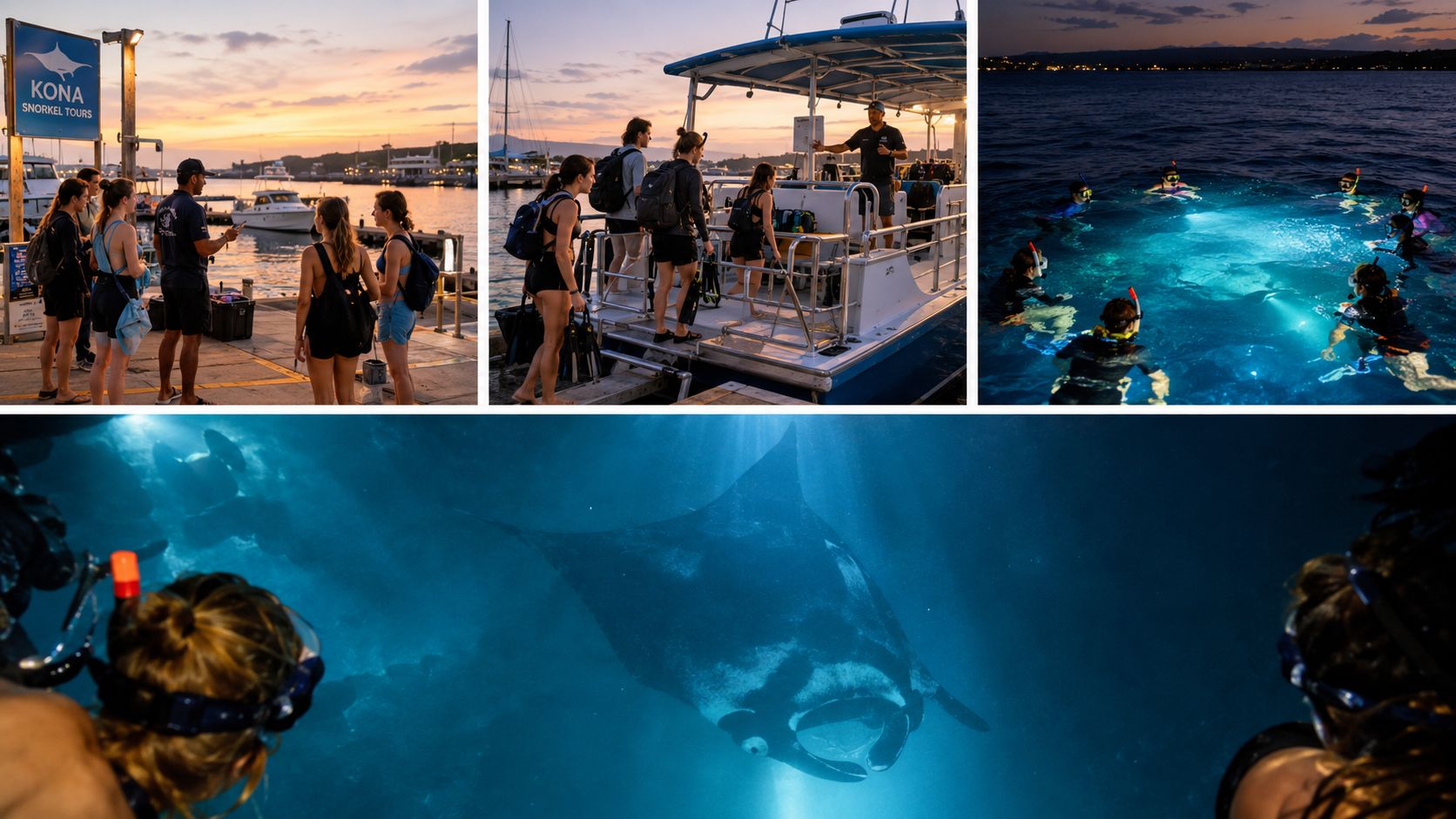
The crew normally manages entry one person at a time from a swim step or platform. Keep your mask and fins secure, use the handholds, and move only when the crew tells you to. You'll be guided to the float or raft, where you'll hold on and settle into a horizontal position.
What happens in the water
The viewing station concentrates light below the group. Plankton gathers in the illuminated area, and manta rays may begin feeding through the cone within minutes. Your job is deliberately boring: stay flat, keep your legs quiet, breathe steadily, and watch.
Crowding makes this harder. A Hawaii safety assessment observed 7 to 22 vessels and 114 to 177 snorkelers and divers in the water during manta-viewing nights, according to the state boating and safety assessment. That's why controlled entry, fixed positions, and surface discipline matter. Uncontrolled movement fragments the light effect, stirs sediment, and makes the experience worse for both animals and people.
You'll rotate back toward the boat when the crew signals. Expect help at the ladder, a place to rinse gear, and time to remove the wetsuit. A warm drink or towel can make the return ride much more pleasant, especially if you've spent the session lying still in cool water.
What to Bring, Wear, and How to Handle Seasickness and Cold
The most common mistake is dressing for the dock instead of the return ride. You may feel warm while getting ready at sunset, then start shivering once you've been stationary in the water and climb back onto the moving boat.
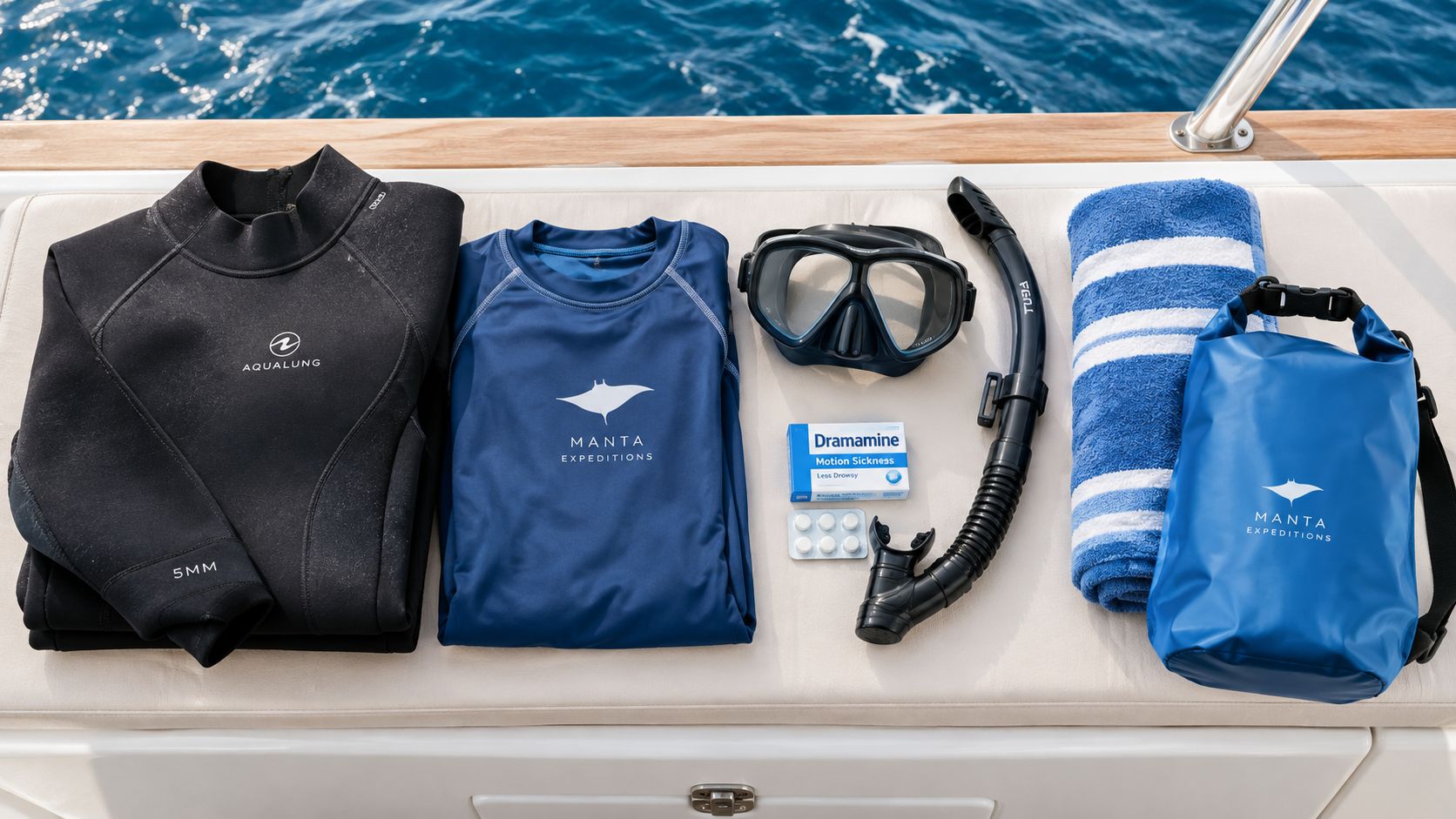
Most Kona operators provide a 3mm or 5mm wetsuit, but wear a swimsuit or thin rashguard underneath. A skin layer reduces rubbing and gives you another barrier against the chill. Water shoes can help with a ladder or swim-step entry, provided the operator permits them on the boat.
Pack the small things
Bring only what you can secure. A dry bag protects your phone and wallet, while a towel and warm layer make the ride back easier. Apply reef-safe sunscreen before boarding, and pack a wide-brimmed hat for the sunset wait.
- Clothing: Swimsuit, rashguard, warm sweatshirt or jacket, and easy-to-remove shoes.
- Personal items: Towel, dry bag, water, hair tie, and minimal valuables.
- Camera gear: A properly secured action camera, not a loose phone you can't afford to lose.
- Comfort items: Prescription mask if needed, defog solution, and any approved flotation aid.
The surface can feel colder than expected because you aren't swimming continuously. A wetsuit helps, but it can't eliminate the effects of stillness, wind, and a wet body on the ride home.
Plan for motion sickness before the boat moves
If you're prone to seasickness, take your chosen preventative according to its label and your healthcare provider's advice. Travelers commonly consider Ship-EEZ Seasickness Patch, Dramamine pills, Bonine pills, Sea Band wristbands, or ginger chews. Medication can cause drowsiness or interact with other conditions, so check the label before using it.
Eat a light meal well before departure, avoid alcohol, and don't arrive dehydrated. Read this practical guide on how to avoid seasickness before you book if nausea has ruined boat outings for you before.
In-Water Etiquette, Safety, and the Law Around Manta Rays
A respectful night snorkel is passive from start to finish. Stay at the surface, hold your position, and let the manta choose whether to pass beneath you. Chasing one for a closer photo can interrupt the feeding pattern that brings rays to the site.
Responsible, considerate diver etiquette and Hawaiʻi guidance require snorkelers to remain at the surface, avoid diving down, keep fins below the waterline, and never touch or pursue a manta. The manta ray interaction guidelines outline the expected behavior during an encounter.
Keep your body predictable
Hold the float or keep your hands still. Do not splash, kick toward a manta, block its route, or reach for a wing. If a ray turns away, let it leave. Keep flashlights off its body, and never swim underneath a feeding manta.
Surface rule: The light board is your viewing station. Treat it as a boundary, not a launch point.
Your operator should explain these rules before entry and enforce them in the water. A crew that permits diving, grabbing, or crowding creates a poorer encounter for every guest. Busy sites already face pressure from boats and swimmers, so disciplined behavior at the surface matters more than choosing the largest or newest vessel.
Hawaiʻi law prohibits capturing, taking, possessing, abusing, or entangling rays in state marine waters. Penalties described in the Big Island manta ray law and viewing guide start at $500 for a first offense and can rise to $10,000, with an administrative fine of up to $10,000 per animal.
The legal risk is only part of the concern. Repeated disturbance can cause mantas to abandon feeding, leaving fewer animals at the site and weakening the experience for later guests. Choose the operator with clear surface rules and a crew willing to enforce them, even if its procedures seem stricter than another company's.
Who Should Skip the Snorkel and Choose a Boat-Only Option
Not every traveler should enter the water at night, and pretending otherwise helps nobody. A person who can technically float may still be unable to stay calm, hold a viewing station, manage a mask leak, or tolerate cold water and boat motion at the same time.
A non-swimmer who has never used a mask should choose a boat-only position rather than learn in dark ocean water. The same applies to anyone with active respiratory or sinus problems that make snorkel breathing difficult, someone recovering from surgery, or a pregnant traveler whose healthcare provider advises against the activity. Severe motion sickness that medication can't control is also a clear reason to remain aboard.
The practical threshold is comfort, not bravado. A neutral booking source says guests should understand their swimming ability, feel comfortable in ocean water, and be able to hold onto a floating viewing station. That guidance appears in this manta snorkel participant information.
Children need more than the minimum age
Operator age limits vary, often landing somewhere around 5 to 8 years old, but the number alone doesn't decide readiness. A child should be calm in water, tolerate the wetsuit and cold, follow instructions without constant physical help, and understand that the manta may pass close without being touched.
The later moonlight departure is a particularly poor choice for many young children because it takes place in complete darkness. If your child has limited snorkeling experience, test the mask and breathing routine in a pool or bright daytime water first.
| Guest Profile | Snorkel | Boat-Only |
|---|---|---|
| Confident swimmer who follows instructions | Strong fit | Optional |
| First-time mask user | Usually poor fit | Better choice |
| Nervous adult who dislikes dark water | Possible later step | Sensible first visit |
| Young child who tires or gets cold quickly | Risky | Better fit |
| Severe uncontrolled motion sickness | Skip | Consider only with operator approval |
| Guest with medical restrictions | Ask a healthcare professional first | May still require approval |
Boat-only guests can watch the illuminated surface from above and see white manta bellies flash beneath the lights. That isn't a consolation prize. For a nervous traveler, it's often the smarter first encounter, and it leaves the door open for a calmer daytime snorkeling experience later.
Booking Tips, Photography, and Why Operator Choice Matters
Book early enough to preserve choice during busy travel periods, but don't mistake an available seat for a quality operation. Ask direct questions before paying:
- Does the operator have a backup site?
- What conditions trigger a cancellation?
- How many guests share each guide?
- Does the crew explain and enforce surface rules?
- What flotation equipment is available?
- How does the company handle guests who need to leave the water early?
A smaller group usually makes it easier to hold a position and gives the crew more time to help with masks, ladders, and nervous swimmers. Confirm the company's current permits, vessel documentation, and insurance directly. Those details matter more than a glossy boat photograph.
Photograph without turning the encounter into a chase
Use a GoPro or similar camera on a short, secured pole. A glow-in-the-dark wrist strap helps you find it if you release your grip, but it doesn't replace a firm attachment. Shoot upward toward the light board for cleaner rays and silhouettes, and avoid flash. Flash distracts other snorkelers and adds nothing useful in the dark water.
If your camera supports a red night filter, test it before the trip. Otherwise, keep the settings simple and prioritize stable footage over constant adjustments. A blurry clip is less valuable than keeping your body still while a manta feeds below.
Kona Honu Divers offers a dedicated manta ray night snorkel, and you can review its current service details through the Kona diving company information page. Use the centered booking button below to check the available departure options.
Kona Honu Divers offers a boat-based manta ray night snorkel for guests who want to observe Kona's reef mantas from the surface, with crew support, flotation equipment, and wildlife-viewing guidance. Visit Kona Honu Divers to review the manta snorkel option, check availability, and choose a departure that matches your group's swimming confidence and comfort in nighttime water.