
You may be comparing boat tours, wondering whether you need scuba certification, or trying to decide if a night in the ocean is right for you. The most useful thing to know before choosing is that Kona's manta rays are wild animals, not performers. A good trip gives them room to feed naturally and gives you a clear, calm place to watch.
The signature encounter happens after dark, when lights gather plankton and manta rays may arrive to feed. Garden Eel Cove is a particularly strong choice for a dive focused on viewing quality and reef care, but no site or operator can promise a sighting. Understanding how the encounter works will help you choose a trip based on more than a headline claim.
What Happens During a Kona Manta Ray Dive
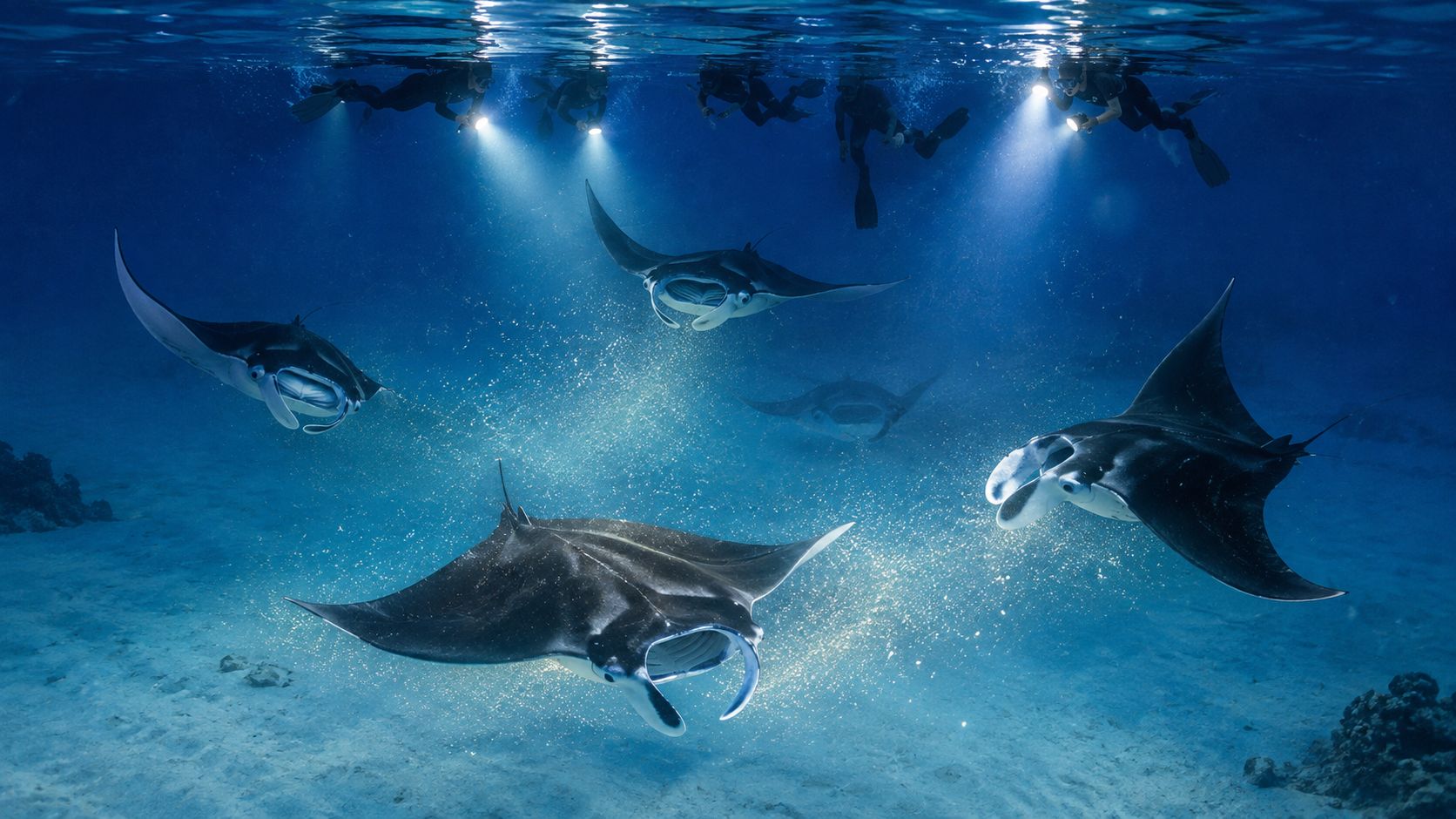
You settle on a sandy patch underwater while the crew's lights shine into the night. At first, the illuminated water may look empty. Then tiny plankton collect in the beams, and a manta ray may glide in to feed, sweeping through the lit area with its mouth open. If you stay still, you can watch it return through the water column without having to follow it.
The lights don't bait the animals or summon them on command. They make naturally occurring zooplankton more concentrated and visible in a specific area. Think of a patio lamp attracting moths: the lamp changes where the insects gather, but it can't guarantee that any will appear. In the ocean, plankton availability, current, and visibility all affect whether mantas come through.
The story behind the lights
Kona's manta night-diving tradition grew out of a hotel's nighttime lights in the late 1980s. The Kona Surf Hotel, now the Sheraton Keauhou Bay Resort, began shining lights into the ocean. Plankton gathered in the illuminated water, feeding mantas followed, and a recurring wildlife encounter took shape. By 2009, state legislative testimony described manta-ray ecotourism as generating more than $2.5 million annually for Hawaii and reported manta sightings on approximately 80% of dives at Garden Eel Cove (Hawaii legislative testimony).
A typical outing starts with a crew briefing and a boat ride to the viewing site. Divers descend to the designated viewing area and point their lights upward; snorkelers stay at the surface and watch from above. Once everyone is positioned, the group waits. Mantas might arrive and feed, or activity may be limited that night.
Kona's encounter is based on a repeated interaction between lights, plankton, and reef manta rays, Mobula alfredi. A long-term analysis of community observations recorded more than 23,000 sightings of 167 identified mantas at Garden Eel Cove and Keauhou, and linked changes in aggregation size to zooplankton availability (Hawaiʻi manta observation study). That's why the best expectation is simple: you're going to observe a feeding opportunity, not watch a scheduled show.
Night Versus Day Manta Encounters
A night dive is designed around a fixed viewing area and lights that make plankton easier to find. In daylight, there's no illuminated gathering point, so a manta encounter depends more on where the animals are feeding and what conditions are like. Daytime manta sightings can happen, but they're less structured than the nighttime experience.
| Aspect | Night Dive | Day Viewing |
|---|---|---|
| Viewing mechanism | Artificial lights concentrate plankton in a viewing area. | Mantas feed or travel in natural conditions, without a light station. |
| Predictability | A known site and established setup make the experience more organized, but sightings still aren't guaranteed. | The encounter depends on where mantas are and how conditions develop. |
| Atmosphere | Dark water, focused lights, and a stationary viewing position create a distinctive night dive. | Natural light makes the reef and surrounding water easier to see. |
| Best suited to | Certified divers who are comfortable underwater at night, and snorkelers who can remain at the surface with guidance. | Visitors who prefer daylight and are comfortable with a less structured wildlife search. |
The night dive is Kona's signature manta experience because it creates a focused place to watch. Divers look up from below as mantas pass overhead, while snorkelers look down from the surface. For a closer look at how those perspectives differ, compare snorkeling and scuba diving with manta rays.
Photographers often value the nighttime setup because the animals may pass repeatedly through the viewing zone, but low light takes practice. First-time visitors may prefer the structure of a guided night outing. Families and people uneasy in dark water should consider whether they'd feel more comfortable watching from the surface rather than scuba diving.
Day viewing suits people who value natural conditions and can accept that a manta might not appear. Neither option turns wildlife into a certainty. Choose based on the kind of experience you'll enjoy, not the assumption that one setting guarantees more animals.
Best Seasons and Dive Logistics for Manta Trips
A calendar can help with planning, but it can't tell you how much plankton will be available on a particular night. Manta aggregation size changes with zooplankton density, and the long-term observations at Kona's main sites found a relationship between prey availability and manta presence (manta observation research). Conditions such as current and visibility also shape what you see. For timing advice, review when to see manta rays in Kona, then keep some flexibility in your plans.
The local animals aren't an endless stream of passing rays. Hawaii state testimony recorded surveys from 1992 through 2007 that identified 106 individual mantas in the Kona region; a later testimony document reported 154 identified animals since 1992 and estimated that the local population probably numbered fewer than 200. More recent observations recorded 167 unique individuals at Garden Eel Cove and Keauhou across the study period (Hawaii state testimony on Kona mantas; community-sourced observations). These records help explain why a wildlife encounter can vary from trip to trip: a relatively small, recognizable resident population responds to feeding conditions.
What the trip usually involves
Exact schedules vary by operator and departure point. Ask whether your tour departs around sunset, how the crew handles the briefing, and when you should expect to return. A boat trip takes you from the harbor to the viewing site; shore-based logistics may be different, so confirm where you'll check in and how the operator manages entry and exit. Don't assume every company uses the same site or schedule.
Before booking, check the departure window and build in room for changes. Arriving with time to check in and listen to the briefing makes the evening less rushed. If you're coordinating with family or planning other activities, ask the operator how long to allow for the full outing rather than estimating from time in the water alone.
Planning point: The most useful timing question isn't only “What month is best?” Ask how the operator handles changing conditions and what flexibility is available if your chosen night doesn't work out.
Garden Eel Cove and How to Pick an Operator
For a manta dive where viewing quality and reef protection both matter, Garden Eel Cove is the superior choice. Also known as Manta Heaven or Makako Bay, it's near Keahole Point. Its protected bay reduces exposure to open-ocean swell, and the viewing area is a broad sandy patch at approximately 35 feet. Divers can settle on the sand and point lights upward, rather than spreading across or kneeling on fragile reef structure (Garden Eel Cove site information).
The sandy viewing area gives the group a defined place to watch, while the surrounding reef adds interest beyond the manta encounter. Garden Eel Cove has also generally supported larger aggregations than Keauhou in the long-term observations, although the number of mantas on a given night can still vary (Kona manta observation study). For a closer look at how the site compares with another well-known viewing location, see this guide to Manta Heaven and Manta Village.
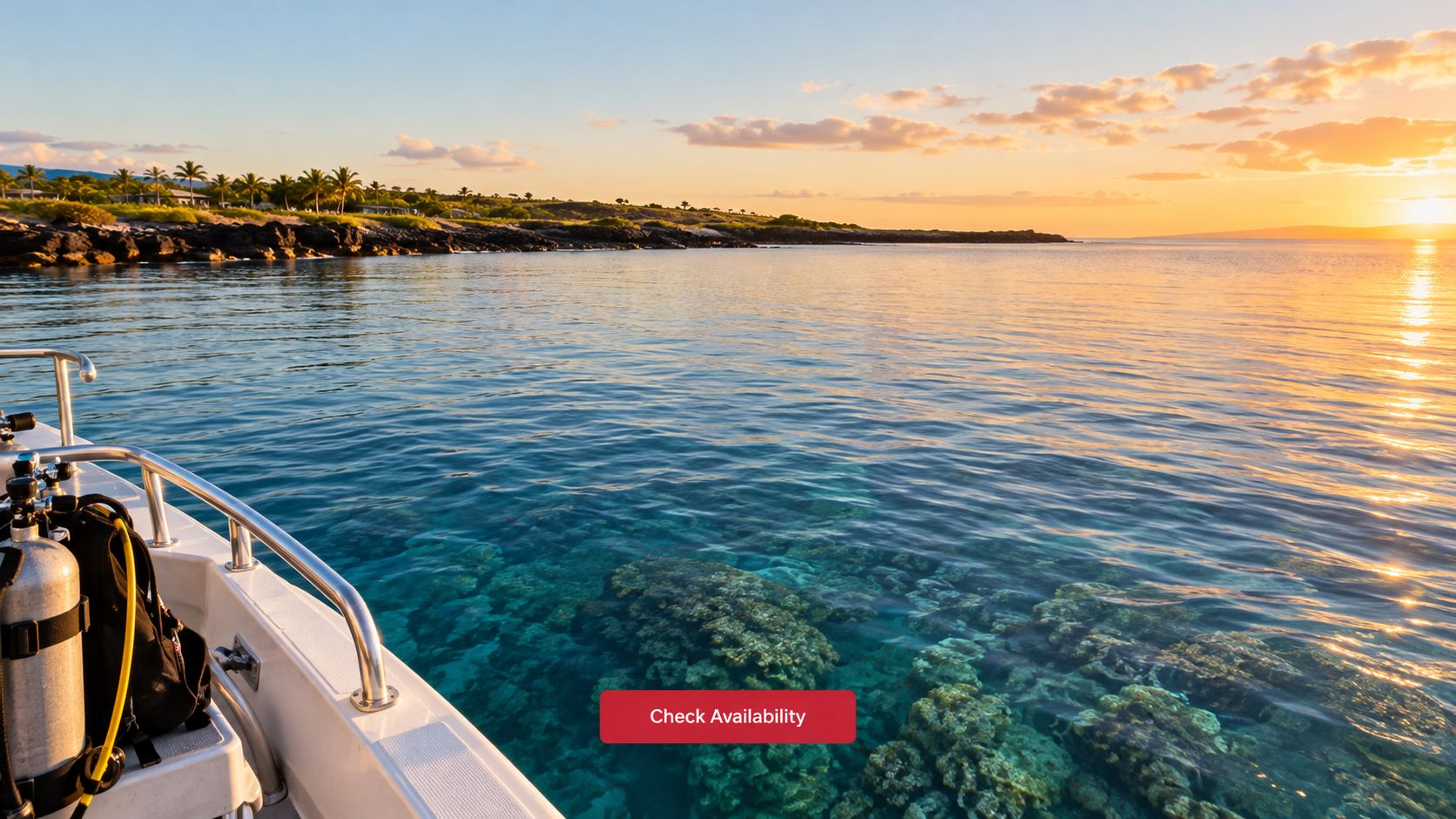
When comparing operators, look beyond claims about how many mantas you'll see. Ask how guides supervise divers and snorkelers, how groups are positioned, how lights are handled, and how the boat approaches and leaves the viewing site. A responsible crew should explain the in-water plan clearly and make sure guests know where to wait and how to exit.
Kona Honu Divers offers a two-tank manta dive and snorkel tour. Check the current trip details directly with the operator, including the departure location and whether the outing fits your experience and comfort level.
Safety and Environmental Etiquette in the Water
Safe doesn't mean risk-free. Manta rays aren't aggressive toward people, but a nighttime ocean activity still involves limited visibility, current, boat traffic, fatigue, and the possibility of panic. A mask can also be displaced if equipment catches on a manta, so a calm briefing and a clear plan matter as much as enthusiasm.
Choose your position based on your abilities. Scuba is for certified divers who are comfortable managing equipment and buoyancy underwater at night. Snorkeling keeps you at the surface, which can suit visitors who don't dive, but you still need to be comfortable in the water and able to follow the crew's directions. If you're anxious, not a confident swimmer, managing a medical condition, pregnant, or concerned about asthma, ask the operator what support they can provide and consult a medical professional when appropriate.
Rules that protect people and mantas
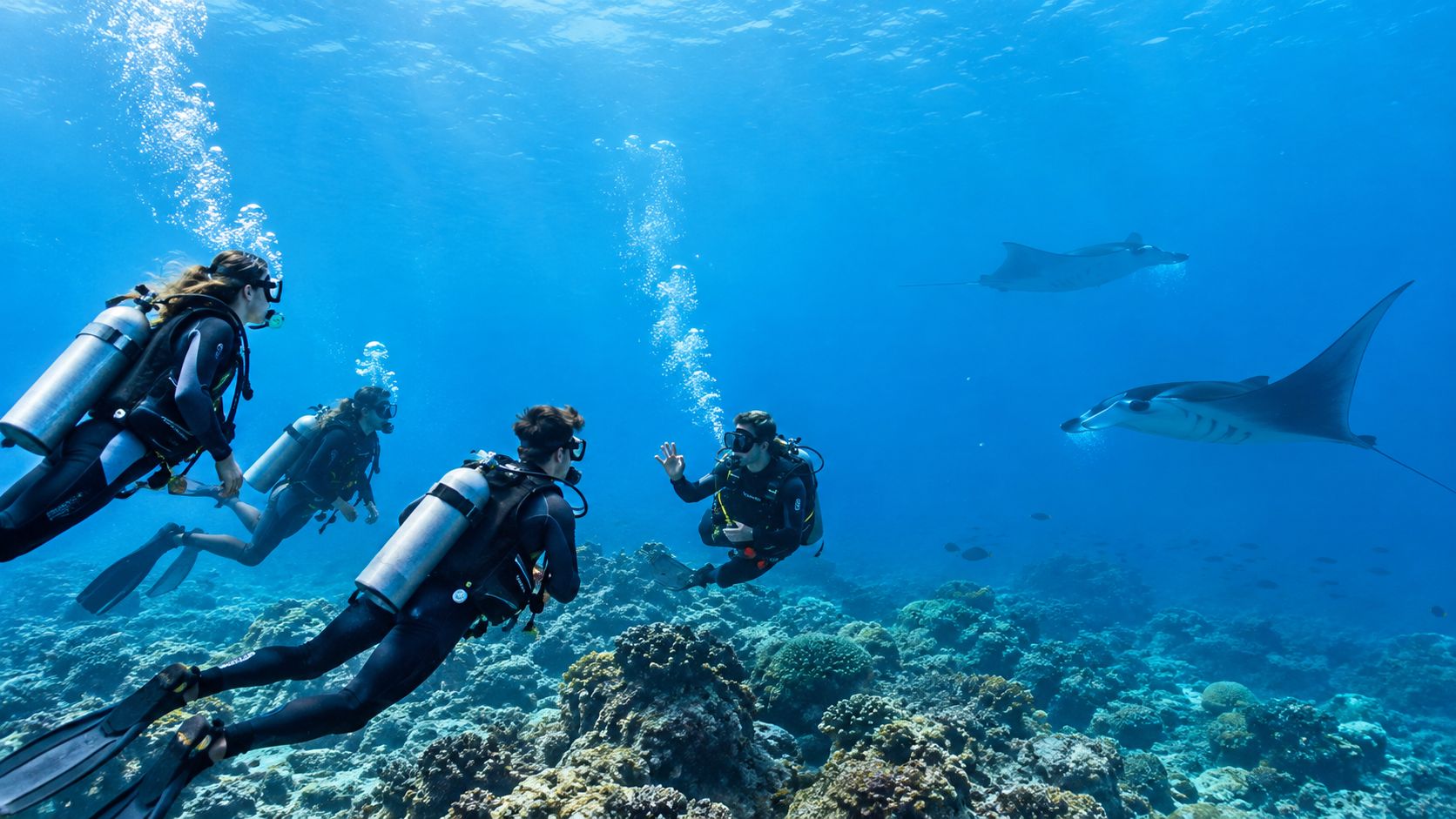
Follow the guide's instructions, and give the animals an unobstructed route through the feeding area. NOAA interaction guidance says snorkelers should remain at the surface and divers should keep lights above their heads. It also warns snorkelers to remove snorkels from their masks before mantas pass, since a ray can snag a snorkel and dislodge the mask (NOAA manta interaction guidance).
- Stay passive: Don't touch, grab, ride, chase, or dive into the manta feeding zone.
- Hold your position: Keep your buoyancy predictable and avoid blocking the animals' path.
- Keep gear controlled: Follow the guide's directions about lights and equipment.
- Tell the crew early: Speak up before entering the water if you're worried about fatigue, mask fit, or staying with the group.
These habits matter because Kona's mantas show strong site fidelity, and research indicates limited interchange between Hawaiian island groups. If the group is separated or you feel distressed, stop moving, signal the guide or crew, and follow the briefing's instructions rather than trying to find the boat alone. For more detail on low-impact behavior, read the responsible diver etiquette guide.
Certification, Gear, and Photography Tips
Scuba participants need to meet the operator's certification and experience requirements. If you're not certified, ask about snorkeling rather than assuming you can join the dive group underwater. Snorkelers remain at the surface, and the guide can explain how the group will be supported there. If you're still considering scuba training, review the Open Water certification course and confirm its schedule and prerequisites with the operator.
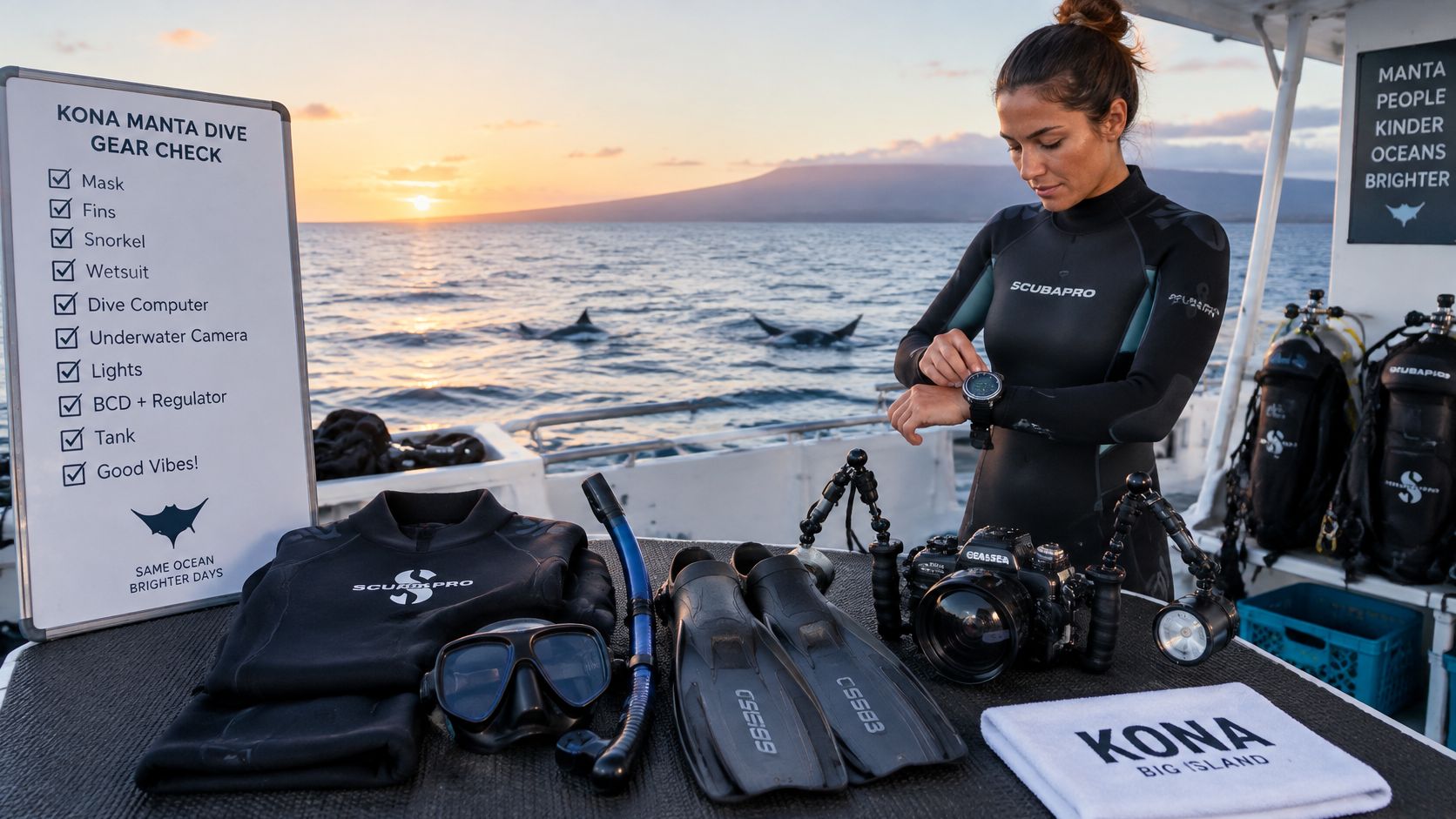
Before departure, check what equipment is included and what you need to bring. A well-fitting mask is important because repeated adjustments in dark water can be distracting. Ask whether wetsuits, masks, fins, and other rental gear are supplied, and let the crew know if you have trouble with a particular fit. A dry, warm layer for after the swim can make the return more comfortable.
Keep the camera steady and the light out of the way
A wide-angle lens can help you photograph the manta's full shape without moving closer. Practise using your camera in low light before the trip, and learn how to adjust exposure and focus without staring at the controls once you're in the water. A steady position will usually produce a better image than trying to follow the animal.
For divers, keep lights above your head as directed by the guide. Don't place a camera or other equipment where it blocks the manta's route or another guest's view. If the animal changes direction, let it go rather than pursuing it for a shot. The best setup is one you can manage calmly while holding your position.
A short checklist helps you avoid last-minute surprises:
- Confirm rentals: Ask what gear is supplied and whether you need to reserve sizes.
- Check your mask: Make sure it seals comfortably before the trip.
- Pack dry clothing: Bring something warm to wear after the water.
- Prepare your camera: Practise controls and low-light settings in advance.
Booking, Pricing, and Answers to Common Questions
Compare tours by what's included, not just the listed price. Ask whether rental equipment is included, whether nitrox is available for eligible divers, what the departure location is, and whether any package pricing or discounts apply. Confirm the operator's cancellation, rescheduling, or no-sighting policy before paying. Since plankton and manta activity vary, flexibility in your itinerary can be more useful than trying to choose a supposedly guaranteed night.
Are manta rays guaranteed? No. The lights create a feeding opportunity, but mantas are wild and may not appear. If a sighting is central to your plans, ask the operator what options are available if the animals don't show.
What if I'm an inexperienced swimmer? Explain your concerns when you contact the operator. Ask about surface support, flotation, guide supervision, and whether the crew thinks the trip suits your comfort level. Don't rely on a vague assurance; describe your actual experience and ask for a specific recommendation.
What if I'm separated from the group? Follow the pre-trip briefing. Signal the guide or crew, stay calm, and don't swim off alone to search for the boat. Ask before the trip how the operator wants guests to respond if they lose sight of their group.
Review the current manta dive and snorkel tour details before choosing a date. A thoughtful booking decision weighs the site, briefing, group supervision, and your own comfort alongside the chance of seeing mantas.
Kona Honu Divers offers guided manta dive and snorkel trips, so you can choose a seafloor view as a certified diver or a surface-level experience as a snorkeler. Check the current tour details, ask the crew about the setup that suits you, and visit Kona Honu Divers to plan your Kona manta encounter.