
The first time a manta turns through the lights at night, the whole site goes quiet. One minute you're settling in, checking your breathing and your trim, and the next minute a white belly fills your mask and a giant wingtip sweeps past close enough to make everyone forget they're underwater.
The Silent Ballet of the Kona Night
The Silent Ballet of the Kona Night
There's a point on a good manta dive when the ocean stops feeling dark and starts feeling organized. You drop into blue-black water, descend through the last of the dusk, and settle onto the bottom while the lights build a bright column overhead. Then the plankton gathers, and the mantas arrive because the food does.
That's what makes manta ray diving in Hawaii so memorable. It doesn't feel like chasing wildlife. It feels like taking your place in a carefully managed theater where the animals are still completely wild.
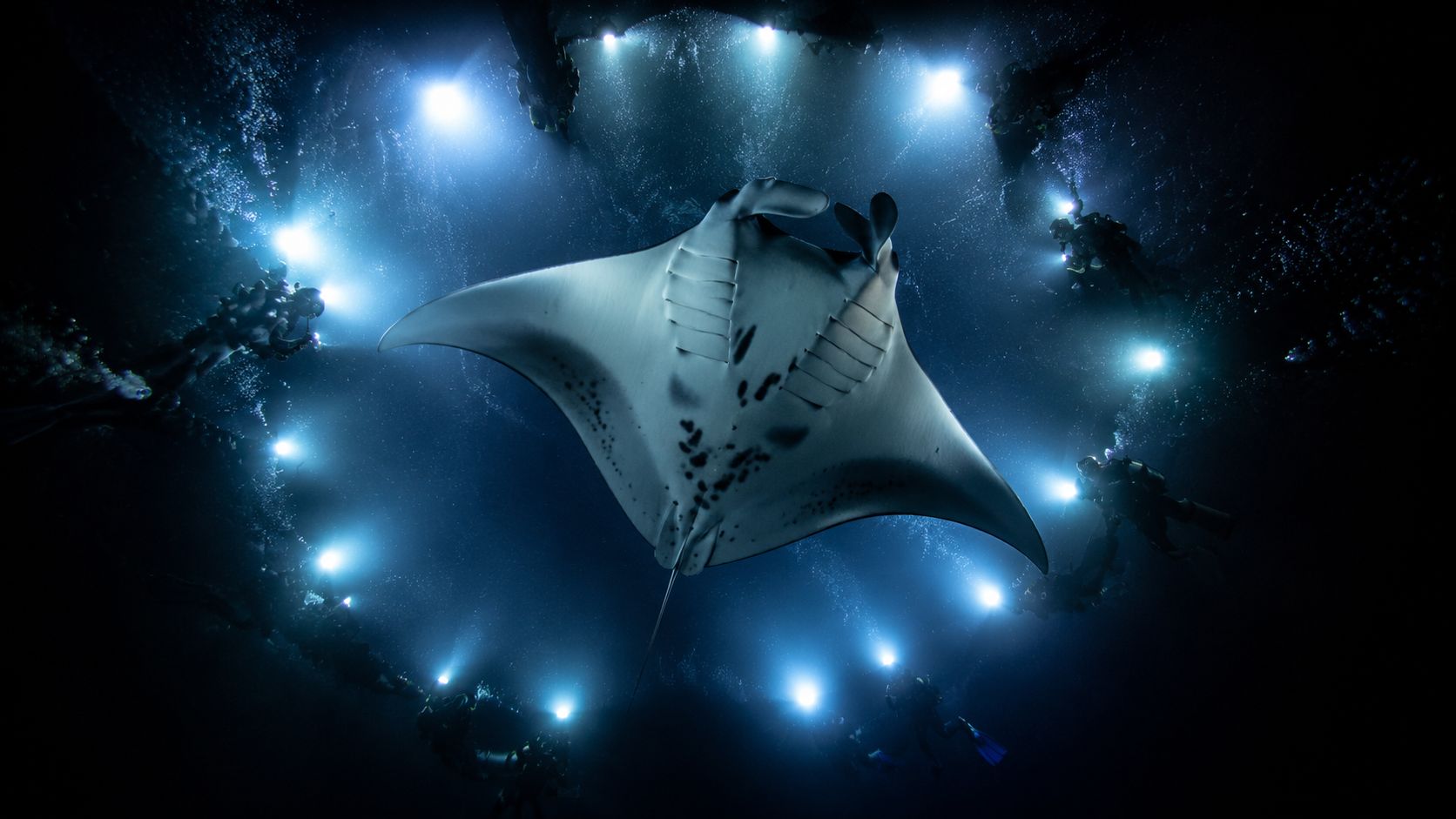
What the first pass feels like
A manta usually doesn't rush in. It glides into the beam, banks, and makes one clean inspection pass before committing to the feeding pattern. Once it starts feeding, the movement gets rhythmic. The ray loops through the light, opens its mouth in the plankton stream, rolls, and circles back.
From the bottom, you get the best sense of scale. You're looking up at a body built for lift, control, and precision. When several mantas are working the same light column, the effect is less like a normal reef dive and more like a slow aerial performance.
Practical rule: The divers who enjoy this dive most are the ones who stop trying to “do” something and just hold position.
Why people remember this dive for years
Most night dives ask you to search. This one asks you to settle down. That's a big difference.
The standard format is simple. You descend, get stable, aim your light as instructed, and let the feeding behavior happen above you. That quiet, low-task setup is one reason so many divers who aren't interested in complicated night navigation still love the manta dive.
A lot of visitors start by looking for the biggest animal in view. After a few minutes, they notice something else. Every pass is slightly different. Some mantas skim low and tight over the group. Others stay higher in the light column. Some make broad turns. Others barrel roll in place.
If you want to see that encounter in its classic form, take a look at the manta ray dive and snorkel tour details. The basic idea is straightforward. Get everyone positioned correctly, keep the site calm, and let the mantas feed without interference.
Why Kona is the World Capital for Manta Ray Encounters
Why Kona is the World Capital for Manta Ray Encounters
Kona works because the conditions line up in a way that's hard to duplicate. The coast supports a resident manta population, operators know the sites well, and the tour format is built around predictable feeding behavior rather than random searching.
About 130 manta rays regularly inhabit the waters around Hawaiʻi Island, and the encounter draws an estimated 80,000 people each year, generating over $4 million annually in economic value. Adult mantas can reach wingspans of up to 18 feet and weigh up to 3,000 pounds, according to this Kona manta ray guide with population and tourism figures.
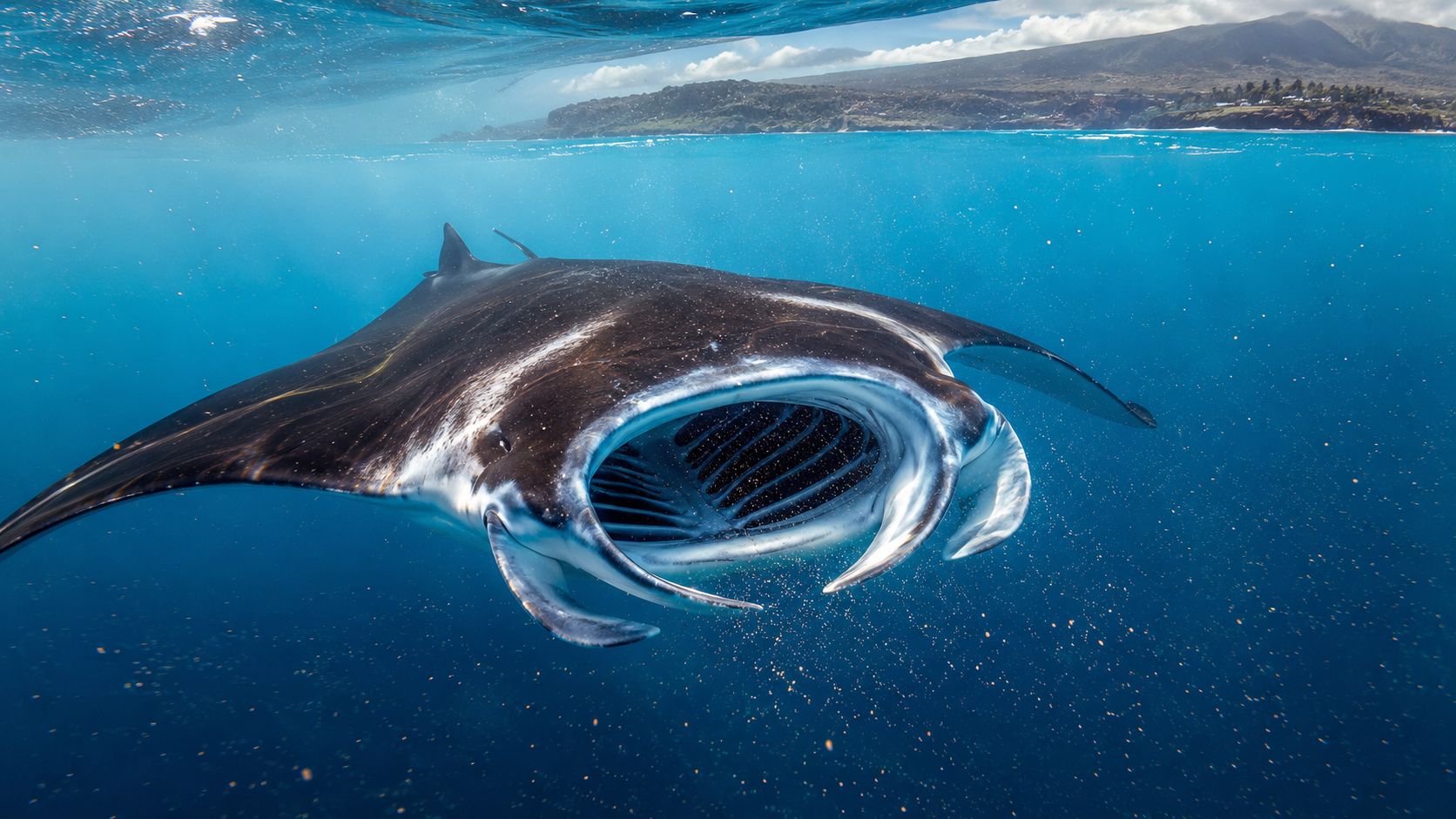
Why Kona stays consistent
A lot of marine wildlife experiences depend on timing and luck. Kona's manta sites are different because the rays are returning to known feeding areas. That doesn't make sightings guaranteed, but it does make the operation repeatable in a way most wildlife tours aren't.
That's also why visitors searching for Kona Big Island diving conditions and site overviews often end up focused on the manta dive. Few dives combine shallow depth, clear structure, and big-animal interaction this well.
Garden Eel Cove versus Manta Village
Both names come up constantly, and both can produce a strong manta show. The trade-off isn't whether mantas use the area. The trade-off is how the site feels in the water.
Garden Eel Cove is the better choice if you care about comfort, spacing, and overall dive quality. Its more protected feel usually makes the whole operation calmer. Divers can settle in without as much distraction, the viewing area tends to feel cleaner, and the surrounding reef experience is better.
Manta Village has history and name recognition. It also tends to be the site many travelers have already heard about. But for a lot of divers, the famous name matters less than the actual underwater setup. If the site feels busier, tighter, or less relaxed, that affects the experience even when the mantas show.
Here's the practical comparison:
| Site | What tends to work well | Main trade-off |
|---|---|---|
| Garden Eel Cove | More comfortable layout, protected feel, stronger overall reef setting | Less famous by name |
| Manta Village | High recognition, long-established site | Can feel more crowded and less relaxed |
The best manta site isn't the one with the biggest reputation. It's the one where guests can stay calm, hold position, and let the mantas feed naturally.
The Night Dive Experience Explained Step by Step
The Night Dive Experience Explained Step by Step
The first time divers do this well, you can see the moment their breathing slows. The reef goes dark, the lights come on, and the whole dive stops feeling like a night dive and starts feeling like a front-row seat. In Kona, the best manta dives are quiet, organized, and predictable in the ways that matter.
This works because the dive is built around position and patience. At Garden Eel Cove, that usually means an easier setup than tighter, busier sites. Divers settle onto the bottom near the light board, keep the water column open, and let the mantas do the work. Good operators keep the formation clean. Good divers keep themselves still.
The profile is straightforward. You descend, get settled, aim your light where the guide asks, and watch the plankton gather. The mantas follow the food and pass overhead, often close enough that new divers forget to blink.
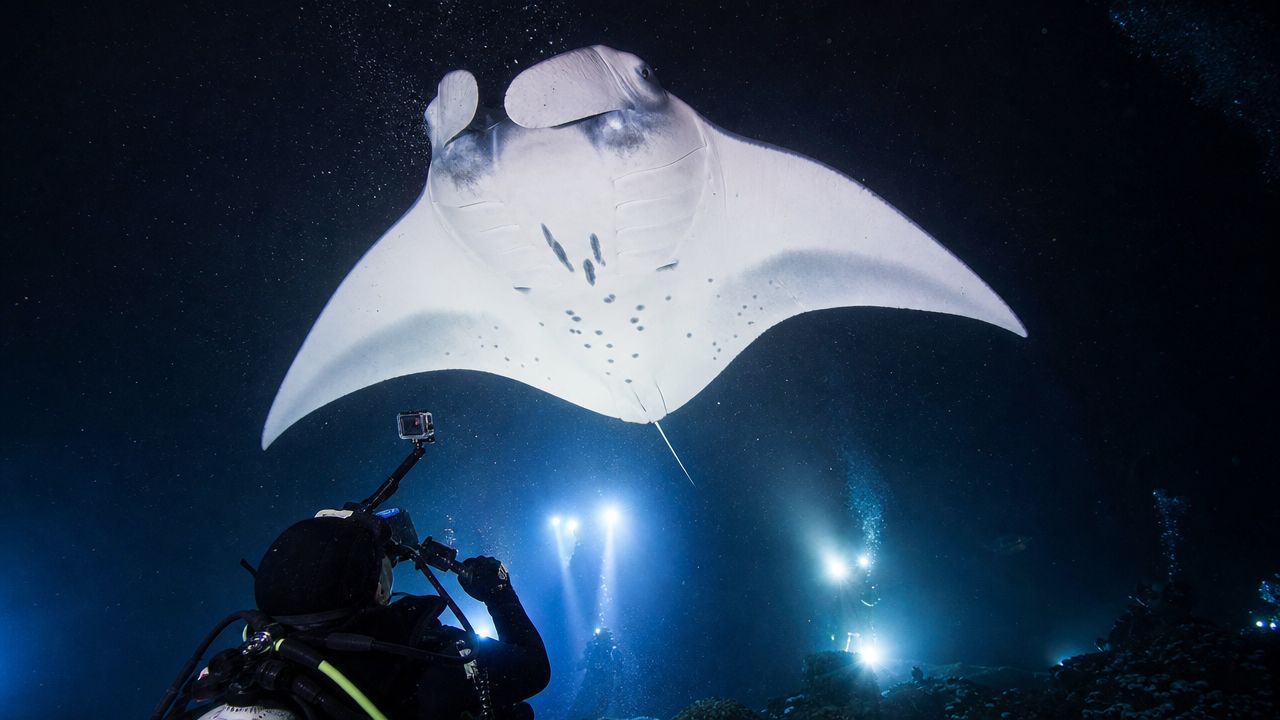
Step 1 through Step 3
Check in and listen to the briefing
Night manta dives are simple, but only if everyone follows the same plan. Your guide covers entry, descent, hand signals, where to kneel or settle, and what to do if you feel stressed. On boats like Kona Honu Divers, the crew usually makes this clear and direct, which helps newer night divers relax before they ever hit the water.Use the ride out to get ready
Set up your gear early. Defog your mask. Clip off anything loose. If you are prone to motion sickness, prepare before the boat starts rocking. This practical guide on how to avoid sea sickness before a Kona boat dive helps more than guessing once you already feel bad.Descend slowly and with control
Fast descents create problems. Equalize early, stay with your guide, and get to the bottom without kicking up the group. If you are anxious at night, this is the part to simplify. Follow the light, follow the diver in front of you, and focus on one task at a time.
Step 4 through Step 6
Take your place and stay out of the flight path
Once you reach the bottom, the job is to get set and stay set. Divers form a loose circle or line around the lights with the center left open above. That open space is where the mantas feed. If someone drifts high, chases, or hovers above the group, the viewing lane gets messy fast.Point your light where the guide tells you
Your beam is part of the setup. The light draws plankton. The plankton draws mantas. Random flashlight waving scatters the visual focus and makes the group harder to manage.Stop finning when you are in position
The strongest manta divers are usually the quietest ones on the bottom. Good buoyancy keeps silt down, preserves visibility, and protects the animals' path. If you feel yourself working hard, exhale, reset, and settle.
The divers who see the most usually move the least.
What not to do underwater
The rules are simple because the reasons are simple.
- Do not reach toward a manta. Close passes happen because the animals feel unthreatened.
- Do not swim up into the water column. That space belongs to the mantas.
- Do not chase one that moves off. Another pass often comes if the group stays calm.
- Do not touch. Contact can damage the protective mucus layer on the manta's skin.
One more practical point. This dive is easier for certified divers who are already comfortable in the dark and can hold position without constant finning. Travelers who feel anxious in open water, families with younger kids, and guests who want a simpler experience often do better on the snorkel trip instead. That is not a lesser option. For plenty of people, it is the smarter one.
Diver or Snorkeler Which Manta Experience is Right for You
Diver or Snorkeler Which Manta Experience is Right for You
This is the decision most mixed groups get wrong at first. They assume scuba must be better because it sounds more advanced. Sometimes it is. Sometimes snorkeling is the smarter call.
Divers are typically at 25 to 40 feet for about 45 to 60 minutes, while snorkelers remain on the surface. Touching mantas is prohibited because it removes their protective mucus, which makes proper etiquette essential for both groups, as noted in this guidance on manta interaction and mixed-skill choices.
Quick comparison
| Traveler type | Diving fits best when | Snorkeling fits best when |
|---|---|---|
| Certified diver | You want the bottom-up amphitheater view and you're comfortable at night | You'd rather keep the night simple |
| Family with kids | Everyone is certified and already night-comfortable | The group has mixed skills or younger children |
| Anxious traveler | You're calm on scuba and trust your buoyancy | You don't want to descend in dark water |
| Motion-sensitive guest | Short boat rides don't bother you and gear task load feels normal | You want less equipment and easier supervision |
When diving is the right call
Choose the dive if you're already certified and enjoy being underwater without needing to multitask. The best part of the dive is perspective. Looking up from the bottom while mantas loop through the beam gives you a dramatic, close-range view that surface guests don't get.
It also comes with more demand. Night diving, equalizing, mask comfort, buoyancy, and breathing control all matter. If any of those already make you tense in daylight, they usually don't improve after dark.
When snorkeling is the better experience
Snorkeling often works better for families, first-timers, and people who don't like the feeling of descending into dark water. You stay on the surface, hold onto the float setup, and watch the mantas feed below. For a lot of guests, that's the right amount of adventure.
If you're comparing formats for your group, this manta snorkel overview helps clarify what the surface experience feels like.
If someone in your group is anxious, seasick, or unsure in the water, snorkeling usually preserves the fun better than pushing them into a night dive they don't want.
Choosing Your Manta Ray Tour How Kona Honu Divers Excels
Choosing Your Manta Ray Tour How Kona Honu Divers Excels
I can usually tell how a manta trip will go before the boat leaves the harbor. Guests are still sorting gear, somebody is asking whether they should have booked snorkel instead, and the crew is either bringing the group together with a clear plan or letting little problems stack up. On this trip, those details matter.
A good manta operator does more than get people to the site. The crew has to brief clearly, choose the right site for the conditions, keep the group organized in the water, and protect the animals while still making the experience enjoyable. That is why operator choice changes the night so much.
What to look for in any operator
Start with the briefing. Divers and snorkelers should know exactly where they will be, how the light setup works, what to do with their hands and fins, and what happens if they feel uncomfortable. Vague briefings create messy entries, drifting lights, and guests who focus on themselves instead of the mantas.
Then look at in-water control.
Strong crews keep people where they belong, protect the viewing lane, and correct problems early. That matters even more on crowded nights, when one poorly positioned guest can spoil the encounter for everyone else and force mantas to change their approach.
Why Garden Eel Cove often gives a better experience
Site choice is not a small detail in Kona. It shapes comfort, crowd level, and how cleanly the encounter comes together.
For many guests, Garden Eel Cove is the better call than the more crowded Manta Village. The site usually feels less compressed, with more room to settle divers properly and less of the cluster that can build when too many boats concentrate on one area. That extra space helps new night divers calm down faster, helps photographers keep better control, and helps the whole group maintain a cleaner formation for the mantas.
There are trade-offs. Manta Village has name recognition, and some visitors book it because they have heard about it for years. Garden Eel Cove often gives a more comfortable boat ride and a less hectic in-water experience, which is the trade I prefer for most divers and mixed groups.
Why Kona Honu Divers stands out
One operator that consistently gets the fundamentals right is Kona Honu Divers in Kona. Their crew structure, boat flow, and site management fit what this dive requires. Guests get direct briefings, organized entries, and clear expectations about where to be and how to behave around the mantas.
That matters for comfort as much as safety. A well-run boat makes gearing up in fading light easier, keeps equipment from turning into a pile on deck, and gets people in and out of the water without unnecessary confusion. Guests feel the difference.
Kona Honu also works well for mixed groups deciding between diving and snorkeling. Certified divers who are comfortable at night usually get more out of the underwater perspective at Garden Eel Cove. Families, anxious swimmers, and anyone unsure about descending after dark often have a better night snorkeling, especially if the goal is to enjoy the mantas without adding task load. A good operator helps people choose the right format before the trip, not after they are already stressed on the boat.
Practical questions to ask before you book
Ask which site they favor and why. Ask how they separate divers and snorkelers. Ask what they do when someone gets anxious, and how strictly they enforce spacing and no-touch rules around the mantas.
Those answers tell you a lot.
The best manta trips are calm, controlled, and respectful of the animal. The worst ones usually advertise the same encounter but deliver a crowded boat, a rushed briefing, and too much chaos in the water. On a Kona manta night, those differences are easy to feel.
Manta Ray Conservation and Responsible Tourism
Manta Ray Conservation and Responsible Tourism
A manta night works only if the animals keep choosing to come back. In Kona, that comes down to boat handling, crowd control, light placement, and whether guests follow instructions once they hit the water.
The biggest difference I see between well-run trips and sloppy ones is simple. Good crews build a predictable feeding area and keep people contained. Poor crews let the encounter sprawl, and the mantas end up working around us instead of feeding naturally through the lights.
That matters even more at busy sites. Garden Eel Cove usually feels more controlled and less compressed than Manta Village, which is one reason many experienced crews prefer it for a calmer, more comfortable encounter. Fewer traffic problems on the surface and better spacing underwater usually lead to better guest behavior too. Ethical tourism is not just about good intentions. It is about choosing an operator and a site setup that reduce pressure on the animals from the start.
What responsible tourism looks like on the water
Responsible manta tourism is easy to recognize if you know what to watch for.
- Divers and snorkelers are positioned with purpose so the mantas have a clear flight path
- Lights stay controlled and consistent instead of flashing all over the water
- The bottom is treated carefully so sand, coral, and resting marine life are not disturbed
- No-touch rules are enforced immediately with no exceptions for photos or excitement
The no-touch rule is the one crews should police hardest. Mantas should never have to dodge hands, fins, tanks, or camera rigs. A guest brushing a manta is not a harmless vacation moment. It changes the encounter for the animal and can disrupt the whole group.
Good operators also brief for the problems guests have. Anxious snorkelers may need extra help settling in at the surface. Divers who are comfortable in daylight can still lose buoyancy control at night if they rush. That is why solid pre-dive coaching matters, and why responsible and considerate diver etiquette is not just a courtesy topic. It directly affects the quality of the manta encounter.
Why your booking choice matters
Booking the cheapest or most convenient trip can put you on a crowded boat with loose standards in the water. That is usually where guests feel rushed, guides spend the whole night correcting basic mistakes, and the mantas get a messier interaction.
Kona Honu Divers has earned a strong reputation because their trips are structured in a way that supports both comfort and animal welfare. That shows up in the briefing, in-water control, and site choice. Garden Eel Cove often gives crews more room to run a clean operation than the tighter, busier feel that Manta Village can have on crowded nights.
Choose the operator that keeps the encounter calm. The mantas benefit, and so do you.
Frequently Asked Questions About Manta Ray Diving
Frequently Asked Questions About Manta Ray Diving
Do I need to be an advanced diver
No. I take plenty of Open Water divers on manta dives, and many do very well. The divers who enjoy it most are the ones with steady buoyancy, calm breathing, and enough confidence to settle in on the bottom without chasing the action.
If you are newly certified and still working hard on basic control, snorkeling is often the better call. You will have less task loading, and the night usually feels easier.
Is manta ray diving in Hawaii available year round
Yes. Kona runs manta trips all year.
Winter can bring rougher surface conditions and occasional cancellations, especially for snorkelers who are sensitive to boat motion or chop. Summer often feels easier on the ride and at the surface, but mantas can show on any month of the year.
Is diving better than snorkeling
For some guests, yes. For others, no.
Diving gives you the classic view from below, with mantas sweeping overhead through the light. It is my favorite way to watch them, and experienced divers usually agree. Garden Eel Cove also tends to feel more comfortable than crowded nights at Manta Village because there is often more room to organize divers cleanly and keep the experience calm.
Snorkeling is usually the smarter choice for families with kids, anxious travelers, weak swimmers who are still comfortable in a flotation setup, and mixed groups where not everyone dives. You stay at the surface, you still get close passes, and you skip the added work of scuba in the dark.
What should I bring
Keep it simple and warm:
- Swimwear: Wear it under your clothes before check-in.
- Towel: You will want it after the dive or snorkel.
- Dry clothes or a warm layer: The ride back can feel chilly, even after a hot day.
- Motion-sickness medication: Bring the one you already know works for you, and take it early if you need it.
- Certification card: Divers should have it ready.
What if we don't see mantas
Mantas are wild animals, so no operator can promise a sighting every night. Kona has a strong track record, but smart guests still ask about the boat's missed-manta policy before booking.
That matters even more if you are planning around one free night on your trip.
How do I make the experience better for myself and for the mantas
Follow directions the first time. Good briefings solve a lot of problems before you ever hit the water.
Then do three simple things:
- Stay in your assigned position.
- Keep your hands, fins, and camera rig under control.
- Let the manta choose the distance. Never reach out and touch it.
Guests who want the most comfortable setup usually do better on a well-run Garden Eel Cove trip than on a packed boat headed to Manta Village. Kona Honu Divers has built a strong reputation for clear briefings, good in-water control, and a calmer operation, which makes a real difference for new divers, anxious snorkelers, and anyone who wants a cleaner wildlife encounter.
If you want a manta night dive run with strong site selection, clear briefings, and a focus on diver comfort, take a look at Kona Honu Divers.