
You're probably here because the manta ray night dive has been sitting in the back of your mind for a while. Maybe you've seen the photos of giant silhouettes looping through blue-white light and wondered if it's really like that, or if tour marketing is doing the heavy lifting.
It is like that. But the part most guides skip is why some nights feel organized, calm, and unforgettable while others feel chaotic. In Kona, the magic comes from technique, site choice, and diver behavior as much as it does from the animals themselves.
That's what makes manta ray diving Hawaii so special. You're not chasing wildlife through open ocean. You're joining a carefully managed interaction built around the mantas' natural feeding behavior. When the crew sets up properly, when divers stay disciplined, and when the site is chosen well, the encounter becomes smoother for people and better for the rays.
The Kona Manta Ray Night Dive Explained
The descent feels strange for the first few moments. You drop through dark water, your breathing gets louder in your ears, and the bottom slowly appears below as a pale sandy patch. Then the lights switch your perspective. What looked like empty ocean becomes a glowing stage, and the first manta can materialize above you so subtly that your brain needs a second to catch up.
That first pass is what people remember. The reason it happens so reliably is more practical than mysterious.
The campfire effect underwater
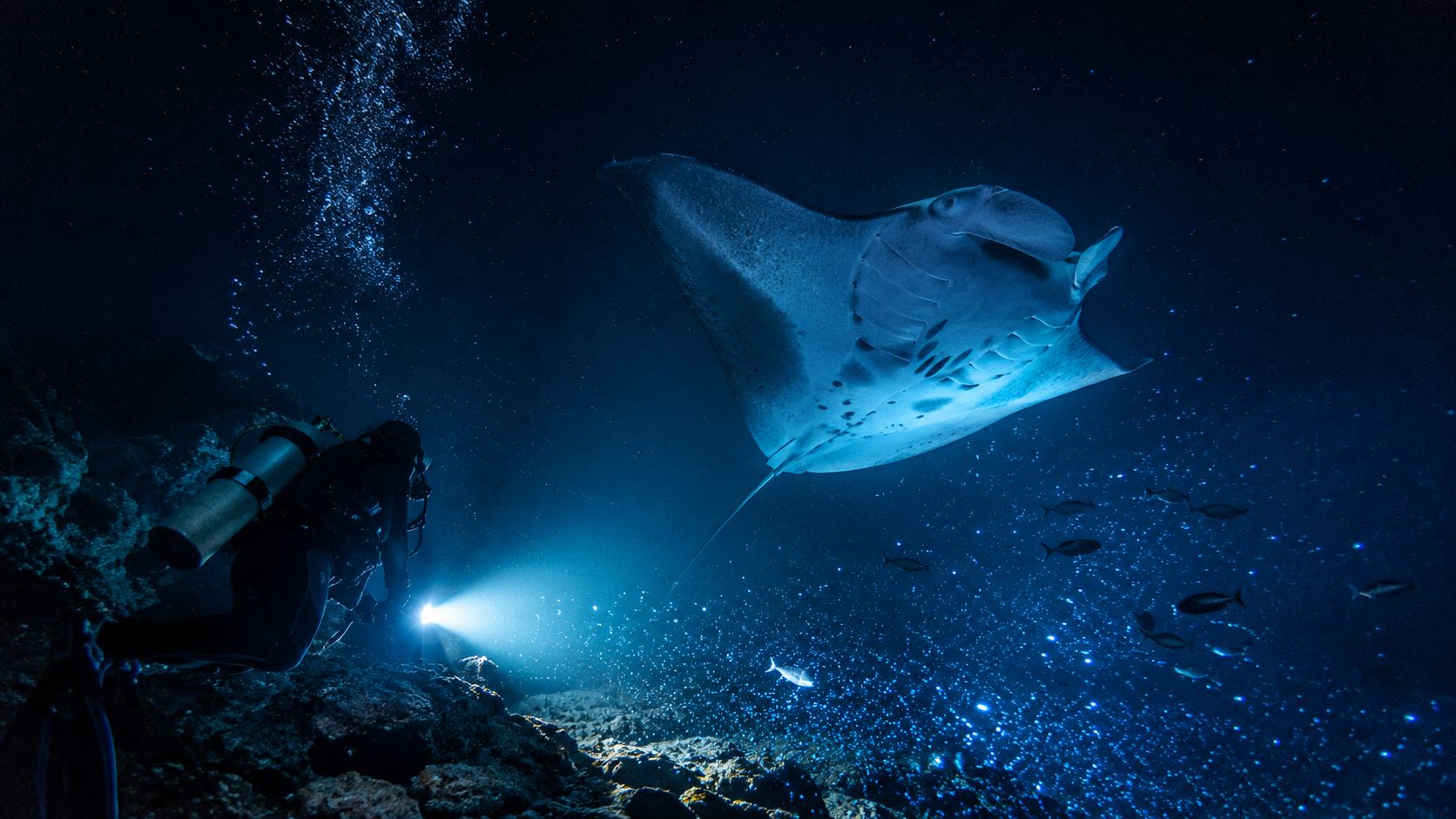
The Kona manta ray night dive operates at a precise depth of 35–40 feet on a sandy bottom, where operators deploy upward-pointing artificial lights. This creates a concentrated cone of plankton that triggers the mantas' filter-feeding behavior, resulting in sighting success rates exceeding 90% year-round.
If you want a broader look at local diving conditions before booking, this Kona diving guide is a useful place to start.
The easiest way to understand the setup is to think of it as an underwater campfire. The lights gather tiny plankton into a bright vertical column. The mantas know that column means food, so they move from the surface into the diver viewing zone and begin feeding passes through the beam.
This isn't random luck. It's a repeatable cause-and-effect system built around light, plankton, and resident reef mantas.
Practical rule: The dive works best when divers stay still and let the feeding zone come alive around them. The moment people start swimming after mantas, they break the very setup that brought the rays in.
Why the depth matters
People often ask why operators don't go shallower or deeper. The answer is simple. The 35–40 foot range balances viewing quality and diver safety. It's shallow enough to keep the dive manageable, but deep enough to line up with the mantas' primary feeding layer.
That sandy bottom matters too. Divers can settle in place, maintain trim, and avoid stirring up sediment. If the sand gets kicked up, visibility drops and the feeding cone gets messy.
A typical encounter lasts 45–60 minutes, which gives the mantas time to feed naturally without turning the experience into a chase. The local population doesn't migrate away seasonally, which is a big reason Kona has become so well known for manta ray diving Hawaii.
What you're actually watching
From the bottom, the view feels almost theatrical. Mantas sweep overhead, roll through the light, then circle back through the plankton-rich water. Some passes are wide and graceful. Others are tight loops that bring them startlingly close.
For new divers, that closeness can be confusing at first. Your instinct may be to reach, fin backward, or lift off the bottom for a better angle. Fight that instinct. The calmer you are, the better the show gets.
Why Garden Eel Cove Is The Premier Manta Dive Site
Not all manta sites feel the same underwater. If you only hear that “Kona has manta dives,” you miss the more important question, which is where along Kona you should go.
For divers, Garden Eel Cove, also called Manta Heaven, stands out for reasons that go beyond reputation. It's a protected location with a better viewing area and healthier surrounding reefs. That combination tends to produce a cleaner, more comfortable setup for the night dive.
Garden Eel Cove is also the site I'd point most divers toward if they want the strongest overall balance of conditions, layout, and manta action. For more background on local site options, this guide to where to see manta rays in Hawaii gives helpful context.
Why protection and layout matter
A manta dive is only as good as the environment around the light box. At Garden Eel Cove, divers descend to a sandy patch at about 35–40 feet and settle around the “campfire” light setup. That bottom topography makes the viewing pattern feel organized instead of scattered.
The site's protection also matters. A more sheltered location helps crews keep the group stable and keeps the feeding cone cleaner. Better reef health around the site adds to the experience, even before the mantas arrive.
The result is a dive that often feels less cramped and more natural than more crowded alternatives.
The direct comparison
Garden Eel Cove, also known as Manta Heaven, is the superior dive site due to its protected location and healthier reefs. It boasts success rates of 85–90% and divers often spot up to 23 mantas, significantly more than the 5–10 typically seen at the more crowded Manta Village, according to Kona Honu Divers' Garden Eel Cove overview.
| Feature | Garden Eel Cove (Manta Heaven) | Manta Village (Keauhou Bay) |
|---|---|---|
| Site character | Protected location with healthier reefs | Popular, more crowded site |
| Typical diver setup | Sandy patch with organized campfire-style viewing | Common first-time choice |
| Depth profile | About 35–40 feet | Commonly used manta site |
| Reported success rate | 85–90% | Often described as reliable, but lower manta counts are typical in the comparison data |
| Reported manta numbers | Up to 23 mantas | Typically 5–10 mantas |
| Overall feel | Better viewing area, often favored for scuba | Shorter ride for some visitors, but more crowded |
Garden Eel Cove gives divers more room to settle, more structure to the light setup, and often more manta activity above the group. Those details change the whole mood of the dive.
Why many first-timers choose the wrong metric
A lot of visitors focus on boat ride length or on the site name they've heard the most. That's understandable, but it's not the best way to choose.
The better questions are:
- How stable is the viewing area: A stable sandy bottom helps divers settle quickly and stay out of the feeding zone.
- How protected is the site: Protection helps preserve visibility and keeps the light column intact.
- How crowded does the experience feel: More crowding can make it harder to hold formation and easier for someone to disrupt the show.
- How many mantas are typically seen: More feeding rays usually means more passes, more variety, and less waiting.
Manta Village still matters in Kona's manta history, and many visitors do enjoy it. But if you want the stronger scuba setup, Garden Eel Cove is the more compelling choice.
Manta Manners The Rules for a Safe and Ethical Dive
Good manta encounters depend on discipline more than bravery. The animals aren't the main risk. Diver behavior is.
That surprises a lot of first-timers. They arrive worried about the size of the manta, then discover the challenge is staying quiet, steady, and predictable in the water.
The non-contact rule is not optional
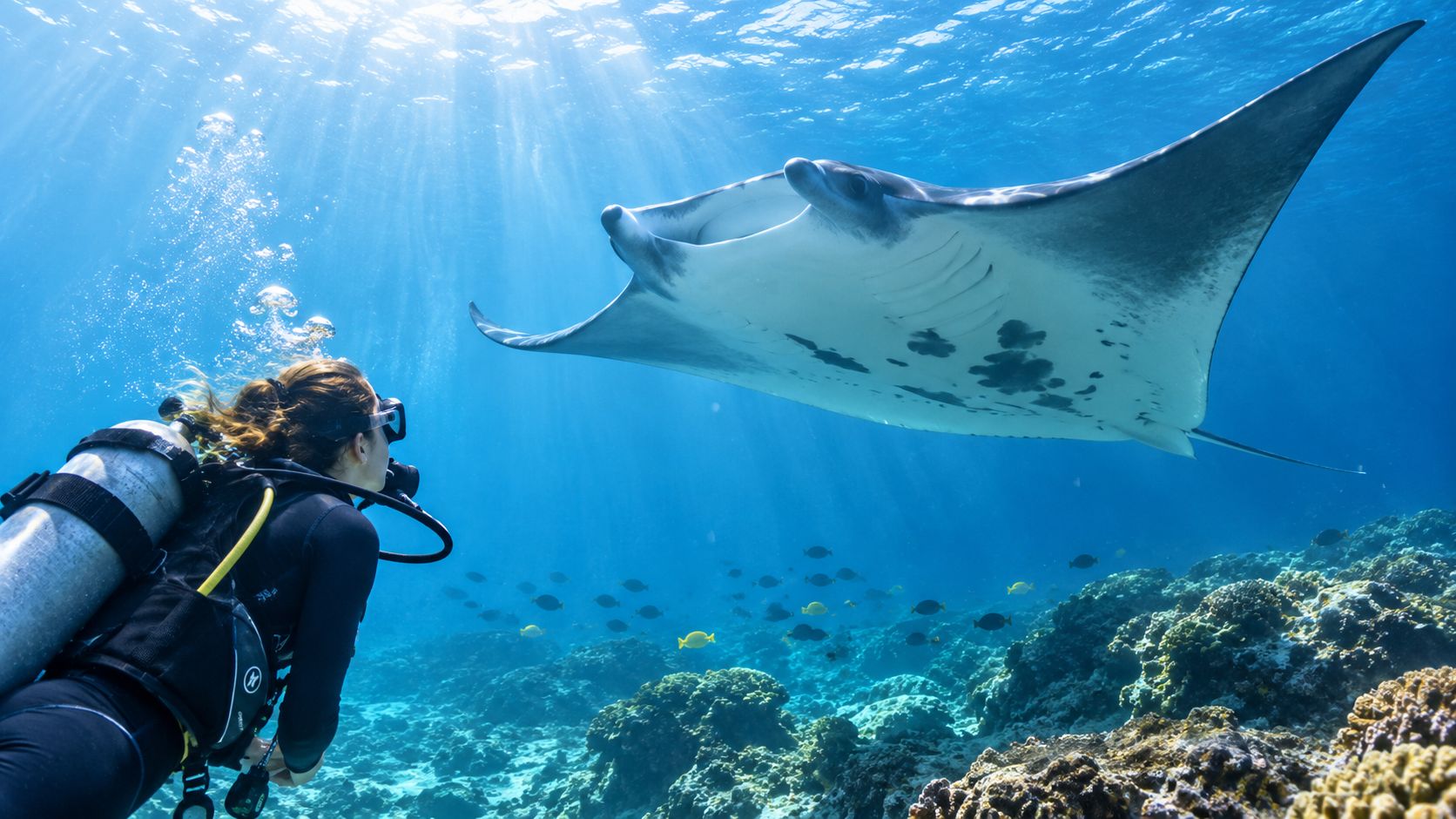
Strict adherence to non-contact protocols is mandatory. Touching rays removes their protective mucus coating, increasing infection risk. Divers must maintain a still-and-kneel position on the bottom, with fins down, to prevent sediment disruption which can collapse the feeding event.
If you want a strong general primer on underwater conduct, this diver etiquette guide covers habits that matter on any dive, especially this one.
Mantas are filter feeders and they don't have teeth, which makes people relax too much. Safe for you doesn't mean harmless to them. Their skin coating protects them, and your hands can damage it even during what feels like a light touch.
So the first rule is simple. Never touch a manta ray.
The body position that makes the dive work
The phrase crews use is usually still-and-kneel. That means settle on the sandy bottom, stop fidgeting, and hold your fins close so you don't scull or kick up sand.
For many divers, the outcome of the dive is decided here. You don't need athletic skill. You need buoyancy control and patience.
Use this checklist before the first manta arrives:
- Set your buoyancy early: Get neutral and stable before the feeding starts. Don't wait until the action begins.
- Keep fins tucked in: Long, lazy fin tips can still disturb the sand.
- Aim your light upward: Don't wave it around the reef or sweep it across other divers.
- Watch your camera habits: If a manta comes in close, give it space and be conservative with strobes.
The calmer the group, the longer the mantas tend to stay engaged with the lighted feeding zone.
Light discipline matters more than people expect
Many beginners think the main rule is “don't touch.” That's true, but it's only part of the story. The feeding event depends on a vertical cone of light and plankton staying intact. If divers point lights randomly, chase mantas, or kick sediment into the water column, they weaken the whole system.
That's why crews can sound strict during the briefing. They're not trying to make the dive rigid. They're protecting the exact mechanics that create the close passes everyone came for.
This is also why a diver with weak buoyancy can affect the whole group. One person lifting off the bottom and flutter-kicking through the beam can make the site feel disorganized fast.
How to Prepare for Your Manta Adventure
Preparation changes how the night feels. Show up cold, hungry, rushed, or queasy, and you'll spend half the trip managing yourself. Show up comfortable and organized, and you can give your attention to the water.
This is one of those dives where small details matter more than expensive gear.
What to bring for comfort
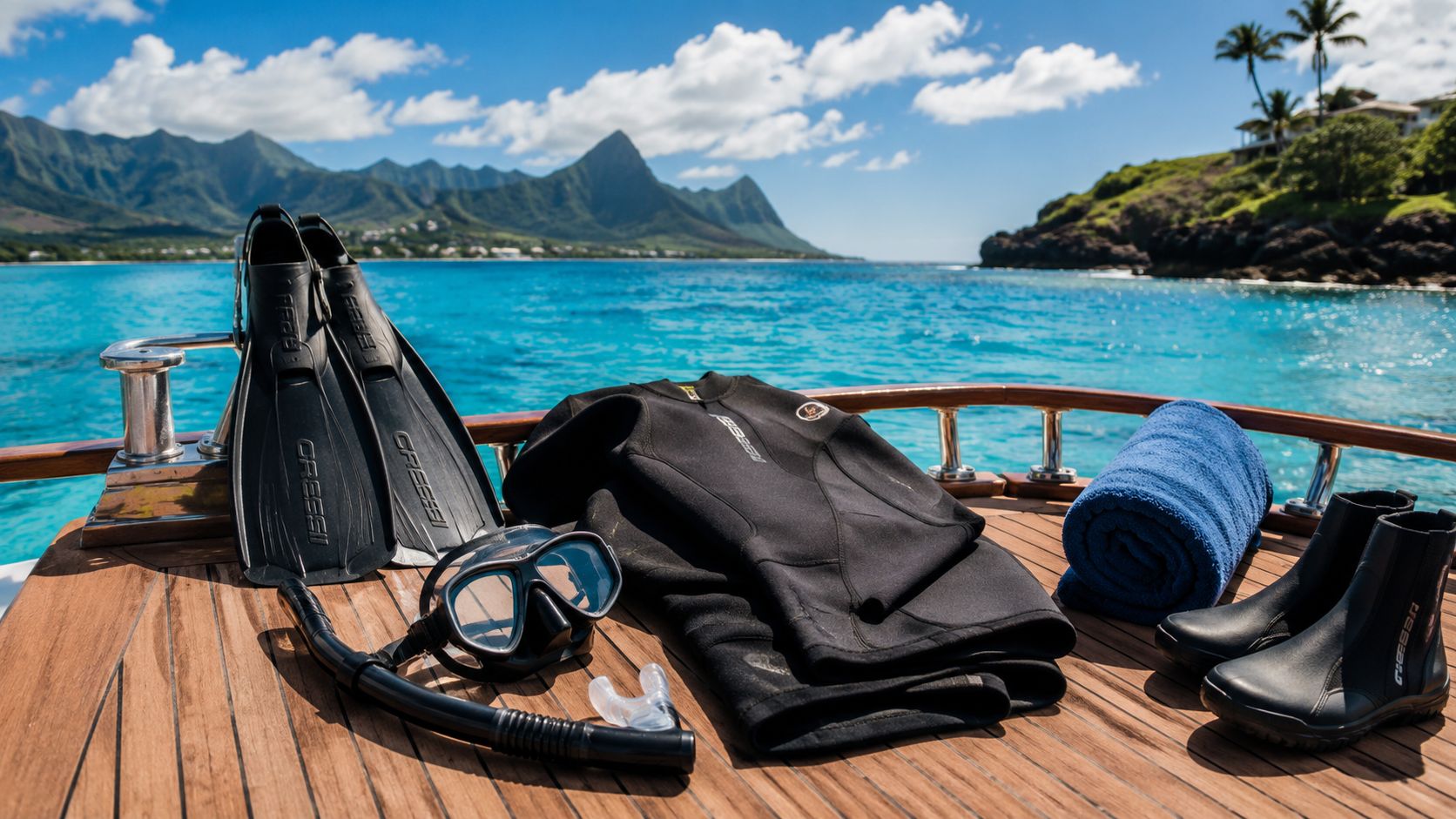
Most operators provide the core dive equipment. Your job is to handle the personal extras that make the ride out and ride back easier.
A short packing list helps:
- Warm layer for after the dive: A hoodie or beanie feels great once the wind hits wet skin on the return.
- Simple dry bag: Keep phone, towel, and dry clothes together.
- Camera you already know how to use: Night dives are not the time to learn a complicated menu system.
- Hair tie or clip: Long hair and mask straps can be an irritating combination in the dark.
Seasickness planning
If you're even slightly prone to motion sickness, deal with it before boarding. Don't wait to see how you feel once the boat starts rocking. This guide on avoiding sea sickness covers useful basics.
If you want over-the-counter options or simple preventatives, these are common choices visitors use:
- Patch option: Ship-EEZ Seasickness Patch
- Classic tablets: Dramamine pills
- Another tablet option: Bonine pills
- Non-medication wristband: Sea Band wristbands
- Natural option: Ginger chews
Take or use them as directed, and do it with enough lead time to help before departure.
Camera tips without turning the dive into a photo mission
Night manta photography can be rewarding, but it can also pull you out of the moment fast. Keep your setup simple. If your housing leaks, your settings are wrong, or your strobe arms are flailing everywhere, you become part of the problem.
A few practical habits help:
- Test gear before the trip: Don't assume a battery is charged.
- Use conservative strobe habits: If a manta comes within inches, back off on flash use.
- Take breaks from filming: Some of your best memories will be the passes you watched directly, not through a screen.
A well-prepared diver looks calm before the giant manta arrives. That calm usually starts on shore, not underwater.
Choosing Your Expert Guide Dive with Kona Honu Divers
A manta dive can be organized brilliantly or merely adequately. The difference usually shows up in briefing quality, site choice, group control, and how seriously the crew treats light discipline and animal etiquette.
That's why operator selection matters. You're not just buying boat space. You're choosing the people who set the tone for the entire encounter.
One local option for both scuba and snorkel trips is Kona Honu Divers' diving tours, including their manta ray dive and snorkel tour page. For divers who want additional night or advanced experiences beyond mantas, they also offer a Blackwater Dive and a premium advanced long-range trip.
The manta ray night dive in Kona achieves an 80 to 90 percent sighting success rate, with divers observing mantas with wingspans ranging from 12 to 18 feet. Dive operators like Kona Honu Divers facilitate 45 to 60-minute bottom times for this amphitheater-style viewing experience.
What to look for in a guide
The strongest guides tend to do a few things consistently:
- They choose sites for conditions, not convenience: Site quality often matters more than the shortest possible boat run.
- They brief behavior clearly: Good crews explain where to put your body, where to point your light, and what not to do when the first manta rush hits.
- They control the group underwater: A manta dive falls apart when divers spread out or improvise.
- They protect the animal first: A crew that enforces no-touch and no-chase rules is doing its job.
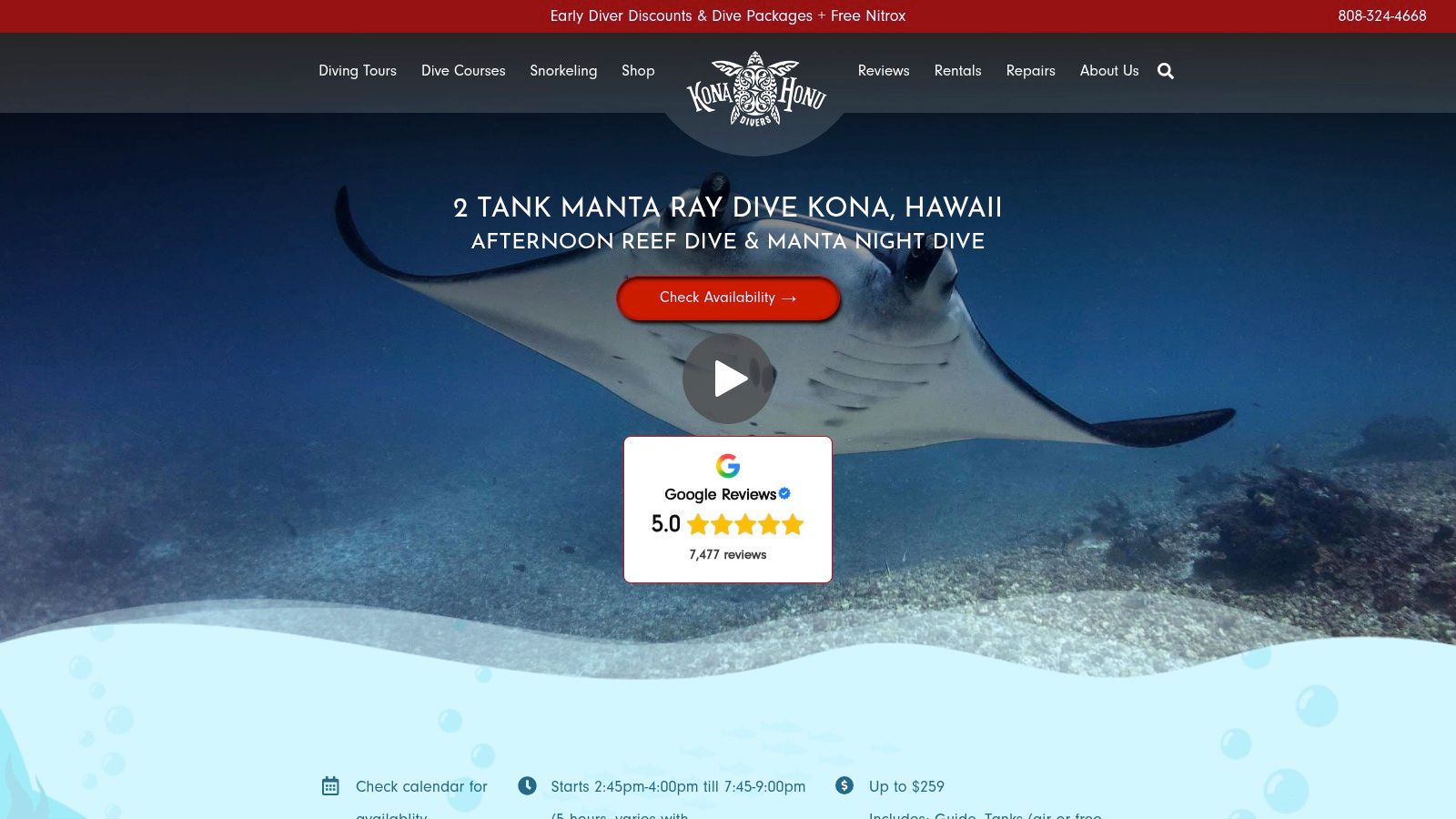
Here's the tour page many divers review before booking:
Matching the trip to your experience level
Some divers just want the manta night dive. Others want to build a broader Kona underwater trip around it. If that's you, it helps to book with an operator that also runs daytime scuba, advanced outings, and night specialties.
That flexibility matters because your manta dive may become the gateway to more. A diver who handles buoyancy well on the manta site often gets curious about more demanding profiles and less conventional night experiences later in the trip.
Your Manta Ray Diving Questions Answered
Is manta ray diving safe for beginners
Yes, with the right setup and briefing. The mantas are filter feeders and aren't aggressive. For scuba, certified Open Water Divers are encouraged because buoyancy control matters a lot on this dive.
What if I'm not scuba certified
You can still do the snorkel version. Snorkelers float at the surface with lighted boards while divers stay below, creating a dual-layer viewing system through the water column.
What's the best time of year
Kona's local manta population is non-migratory, so sightings are reliable year-round. The feeding behavior is nocturnal and starts around sunset, when plankton concentration and light contrast support the encounter.
How close do the mantas get
Very close at times. They may pass overhead or move through the water column between surface snorkelers and bottom divers. The correct response is always the same. Stay still and let them choose the distance.
Where can I read more common trip details
If you still have practical questions about booking, gear, logistics, or dive policies, the Kona Honu Divers FAQ page is a good final stop before you reserve.
If you want a manta night dive that respects the animals and gives you the best chance at a smooth, memorable encounter, take a look at Kona Honu Divers. Choose the trip that fits your comfort level, arrive prepared, and treat the mantas like wild animals instead of a photo prop. That's how manta ray diving in Hawaii stays magical.