
You're probably doing what most guests do before they book. Comparing snorkel versus scuba, wondering if the dark ocean will feel exciting or intimidating, and trying to figure out which Kona manta site gives you the strongest chance at a clean, close, respectful encounter.
That's the right approach.
Manta ray diving in Hawaii isn't just another night dive. Done well, it's one of the most controlled and rewarding wildlife encounters in the ocean. Done poorly, it becomes a rushed checklist item where people kick up sand, wave lights around, and miss what makes the experience so special. The difference usually comes down to site choice, briefing quality, and whether guests understand that the best manta encounters happen when humans stay quiet and predictable.
An Unforgettable Encounter Awaits
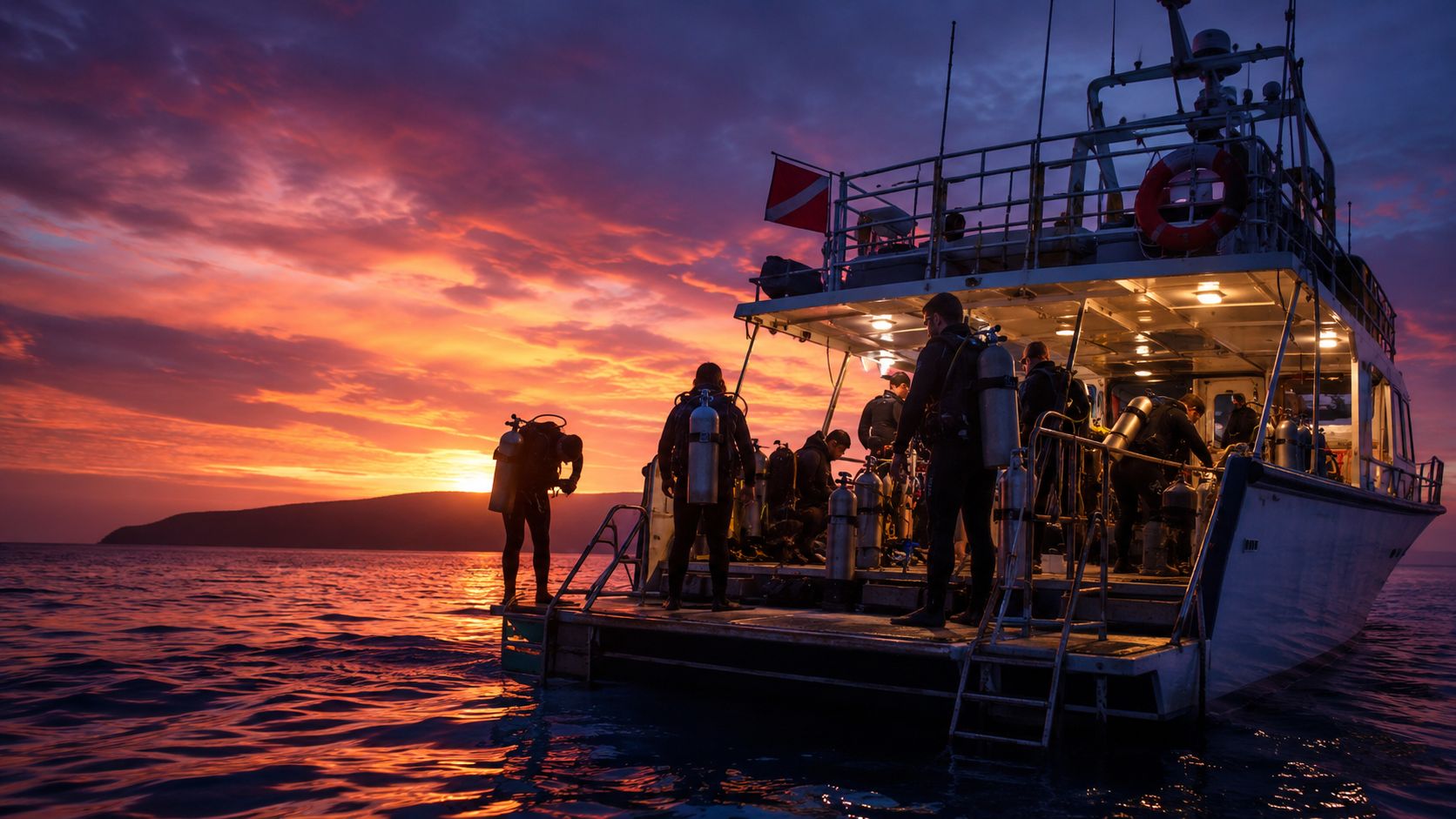
The boat ride out is calm, the sky is still holding the last color of sunset, and everyone is half excited, half trying to act relaxed. Then the lights go in, the ocean turns black beyond the glow, and the whole mood changes. You stop thinking about your gear and start watching the water.
For divers, the scene from below is what people remember for years. You settle onto the sandy bottom, point your light where the guide tells you, and wait. Out of the dark, a white belly appears first. Then the full animal comes into view, gliding over the beam of light and banking back through the water column in a slow feeding pass.
Snorkelers get a different kind of magic. From the surface, you look down into the light field while mantas rise from below and turn just under the board. The movement is clean, close, and surprisingly graceful for an animal that big.
Stay calm on the first pass. Most people want to reach. The better move is to stay still and let the manta decide the distance.
Kona has become the benchmark for this experience for a reason. The conditions are unusually reliable, the animals are resident, and the sites are set up around predictable nighttime feeding behavior. That combination makes manta ray diving in Hawaii far more dependable here than in most places that advertise manta encounters.
Why Kona is the Global Epicenter for Manta Rays
In Kona, a manta briefing usually starts with one simple point. We are not chasing random pelagic wildlife and hoping for luck. We are working around a resident population that returns to reliable feeding areas night after night, which is why manta ray diving here is more consistent than in many places that sell the same promise.
The local setup is unusually favorable. The Kona Coast has more than 450 individually identified reef mantas, year-round sighting success in the 80 to 90 percent range, typical encounter depths of 25 to 40 feet, roughly 20 manta sightings per night, and visibility that often reaches 100 feet, according to this overview of the Kona manta dive experience and population. Those numbers matter because they translate into easier descents, longer comfortable viewing time, and a better chance of seeing repeated feeding passes instead of one distant silhouette.
From an operator's standpoint, Kona works because several conditions line up at once. The mantas live here year-round. The feeding behavior is predictable around light and plankton. The depths stay manageable for certified divers, and the viewing format also works well for snorkelers on the surface. Clear water helps too. A manta that turns inside a bright light field at close range is a very different experience from spotting one far out in blue water and trying to keep up.
Reliability is a key advantage. Guests often focus on how many mantas they might see, but consistency is what makes the encounter special and safe. Briefing a new diver is easier when the site is shallow, the bottom is usable, and the animals are known to circle back through the same viewing zone instead of vanishing into open water.
Kona's broader marine conditions help as well. The coast supports excellent diving beyond the manta sites, and that same combination of volcanic structure, clear water, and marine life concentration is part of what makes diving in Kona so distinct. If you are planning more than one day on the water, it also helps to compare different Kona scuba diving tour styles so you match the trip to your experience level and goals.
One practical note from the boat. A famous manta destination is not automatically the right manta destination for your group. Kona stands out because the encounter is established, repeatable, and manageable for both divers and snorkelers when the site choice is smart. That is exactly why Garden Eel Cove gets so much attention from experienced crews.
Choosing Your Manta Dive Site in Kona
You feel the difference between sites before the first manta arrives. The boat ride, the way the surface moves, how easy it is to organize divers on the bottom and snorkelers overhead, all of that shapes the night. If the goal is the strongest overall manta ray diving in Hawaii, Garden Eel Cove is the site I recommend most often.
Garden Eel Cove, often called Manta Heaven, tends to give crews a more controlled setup. The site is generally more protected, the surrounding reef is in better shape, and the viewing area is easier to manage well. Earlier reporting on Big Island manta site comparisons also noted strong sighting consistency there and sessions with very high manta counts, which matches why experienced Kona crews keep returning to it.
Kona Manta Ray Dive Sites Compared
| Feature | Garden Eel Cove (Manta Heaven) | Manta Village (Koholalele) |
|---|---|---|
| Exposure | More protected | Can be less forgiving depending on conditions |
| Reef condition | Healthier surrounding reefs | Varies |
| Diver viewing layout | Wider, easier to organize | More limited by comparison |
| Reported consistency | Strong, with a dependable pattern of activity | Can be good, but less predictable for some groups |
| Fit for mixed groups | Strong for divers and snorkelers together | More dependent on conditions and group comfort |
Why Garden Eel Cove works better in practice
From a divemaster's perspective, the best site is the one that stays organized once everyone hits the water.
At Garden Eel Cove, divers can settle on the bottom with enough room to hold position without stacking on top of each other. That matters. Better spacing means cleaner light placement, less fin wash, and fewer problems with visibility once the mantas start feeding in the beams.
Snorkelers benefit too. A calmer, more predictable surface setup makes it easier to keep the float group together and focused on the light board instead of on chop, current, or boat traffic. For families and mixed-experience groups, that trade-off usually matters more than a famous site name.
Manta Village still has name recognition, and on the right night it can be very good. But if a guest asks me where I would send a new diver, a cautious snorkeler, or a group that wants the highest-quality encounter rather than just a story about the site name, I point them to Garden Eel Cove.
If you want broader context before choosing a manta charter, this guide to diving Kona Big Island waters gives a useful overview of how the different parts of the coast dive.
The Night Dive Experience Explained
A lot of first-time guests think this is an active hunt. It isn't. The best manta dive is built around stillness, light placement, and patience.
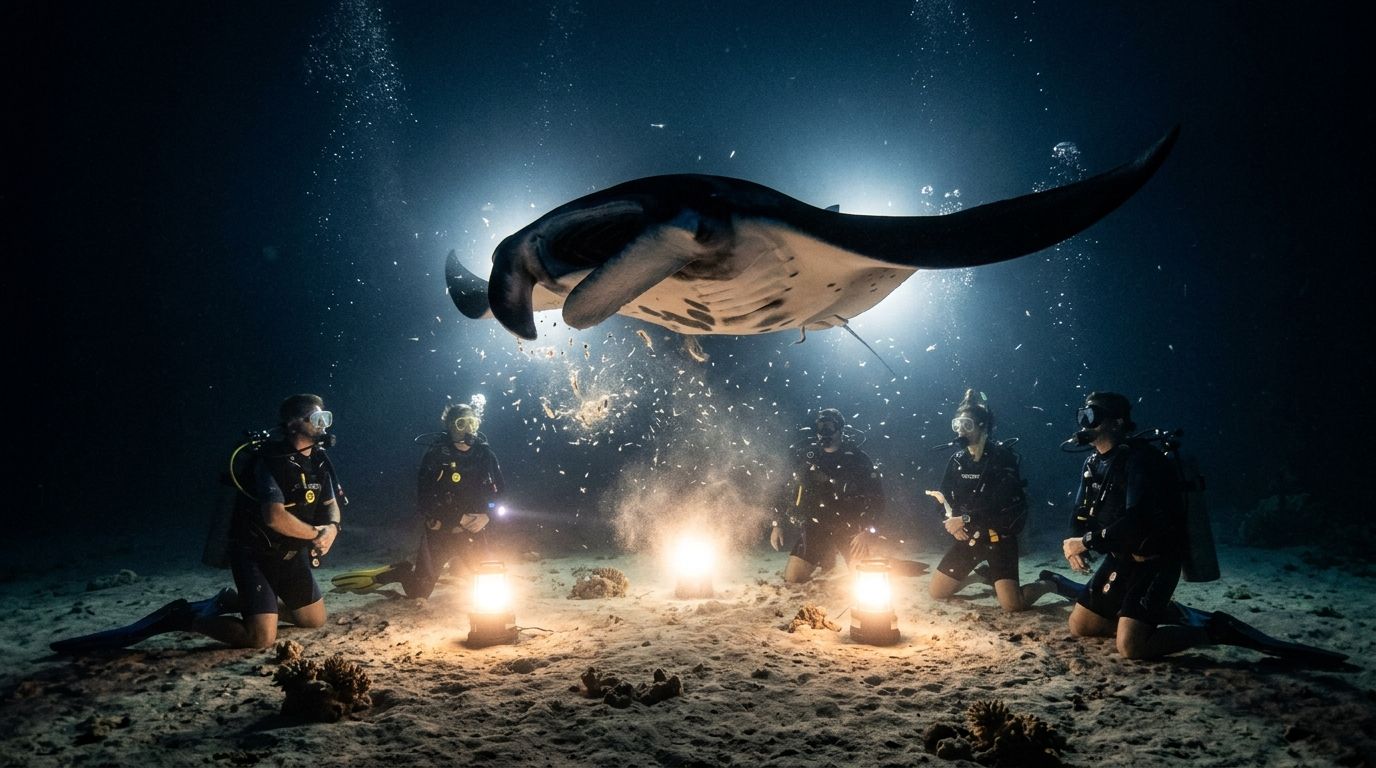
The dive operates at 30 to 40 feet on a sandy seabed. Operators place underwater lights that attract plankton through phototaxis, creating a concentrated food patch that draws mantas in for encounters averaging 45 to 50 minutes, as described in this explanation of the Kona manta night dive setup. If you're curious about the exact depth profile, this guide on how deep the Kona manta ray dive is covers that clearly.
What scuba divers do
Once on the bottom, divers kneel or sit on the sand and stay put. Lights point upward into the water column. Good buoyancy matters because every misplaced fin kick sends sediment into the beam and degrades the whole viewing cone.
The strongest diver behavior is boring on purpose:
- Hold position: Pick your spot and commit to it.
- Keep fins up: Don't stir the bottom.
- Aim your light as briefed: The beam helps build the feeding zone.
- Watch above, not around: The action usually develops over the light field.
What snorkelers do
Snorkelers remain at the surface, usually holding onto a floating light board. Their light source creates the top of the feeding zone while divers illuminate from below. The mantas move between those layers, feeding through the concentrated plankton.
That layered setup is why snorkel and scuba can both be excellent without being identical experiences. Divers get the cathedral ceiling effect from below. Snorkelers get the barrel-roll view from above.
The best guests aren't the ones who move the most. They're the ones who become part of the setup and let the mantas work.
If you're looking at actual trip options, the manta ray dive and snorkel tour page shows the tour format.
Safety Rules and Manta Ray Etiquette
There's one rule that matters more than any other. Don't touch the manta.
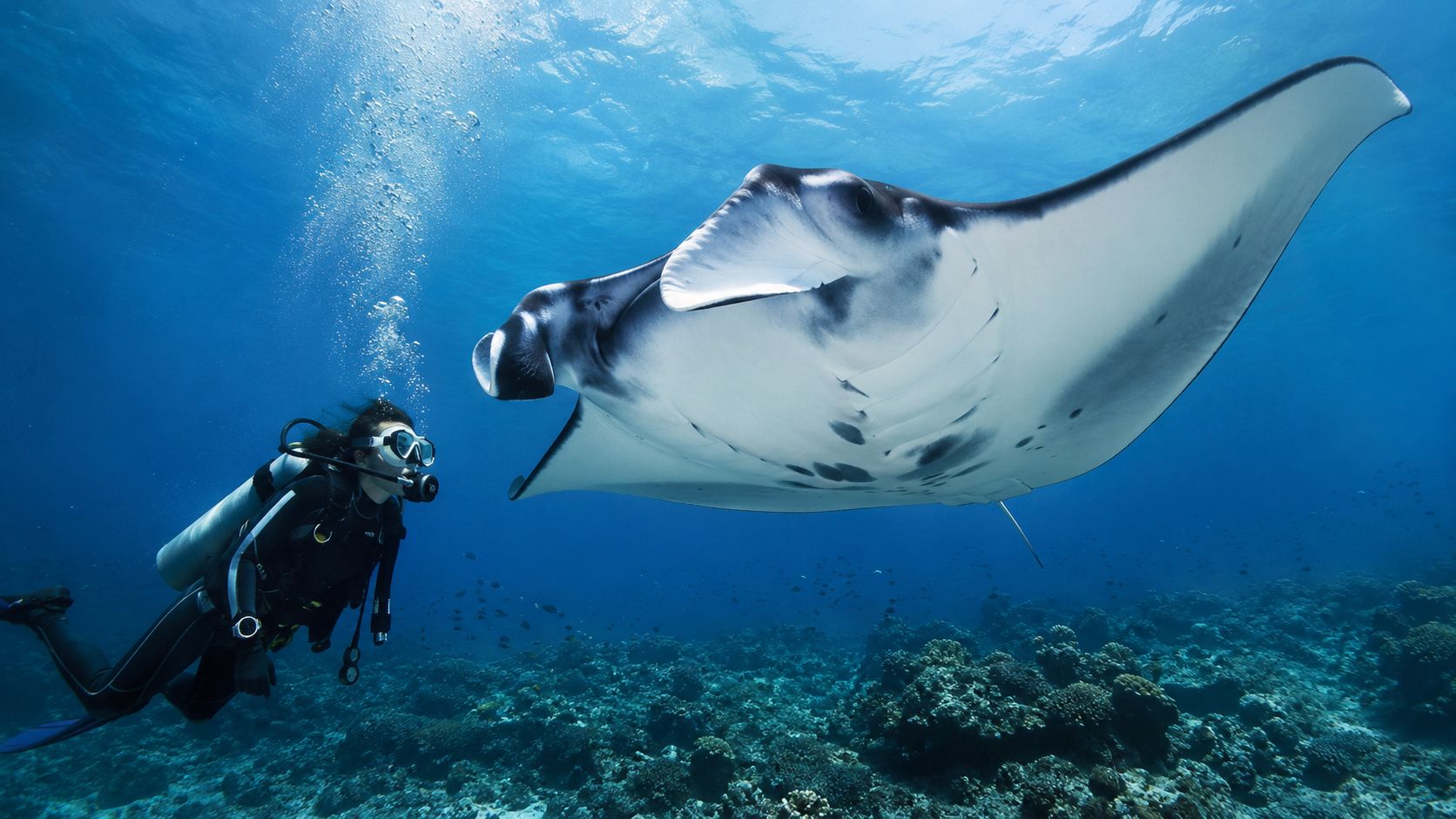
Manta rays have a protective mucus layer that shields them from pathogens. Human contact removes that layer and raises the risk of infection, which is why reputable operators use a strict no-touch protocol and run the encounter as passive observation, as explained in this article on diving responsibly with manta rays in Hawaii.
The rules that actually improve the dive
People sometimes hear “passive observation” and assume it's only about conservation. It also improves the quality of the encounter.
- Stay in your lane: Chasing a manta usually pushes it off the light path.
- Keep your hands in: Reaching changes the animal's line and can spoil a close pass.
- Control your fins: Sediment in the water reduces visibility and weakens the feeding cone.
- Follow the guide's light instructions: Random flashlight movement makes the scene less organized.
A respectful diver gets better manta behavior. That's the trade-off people miss. Restraint is not giving up the experience. It's how you get the best version of it.
Certification and comfort level
For scuba, Open Water Diver is the minimum, though some operators may ask for more experience or night-diving comfort because of the low-light setting and the possibility of anxiety in the dark. That's sensible. A manta dive is shallow, but it's still a night dive. You should be able to manage your buoyancy, mask, and breathing without drama.
If you want to sharpen your habits before the trip, this guide to responsible considerate diver etiquette is worth reading.
Some divers decide they love night diving and want a bigger challenge afterward. In that case, the Blackwater night dive is a very different experience, and more advanced guests often look at the premium advanced 2-tank trip for longer-range sites and stronger conditions.
Booking Your Tour and Practical Tips
You want the night to feel calm before you ever hit the water. That usually comes down to booking the right boat, the right site, and the right format for your group.
Start with the questions that directly affect the experience. Ask which manta site the boat is running, how the crew manages diver and snorkeler flow, how long the ride is, and what happens if conditions change after departure. In Kona, those details matter more than polished marketing copy. Garden Eel Cove is usually the smarter pick because it gives both divers and snorkelers a more organized encounter, with a setup crews can run cleanly and consistently.
Kona Honu Divers runs dedicated manta trips for both scuba divers and snorkelers on the Big Island. If you are comparing trip styles, departure logistics, and site options, their page on manta ray tours on the Big Island is a useful place to start.
What to bring and what to skip
Pack light. A crowded deck at night gets messy fast, and simple gear choices make the whole trip smoother.
- Bring a towel: You will want it on the ride back.
- Pack a dry layer: Even warm days can end with a cool boat ride after a still night dive or snorkel.
- Use a compact camera setup: Small rigs are easier to manage in the dark and less likely to interfere with the group.
- Skip extra lights unless the crew approves them: Poorly aimed video lights can scatter the viewing pattern and distract other guests.
- Leave the photo chase behind: Divers and snorkelers who stay stable usually get the best passes and the cleanest shots.
I tell guests this all the time. The person trying hardest to force the moment usually misses it. Hold position, keep your movements quiet, and let the mantas do the work.
Seasickness prep that works better than wishful thinking
If you are prone to motion sickness, treat it before boarding. Waiting until the boat is already rolling puts you behind the problem.
Common options include Ship-EEZ Seasickness Patch, Dramamine pills, Bonine pills, Sea Band wristbands, and Ginger chews.
A steady guest has a better night. Breathing settles down, briefings make more sense, and the in-water portion becomes something to enjoy instead of something to endure.
Frequently Asked Questions About Manta Diving
What's the best time of year to see mantas in Kona
Year-round. Kona's resident manta population doesn't migrate, which is why the area is known for consistent encounters. Winter can bring rougher seas and more cancellations, while summer often feels easier for guests on the boat.
What if we don't see any mantas
Sightings are highly reliable in Kona, but these are still wild animals. Ask your operator about their specific policy before booking rather than assuming every company handles a no-show night the same way.
Is diving or snorkeling better
Neither is objectively better. Divers watch mantas from below as they fly through the light. Snorkelers watch the feeding passes from above. Choose based on certification, comfort in the dark, and which viewing angle sounds more appealing.
How cold is the water for a night dive
Water temperature changes with season, so ask your operator what exposure protection they recommend for your trip dates. A proper wetsuit choice matters more at night because people cool down faster when they stay relatively still during the encounter.
If you want manta ray diving in Hawaii done with good site selection, clear briefings, and a strong focus on respectful in-water behavior, book with Kona Honu Divers. The right crew and the right site make all the difference when the lights go on and the first manta appears.