
A manta ray dive in Kona may be the evening you've planned your Big Island trip around. It's natural to wonder whether the rays will show, whether you should dive or snorkel, and what it's like to enter the water after dark. The useful starting point is that this is a wildlife encounter shaped by conditions, not a performance on a schedule.
Kona's resident mantas return to familiar feeding locations, but the number of rays varies with plankton and site conditions. Choosing a well-organized viewing area, listening closely to the crew, and leaving the animals room to feed can make the experience calmer and more respectful, whether you're watching from the seafloor or the surface.
Discover the Kona Manta Night Experience
The boat settles at a manta site after dark. The crew establishes a lighted viewing area, and the group gets into position. If a manta arrives, it may glide through the light, turn, and feed on plankton. From below, the moment can feel surprisingly quiet: you're watching an animal move through the water column while your job is to stay still and keep its path open.
That encounter isn't guaranteed. The lights attract plankton, which can draw feeding mantas, but they don't summon rays on command. Plankton availability, current, sea state, and conditions at the site all influence activity. A calm night may still bring a quiet viewing area; an active feeding group can also change in size as the evening unfolds.
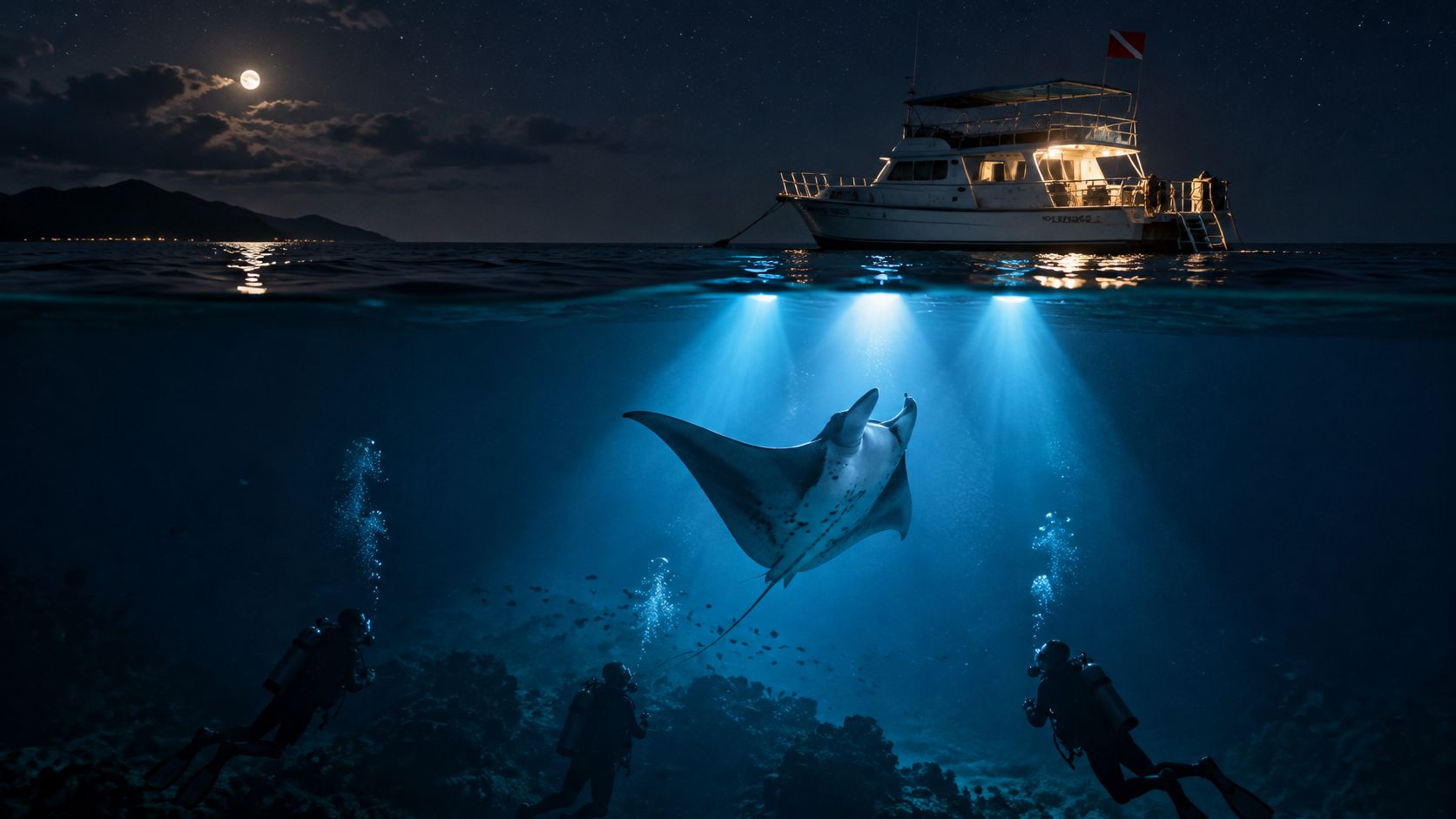
For divers, Garden Eel Cove, also called Manta Heaven, is a strong choice because its protected setting and broad sandy viewing area help crews organize the group without asking divers to settle on living coral. The open water above the sand gives feeding mantas room to pass, while surrounding reef adds interest on the trip. Its layout supports a clear viewing position, not a promise of more rays on any particular night. Learn about scuba diving tours in Kona and explore manta ray dive and snorkel tours.
Kona Honu Divers offers a guided manta night dive with a briefing and equipment support, and its two-tank option combines an afternoon reef dive with the night encounter. These are options to compare with other operators by asking how they handle changing conditions, group positioning, and a quiet manta night.
Understand Why Mantas Visit Kona
Kona's night encounters take place within a recurring feeding system. Reef mantas visit familiar locations, where plankton gathers in the water. Lights can make that plankton easier for people to see and may attract it into a concentrated area, but the rays' presence depends on food and conditions, not on a fixed appointment.
A University of Hawaiʻi study analyzed community-sourced photo-identification records from 2010 through 2022, covering 13 years at Garden Eel Cove and Keauhou. The dataset included more than 23,000 sightings of 167 individually identified reef manta rays. Garden Eel Cove consistently supported larger aggregations, while Keauhou was visited disproportionately by females, suggesting the locations may serve different ecological functions. Read the University of Hawaiʻi study.
Think of Garden Eel Cove's sandy staging area as a natural amphitheater. Divers can settle in a defined place while the feeding column remains open above them. The crew can organize the group around the viewing lights, and the animals can move through the open water without divers needing to spread across the reef. The layout helps structure the experience, but it doesn't control how many mantas visit.
Why a fixed season isn't the whole answer
The study found that seasonal and year-to-year changes in aggregation size tracked zooplankton density. In practical terms, prey availability is a primary driver of manta activity. That makes “Which season guarantees the most rays?” less useful than “How does the operator respond when conditions change?”
Kona's resident population means mantas may be present year-round. It doesn't mean a large feeding aggregation will appear every night. Ask the crew how they describe recent activity and what options are available if conditions are poor. A clear answer should distinguish the possibility of seeing resident animals from a promise of a particular encounter.
Prepare for Your Manta Ray Dive
Start with your own comfort and experience, then confirm the details of the trip. A nighttime boat ride and ocean entry can feel different from a daytime dive, so don't assume that familiar routines will apply. Tell the operator about relevant health concerns, medication questions, or limited experience in the water, and follow its advice on whether the activity is appropriate for you.
If you're diving, confirm the certification and experience requirements before booking. You'll need to manage your breathing, buoyancy, depth, and signals while following the guide's positioning instructions. Snorkelers have a different task: remain at the surface, hold their position as directed, and be comfortable using a mask and snorkel in dark water.
Seasickness is easier to plan for before boarding. If you're prone to nausea, speak with a healthcare professional about suitable options and review this guide to avoiding seasickness on a small boat.
Pack for comfort, not guesswork
Wear swimwear under your clothes if that suits the check-in process. Bring a towel and a change of clothes for after the trip, and use reef-safe sunscreen if you'll be outside before sunset. Have identification available if the operator needs it for check-in or transportation. Ask what equipment is provided; masks, exposure gear, and dive lights are generally handled through the dive operation, but inclusions can differ.
| Participant | Confirm Before Booking | Bring or Prepare |
|---|---|---|
| Certified diver | Certification, experience, health requirements, and site-change policy | Swimwear, towel, dry clothes, and comfort with night-diving procedures |
| Snorkeler | Swimming requirements, age or ability criteria, flotation, and surface setup | Swimwear, towel, dry clothes, and confidence floating in the water |
| Photographer | Rules for lights, camera use, positioning, and any gear limits | Tested housing, batteries, and a plan for steady, non-intrusive shooting |
Before paying, confirm the meeting time, the best channel for cancellation or schedule updates, and what happens if sea or site conditions lead to a change. Ask what the operator does if manta activity is low, and keep your expectations flexible. A useful packing list can't replace a clear briefing or an honest conversation about the conditions.
Follow the Night Dive From Boat to Return
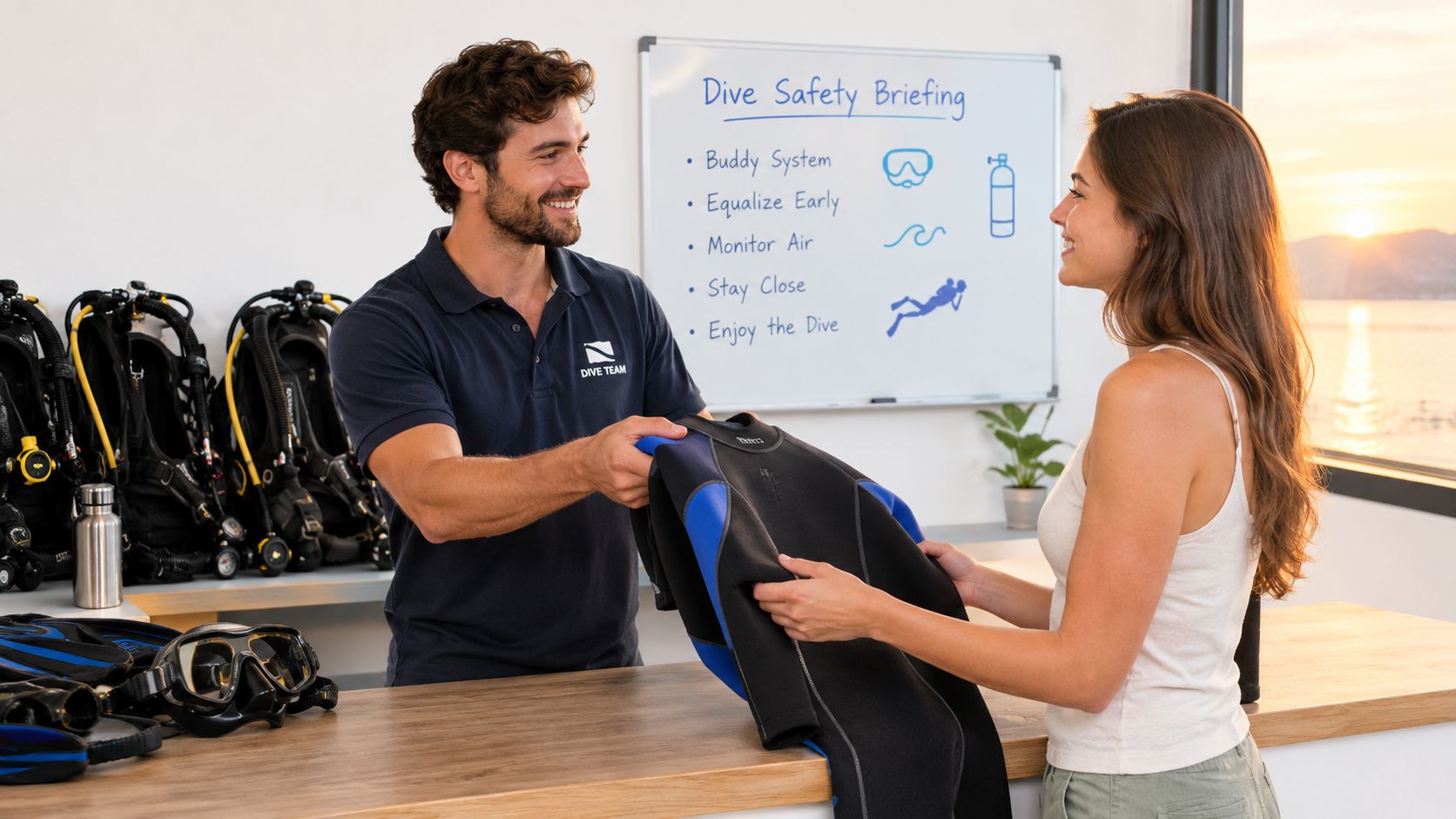
Check-in is the time to ask practical questions, not the moment to guess. The crew should explain the boat plan, equipment, entry and exit procedures, and how the group will position itself. Pay attention to the wildlife briefing, even if you've done night dives before. The light arrangement and rules around feeding mantas require specific behavior.
Once you're geared up, enter when instructed and stay with the group. Certified divers descend with their guide and settle on sand or another non-living surface. At Garden Eel Cove, divers typically gather on a broad sandy patch at approximately 35 feet, forming a circle around the central lights. That predictable staging area helps keep the reef clear and the feeding column unobstructed. Read more about scuba diving at night.
Divers should keep their movements slow and their position predictable. Hold lights above your head and aim them upward into the water column, following the guide's instructions. Don't shine a beam into a manta's face, swim after it, or move into its feeding route to improve a view. A manta may pass close; don't reach toward it or change position suddenly.
Snorkelers have a separate role. Stay at the surface and direct lights downward as instructed. Don't dive into the feeding column, even if a manta swims beneath you. The surface group and divers below should each leave the animals room to move naturally.
Let the guide manage the sequence
During the observation, monitor your air and signals if you're diving, and follow the guide's direction for when to ascend. Don't stand or kneel on living coral while finding a position; the sandy bottom at Garden Eel Cove provides an alternative. After the dive, exit carefully, keep equipment organized, and follow crew instructions for the return trip.
The non-contact rule is firm: don't touch, chase, ride, block, or interfere with mantas. Contact may remove the protective mucus layer on their skin and leave them more vulnerable to infection. These rules aren't just formalities. They let the animals keep feeding and help prevent collisions in a busy viewing area.
Choose the Right Manta Dive Option
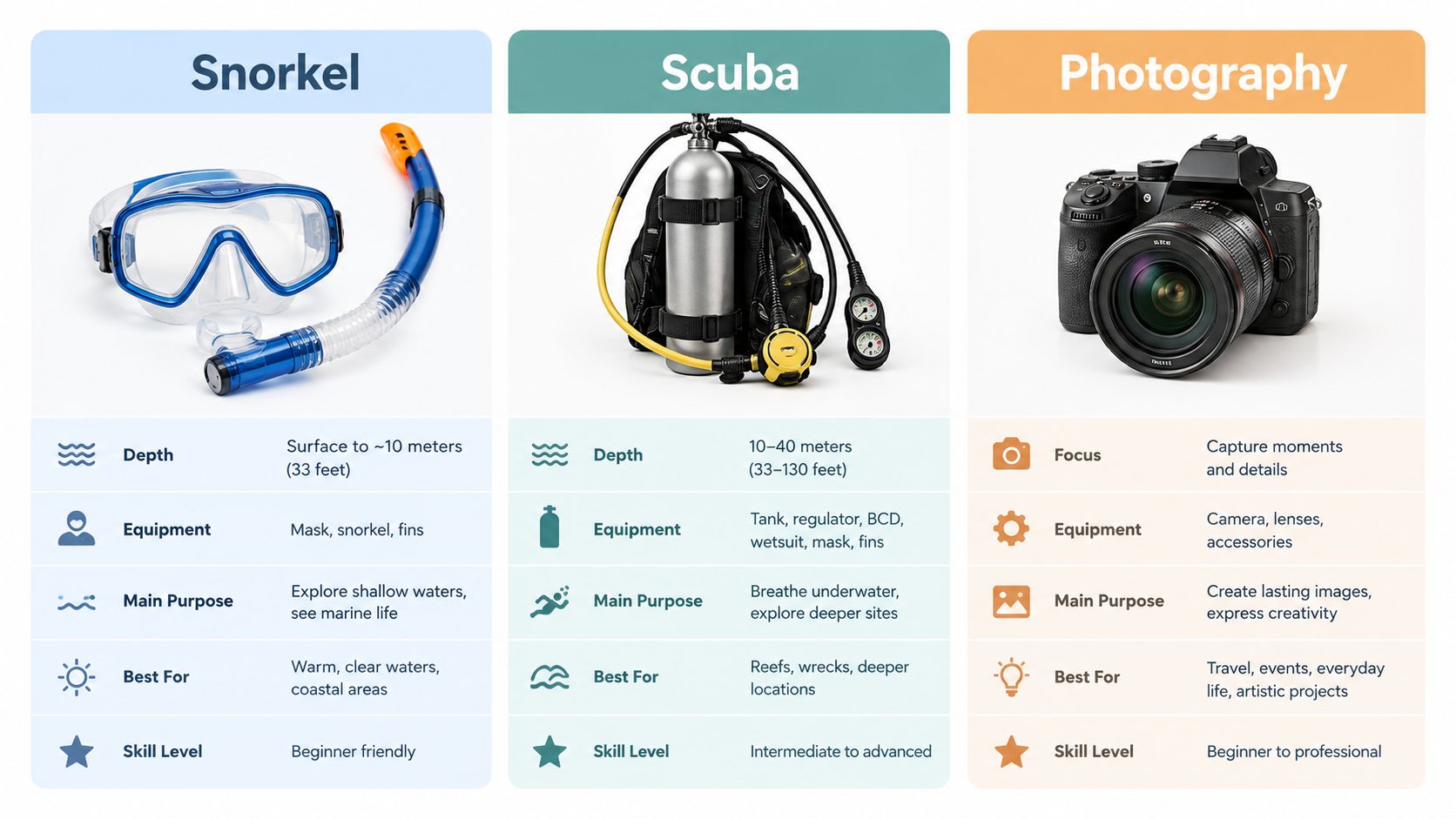
Choose based on your certification, comfort in the water, and the perspective you want. A snorkeler and a scuba diver can share the same wildlife encounter, but they have different positions and responsibilities. Snorkelers remain at the surface; certified divers follow the guide to a designated position below.
| Participant | Credential Needs | In-Water Role | Best Goal | Important Trade-Off |
|---|---|---|---|---|
| Snorkeler | Meet the operator's swimming and ability requirements | Float at the surface and follow the crew's light instructions | Watch from above without scuba equipment | Must stay at the surface and keep out of the feeding column |
| Recreational diver | Valid scuba certification and operator approval | Stay with the guide and hold a stable position on the bottom | View feeding passes from below | Requires comfort with night diving and buoyancy control |
| Underwater photographer | Meet the requirements for the chosen activity | Photograph without crowding or blocking mantas | Capture feeding behavior while respecting distance | Camera handling must not distract from safe positioning |
| More experienced diver | Confirm requirements for each specific trip | Follow the plan for the selected dive | Add a separate advanced or blackwater experience | These are distinct outings, not substitutes for the manta dive |
Photographers should plan around behavior first and equipment second. Test the housing, battery, and controls before boarding; use a stable camera position and choose lighting that suits the conditions. A red-light preference may be practical when permitted, but no camera setting is more important than keeping the ray's path clear.
A manta snorkel-or-dive comparison can help you think through the viewpoint and water skills that suit you. If you want another kind of night diving, a blackwater dive is a separate experience. Divers seeking a more challenging outing can review advanced dive options, while keeping the manta trip's specific requirements in mind.
For a guided manta outing, compare what each operator includes and how its crew briefs divers and snorkelers. Kona Honu Divers offers a manta night dive and a two-tank option that pairs a reef dive with the manta encounter. Ask whether the itinerary, equipment support, and site plan match your needs.
Protect Mantas Through Responsible Diving
Kona's mantas are a localized population, so responsible conduct is part of the encounter, not an optional extra. Genetic research found 318 unique reef manta rays documented around Hawaiʻi Island from 1979 through 2023, and estimated an effective population size of approximately 104 adult breeders, with a 95% confidence interval of 99–110. The first recognized regular Kona resident, commonly identified as Lefty, was recorded in 1979. These figures describe different things: the catalog count is animals recorded over time, while effective population size estimates the breeding group contributing genetically to future generations. Read NOAA's summary of the genetic study.
The research also found no confirmed photo-identification matches between Hawaiʻi Island's catalog and Maui Nui's catalog. A local manta encounter therefore involves animals from a population that researchers describe as relatively localized, not one freely mixing statewide group. That makes simple choices, such as keeping distance and avoiding contact, worth taking seriously.
Practical rule: Watch the manta's direction, keep a clear path ahead of it, and don't reposition to get a closer view.
Crowding around lights can leave animals with less room to feed and create collision risks for people and mantas. Divers should use neutral buoyancy, keep lights above their heads and aim them upward, and stay on sand when possible. Snorkelers should remain at the surface with lights directed downward. Everyone should move slowly and avoid blocking a ray with a body or camera.
Contact may strip away the protective mucus layer on a manta's skin, potentially increasing its vulnerability to infection. A long-term Kona study reported that aggregation patterns remained relatively stable despite increased tourism during the study period, but persistence isn't proof of zero impact. Use considerate diver etiquette to make the viewing area safer and leave the animals free to feed.
Plan Your Ideal Kona Dive Itinerary
For a beginner or snorkeler, make the manta outing the main event rather than trying to fit too much into the evening. Confirm that the operator's ability requirements fit your group, arrive with time to settle in, and listen closely to the surface-positioning instructions. Set a realistic goal: learn the routine and watch respectfully if mantas arrive, rather than judging the trip by the number of animals seen. Leave room to dry off and rest afterward.
For an underwater photographer, prepare the camera before the boat ride. Check the housing seal, battery, lights, and controls on land, then follow the crew's rules for illumination and positioning. Treat the first descent as a chance to establish a stable, non-obstructive position. After the trip, review the images for framing and exposure rather than trying to solve every camera setting in the water.
For an experienced diver, plan the manta outing as one part of a broader dive schedule. Garden Eel Cove offers reef interest around the nighttime viewing area, while advanced diving and blackwater exploration are separate options with their own requirements and conditions. Don't assume these activities happen on the same boat or as part of the same dive. Ask the operator how the itinerary fits your experience and leave space for rest between outings.
Make room for conditions
Check current conditions and the site plan with the operator rather than relying on a seasonal promise. If your travel schedule allows, keep an evening flexible so that a weather or sea-state change doesn't force the manta encounter into an unsuitable plan. For lodging and travel logistics, consult this guide to places for divers to stay on the Big Island.
Before booking, check your certification or swimming readiness, confirm the operator's site and change-of-plan policy, and understand the briefing. Decide how you'll keep distance and avoid interfering with feeding. Finally, ask what the operator recommends if activity is low. Treat the manta sighting as a wildlife possibility, not a guaranteed appointment.
Kona Honu Divers offers guided reef and manta dives, along with separate advanced and blackwater options, so you can ask which trip fits your experience and plans. If Garden Eel Cove's sandy staging area and reef setting suit the kind of night dive you want, visit Kona Honu Divers to review the tour details and check availability.
A manta night dive is most rewarding when you arrive ready to follow the briefing, stay steady in the water, and accept that wildlife sets the pace. Choose your tour around your comfort and certification, then give the rays room to feed if they visit.