
You're probably in one of two places right now. You're either staring at tour options and wondering which manta ray dive Kona trip is worth your evening, or you've already decided to do it and want to avoid rookie mistakes that turn an extraordinary dive into a confusing one.
That's smart. Kona's manta experience is simple once you understand the moving parts. The site matters. Your position in the water matters. Light placement matters. Even small details, like whether you're diving or snorkeling, change the whole feel of the encounter.
Introduction to Manta Ray Dive Kona
Dusk on the Kona coast has a pattern to it. Boats head out as the sun drops, the ocean goes from bright blue to dark cobalt, and then the underwater lights switch on. A few minutes later, the water column starts to glow with plankton. That glow is what brings the mantas in.
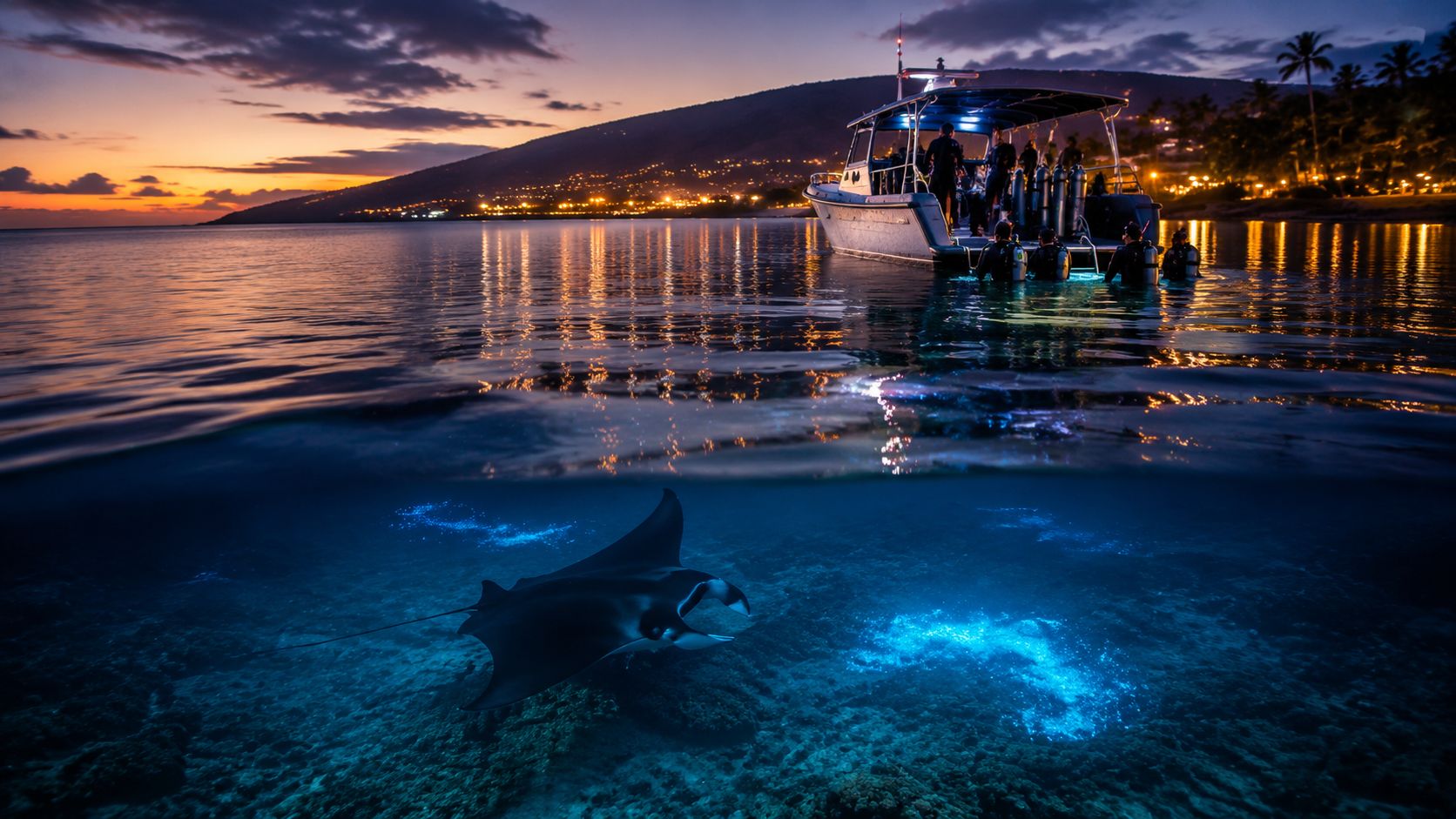
Kona stands apart because the setting is unusually reliable. The Kona Coast sustains a resident population of over 450 individually identified reef manta rays, creating the world's most reliable aggregation site with an 85–90% sighting success rate per excursion, according to this Kona manta overview. That's why so many divers start their planning with a dedicated Hawaii manta ray diving guide.
What confuses many first-timers is that “manta dive” sounds like one product. It isn't. There's the classic night dive, the surface snorkel version, site differences like Garden Eel Cove and Manta Village, and add-on choices for divers who want more than one underwater experience in the same trip.
Practical rule: Think of the manta dive less like a hunt and more like showing up at a feeding station with the right timing, the right lights, and the right behavior.
What to Expect on Night and Day Dives
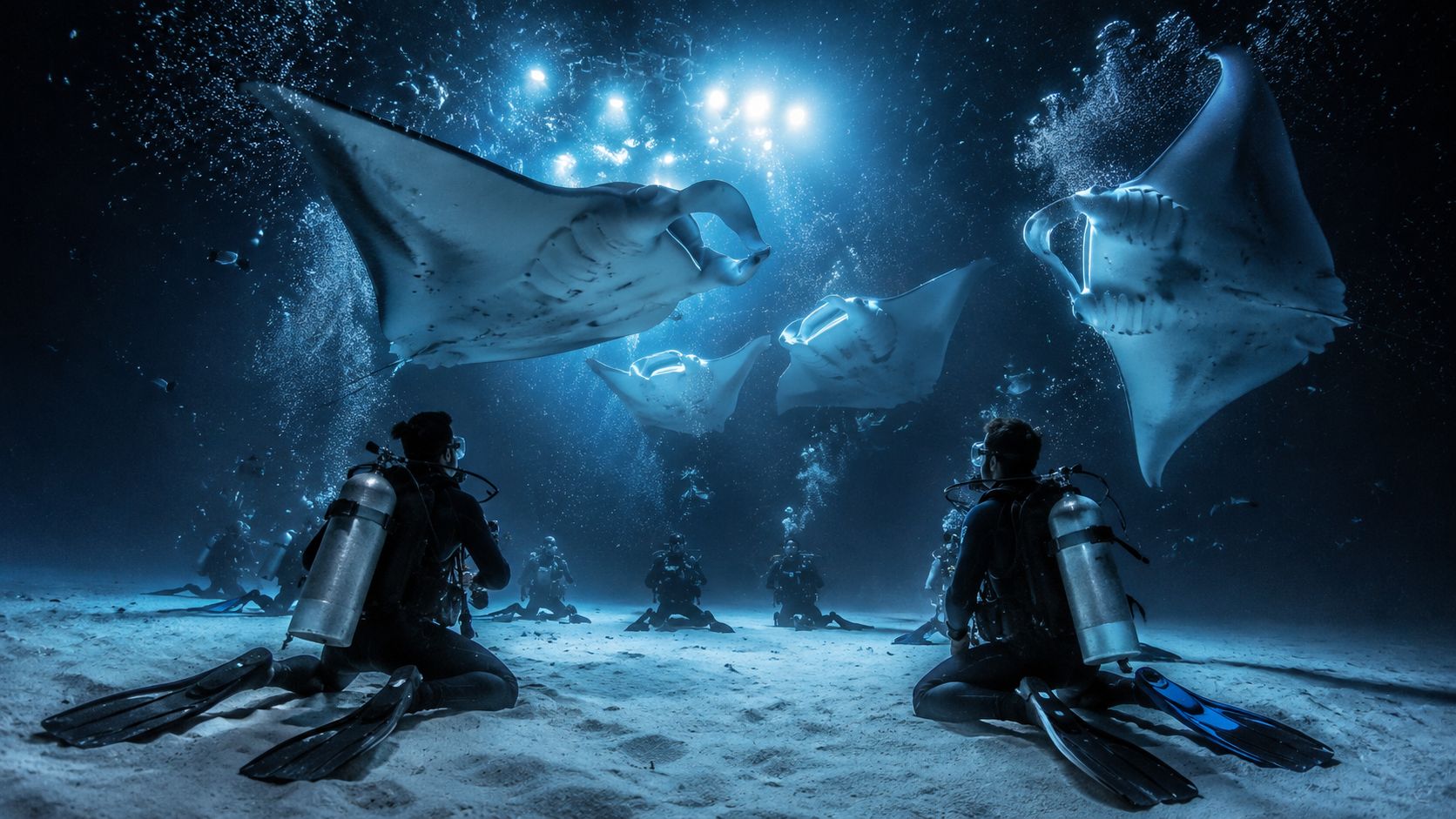
Night dives get the attention for a reason. They're built around a repeatable feeding setup rather than random luck. Divers settle onto the bottom, lights aim upward, and the plankton gathers above. Mantas then loop through that lit water like giant birds feeding in a spotlight.
How the night dive works
At night, divers usually stay in a fixed viewing position rather than swimming after the animals. That surprises people who expect a drifting or exploratory dive. In reality, stillness is part of what makes the system work.
Technical guidance for Kona manta diving calls for divers to hold a static position at 35–40 feet on a sandy bottom, with in-water encounters limited to 45–60 minutes, and with lights directed upward to protect the feeding corridor while snorkelers direct their lights downward from the surface, as described in this detailed breakdown of Kona manta dive procedures.
A good mental picture is an underwater campfire. The group forms a semi-circle around the light source, and the open middle becomes the route where mantas barrel roll, bank, and pass overhead. You're not chasing action. You're sitting where the action naturally organizes itself.
What it feels like underwater
The sensory experience is strange in the best way. Your world shrinks to the cone of light above you, then suddenly expands when a manta sweeps in from the dark edge of visibility. One second you see only plankton. The next second a massive white belly fills your mask view.
Night encounters in Kailua-Kona typically last 45 to 60 minutes with an average of 10 manta sightings per dive, and water temperatures generally range from 70°F to upper 70s°F, based on this overview of the Kona manta night dive. If you want the surface version instead of scuba, this night manta swim option shows how the experience differs.
The best first-time manta divers don't try to “do” much underwater. They settle, breathe slowly, and let the animals come to them.
What about daytime encounters
Daytime manta experiences are much less standardized. You might see mantas while snorkeling or diving on a regular reef trip, but daytime trips don't usually offer the same predictable feeding choreography. That's why most operators build their flagship experience around evening departures.
Here's the practical difference:
| Experience | Typical position | Main appeal | Main limitation |
|---|---|---|---|
| Night scuba dive | On the bottom, looking up | Closest amphitheater effect | Requires scuba certification |
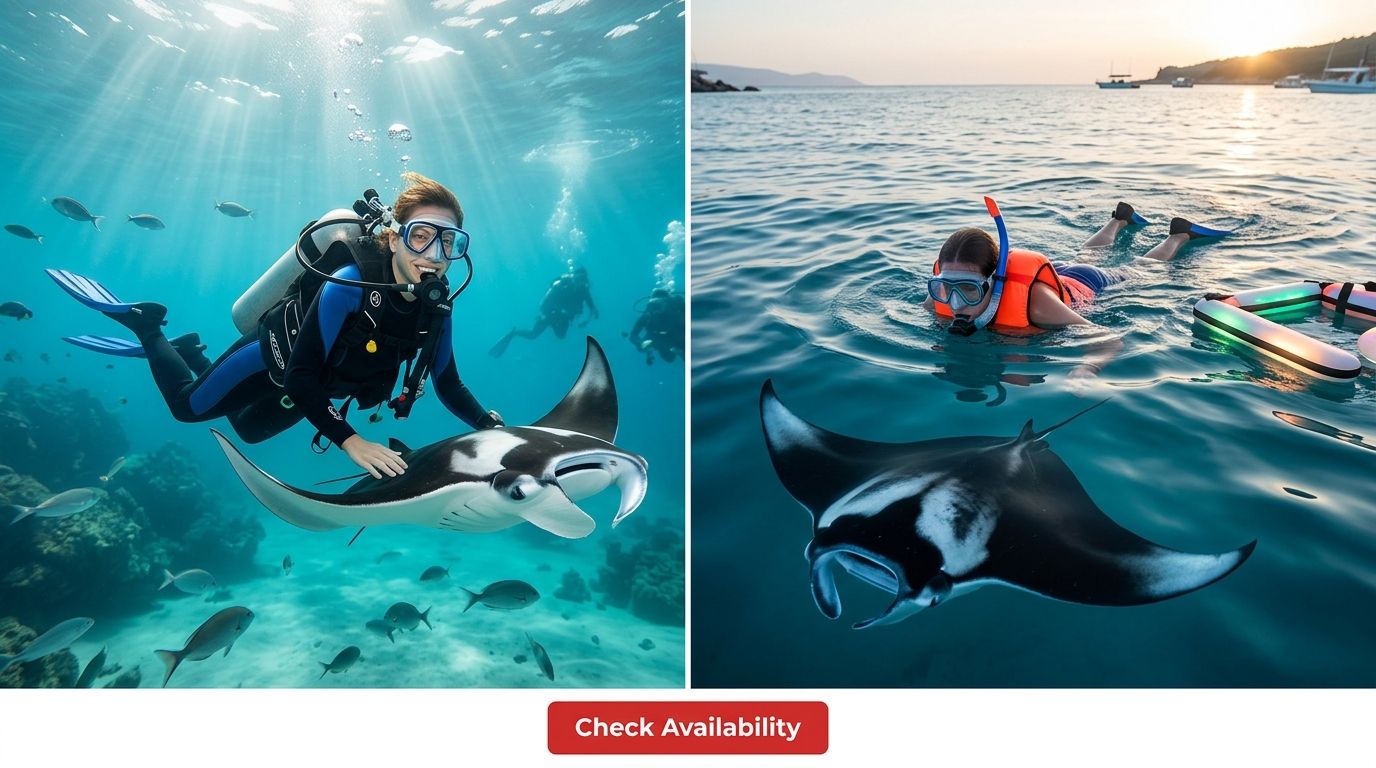
| Night snorkel | On the surface with lit board | Easier for non-divers and families | Different angle of view |
| Day reef dive or snorkel | Mobile, exploratory | Natural reef setting | Less predictable manta interaction |
If you're choosing purely for manta behavior, night wins. If you're choosing for simplicity, snorkeling is easier. If you're hoping for a casual daytime manta sighting, treat it as a bonus rather than the main goal.
Exploring Dive and Snorkel Options
The right format depends on two things. First, whether you're certified and comfortable in low-light conditions. Second, whether you care more about immersion, simplicity, or variety.
Site choice matters more than many guides admit
A lot of broad travel content treats all manta sites as interchangeable. They aren't. Garden Eel Cove is the superior choice for manta ray dive tours due to its protected location, better viewing area, and healthier surrounding reefs compared to Manta Village, according to this site comparison of Big Island manta locations.
That matters because layout changes your entire experience. A protected site usually means a more controlled setup, more comfortable positioning, and a cleaner viewing lane. For scuba, bottom topography matters even more because divers need a stable place to settle without stirring sediment or bunching up awkwardly.
If you want the surface option, this manta ray snorkel page helps show how the snorkel format is organized.
Which option fits which traveler
Use this quick filter:
- Certified diver who wants the classic experience: Choose the two-tank manta dive format. It gives you a dusk reef dive first, then the night manta portion.
- Non-diver or mixed family group: Choose the snorkel version. It removes scuba logistics and still gives you a strong overhead view.
- Experienced diver who wants more than mantas: Pair the manta trip with an advanced long-range dive on another day or look at a blackwater night dive if pelagic larvae and open-ocean night diving interest you.
One practical point often missed in booking comparisons is crowd feel. Some divers want maximum odds and don't mind a busier scene. Others want a cleaner setup with less chaos. That's where Garden Eel Cove tends to stand out for many scuba-focused travelers.
You can browse general Big Island diving tours or go straight to the dedicated manta ray dive tours page if mantas are your main target.
Logistics and Booking with Kona Honu Divers
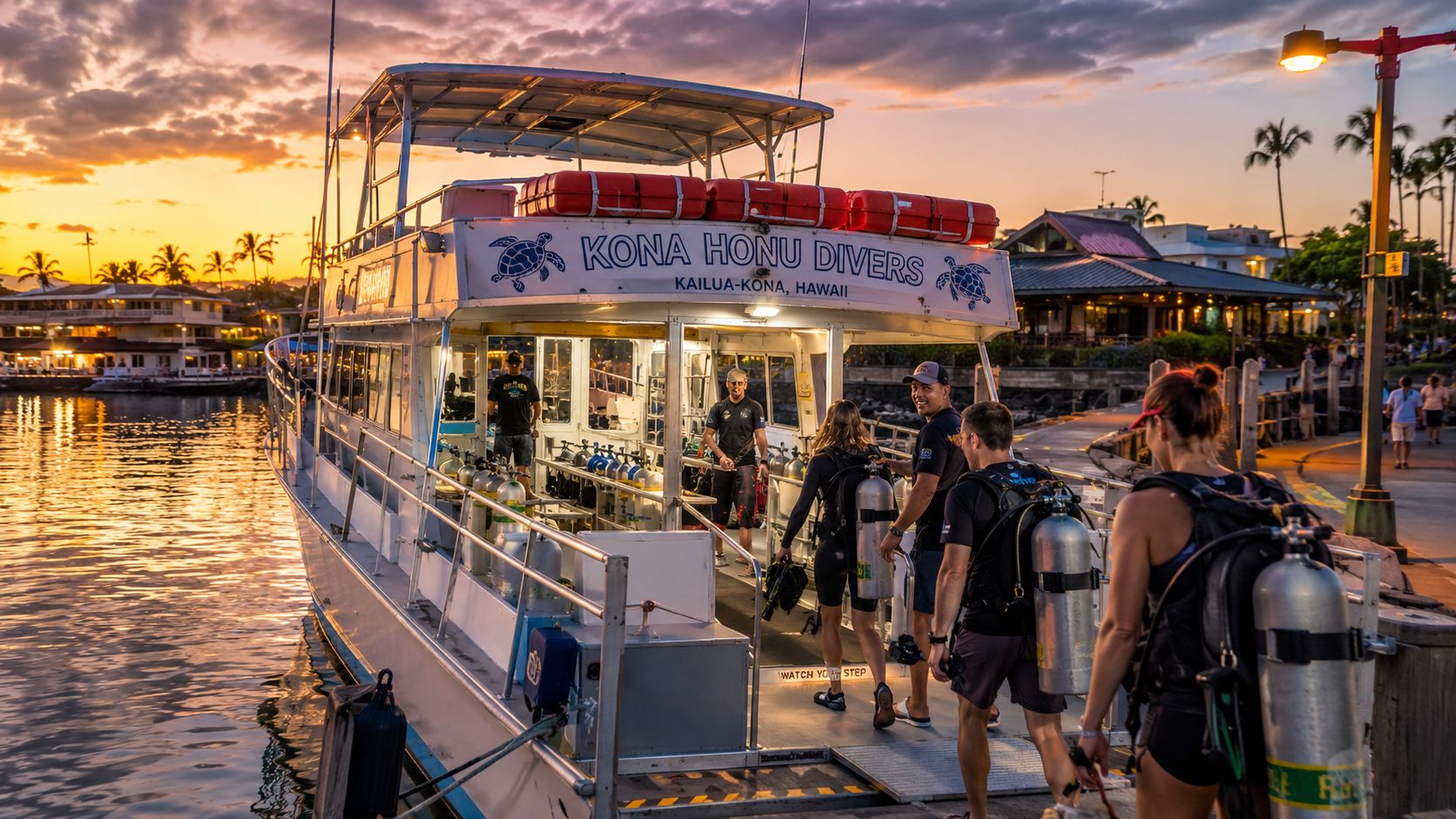
Most confusion about booking comes from people treating the manta dive like a short sunset cruise. It isn't. You need time for check-in, boat loading, the safety briefing, gear setup, transit, and the in-water portion.
Timing the evening
The operating window is broader than newcomers expect. The entire operational window spans 3–4 hours, with departure typically between 4:30–6:00 PM to align with sunset and peak plankton activity, as noted in this article on the Kona manta night dive schedule.
That means you shouldn't book a rushed dinner before the trip or a tight evening commitment after it. Build the whole evening around the dive. You'll enjoy it more and avoid arriving flustered.
Booking details that matter
When comparing operators and departure options, ask these questions:
- Meeting logistics: Where exactly do you park, and how early do you need to arrive for check-in?
- Gear handling: Are rentals fitted before departure or after boarding?
- Trip format: Is the manta portion a standalone dive or part of a two-dive evening?
- Policy clarity: What happens if weather changes, and how are reschedules handled?
- Extras for certified divers: Some companies offer package options, nitrox, or discount structures tied to broader dive bookings.
Kona Honu Divers offers Big Island dive tours and a dedicated manta night dive and snorkel booking page, which can help if you're comparing formats in one place.
A simple planning sequence
If you like checklists, use this order:
- Choose dive or snorkel first. Don't start with price. Start with the format you'll enjoy.
- Pick the date early in your trip. That gives you room if weather shifts.
- Keep the evening open. Manta departures run on ocean timing, not dinner reservation timing.
- Ask about comfort details. Boat ride length, gear storage, and post-dive warmth matter more than most first-timers realize.
Gear Certification Safety and Conservation
This is the part that turns nerves into confidence. Most first-timers don't struggle because the dive is difficult. They struggle because they don't know what “good behavior” looks like underwater at a manta site.
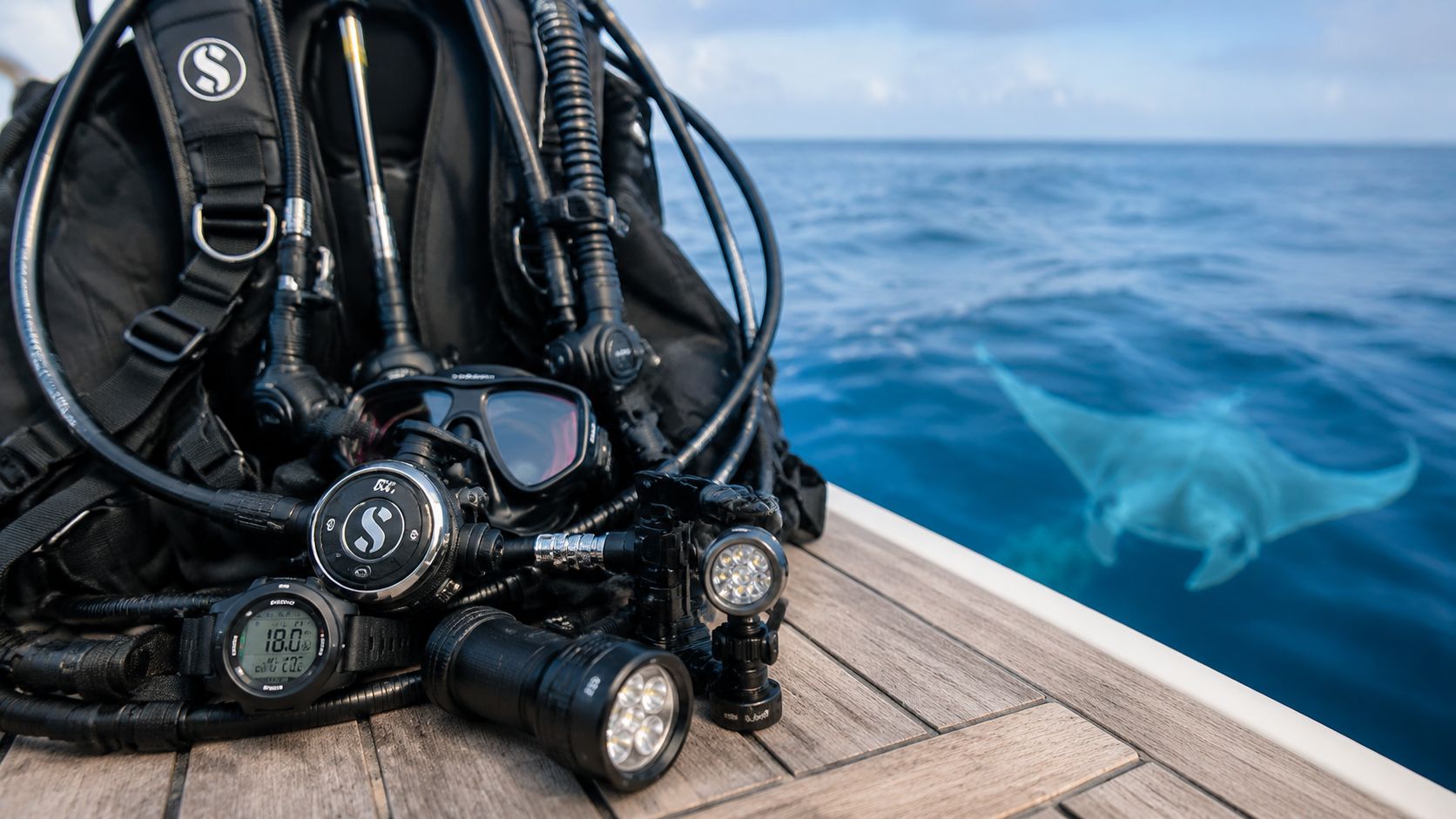
What to bring for scuba and snorkel
For scuba divers, the core kit is standard but the use of it is specialized on this dive.
- BCD and regulator: You need stable buoyancy and calm breathing more than athletic movement.
- Exposure protection: A wetsuit helps because you'll spend much of the dive relatively still.
- Dive light: The manta setup depends on light discipline, not random flashlight waving.
- Mask and fins: Comfort matters. A leaking mask becomes much more annoying at night.
For snorkelers, the list changes:
- Mask and snorkel: Fit matters because you'll spend time face-down at the surface.
- Fins: Helpful for positioning, but you're usually not swimming laps around the site.
- Flotation or board system: The lit board is part viewing platform, part light source.
- Warm layer for the boat ride back: People often forget this and shiver after a great experience.
Certification and readiness
A certified scuba diver can usually join a manta night dive if the operator is comfortable with their experience level and the diver can follow instructions well. If you haven't been in the water for a long time, a refresher is often the smartest move.
Night diving compresses your attention. Tasks that feel easy in daylight can feel clumsy after dark. Equalizing, clearing a mask, checking your gauge, and settling your buoyancy all need to feel automatic enough that you can stay relaxed.
If you haven't dived recently, don't test your memory on a night boat. Refresh first, then enjoy the manta dive instead of wrestling your gear.
The underwater rules that protect the experience
Kona manta diving works because people follow procedure. The key protocols include maintaining a semi-circle formation, keeping the water column open for the animals, avoiding direct bubble exhalation into the mantas' faces, and keeping fins still so the sandy bottom doesn't cloud the feeding zone, according to this explanation of in-water manta protocols.
The simplest way to remember it is this:
| Do | Avoid |
|---|---|
| Stay still on the bottom | Swimming up into the feeding lane |
| Aim your light as instructed | Sweeping the beam around randomly |
| Keep fins quiet | Sculling or kicking sediment |
| Watch with your eyes | Trying to touch or block the animals |
Conservation comes first
The Manta Pacific Research Foundation has identified more than 200 mantas in Big Island waters and supports strict engagement rules, including the golden rule of no touching the animals, as summarized in this guide to manta ray diving in Hawaii.
That rule isn't just ethics talk. Mantas are there to feed. The cleaner and calmer the setup, the more naturally they behave. Treat them like wild animals passing through a shared space, not performers at a show.
Best Seasons Conditions and Photography Tips
A lot of visitors want one neat answer to “best time of year.” Kona doesn't work that way. The more useful question is what kind of conditions you care about most.
Reading conditions the practical way
Kona supports one of the world's most accessible manta populations, with an 80 to 90 percent sighting success rate on night dives at the primary sites, according to this Hawaii manta dive overview. But sighting success doesn't mean every night looks the same.
Plankton concentration shifts. Currents change the feel of the site. Some nights look like a perfectly lit ballet. Other nights feel quieter and less organized. That's normal, and it's one of the lesser-known truths many glossy guides skip.
Research-backed commentary on current coverage also points out that seasonal plankton variability can produce skipped or low-activity scenarios when currents shift or water temperatures fluctuate. That's why experienced travelers keep expectations realistic rather than treating every outing like a guaranteed highlight reel.
If you want broader context for planning other dives around your trip, this Kona Big Island diving guide is a helpful companion.
Photography without overcomplicating it
Manta photography rewards restraint. You're shooting large, graceful animals in a dark environment filled with reflective plankton. That means your biggest enemies are backscatter, blown highlights, and frantic finning.
A practical setup often includes:
- Wide-angle lens: Mantas can pass very close, and you need the full shape in frame.
- Manual exposure: Many shooters start around 1/60s at f/2.8 with a higher ISO, then adjust based on how strong the lights are.
- Stable body position: The less you move, the sharper your images tend to be.
- Thoughtful light placement: Keep artificial light balanced so the plankton glow looks natural instead of washed out.
Good manta photos usually come from patient divers who pick one composition zone and wait, not from people spinning in circles trying to shoot every pass.
For compact camera users, don't chase perfection. Prioritize clean silhouettes, a visible cephalic fin shape, and one well-timed pass through the brightest part of the water column.
Packing Checklist and Expert Tips
Packing for a manta ray dive Kona trip is mostly about preventing small annoyances. The dive itself may be smooth, but forgetting one comfort item can dominate your memory of the evening.
What to pack
- Travel basics: ID, reef-safe sun protection for daytime boat exposure, dry clothes, and any booking confirmations you like to keep handy.
- Dive essentials: Certification card, logbook if needed, wetsuit if you prefer your own fit, dive computer, and defog.
- Photo kit: Charged batteries, extra memory cards, lens cloth, and a dry bag or zip bag for electronics.
- Boat comfort items: Towel, reusable water bottle, and a light layer for the ride back.
If you're prone to motion sickness, pack before it becomes a problem. Common options include the Ship-EEZ Seasickness Patch, Dramamine pills, Bonine pills, Sea Band wristbands, and Ginger chews.
Small habits that help
Try these:
- Pre-sort your gear: Put night-dive items together so you're not digging around on a dark deck.
- Use simple dry storage: A zip bag for wallet, keys, and phone beats loose items rolling around a bench.
- Don't overpack heavy clothing: Kona evenings usually call for comfort, not bulk.
- Rent selectively: If you're traveling light, many divers bring only personal-fit items and use local rental gear for the rest.
The goal is to arrive calm, not overloaded.
FAQs and Why Choose Kona Honu Divers
Some of the best questions come up after people understand the basics. They're no longer asking “What is the manta dive?” They're asking how to make the right version of it fit their trip.
Common questions first-timers ask
Can I do the manta experience if someone in my group doesn't dive?
Yes. Mixed groups often split between scuba and snorkel formats depending on certification and comfort.
Does a full moon ruin the dive?
Moon phase changes the feel of the night, but operators still run trips based on site conditions, visibility, and safety rather than one simple moon rule.
Can I pair mantas with more advanced diving?
Yes. Many experienced divers combine the manta evening with a separate premium advanced long-range trip or a blackwater night dive on another day.
What if I'm certified but rusty?
Be honest when booking. A refresher or simpler dive earlier in the trip can make the manta night much more enjoyable.
Why many divers shortlist this operator
Kona Honu Divers is one local option for Kona diving trips. The company states that its crew brings over 200 years of combined industry experience, and it focuses on custom boats, maintained gear, and a wide range of dive formats, according to the publisher information provided for this article.
Those details matter because manta diving rewards smooth operations. On a night boat, the things you notice most are whether the crew communicates clearly, whether gear setup feels organized, and whether the in-water plan is calm and predictable.
If you're choosing between several manta ray dive Kona options, focus on fit. Pick the site that matches your priorities, choose scuba or snorkel based on how you like to experience wildlife, and give yourself enough schedule room to enjoy the whole evening instead of rushing through it.
If you're ready to plan your manta night, explore current trips and schedules with Kona Honu Divers. A well-run manta dive feels simple once the logistics are handled well, and that leaves you free to do the part that matters most, settle in, look up, and watch the mantas fly.