
You're probably in one of two places right now. You've either already decided that a manta ray night dive belongs on your Big Island trip, or you're staring at a long list of tours and trying to figure out which one will give you the kind of experience you'll still be talking about years from now.
That's the right question to ask.
A manta ray dive in Kona isn't just another boat trip. At its best, it feels calm, organized, safe, and almost unreal once you're underwater. At its worst, it can feel rushed, crowded, and less comfortable than it should be. The details matter. Site choice matters. Crew briefing matters. Your own preparation matters.
If you're comparing options, start with the operator's actual manta offerings and broader Kona diving tours. Then look closely at where they run the tour, how they manage guests in the water, and whether their approach puts the mantas first.
The Unforgettable Magic of a Kona Manta Ray Night Dive
The moment most divers remember isn't giant fanfare. It's the silence.
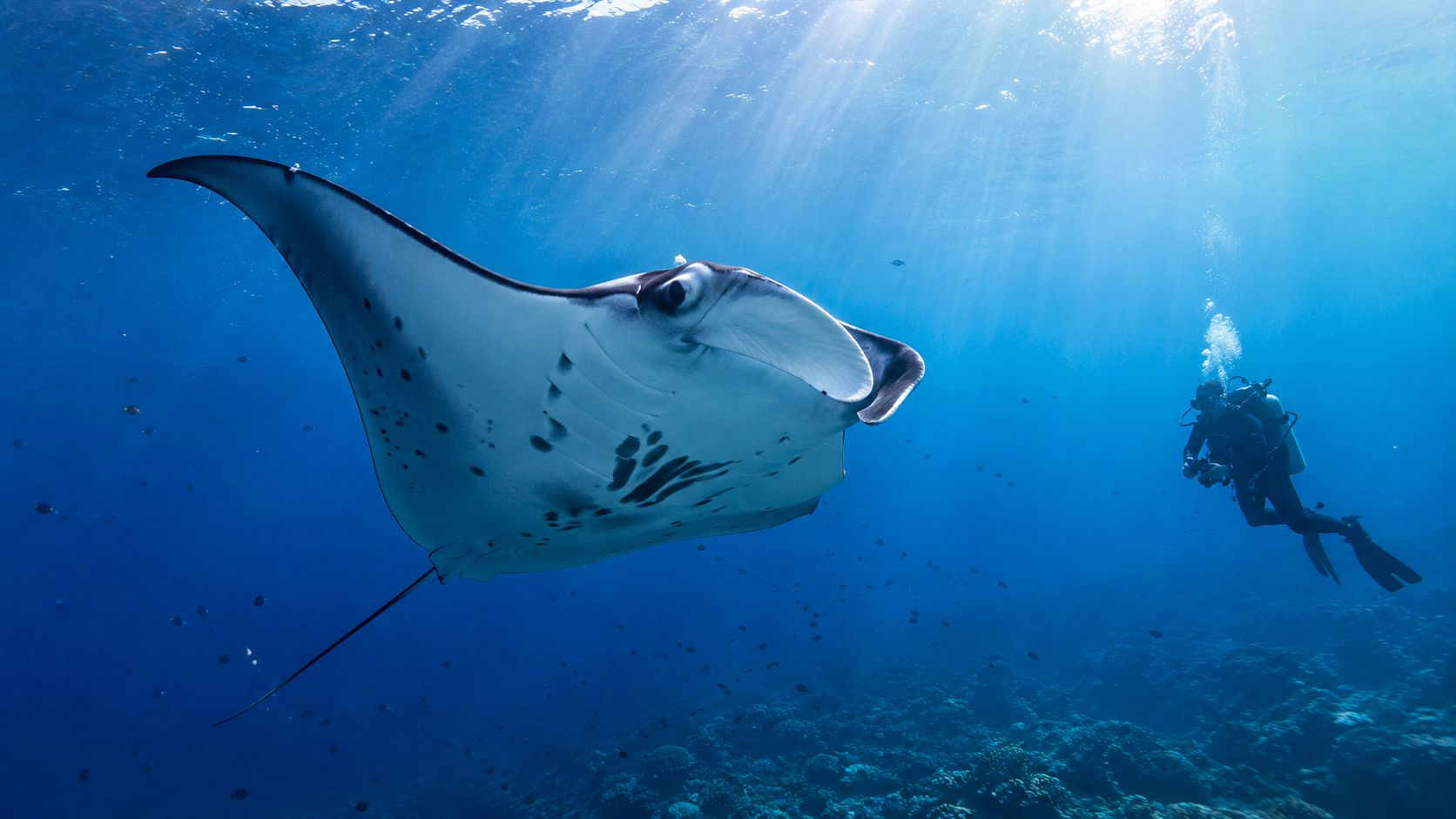
You drop below the surface after sunset, settle in, and watch the beam from the dive lights cut upward through dark water. At first, there's only the glow, your bubbles, and the outline of the other divers. Then a shape appears at the edge of the light. It grows larger without seeming to move fast. A manta glides in overhead, banks, turns, and passes so smoothly it barely looks real.
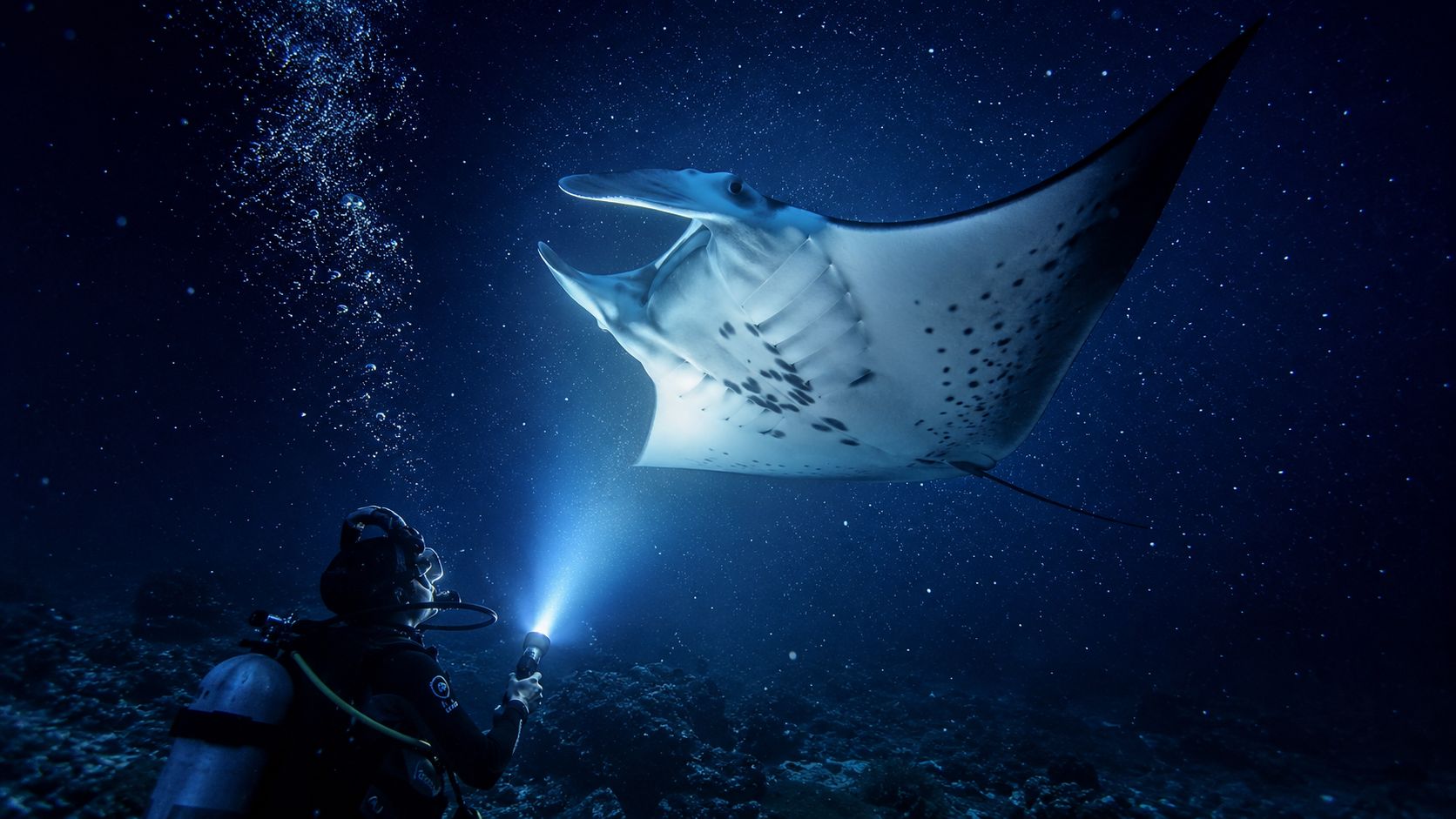
That's why this dive stays with people. There's no noise, no chasing, no chaos when it's run properly. Divers stay low, lights draw in plankton, and the mantas come to feed. What you're watching is natural movement around a simple setup that lets you see it clearly.
What makes Kona different
Kona has earned its reputation because the manta experience here is unusually reliable in feel, simple to understand, and accessible to certified divers who want something beyond a standard reef dive. You're not drifting through the dark hoping to stumble onto a passing animal. You're participating in a carefully managed nighttime encounter built around predictable feeding behavior.
For many guests, the best format is a twilight reef dive followed by the manta dive itself. That sequence helps people settle in, check weighting, relax into night conditions, and enjoy the second part of the evening more.
Practical rule: If a night dive is already outside your comfort zone, choose the operator and site that reduce variables rather than add excitement.
If you're ready to look at a tour built around that format, the 2-tank manta dive and snorkel trip is the right place to start. The rest of the planning comes down to choosing the right site, arriving prepared, and knowing how to behave once the mantas arrive.
Choosing Your Manta Adventure Why Garden Eel Cove Is Superior
Most conversations about the manta ray dive in Kona eventually come down to one decision. Garden Eel Cove or Manta Village.
Both are known manta sites. Both can produce memorable encounters. But if the goal is the most comfortable, controlled, and enjoyable overall experience for a broad range of guests, Garden Eel Cove is the stronger choice.
Why site choice changes the whole night
Garden Eel Cove, also called Manta Heaven, offers a setup that works especially well for a guided manta program. The location is more protected, which usually means a calmer ride and a steadier in-water experience. That matters more than many guests realize. People don't remember a dive as “good” only because mantas showed up. They remember how easy entry felt, how manageable the surface conditions were, and whether they could settle in and enjoy the show.
The underwater viewing area at Garden Eel Cove is another major advantage. There's room to organize divers cleanly around the light field without making the whole scene feel cramped. When the group can stay low and spread out appropriately, the water column above remains open for the mantas to move naturally.
Operators that prioritize this site are usually making a guest-experience decision, not just a routing decision. You can read more about that local perspective in this Garden Eel Cove manta overview.
Kona Manta Dive Site Comparison
| Feature | Garden Eel Cove (Our Choice) | Manta Village (Other Operators) |
|---|---|---|
| Water movement | More protected and often more comfortable | Can feel more exposed depending on conditions |
| Viewing layout | Larger area for the campfire setup and diver positioning | Viewing can feel tighter |
| Guest comfort | Easier for many divers and snorkelers to settle in | More variable comfort level |
| Reef quality nearby | Better surrounding reef environment | Less appealing overall reef setting |
| Overall flow of the tour | Better suited to a calm, organized encounter | More condition-dependent |
What works better at Garden Eel Cove
A good manta dive isn't about packing people into the water and hoping proximity creates magic. It's about giving the mantas space and giving guests a stable platform for observation.
At Garden Eel Cove, what tends to work best is:
- A clear semicircle setup: Divers can stay low and still keep a wide, open stage above them.
- A calmer waiting period: Guests often relax faster when surge and surface motion are less distracting.
- Better reef context: The surrounding area adds value to the earlier portion of the trip instead of making the manta segment carry the entire evening.
- A more comfortable snorkel option too: Even if someone in your group isn't diving, the site still favors an easier overall experience.
The best manta site isn't the one with the loudest reputation. It's the one that lets people get comfortable quickly and gives the mantas room to do what they already want to do.
How the Manta Ray Night Dive Works From Sunset to Starlight
The evening usually starts with golden light on the water, a calm boat ride out of the harbor, and a lot of anticipation. Then the pace settles. A well-run manta charter follows a clear sequence, and that structure is a big part of why guests feel comfortable once the sun goes down.
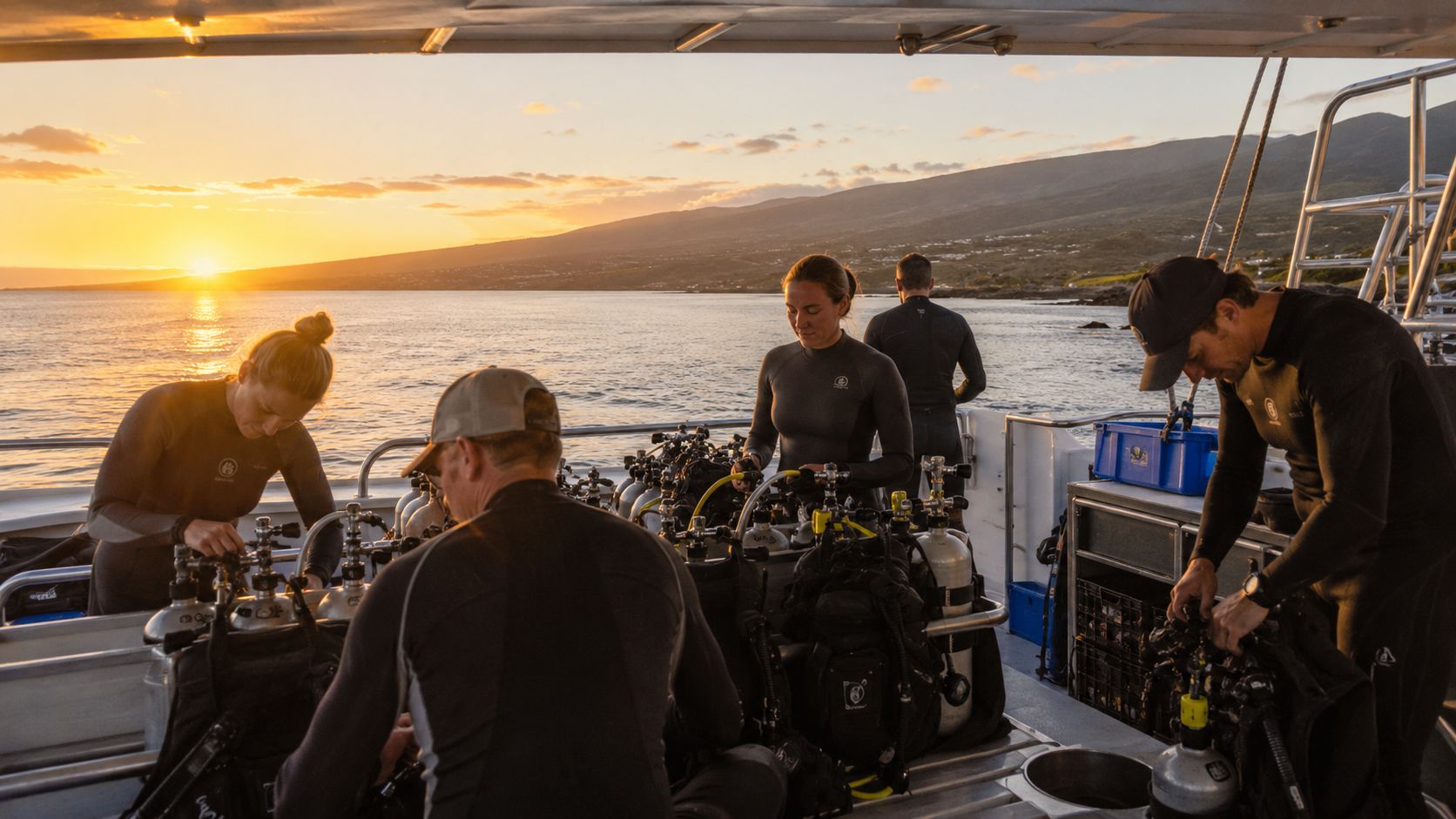
Step one starts before full darkness
On many stronger manta charters, certified divers begin with a dusk or twilight dive before the night portion. That first dive has a purpose beyond sightseeing. It gives divers time to settle in, confirm weighting, slow their breathing, and get comfortable with the conditions while there is still ambient light.
That extra water time matters. Divers who begin the manta portion already relaxed tend to use less air, move less, and enjoy the encounter more. If you're comparing trip formats, it helps to review the operator's full Kona diving tour lineup and choose the option that fits your experience level and goals for the evening.
The briefing shapes the whole dive
A good manta briefing is specific. Crew should cover how the entry works, where divers settle on the bottom, where lights are placed, how to protect the viewing lane, and what to do if surge or equalization slows your descent.
At Kona Honu Divers, this part of the night is treated seriously because small mistakes change the quality of the encounter for everyone. The mantas need open water above the lights. Divers need clear instructions and a simple job.
You should also know what the profile feels like before you book. If you want a clearer picture, read this guide on how deep the Kona manta ray dive is.
Underwater, the setup is simple
Divers descend, settle into the assigned positions, and aim the lights upward. The light attracts plankton. The plankton brings in the mantas.
From there, good diving is quiet diving.
- Descend under control and get into position without rushing.
- Stay low and stable on the bottom where the crew directs you.
- Keep gauges, fins, and cameras tucked in so the mantas have room to pass.
- Watch the water above the lights because that is where the first movement often appears.
- Hold your position and let the encounter come to you.
Guests are often surprised by how little they need to do. The divers who get the strongest experience are usually the ones who stop adjusting, stop chasing angles, and let the pattern develop overhead.
What the feeding pattern looks like
Once the mantas arrive, the tempo changes. A ray glides through the light, banks upward, turns, and returns for another pass. Then another follows. On a good night, the action builds into repeated close flyovers that feel slow, controlled, and effortless from below.
Garden Eel Cove suits this style of dive well because the layout supports a clean viewing area and a more organized campfire formation. That means less scrambling, less crowding, and a better chance for each diver to settle in early instead of spending the first part of the dive trying to find the right spot.
Stay still. Look up. Let the mantas do the work.
When the dive ends, the boat ride back is usually quieter than the ride out. People are warm, tired, and still replaying those passes in their heads. That is usually the sign of a night that ran the way it should.
Your Complete Kona Manta Dive Preparation Checklist
Preparation is where a good trip becomes a smooth trip. Most problems on a manta night come from simple things: people show up cold, hungry, overpacked, underprepared for boat motion, or with camera expectations that don't match the conditions of a low-light wildlife encounter.
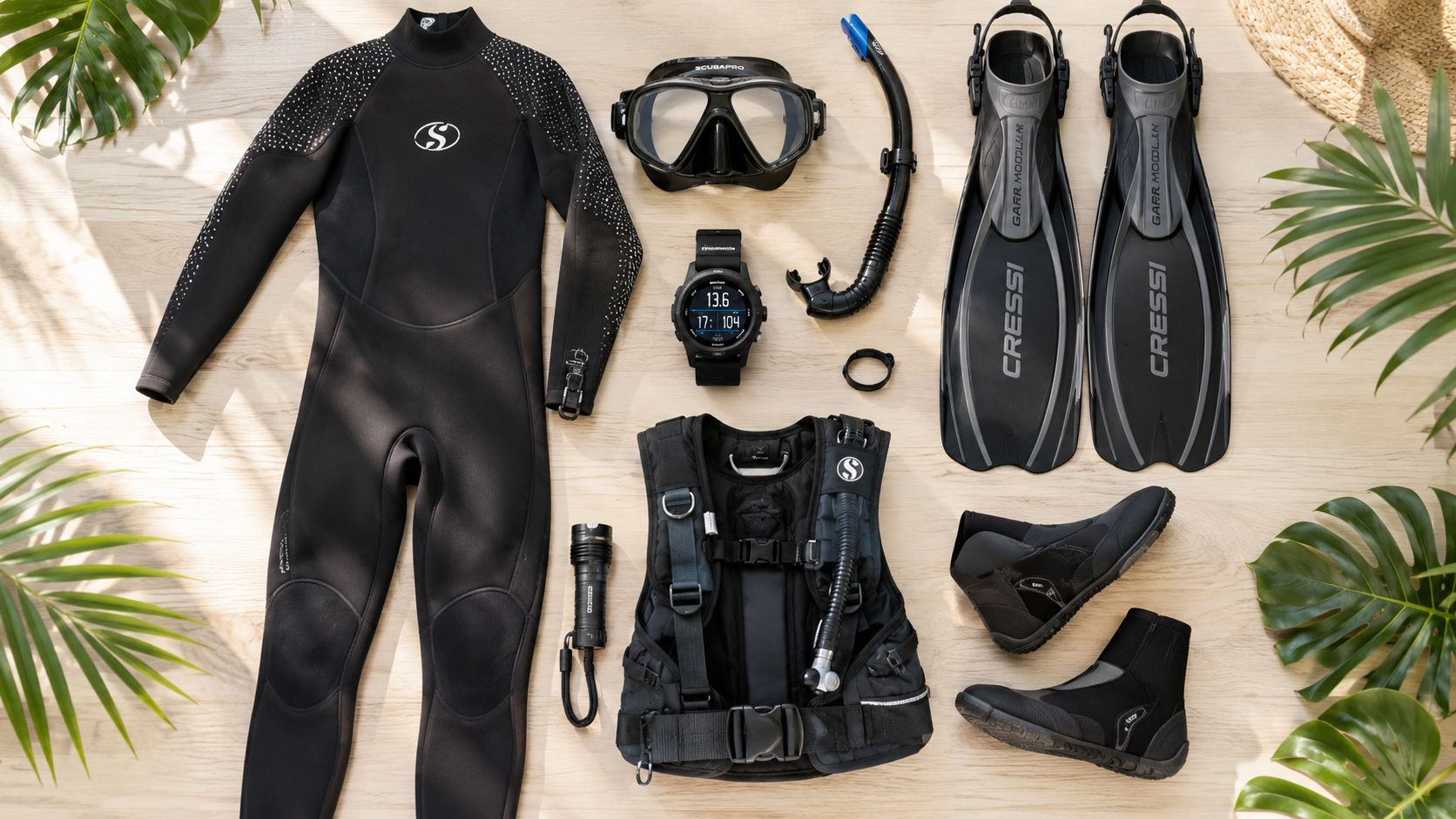
Bring the right things and skip the junk
A manta charter doesn't require a mountain of gear if you pack intelligently.
- Towel and dry clothes: The ride back can feel cool after a night dive.
- Light jacket or warm layer: Even in Hawaii, wet skin plus wind changes the mood fast.
- Certification card: You need to be a certified diver for the dive version.
- Reusable water bottle: Hydration helps more than people think.
- Simple snacks for before check-in: Don't board on an empty stomach, but don't eat a heavy meal right before departure.
- Personal mask if you have one: Familiar gear lowers stress.
- Defog and basic camera prep: Handle this before the boat leaves if possible.
Seasickness planning matters
If you're even mildly prone to motion sickness, plan for it before the boat leaves the harbor. Don't wait to “see how you feel.” By then, you're behind.
Helpful options include the Ship-EEZ Seasickness Patch, Dramamine pills, Bonine pills, Sea Band wristbands, and Ginger chews. If you want a deeper rundown of prevention strategies, this article on how to avoid sea sickness covers the basics well.
What usually doesn't work is improvising at the dock with no sleep, no water, and a giant lunch in your stomach.
Know whether the dive is right for you
Not every visitor should choose the scuba version.
Ask yourself three things:
- Are you currently comfortable diving at night? You don't need to be an expert, but you should be calm underwater.
- Can you follow positioning instructions precisely? This dive rewards control, not roaming.
- Are you recently active as a diver? If you're rusty, consider a refresher before the trip.
If the answer to those is shaky, the snorkel version may be the better choice for this particular experience.
Photography without ruining the encounter
Manta photography is rewarding, yet many divers overcomplicate the night with it. The best approach is usually the simplest one.
- Use a compact setup: Large camera rigs create clutter in the viewing lane.
- Dial in before entry: Don't spend the first half of the dive fumbling with settings.
- Shoot for behavior, not perfection: A graceful pass through the lights tells the story better than a forced close-up.
- Respect the animal first: Avoid blinding, intrusive habits that turn a wildlife encounter into a camera exercise.
Camera advice: If your photo plan makes you less aware of your fins, buoyancy, and spacing, your photo plan is too ambitious for this dive.
The crew briefing will cover the safety rules. Listen closely. On this dive, small mistakes affect everyone around you, including the mantas.
Diving with Kona Honu Divers What Sets Us Apart
The difference between an average manta trip and a well-run one usually comes down to decisions guests don't see at first glance. Boat design. Crew habits. Briefing quality. How the team spaces people in the water. How much urgency they create, or avoid.
That's where operator choice matters.
The practical differences guests feel
Kona Honu Divers runs tours that are built for divers who care about comfort and process, not just the manta sighting itself. The boats are custom dive boats rather than generic ride platforms, which changes the tone of the evening before you even hit the water. Space matters when people are gearing up at dusk. So does a crew that keeps transitions calm and organized.
The team also matters more than most marketing pages can capture. A crew with deep local experience usually spots issues before they become problems. They can tell when a guest needs a quieter explanation, when weighting needs adjustment, and when the group needs structure instead of chatter. If you want to get a sense of the people behind the operation, the diving team page gives useful context.
What tends to work better on a premium charter
Instead of focusing on hype, look at the trade-offs:
- Smaller groups: Better for personal attention and cleaner in-water organization.
- Custom-built dive boats: Better gear flow, easier entries, and more comfort on the ride home.
- Experienced crews: Better briefings, better troubleshooting, and better pacing.
- Included extras where applicable: Early diver discounts and free nitrox for certified divers can add practical value.
- Clear booking path: Easier to match the right charter to your certification and comfort level.
What doesn't work as well is choosing only on price and ignoring the mechanics of the actual experience. A manta tour is short enough that every operational choice becomes noticeable.
Booking without overthinking it
The simplest approach is to book the trip that matches your actual diving profile, not the one you wish you had. If you're comfortable at night and want the full experience, choose the two-tank manta format. If your group includes non-divers, compare the snorkel alternative separately rather than forcing everyone into one plan.
Manta Ray Conservation and Responsible Tourism
A manta encounter only stays special if divers and snorkelers treat it as a privilege instead of a performance.
The most important rule is simple. Passive observation. Stay where you're told, keep your body position clean, and let the animal control the interaction. That rule protects the experience for future guests, but above all, it protects the mantas themselves.
Why respectful behavior matters
Touching a manta ray isn't harmless curiosity. Their skin has a protective coating, and interfering with it can leave them more vulnerable. That's why reputable operators insist on no touching, no chasing, and no trying to insert yourself into the middle of the feeding pattern.
There's another reason to be disciplined. Manta rays have the largest brain-to-body size ratio of any fish, demonstrating a high level of intelligence and curiosity, which is why respectful, passive interaction is so important for their well-being (Manta Trust).
What responsible guests actually do
The idea of being a good manta guest is less complicated than people think.
- Stay in position: Divers stay low. Snorkelers stay at the surface.
- Leave the water column open: The mantas need room to bank, roll, and feed.
- Control your gear: Dangling cameras, fins, and arms create unnecessary risk.
- Follow etiquette beyond this dive: Good habits carry into every marine encounter. This guide to responsible diver etiquette is a useful baseline.
Good manta etiquette isn't passive because guests are less involved. It's passive because restraint is what makes the encounter work.
The light setup itself is not about forcing the mantas into unnatural contact. It attracts plankton, and the mantas respond by feeding in a way that allows people to observe them. When guests stay disciplined, the result feels less like a show and more like being allowed to witness a natural event from the right place.
Frequently Asked Questions About the Manta Dive
Can non-divers still experience the mantas
Yes. The snorkel version is excellent for non-divers, mixed groups, and strong swimmers who want the surface view. You'll typically hold onto a lighted float while watching the mantas feed below. If that's the better fit, use the snorkel booking option below.
What if I want another unusual night dive in Kona
If you want something very different from the manta format, look at the Kona Blackwater Dive. It's a completely different kind of night diving experience, focused on pelagic life in open water.
I'm an experienced diver and want more than the standard sites
Then the right move may be a charter built around more advanced conditions and locations. The premium advanced long-range dive tour is the better fit for divers who want a more demanding day on the water.
If you're ready to book a manta ray dive in Kona with an operator that focuses on safe procedures, thoughtful site selection, and respectful wildlife interaction, take a look at Kona Honu Divers.