
You're standing on a dock in Kona at sunset, wetsuit half zipped, trying to decide if a night dive is thrilling or a little unnerving. You're not alone in that. Most divers arrive with the same questions about visibility, cost, and whether the mantas will show up. A good Manta Dive Hawaii experience answers all three before you ever get wet.
What Is a Manta Dive in Hawaii
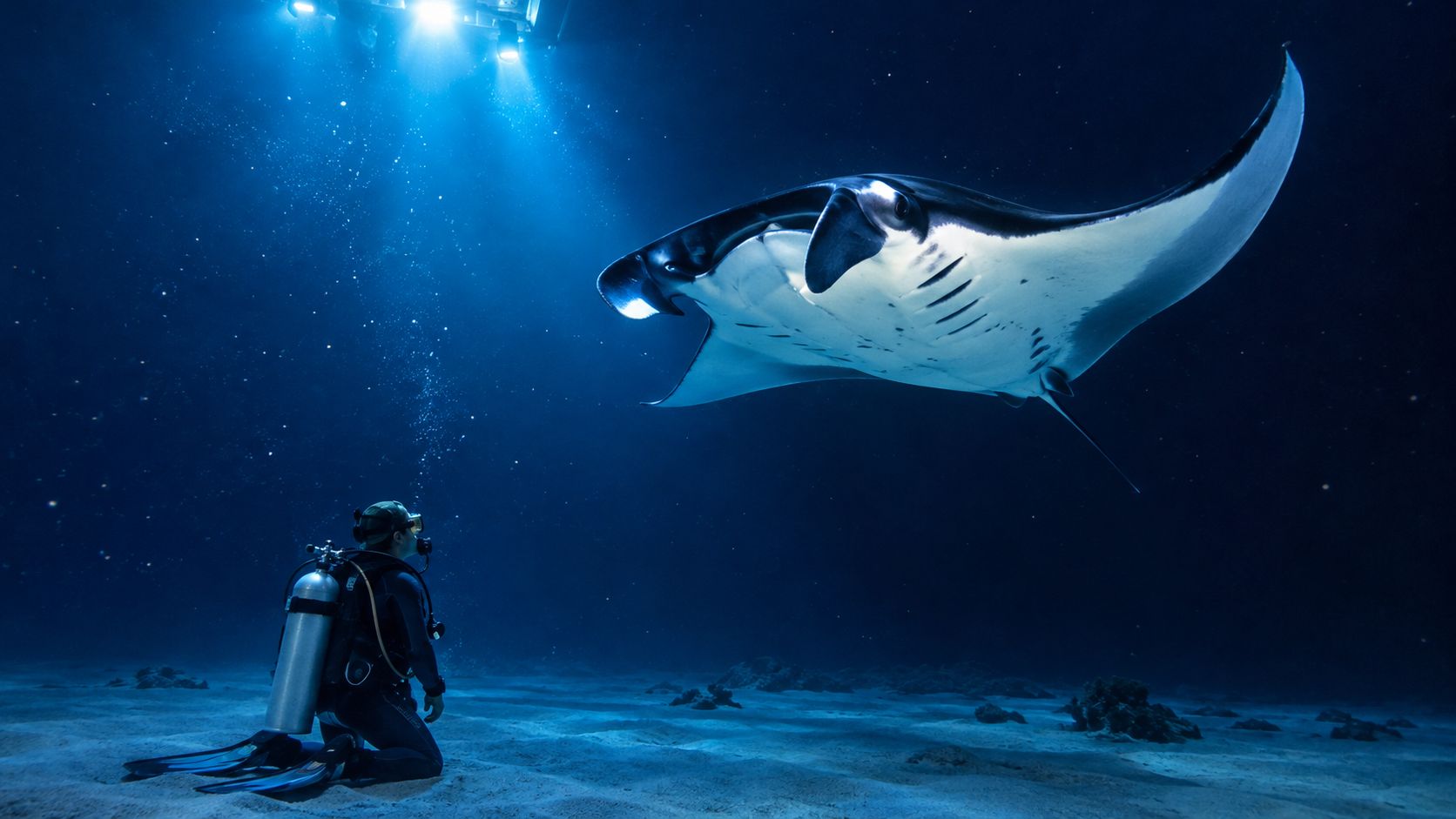
The boat idles in near darkness. You descend into black water, follow your guide's light to the bottom, and settle into place. At first there's only a cone of light and a fine snow of zooplankton drifting through it. Then a dark wing cuts across the beam, and a reef manta ray rolls into a slow, open mouthed loop directly above you.
That's the core of the experience, and it's nothing like a daytime reef dive. You're not swimming a route or hunting for subjects. You're stationary, watching wild animals feed on plankton concentrated by light. Snorkelers watch from the surface while divers watch from below, so the same animal can pass between two groups on a single circuit.
What Makes It Different From Day Diving
Daytime encounters depend on luck and timing. You might cross paths with a manta at a cleaning station, and it's gone in seconds. At night in Kona, the food comes to a fixed, well known spot, and the animals return to it. That predictability is what turned a curiosity into Hawaii's signature dive.
Don't expect a uniform show, though. Some nights bring a steady rotation of animals working the lights. Other nights are quieter, with long gaps between passes. Honest operators tell you that upfront, because the difference between a great night and a slow one usually comes down to plankton, not effort.
The mantas aren't performing for you. You're sitting in on dinner, and dinner doesn't run on a schedule.
That framing matters for how you plan. If you treat this as a wildlife encounter you'll book early in your trip, keep a backup night open, and pick your site deliberately. If you treat it as a guaranteed spectacle, you'll be disappointed by any night that doesn't match a highlight reel. The sections ahead cover the science, the sites, safety, gear, photography, and booking, so you can make that call with clear eyes. For a broader look at what's on offer around Kona, browse the range of Big Island diving tours before you lock in dates.
Why Kona Is the World’s Manta Dive Capital
Kona didn't become famous by accident. It built that reputation over decades, one catalogued animal at a time, and the timeline explains why divers trust this coast more than anywhere else.
The first Kona manta was identified and catalogued in 1979, and systematic naming and cataloguing expanded in 1991 as the night dive gained momentum, according to the account of Keller Laros and Kona's manta identification work. In the early days, a single boat carried only six to eight divers a few nights per week. By 1993, that had grown to as many as five boats and approximately 50 people in the water.
Protection Turned Tourism Into an Asset
Growth brought a hard question. In the early 2000s, demand for dried manta gill rakers in Asian markets drove aggressive fishing across the Pacific. Kona's dive community had already shown that a live manta, visited nightly by paying divers and students, was worth far more than a harvested one. On June 5, 2009, Hawaii's governor signed Act 092(09), making it illegal to kill or capture manta rays in state waters.
That law changed the math permanently. Operators could invest in a site knowing the animals had legal protection. Researchers could track individuals across years instead of documenting a disappearing population.
A Population You Can Actually Name
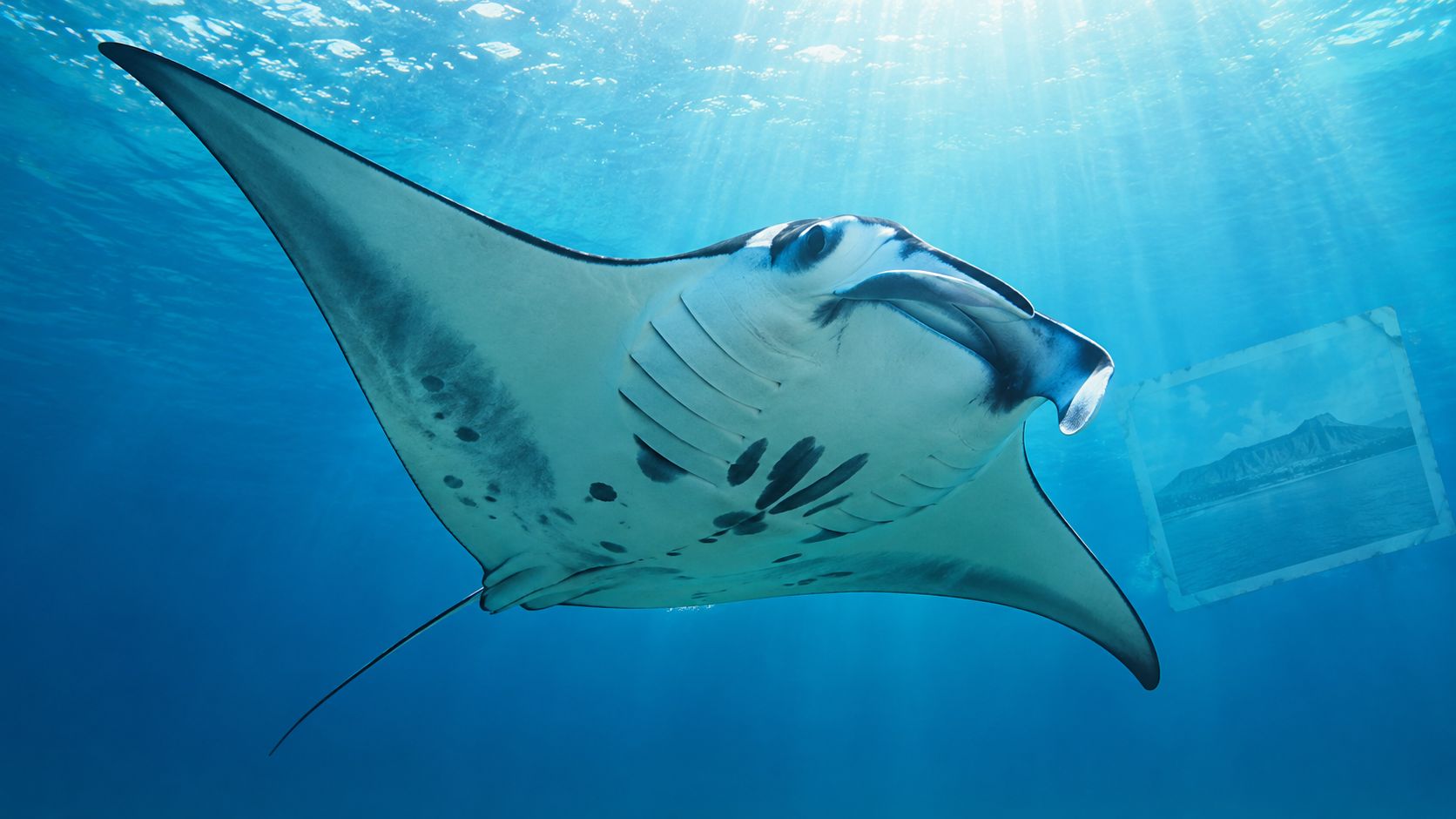
- Individual identification: By 2014, the Manta Identification Project had documented more than 211 Kona manta rays, each recognized by its unique belly markings.
- Long term monitoring: Guides and guests contribute sightings, so the catalogue keeps growing with ordinary dive nights.
- Resident behavior: Known animals return to the same feeding areas, which is why experienced guides can often tell you who you're watching mid dive.
That's the reason Kona holds its title. You're not hoping a migratory animal wanders past. You're visiting a legally protected, individually monitored population at feeding sites it has used for years. Few places on Earth can offer that combination of reliability and accountability.
How the Night Dive Works
There's no feeding involved, and that's the first thing to get straight. Nobody puts food in the water. The mechanism is simpler and more elegant than that.
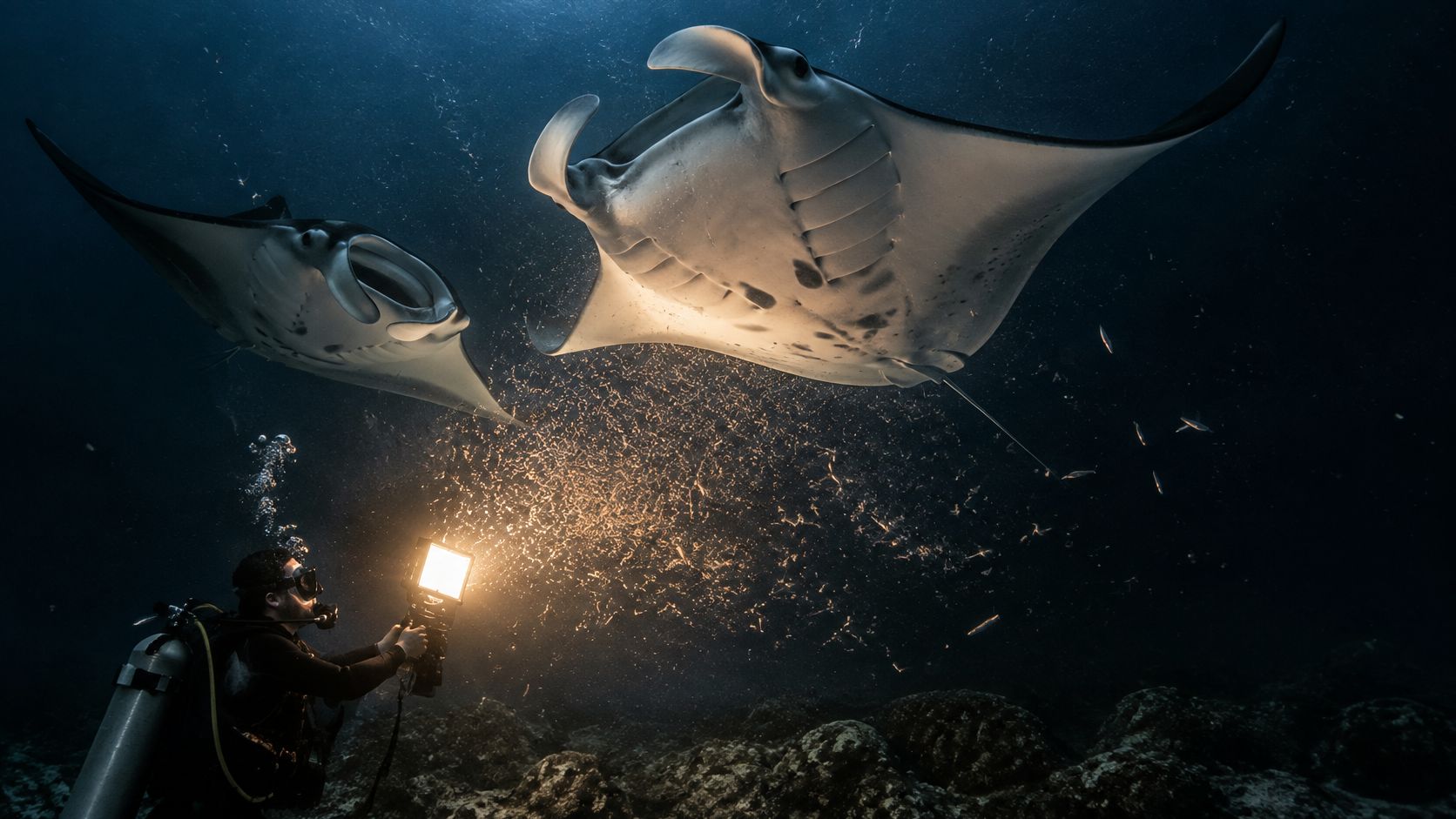
Underwater lights aggregate zooplankton, and reef manta rays, Mobula alfredi, then filter feed inside that illuminated water column, as described in NOAA guidance on manta ray interaction practices. The lights don't attract the mantas directly. They concentrate the mantas' food, and the mantas follow the food.
The Sequence From Dock to Ascent
- Arrive after sunset: Dives at Kona's established sites generally began immediately after sunset, around 18:00, and lasted about one hour, per the NOAA repository study of Kona manta aggregations.
- Descend and settle: Divers drop to the seafloor and form a stable semicircle, often called the campfire, with lights pointed upward.
- Hold your position: Snorkelers stay at the surface. Divers stay low. Nobody enters the open water in the middle, because that's the mantas' feeding corridor.
- Watch the loops: Mantas barrel roll and swoop through the light, mouths open, sometimes close enough that you'll duck on instinct. Don't. Hold still and let them pass.
If you're new to diving after dark, read up on what scuba diving at night actually involves before you book. The skills are basic, but your first night descent shouldn't be a surprise.
Why Stillness Is the Whole Technique
Mantas need unobstructed room to maneuver, and they plan their passes around predictable obstacles. A diver who drifts up into the corridor or kicks across the center breaks that pattern and pushes animals off the light. A diver who kneels, breathes slowly, and stays put becomes part of the furniture. That's when the closest passes happen.
Garden Eel Cove vs Other Kona Dive Sites
Most guides treat Kona's two main night sites as interchangeable. They aren't, and picking the right one is the single most useful decision you'll make.
A 2025 University of Hawaii study analyzed 13 years of community sourced observations from 2010 to 2022 at Garden Eel Cove and Keauhou, covering more than 23,000 sightings of 167 individually identified reef manta rays, according to the University of Hawaii repository record for that research. Garden Eel Cove consistently supported larger aggregations, while Keauhou was visited predominantly by females, who represented 91% of sightings there.
Garden Eel Cove vs Keauhou at a Glance
| Site | Aggregation Size | Sex Ratio | Best For |
|---|---|---|---|
| Garden Eel Cove | Consistently larger, more variable | Roughly balanced overall | Divers wanting the fullest show and best viewing area |
| Keauhou | Consistently smaller groups | Strongly female biased | Quieter, calmer encounters close to town |
Why Garden Eel Cove Wins for Most Divers
Beyond the numbers, Garden Eel Cove is the superior choice for a dive tour because of its protected location, its better viewing area, and its healthier reefs. Divers get more room to settle without crowding coral, and the reef dive that precedes the night dive there is worth doing in its own right. Keauhou is convenient and can be lovely, but smaller groups mean a slow night there feels slower.
For a deeper site by site breakdown, see the complete comparison of Manta Heaven and Manta Village before you choose an operator.
What a Guarantee Can Honestly Mean
Aggregation size tracks zooplankton density, so no lunar calendar or best month chart can promise a specific night. When an operator advertises a sighting guarantee, read it as a rebooking policy, not a promise about wildlife. The practical response is simple. Book early in your stay, choose the site with larger typical aggregations, and keep a second night free in case plankton is scarce on the first.
Decision rule: Pick the site first and the operator second. A great crew at the weaker site still can't summon plankton.
Safety, Certification, and What to Bring
This dive is accessible, but accessible doesn't mean casual. You're in open ocean at night, and preparation is what separates a relaxed diver from a distracted one.
Who Can Join
Certified scuba divers can do the dive, and it's a reasonable early night dive because you stay in one place rather than move around. That said, you need solid buoyancy control. If you're still bouncing off the bottom on day dives, get a couple more dives in first. Snorkelers don't need certification, but you should be a comfortable swimmer who's fine floating in dark water while large animals pass underneath.
Be honest with the crew about recent dive experience, ear trouble, or anxiety in the dark. Good guides adjust your position and buddy pairing. They can't adjust for problems you hide.
Gear That Actually Matters
- Exposure protection: You'll sit nearly motionless, so you'll chill faster than on a swimming dive. Wear a thicker wetsuit than you'd pick for a daytime reef tour.
- Primary and backup light: Your light is both a tool and part of the plankton setup. Carry a backup, and check batteries before you leave the shop.
- Sleek setup: Clip off dangling gauges and octopus hoses. Loose gear snags coral and stirs up the bottom you're kneeling on.
- Warm layer for the boat: A dry sweatshirt or windbreaker for the ride home makes a bigger difference than you'd expect.
Positioning Rules in the Water
Stay on or near the seafloor, keep your light aimed up, and never chase, touch, or block a manta. Maintain neutral buoyancy if you need to reposition, and move slowly along the edge of the group rather than across the center. If a manta comes straight at you, stay low and still. It sees you and will veer at the last moment with more grace than you'll manage.
Entries and exits deserve the same care. Follow the guide's light on descent, stay with the group on ascent, and surface near the boat where the crew can see your light.
Photography Tips and Responsible Behavior
Here's the contrarian truth about manta photography. The divers who get the best images are almost never the ones who got closest. They're the ones who stayed still long enough that the manta forgot about them.
Settings and Positioning That Work
Shoot wide. These animals are big, the action is close, and a zoomed in frame will clip wings on every pass. Use continuous video or burst mode if your camera handles low light poorly in stills, since a feeding loop gives you several chances at the same composition. Frame against the illuminated water column so the manta's white belly separates cleanly from the dark background.
Anticipate the loop instead of reacting to it. Mantas repeat their circuits through the densest plankton, so watch two or three passes, pick your angle, and wait. Moving to chase a better angle usually ruins the pass you were about to get.
Let the manta come to your frame. The moment you swim at it, you've traded a natural feeding pass for a picture of an animal leaving.
Light Discipline
Keep your light steady and aimed up with the group's. Waving a bright beam directly at a manta or strobing it repeatedly at close range disrupts feeding and annoys every diver around you. If you're using a camera light, moderate settings are plenty at these distances.
The same etiquette that protects the animals also protects your footage. Chasing stirs sediment, crowds the corridor, and pushes mantas off the light, which means worse shots for everyone. The habits in this guide to responsible and considerate diver etiquette apply doubly at night, when one careless diver affects the whole semicircle.
For many divers, video captures this dive better than stills. The slow roll, the plankton streaming past, the sheer scale of the wing overhead, all of that lives in motion.
Typical Itineraries and Pricing with Kona Honu Divers
A typical evening has a comfortable rhythm. You check in at the shop in the late afternoon, get fitted for gear, and ride out while there's still light in the sky. The first dive is a reef dive at the site, which doubles as a relaxed orientation to the terrain you'll kneel on after dark. Between dives you warm up on the boat, get the night briefing, and watch the light fade. Then you descend for the manta dive itself and surface to a quiet ride back under the stars.
Kona Honu Divers runs this as a two tank trip combining that afternoon reef dive with the night dive at Garden Eel Cove, detailed on their two tank manta dive and snorkel tour page. Their broader selection of Kona diving tours covers the morning reef trips that pair well with a manta night later in your stay.
What the Price Should Include
With a premium operator, expect tanks, weights, a dive light, and a professional guide in the water with you. Kona Honu Divers also includes complimentary nitrox for certified divers, which is a genuine perk on a two tank evening. Rental gear quality matters more than most divers realize at night, when a fogging mask or a weak light can ruin the dive, so ask how gear is maintained before you compare prices.
On pricing itself, compare what's included rather than chasing the lowest sticker. A cheaper trip that charges separately for gear, lights, and nitrox often ends up costing the same as an all in trip, with more hassle at check in. Rebooking policies for no sighting nights also vary, so ask about them directly.
The crew's experience shows in small ways. Positioning the group where the plankton collects, judging when to shift the lights, and keeping anxious divers calm in the dark are learned skills. That's what you're really paying for.
Conservation and the Future of Manta Diving
The uncomfortable question deserves a straight answer. Does nightly tourism around artificial lights harm the animals it celebrates? The honest position is that the activity has continued for decades alongside a stable, monitored population, and that real risks exist and need managing.
NOAA's 2024 recovery status review notes that growing manta tourism can produce unintended consequences, citing research associating a heavily used Kona site with lower emergent zooplankton abundance and diversity than a less used site, possibly reflecting inadvertent habitat damage from divers, as documented in NOAA's recovery status review for the giant manta ray. Hawaiian County materials also summarize concerns including stress, disease, injury, feeding changes, and habituation linked to human interactions.
The Risks Operators Can Control
- Benthic damage: Divers kneeling carelessly or kicking across the bottom damage the habitat that produces emergent plankton. Settling on sand or rock, not coral, is non negotiable.
- Boat strikes: Hawai'i DLNR materials report serious manta injuries from propeller strikes off West Hawai'i, along with a recent fatal human boat strike incident in the area. Careful boat handling around the dive site protects everyone.
- Crowding and contact: Touching strips a manta's protective mucus layer, and crowding the corridor interrupts feeding. Distance is a conservation tool, not just politeness.
Responsible operators limit group sizes, enforce light discipline, brief guests thoroughly, and contribute sightings to citizen science monitoring. You can read about one operator's eco friendly practices in Kona to see what that commitment looks like in practice.
Your part is straightforward. Book with operators who brief you on behavior, hold your position, keep off the coral, and never touch an animal for a photo. The mantas have tolerated our lights for decades because, on good nights, the divers on the bottom behave like guests. Keep it that way and this dive has a long future.
Ready to see it with your own eyes? Kona Honu Divers runs the two tank manta night dive at Garden Eel Cove with experienced local guides, well maintained gear, and complimentary nitrox for certified divers. Book early in your trip, keep a backup night open, and come ready to sit still in the dark while something extraordinary flies overhead.