
Kona's manta dive takes place after sunset at two established viewing sites, Garden Eel Cove and Keauhou, and the in-water experience runs about one hour with a high but not guaranteed chance of an encounter. You're probably looking at glossy photos, wondering if it's really that close, that calm, and that reliable, or if you'll spend an evening staring into dark water. The honest answer is that a well-run manta dive Hawaii trip is one of the most predictable wildlife dives you can book, and it's still wildlife. Pick the right site, control your buoyancy, and book an operator that limits crowding, and you'll give yourself the best version of it.
What a Manta Dive in Hawaii Actually Feels Like
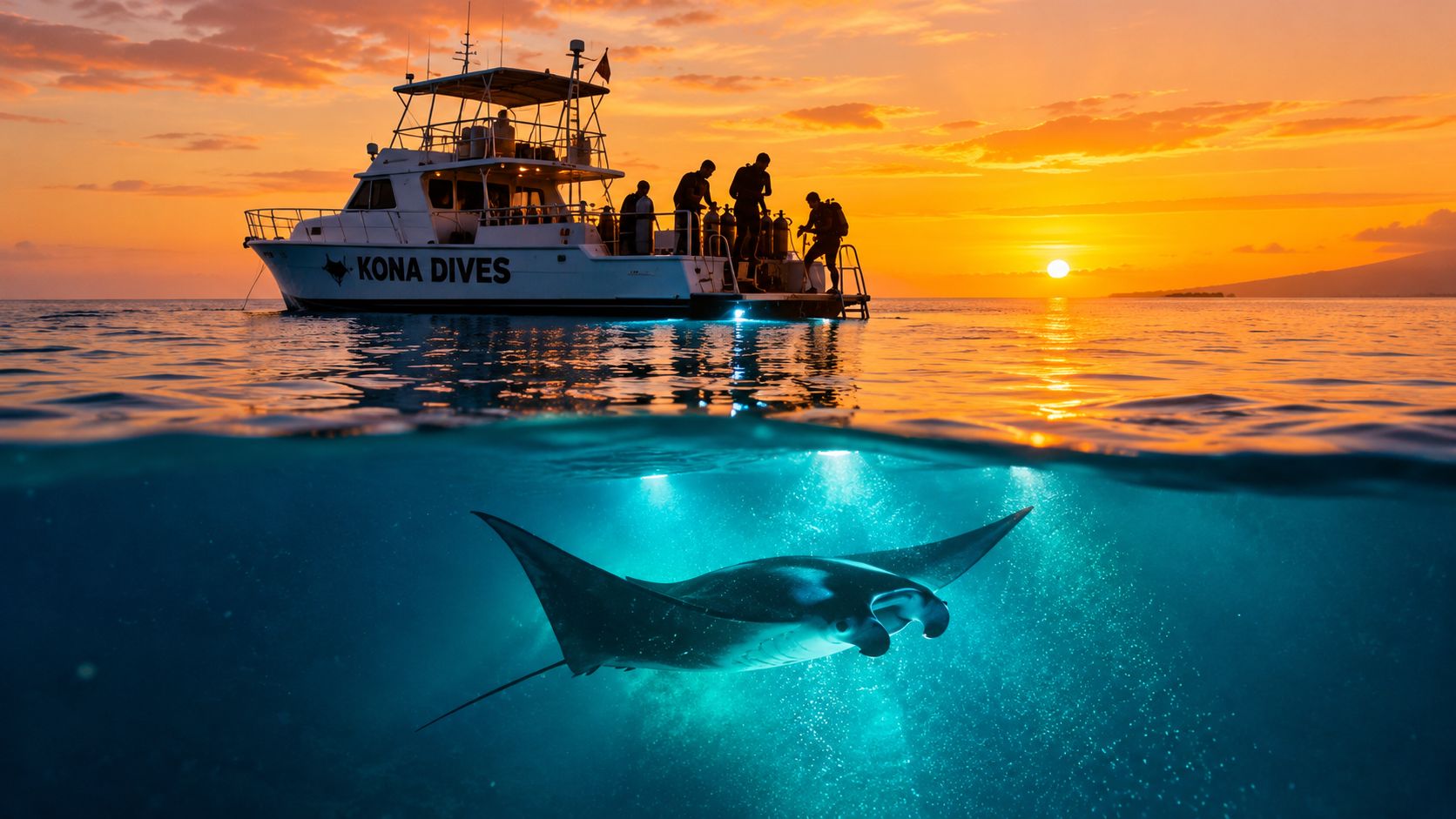
The boat leaves the harbor while there's still light on the water. You ride the Kona coast at dusk, check your gear, and listen to a briefing that matters more than most divers expect. The crew explains where you'll sit, where the lights go, and why you don't reach up, chase, or wander from your assigned position.
You step in as the sky goes dark and follow your guide down to a sandy viewing area. At first it's just your light beam, your bubbles, and specks drifting through the water. Then the main lights come on, the plankton thickens into a visible cloud, and the whole site changes character in about a minute.
The First Pass
The first manta usually arrives as a shadow at the edge of the light, not a dramatic entrance. It banks in with its mouth open, rolls through the brightest part of the cloud, and passes close enough that you can see the spot pattern on its belly. Those belly spots are unique to each animal, which is how individual mantas get identified and tracked over years.
After that, the hour settles into a rhythm. A manta loops, another crosses behind it, reef fish dart through the beams, and you mostly stay still and breathe slowly. It's not an adrenaline dive. It's quiet, repetitive in the best way, and strangely intimate because you're watching feeding behavior instead of an animal reacting to you.
You're not there to interact. You're there to be ignored by an animal that's busy eating, and that's exactly why it works.
What Surprises Most Divers
- The stillness: You'll barely swim. Your job is to hold position, stay low, and let the animals choose their lines.
- The scale: A manta overhead blocks the light like a slow-moving ceiling. Photos undersell that.
- The cold creep: Sitting still at night chills you faster than an active reef dive. Dress warmer than you think you need to.
- The quiet boat ride back: People come up talking fast, then go quiet. The debrief, naming the individuals you saw, is part of the fun.
Set your expectations correctly before you book. Encounters are highly probable at these sites, and they are never guaranteed. If you need a guaranteed animal, go to an aquarium. If you want the genuine experience, accept the small chance of a no-show night and book early enough in your trip to try again.
Why Kona Manta Encounters Happen After Dark
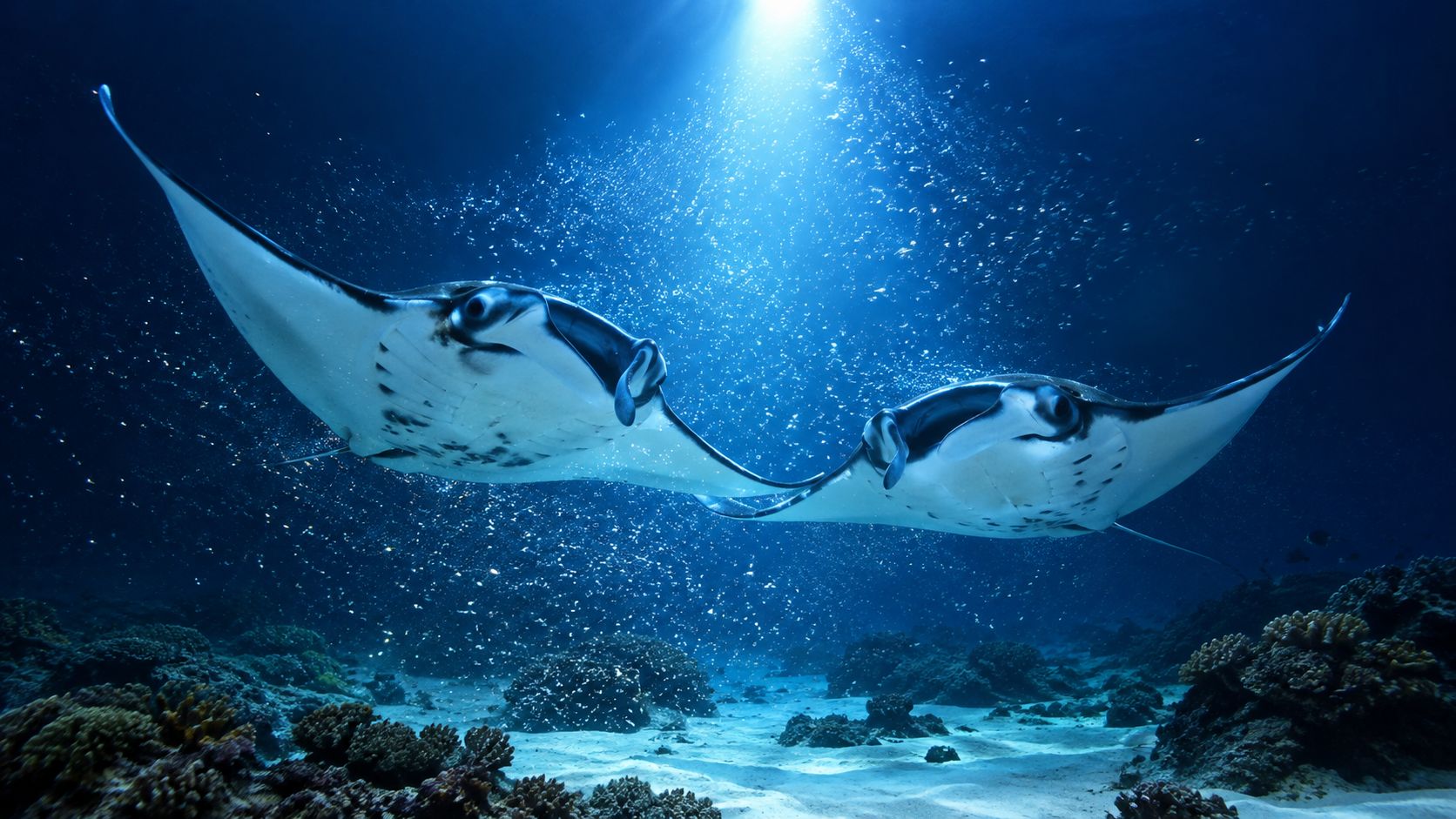
The mechanism is simple, and understanding it makes you a better diver on the site. Underwater lights concentrate zooplankton, and reef manta rays come to feed on that concentrated prey in repeated nearshore locations after sunset. Dives at Hawaiian viewing sites typically begin immediately after sunset and last approximately one hour, a pattern documented in scientific observations of Hawaiian manta viewing sites.
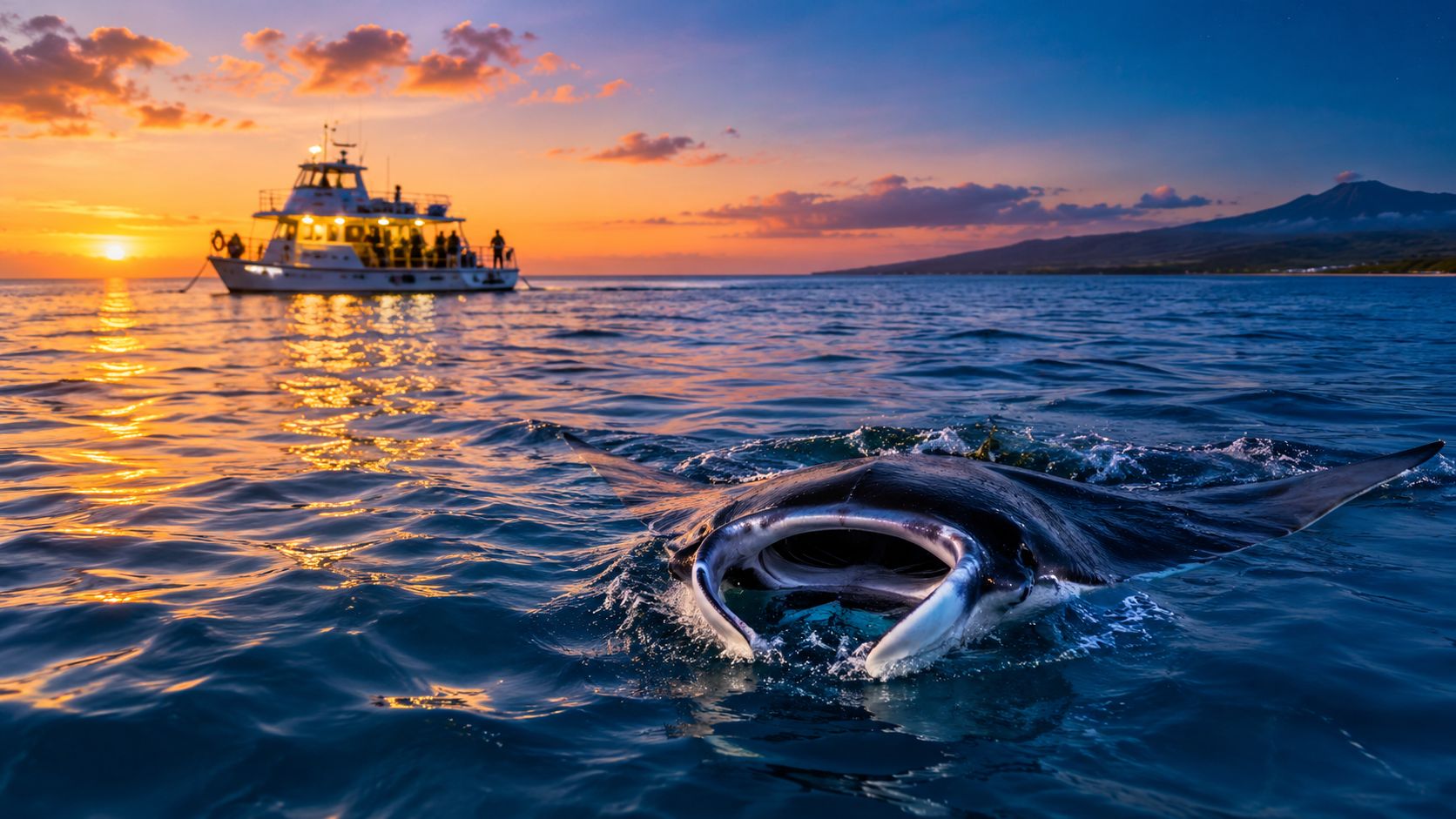
Mantas are planktivores. They don't bite, grab, or hunt individual prey items. They swim forward continuously with their mouths open, using broad cephalic lobes, the rolled fins beside the mouth, to funnel plankton-rich water in for filtering.
Why the Lights Work
- Lights go on after dark. Bright underwater lights create a visible column in otherwise black water.
- Plankton gathers. Tiny organisms concentrate in and around the beams, far denser than in open water.
- Mantas work the column. They make repeated feeding passes, often looping and barrel-rolling through the densest part of the cloud.
That sequence is why the dive is scheduled the way it is, and why a general guide to scuba diving at night only gets you partway there. This isn't a reef tour with torches. It's a feeding station that exists because the lights create it.
Where You Fit in That System
Your best position is near the illuminated zone, not inside it. Sit in the middle of the plankton column and you're blocking the exact corridor the mantas want to swim through. Stay low, hold neutral buoyancy, and keep off the seafloor where you can. That protects the habitat under you and keeps your fins out of the animals' flight paths.
Sudden finning, chasing, or reaching upward can break up a feeding pass. The manta aborts and circles wider, which means a worse view for everyone. Calm divers get closer passes, every time.
Don't mistake predictable for scripted, though. Mantas aren't permanently parked at one site. Individual animals vary in how they use these locations, and site use differs between the sexes, so a strong night at one spot doesn't promise the same show the next evening. Treat it as wildlife observation with unusually good odds.
Garden Eel Cove vs Keauhou and Why Garden Eel Cove Wins
Kona has two established manta-viewing zones in West Hawaii, both within the West Hawaii Ocean Recreation Management Area, as described in the guide to Kona's two manta viewing zones. The northern site is Makako Bay, called Garden Eel Cove or Manta Heaven, near Kona International Airport. The southern site is Kaukalaelae Point near Keauhou Bay, often called Manta Village.
My recommendation is clear. Book Garden Eel Cove. Its naturally protected bay reduces exposure to swell and wind, and its broad sandy amphitheater gives divers a more controlled, spread-out viewing area, points laid out in the case for Garden Eel Cove as the superior manta dive site. The surrounding reef setting is also stronger, so your first tank before dark is a better dive in its own right.
Garden Eel Cove vs Keauhou Bay at a Glance
| Feature | Garden Eel Cove (Makako Bay) | Keauhou (Kaukalaelae Point) |
|---|---|---|
| Exposure | Protected bay, less swell and wind | More exposed to conditions |
| Viewing area | Broad sandy amphitheater, controlled positioning | Smaller, tighter viewing space |
| Reef setting | Stronger surrounding reef for the afternoon dive | Less reef interest around the site |
| Aggregation pattern | Consistently larger aggregations in long-term records | Smaller groups, stronger female presence |
| Best for | Most divers, photographers, first-timers | Nights when conditions or recent activity favor the south |
What the Long-Term Data Says
A 2025 University of Hawaii study analyzed 13 years of records from 2010 to 2022 at both sites, covering more than 23,000 sightings of 167 individually identified reef mantas, in the University of Hawaii study of Kona manta aggregations. Garden Eel Cove consistently produced larger aggregations than Keauhou. Keauhou showed a stronger presence of females, which suggests the sites may serve different ecological purposes.
Across both locations, the sex ratio was approximately 1 to 1 male to female, even though visitation patterns differed by site. That's a healthy, well-documented local population, not a handful of animals being oversold. For a visiting diver, larger average aggregations at Garden Eel Cove translate directly into more passes, more individuals, and more time with animals in view.
The honest trade-off: A good captain still checks current conditions and recent manta activity before committing. Garden Eel Cove is the better default, not an excuse to ignore the ocean on a given night.
Choose the trip built around Garden Eel Cove, and let conditions, not habit or a shorter boat ride, be the only reason you end up at Keauhou instead.
Best Seasons and Conditions for a Kona Manta Dive
Kona mantas don't migrate away for a season, so this is a year-round dive. That said, year-round doesn't mean every month feels the same on the water. Your real variables are surface conditions, plankton density, and how much schedule flexibility you build into your trip. A deeper look at timing is covered in the breakdown of the best time to see manta rays in Kona.
The long-term Kona dataset found that seasonal and annual changes in aggregation size tracked zooplankton density, identifying prey availability as a major factor controlling manta presence. Translation for divers: the animals follow food, and food levels shift. Some stretches produce big, busy nights, and others produce quieter ones, with no calendar date that locks in either outcome.
How the Year Breaks Down
- Summer and fall: Typically the calmest seas on the Kona coast, with easier entries, gentler boat rides, and the most comfortable conditions for newer night divers.
- Winter: Manta activity continues, but larger swell can reach the coast and occasionally force reschedules. This is when the protected geography of Garden Eel Cove earns its keep.
- Spring: A good middle ground, with generally workable conditions and fewer peak-season crowds competing for space at the site.
Kona's broader track record supports the destination's reputation. A global study of 538 manta and mobulid survey sites found Hawaii had the highest reported manta sighting frequency in the dataset, and at 13 Hawaiian sites across 4,001 dive observations, the probability of seeing a manta increased by approximately 10% per year over the preceding decade, reported in the global study of manta sighting frequency in Hawaii. Note the time frame on that trend. It's evidence of a strong, established viewing destination, not a promise about next Tuesday.
How to Book Around Conditions
Check the marine forecast for swell and wind, not just air temperature and sunshine. A beautiful beach day can still produce surge at a night site. Then protect yourself with scheduling: book the manta dive in the first half of your trip. If weather cancels you or the mantas don't show, you still have nights left to rebook. Divers who save it for their last evening are the ones who go home disappointed.
Certification Safety and What to Pack
Scuba divers need to be certified, and you should be honest with yourself about recent experience. This is a night dive where you'll descend in the dark, hold a fixed position, and manage your buoyancy around other divers and large animals. If your last dive was years ago, do a refresher or a daytime dive first. Operators can verify certification and ask you to sit out if you're not ready, and that's the right call when it happens.
Snorkelers don't need certification, and the surface experience on a floating light board is excellent. But you do need basic comfort floating in open ocean at night. If you can't swim or panic in deep water, this isn't your activity, and no crew can brief that away.
Rules That Are Not Suggestions
Hawaii law protects manta rays in state waters. Under Hawaii Revised Statutes section 188-39.5, it's illegal to capture, take, possess, abuse, or entangle any ray, with reported penalties from $500 for a first offense to $10,000, plus an administrative fine of up to $10,000 per animal, as summarized in the overview of Hawaii manta ray legal protections. The practical rules flow from that: no touching, no chasing, no blocking a manta's path, and nothing dangling into its approach corridor.
Good conduct also covers the divers around you. The habits in this guide to responsible and considerate diver etiquette apply double at night, when space is tight and everyone is working from the same pool of light.
- Run a pre-entry check: Lights working, backup secured, gauges and accessories clipped tight, nothing trailing.
- Hold your assigned spot: Wandering divers create collision risk and push mantas off their lines.
- Mind surface lights and boats: Know where the vessels and snorkel boards are above you before you ascend.
- Stay clear of neighboring groups: Crossing into another group's light pool ruins two dives at once.
Crowding is a documented issue at these sites, not a hypothetical one. A Hawaii visitor-use study found 82% of surveyed participants felt crowded by snorkelers, 78% by boats, and 69% by scuba divers, with typical use around 52 snorkelers, 32 divers, and 11 boats, leading the researchers to conclude social carrying capacity was likely being exceeded, per the Hawaii visitor use study of manta site crowding. High density makes buoyancy harder, adds bubbles and sediment, and shrinks the space mantas need. Your discipline is part of the safety system.
What to Pack
Bring your certification card, a towel, a warm layer for the ride back, and seasickness remedies if you're prone to motion sickness, taken before boarding. Wear a thicker wetsuit than your daytime dives, because you'll be nearly motionless in the water at night. Leave loose jewelry, dangling accessories, and anything you can't secure back at the hotel.
Underwater Photography Tips for Manta Encounters
This is a wide-angle dive. Mantas pass close and fill the frame fast, so bring the widest lens or setting you have and leave the macro mindset on the boat. You can see what works in this collection of Kona manta ray dive pictures, and you'll notice the strong shots share one trait. The photographer was low, still, and already set up before the animal arrived.
Set Everything Before the First Pass
Preset your exposure and white balance on the descent, aimed into the light pool. Fiddling with menus while a manta is overhead means you miss the shot and, worse, you start finning to compensate. Decide your settings, lock them in, and then think only about timing.
Angle your strobes out and slightly back to reduce backscatter. The water around you is full of plankton, and light fired straight forward turns every particle into a bright white dot across your frame. Edge lighting keeps the manta lit and the snowstorm down.
Backscatter rule: If your strobes light the water between the lens and the animal, you've photographed the plankton, not the manta.
Shoot the Pattern, Not the Moment
Manta feeding passes are predictable. An animal working the light pool will loop and come through roughly the same line again, which means your second and third passes are your real shooting opportunities. Watch one full circuit with the camera down. Learn the line. Then pre-aim at the point where the manta crosses the brightest water and wait.
Buoyancy is a photography skill here, not just a safety one. Fin wash kicks up sediment, stirs the plankton column, and degrades every frame you and your neighbors take. Get weighted so you can sit stable and slightly negative, breathe slowly, and make your movements small.
Phone shooters, the same logic applies to you. Shoot video instead of stills, brace the housing with both hands, keep it close to your body, and never extend a selfie stick or a strobe arm into the animal's approach corridor. Secure every dangling accessory before you get in. The best manta footage in Kona comes from the calmest person in the group, not the biggest camera rig.
Choosing an Operator and Booking Smart
Your operator choice controls more of this experience than any other decision you'll make. The mantas do their part most nights. What varies wildly is how many people are packed around the lights, how well positions are managed, and whether the crew enforces the rules or just recites them. Judge operators on carrying-capacity discipline and crew competence, not on the lowest price. The broader Kona options sit within the full range of Kona diving tours, but the manta trip deserves its own scrutiny.
The pressure on these two sites is real. A Hawaii County safety assessment recorded at least 42 commercial operators visiting the two major nighttime viewing sites as of 2015, a historical figure that illustrates how concentrated activity gets, documented in the Hawaii County manta viewing safety assessment. That's the context behind every question below.
Questions That Reveal a Good Operator
- How many divers per guide, and per light pool? Small groups mean space, supervision, and cleaner sight lines.
- Which site, and why tonight? You want a Garden Eel Cove default with a conditions-based reason if they go south.
- How do you position divers? Fixed spots, separation from boats and snorkel boards, and enforced no-touch rules are the marks of a controlled site.
- What's the reschedule policy? Weather cancellations and no-show nights happen. Know before you pay whether you can rebook.
If you're still deciding between the bottom view and the surface view, this comparison of snorkeling versus diving with manta rays settles it based on your certification and comfort level. For certified divers, the dive is the stronger experience. You're inside the scene, not looking down at it.
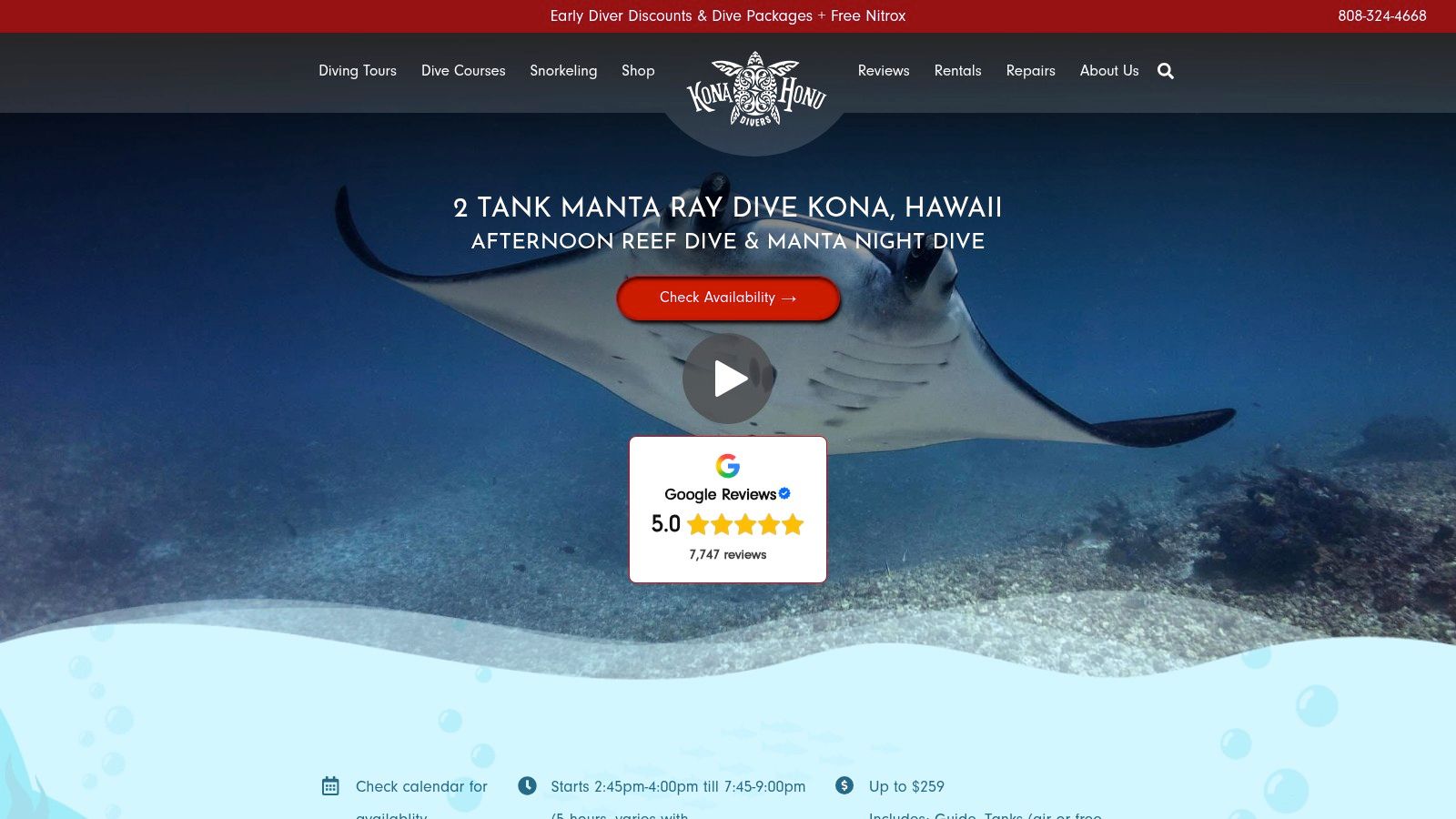
One concrete option is the 2-tank manta dive and snorkel tour from Kona Honu Divers, which pairs an afternoon reef dive with the manta night dive at Garden Eel Cove and includes a guide, tanks, weights, and a dive light. That two-tank format is worth paying for regardless of who runs it, because the daylight dive lets you check your weighting and buoyancy before you're asked to sit still in the dark.
Book earlier than feels necessary, especially in busy months, and put the dive early in your itinerary. Cheap seats on an overloaded boat at a crowded site cost you the very thing you flew to Hawaii for.
Your Manta Dive Checklist and Final Take
Everything above compresses into a short list of decisions. Make these calls before you're standing on a dock at sunset with no options left.
- Site: Garden Eel Cove, for the protected bay, the broad viewing amphitheater, and the stronger reef.
- Timing: Any season works, calmer months are easier, and you book early in your trip so weather can't end your chances.
- Readiness: Certified and recently wet for scuba, a thicker wetsuit, gear secured, nothing dangling.
- Conduct: Fixed position, neutral buoyancy, no touch, no chase, lights and cameras preset before the first pass.
- Operator: Small groups, controlled positioning, and a crew that enforces the rules it briefs.
My final take is simple. This is a wildlife encounter backed by more than a decade of documented, individually identified animals returning to the same feeding sites, and it stays that reliable only if the people in the water behave like guests. Do your part, pick the protected site, and this will likely be the dive you compare every future night dive against.
Kona Honu Divers runs guided manta ray night dives to Garden Eel Cove, pairing an afternoon reef dive with the after-dark encounter so you're settled and properly weighted before the mantas arrive. If you're ready to sit in the light pool and watch these animals work it, visit Kona Honu Divers to check dates and reserve your spot before the small-group boats fill.