
Table of Contents
- Get comfortable before looking for mantas
- Why your position matters
- Better evidence, not a guarantee
- Pack for comfort rather than equipment volume
- Separate legal status from onboard expectations
- Seasonal Conditions for the Kona Manta Ray Night Dive
- Start with a manageable exposure plan
- Confirm the details that affect your evening
You've found a free evening in Kona, and the manta tours all look similar until you start comparing the details. Which site will you visit? Do you need scuba certification? And does a crowded patch of ocean after dark really deliver the quiet wildlife encounter you're hoping for?
A Kona manta ray night dive works best when you choose the site carefully, arrive comfortable with your equipment, and understand what the crew is trying to organize underwater. The attraction isn't a performance. You're watching wild animals use a concentrated feeding opportunity, and the quality of that experience depends on both ocean conditions and guest behavior.
What a Kona Manta Ray Night Dive Actually Feels Like
The trip starts with ordinary boat work, not mantas. Before departure, get your equipment fitted, organize anything you'll need after dark, and tell the crew about unfamiliar rental gear or concerns about night diving. Don't save those conversations for the moment everyone's ready to enter.
On the ride toward Garden Eel Cove, also called Manta Heaven or Makako Bay, pay attention to the briefing rather than trying to memorize every piece of coastline. You need to know where your group will gather, how you'll communicate, and how the crew wants you to return to the boat.
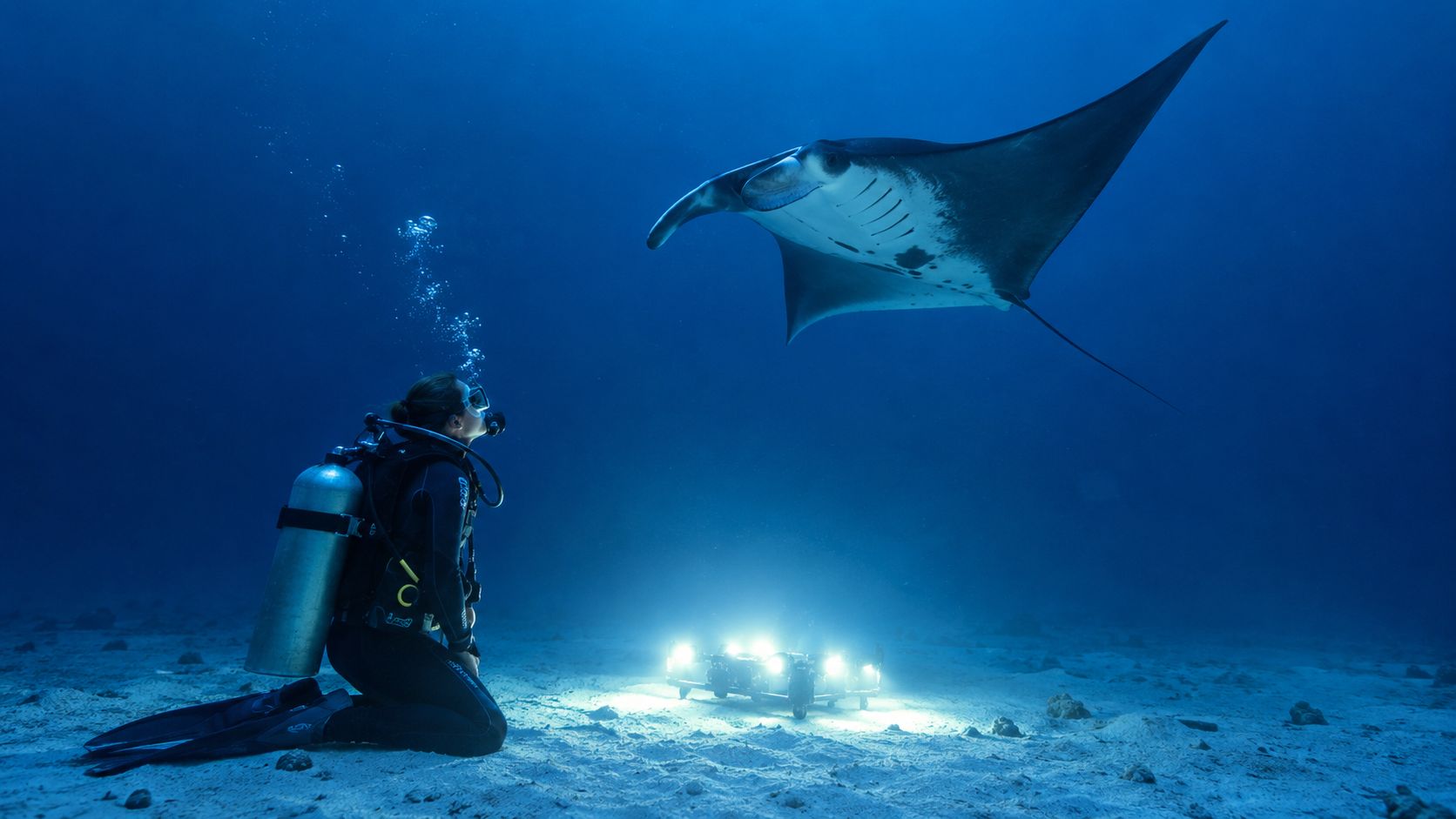
Get comfortable before looking for mantas
Choose your exposure protection and adjust your weighting before the encounter. A wetsuit that restricts movement or a weight system you haven't checked becomes much more distracting once your attention shifts upward. Ask for help rather than assuming discomfort is part of night diving.
Certified scuba participants descend to the viewing area, while non-certified participants remain at the surface with a snorkel, as explained in the University of Hawaiʻi account of diving with the rays. Those are different perspectives, not interchangeable activities, so make sure everyone in your group books the appropriate option.
- During entry: Follow your guide's sequence and establish comfortable breathing before handling a camera.
- At the viewing area: Find your assigned position and check that your equipment isn't extending into another guest's space.
- During the encounter: Let the animal approach and pass without trying to improve your position mid-pass.
The first appearance can be surprisingly understated: a pale shape at the edge of the illuminated water, then a recognizable ray moving overhead. Sometimes the approach becomes a looping feeding pass. Sometimes the animal continues out of view.
Practical rule: Get settled before the excitement starts. The less equipment management you're doing, the more of the encounter you'll actually notice.
Don't judge the night only by proximity. Watching a manta turn through the edge of the light can be just as compelling as an overhead pass, especially when you can follow its entire movement instead of staring through a camera screen.
How the Lights Create a Living Plankton Trap
The lights attract the food, not the mantas directly. Operators concentrate zooplankton with artificial illumination, and reef manta rays, Mobula alfredi, filter-feed through that prey-rich water. Research observations describe illuminated surface and seafloor areas at approximately 10 meters, with dives commonly beginning shortly after sunset and lasting about one hour, according to the NOAA-hosted research on illuminated manta feeding encounters.
That mechanism explains why this isn't a bait-feeding operation. The crew isn't handing food to animals or directing them through a routine. They're creating a localized feeding opportunity whose effectiveness still depends on prey availability and moving water.
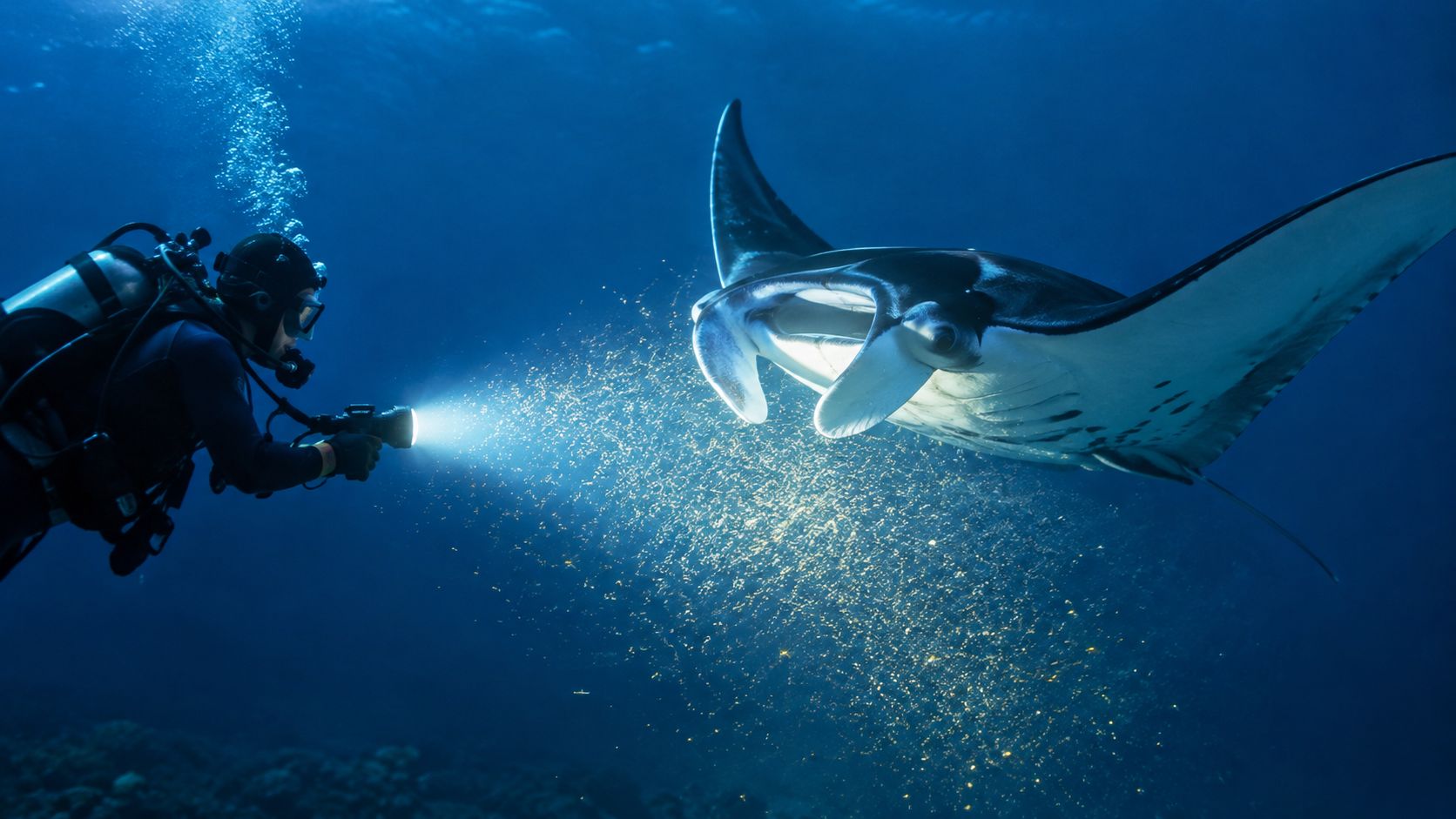
Why your position matters
A weighted light platform or coordinated dive lights gives the group a common reference point. For a diver, that's more useful than treating the entire dark bay as somewhere to search. The encounter depends on maintaining a coherent viewing area, not on how much ground you cover.
Current can shift the concentrated prey and the mantas' approach. A pass that favored one side of the group may favor another later. That doesn't mean your original position was wrong or that you should move across the viewing area.
| What you notice | A useful response |
|---|---|
| Activity shifts toward another part of the light field | Stay in position and watch the wider scene |
| A manta disappears beyond the illumination | Let it leave rather than following |
| Your body position becomes difficult to maintain | Signal your guide and resolve buoyancy |
| Other guests start moving toward the same animal | Keep your own position predictable |
The practical trade-off is between individual pursuit and a stable group encounter. Swimming after a departing ray might briefly change your angle, but it also takes you away from the organized viewing area and introduces another moving obstacle.
Good buoyancy matters even when the dive feels stationary. You should be able to remain where your guide places you without drifting upward into the animals' route or using constant corrective kicks.
A quiet interval isn't evidence that someone needs to add more lights or swim farther out. The food concentration may be less favorable. Once you understand the mechanism, patience becomes a sensible diving technique rather than passive waiting.
Why Garden Eel Cove Is the Superior Manta Dive Site
Garden Eel Cove is the stronger default choice for a scuba-focused manta trip when conditions are suitable. Its protected location near the Kona airport, established viewing area, and nearby reef habitat give divers a better overall setting than choosing a departure solely for convenience. The state manta-viewing boating and safety assessment identifies Garden Eel Cove at Makako Bay and Kaukalaelae Point at Keauhou Bay as the principal viewing locations.
The preference isn't just about scenery. A 2025 University of Hawaiʻi study, using 13 years of observations from 2010 through 2022, analyzed more than 23,000 sightings of 167 identified reef mantas and found that Garden Eel Cove generally supported larger nighttime aggregations, while Keauhou showed predominantly female attendance and strong female site fidelity (long-term Kona manta aggregation study).
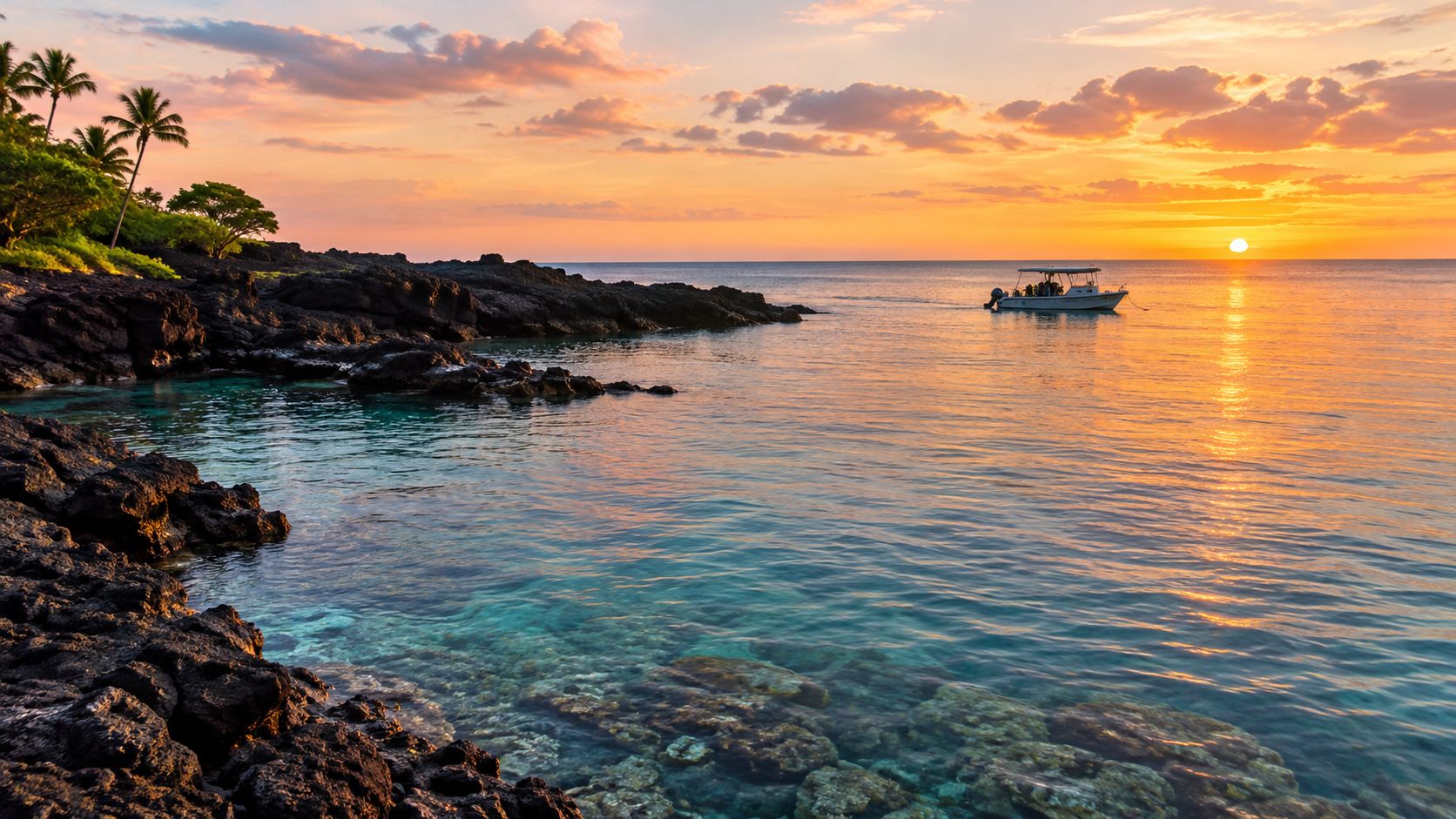
Better evidence, not a guarantee
Historical testimony reported manta sightings on approximately 80% of dives at Garden Eel Cove, but that figure belongs to an earlier record, not a current booking promise (Hawaiʻi legislative testimony on manta research and tourism). Don't turn a historical observation into a guaranteed outcome for your travel date.
The practical advantages are more useful than a marketing percentage:
- Protected setting: Shelter is a meaningful advantage when the prevailing conditions favor the cove.
- Established viewing area: A defined place to organize guests supports a more orderly dive.
- Better reef context: Nearby reef habitat adds value to a dive outing beyond the manta encounter alone.
Keauhou remains an established manta site with its own recurring animals. Calling Garden Eel Cove superior for a dive tour doesn't make Keauhou biologically unimportant or imply that every night at the northern site is better.
The sensible booking question is: Does the operator plan around Garden Eel Cove while retaining the judgment to change or cancel when conditions require it? A site preference is useful. An inflexible promise to use that site regardless of conditions isn't.
Gear, Certification, and What Kona Honu Provides
Start with certification, then sort the equipment. A manta encounter isn't the place to improvise a first scuba experience or conceal uncertainty about basic skills. If you need training before planning the dive, review the open-water certification options separately from your tour booking.
For a certified diver, the most useful preparation is familiarity. Know your buoyancy controls, weight release, pressure gauge, and light switch without needing to stare at each one. Tell the shop if you haven't dived recently or haven't used the equipment configuration you'll be wearing.
Pack for comfort rather than equipment volume
- Exposure protection: Ask the shop which wetsuit suits current conditions and your tendency to feel cold. Consider a hood if you chill easily, but don't introduce unfamiliar equipment without checking its fit.
- Mask and fins: Prioritize a reliable seal and controlled movement. A clear mask skirt is a preference, not a requirement for seeing mantas.
- Dive lights: Confirm what's supplied and whether you should bring a backup. Learn the controls before boarding.
- Personal essentials: Bring your certification details, towel, dry layer, and any personal equipment you know fits well.
Use the shop's package description to separate included equipment from available rentals. Ask specifically about tanks, weights, the guide, exposure protection, regulator, buoyancy compensator, and lights. Don't assume that “gear available” means every item is included in the displayed fare.
Pack the equipment that improves fit or familiarity. Confirm the rest before filling your luggage.
Nitrox also needs a clear conversation. Ask whether it's available for your departure, whether your qualification is accepted, and whether any charge applies. It doesn't replace ordinary gas planning or the need to follow the guide's profile.
Treat an early-diver discount the same way: verify current eligibility and package terms rather than assuming an advertised offer applies to every booking. The useful outcome is a written understanding of what you're paying for, not a surprise discussion at check-in.
Marine Etiquette and Which Rules Are Actually Enforceable
Law, agency guidance, proposed regulation, and operator policy aren't the same thing. A safety recommendation can be worth following without being a site-specific statute, and a proposal doesn't become enforceable just because a travel article repeats it.
The Hawaiʻi County manta-viewing safety assessment evaluates the interaction of boats, lighting, diver positioning, crowding, and passenger behavior. That's the right practical perspective: guest conduct is part of a shared safety system, not merely a list of wildlife courtesies.
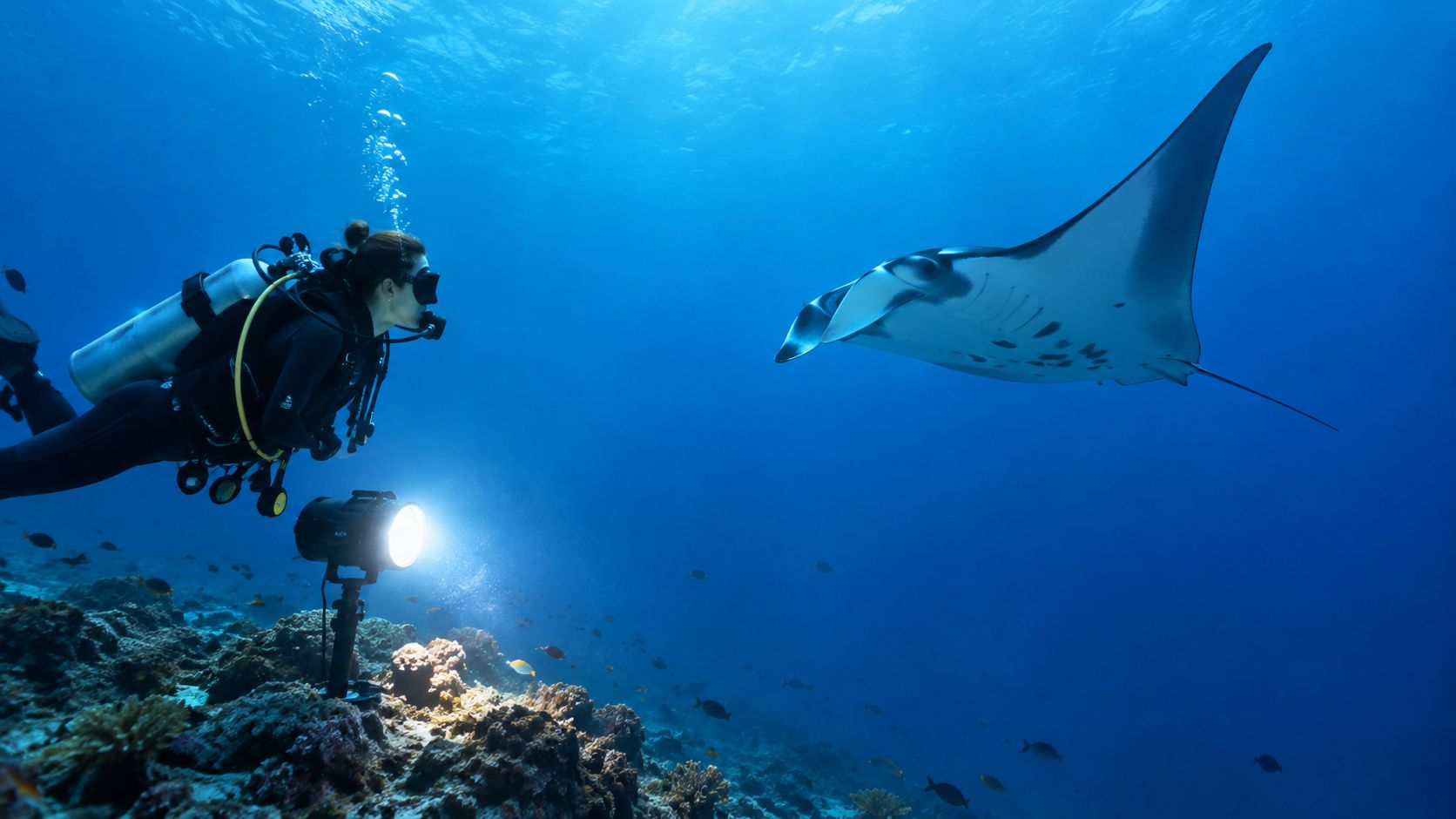
Separate legal status from onboard expectations
| Category | What it means for a guest |
|---|---|
| Adopted law or regulation | Check the current official text and applicable jurisdiction |
| Proposed rule | Don't describe it as an existing legal limit |
| Agency guidance | Treat it as guidance unless a binding requirement also applies |
| Operator policy | Follow the crew's participation and safety conditions |
Published descriptions of proposed boat limits, passenger caps, guide ratios, or operating hours shouldn't be treated as proof of current law. The historical assessments discussed earlier don't establish today's complete legal position, so ask for the current official rule if a particular legal limit matters to your decision.
Crew directions are not optional during the trip. The crew must coordinate people around vessels, equipment, and wildlife, whether each instruction appears in a statute or not.
- Keep your hands to yourself: Don't touch or attempt to hold a manta.
- Leave the route open: Don't chase, rise into, or block an approaching animal.
- Control your lighting: Follow the briefing and avoid directing a beam into eyes.
- Stay predictable: Maintain the assigned position and signal if you need assistance.
Review the shop's responsible and considerate diver etiquette before departure so the briefing reinforces familiar expectations.
If an animal approaches closely, your responsibility is still restraint. A close pass isn't permission to reach out, and another guest's behavior isn't a reason to copy it.
Best Time of Year and What Conditions Affect the Dive
Choose your date around schedule flexibility and the marine forecast, not a promise that a particular month guarantees mantas. The long-term aggregation research discussed earlier linked changes in attendance to zooplankton density. A calendar alone can't tell you how much prey will concentrate at the viewing area that evening.
Separate two questions when you speak with the operator: Can the crew safely run the trip, and what conditions might affect the encounter? A safe departure doesn't guarantee active feeding, while an otherwise promising wildlife forecast doesn't justify entering unsuitable water.
Seasonal Conditions for the Kona Manta Ray Night Dive
| Season | Typical Water | Wind and Swell | Encounter Quality | Booking Tip |
|---|---|---|---|---|
| Spring | Confirm current temperature and visibility | Ask about the departure forecast | Don't infer feeding activity from season alone | Leave room for a change of date |
| Summer | Choose exposure protection for your own comfort | Check local conditions rather than assuming calm | Evaluate the actual evening | Ask which site is planned |
| Fall | Verify conditions close to departure | Discuss any approaching weather | Plankton and site conditions remain decisive | Avoid making it your only available evening |
| Winter | Ask about warmth and surface comfort | Confirm swell exposure and cancellation policy | Conditions may alter the plan | Keep an alternative evening open |
This is a booking decision matrix, not a measured seasonal forecast. It deliberately avoids assigning temperature ranges or encounter ratings that the available evidence doesn't establish.
Moon phase shouldn't outrank the operator's assessment either. Don't rearrange an entire holiday around a darker night without a sound, site-specific reason. Wind direction, swell exposure, boarding conditions, and the crew's ability to organize the viewing area deserve more attention.
For trip planning, use the guide to choosing when to see Kona's manta rays alongside a direct conversation with the shop.
Ask what happens if the preferred site becomes unsuitable, whether rescheduling is possible, and how a no-sighting trip differs from a weather cancellation. Those answers matter more than a generic “best season” label.
Photographing the Encounter Without Disturbing It
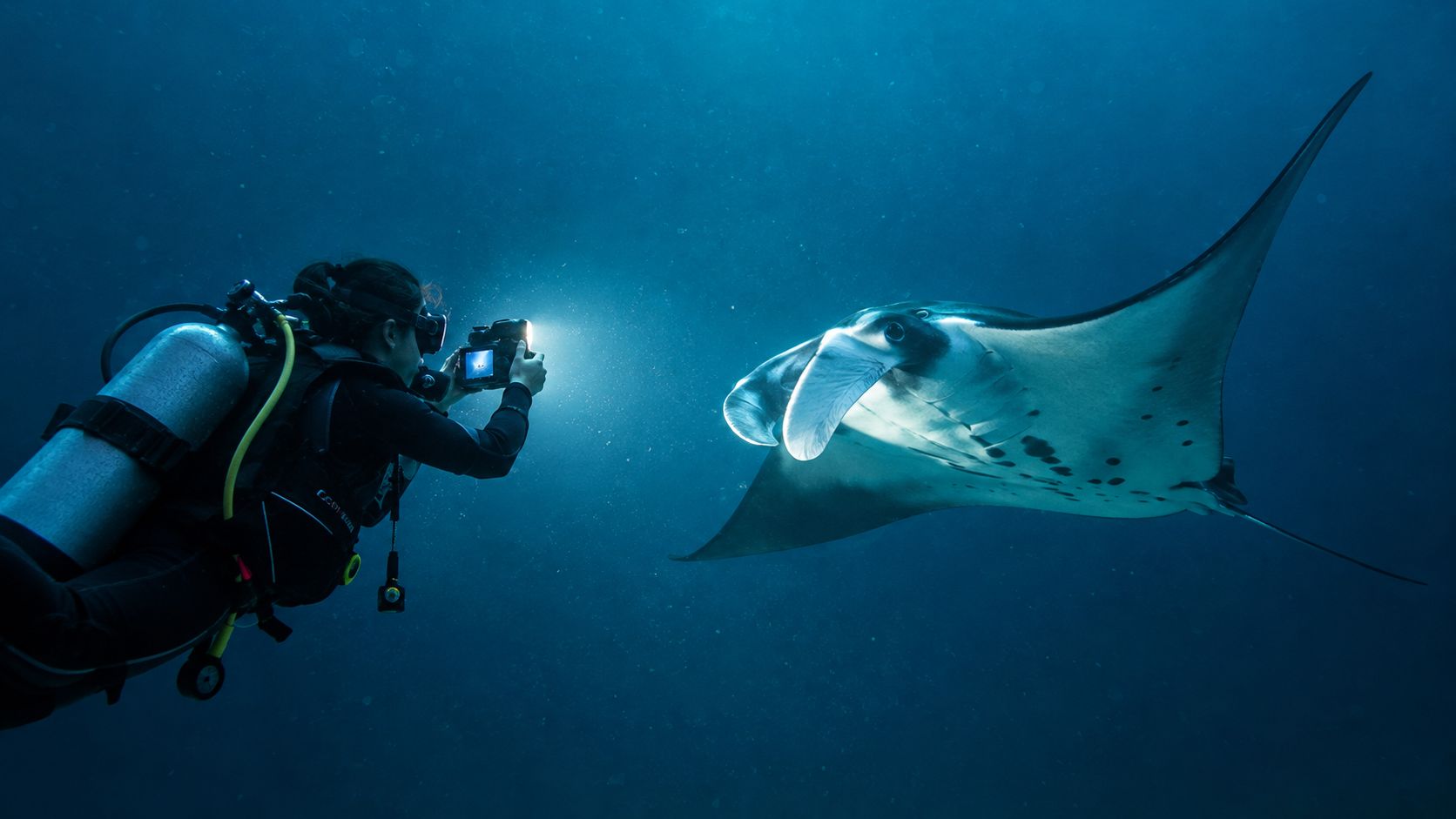
Build your photo plan around holding position, not getting closer. A camera setup that requires constant adjustment can turn a straightforward observation dive into an equipment-management exercise.
Prepare the housing before the boat gets busy. Check the seal, battery, memory, controls, and attachment points, then make sure nothing dangles below you or extends into another diver's space. If you're using a dome port, give yourself room to handle it without sweeping the housing across your neighbor.
Start with a manageable exposure plan
Use manual exposure if you're comfortable with it. Choose a shutter speed that handles movement, open the aperture as your intended depth of field allows, and raise ISO rather than accepting unusable motion blur. There isn't a universal setting because cameras, lenses, distance, and illumination differ.
- White balance: Capture raw files if your camera allows it, and avoid spending the encounter trying to perfect color on the rear screen.
- Strobes: Ask whether they're permitted. If allowed, position them so you're not firing into another guest's face, and avoid rapid bursts.
- Video lights: Confirm permission before adding illumination, then keep beams controlled rather than sweeping them across the group.
- Focus lights: Don't assume a red setting exempts a light from the crew's lighting policy.
Camera discipline: If taking the photograph requires leaving your assigned position, let that photograph go.
Compose for the whole approach instead of waiting until the animal fills every corner of the frame. A wider composition gives you more tolerance for an unexpected turn and can preserve the relationship between the manta, the light field, and the surrounding darkness.
Review a short test sequence, then stop repeatedly checking the display. Constantly looking down makes it easier to miss both the animal and your own movement.
If you'd rather watch without managing a housing, ask about the manta night dive photo package. Confirm what's offered for your departure and how images are delivered before deciding whether to bring your own system.
Booking, Pricing, and Why Kona Honu Divers Is the Right Choice
Book the site plan, participation type, and package inclusions, not just the photograph at the top of a tour page. A useful reservation should make clear whether you're joining a scuba activity, what equipment is covered, and what happens if conditions change.
The manta ray dive tour page is the relevant starting point for this encounter. If you're comparing the outing with other underwater plans, browse the broader Kona diving tours without assuming that every departure has the same requirements or inclusions.
Confirm the details that affect your evening
- Destination: Ask whether Garden Eel Cove is the intended site and what would trigger a change.
- Final price: Check the current checkout total, rental charges, taxes, and any optional additions.
- Qualifications: Confirm certification and experience requirements before paying.
- Package terms: Verify equipment, nitrox eligibility, discounts, cancellation terms, and any no-sighting policy.
Read guest reviews of the dive operation for concrete descriptions of briefings, equipment help, and crew communication. Those details are more useful than treating a star rating as proof that every departure will suit every guest.
The right operator should answer practical questions without replacing them with promises about wildlife. For this dive, a clear Garden Eel Cove preference, understandable booking terms, and a crew-led approach are stronger decision criteria than an unsupported guarantee.
Use the booking calendar to check your actual travel dates, then resolve any equipment or qualification questions before completing the reservation.
Kona Honu Divers offers manta ray dive outings for travelers planning this distinctive Kona encounter. Visit the team to check availability, confirm the Garden Eel Cove plan, and choose the equipment and participation option that fit your experience.