
Table of Contents
- Documentation Is Not an Advertising Image
- Questions That Reveal the Real Deliverable
- From Plankton to a Feeding Pass
- Why a Belly Photograph Means Something
- What Mooring Rules Mean for Your Night
- Strobe Position Beats Strobe Power
- Settings Are a Starting Point, Not a Recipe
- Read the File Terms Closely
- Confirm These Details Before You Commit
- A Practical Packing and Readiness List
- Protect Your Position Underwater
- When Several Boats Share the Night
- Short FAQ
The most popular advice about a Kona manta night dive with photo package is also the most misleading. People will tell you to chase the biggest lights, the most powerful strobe, and the closest possible shot. That approach misunderstands the animal, the water, and the job a photographer is doing for you. A good package doesn't sell you control over wildlife. It gives you professional documentation of a brief, dark, unscripted encounter, handled in a way that keeps the manta's path open.
What a Kona Manta Night Dive Photo Package Really Includes
You slip into black water, settle, and watch your guide's light cut upward through drifting particles. Nothing about the next few minutes can be staged. A manta may roll directly overhead, feed at the edge of the beam, or stay distant while it follows food you can't predict.
That's the moment to reconsider what you bought. A Kona manta night dive with photo package should be judged as professional documentation, not as a promise of a fixed number of portraits. The photographer works around your position, the light, and the animal's chosen route, recording what happened on that dive.
Documentation Is Not an Advertising Image
An advertising image implies a clear animal, a clean background, and a pose that can be repeated. A dive record is different. It may show silhouettes, a feeding pass through plankton, your buddy watching from the bottom, or a manta turning away before it fills the frame.
That doesn't make the record less valuable. It makes it honest. You're paying for someone who's managing exposure, strobe angle, and positioning so you don't have to split your attention between buoyancy and a camera menu.
A valuable frame proves you were there, in that light, with that animal. It doesn't need to look like a studio portrait to be worth keeping.
Questions That Reveal the Real Deliverable
- Who is shooting: Ask whether a photographer is in the water with your group, or whether you're only receiving rental gear and guidance.
- What arrives afterward: Confirm edited files, full resolution downloads, delivery timing, and file format before you pay.
- What is backed up: Ask how images are stored if a card fails, and whether you may also use a personal camera.
If you're budgeting the whole trip, it helps to read about how expensive scuba diving in Hawaii can be so photo costs don't surprise you later. Then check the current tour details directly rather than relying on a generic description.
Photo Package Terms to Confirm
| Confirm Before Booking | Why It Matters |
|---|---|
| Photographer in the water | Separates photographer led documentation from do it yourself shooting |
| Edited files and resolution | Determines whether images suit sharing, printing, or both |
| Delivery time and backup | Sets expectations if files are delayed or a card problem occurs |
| Personal camera policy | Prevents crowding and gear conflict during the dive |
Realistic expectations aren't a warning label. They're the basis of a good booking decision.
Understanding Kona’s Nighttime Manta Experience
Kona's tradition didn't begin as a purpose built attraction. In the late 1970s, artificial lights near a Keauhou oceanfront hotel attracted plankton, and feeding mantas followed, a history described in testimony submitted to the Hawai'i Legislature on Kona manta diving. What started as an accident became a structured encounter because the animals kept returning to feed.
By 2002, approximately 11,000 snorkelers and scuba divers were participating each year, generating an estimated $920,000 in direct revenue and about $2.5 million in broader annual economic activity, according to that same testimony. Those figures explain the scale, but they don't explain why a single night feels so personal. The biology does.
From Plankton to a Feeding Pass
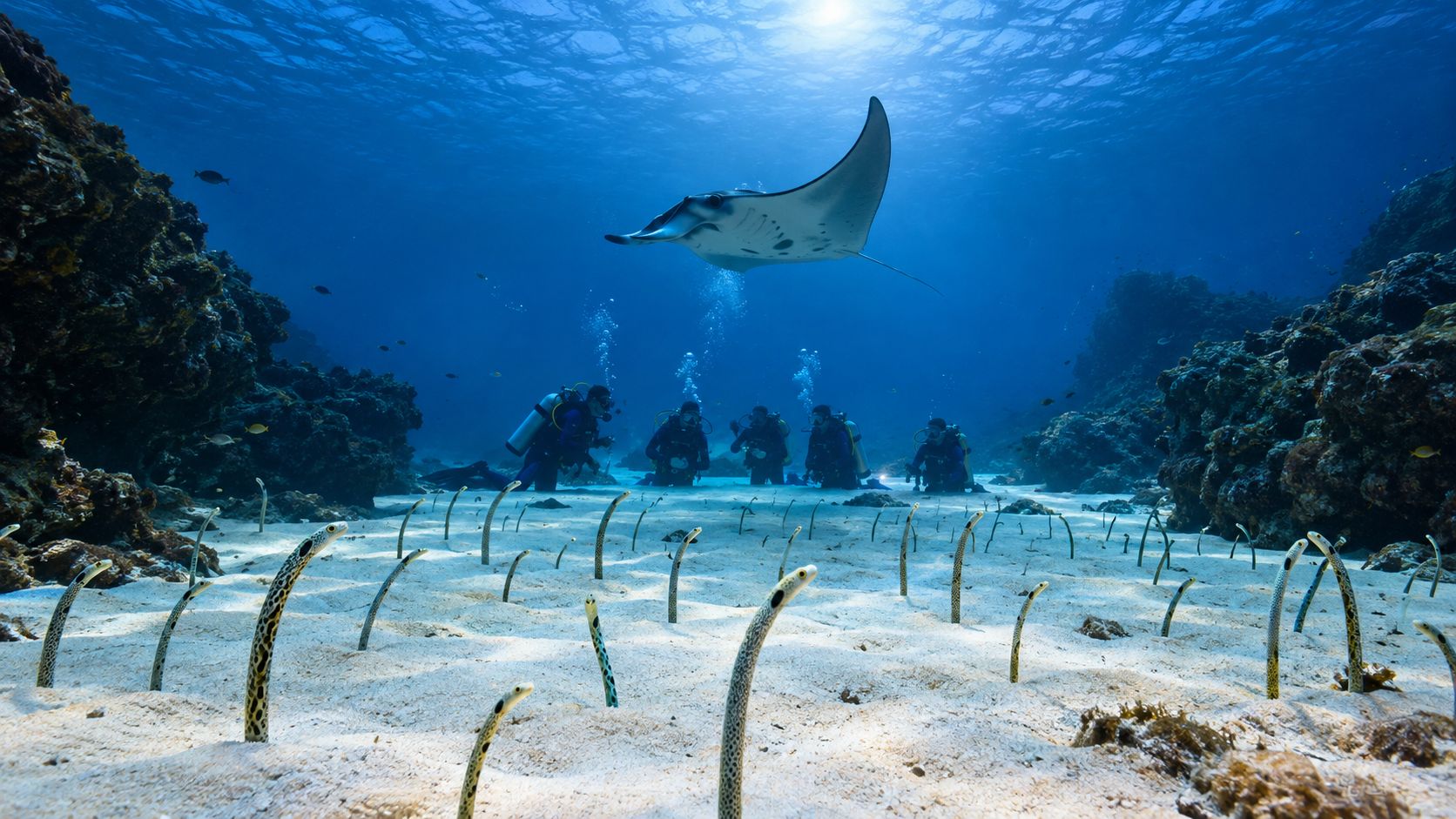
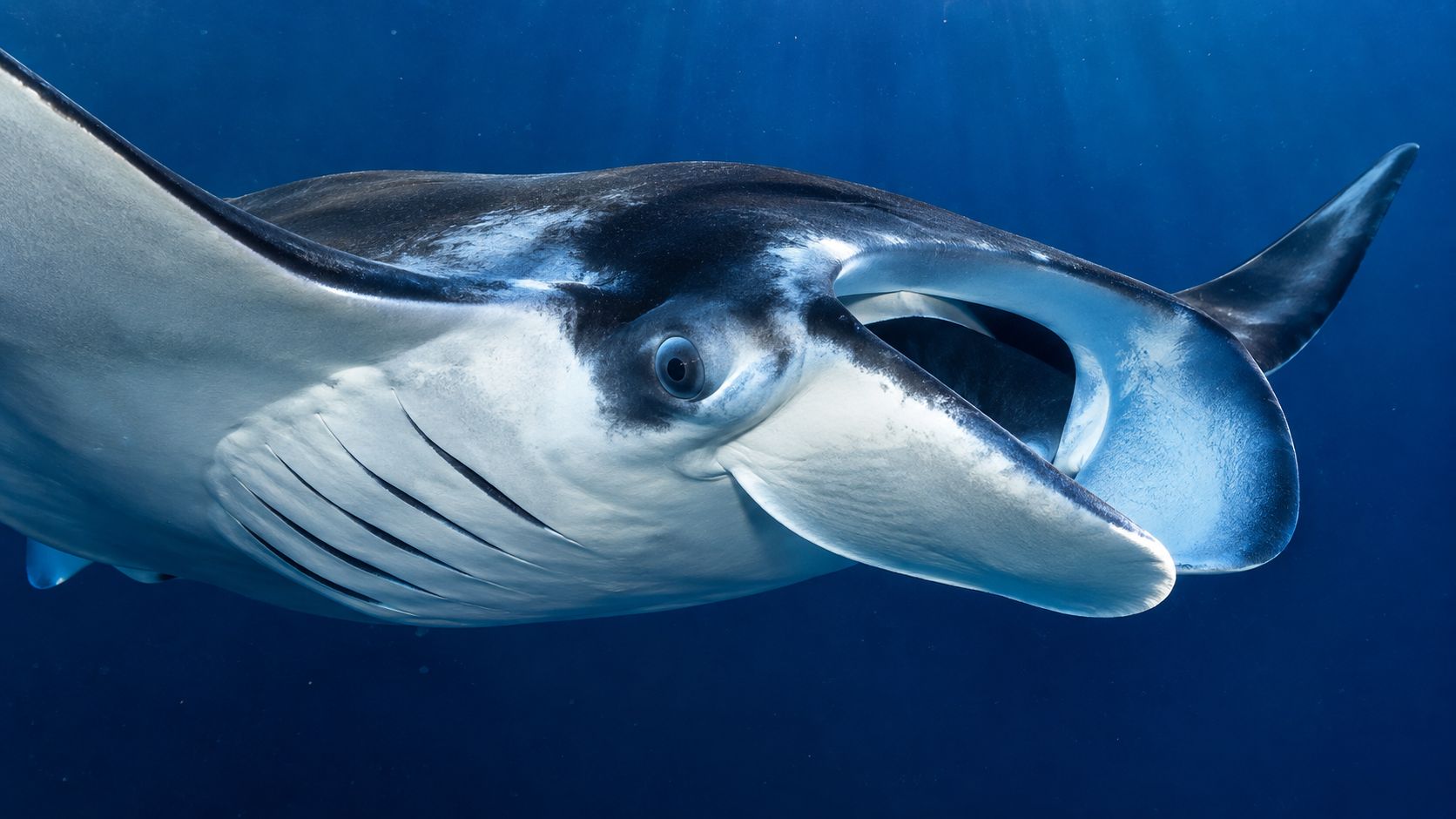
At night, zooplankton move upward, and dive lights concentrate them further. A manta uses its cephalic fins to direct plankton rich water into its mouth, then filters prey across specialized gill rakers, as explained in Hawai'i's species information on the giant oceanic manta ray. You're watching feeding mechanics, not a performance.
That chain is ecological, not guaranteed. Plankton density, current, visibility, weather, and the animal's own behavior shape every night. A bright light can't command a manta to arrive, and understanding that distinction helps you read whether it's better to snorkel or dive with manta rays with clearer expectations.
Why a Belly Photograph Means Something
In 1979, scientists and conservation groups began recognizing individual Kona mantas through photographs of their unique ventral markings. Each belly pattern works like a natural identification mark. A clear underside image can therefore be both a trip keepsake and a record of a specific living animal seen again over time.
This experience sits apart from other night products. The manta ray dive tours page covers the manta focused trip, while a Kona blackwater dive and more experienced or advanced diving opportunities are separate choices with different subjects and demands. Don't treat them as interchangeable versions of the same night.
Choosing Garden Eel Cove for Better Manta Viewing
Location shapes how calmly a photographer and guide can organize the dive. For this tour, Garden Eel Cove is the superior choice because of its protected location, its better viewing area, and its better reefs. You're not choosing between interchangeable patches of sand.
Protection matters at night. A defined viewing area gives the crew a clearer place to position divers, coordinate upward lights, and keep the water column open for feeding passes. Better reef structure around the site also gives the earlier part of the outing more substance than a bare staging area would.
What Mooring Rules Mean for Your Night
Boating rules set the outer frame for the schedule. A county assessment states that day use moorings may not be occupied for more than 2.5 hours when another vessel is waiting, anchoring is prohibited within 100 yards of a day use mooring, and vessels must operate at slow no wake speed within 100 feet of a displayed dive flag, details set out in the Manta Ray Viewing Boating Operations and Safety Assessment.
Translate that into guest terms. Departure timing, mooring rotation, and entry order aren't casual choices. The crew is managing shared access, protecting divers entering the water, and working inside a finite viewing window.
- Arrival and setup: The boat secures its position before anyone treats the site as a photo set.
- Entry sequence: Divers enter under crew direction so lights and bodies don't scatter across the manta's route.
- Exit discipline: The session ends within operational limits, even if you'd happily stay longer.
Field note: Garden Eel Cove improves organization and viewing conditions. It cannot control manta attendance, and no honest operator should imply otherwise.
That balance is the point. A protected, well defined site helps a photographer work cleanly and helps you feel oriented in the dark. The animal still decides whether, and how closely, it feeds that night.
How Manta Photography Controls Backscatter
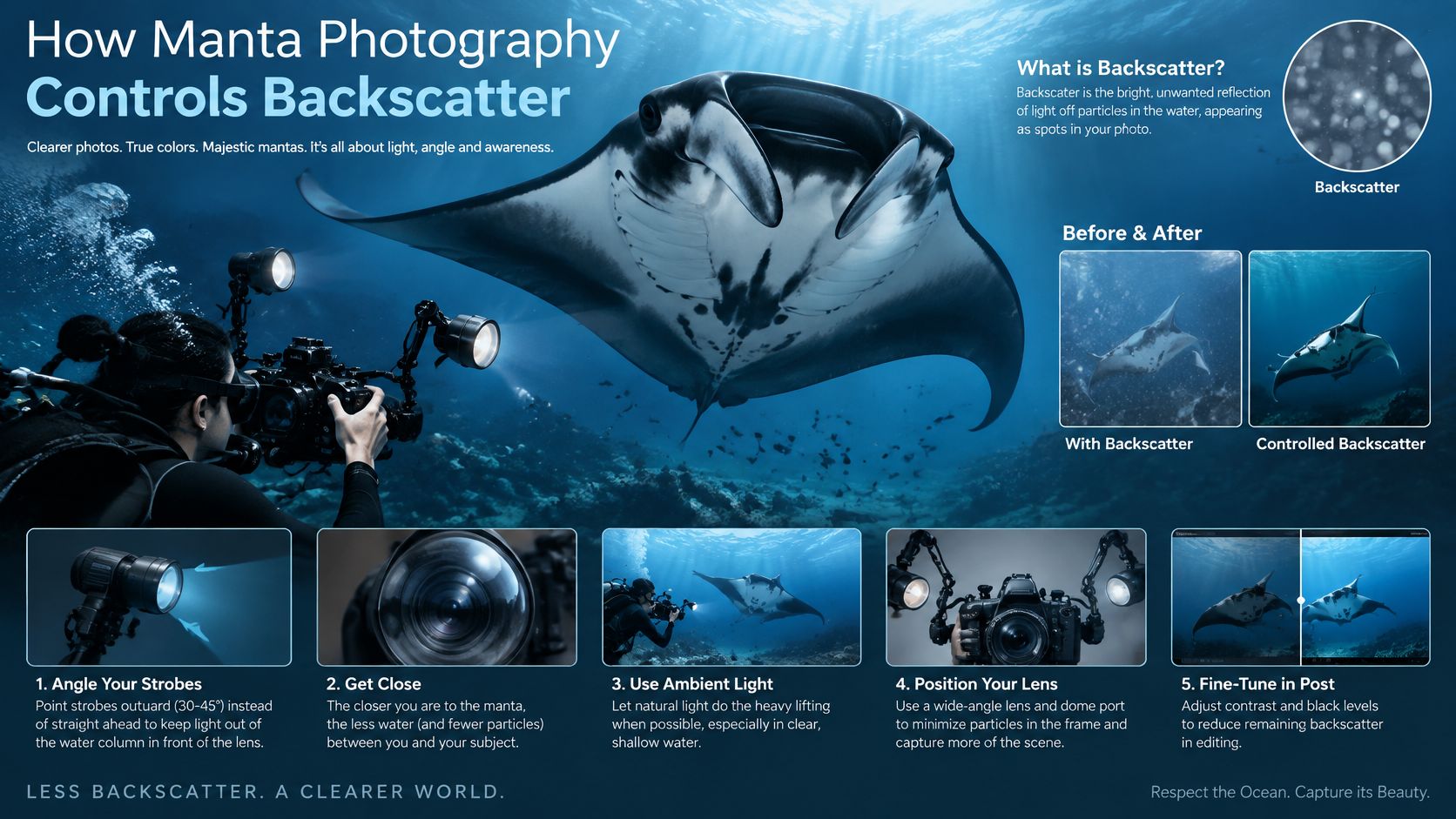
Most disappointing night photos fail for one ordinary reason. Plankton and suspended particles sit between the camera and the manta, and a direct flash lights them up. That reflected haze is backscatter, and turning the flash brighter usually makes it worse.
Think of headlights in fog. More power doesn't create clarity, it creates a brighter wall of particles. A professional solves the geometry first, then worries about output.
Strobe Position Beats Strobe Power
Divers Alert Network recommends a starting geometry of roughly 3 feet between strobes at the 10 and 2 o'clock positions, with heads behind the lens port, in its guidance on shooting in a turbid environment. Angle the beams outward so they light the manta while minimizing the lit water directly in front of the lens.
That off axis arrangement improves contrast and keeps the silhouette readable against black water. Reviewing frame edges underwater matters too. A quick check reveals flare or a snowstorm of particles while the photographer can still adjust, rather than after the animal has gone.
Settings Are a Starting Point, Not a Recipe
Apertures around f/8 to f/13 can help balance strobe exposure with ambient darkness. Even so, shutter speed, ISO, and strobe power still change with subject distance and motion. A manta rolling through a beam won't hold still for a textbook setting.
- Restraint: Two well placed strobes usually serve guests better than a bulky rig pushed into shared space.
- Position: Staying low and stable protects both the composition and the manta's approach.
- Review: Checking edges early prevents a whole dive of unusable frames.
Extra trays, arms, and lights can crowd other divers and obstruct the animal. Responsible positioning isn't a separate rule pasted onto photography. It's part of how clean images are made in the first place.
Setting Realistic Expectations for Your Photo Package
Confusion usually starts with the word package. It sounds like a box with fixed contents. Underwater, only part of that box is under human control, and learning to separate the two parts protects you from disappointment.
An operator can control who photographs, what gear they carry, how files are edited, and when they're delivered. Nobody controls how many mantas appear, how close they swim, or whether visibility stays clear through the feeding passes.
What a Photo Package Can and Cannot Promise
| Operator-Controlled Deliverables | Wildlife-Dependent Outcomes |
|---|---|
| Photographer present during the dive | Number of usable frames |
| Image selection and color correction | How closely a manta approaches |
| File format and download method | Poses, rolls, and feeding behavior |
| Backup and delivery process | Clarity affected by particles and visibility |
Read the File Terms Closely
Ask about retouching, watermarks, aspect ratios for sharing and printing, and whether downloads are high resolution. Check who appears in backgrounds and whether images containing other guests are included or excluded. Browsing manta ray dive Kona pictures can show you the style of imagery, but sample galleries don't confirm your specific package terms.
Ask Kona Honu Divers to confirm current policies directly. Don't infer refunds, rescheduling, image counts, or delivery promises from generic tour descriptions written for a different product. Families, first time night divers, and travelers who value predictable files benefit most from getting those answers in writing.
The honest promise is photographer led documentation. Guaranteed manta portraits would require controlling a wild animal, and that claim should make you cautious.
Plan Your Booking and Dive Day
Picture two divers booking the same night. One shares recent experience, comfort in the dark, and buoyancy concerns before paying. The other assumes every detail is standard and asks questions on the dock. The first diver gives the crew a chance to place them well and explain what the camera plan can realistically capture.
Start with the Kona scuba diving tours page for the broader trip range, then confirm the manta specific itinerary. Reading about what is the best time to see the manta rays in Kona helps with planning, but it doesn't replace current availability or package confirmation.
Confirm These Details Before You Commit
- Availability and site plan: Confirm current dates and whether the Garden Eel Cove itinerary applies to your booking.
- Certification and experience: Ask about minimum certification, age requirements, and any recent logbook expectations.
- Gear inclusions: Clarify rental equipment, cylinders, weights, sizes, and what remains your responsibility.
- Photo terms: Verify that a photographed night dive is available as a named package on your date.
Don't invent answers from the tour pages. Meeting time, duration, price, gear fees, and certification rules can change, and the pages don't confirm package pricing or inclusions that aren't stated. A short direct check prevents a long misunderstanding later.
On the day, follow the briefing as your operating plan. The crew will sequence entry, set the viewing formation, and direct light use so the photographer can work without pushing guests or gear into the manta's path. Your job is simpler than you may expect. Arrive prepared, stay where you're placed, and let the encounter come to you.
Prepare Your Camera, Body, and Dive Gear
Preparation works best when you divide it into three jobs. Prepare the camera, protect the environment, and protect the person. That mental model keeps a long packing list from turning into a pile of unrelated items.
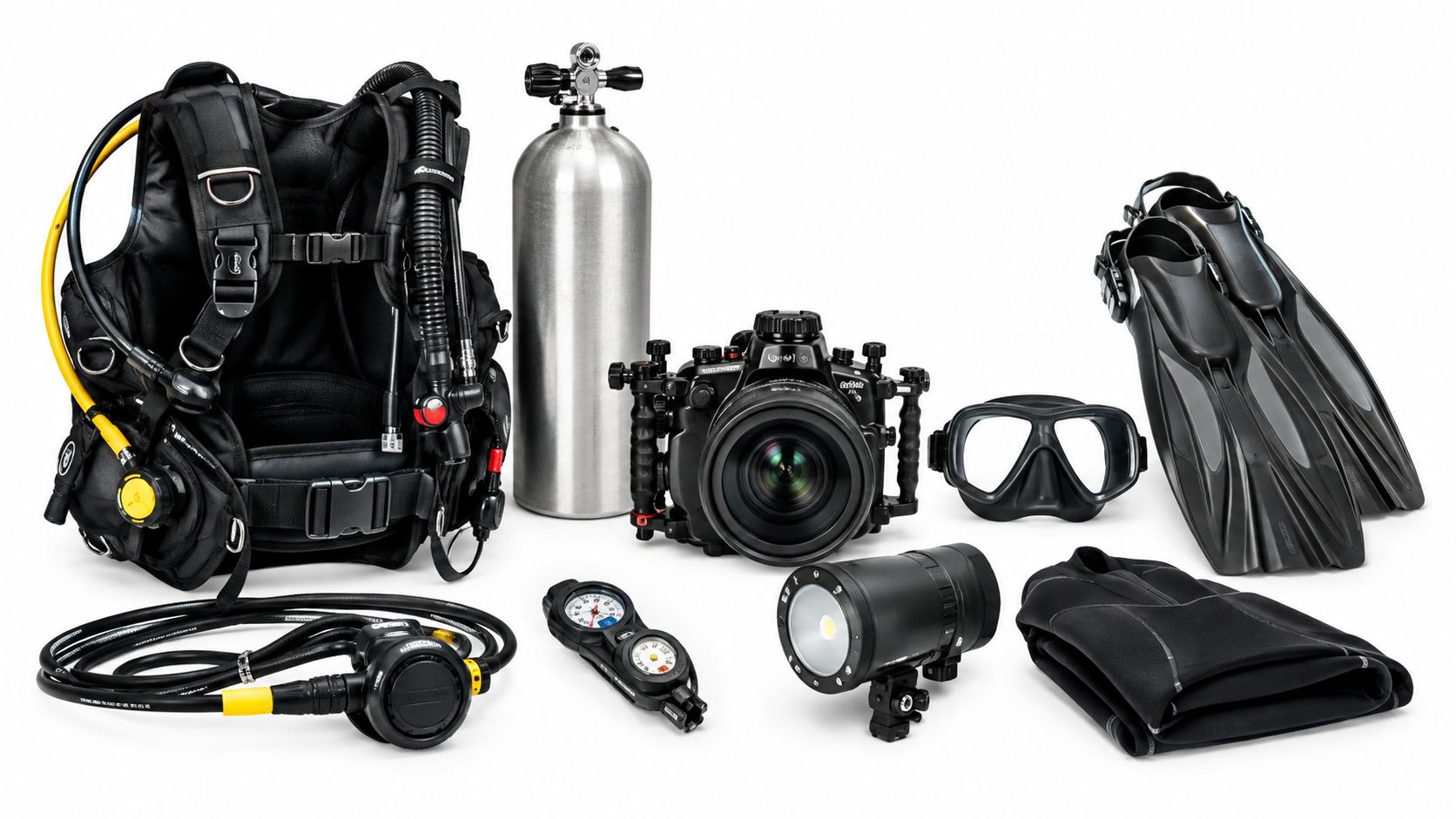
If you're bringing a personal camera, test the housing controls on land first. Clean the port, charge the battery, format or clear storage, and secure a wrist strap or attachment point. You don't want your first housing lesson to happen in darkness while a manta is already feeding.
A Practical Packing and Readiness List
- Personal essentials: Bring identification, required documents, water, warm layers for after the dive, and dry clothing.
- Sun and skin care: Use reef safe sunscreen where appropriate earlier in the day, and follow crew guidance near the water.
- Rental confirmation: Confirm gear, weights, and sizing with the operator before arrival, rather than assuming your size will be waiting.
- Camera readiness: Use a wide angle lens if you're shooting, pre focus, and compose with the beam and silhouettes in mind.
Protect Your Position Underwater
Stay neutrally buoyant, hold a stable position, and leave the manta an unobstructed approach. Don't lift into the water column for a better angle, and don't block another diver's view with arms, lights, or a housing. The animal's repeated passes reward patience more reliably than movement.
If you feel overwhelmed, signal your guide early. A diver who can't maintain position should follow the guide's direction to move, settle with support, or leave the viewing area safely. Speaking up protects your dive, the group's formation, and the photographs everyone came for.
Review Safety, Crowding, and Manta Conservation
The biggest light doesn't win this dive. Neither does the most aggressive camera rig. The best images usually come from a smaller, better managed setup where divers stay low, the water column stays open, and the manta chooses the distance.
Remain near the bottom as directed, point lights in a controlled direction, and never touch or chase a manta. Those rules aren't etiquette for its own sake. They keep the feeding route clear and reduce the chance that your bubbles, fins, or housing change the behavior you're hoping to photograph.
When Several Boats Share the Night
Vessel density and in water spacing can vary, even at Garden Eel Cove. Follow crew positioning, avoid drifting into another group's light, and accept that your photographer may choose restraint over a crowded angle. Background guidance on manta encounters is summarized in practical safety guidance for the Big Island manta experience, but your crew's briefing governs your specific dive.
If you're nervous, feeling unwell on the boat, or unsure you can hover comfortably, tell the guide before entry. Early communication lets the crew adjust supervision and explain surface support. For broader conduct, responsible and considerate diver etiquette reinforces the same principle. Your comfort plan is part of the safety plan, not an inconvenience.
Short FAQ
Do I need to confirm certification in advance?
Yes. Confirm current certification, age, and experience requirements directly before booking, since they aren't established by a photo package description alone.
Can I bring my own camera if a photographer is shooting?
Ask first. Personal gear may be welcome, but it can't crowd the formation or enter the manta's path.
What happens if visibility or manta activity is limited?
Expect documentation of the dive that occurred, not invented replacement images. Confirm any rescheduling or refund policy before you pay.
Book your Kona manta night dive with photo package questions answered in advance, so you can focus underwater on the feeding passes at Garden Eel Cove rather than on camera settings. Kona Honu Divers offers manta focused night diving with crew guidance on positioning, lights, and responsible viewing. Visit Kona Honu Divers to confirm current availability, inclusions, and photo options for your dates.