
The Kona manta dive is a night scuba experience where divers watch manta rays feed on plankton attracted to bright lights, and the strongest sightings are typically from April through September at sites like Garden Eel Cove. It's a real wildlife encounter, not a staged show, so the best results come from understanding the season, the site, and the rules before you book.
If you're picturing a dark boat ride, a cold splash, and a few nervous minutes before something enormous glides into view, you're in the right mindset. That's exactly why this dive stays unforgettable, because the payoff is quiet, slow, and genuinely wild. For the broader Kona dive context, this guide to what makes diving in Kona unique is worth reading alongside the manta plan.
What Makes the Kona Manta Dive Special
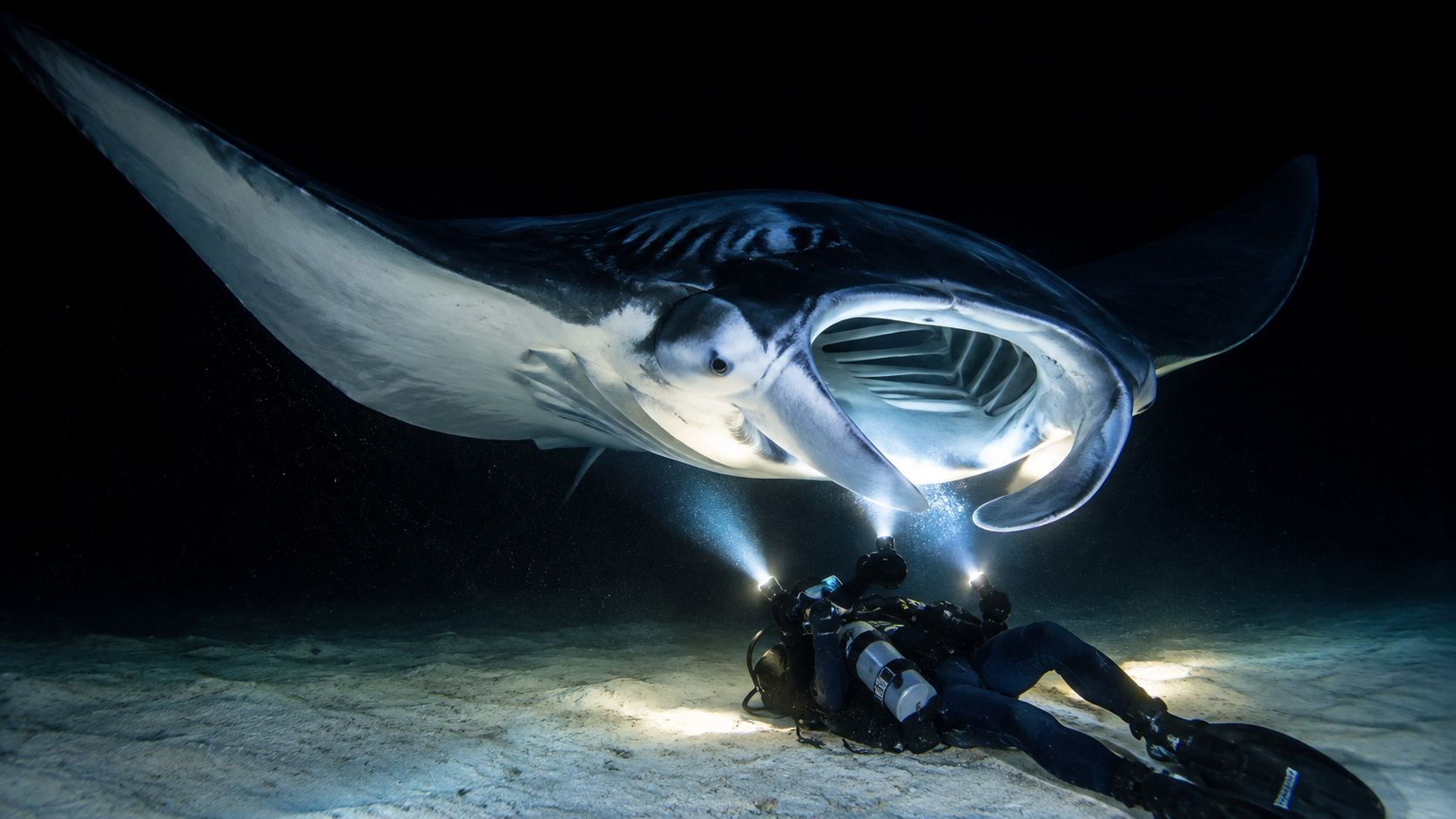
The first time you settle on the sand and look up, the ocean feels like a theater with the lights turned low. Then a white belly appears above you, followed by a second manta turning through the beam, and the whole scene shifts from anticipation to disbelief. The animals aren't performing for people, they're feeding, and that difference is exactly why the encounter lands so hard.
A dive built on a real ecological pattern
Kona's manta encounter grew from a specific sequence of events, not from marketing. In 1979, lights at the former Kona Surf Hotel drew plankton, which drew manta rays into shallow water. A similar effect appeared at Keauhou Bay during construction in the early 1980s, and organized night dives started in the early 1990s, with 1991 marking a scheduled-dive milestone at the original site historical account.
That history matters because it explains why the experience feels so repeatable. The lights create a plankton concentration, the plankton draws the mantas, and consistent site management keeps the viewing area usable night after night. The result is one of the rare wildlife dives where the ecology is visible in real time instead of hidden behind guesswork.
The best manta encounters feel calm, not crowded. Let the animals choose the distance, and the whole dive gets better.
Why it stands out from other wildlife dives
Most wildlife dives ask you to search, drift, or wait for luck. Kona asks you to hold position and let the food chain come to you. That makes the experience easier to follow for first-timers and more interesting for experienced divers, because the behavior is easy to read once the lights go in and the plankton starts to gather.
It's also why people remember the dive in terms of motion rather than spectacle alone. Mantas don't just pass by, they bank, loop, and feed in slow, deliberate patterns that are easy to watch from the bottom. If you want the photo side of the trip as well, this manta dive photo package page shows how operators package that part of the experience.
How the Manta Ray Night Dive Works
A well-run manta night dive depends on light, plankton, and disciplined positioning. Divers settle low on the bottom, lights aim upward, and the illuminated water column becomes the feeding lane. Snorkelers stay at the surface with lights aimed downward, so both groups can share the same space without crowding the animals.
The light and plankton chain
The biology is straightforward. Artificial light gathers plankton, the plankton attracts the mantas, and the mantas feed where the concentration is highest NOAA viewing guide. You often see barrel rolls because that posture lets the ray filter-feed efficiently while staying in the lit column.
That is why layout matters so much. Divers are usually placed in a semicircle near the bottom, which leaves the middle of the water column open. Snorkelers remain above them, so the encounter works as a layered setup instead of a cluttered one.
Diver and snorkeler roles
Divers and snorkelers share the scene, but they do different jobs. Divers anchor the lower light field, while snorkelers maintain the surface glow from above. The mantas move between those layers, and that is what makes the encounter feel close without asking anyone to chase them.
A good operator makes the system feel calm because the spacing is controlled. Drift into the feeding lane, point lights the wrong way, or hover where the animals need room, and the pattern breaks fast. Kona Honu Divers' manta dive photo package is a useful example of how operators organize the dive and the photography around that structure.
Practical rule: keep the center corridor open.
The quiet-looking part of the dive comes from discipline. Every beam, every body position, and every breath is there to preserve space for the mantas. When the crew runs it well, the dive feels calm and readable. When spacing slips, the whole encounter loses its rhythm.
Best Seasons and Times for Your Dive
Season matters more than most booking pages admit. A six-year NOAA-linked dataset recorded 25,444 observations of 118 individual reef manta rays across Kona sites, with the highest abundance generally from April through September and the fewest sightings in January NOAA dataset. That doesn't make winter a bad choice, but it does mean your planning should match the calendar accurately.
How I'd read the year
Spring through early fall gives you the strongest odds of a fuller feeding scene. Summer is usually the most comfortable time in the water, and calmer conditions help people relax, especially if they're new to night diving. Winter still works because the population is resident, but sighting variability rises and booking flexibility becomes more useful.
A “best month” answer only helps if it includes the trade-off. If you want the highest probability of a fuller aggregation, prioritize the warmer half of the year. If your vacation dates are fixed, keep expectations realistic and treat the dive as a wildlife sighting, not a guaranteed performance.
Kona Manta Dive Seasonal Guide
| Month | Sighting Likelihood | Water Conditions | Crowd Level |
|---|---|---|---|
| January | Lower | More variable | Often busy around holiday travel |
| February | Variable | More variable | Moderate |
| March | Improving | Generally calmer | Moderate |
| April | High | Generally favorable | Moderate to busy |
| May | High | Favorable | Busy |
| June | High | Calm | Busy |
| July | High | Calm | Busy |
| August | High | Calm | Busy |
| September | High | Favorable | Busy |
| October | Solid | Generally favorable | Often lighter |
| November | Solid | Generally favorable | Often lighter |
| December | Variable | More variable | Busy around holidays |
That table gives you the honest version of the calendar. It doesn't promise a miracle on any one date, but it does show where the odds improve. If you want a deeper planning layer, this guide to when to dive with manta rays in Kona adds useful local context.
Why Garden Eel Cove Is the Superior Choice
Garden Eel Cove, also called Manta Heaven, gives you the cleanest viewing setup on the Kona coast. It sits offshore from Kailua-Kona near Hoona Bay and Makako Bay, and it's reached by tour boats from nearby harbors such as Honokohau site record. The protected layout gives divers a stable bottom position and a clearer column for the mantas to work through.
Garden Eel Cove versus Keauhou Bay
Keauhou Bay has history and still matters, especially for its strong site fidelity among females in long-term records. But Garden Eel Cove consistently produces larger aggregations in the community-sourced dataset, and that usually translates into a more dramatic viewing night University of Hawai'i study. That's the practical distinction, one site tends to feel more expansive, while the other can feel more resident-focused.
The shape of Garden Eel Cove also helps. You're not swimming after mantas through open water, you're holding a defined observation spot with the reef and bottom beneath you and the open corridor above. That setup makes the dive easier to control, easier to photograph, and easier to share with mixed-experience groups.
Why protected water matters
A protected site isn't just more comfortable, it's more predictable. Less surge means better bottom stability, cleaner breathing control, and fewer unplanned movements into the feeding lane. Those details sound small until you're hovering in the dark and trying to stay still while a manta turns overhead.
Bottom line: choose the site that gives the mantas room to move, not the one that asks the animals to work around you.
That's why Garden Eel Cove earns the stronger recommendation for most divers. It aligns the viewing setup, the reef setting, and the animal movement better than a looser open-water arrangement does.
Certification, Gear, and Physical Preparation
A night manta dive rewards calm divers, not just certified ones. You need enough comfort in the water to hold position, control buoyancy, and follow light discipline without getting tense. If you're still building confidence as a diver, this learning-to-scuba resource is a practical place to start before you book.
What to check before you go
Open Water certification is the usual baseline, and a night diving endorsement helps if you're not already comfortable after dark. Good buoyancy matters more here than on many daytime reef dives because the whole experience depends on staying put without kicking up sand or drifting into the viewing lane.
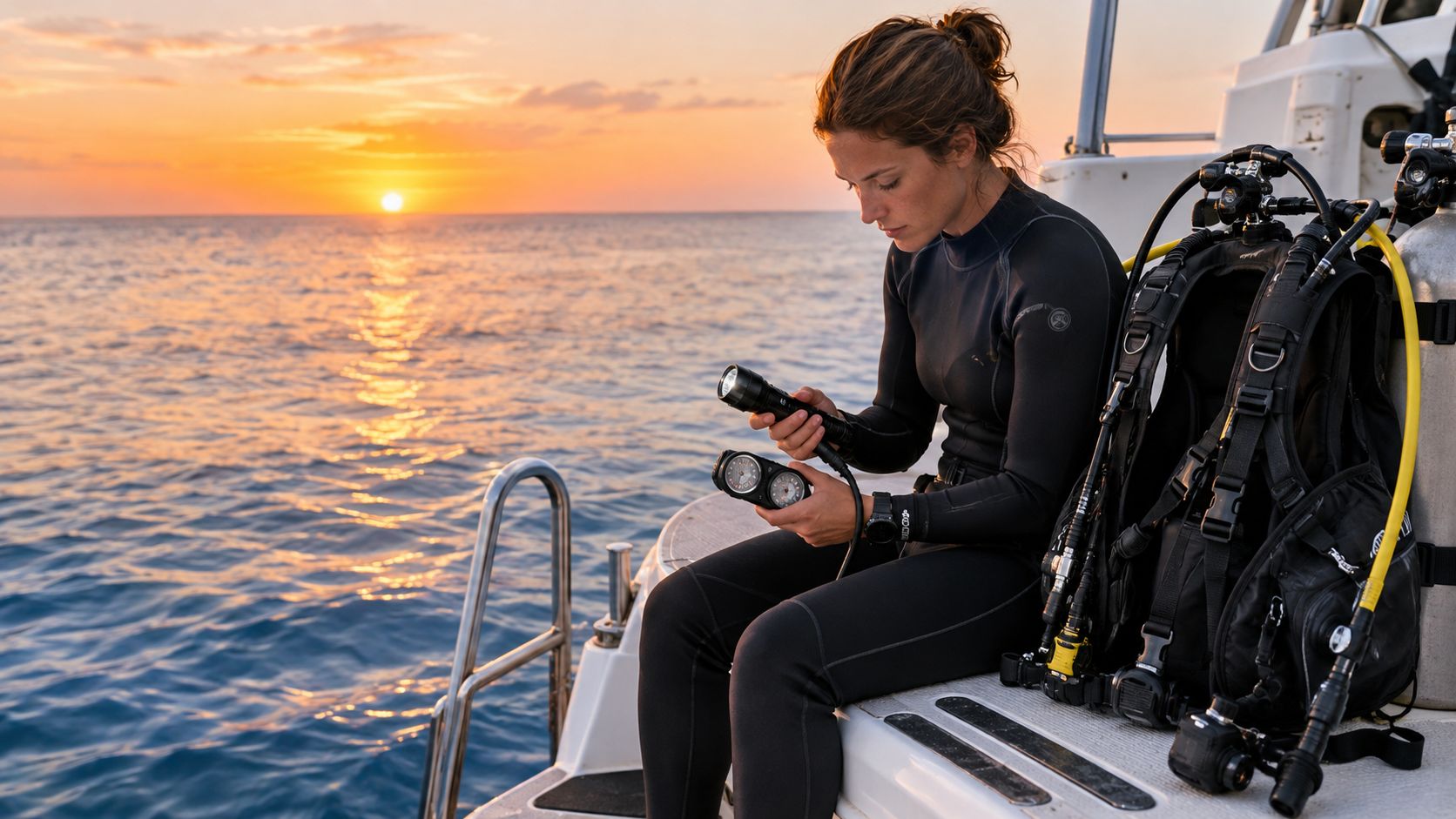
Bring the gear that keeps you relaxed. A properly fitted exposure suit, a reliable dive light, and a mask you trust go a long way toward making the night feel manageable. If you're prone to motion sickness, use your normal prevention routine before boarding so you're not trying to solve that problem once the boat is moving.
What the operator usually handles
Reputable crews usually handle tanks, weights, and the basic briefing, then set the group up around the light plan. That means your job is preparation, not improvisation. Pack a towel, dry clothes for the ride back, and water, because the water time may be the shortest part of your evening but the boat time still matters.
A simple readiness check helps:
- Check your buoyancy: If you can hover without hand-waving or sculling, you'll have an easier time staying in position.
- Check your nerves: If night diving makes you anxious, talk it through before the trip instead of after the boat leaves.
- Check your comfort level: If you haven't dived recently, refresh your skills first so the first descent doesn't feel rushed.
- Check your seasickness plan: Use the remedy you already know works for you.
The gear list is important, but mental readiness is the bigger variable. When divers feel steady, the mantas come closer, the lights stay cleaner, and the whole encounter becomes quieter in the right way.
Safety Guidelines and Dive Etiquette
The central safety issue is not whether manta rays are dangerous. It's whether divers can keep the encounter calm, open, and free from contact. Independent guidance is clear on the main hazards, including vessel or propeller strikes, anchor contact, in-water medical emergencies, drowning, and boat-to-boat collisions in dark, shared water DAN alert diver guidance.
The rules that actually matter
The best dive behavior is simple, and it works because it respects how the animals feed. Keep your body low, keep the feeding lane open, and never touch, chase, block, or ride a manta. Stay aware of the boat, follow entry and exit instructions, and use your light without shining it where it interferes with the animals.
Observation-only diving is the standard, not the compromise. The closer you get by forcing the encounter, the worse the experience becomes.
That principle applies to bubbles too. Timing your breathing so bubbles don't blow directly into a manta's path isn't just polite, it protects the animal's movement. The same goes for cameras and accessories, which should stay out of the feeding corridor rather than being waved at the mantas for a better shot.
Diver and snorkeler etiquette
Divers and snorkelers can share the site well when each group stays in its lane. Divers remain low and shine lights upward, snorkelers stay at the surface and shine lights downward, and neither group dives into the feeding column or crowds the other. The structure works only when people accept that the mantas control the distance.
If you're unsure whether you're ready, use one simple test, can you stay relaxed while remaining still in the dark? If the answer is no, work on that first. Calm control is a conservation tool here, not a luxury.
Booking Your Kona Manta Dive Experience
A good booking decision starts with the site, the season, and the operator's approach to safety. Garden Eel Cove is the stronger site choice for most visitors, but the boat crew matters just as much because the experience lives or dies on execution. Kona Honu Divers offers a two-tank afternoon reef dive combined with a night manta dive, with a guided setup that includes tanks, weights, and a dive light for the manta portion.
What to ask before you reserve
Ask how the crew handles night briefings, what kind of buoyancy support they expect from guests, and whether the trip is set up for divers only or mixed groups. Also ask what happens if conditions change, because a responsible operator won't pretend every night looks the same. If seasickness is a concern, plan ahead instead of hoping it won't matter once you're on the boat.
A short booking checklist helps:
- Confirm the dive site: Garden Eel Cove should be the default conversation for many divers.
- Check your readiness: Make sure your certification and comfort level match a night dive.
- Pack for comfort: Bring dry clothes, a towel, water, and your usual motion-sickness plan.
- Keep the day flexible: The best wildlife trips reward patience and a little scheduling room.
The right operator gives you structure without overpromising. That's the balance you want for a manta dive, enough organization to protect the animals and enough realism to keep expectations honest.
If you want a straightforward way to book a properly run Kona manta dive, Kona Honu Divers offers manta-focused scuba trips built around safety, site management, and clear briefing. Visit their site, review the current schedule, and pick the date that gives you the best chance of seeing Kona's mantas on their own terms.