
Many visitors assume Kona's manta dive is a modern tourist invention. It isn't. Regular manta dives have operated along the Kona Coast since the late 1970s, and a 2002 survey of nine dive shops estimated approximately 11,000 snorkelers and scuba divers joined manta tours that year, generating about $920,000 in direct revenue for those shops, according to Hawaiʻi State Legislature testimony on Kona manta tourism. That narrative defines Kona Divers. You're not booking a novelty. You're stepping into one of Hawaiʻi's longest-running wildlife experiences, and picking the wrong tour for your skills is the fastest way to waste it.
Why Kona Divers Put This Big Island Spot on the Map
Kona sits on the leeward side of Hawaiʻi Island, sheltered from the trade winds that punish other coasts. Divers Alert Network describes Kona as lying in the lee of two very large seamounts, where currents bring relatively clear open-Pacific water to shore, supporting encounters with mantas, turtles, sharks, dolphins, whales, and blackwater plankton, as detailed in DAN's profile of Kona diving conditions. That geography is why boats run year-round here when other islands cancel.
Don't mistake sheltered for automatic. You'll still get surge, current at exposed points, and days when a shore entry is a bad idea. But you get reef gardens, lava tubes, drop-offs, night mantas, and open-ocean blackwater within a short boat ride. Few places pack that range into one harbor.
One Shop, Every Decision in One Place
That's why I send mixed groups to Kona Honu Divers as a single decision hub. Tours, courses, rentals, private charters, gear sales, and repairs sit under one roof, so a novice, a certified partner, a photographer, and a snorkeling parent don't need four separate bookings. You can review the full menu on the Kona diving tours page and match people to trips directly.
Freedivers and spearfishers shopping for gear, serious snorkelers who want skills coaching, and repeat visitors who've already done the standard reef sites all use the same counter. That matters. Staff who service your regulator in the morning and guide your night dive that evening will tell you if you're booking beyond your comfort level.
My rule for first-timers: Book for the diver you are today, not the diver you were five years ago or hope to be by Friday.
If you're newly certified, choose shallow reef time first. If you're current, comfortable at night, and solid on buoyancy, the signature night options open up. Kona rewards that honesty with better dives, not bigger egos.
Signature Tours at Kona Honu Divers
Pick by skill and goal, not by photo on a brochure. Every option below is good. They're not interchangeable.
The Workhorse and the Bucket List
The 2-tank morning trip is where most certified Kona Divers should start. You get two reef dives in daylight, time to sort weighting and buoyancy, and a look at lava formations, coral gardens, and endemic fish without darkness adding task loading. If you haven't dived recently, do this before any night booking. You'll enjoy everything else more.
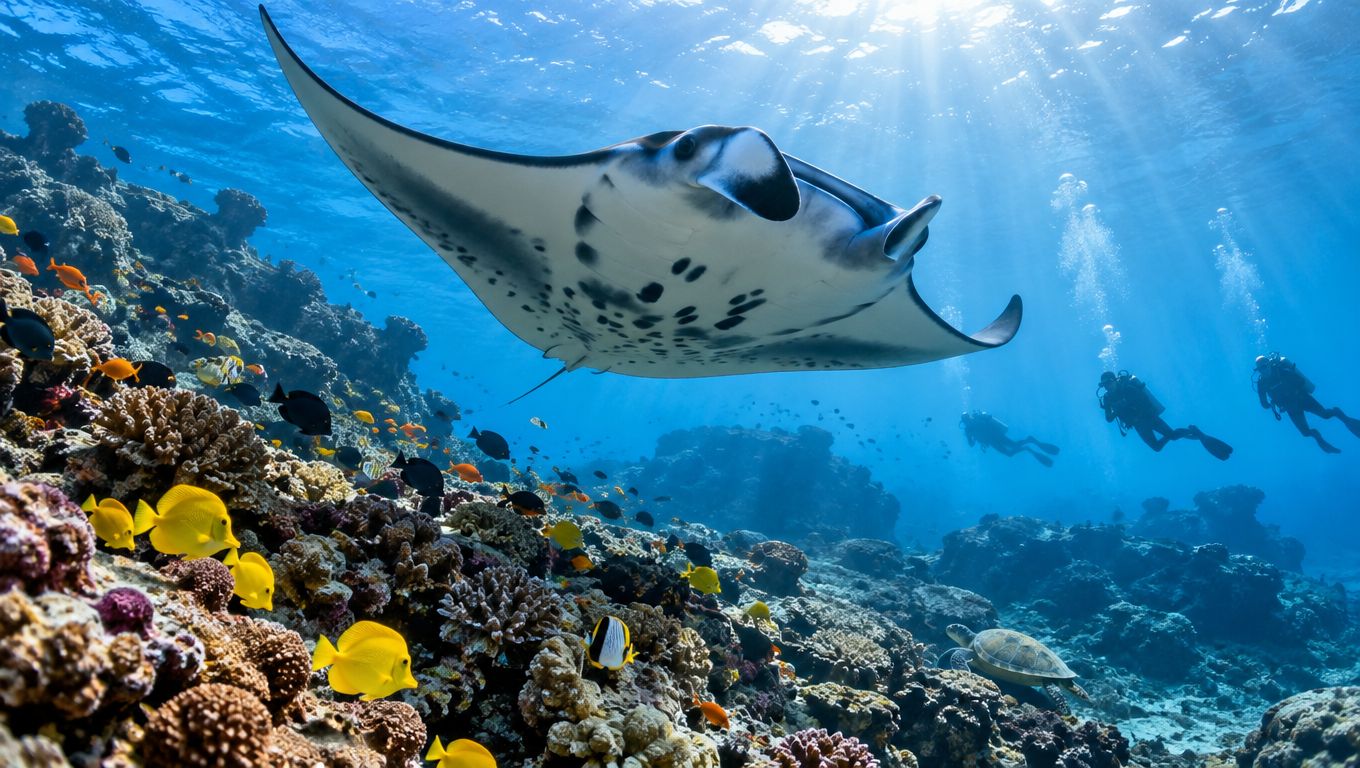
The 2-tank manta dive and snorkel is the famous one, and for good reason. Divers settle near lights that concentrate plankton while snorkelers watch from the surface, so mixed groups can share the same evening. Book it through the manta ray dive tour page, but understand what you're buying. The first tank is a twilight reef dive, the second is the manta encounter after dark. Garden Eel Cove is the superior site for this tour because of its protected location, better viewing area, and better reefs. You get a real reef dive first, not just a wait for sunset, and a viewing setup that spreads divers out instead of stacking everyone on a small patch of sand.
For Divers Who Want More Challenge
The premium advanced 2-tank trip is not a faster version of the morning dive. It's for experienced divers chasing lava tubes, pinnacles, and shark nurseries where depth, navigation, and air consumption actually matter. If that sounds like you, look at more experienced diving opportunities on the advanced trip. If you're still working on trim, skip it. You'll see less, burn gas faster, and hold up a group that paid for advanced sites.
Blackwater is different again. On the Kona blackwater dive, you're tethered in open ocean over very deep water at night, watching larval fish, squid, and jellies rise in your lights. There's no reef, no bottom reference, and no place to kneel when you feel disoriented. Photographers love it. Nervous night divers shouldn't start here.
Private charters solve a different problem. Families with young snorkelers, photographers who need a slower pace, and groups mixing divers and non-divers get control over site choice and timing. You pay for flexibility, and for those groups it's worth it.
Which Kona Honu Divers Tour Fits You Best
| Tour | Best For | Skill Level |
|---|---|---|
| 2-Tank Morning | First Kona reef dives, rusty divers rebuilding comfort | Certified beginner to intermediate |
| 2-Tank Manta Dive and Snorkel | Bucket-list night encounter, mixed diver and snorkeler groups | Certified divers, snorkelers welcome |
| Premium Advanced 2-Tank | Lava tubes, pinnacles, shark nurseries | Advanced, experienced only |
| Blackwater Night Dive | Pelagic creatures, macro photographers | Advanced night divers |
| Private Charter | Families, photographers, custom pace | All levels, by arrangement |
Certifications, Courses, and Refreshers
If you aren't certified, don't try to shortcut your way onto a night dive. Get trained properly, and Kona is an excellent classroom because conditions let you focus on skills instead of fighting surf.
Start, Refresh, Then Specialize
Entry-level certification follows a clear sequence. You complete knowledge development, practice skills in confined water, then do open-water checkout dives locally with an instructor. Mask clearing, regulator recovery, buoyancy control, and buddy procedures aren't paperwork hurdles. They're the exact skills that keep a manta dive calm when a ray passes overhead and every instinct tells you to rise toward it.
Browse the pathway on the scuba classes page and be honest about timing. Don't schedule certification and an advanced trip back to back with no margin for weather, equalization trouble, or simple fatigue.
A refresher is the highest-value course most returning divers refuse to book. If you haven't dived in a few years, a short session rebuilding assembly, buoyancy, emergency skills, and computer use costs less than ruining a premium charter. I've watched confident-on-paper divers burn through a tank in shallow water because they skipped this step. Book the refresher, then the morning 2-tank, then decide on night diving.
Continuing education is where Kona gets fun. Advanced training, deep, night, and nitrox specialties map directly to what's here:
- Nitrox: Extends bottom time on repetitive reef days and pairs well with multi-day packages.
- Night specialty: Builds light handling, navigation, and buddy communication before mantas or blackwater.
- Deep training: Prepares you for pinnacles and walls where clear water makes depth deceptive.
Clear water fools people. You feel shallower than you are, drift farther from your buddy, and notice depth late. Training fixes that before it becomes a problem.
Non-scuba companions aren't left on the dock. Freediving instruction and snorkeling-skills coaching give partners and family members real water competence, better breath-hold safety, finning technique, and equalization basics, instead of a mask and a wave goodbye.
Each credential opens a specific door. Open Water gets you on morning reefs. Comfortable night skills get you to mantas. Advanced experience plus solid gas management gets you considered for advanced and blackwater trips. Work in that order.
Fleet, Rentals, and Equipment That Actually Feels Pro
Boats and rental gear decide more dive quality than most visitors admit. A cramped deck, a free-flowing regulator, or a BCD that doesn't fit will follow you underwater all day.
The fleet setup here focuses on surface-interval comfort for a reason. Covered seating keeps sun off you between tanks, hot showers matter after a night dive when you're chilled and salty, and proper storage keeps cameras and dry bags out of the walkway. You rest better, hydrate better, and start tank two sharper. That's not luxury. That's safety with better manners.
What Proactively Serviced Should Mean to You
Rental regulators and BCDs that are proactively serviced get inspected and maintained before they fail, not after a customer complains. For you, that means inflators that don't stick, second stages that breathe cleanly, and hoses and O-rings replaced on schedule. Check options on the scuba rentals page before you pack a heavy gear bag across the Pacific.
My packing advice is simple. Bring your own mask, computer, and fins if you love them. Rent BCD, regulator, and wetsuit if you're only diving a few days. Free nitrox for certified divers on board is a genuine perk if you're nitrox certified, so bring that card or digital proof and analyze your tank like you were trained to do.
- Mask fit: Personal, bring yours.
- Computer: Bring it, you know its alarms and conservatism settings.
- Camera housing: Test it at home, not on the boat ride out.
The sales and repair side matters mid-trip. Snorkelers can buy a mask that seals, freedivers and spearfishers can replace a fin or belt, and gift buyers can get staff who dive to steer them away from gimmicks. If your own regulator starts breathing wet on day two, in-house repair support beats shipping it home and losing the week.
Try rental gear on before the boat leaves. Breathe from it, inflate and dump the BCD, and check the alternate. Five minutes at the dock prevents an aborted dive.
Planning Around Kona Conditions and Site Choices
Don't book Kona on the phrase calm year-round. Book it with a decision framework, and you'll cancel the right dives and keep the right ones.
Commonly reported conditions include water temperatures of 75 to 81°F (24 to 27°C) and typical visibility of 60 to 100 feet or more, with most reef currents gentle and stronger conditions more likely at exposed points and during blackwater operations, according to destination data for Kona diving conditions. Thermoclines are generally mild but may become more noticeable below roughly 100 feet. Those ranges help, but they don't make today's call for you.
Boat Dive Versus Shore Entry Is a Different Decision
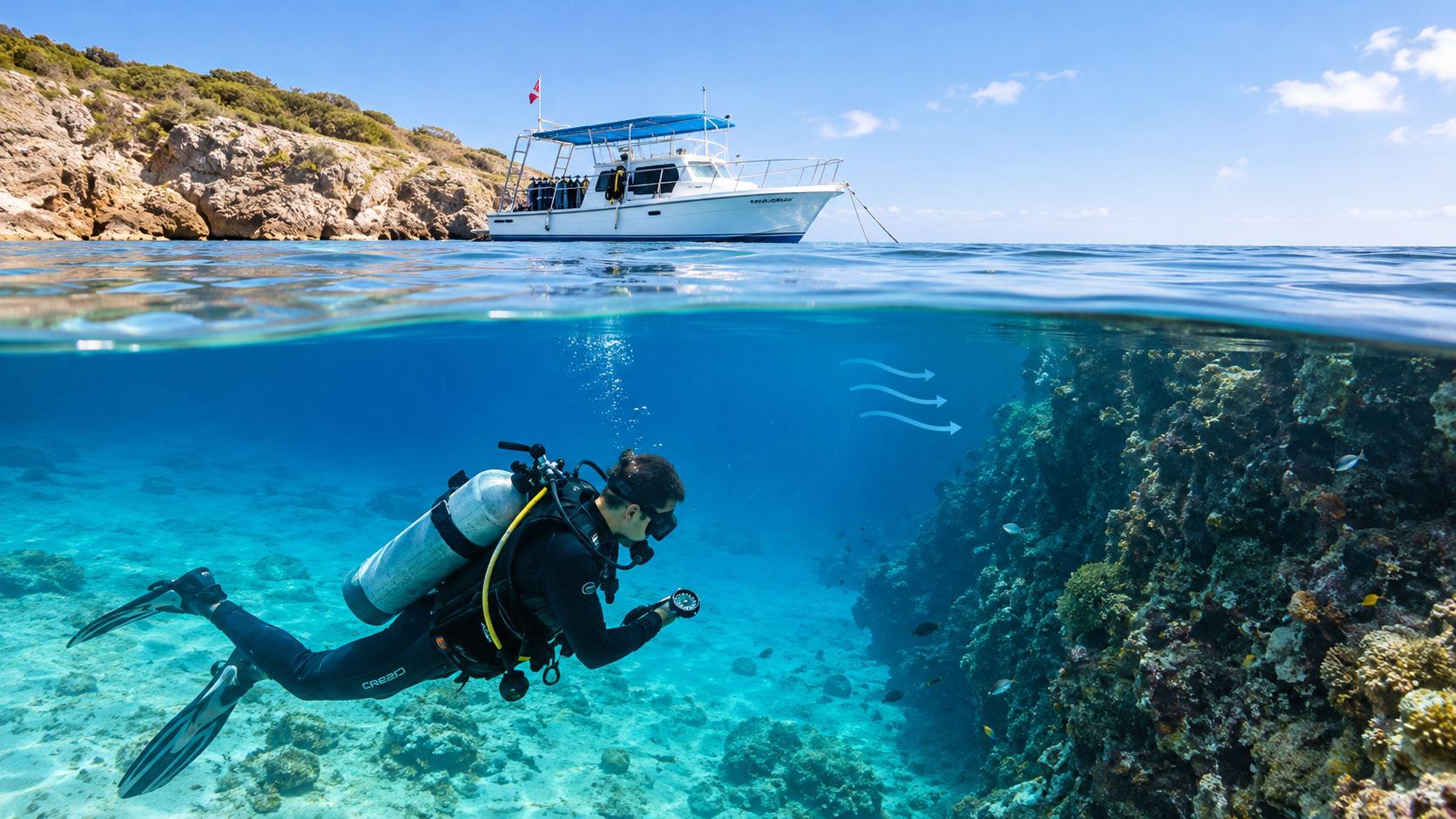
A boat can operate safely offshore while a lava-rock shore entry is getting hammered by surge. Available guidance notes roughly 60 to 150 feet of visibility and 74 to 80°F water, warns that visibility can decline after heavy rain, and advises treating a high-surf advisory as a reason not to attempt a shore entry, as summarized in the Big Island scuba diving guide on conditions and forecasting. Check the National Weather Service marine forecast yourself. Don't rely on a hotel concierge glance at the sky.
Use this sequence:
- Check swell and surf advisories: If there's a high-surf advisory, skip shore entries, period.
- Ask about rain runoff: Heavy rain can cut visibility near shore even when offshore water stays clear.
- Match entry to the weakest diver: A family shore dive fails at the entry, not at depth.
- Protect photography goals: Surge ruins macro and stirs particulate for wide angle, so swap to a sheltered site instead of forcing it.
Seasonal planning helps with exposure protection and expectations, and the guide to the best months to scuba dive in Hawaii is worth reading before you choose dates. Cooler months push many divers toward thicker neoprene, warmer months suit lighter suits, but personal cold tolerance on repetitive and night dives matters more than a chart.
Build flexibility into the trip. Put your must-do manta or blackwater night early in the week, not on your last night. If weather forces a swap, you still have a second chance.
Manta Ray Night Dives Without the Hype
Mantas aren't coming to see you. They're coming to eat, and understanding that makes you a better, less disruptive diver.
Artificial lights concentrate plankton in the water column, and reef manta rays, Mobula alfredi, make repeated feeding passes through the densest patches. Kona Honu's overview notes photo-identification from unique ventral spot patterns has enabled tracking, with the Manta Pacific Research Foundation identifying more than 270 manta rays in the Kona study area, as explained in background on Kona manta rays and photo identification. Light drives plankton, plankton drives mantas. You're a bystander at a feeding event.
Why Garden Eel Cove Wins
There are two principal viewing areas, Keauhou Bay, called Manta Village, and Hoʻona Bay and Makako Bay, associated with Manta Heaven and Garden Eel Cove. I recommend Garden Eel Cove because its protected location gives a better viewing area and better reefs, so your twilight dive has real structure and life, and the night setup gives mantas cleaner feeding lanes. Manta rays were observed on approximately 80% of dives at Garden Eel Cove in the testimony data cited earlier. That's strong, and it still isn't a guarantee.
Read the background on diving with manta rays before you go, then accept biological variability. A 2025 University of Hawaiʻi study analyzed more than 23,000 sightings of 167 individual reef manta rays over 13 years and found stable aggregations despite increased tourism, with aggregation size closely tracking zooplankton availability, according to the University of Hawaiʻi study record on Kona manta aggregations. No plankton, fewer mantas. No operator can schedule food.
Know about crowding before you're in it. A peer-reviewed Kona study surveyed 444 participants, with 284 snorkelers (64%) and 160 scuba divers (36%), and found 82% felt crowded by snorkelers, 78% by boats, and 69% by scuba divers, as reported in peer-reviewed research on crowding at Kona manta sites. Sites could receive as many as 30 tour boats and 300 participants in a single day. Choose an operator that briefs spacing and enforces it.
Etiquette that actually helps: Stay at least 3 meters away, approach from the side, stay calm and still, hold neutral buoyancy, and never block the feeding corridor.
Don't touch, chase, or rise into a ray's path for a photo. Mantas have been documented changing course, avoiding swimmers, and interrupting feeding during encounters. Your job is to be boring furniture on the bottom. Do that, and the show comes to you.
Booking, Packing, Photography, and Local Rules
Good Kona trips are built on boring preparation. Book early, pack for night work, and learn Hawaiʻi rules before a ranger or captain has to teach you.
Lock must-do nights first in the FareHarbor flow, then fill mornings around them. Keep a buffer day before flying home and don't stack certification, blackwater, and a dawn departure into one heroic plan. Review responsible and considerate diver etiquette while you book, because boat and reef behavior is part of the product you're buying into.
Pack, Shoot, and Don't Get Sick
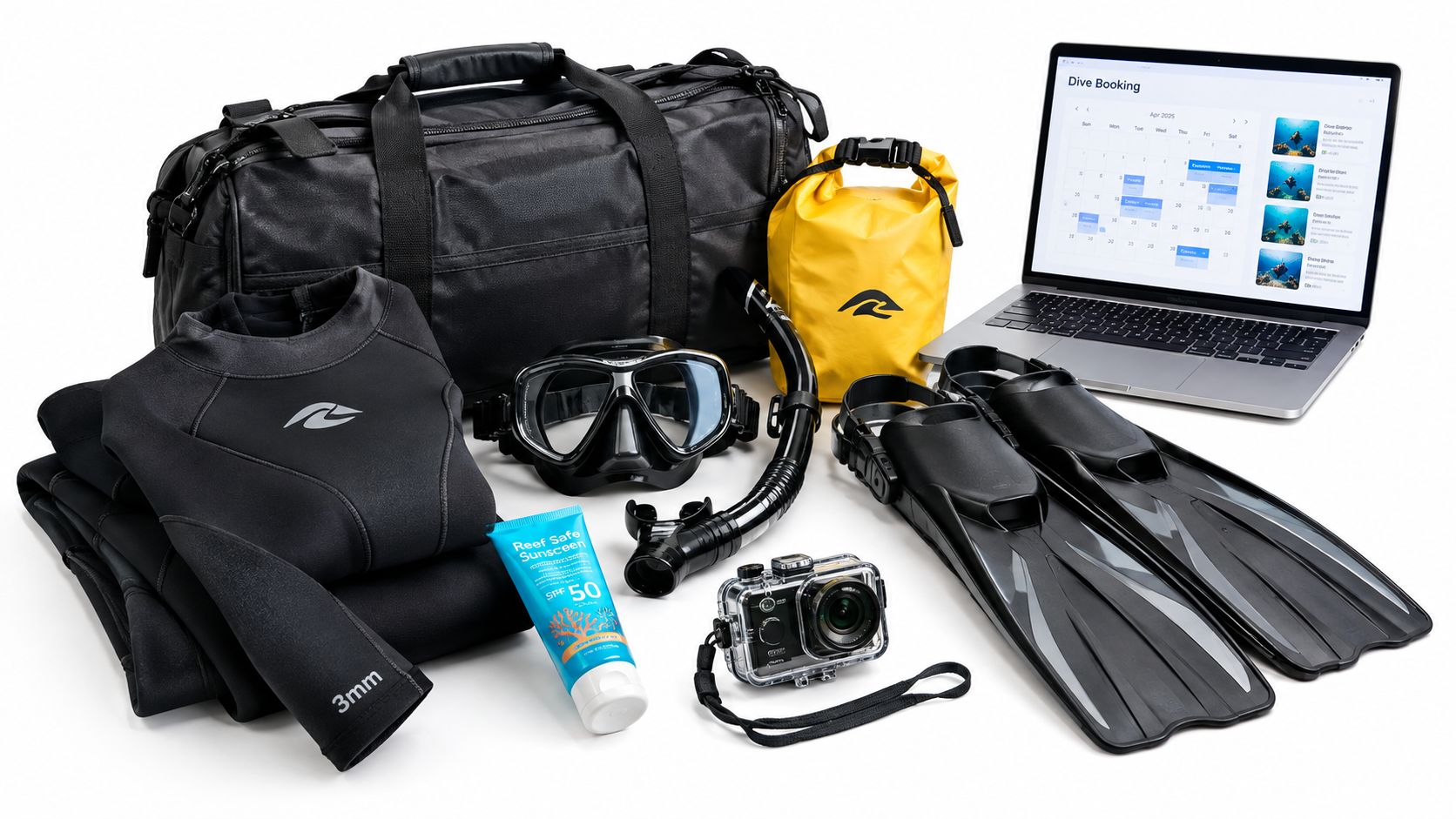
Pack a 3 mm wetsuit as your baseline and adjust for season and repetitive night diving, reef-safe sunscreen, a surface marker buoy, and redundant lights for night dives. Photographers need wide angle for mantas, controlled strobe power so you don't blast plankton into white noise, and a focus light plus macro mindset for blackwater. Get close properly with buoyancy, not by kneeling on coral.
Seasickness ruins more evenings than current does, especially on blackwater drifts where you can't fix your eyes on a reef. Sort it before you board:
- Ship-EEZ Seasickness Patch: Ship-EEZ Seasickness Patch for people who prefer a patch option.
- Dramamine pills: Dramamine pills, taken early enough to work.
- Bonine pills: Bonine pills, a common alternative many divers tolerate well.
- Sea Band wristbands: Sea Band wristbands, a cheaper generic brand that gets better ratings.
- Ginger chews: Ginger chews as a mild, non-drowsy backup.
Don't test a new medication on dive day. Talk to your clinician, trial it on land, and stay hydrated.
Hawaiʻi Rules You Must Follow
Hawaiʻi requires divers to display a dive flag and remain within 100 feet of it while diving, except in an emergency. A surface flag must measure at least 12 by 12 inches, a flag on a vessel longer than 16 feet must measure at least 20 by 24 inches with a blue-and-white alpha flag, and night flags must be illuminated well enough to be identifiable from 100 feet away, per Hawaiʻi DLNR special provisions for dive flags.
At the Old Kona Airport Marine Life Conservation District, taking, injuring, or removing marine life including live coral, algae, shells, and ʻopihi is prohibited, feeding or introducing attractants is prohibited, and anchoring is barred, according to DLNR rules for the Old Kona Airport Marine Life Conservation District. Look, photograph, leave everything where it lives.
Choosing Your Trip and Booking with Confidence
Stop researching every Kona Divers option as if they're all for you. They're not, and that's the point.
First-time visitor: Book a 2-tank morning reef trip, then the 2-tank manta dive at Garden Eel Cove later in the week. You'll build comfort in daylight and earn the night dive. Add a refresher first if you've been dry for years.
Returning certified diver: Go morning reef on day one to recalibrate, then choose between premium advanced sites or blackwater based on what you enjoy. Structure and depth, pick advanced. Weird pelagic life and photography, pick blackwater. Don't book both on consecutive nights unless you're sleeping well and managing gas easily.
Photographer or family group: Consider a private charter. You control pace, site choice, and surface time, and snorkelers aren't rushed to match a dive group's schedule.
Booking tours, a course, rentals, and any gear purchase in one place cuts the usual vacation friction. Your sizes, certification level, and yesterday's performance are known to the same crew advising tomorrow's booking. Use that. Tell them your recent dive history, accept a recommendation to step down a level if they make it, and you'll get better dives than the person who argued onto the wrong boat.
Pick your profile, book that trip, and get in the water.
Kona Honu Divers brings tours, certification and refresher courses, proactively serviced rentals, private charters, and gear sales and repair together in one Kona shop, so you can match a morning reef dive, Garden Eel Cove manta night, advanced trip, or blackwater excursion to your real skill level. Visit Kona Honu Divers to choose your trip, confirm availability, and book the Kona dive that fits you.