
Clear water doesn't necessarily mean a safe entry. Kona's sheltered coast can offer excellent offshore diving while swell makes a nearby lava-rock exit hazardous, a distinction highlighted in Big Island shore-diving guidance. The most useful way to plan Kailua Kona scuba diving isn't to collect famous site names. It's to match the day's ocean conditions, your current skills, and the experience you want.
Why Kailua Kona Is a Scuba Diving Destination Unlike Anywhere Else
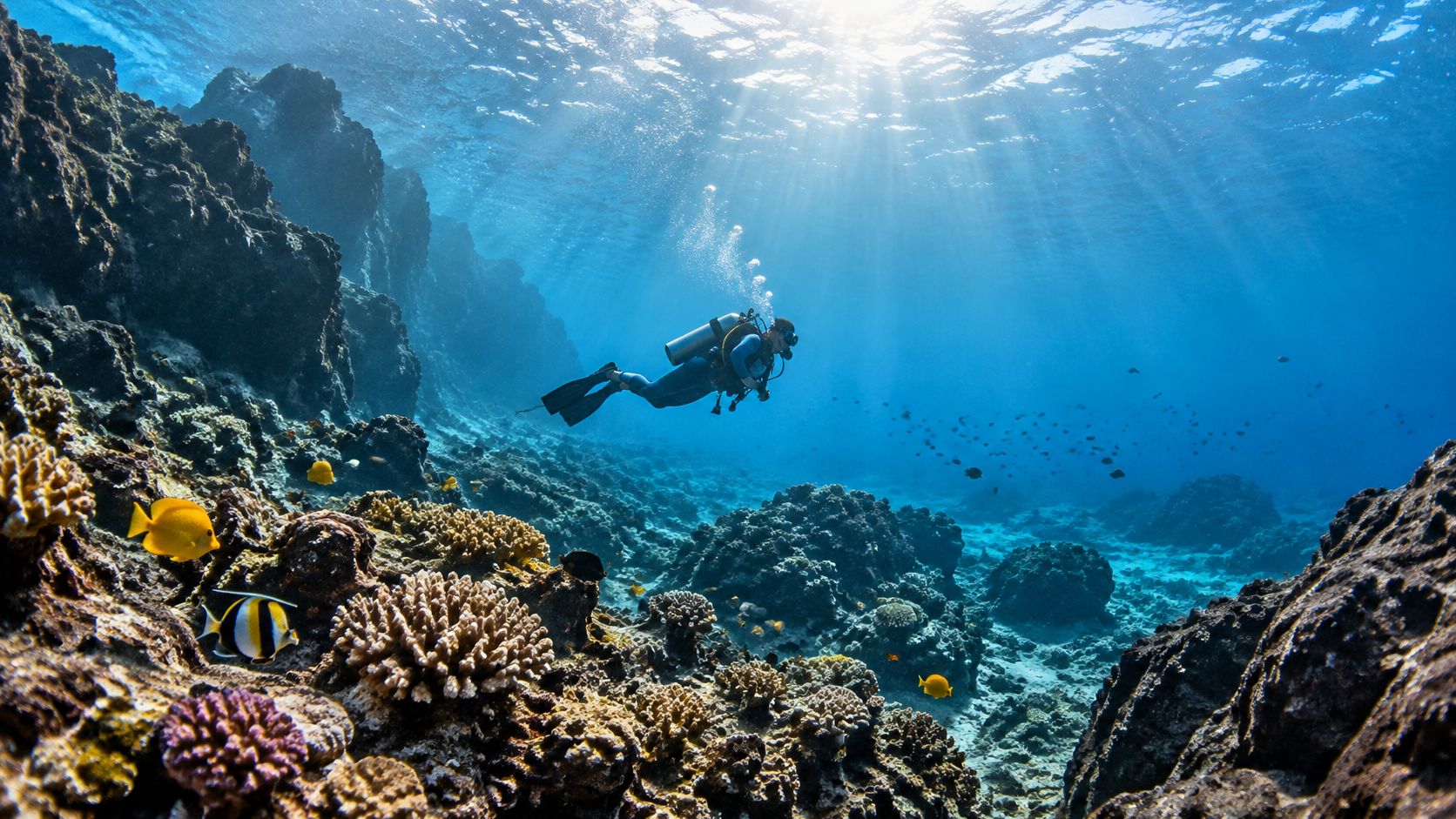
Kona's underwater appeal starts with contrast: volcanic terrain, living reef, and open Pacific water within the same diving destination. You can plan around reef exploration, stationary manta viewing, or a specialized offshore night dive, but those aren't interchangeable experiences. Each asks something different of the diver.
The coast's reputation for favorable conditions has a physical explanation. Kona sits in the lee of substantial volcanic terrain, while offshore currents supply relatively clear water, as described in Divers Alert Network's Kona diving overview. That combination supports varied diving, but wind, swell, surge, and current still determine what's practical on any particular outing.
Choose the experience before the site
A newly certified diver may get more from an uncomplicated reef route than a dramatic formation requiring constant depth corrections. A photographer might prefer time over a modest patch of reef instead of covering distance. An experienced diver seeking open-water exposure needs a different briefing and gas plan altogether.
Start with these distinctions:
- Reef exploration: Prioritize manageable depth, easy communication, and time to observe rather than distance traveled.
- Wildlife viewing: Decide whether you want an organized encounter or a reef dive where sightings remain incidental.
- Specialized diving: Treat advanced terrain and offshore night diving as separate commitments, not automatic upgrades.
A destination worth observing carefully
Kona's reefs are also a monitored ecosystem, not a scenic backdrop. NOAA assessed West Hawaiʻi reef-fish and benthic communities during the 2015 bleaching event, establishing a baseline under environmental stress; subsequent reporting describes a 45% decline in west-coast fish biomass between 2008 and 2018, according to the West Hawaiʻi reef assessment record.
That context changes what constitutes a good dive. Careful buoyancy, patient observation, and leaving animals undisturbed matter more than completing a checklist of attractions. Choose a route you can dive cleanly, not merely one you can technically reach.
Reading Kona’s Conditions Like a Local
A useful conditions check answers a specific question: Can this group enter, complete the planned route, and exit safely today? A favorable regional forecast doesn't answer that by itself. Neither does a photograph of flat water taken earlier in the week.
Separate surface access from underwater conditions. A boat can avoid a difficult shoreline entry, but it doesn't remove current, surge, or an awkward boarding ladder. Likewise, a sheltered-looking entry doesn't prove that the return route will remain comfortable.
Read the forecast against the actual entry
Check swell direction, height, and period alongside wind and tide timing. Then ask the operator how those conditions affect the proposed site rather than trying to translate a forecast into a universal go-or-no-go number.
At a shore entry, watch the water through successive sets. Look for water washing across the exit, forceful backwash, and surge that would make standing or removing fins difficult. Don't judge the site solely during a quiet gap.
Practical rule: If you can't explain how you'll get out when conditions are less convenient than they are now, don't enter.
Use a short checklist before committing:
- Forecast exposure: Does the swell direction expose this shoreline, even if the broader coast looks sheltered?
- Exit practicality: Can you return with tired legs, reduced gas, or a buddy needing assistance?
- Underwater workload: What current and surge does the crew expect, and how will that change the route?
- Alternative plan: Is there another suitable site, a boat option, or a sensible reason to stay dry?
Plan for workload, not just visibility
Agree on turn pressures and gas reserves before entry. Tell the guide if current-related exertion could be a problem, and secure cameras and hoses so you aren't managing loose equipment during surge. Don't let enthusiasm for clear water override a conservative route.
Visibility also needs context. Suspended material can make photography frustrating without necessarily making the dive unsuitable. The important questions are whether you can maintain buddy contact, move confidently, and follow the guide's plan.
Use this guide to the best months to scuba dive in Hawaii for broad scheduling, then make the final site decision with current local information. Seasonal planning helps you choose travel dates. It doesn't replace the briefing immediately before a dive.
Signature Dive Sites Around Kailua Kona
The best Kona site is the one that fits your goals without exceeding your usable skills. Certification establishes training history; it doesn't tell a guide how comfortably you handle surge, maintain depth while photographing, or manage an unfamiliar exit.
Treat site descriptions as a starting point for a conversation. Ask what route the crew proposes, whether there's an overhead environment, and what happens if someone wants to turn early. Those answers reveal more than a dramatic site photograph.
Manta sites and reef-focused choices
Garden Eel Cove belongs on the shortlist for divers prioritizing manta viewing. Its designated sandy viewing area creates a different experience from a roaming reef dive. Choose it for the encounter setup rather than expecting an unrestricted nighttime exploration.
Keauhou, commonly called Manta Village, is another established manta location. It deserves comparison on the proposed viewing arrangement, access, and current conditions, not solely on how close it is to your accommodation. The detailed comparison below matters more than convenience alone.
Kealakekua Bay is worth discussing when reef observation and photography are your priorities. Ask exactly where the trip will dive and how access is arranged. A bay name on an itinerary isn't a complete description of the underwater route, and conservation restrictions deserve explicit attention.
Shore entries and advanced terrain
Two Step appeals to divers considering independent shore access, but the entry is part of the dive, not a minor inconvenience before it. Apply the conditions assessment above, and seek local orientation if the site is unfamiliar. Don't carry a camera system into an entry you haven't first evaluated without distractions.
For boat-accessed pinnacles and lava formations, distinguish open-water sightseeing from penetration. You can appreciate a formation without swimming inside it. If a proposed route includes an overhead, ask whether your training and equipment are appropriate before agreeing to participate.
Deeper or offshore routes shouldn't be sold to yourself as guaranteed shark dives. Wildlife remains optional; depth, gas management, and water-column awareness are the commitments you're accepting. A worthwhile advanced dive still needs to make sense if the hoped-for animal never appears.
Kona Dive Sites at a Glance
| Site | Best For | Typical Conditions | Signature Encounter |
|---|---|---|---|
| Garden Eel Cove | Organized manta viewing | Stationary viewing setup, subject to conditions | Feeding mantas |
| Keauhou / Manta Village | Alternative manta location | Site-specific night briefing essential | Manta viewing |
| Kealakekua Bay | Reef observation and photography | Route and access require confirmation | Reef communities |
| Two Step | Locally oriented shore divers | Entry and exit depend on swell | Shore-access reef exploration |
| Boat-selected pinnacles and lava formations | Advanced topography | Depth, surge, and exposure vary | Volcanic terrain |
| Operator-selected deeper offshore sites | Experienced open-water divers | Current and gas planning are central | Possible pelagic encounters |
Use this table to identify a conversation, not to demand a destination. A crew that changes sites for sound operational reasons is making a better decision than one that follows yesterday's plan regardless of today's water.
Manta Night Dives and Why Garden Eel Cove Stands Out
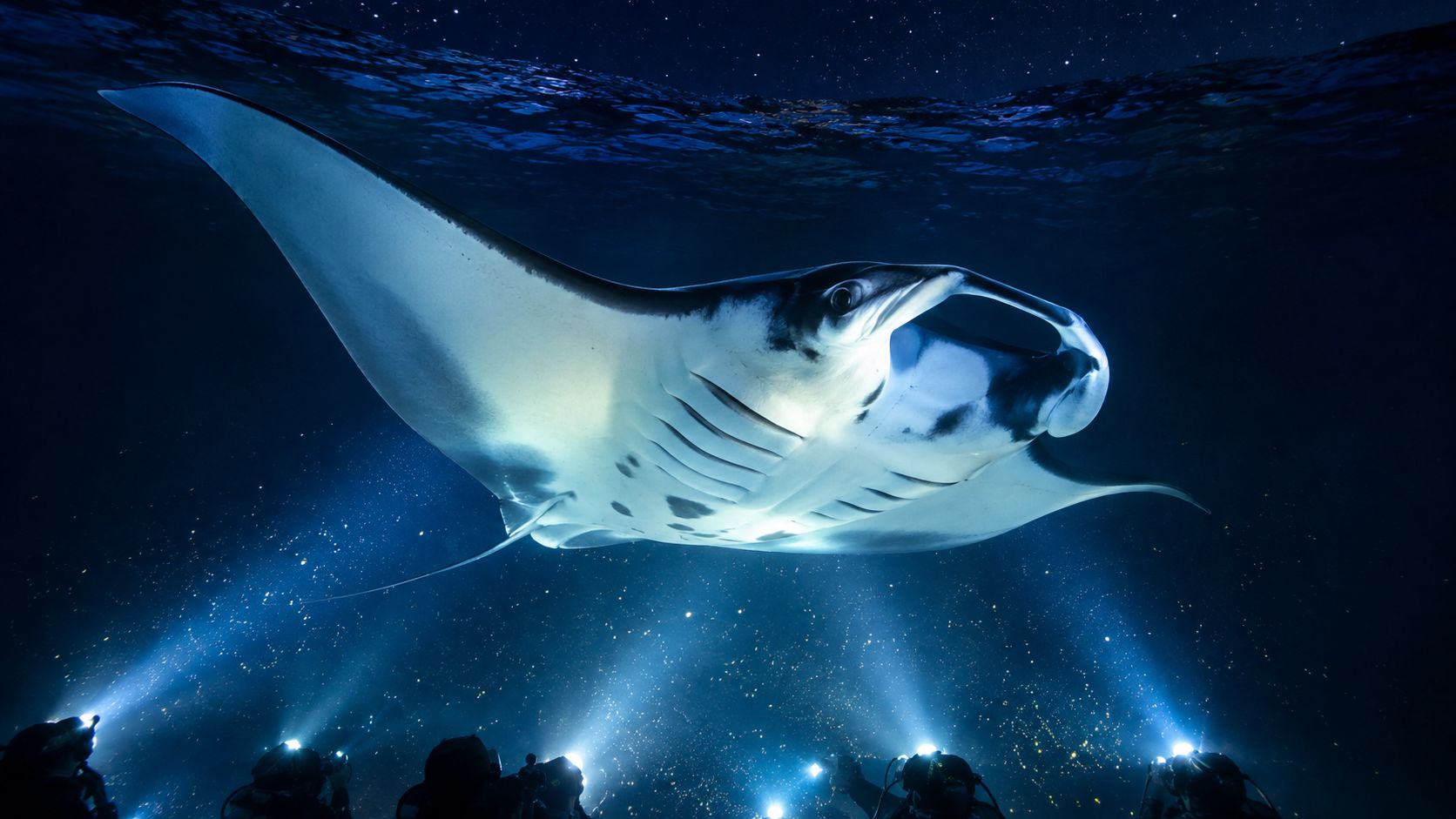
The manta encounter begins with food, not a performance. Artificial lights concentrate plankton, and reef mantas filter-feed in the illuminated water. The Woods Hole account of Kona's manta aggregations explains how underwater lighting helped establish this recurring feeding opportunity.
That creates a counterintuitive trade-off: water full of plankton may look less clear while offering the conditions that attract feeding mantas. Don't judge the night by how empty and transparent the light beam looks.
Why Garden Eel Cove is the stronger choice
For a first manta dive, Garden Eel Cove is the preferred choice because of its protected setting, better viewing area, and surrounding reef experience. The sandy staging area is especially useful: divers can remain grouped away from much of the adjacent coral rather than continually repositioning.
The viewing area is approximately 35–40 feet deep, according to the Garden Eel Cove site description. Follow the guide's positioning instructions while controlling buoyancy and keeping fins clear of the bottom. A stationary dive still requires active attention to depth, breathing, and equipment.
The animals' repeated returns are well documented. A six-year study recorded 25,444 observations of 118 individually identified reef mantas across Manta Heaven and Manta Village, supporting strong site fidelity rather than dependence solely on passing offshore animals, as detailed in the scientific manta aggregation study.
Reliability isn't a promise of a crowd
Research-based reporting on a 2025 University of Hawaiʻi analysis of more than 23,000 observations from 2010–2022 involving 167 mantas describes group size tracking zooplankton availability, with Garden Eel Cove supporting larger groups more consistently than Keauhou, as summarized in this review of Kona manta observations.
That supports choosing Garden Eel Cove. It doesn't support promising a particular number of animals.
A smaller encounter can still be excellent. Give the animals space instead of trying to manufacture a closer pass.
Passive interaction is nonnegotiable. Don't touch, chase, block, grab, or ride a manta; contact can damage its protective mucus layer, as explained in Kona manta interaction guidance. Keep lights directed downward rather than into an animal's eyes.
Review the Kona manta night-dive overview for preparation, then compare the manta dive and snorkel tour options. Ask about site selection and no-sighting terms before paying.
Blackwater Diving After Dark in the Open Pacific
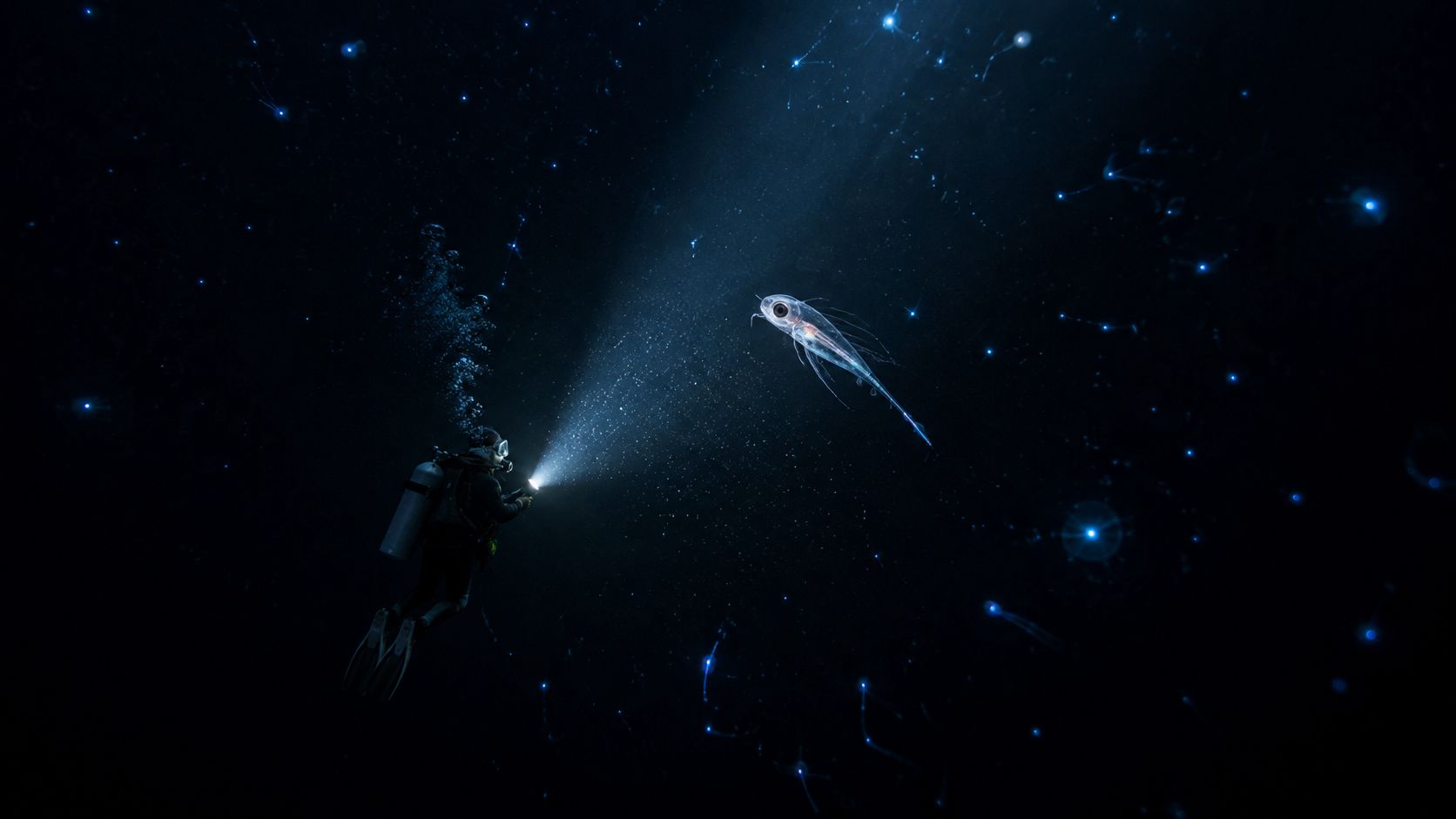
A blackwater dive asks you to pay attention to a different scale of life. Instead of watching a large animal cross a familiar reef, you're searching dark open water for small subjects illuminated by your light. The attraction is close observation, not covering ground.
Treat it as a specialized offshore night dive, not a more adventurous version of the manta excursion. You need a clear understanding of the boat's procedures, your position in the water, and how the crew keeps divers organized when there's no reef beneath them to use as a reference.
Confirm the system before committing
Ask the crew to explain the planned operating depth, line or tether arrangement, light signals, separation procedure, and recovery process. Don't assume that procedures you used with another operator will apply. The water below the divers isn't the planned diving depth, and the distinction needs to be unmistakable.
Your suitability depends on more than willingness to enter dark water:
- Buoyancy: Can you hold depth without following a moving subject upward or downward?
- Task management: Can you monitor gas, depth, the group, and your light while using a camera?
- Night readiness: Are equipment handling and communication familiar enough that darkness won't overwhelm them?
- Recovery confidence: Are you comfortable following the boarding procedure after an unfamiliar offshore experience?
Photograph less until you're settled
For photographers, the temptation is to pursue every interesting shape. Resist it until you understand your position relative to the operating system and other divers. A missed image is inconsequential compared with losing depth awareness.
Keep the camera configuration manageable and discuss lighting etiquette before entry. If adjusting a setting takes your attention away from the dive, stop photographing and reset. Blackwater rewards patience, but it shouldn't require sacrificing basic awareness for a subject.
Read the Kona blackwater dive preparation guide before deciding whether the format suits you. Then check the Blackwater Dive tour requirements directly with the crew, including prerequisites and current operating procedures. Eligibility should be confirmed before arranging the rest of your evening around it.
Choosing the Right Trip Type for Your Experience Level
Choose the least complicated trip that delivers the experience you want. Booking an advanced charter because you hold an advanced card can be a poor choice if your recent diving has been infrequent. A straightforward guided reef outing may offer more enjoyment and better photography with less workload.
For a certified, current diver, a morning reef boat trip is a sensible starting point. Use it to assess weighting, rental fit, and comfort before adding specialized evenings. The diving tours lineup provides a starting point for comparing formats rather than assuming every departure suits every diver.
Match training and recent experience
New divers should discuss instruction before selecting a wildlife specialty. An introductory experience, full certification course, and refresher serve different purposes. Use the Big Island scuba diving guide for beginners to identify which conversation to have with an instructor.
For experienced divers seeking more demanding routes, compare the advanced dive trip. Describe your recent depth exposure, buoyancy comfort, and experience in current candidly. Ask what qualifications apply rather than assuming the trip name tells you everything.
| Your situation | Sensible starting point | Confirm before booking |
|---|---|---|
| Certified and recently active | Guided reef boat trip | Route suitability and equipment |
| Certified but rusty | Refresher assessment | Required skills review |
| Not certified | Instructor-led training option | Medical screening and course scope |
| Experienced and seeking complexity | Advanced charter | Prerequisites and expected workload |
| Group with competing priorities | Private-charter inquiry | What can realistically be combined |
Plan mixed groups explicitly
A private charter can be useful when photographers want a slower pace or family members have different priorities. It offers planning flexibility, not permission to disregard conditions or combine incompatible activities.
For scuba-and-snorkel groups, confirm whether both activities can happen on the same departure and at an appropriate site. Ask about supervision, water confidence, and how each person boards afterward. A shared boat day works best when the crew knows everyone's needs before departure, not when a non-diver arrives expecting an improvised arrangement.
Gear, Seasickness Prep, and Safety Rules Specific to Kona
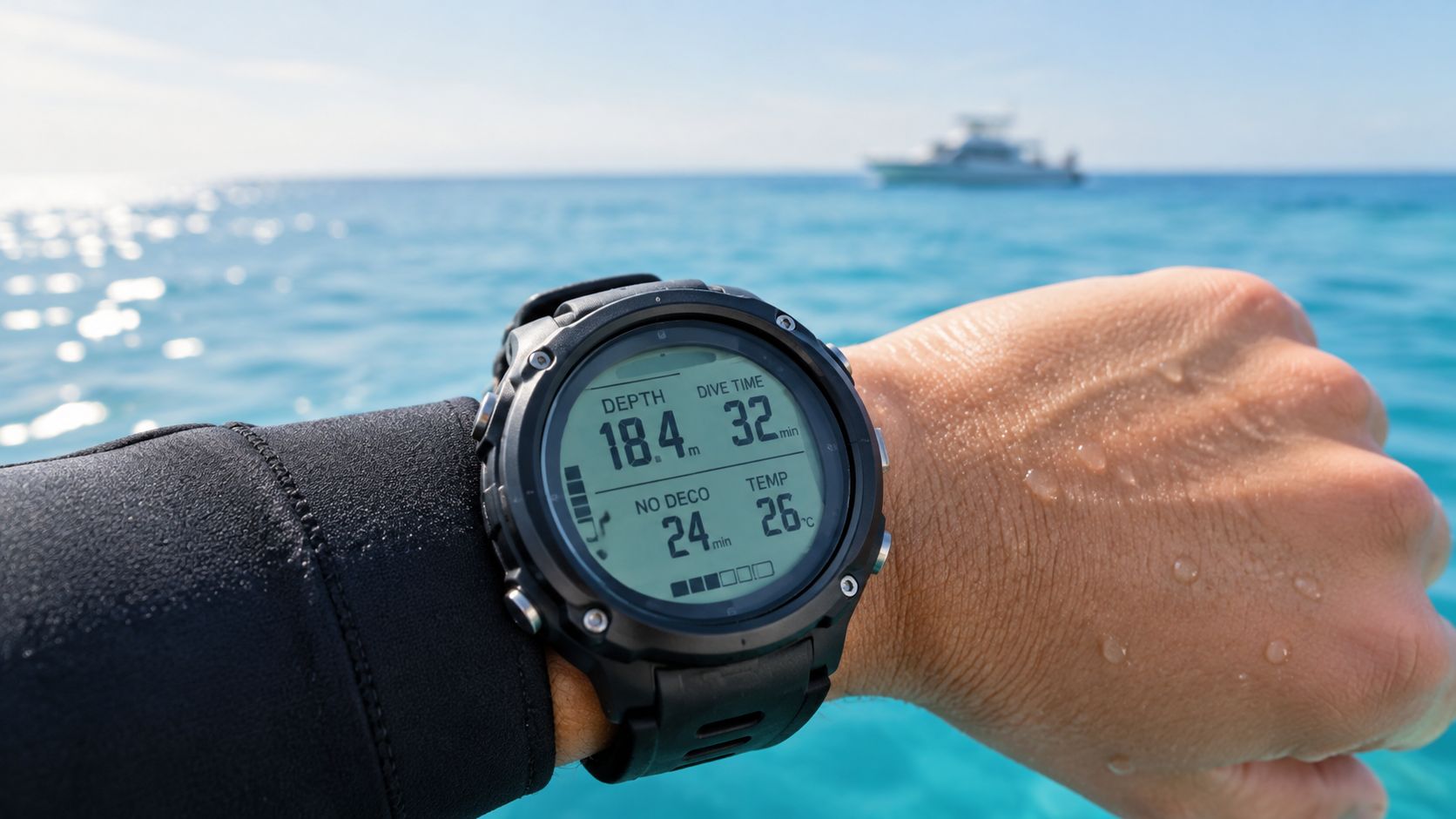
Bring equipment you know fits: a dependable mask, your dive computer, and suitable personal exposure protection. Pack certification details, medication information, a towel, and dry clothing. For rental equipment, ask about servicing and check fit and function before departure rather than assuming unfamiliar gear will sort itself out underwater.
Make a seasickness plan before boarding
Review these boat-seasickness preparation tips, then discuss medication suitability with a pharmacist or clinician who understands that you'll be scuba diving. Follow product directions, and don't first discover a medication's sedating effects on a dive day.
Products available for purchase include:
- Patch option: Ship-EEZ Seasickness Patch.
- Pill options: Dramamine pills and Bonine pills.
- Wristband option: Sea Band wristbands. Compare current prices and reviews rather than assuming a particular brand performs better.
- Ginger option: Ginger chews.
These are shopping options, not equivalent treatments or a blanket recommendation for diving. Check ingredients, warnings, interactions, and individual suitability.
Reserve time before flying or ascending
For qualifying no-decompression diving, allow at least 12 hours after a single dive and 18 hours after multiple dives before flying, following the Big Island post-dive travel guidance. These are minimum intervals, not guarantees that every itinerary is appropriate.
High-elevation drives, including Saddle Road and Mauna Kea, need separate consideration and potentially longer precautions. Discuss the actual route and your dive schedule with the operator before committing to an inland excursion.
Itinerary check: Put altitude activities before your diving days when practical, rather than trying to squeeze them into a surface interval.
Keep wildlife boundaries in the plan as well. Federal rules prohibit approaching Hawaiian spinner dolphins within 50 yards; follow the manta practices described earlier and respect protected-area restrictions. If an animal changes your intended route, give it room instead of treating the encounter as permission to approach.
Booking Your Kona Dives and Common Questions
Build your booking around current skills, then add specialty trips only where they fit. Confirm prerequisites, rental needs, check-in location, cancellation terms, and post-dive travel before payment.
Questions to settle before booking
- How much diving should a beginner schedule? Let the instructor assess progress and comfort rather than committing to an ambitious vacation quota.
- Can a non-diver join the manta outing? Ask about the snorkel option and its swimming requirements; don't assume every participant belongs in the same activity.
- When should I travel for calm water? Use seasonal guidance for planning, but leave room for daily site changes.
- Should I book the final evening? Earlier scheduling leaves more flexibility for weather and avoids compressing your departure arrangements.
Check available departures, then ask the crew to verify that your intended combination makes operational sense.
For guided reef trips, manta encounters, blackwater excursions, or instruction, visit Kona Honu Divers to compare the available options. Share your certification, recent experience, group needs, and flight or altitude plans so the crew can help you choose a suitable Kailua Kona scuba diving itinerary.