
The boat is loaded. Tanks are strapped in. Everyone is talking about mantas, reef sharks, lava tubes, and that one dive they’ve wanted to do for years. Then the swell hits outside the harbor, your forehead gets clammy, and suddenly the only thing you can think about is your stomach.
If that sounds familiar, you’re not unusual and you’re not doomed. About 1 in 3 people are highly susceptible to motion sickness, according to MedlinePlus Genetics. On a dive boat, even people who feel fine in cars or planes can get caught off guard because the motion is irregular, the smells are stronger, and gearing up adds stress.
A lot of guests ask how to avoid sea sickness because they want one simple trick. There usually isn’t one. What works is stacking the right habits before the boat leaves, choosing the right spot once you’re on board, and using the remedy that fits your body and your dive plan. That’s true whether you’re heading out for a reef dive, a long advanced day, or a night dive.
Crew members who spend their lives on the water learn the same lesson over and over. The people who do best are rarely the ones who try to tough it out. They’re the ones who prepare early and make smart choices fast.
Introduction Don't Let a Green Tinge Ruin a Blue Paradise
You can be thrilled about the dive and nervous about the ride at the same time. That’s common in Kona, especially when someone has dreamed about a manta night dive for months and then starts feeling off before the first site.
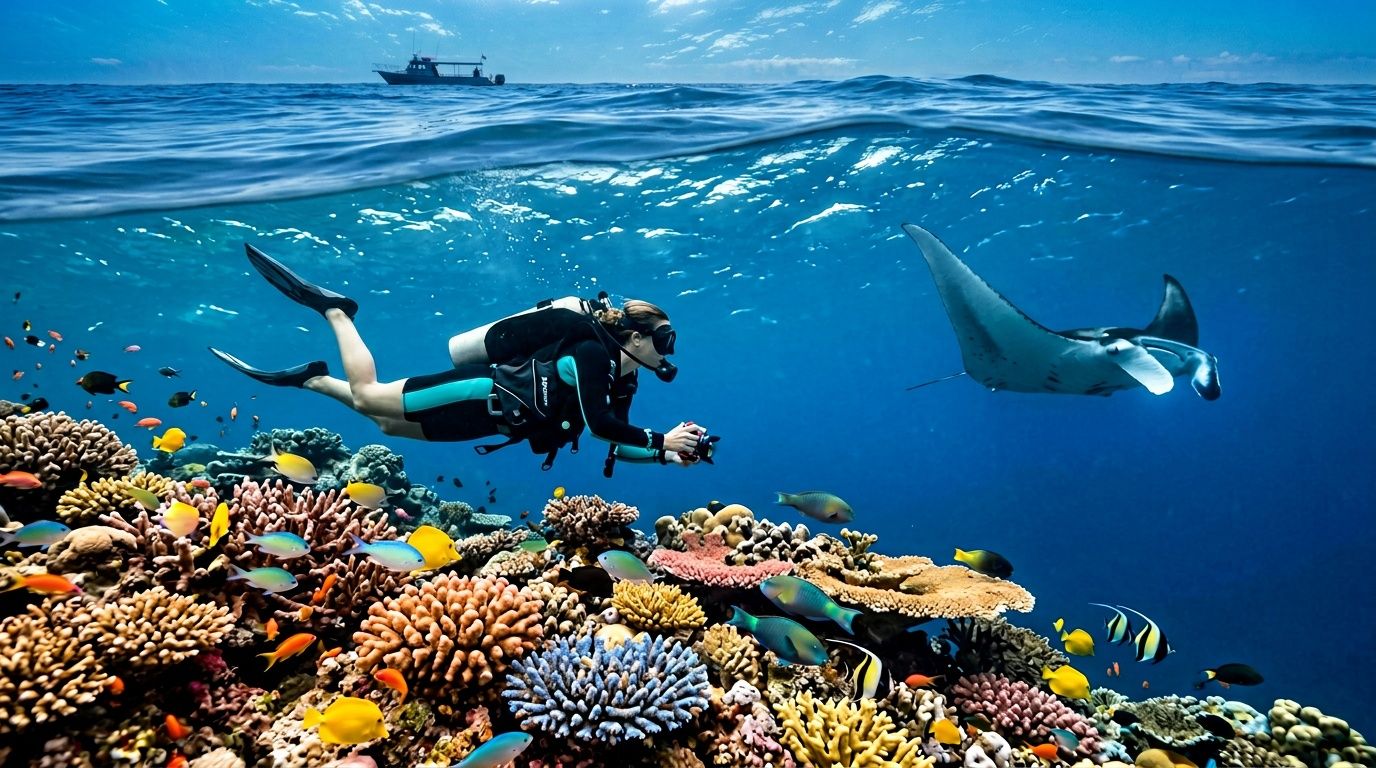
The good news is that seasickness is manageable. Even better, a lot of the best fixes are simple. Sleep matters. Timing matters. Where you stand on the boat matters. So does what you stare at, what you eat, and whether you wait until you already feel miserable before acting.
If you like understanding the bigger comfort side of being on the water, this guide to a stress-free sailing experience is a useful companion read. The same principle applies on a dive boat. Comfort and confidence start before the rough part starts.
Seasickness can turn a great dive day sideways fast, but it usually gives you chances to stop the slide if you act early.
From a divemaster’s perspective, the goal isn’t to pretend nobody gets queasy. The goal is to keep it from ruining the trip. That means being candid about trade-offs. Some remedies work well but can make you drowsy. Some natural options are gentle but mild. Some people feel much better the second they get in the water, while others need to manage the whole boat ride carefully.
Your Pre-Dive Prep Plan for a Steady Stomach
A rough crossing usually starts going wrong before anyone steps on the boat. In Kona, I see it all the time. Someone shows up excited for a two-tank morning or a manta night dive, slept poorly, skipped breakfast, slammed coffee, and hopes they can tough it out. That plan rarely holds.

The CDC’s motion sickness guidance makes the big points clear. Good prevention beats trying to recover once symptoms start. Poor sleep, alcohol, and nicotine all make you more likely to feel lousy on the ride out.
Build your dive day the night before
Treat the evening before your trip like part of your dive briefing.
Get a full night of sleep if you can. Fatigue lowers your tolerance for motion, heat, gear setup, and the usual low-level stress of being on a boat with a schedule. If you already know you run queasy during long surface intervals or on the ride to a second site, sleep is not optional.
Skip alcohol. Even one or two drinks can leave you dehydrated, foggy, and behind before the boat leaves the harbor.
Go easy on nicotine too. If it sometimes turns your stomach on land, it can do the same offshore, only faster.
Eat for stability
A light breakfast works better than either extreme. An empty stomach can make nausea hit harder, but a heavy plate of greasy food can sit badly once the swell picks up.
Good pre-boat choices are simple and boring. Toast, plain rice, crackers, oatmeal, a banana, or something similarly easy to digest. Keep the portion moderate. You want steady energy for gearing up, giant strides, and time in the water, not a stomach that feels full every time the boat rocks.
I tell divers to eat enough that they feel normal, then stop. That rule holds up well.
Choose your prevention plan before you leave home
Do not wait until you feel off at the dock.
If you use motion-sickness medication, take it early enough to be working before the ride starts. If you prefer non-medication options, decide that ahead of time and pack them before you leave. The remedies section covers specific products, but the timing matters more than the brand.
A simple plan looks like this:
- Decide the night before what you will use.
- Take any preventive remedy on schedule, not after symptoms start.
- Bring water.
- Pack one small bland snack for the ride back or the surface interval.
- Tell the crew early if you know you are prone to seasickness.
That last point helps more than people expect. On our boats at Kona Honu Divers, we can usually help guests make smarter choices early if we know what they tend to struggle with. That is especially true for snorkelers who stay on the surface the whole trip and for divers doing night dives, where darkness, waiting, and extra gear can make mild nausea feel stronger.
If you want a few more strategies to stop seasickness on a boat, that guide pairs well with a diver-focused plan.
A few habits that backfire
Saving medication for later is a common mistake. Once you are pale, sweaty, and trying to focus through nausea, you are already playing catch-up.
Too much coffee and too little water can also be a bad mix. Some divers handle it fine. Others get jittery, dehydrated, and nauseated before the first briefing ends.
A giant breakfast causes its own problems. I would much rather see someone board with a banana and toast than a full brunch sitting heavy in their stomach.
If you have been sick on a previous trip and want to know whether you might still feel it later that day, read this guide on how long sea sickness lasts before your next charter.
On-Boat Strategies to Keep Your Balance
The boat is underway, your gear is on, and the first hint of nausea usually starts with one bad choice. Sitting in the wrong spot, staring down too long, or hiding in the cabin can turn a mild wobble into a rough ride fast.
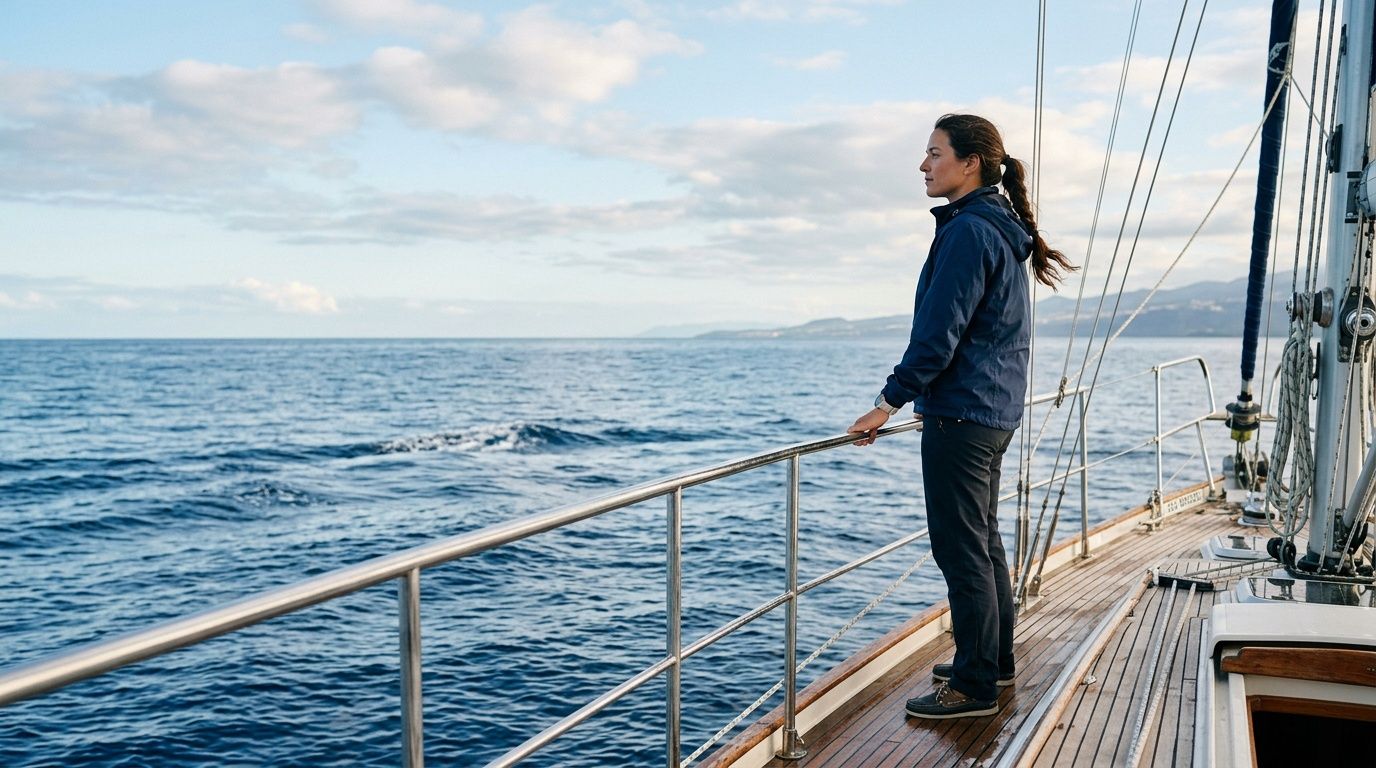
On our Kona Honu Divers boats, we watch this pattern all the time. Guests who stay out in the air, keep their eyes up, and settle near the middle of the boat usually do better than the ones who camp out at the bow or fold over a phone screen. The middle tends to move less. Your brain gets fewer mixed signals there, which gives your stomach a break.
Choose your spot early
Do not wait until you feel bad to move.
Claim a place near the middle of the boat if you know you are sensitive. If there is a lower, stable seating area with airflow, that is often a good call. The bow is fun when conditions are flat, but in any real chop it is where many divers start losing the battle. Cabins can help if weather forces you inside, but a warm, stuffy cabin with diesel smell and no horizon is a common trigger.
Keep your eyes and body working together
The fastest way to make motion sickness worse is to spend too long looking down. Cameras, gauges, dry bags, and phones all pull your focus into the boat when your inner ear knows you are still moving.
Use a simple routine instead:
- Look at the horizon during transit and surface intervals.
- Face forward when you can.
- Finish one gear task at a time, then get your head back up.
- Ask a buddy to hand you items instead of digging through your bag for two minutes straight.
That last one matters more than people think, especially on night dives. Darkness takes away a stable visual reference, and the extra setup time keeps your head down longer. I have seen divers feel fine on the ride out, then get queasy during a calm surface interval because they spent ten minutes bent over lights, batteries, and mask prep.
Work with the boat, not against it
Trying to push through in silence rarely helps. Tell the crew as soon as you feel off. We can often move you to a better spot, get some air on you, or slow down the gear shuffle before things slide downhill.
Snorkelers need a slightly different approach. Since they stay on the surface the whole trip, they do better if they avoid long stretches looking down into the water between entries and keep a steady breathing rhythm once they are in. Divers often get relief underwater, then feel the motion again during the surface interval while peeling off fins, managing cameras, and waiting for the next drop. That is the moment to sit still, look out, and avoid unnecessary tasks.
If you want more behavior-based strategies to stop seasickness on a boat, that guide matches what experienced crews see day after day.
For more prevention basics before trip day, this guide on how to prevent seasickness on a boat before boarding and underway covers the setup in more detail.
Your Anti-Seasickness Toolkit Remedies and Patches
There isn’t one perfect remedy for everybody. The right choice depends on how sensitive you are, whether you get drowsy easily, and how long you’ll be on the water.
Scopolamine patches achieve 70-90% efficacy in controlled trials for moderate seas and are useful for multi-day or night dives because they can last 12-72 hours. For non-patch users, taking meclizine or dimenhydrinate 1 hour before boarding offers protection, but drowsiness occurs in 10-20% of users, based on the guidance in this article about avoiding sea sickness.
The main options
Patches are popular because they’re low-effort once applied. A Ship-EEZ Seasickness Patch fits people who want longer coverage, especially for night diving or back-to-back boat days.
Pills are straightforward and easy to find. Dramamine pills and Bonine pills are common choices, but the trade-off is that some divers feel sleepy, dry-mouthed, or a little foggy.
Non-drug options have a place too. Sea Band wristbands are simple and don’t cause drowsiness. Ginger chews are easy to carry and can be a useful add-on if your stomach gets unsettled by smells or light nausea.
Seasickness Remedy Comparison
| Remedy Type | How it Works | When to Use | Key Consideration |
|---|---|---|---|
| Scopolamine patch | Delivers medication over time through the skin | Best applied well before the trip, especially for longer outings | Good for extended coverage, but talk to a physician first |
| Dimenhydrinate | Antihistamine approach for motion sickness prevention | Take before boarding | Can cause drowsiness |
| Meclizine | Antihistamine approach with a similar preventive role | Take before boarding | May still cause drowsiness for some people |
| Acupressure wristbands | Apply pressure at the P6 point | Put on before boarding and wear through transit | Drug-free, but results vary |
| Ginger | Mild nausea support | Use before and during the trip as needed | Better as support than a heavy-duty solution for severe cases |
How to choose without overthinking it
If you get strongly motion sick, start with the more reliable tools. If your symptoms are usually mild, bands or ginger may be enough. If you’re unsure, a physician can help you decide whether a patch is a better fit than an antihistamine.
For readers comparing patch options and timing, this overview of the Ship-EEZ sea sickness patch is a useful reference.
Diver-Specific Tips for a Queasy-Free Experience
Divers have a few special seasickness triggers that casual passengers don’t. Gearing up makes you hot. Looking down at buckles and hoses increases sensory mismatch. Surface intervals can be long enough for nausea to build even after a good first dive.
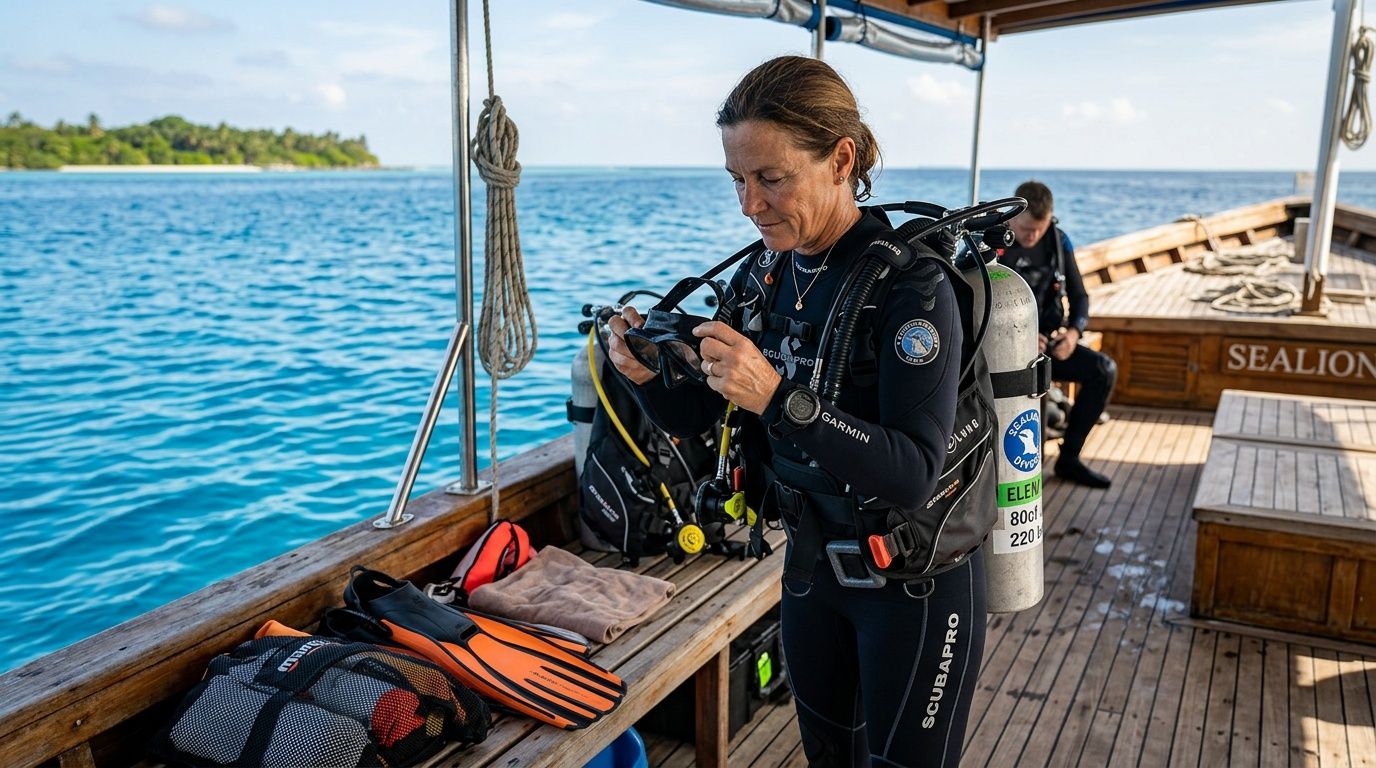
For divers and snorkelers, positional and sensory techniques matter. Position yourself amidships, focus on the horizon between gear tasks, and remember that once you’re in the water the feeling often subsides because your body has a stable reference. Controlled breathing techniques can also reduce nausea by up to 40%, as described in this guide on preventing sea sickness on a boat.
While gearing up, look up more than down
This is the mistake I see most often. A diver sits hunched over, staring into a gear bag, fiddling with clips, checking a computer, then rechecking everything while the boat rocks. That’s a rough recipe.
Break gearing up into short chunks. Do one task, then lift your eyes to the horizon. Breathe slowly. Reset. Then do the next task.
The more time you spend folded over your gear, the easier it is for nausea to sneak in.
If you want a non-drug option specifically geared toward dive travel, these notes on Sea-Band sea sickness wristbands are worth a look.
Surface intervals can be the hardest part
Some divers are fine underwater and miserable on the boat between dives. That doesn’t mean anything is wrong with your diving. It usually means your stable visual reference disappeared once you climbed back aboard.
A few boat-tested habits help:
- Stay cool: Heat and nausea feed each other.
- Don’t bury yourself in your phone: The screen is a common trigger.
- Keep sipping water: Small, regular sips are easier than chugging.
- Sit where motion is calmest: If you gave up the good seat after the first dive, claim it back.
Night dives and blackwater dives need extra planning
Night diving adds a layer of disorientation because you lose the easy visual reset of the daytime horizon. If you’re doing a Kona Blackwater Dive, plan your anti-seasickness strategy before you ever leave the harbor. This is the kind of trip where longer-acting prevention often makes more sense than hoping you’ll feel fine.
For more experienced divers spending more time offshore, longer outings can magnify motion issues because exposure lasts longer. If that’s your style of diving, these advanced long-range dive tours are exactly the kind of trips where preparation pays off.
A practical local option for people planning boat diving in Hawaii is the Kona Honu Divers tour schedule, especially if you’re matching a remedy to a day trip versus a longer specialty outing.
Final Thoughts and Your Next Blue Adventure
Sea sickness is common. It’s frustrating, but it doesn’t have to own your dive day. You can often mitigate its effects by preparing early, choosing the smart spot on the boat, and using a remedy that matches the trip instead of guessing.
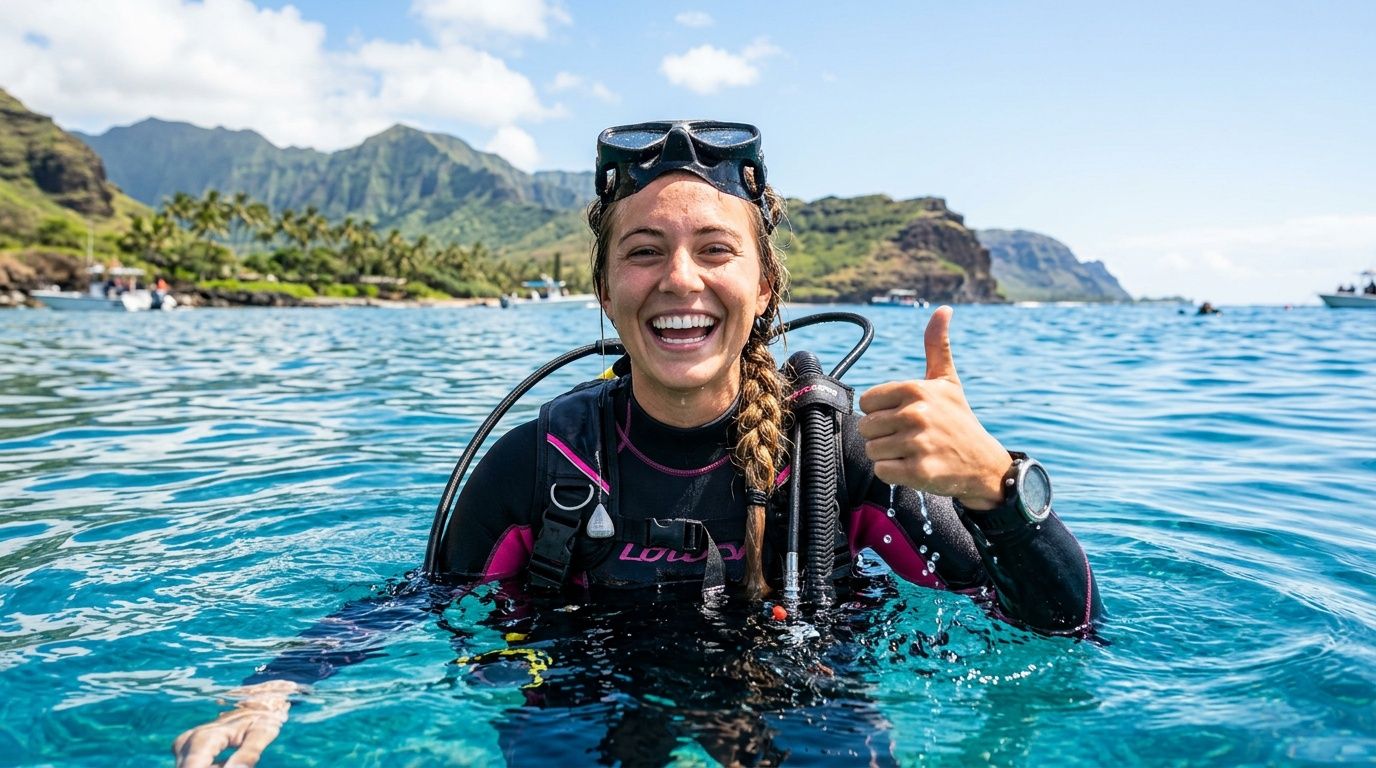
If you start feeling sick, keep the response simple. Get fresh air. Face forward. Stop looking down. Sip water. Don’t panic. People often make it worse by rushing below deck or trying to power through in the worst spot on the boat.
There’s also one group that deserves more specific guidance. Acupressure bands like Sea-Bands have been shown to reduce nausea by 60-70% in pregnant women, making them a drug-free, non-drowsy option for family travel and snorkeling trips, according to this article on preventing and coping with seasickness.
A rough ride doesn’t cancel a great ocean day. Good decisions made early usually turn the day back around.
When you know how to avoid sea sickness, you stop treating it like bad luck and start treating it like something you can manage.
Frequently Asked Questions About Seasickness and Diving
Should I still dive if I feel mildly seasick?
Sometimes yes, sometimes no. Mild nausea often improves once you’re in the water because your body gets a steadier reference point. But if you’re dizzy, overheated, or struggling to focus, tell the crew before you gear up. Diving while distracted or weak isn’t worth it.
What’s the biggest mistake divers make?
Waiting too long. They ignore the first signs, stay in a bad spot, stare at their gear, or hide in the cabin. Early action usually works better than late rescue.
Are pills, patches, or wristbands better?
It depends on your history. Strongly susceptible divers often prefer prevention that starts before boarding and lasts through the full outing. Mildly sensitive guests sometimes do fine with wristbands, ginger, and smart boat habits. If you’re choosing medication, think about whether drowsiness will bother you.
Can I take seasickness medication for a night dive?
Many divers do, but timing matters and side effects matter. If you’re doing a later departure, don’t assume your morning plan still covers the evening. Choose based on duration and how your body responds, especially if you’ve never used that remedy before a dive day.
Where can I compare pill options for dive trips?
This guide to sea sickness pills helps sort through the common choices and when each one makes sense.
If you’re ready to trade worry for clear water, calm breathing, and a much better boat ride, book your next trip with Kona Honu Divers. A little planning before departure goes a long way once the harbor drops behind you.