
You're probably in one of two spots right now. You're either certified, staring at a Hawaii trip calendar and trying to pick the right island, or you've already decided on the Big Island and want to know if Kona really lives up to the hype.
It does, but only if you approach it the right way.
Hawaii scuba diving isn't difficult to sell. Warm water, clear water, reef life, volcanic structure, and year-round diving make that part easy. The harder question is where you should base yourself if you want the strongest trip, the fewest compromises, and the highest odds of coming home saying, “That was worth the flight.”
For most certified divers, that answer is Kona.
Embark on an Underwater Journey in Hawaii
The first thing many divers notice in Kona isn't a fish. It's the shape of the seafloor.
You descend through blue water that stays bright longer than expected, and the reef below doesn't look soft and rounded the way many tropical destinations do. It looks carved. Lava fingers, shelves, cracks, and old flow patterns give the bottom real texture. Then the life fills in around it. Butterflyfish, tangs, eels tucked into rock, maybe a turtle moving through the edge of the site without any hurry at all.
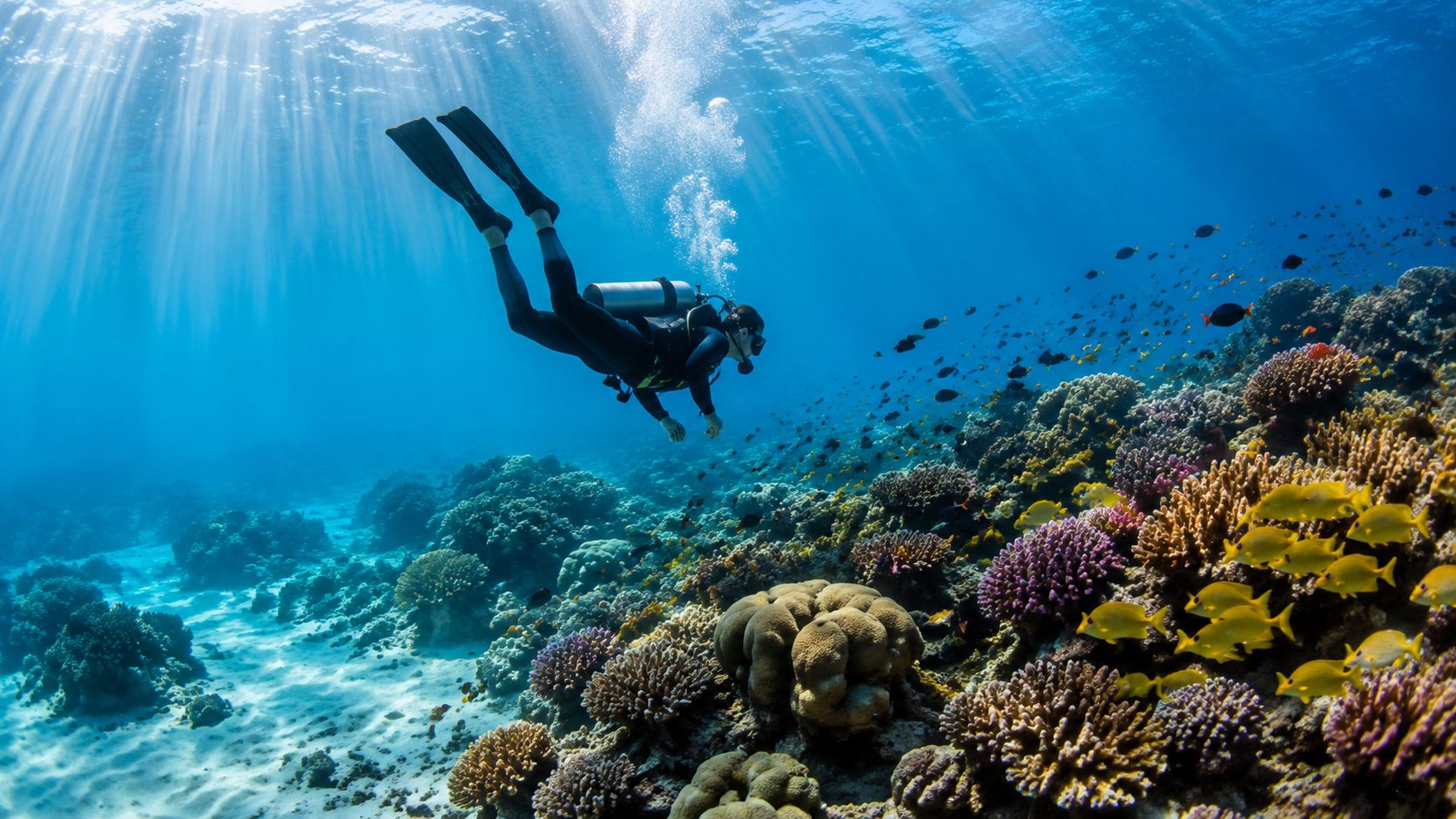
That's what makes Hawaii memorable underwater. You're not just diving a reef. You're diving a volcanic island that kept growing into the ocean, then let marine life colonize every ledge, arch, pocket, and wall.
If you're still deciding whether Hawaii is the right fit at all, this overview of diving in Hawaii is a useful starting point. The broad appeal is obvious once you get in the water. The more important question is which part of Hawaii matches the kind of diver you are.
Clear water can make a site feel easy. Don't mistake visibility for simplicity. Good Hawaiian diving still depends on current awareness, buoyancy control, and choosing a site that fits your comfort level.
That's why experienced local guidance matters more here than many visitors expect. Hawaii rewards divers who slow down, listen to the briefing, and dive the site that suits the day instead of chasing a photo they saw online.
Why Choose Hawaii for Your Next Dive Adventure
Hawaii isn't a fringe dive destination. It's a mature, high-volume one.
An independent Kona guide estimates over 1.5 million scuba dives annually across the islands, supported by more than 215 dive shops, with water temperatures around 75 to 80°F and visibility often above 100 feet. Those conditions are part of why Hawaii remains a year-round dive destination for traveling divers and working operators alike, as noted in this look at why scuba diving is big in Hawaii.
Those numbers matter for a practical reason. A busy, established dive market usually means better infrastructure, more training options, more charter choices, and less guesswork for visitors. Hawaii has all of that.
The appeal is consistency, not just scenery
A lot of destinations offer pretty reefs on their good days. Hawaii's strength is that diving is available throughout the year, and the islands support beginner training, guided boat diving, and more advanced profiles in the same statewide market.
For a traveling diver, that translates into three real advantages:
- You can build a real trip around diving: Hawaii isn't a place where you hope one shop is operating when you arrive. The statewide industry is large and established.
- Warm water simplifies packing: Typical conditions allow lighter exposure choices than colder Pacific destinations.
- Good visibility changes the feel of a dive: Navigation, situational awareness, and simple enjoyment all improve when you can see the terrain around you.
Not all Hawaiian islands dive the same way
This is the point many generic travel guides gloss over. Hawaii is one state, but it's not one underwater experience.
SSI notes the Big Island is especially known for lava tubes, underwater arches, and the manta ray night dive, while PADI highlights that Hawaii ranges from serene shallow dives to drift dives. In plain terms, the “best” island depends on your training, comfort, and goals, which is exactly why a one-size-fits-all answer doesn't help much in practice, as discussed in this overview of scuba diving in Hawaii by island.
Here's the quick read:
| Island | Strong fit for | What stands out |
|---|---|---|
| Big Island | Divers who want variety and iconic specialty dives | Volcanic structure, lava formations, manta diving |
| Oahu | Divers who like mixed activity trips | Broad range of diving styles |
| Maui | Vacationers balancing diving with resort time | Accessible recreational diving |
| Kauai | Divers comfortable with more variable conditions | More rugged feel |
Bottom line: If you want the broadest all-around Hawaii scuba diving trip, choose the island that gives you both easy reef diving and signature experiences without changing bases.
That island is usually the Big Island, and within the Big Island, Kona is the clearest recommendation.
The Kona Coast The Pinnacle of Hawaii Scuba Diving
Kona works because geography does a lot of the heavy lifting.
The coast sits on the leeward side of the island, sheltered by massive volcanoes from the prevailing trade winds. That protection tends to produce calmer, clearer water than many visitors expect from an open Pacific destination. You still plan around conditions, because smart divers always do, but Kona gives operators more workable days and more site options than many other parts of Hawaii.
That's the first reason serious divers keep coming back. The second is the terrain.
Volcanic geology changes the whole dive
Coral destinations can blur together if all you see are slope reefs and bommies. Kona doesn't have that problem.
You're diving a coast shaped by lava. That means arches, tubes, swim-throughs, old flow contours, and reef growth that uses volcanic structure as its framework. Even straightforward recreational sites often feel dramatic because the topography has edges and relief.
If you want a broader explanation of what makes this coastline different underwater, this guide on what is unique about diving in Kona is worth reading.
Kona suits both conservative and ambitious divers
Kona distinguishes itself from islands that are great for one type of diver but weaker for another.
A newer certified diver can have a very satisfying trip here by sticking to calm daytime reefs, listening carefully, and keeping the plan conservative. An experienced diver can stay busy with more technical-feeling topography, night diving, and specialty charters. That range matters if you're traveling with mixed experience levels.
What works in Kona:
- Choosing the site for the day's conditions: Good operators don't force a plan that no longer fits the ocean.
- Respecting the volcanic terrain: It's beautiful, but it also demands buoyancy discipline.
- Using local site knowledge: Entries, exits, surge patterns, and current lines matter.
What doesn't work:
- Booking by photo alone: The most famous site isn't automatically the right site for your skill level.
- Assuming calm on the surface means simple underwater conditions: It often helps, but it doesn't guarantee anything.
- Overestimating your comfort on night or advanced dives: Kona rewards honesty.
Why operator quality matters more than people think
On a coastline with this much variety, the crew running the boat shapes the whole experience. Site selection, briefing quality, group control, and how guides respond when a diver looks stressed all matter more than fancy marketing copy.
Kona Honu Divers runs Kona diving tours that cover the coast's core experiences, including daytime charters and specialty dives. That matters less as a brand statement than as a practical one. On the Big Island, divers need an operator that understands how to match conditions and dive profiles to the specific people on the boat.
Signature Kona Dives You Cannot Miss
Some dives are famous because they photograph well. Some are famous because divers talk about them for years afterward. Kona has both, and the difference is obvious once you do them.
The manta ray night dive
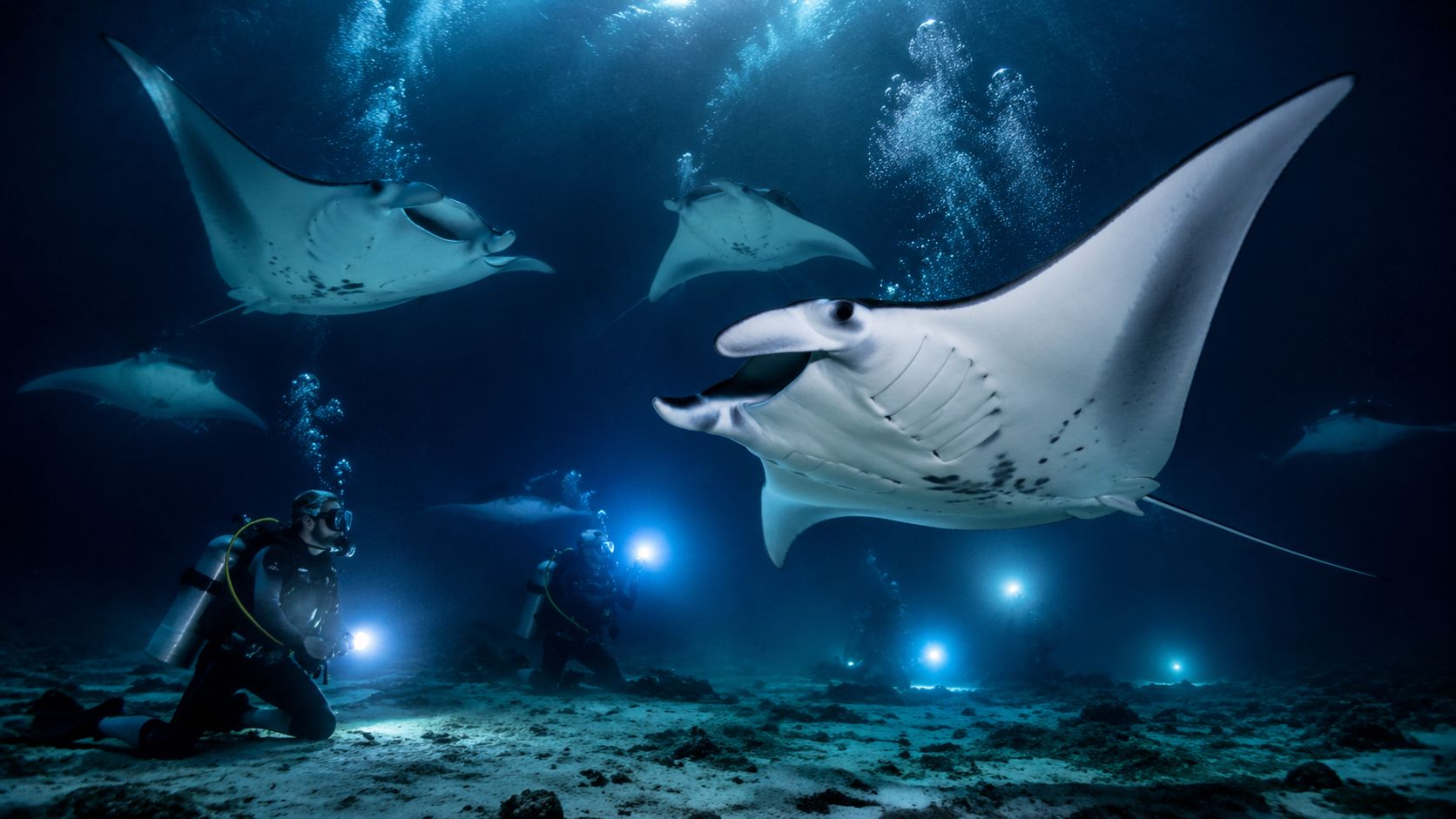
If you've never done it, the setup sounds strange. You descend after dark, settle into a controlled position, and aim your light as directed. Plankton gathers in the light. Then the mantas arrive and start looping overhead.
The first pass is the one people remember. A large animal appears out of black water, glides through the beam, banks, and comes around again with complete control. You're not chasing anything. You're part of a viewing system. That's why this dive works so well when it's run properly.
For the manta experience, manta ray tours on the Big Island are built around the local conditions that make Kona famous after dark.
Garden Eel Cove deserves specific mention. It's the superior choice for this experience because of its protected location, stronger viewing setup, and better surrounding reef structure. That combination makes the dive feel more organized and more comfortable, especially for divers who are confident at night but new to this specific style of dive.
Stay still, keep your beam where the guide wants it, and let the animals do the work. The divers who enjoy this dive most are usually the ones who move least.
If you want the dedicated trip page, book the Manta Ray Dive & Snorkel.
The blackwater dive
Blackwater diving isn't a reef dive at night. It's a different category altogether.
You're in open ocean, suspended over deep water, diving a lit reference system that draws in pelagic larval life and strange deep-ocean creatures rising toward the surface after dark. There's no reef under you. No wall to orient off. No simple visual comfort blanket.
That's exactly why experienced divers love it.
Every blackwater dive feels a little like watching a science documentary from inside the frame. Tiny transparent animals pulse past your mask. Unfamiliar shapes appear in the beam, then vanish. You spend the dive scanning carefully, adjusting buoyancy with precision, and realizing how much life the open ocean hides in plain sight.
This is not the dive to book because it sounds edgy. It's the dive to book if you already like night diving, can manage yourself calmly in reduced-reference conditions, and want one of the most unusual experiences available anywhere.
For that trip, use the Black Water Night Dive.
Advanced long-range diving
Some divers come to Kona and want more than the standard easy-access rotation. They want remote-feeling sites, more dramatic profiles, and less traffic in the water.
That's where a longer-range advanced charter makes sense.
These trips appeal to divers who are already comfortable managing their buoyancy, gas, awareness, and task loading without constant hand-holding. The reward is simple. You get a stronger sense of exploration. The reef often feels less disturbed, the lava formations feel wilder, and the day itself feels built around diving rather than around accommodating the widest possible audience.
A few reasons experienced divers choose this format:
- More ambitious site selection: Crews have room to target sites that don't fit basic beginner itineraries.
- Better fit for trained divers: You're less likely to spend the whole day constrained by the least experienced profile on board.
- A different feel: Remote or less-frequented sites often deliver the sense of discovery people were hoping for when they booked Hawaii in the first place.
If that's your lane, look at the Premium Advanced 2-Tank Trip.
Planning Your Hawaii Dive Trip Itineraries and Logistics
The good news is that planning a Kona dive trip isn't complicated. The better news is that you don't need to chase one narrow season to get good diving.
When to go
Hawaii diving is available year-round, and Kona is one of the easier places in the state to plan around because conditions are often workable across the calendar.
Summer usually means calmer seas and simpler boat days. Winter can add more motion on the surface, but it also brings a different kind of atmosphere to the ocean. If you like hearing whale song during the right season, winter has its own appeal.
The practical answer is this:
- Choose summer if you want the easiest overall conditions
- Choose winter if you're comfortable being a bit more flexible
- Choose Kona either way if diving is the main purpose of the trip
Certification and trip fit
A standard recreational boat itinerary works well for many Open Water divers, provided you're comfortable, recently active, and honest about your skills.
More advanced opportunities require a different conversation. Night diving, deeper profiles, and specialized trips aren't the place to discover that your buoyancy is rusty or that you dislike task loading after sunset.
Use this simple planning filter:
| Your situation | Smart trip choice |
|---|---|
| Newly certified and a bit rusty | Easy daytime reef dives first |
| Comfortable recreational diver | Mix morning charters with one signature night dive |
| Experienced diver | Add advanced or specialty charters |
| Mixed diver and non-diver group | Include a trip with a snorkel option |
If your travel group includes people who don't dive, that matters. Kona makes it easier to mix activities, and many visitors pair diving days with a surface outing such as Kealakekua Bay snorkeling.
A simple itinerary that works
For a short trip, don't try to do everything.
A strong three-day plan often looks like this:
- Day one: Start with a conservative two-tank morning dive to settle in, check weighting, and get comfortable in local conditions.
- Day two: Choose either another reef-focused morning or a more advanced charter if your experience supports it.
- Day three: Finish with a signature experience such as the manta night dive.
If you have more days, then add blackwater or another advanced option. Don't front-load every difficult dive. You'll often find Hawaii scuba diving more enjoyable when the trip builds gradually.
Planning rule: Your first dive in Hawaii shouldn't be the most demanding dive of your vacation.
Seasickness preparation
Even on calmer coasts, boats move. If you're prone to seasickness, solve that before the boat leaves the harbor.
Useful options include Ship-EEZ Seasickness Patch, Dramamine pills, Bonine pills, Sea-Band wristbands, and ginger chews.
Medication timing matters. Don't wait until you already feel bad. If you know you get motion sick, prepare early, hydrate well, and eat lightly instead of skipping food completely.
Gear Safety and Conservation
Good dives usually start with boring details handled well. Fit, weighting, gas checks, briefing attention, and calm decision-making matter more than buying flashy gear.
Bring what affects comfort most
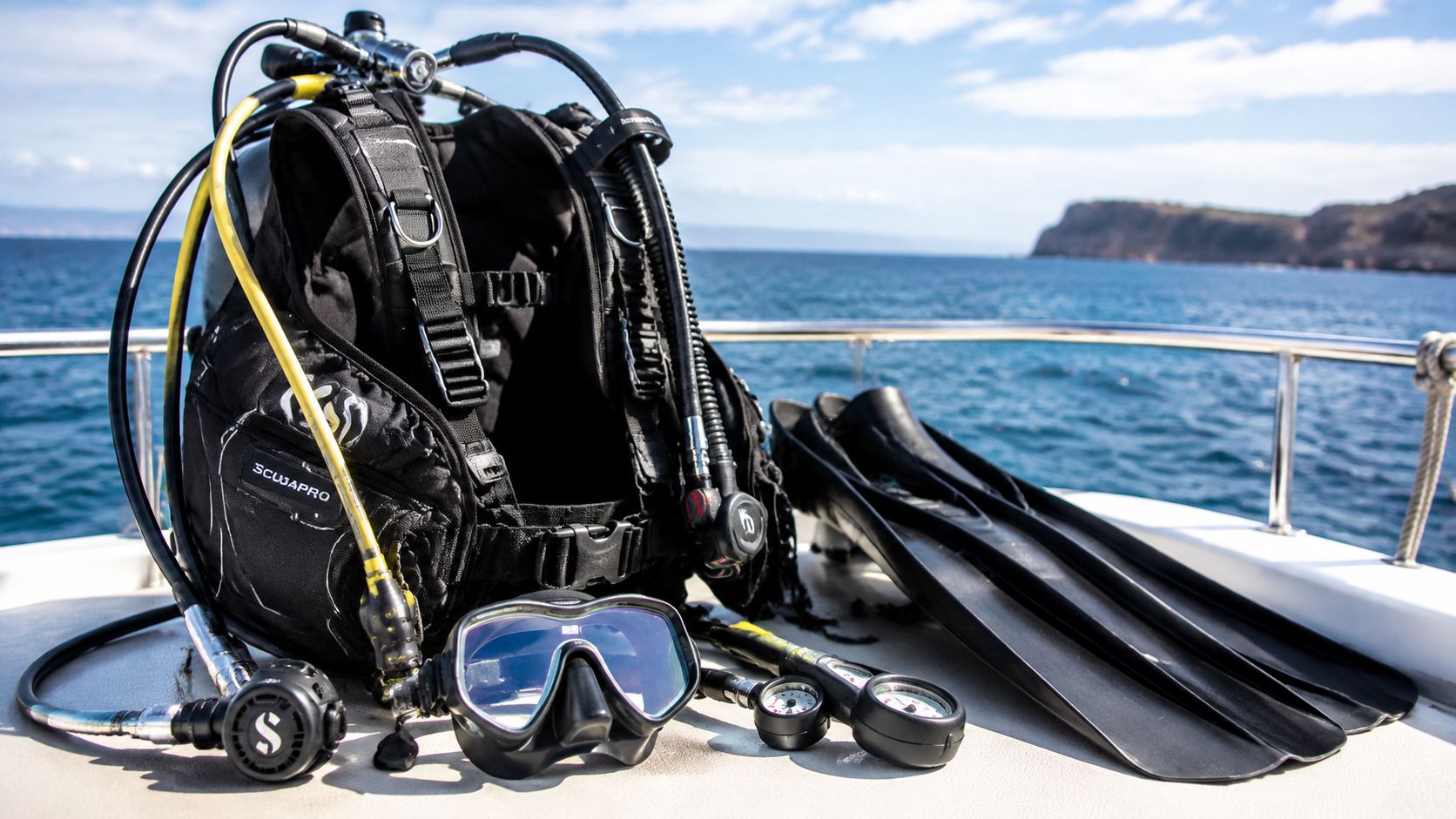
If you own gear, the items that most affect your day are usually the simplest ones.
- Mask: A familiar, well-fitting mask solves a surprising number of problems.
- Fins: Fit matters. Foot pain and cramping can ruin an otherwise easy dive.
- Exposure layer: Hawaii is warm, but comfort is personal. Bring what you know works for you if you chill easily.
Rental gear is often the right choice for heavier items. Just inspect it before the briefing ends. Check your inflator, alternate air source, releases, and weight setup while you still have time to fix anything.
Safety is mostly discipline
Most underwater problems don't begin as emergencies. They start as small errors that stack up.
A diver skips a buddy check. Another diver rushes descent because the group is moving. Someone realizes halfway through the dive that they're overweighted and compensating with inflator gas instead of breathing and trim. In lava terrain, those mistakes show up fast.
That's why the basics matter so much in Kona:
- Listen to the briefing: Terrain, current, entry, and exit instructions are not filler.
- Dive your own dive within the plan: Don't chase a stronger diver into a profile that doesn't fit you.
- Watch your buoyancy closely: Volcanic structure and coral don't forgive sloppy finning.
- Call the dive early if needed: A conservative decision is usually the right one.
Conservation is part of dive skill
A diver with good control looks better underwater and causes less damage. In Hawaii, those two things are connected.
You're visiting a living reef built on volcanic structure. Touching coral, grabbing rock for balance, crowding turtles, or trying to close distance on mantas doesn't make the encounter better. It makes it worse for the site and usually worse for the diver too.
Use a simple standard:
Leave the animals an exit, leave the reef untouched, and leave the site looking like nobody was there.
Passive observation is the right mindset here. Hover. Watch. Let the encounter come to you.
If you use sunscreen before or after your dive day, choose reef-safe options and rely on shade and protective clothing whenever possible. Conservation in Hawaii isn't abstract. It's a set of decisions you make on the boat, at the entry, and every minute underwater.
Your Unforgettable Hawaii Dive Awaits
If your goal is to have a nice vacation with one or two easy dives, several Hawaiian islands can work. If your goal is to build a real dive trip around memorable underwater terrain, reliable access, and signature experiences that stand apart, Kona is the clear choice.
That's the strength of diving this coast. You can spend one morning on volcanic reef, another night under manta rays, and another outing in open ocean blackwater without changing islands or reinventing your whole plan. Few destinations package that much variety this cleanly.
The operator you choose still matters. Boats, briefings, group control, and site judgment shape the day more than most visitors realize. A strong crew makes the ocean feel organized. A weak one makes even a good site feel rushed.
If you're ready to turn the idea into an actual trip, start here:
For divers who want local Hawaii expertise, thoughtful site selection, and access to the signature experiences that make Kona special, Kona Honu Divers is a strong place to start planning.