
You're probably in one of two places right now. Either you're planning a Hawaii trip and trying to decide whether scuba deserves a full day, or you already know you want to dive and you're stuck on the key question: which island gives you the experience you're hoping for.
That distinction matters more than most visitors realize. Hawaii can be easy, warm, and relaxed. It can also be demanding if you pick the wrong coast, the wrong season, or a dive profile that doesn't match your comfort level. Good Hawaii scuba diving isn't about collecting the longest site list. It's about matching the island, conditions, and style of diving to the kind of trip you want.
If you're starting your search, Kona Honu Divers is one place to get oriented on the range of Big Island dive options. Kona gets a lot of attention for good reason, but Hawaii as a whole offers much more than one famous night dive or one postcard reef.
Your Underwater Adventure in Paradise Awaits
A lot of people arrive in Hawaii expecting clear water, reef fish, and maybe a turtle if they're lucky. Then they descend for the first time and notice what distinguishes these dives. The bottom isn't just coral. It's lava. The terrain drops, folds, and opens into structure that feels built rather than grown.
That's the first thing I'd tell any visitor considering Hawaii scuba diving. Don't think of it as a generic tropical reef destination. Hawaii has warm water, colorful fish, and easy vacation logistics, but its distinctive character comes from the volcanic seascape and the way each island presents it.
What the first good Hawaii dive feels like
The best first dives in Hawaii usually aren't the deepest or the most ambitious. They're the dives where you settle in early, get your breathing under control, and have enough calm water to look around.
You notice the light first. Then the contrast. Dark lava rock, bright reef fish, pale sand channels, and sudden cutouts in the terrain that make the underwater scenery feel dramatic without needing extreme depth.
A well-chosen easy dive beats a famous difficult dive almost every time, especially on vacation.
That's why trip planning matters. Beginners often need calm entries, patient briefings, and simple site layouts. Experienced divers usually want the opposite problem. More structure, more task loading, more unusual encounters, and less repetition. Hawaii can do both, but not every island does both equally well.
What makes Hawaii worth the effort
Hawaii works for mixed groups in a way many dive destinations don't. One person can do a boat dive, another can snorkel, and both can still feel like they had a real ocean day. Families, newly certified divers, and advanced divers can all build strong itineraries here if they stop thinking in terms of “the best island” and start thinking in terms of the best fit.
That's where Kona often separates itself. But before getting into island-by-island decisions, it helps to understand why Hawaii is such a serious dive destination in the first place.
Why Choose Hawaii for Your Next Dive Trip
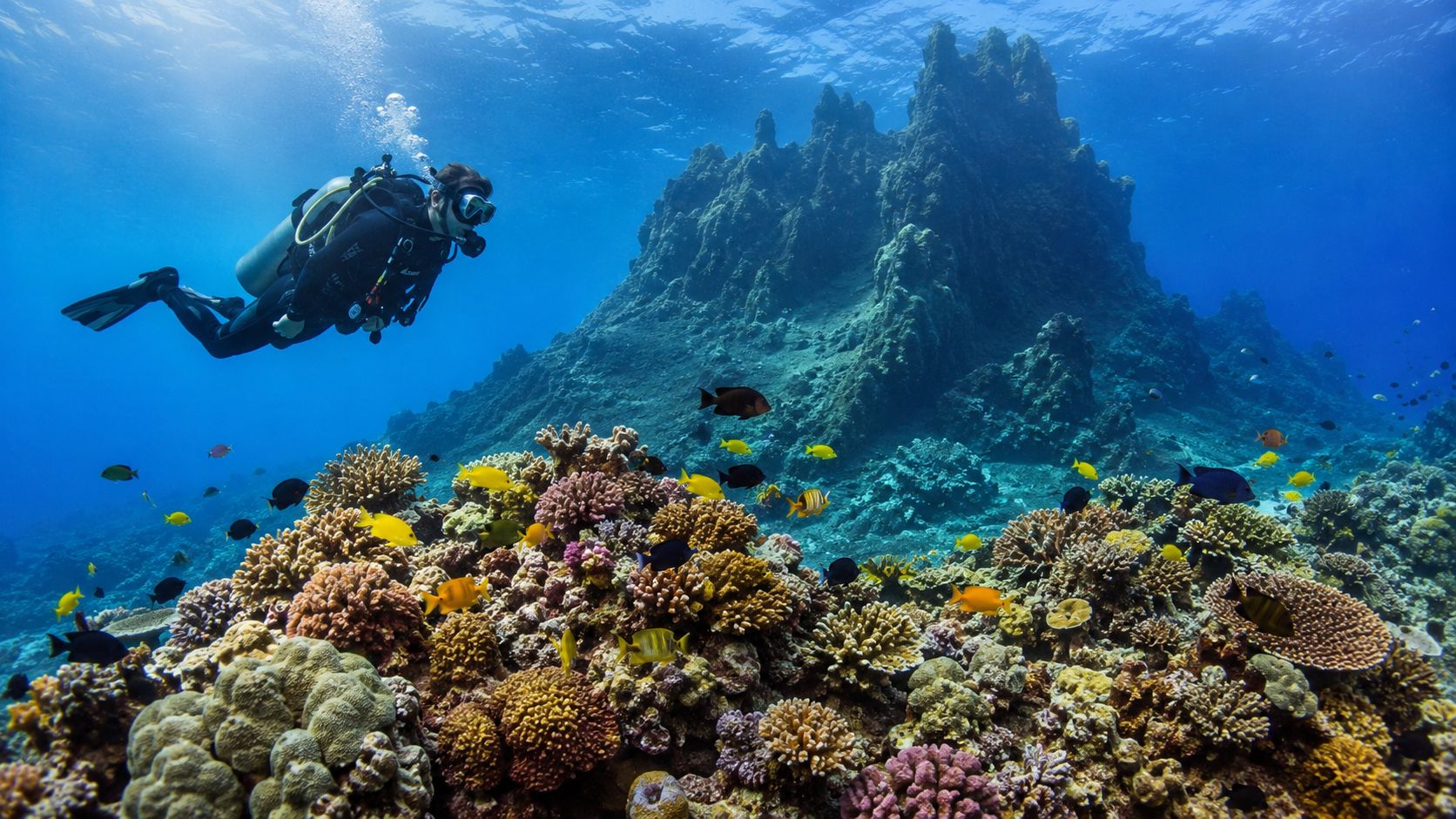
A good Hawaii dive trip starts paying off the moment you hit the water and realize the diving is not an afterthought here. Operators are used to certified divers who want efficient boat days, students who need patient briefings, and mixed groups where one person dives and another snorkels. That matters on vacation. Better logistics usually mean more time in the water and fewer compromised plans.
Hawaii also offers something many warm-water destinations do not. The diving has a strong sense of place. Volcanic structure shapes much of the underwater experience, so even moderate-depth dives often feel dramatic because the terrain has relief, shadow, and clear lines instead of long stretches of flatter reef.
The terrain gives Hawaii its identity
On a lot of Hawaii dives, the site itself carries the day. Fish life matters, of course, but so do the lava shelves, arches, fingers, bowls, and broken ledges that create natural routes through the reef. For newer divers, that can make a simple dive feel memorable without adding depth or current. For experienced divers, it adds structure and better photography opportunities.
| Feature | What it means underwater |
|---|---|
| Lava structure | More ledges, cut-throughs, folds, and hard contours |
| Volcanic relief | Better shape and depth perception, even on easier dives |
| Reef growth on lava | A mix of marine life and geology rather than reef alone |
That combination is one reason Hawaii keeps drawing repeat divers. You are not only checking marine life off a list. You are diving terrain that looks and feels different from the Caribbean, Mexico, or Southeast Asia.
The conditions work for real vacation diving
Water temperatures usually stay in a comfortable range for most of the year, and that lowers the barrier for newer divers while making multi-day diving easier on everyone. A 3 mm suit is enough for many people in warmer periods. Others will be happier in a 5 mm, especially on longer boat rides, deeper profiles, or multiple days in a row. That is the kind of trade-off visitors should plan for instead of assuming "tropical" always means warm enough for everybody.
Comfort helps, but reliability matters more. Hawaii has enough established charter operations, instructors, and rental support that visitors can build a serious dive itinerary instead of squeezing in one novelty dive between beach days.
Hawaii is strongest when you choose the right version of it
The mistake I see most often is treating all Hawaiian diving as one product. It is not. Shore access, visibility, surge exposure, boat diving style, and marine life encounters vary a lot by island. A newly certified diver looking for calm, confidence-building conditions needs a different plan than a diver chasing advanced profiles or specialty night dives.
That is why island choice should come before site choice. If you want a practical breakdown, this guide to which Hawaiian island is best for scuba diving is the useful question to answer first.
Kona stands out because it often gives divers the cleanest combination of dependable conditions, strong site variety, and signature experiences that are worth planning a trip around. Not every visitor needs Kona. But a lot of visitors end up happiest there once they match the island to their actual skill level, season, and trip goals.
Planning Your Dive Trip The Right Island and Season
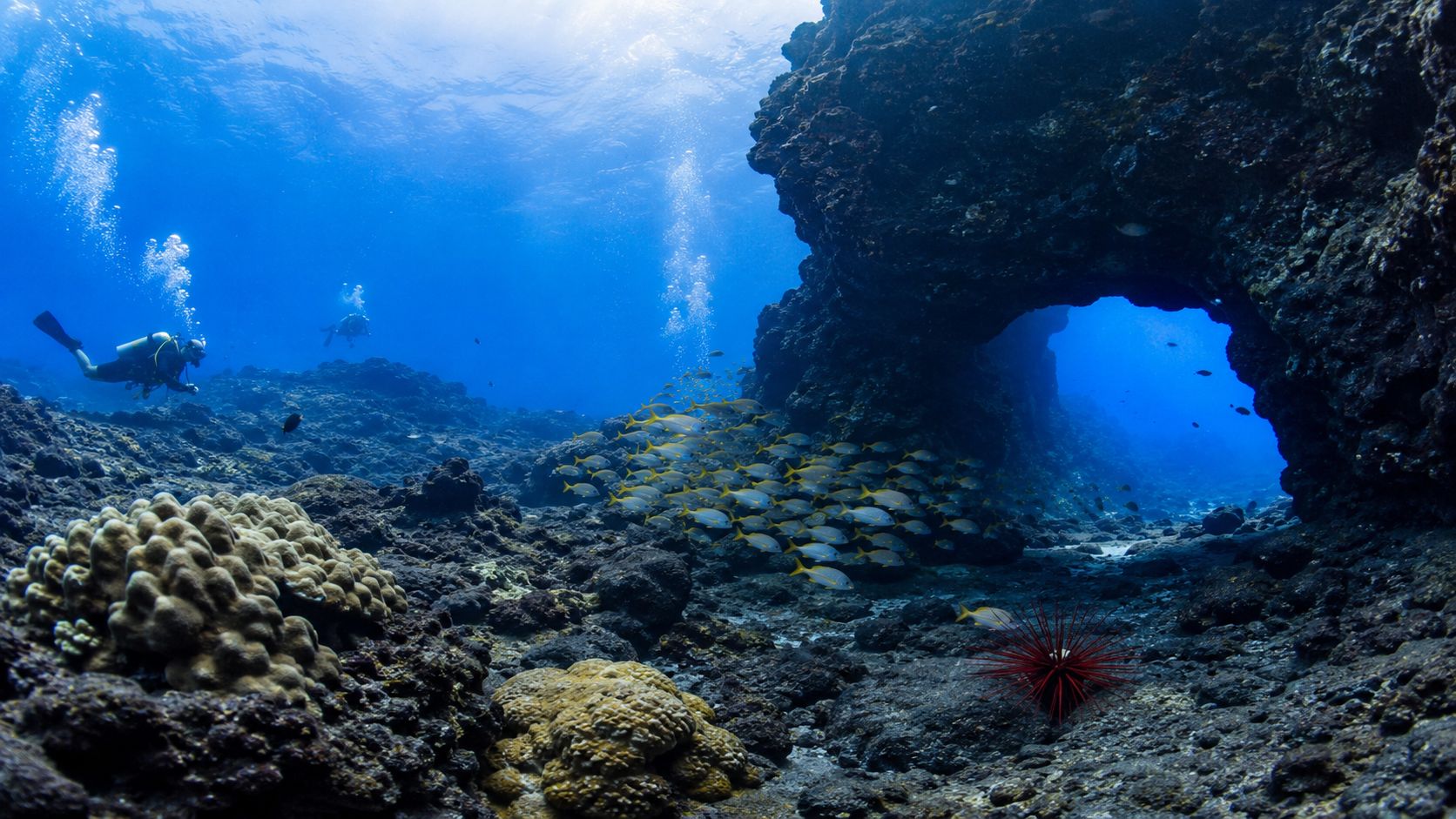
Most visitors search “Hawaii scuba diving” as if the islands offer one interchangeable experience. They don't. The single biggest planning mistake is choosing the island for hotel reasons first and then trying to force the diving to fit.
A more useful starting point is this comparison of which Hawaiian island is best for scuba diving, because the answer changes depending on your skill level, season, and tolerance for changing ocean conditions.
Kona and the Big Island
Kona is often the easiest recommendation because it's frequently the most predictable for calm diving conditions year-round due to its leeward setting, while winter can bring larger swells to other islands, as explained in this island-comparison discussion.
That one planning detail affects almost everything else. It can mean:
- More reliable boat departures
- Friendlier conditions for newer divers
- Less stress for mixed-experience groups
- More confidence booking specialty dives
Kona also has range. A diver can spend one day on accessible reef structure and another on a signature night or advanced-style dive without changing islands.
Maui and Oahu
Maui works well for travelers who are building a broader vacation first and a dive itinerary second. If you're balancing beach time, family plans, and a few days in the water, Maui often fits well. The trade-off is that it may not be the first choice if diving is the central goal of the trip.
Oahu tends to suit visitors who want a busier destination with more non-dive activity built around the trip. That can be a plus if one part of the group dives and another doesn't. The trade-off is that your diving day can feel more tied to logistics, traffic, and urban vacation pacing.
Kauai and the practical decision
Kauai appeals to divers who like a more rugged atmosphere. When conditions line up, it can be excellent. The trade-off is that flexibility matters more. If your schedule is rigid and your vacation includes only one or two planned dive days, unpredictability matters.
Here's the cleanest way I break it down for visitors:
| Island | Best fit | Main trade-off |
|---|---|---|
| Big Island, Kona | Broadest fit across skill levels and trip styles | Can shift the whole trip toward diving because it's so easy to prioritize |
| Maui | Families and resort-style vacations with some diving | Less ideal if diving is the trip's main purpose |
| Oahu | Travelers who want urban activity plus diving | Dive days can feel less insulated from land logistics |
| Kauai | Flexible travelers who like a wilder feel | Conditions can matter more to itinerary success |
If you only have a few dive days and want to reduce risk, pick the island with the most dependable conditions, not the island with the prettiest brochure.
How season changes the decision
Season doesn't make Hawaii undiveable. It changes how much margin you have. On islands with more exposure, winter can limit site choice or raise the bar for comfort. Kona usually handles that better because of its leeward geography.
For beginners, recently certified divers, and anyone traveling with one-shot expectations, Kona is often the practical answer. For experienced divers with more flexibility, the other islands can absolutely be rewarding. The key is honesty about your goals. If what you want is a smooth, reliable dive vacation, predictability wins.
The Best Dive Sites and Experiences in Kona
You drop in on your second morning, level off over black lava, and realize the reef looks nothing like yesterday's dive. That is Kona's real advantage. The coast gives you enough variety that a three or four day dive schedule can stay fresh without turning every outing into a long run or a conditions gamble. If you want a useful overview of how the coast is laid out, this guide to diving Kona on the Big Island is a solid starting point.
Kona rewards divers who choose sites by objective, not by name alone. Some spots are better for easy descents and buoyancy practice. Others are worth booking for lava structure, longer sightlines, or the chance to spend more of the dive watching terrain and less of it getting oriented. That is the framework that matters here. Match the site to your skill level, your air consumption, and what you want from the day.
What works well on Kona reefs
The most reliable daytime dives for visiting divers usually share a few traits. Clear reference points. Moderate profiles. Volcanic structure that gives the reef some shape without forcing a complex route. Lava fingers, shelves, swim-throughs, and sandy channels let guides build a dive that feels organized from start to finish.
That matters more than people expect.
Newer divers tend to relax faster when the bottom has obvious contours and the navigation stays simple. Experienced divers usually enjoy the same sites for different reasons. Good structure creates better composition for photography, cleaner fish life observation, and a dive that feels like more than a lap over flat reef.
Kona also holds attention over multiple days because the underwater topography changes from site to site. One morning may be built around broken lava and holes in the reef. The next may be a cleaner coral garden with more open sand and better light. You are still diving the same coast, but the experience can be meaningfully different.
How to choose the right kind of Kona dive day
Visitors often book too aggressively on paper. In the water, a simpler plan is often the better one.
- Newly certified divers usually get the most from calm two-tank reef trips with straightforward descents, conservative depth, and plenty of time to settle in.
- Divers who have been out of the water for a year or more should treat day one as a checkout for weighting, trim, and comfort. That produces better dives for the rest of the trip.
- Photographers and videographers often do better on stable daytime reefs than on an itinerary stacked with every headline dive.
- Advanced divers should look for operators that can vary site selection based on conditions and the group's actual ability, not just the advertised schedule.
Price matters, but it should not drive the decision by itself. In Kona, two boats can charge similar rates and deliver very different experiences depending on group size, briefing quality, site choice, and how well the crew separates new divers from fast moving veterans. I tell people to read the dive plan, not just the invoice.
Boat diving and seasickness
This is the practical problem that ruins otherwise easy dives. A diver who starts the day queasy often breathes fast, misses the briefing, and burns through gas early. The reef did not get harder. The diver showed up compromised.
Options people commonly use include the Ship-EEZ Seasickness Patch, Dramamine pills, Bonine pills, Sea Band wristbands, and Ginger chews.
A few habits make a real difference:
- Start early: If you use medication, take it early enough to be working before departure.
- Eat lightly: Go with a small, plain breakfast rather than boarding empty or eating heavy.
- Stay outside: Horizon reference and fresh air usually help more than sitting in the cabin.
- Tell the crew early: Good crews can place you where the ride is easier and keep an eye on you before the second dive turns into a struggle.
A site that suits your certification level can still feel difficult if you are nauseated before you hit the water.
Kona Honu Divers is one operator visitors often consider for Big Island scuba. It runs local boat diving and specialty trips. The brand matters less than fit. Choose the crew whose boat procedures, briefing style, and site selection match your actual experience level.
Hawaii's Signature Dives You Cannot Miss
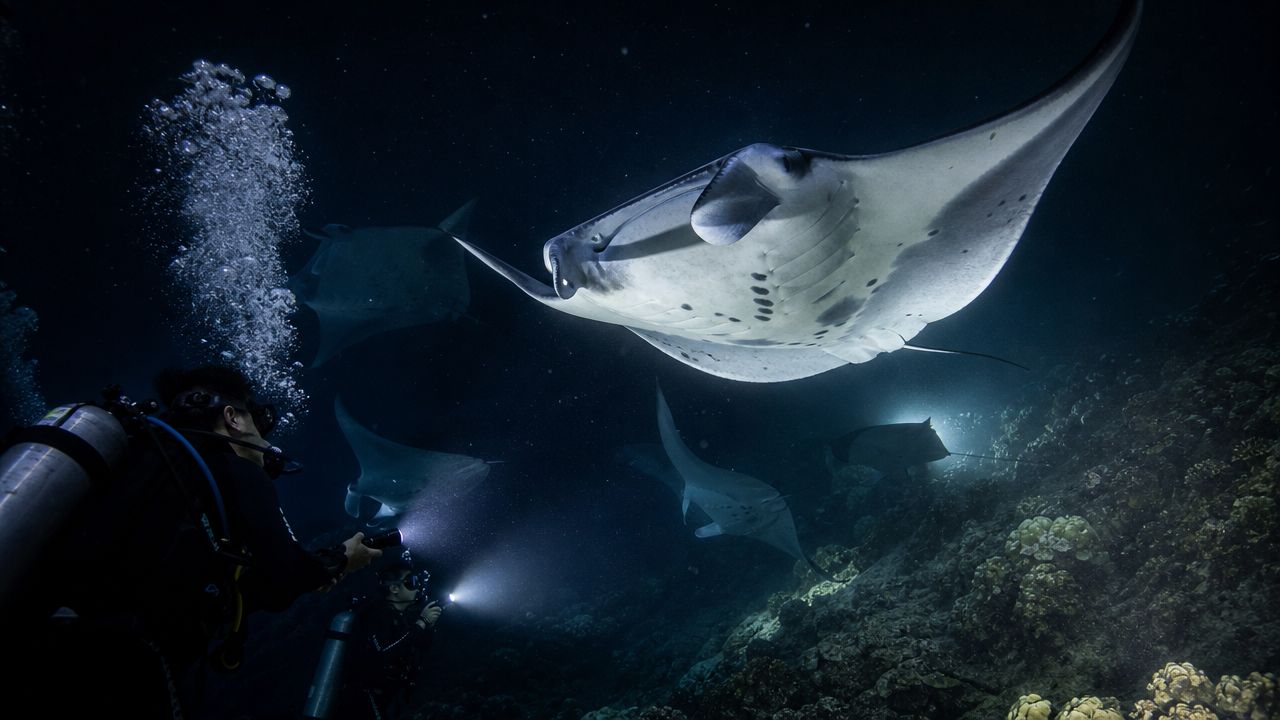
Some dive destinations have one famous dive that's better in marketing than in reality. Kona's signature dives aren't like that. When conditions line up and the operation is run well, they deserve their reputation.
If you're comparing the famous night encounter from a diver's point of view, this manta ray night swim page gives helpful context on why the experience is so distinctive in Kona.
The manta ray night dive
This is the dive most travelers ask about first, and for good reason. Done properly, it doesn't feel like a normal night dive with an occasional animal pass. It feels like a staged wildlife theater where divers hold position and the action happens above them.
The key is understanding the format. You're not chasing mantas around a reef. You settle into the viewing zone, keep your light where the guide wants it, and let the plankton draw the animals in. That's what makes the dive work.
Garden Eel Cove is often the stronger choice for this experience because of its protected location, better viewing setup, and better reef surroundings. Those details matter. A protected site gives divers a cleaner, calmer viewing platform and usually makes the whole dive more controlled.
For visitors ready to book, the manta ray dive tour is the relevant trip page.
The Kona blackwater dive
If the manta dive is Hawaii's most famous underwater show, the blackwater dive is its strangest. This is not a reef dive at night. It's an open-ocean night dive where divers descend beneath a lighted line system and watch deep pelagic life rise toward the surface.
This dive is for comfortable divers. Not necessarily technical divers, but divers who don't need a bottom beneath them to stay mentally settled. The challenge is less about raw depth and more about awareness, composure, and task loading in open water at night.
The blackwater dive tour is worth considering if you already like unusual marine life and don't need the reassurance of a reef or wall.
Some divers leave blackwater talking about the creatures. Others talk about the feeling of suspension in open ocean darkness. Both reactions are normal.
Advanced days for experienced divers
Some visitors come to Hawaii wanting more than local reefs and a single marquee night dive. For that group, longer-range or more advanced charters can be the right play, especially when the goal is site variety and a stronger sense of expedition.
The advanced long-range dive tour fits that category. It makes the most sense for divers who already know they're comfortable with deeper profiles, changing conditions, and more demanding site structure.
A simple way to choose:
- Pick the manta dive if you want a signature Hawaii memory with broad appeal.
- Pick blackwater if you want something rare, surreal, and mentally engaging.
- Pick an advanced trip if you already know standard local diving won't be enough.
Essential Guide for Divers Safety and Gear
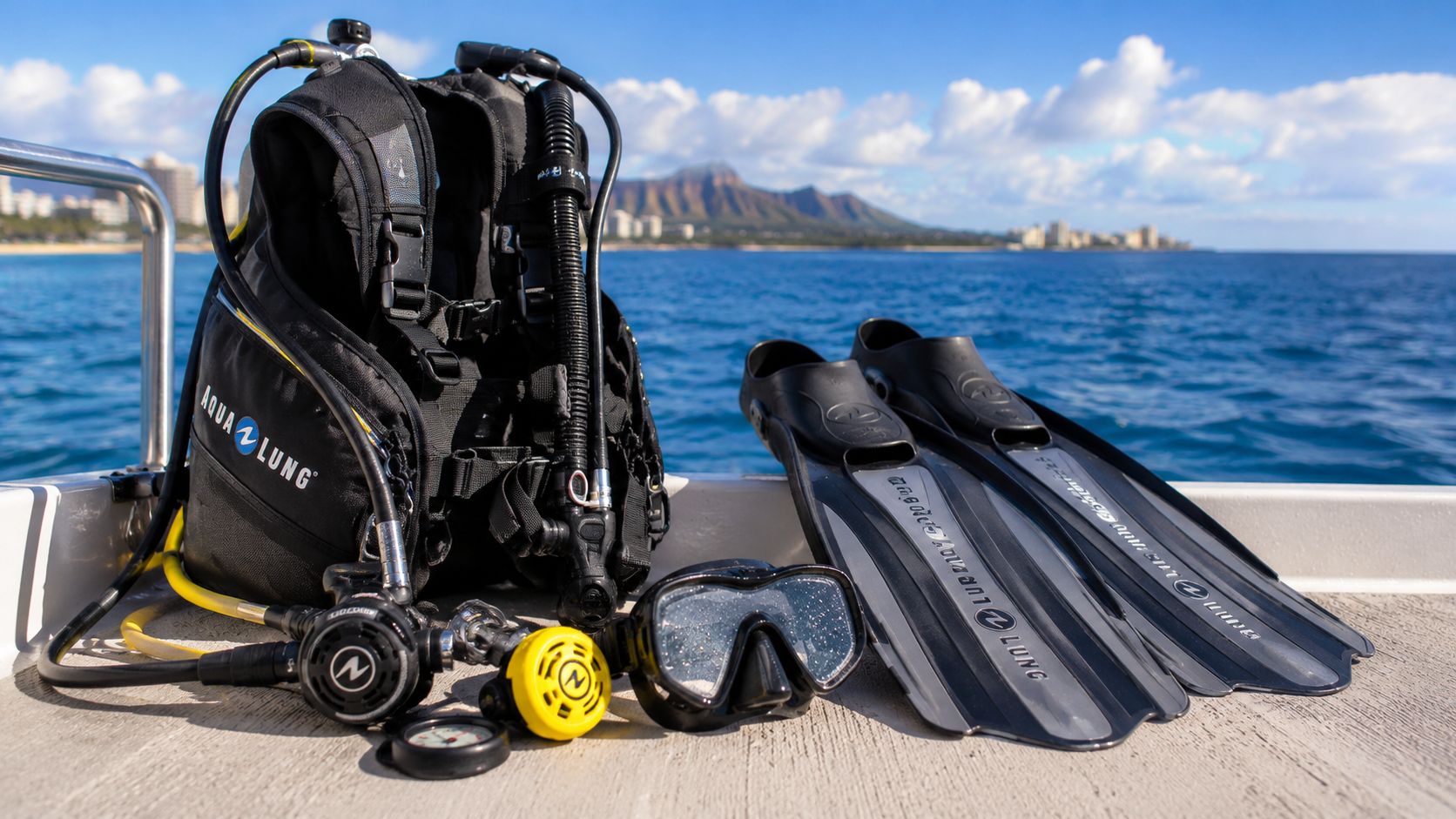
The best Hawaii dive trips usually feel effortless on the boat because the preparation happened before the boat left. Certification, weighting, exposure protection, and honest communication with the crew matter more than is often acknowledged.
If seasickness is even a possibility for you, read this practical guide on the best sea sickness medicine before your dive day and solve that part of the plan early.
Certification and dive matching
The safest divers in Hawaii aren't always the most experienced. They're the ones who book dives that match their current ability, not the certification card they earned years ago.
Use this simple filter:
- Open Water level: Good fit for many reef dives and conservative boat diving.
- Advanced-level comfort: More useful when dives involve added depth, more complex structure, or night procedures.
- Non-certified visitors: Introductory or discover-style experiences are often the smarter first step than forcing a full course into vacation time.
A rusty diver with decent judgment is easier to guide than a confident diver who books above their comfort zone.
What to bring and what to rent
You can rent most scuba gear in Hawaii without a problem. Still, I strongly prefer divers bring the personal items that most affect comfort and fit.
- Mask: A familiar mask prevents half the annoyance that ruins easy dives.
- Fins: Proper fit matters more than brand.
- Exposure layer: Bring your own if you already know what keeps you comfortable.
- Certification materials: Have them ready before check-in, not while the boat is boarding.
- Any seasickness items: Keep them accessible, not buried in luggage.
For rented gear, inspect it before the briefing is over. Check inflator function, hose routing, tank security, releases, and weighting assumptions. None of that is dramatic. It just prevents avoidable mistakes.
Underwater behavior that keeps Hawaii healthy
Good buoyancy in Hawaii isn't just about looking polished. It protects the environment. Volcanic ledges, reef growth, and animal resting areas don't need touching, chasing, or kneeling.
A few habits make a real difference:
- Keep your fins up when you're near reef or rock structure.
- Pause before approaching wildlife instead of closing distance automatically.
- Use hand signals early if something feels off.
- Abort the dive if needed without ego. There's no prize for forcing a bad day.
Check AvailabilityThe divers who have the best wildlife encounters usually stop trying to force the encounter.
Frequently Asked Questions About Scuba Diving in Hawaii
Is Hawaii scuba diving good for beginners
Yes, if the site and island match the diver. Beginners usually do best in calm water, with easy descents, clear briefings, and no pressure to perform above their comfort level. That's a big reason Kona is often the easiest recommendation for first Hawaii dive trips.
Do I need to be certified to try scuba in Hawaii
No. Non-certified visitors can usually do introductory or discover-style scuba experiences with direct supervision. If you already know you want multiple certified dives on the trip, getting certified before arrival gives you more flexibility.
Are shark encounters common and safe
Shark encounters can happen in Hawaii, and for recreational divers they're usually a normal wildlife observation rather than a safety event. The right response is simple. Stay calm, follow the guide's instructions, and don't turn the moment into a chase.
What is the average visibility in Kona
Visibility changes with site and conditions, so it's better to ask the operator what the coast is doing during your travel window. Kona is popular partly because divers often choose it for its dependable conditions rather than for one fixed visibility promise.
What's the best way to book a dive tour and save money
Book early, be flexible on trip timing, and look at package options directly through the operator instead of waiting until the last minute. The cheapest-looking day isn't always the best value if it puts you on the wrong trip for your skill level.
Should I book a manta dive or a daytime reef dive first
If you're newly certified or haven't dived in a while, do a daytime reef dive first. Get your weighting, buoyancy, and comfort back. The manta dive is much better when you arrive settled instead of rusty.
If you're planning a Big Island dive trip and want a straightforward place to start, Kona Honu Divers offers Kona boat diving, manta trips, blackwater diving, and beginner-friendly options that make it easier to match the right experience to your comfort level and goals.