
You're probably planning this trip with a dozen tabs open. One page says Maui. Another says Kona. Someone in your group wants easy reef dives, someone else wants mantas, and you're trying to figure out whether Hawaii scuba diving will feel relaxed, advanced, expensive, or all three.
The short answer is yes. It can be any of those, depending on the island, the operator, and how honest you are about your actual comfort level underwater.
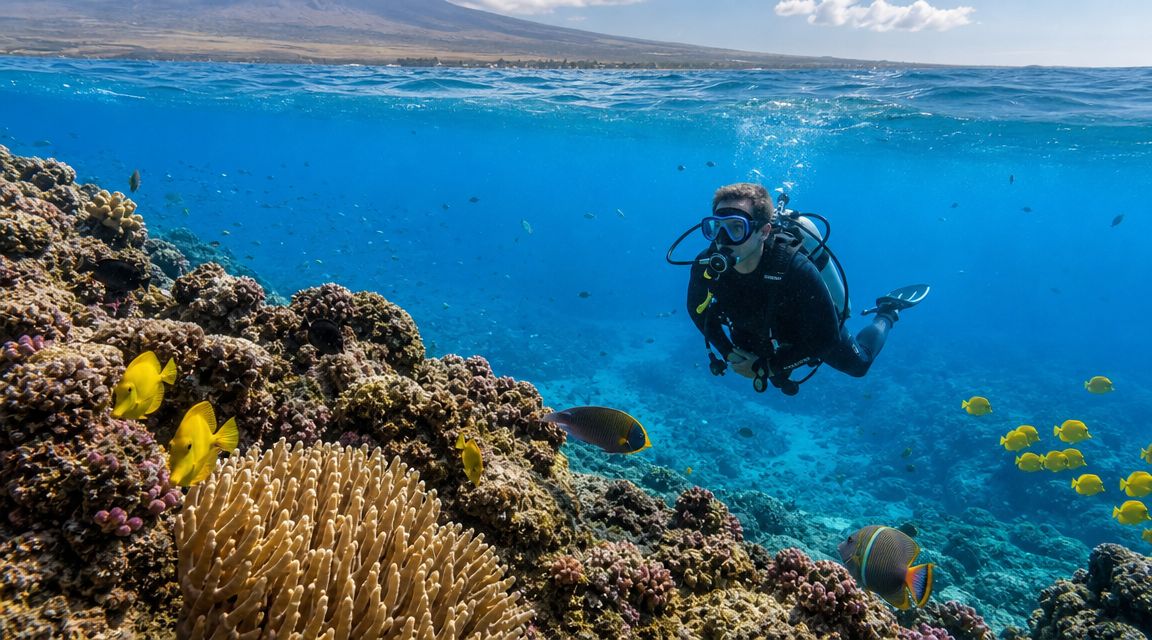
A good Hawaii dive trip usually starts with a simple descent. Warm blue water. Lava rock taking shape below you. A turtle moving past like it has nowhere urgent to be. Then the site opens up. A ledge. A swim-through. Coral tucked onto old volcanic structure. Hawaii doesn't dive like a soft, flat tropical postcard. It feels sculpted.
That's the part many visitors remember most. The underwater world has drama before a single big animal shows up.
Some days the magic is in the terrain. Some days it's a manta ray pass at night, so close you stop thinking about your gauges for a second and just stare. Some days it's subtler than that. Good visibility, easy breathing, a guide who chose a site that matches the group instead of choosing the flashiest briefing.
That's how Hawaii scuba diving goes well. Not by chasing the hardest dive on day one, but by matching the right water to the right diver. When you do that, Hawaii delivers the kind of diving people come back for.
Welcome to Your Underwater Paradise
A first Hawaiian dive often resets a diver's expectations.
You drop below the surface expecting reef fish and warm water. Then the geology shows up. The bottom isn't just coral. It's lava, folded into shelves, cut into arches, hollowed into caverns and tubes. Even straightforward reef dives carry a sense of structure that feels distinctly Hawaiian.
The water helps too. You're not fighting thick exposure protection or bracing for a shock when you descend. Hawaii feels swimmable from the start, and that changes how quickly people relax. Relaxed divers breathe better, notice more, and usually have a much better trip.
What makes Hawaii feel different underwater
Hawaii has range. One diver can spend the morning cruising reef with turtles and eels, then spend another day on a night dive that feels completely separate from daytime diving. On the Big Island especially, the shift from bright lava reefs to open-ocean darkness happens fast, which is part of the appeal.
For many visitors, the true surprise is how memorable the non-dramatic moments are.
Some of the best dives in Hawaii aren't the deepest or rarest. They're the dives where conditions, site choice, and diver ability line up cleanly.
That's the insider difference. Divers who book only by photo often miss it. Hawaii rewards judgment.
The trips people enjoy most
The strongest trips usually share a few traits:
- Realistic pacing: Don't stack every demanding dive back-to-back.
- Island fit: Pick your island based on diving style, not just hotel deals.
- Operator fit: A careful briefing and good site match matter more than flashy marketing.
- Room for wonder: Leave space for the dive that wasn't on your original wishlist.
Hawaii can be gentle, advanced, cinematic, and humbling, sometimes in the same week.
Why Hawaii is a World Class Diving Destination
Hawaii earns its reputation with a mix that few places can offer at the same level. The islands support a large, active dive market, and one estimate puts that scale at 1.5 million+ scuba dives per year with 215+ licensed dive shops across the state, while water temperatures are typically 75-80°F (24-27°C) and visibility is often reported above 100 feet, as outlined in this look at why scuba diving is big in Hawaii.
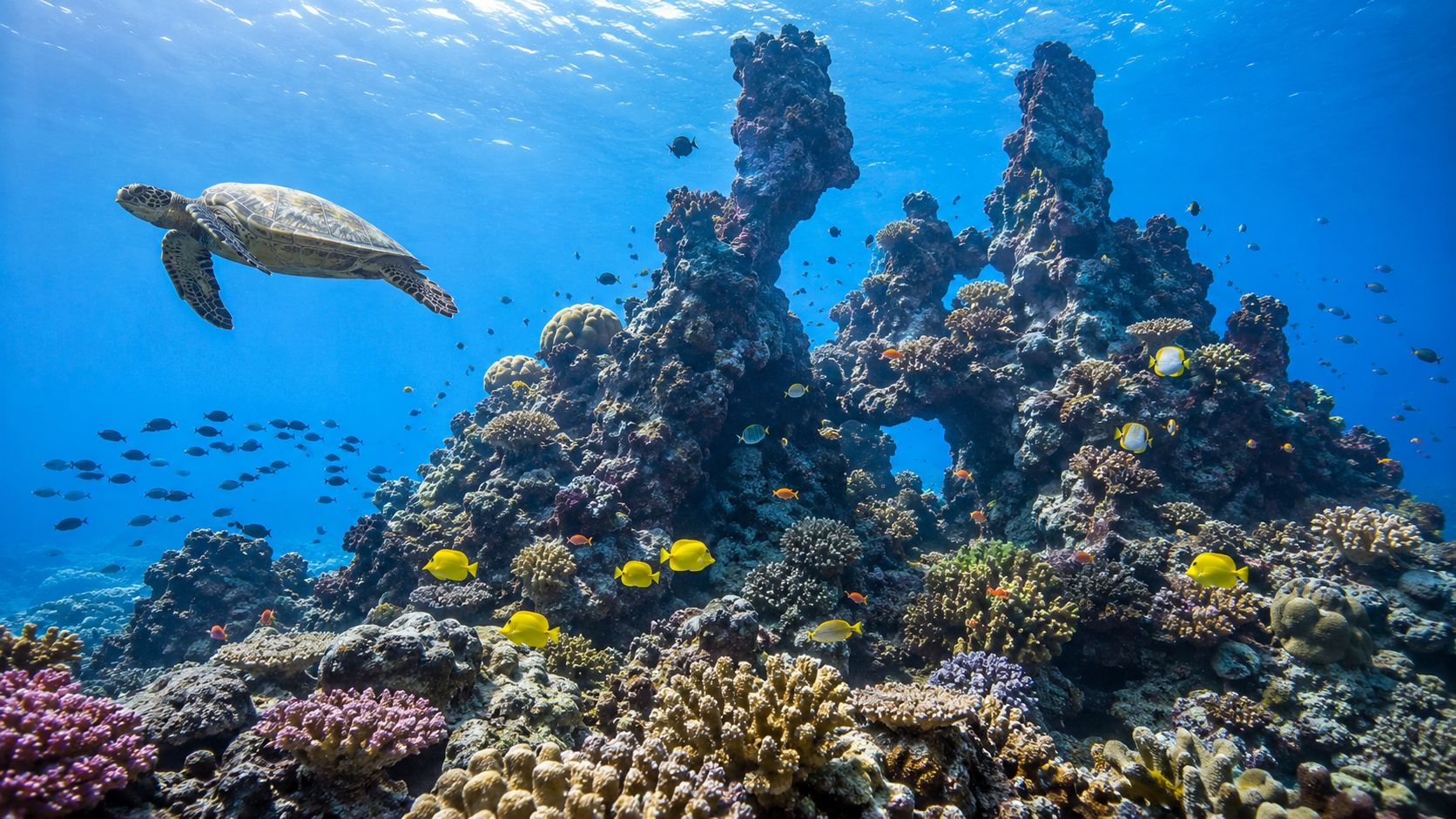
Those conditions matter in practical terms. Warm water reduces friction for newer divers. Strong visibility makes descents, buddy contact, and situational awareness easier. Year-round usability also makes Hawaii less seasonal than many colder-water destinations.
The volcanic terrain changes the whole dive
A lot of tropical destinations sell fish and color. Hawaii adds shape.
The islands are part of a volcanic chain with 8 major islands and 100+ smaller islands, islets, and atolls, which creates a wide spread of dive environments. On the Big Island's Kona coast, industry coverage often highlights swim-throughs and caverns in depths from 30 to 200 feet, according to Scubapro's Hawaii scuba overview.
That topography changes how dives feel underwater. You aren't just floating over reef. You're navigating contours, edges, and lava-formed structure.
Marine life gives Hawaii its identity
Hawaii also carries strong wildlife appeal. PADI identifies manta rays, tiger sharks, and white-tip reef sharks among the signature species divers may see in Hawaiian waters, in its Hawaii diving guide.
That doesn't mean every dive turns into a megafauna show. What it means is the ceiling is high. On any given trip, the mix can include turtles, reef fish, eels, sharks, and one or two encounters that stay in your head for years.
Why divers return: Hawaii doesn't depend on one marquee site. It keeps delivering across conditions, terrain, and wildlife.
An Island by Island Guide to Scuba Diving in Hawaii
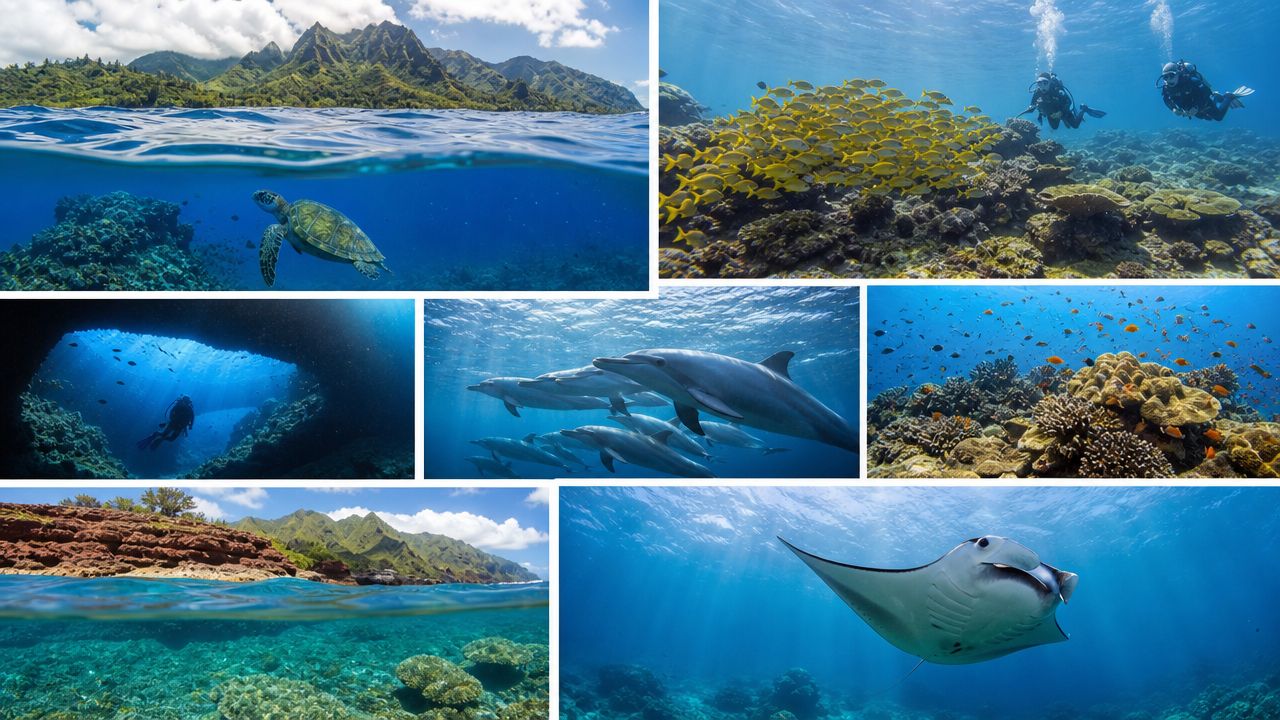
Choosing the right island shapes the whole trip. Hawaii's volcanic chain includes 8 major islands and 100+ smaller islands, islets, and atolls, which is one reason the diving varies so much from place to place, as noted in this guide to scuba diving across Hawaii.
The Big Island and Kona
If your priority is diving first and everything else second, Kona is the cleanest recommendation.
The Kona coast gets attention for good reason. It concentrates many of Hawaii's most talked-about dive experiences, and coverage often points to swim-throughs and caverns in depths from 30 to 200 feet along this coast. That translates to variety. Easy reef dives, lava structure, night diving, and more demanding profiles can all fit into one stay.
For broad trip options, look at Big Island dive tours in Kona. If you're an experienced diver looking for a longer-range profile with more advanced site selection, the premium advanced 2 tank trip is the kind of format worth considering.
Best fit for Kona:
- Certified beginners: Calm reef dives with strong briefings
- Returning divers: Refresher-friendly day boats and lava terrain
- Advanced divers: Night, blackwater, deeper structure, and more task-loaded dives
Maui
Maui works well for divers who want a broader vacation with diving built in, not a dive-only itinerary.
The draw here is balance. You can combine boat diving with easier family logistics, resort access, and plenty to do topside. Diving around Maui tends to appeal to travelers who want attractive reef diving without making every day revolve around a harbor departure.
This is often the better choice for mixed groups where not everyone dives.
Oahu
Oahu is the practical choice for travelers who want city access, dining, and a lot of activity options around their diving.
The island also works well for people who like variety in operator style and site type. If part of your group wants snorkeling rather than scuba, Living Ocean Tours is the snorkeling option I'd point people toward on Oahu.
Oahu is usually strongest for:
- Urban travelers: Easy to combine with Honolulu plans
- Groups with mixed interests: Diving, snorkeling, and non-ocean days all work
- Divers who like choice: Plenty of scheduling flexibility
Kauai
Kauai has a more rugged personality. The diving can be rewarding, but it usually suits travelers who are comfortable with a less polished, more condition-dependent trip.
That's part of its appeal. Kauai feels wilder. Divers who enjoy dramatic scenery above and below water often love it. But this isn't the island I'd suggest for someone who wants the simplest first Hawaii scuba diving experience.
Quick island comparison
| Island | Diving personality | Strongest fit |
|---|---|---|
| Big Island | Dive-focused, volcanic, specialty-rich | Divers prioritizing underwater time |
| Maui | Easy vacation pairing | Couples, families, mixed-interest trips |
| Oahu | Flexible and activity-heavy | Groups balancing diving with city plans |
| Kauai | Rugged and less predictable | Experienced travelers comfortable adapting |
Pick the island for the trip you actually want, not the one with the most famous photo.
Hawaii's Most Unforgettable Signature Dives
Some dives are good vacation dives. A few become the reason people book the trip in the first place.
On the Kona side of the Big Island, local conditions often provide 100+ feet of visibility with relatively stable water temperatures of 75-80°F, and those conditions are especially helpful for advanced profiles such as night, wreck, or blackwater diving because visibility improves buddy contact and task loading while warm water reduces thermal stress, as described in this Hawaii diving conditions guide.
The two signature experiences here deserve the attention they get.
The manta ray night dive
The manta dive works because it's not a chase.
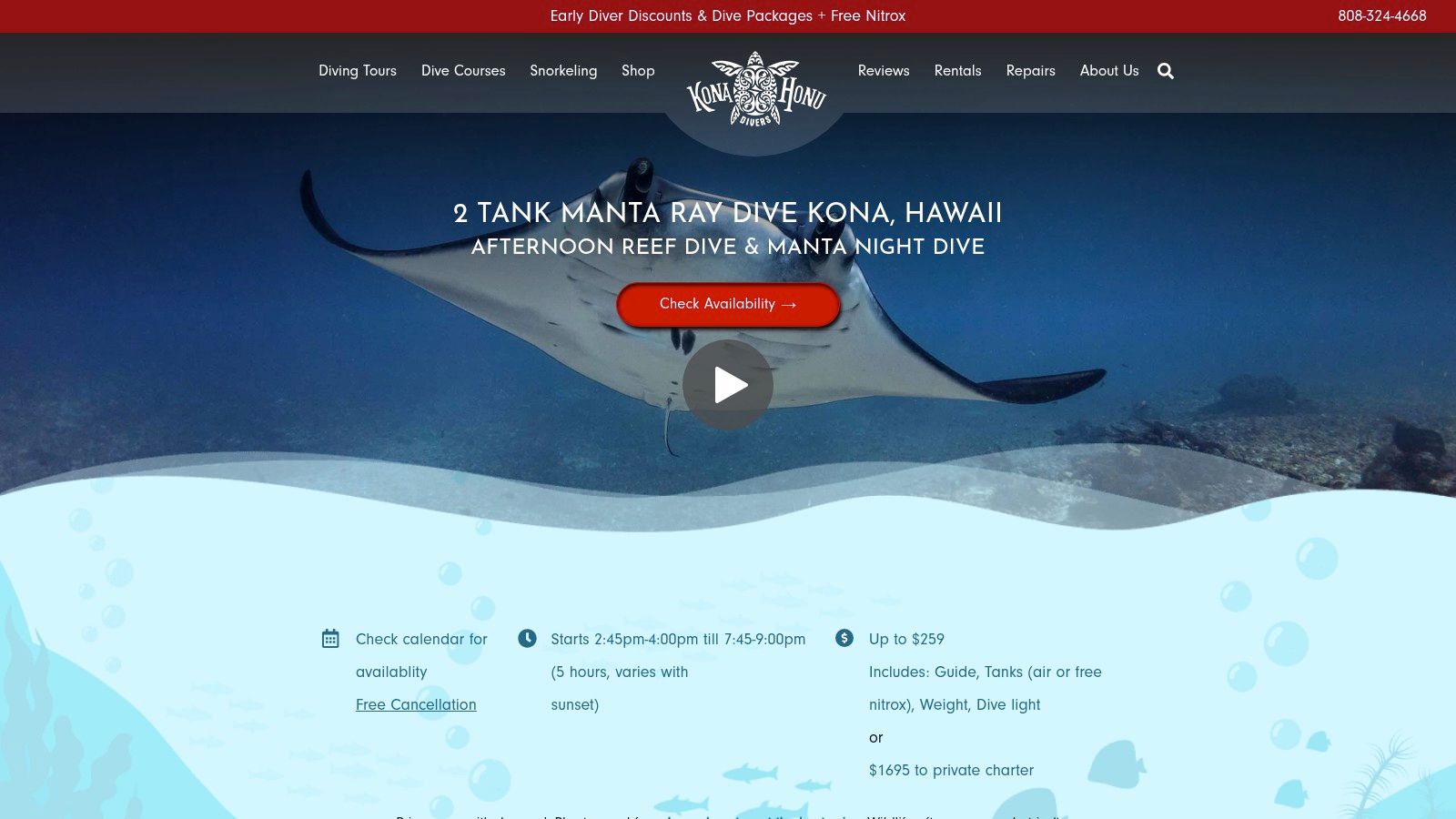
Divers settle into position, lights attract plankton, and the mantas come in to feed. When it's run correctly, the whole dive has a calm, almost theatrical rhythm. You stay still, keep your awareness, and let the encounter happen above you.
For this experience, Garden Eel Cove is the superior location because its protected setting supports a better viewing area and better reef structure around the site. If the manta dive is on your list, start with this Big Island manta ray tour overview and compare it with the actual 2 tank manta dive tour details.
What works on a manta dive:
- Stillness: The more disciplined the group, the better the viewing
- Comfort at night: This isn't the dive to test whether you dislike darkness
- Listening to the briefing: Light placement and positioning matter
The blackwater dive
Blackwater diving is different enough that many experienced divers remember it as a category of its own, not just another night dive.
There's no reef below you. No wall beside you. You're suspended in open ocean at night, focused on a lit water column where pelagic larvae and deep-ocean life rise toward the surface. It can feel surreal, quiet, and mentally demanding in the best way.
If that appeals to you, the Kona blackwater night dive tour is the direct starting point.
This dive rewards divers who already know how they behave at night. If you need a bottom reference to stay settled, get more night experience first.
Which one should you choose
If you want a classic Hawaii memory, choose the manta dive.
If you already enjoy night diving and want something strange and oceanic, choose blackwater. For many advanced divers, it becomes the most unforgettable dive of the trip.
Essential Dive Planning Skills Safety and Gear
You notice Hawaii's demands the moment you drop in on a sloping lava reef. Depth changes quickly, surge can push you off your line, and a small buoyancy mistake turns into a fin kick against rock or coral. Divers who arrive with clean fundamentals usually relax faster and see more.
Hawaii is comfortable to dive for much of the year, but the underwater terrain asks for precision. Water temperatures are often warm enough that many divers are happy in light exposure protection, while others run cold on repetitive boat days and prefer a full 3 mm suit. Bring what keeps you calm and focused, not what looked fine on one tropical trip years ago.
Skills that matter most here
The first thing I watch in Hawaii is control in the water column.
A diver who can hold a stop without sculling, adjust depth gradually on a lava slope, and stay off the bottom in surge will have an easier day than a diver chasing maximum depth or bottom time. That matters even more on sites with swim-throughs, sharp volcanic structure, or night conditions.
Focus on these skills before booking more demanding profiles:
- Buoyancy control: Keeps you off lava, coral, and silty pockets
- Trim: Reduces effort and helps in swim-throughs and surge
- Navigation awareness: Useful on reefs where structure can pull your attention away from the plan
- Honest self-assessment: A certification card does not mean you are current
If you have not dived in a while, do a conservative first day. An easy checkout dive, a buoyancy tune-up, or a guided reef dive is usually a smarter start than forcing an ambitious profile on day one.
Boat comfort and seasickness
Seasickness changes the whole dive day. Air consumption goes up, attention drops, and even a simple back roll can feel like work.
Useful options include Ship-EEZ Seasickness Patch, Dramamine pills, Bonine pills, Sea Band wristbands, and ginger chews.
A few habits help:
- Eat lightly: Too much food and too little food can both cause problems
- Hydrate early: Start before boarding
- Keep your eyes outside: Looking at the horizon usually beats staring at your phone
- Tell the crew early: Crews can often help with seat choice, timing, and setup if they know before you feel awful
A calm diver almost always has a better dive.
What to bring and what to rent
Bring the equipment that has to fit your body and your diving style. Rent the bulky pieces unless you know you dive better in your own setup.
A practical split looks like this:
| Bring if possible | Usually fine to rent |
|---|---|
| Mask | BCD |
| Fins | Regulator |
| Computer | Weights |
| Exposure layer if you run cold | Tank |
I strongly recommend bringing your own mask and computer. A rental BCD that feels slightly different is usually manageable. A mask that leaks or a computer you do not know well can distract you through the whole dive.
Nitrox also makes sense for many Hawaii trips, especially if you are planning several boat days close together. If you are already certified, review these nitrox diving benefits for repetitive diving days before you book.
How to Book Your Dives and Choose an Operator
You can book the same famous Hawaii dive site with two different boats and come back with two completely different experiences. One feels calm, organized, and safe. The other feels rushed before you even hit the water.
That difference usually comes down to the operator, not the reef.
A good crew adjusts the plan to the ocean, keeps the group size manageable, and gives a briefing that tells you what matters once you descend. A weak operation can turn an easy morning into a high-workload dive with poor site matching, vague procedures, and too many divers following one guide. Cost matters, but value in Hawaii comes from judgment on the boat.
What to compare before you book
Start with the operator's process, not the photo gallery. Ask how they choose sites, how they separate newer divers from experienced ones, and what happens if conditions change after departure. Good answers are specific. Crews should be able to explain how they handle surge, current, entry style, bottom time, and diver turnaround without sounding scripted.
A few questions reveal a lot:
- How do they choose sites? Daily conditions and diver ability should drive the plan.
- How crowded is the boat? Personal space matters more than many visiting divers expect, especially while gearing up.
- How detailed is the briefing? You want terrain, likely conditions, hazards, and clear in-water procedures.
- How do they manage mixed experience levels? This affects both safety and enjoyment.
- What is included in the price? Gear, guide service, nitrox, snacks, park fees, and specialty support can change the actual cost.
If you are comparing local options on the Big Island, this guide to choosing a Kona diving company is a useful way to filter the sales talk and focus on what affects your actual dive day.
Boat diving versus shore diving
Boat diving is the better call for many visitors. The crew handles site selection, watches the conditions, helps with setup, and gets you to terrain that shore divers cannot reach easily. That support matters if you are on a short trip and want your diving days to count.
Shore diving still has a place. It gives experienced, self-sufficient divers more control over pace and profile, but Hawaii shore entries can be deceptively tricky. Lava rock, surge, and entry timing punish hesitation. Visitors who do not know the access points often spend more energy getting in and out than they do enjoying the dive.
One operator example
Kona Honu Divers is a practical example of the kind of operator many traveling divers look for. They run guided reef dives, manta night dives, blackwater trips, training, and nitrox support. That range makes trip planning simpler if you want one shop that can handle both a relaxed checkout-style day and a more advanced specialty dive later in the week.
That is a significant booking advantage. You are not just reserving seats on a boat. You are building a dive plan that fits your skill level, your schedule, and the dives you came to Hawaii to do.
Sample Hawaii Scuba Diving Itineraries
The best itinerary is one that leaves enough margin for weather, fatigue, and the dive you decide to add once you arrive.
Seven day Big Island dive intensive
This works well for divers who want Hawaii scuba diving to be the main event.
A solid flow looks like this:
Arrival and setup
Keep day one light. Assemble gear, check fit, and don't rush into a demanding profile after travel.Easy two-tank reef day
Start with straightforward Kona diving. Use this day to dial in weighting, breathing, and local conditions.Second day of reef and lava structure
Add more terrain once everyone is comfortable. At this stage, people begin to settle into Hawaii's underwater style.Restful morning and manta night dive
Don't cram extra stress into a night-dive day. Stay relaxed and save mental bandwidth for the evening.Advanced day
If you're qualified and comfortable, this is the place for the longer-range or more demanding profile.Recovery pace, then blackwater if appropriate
Only slot this in if the diver is ready for it.Buffer day
Leave one day flexible for weather changes, repeat favorites, or topside exploring.
Ten day multi island dive and explore trip
This version suits travelers who want depth and variety.
Try this rhythm:
Days 1 to 5 on the Big Island
Focus on Kona. Get your signature diving done early, especially specialty dives.Days 6 to 10 on Maui or Oahu
Shift into a broader vacation mode. Dive less aggressively. Mix in snorkeling, beaches, food, and non-dive sightseeing.
The smartest itineraries front-load the dives that matter most, then use the second half of the trip for flexibility.
That approach protects you from weather changes and avoids ending the trip feeling like a compressed checklist.
Hawaii Scuba Diving Frequently Asked Questions
What is the best time of year to scuba dive in Hawaii
Hawaii is a year-round destination. The better question is what kind of trip you want. Many travelers prefer calmer, easier-feeling conditions, while others like the feel of winter ocean activity and are comfortable being more flexible with site plans.
Can I learn to scuba dive in Hawaii
Yes. Hawaii works well for training because the water is warm and many operators can pair instruction with attractive real-ocean dives. If your vacation time is limited, decide in advance whether you want a full certification course or just an introductory experience.
What marine life am I most likely to see
Expect reef life first. Turtles, eels, reef fish, and the usual small interactions are the foundation. Signature encounters such as manta rays or sharks are part of Hawaii's appeal, but they should feel like a bonus layered onto already strong diving, not the only reason to get in the water.
Is nitrox worth it in Hawaii
For repetitive diving, yes, especially if you're doing several boat days close together. It won't turn a poor dive plan into a good one, but it can be a useful tool for qualified divers who want more margin and a more comfortable multi-day schedule.
If you want a trip that combines classic Kona reef diving with iconic night experiences, Kona Honu Divers is a practical place to start comparing schedules, training options, and specialty dives.