
The first time you watch a manta ray turn through your light beam at night off Kona, the whole dive goes quiet in a different way. Even experienced divers stop fidgeting with gauges for a second and just stare.
Your Ultimate Hawaii Scuba Diving Adventure Starts Here
Hawaii scuba diving pulls people in for obvious reasons at first. Warm water. Blue water. Reef fish. Sea turtles. Then you get in, swim a lava arch or hover over black volcanic structure, and you realize Hawaii doesn't dive like most tropical destinations.
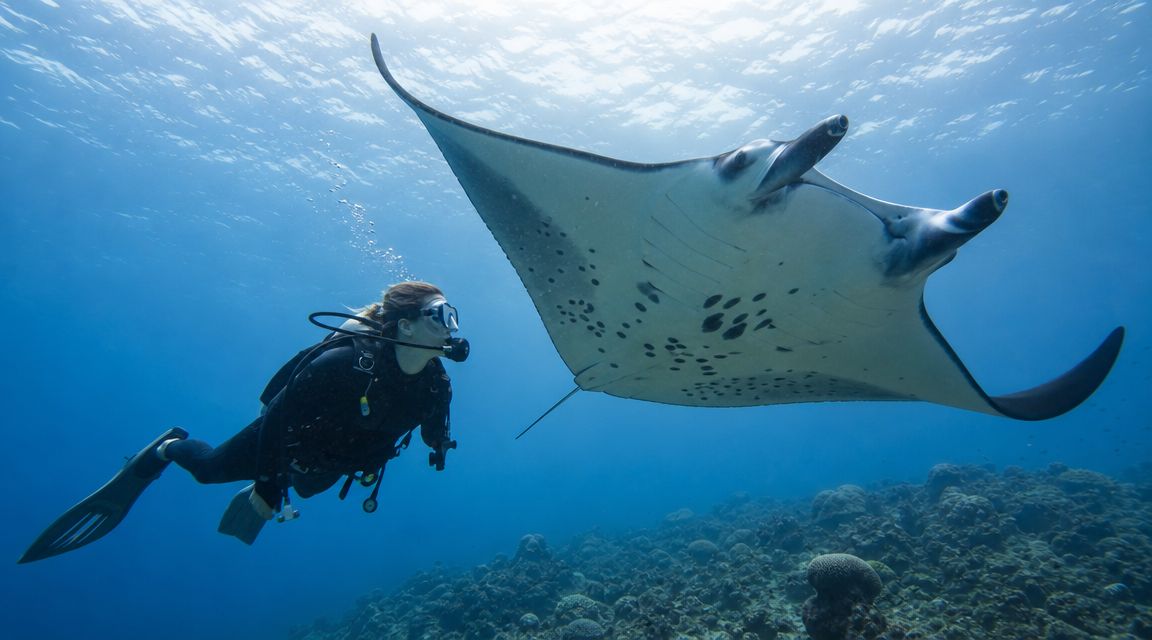
A lot of first-time visitors expect a simple beach-vacation add-on. What they find instead is a full dive destination with enough variety to shape an entire trip around the water. That's especially true if you're using a local operator on the Kona coast and building your days around conditions instead of trying to force a fixed checklist. If you're starting your trip planning, Kona diving resources from a local Big Island operator are a useful place to get oriented.
What makes the experience different
Hawaii was built by volcanoes, and that matters underwater. The terrain has ledges, fingers of lava rock, swim-throughs, caverns, and sharp changes in depth that reward divers who are comfortable in the water column and paying attention.
Marine life is part of the draw, but structure is what gives Hawaii scuba diving its character. On one dive you may spend the whole time working around lava shelves and watching reef life tucked into cracks. On another, the open blue becomes the main event.
Practical rule: Come to Hawaii ready to dive the conditions you have, not the exact site list you wrote down at home.
Who Hawaii works for
Hawaii can work for a lot of divers, but not always in the same way.
- Newer certified divers often do well on protected reef and morning boat dives where the pace is calm and task loading stays manageable.
- Returning vacation divers usually get the most from a short trip by focusing on one island instead of trying to sample everything.
- Advanced divers have real reasons to come back, especially for night diving, deeper volcanic topography, and pelagic-style experiences.
That last point matters. Hawaii isn't just scenic. It's one of those places where a diver can spend years improving and still find a new angle.
Why Hawaii Is a World-Class Dive Destination
Hawaii earns its reputation because it combines reliable conditions with underwater terrain that feels distinct from other warm-water destinations. The volcanic origin of the islands shapes almost every dive. You don't just look at reef. You move through architecture.
One industry overview says Hawaii hosts over 1.5 million scuba dives annually and supports 215+ licensed dive shops, with typical ocean temperatures of 75-80°F (24-27°C) and visibility that can exceed 100 feet. That combination helps explain why demand stays strong across seasons and why the destination functions as a serious dive market rather than a niche add-on for beach tourists, as noted in this overview of Hawaii's scuba scale and conditions.
Geology changes the dive
Volcanic terrain creates a different kind of awareness underwater. Divers tend to notice:
- Lava tubes and caverns that can make even shallow dives feel exploratory
- Steep relief that changes light, current feel, and navigation
- Hard volcanic contours that punish sloppy buoyancy faster than a soft sand channel would
That doesn't make Hawaii harder across the board. It makes it more technical in feel, even on relatively accessible dives.
It's not just warm water tourism
The year-round water range is a big reason people can plan trips with confidence. You're not waiting for a narrow seasonal window to have a worthwhile dive holiday. Stable comfort and strong visibility mean divers can focus on site choice, goals, and operator quality instead of wondering whether the destination only works for a few weeks each year.
A mature dive destination also means infrastructure. Boats, instructors, charter options, rental gear, training pathways, and specialty dives are widely available across the islands.
Good Hawaii diving comes from matching the island and the site to your skill level. Great Hawaii diving comes from doing that before you ever book the flight.
What experienced divers notice quickly
The best part of Hawaii scuba diving isn't one single animal encounter. It's the mix.
| Feature | Why it matters underwater |
|---|---|
| Volcanic topography | Adds structure, navigation interest, and memorable site character |
| Warm water | Keeps diving comfortable across the year |
| High visibility | Makes wide reef scenes and blue-water encounters easier to appreciate |
| Established operator network | Gives travelers more ways to build a trip around their exact goals |
Exploring Hawaii's Premier Dive Regions
On the boat, I hear the same question every week. Which Hawaiian island should I dive if I only have a few days?
The honest answer depends less on bragging-rights sites and more on how you want the trip to feel once you are in the water. Some divers want one or two easy morning charters wrapped into a broader vacation. Others want to stack multiple dive days, keep transit simple, and spend their energy underwater instead of in the car or adjusting backup plans.
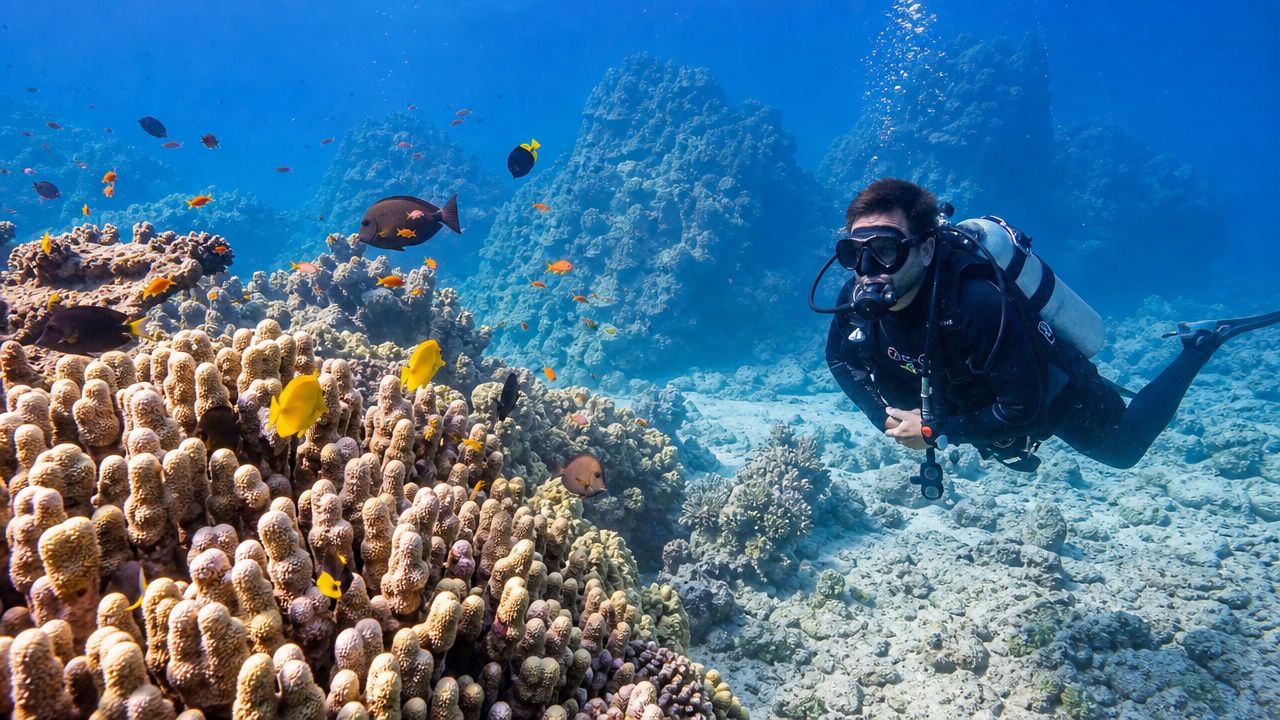
Oahu and Maui are good choices for the right kind of trip
Oahu works well for travelers who want diving as part of a bigger vacation. You can mix in restaurants, Pearl Harbor, Waikiki, family activities, and a dive day or two without feeling like the trip has to revolve around boats and gear.
Maui often fits visitors who are planning a resort-heavy stay and want diving to be one strong part of the schedule, not the whole framework. That can be a smart call for couples, mixed-interest groups, or anyone splitting time between beaches, road trips, and the water.
Both islands can deliver good dives. The trade-off is focus. If your main goal is to log as much quality bottom time as possible on a short trip, those broader vacation priorities can eat into dive efficiency.
Why Kona often makes the most sense for dedicated divers
Kona wins a lot of short-trip decisions for a simple reason. It is easier to build a dive-centered itinerary around the west side of the Big Island than around islands where diving competes more heavily with traffic, crowds, or more exposed conditions.
The practical advantage is time. Less reshuffling. Less hoping conditions cooperate with your narrow schedule. More chances to get on the boat, dive, eat, rest, and do it again the next day.
If you are comparing islands specifically for scuba planning, this guide to which Hawaiian island has the best scuba diving lays out the differences in a way that is useful for actual trip decisions.
Use this framework instead of chasing generic "best dive" lists
Choose your island based on the trip you are trying to build.
- Choose Oahu if you want diving folded into a city-and-sightseeing vacation.
- Choose Maui if you want a resort trip with diving, snorkeling, and topside exploring sharing the schedule.
- Choose Kona if diving is the main objective and you want the easiest shot at putting together several strong dive days in a row.
That last point matters more than many visitors expect.
A site can be excellent on paper and still be the wrong pick for your trip if the logistics are clunky, the conditions are less forgiving, or your group has mixed experience. Kona tends to be strong because it gives divers more usable options without forcing the whole vacation to bend around one or two narrow windows.
Who usually gets the most out of Kona
Kona is a strong fit for:
- Newly certified divers who want comfortable, confidence-building conditions
- Couples and groups with mixed experience levels because operators can often match sites more flexibly
- Return visitors to Hawaii who want a dive-first trip instead of sampling several islands
- Divers with a short schedule who would rather maximize water time than spend the trip repositioning
It also suits people who care about operator quality, because the Kona market gives you enough choice to compare boat style, guide attitude, check-in flow, site selection, and how well a crew handles divers with different goals.
That is the decision-making lens. Pick the island that matches your available days, your comfort level, and how central diving is to the trip. For a lot of divers, especially on a shorter schedule, Kona is the cleanest answer.
Hawaii's Unforgettable Signature Dives
The first time I watched a diver surface from the manta night dive in Kona, he pulled off his mask and just laughed. No big speech. No attempt to sound polished. He had that look people get when a dive delivers something they did not expect to feel. That is why signature dives matter. They are not just famous. They give you a clear reason to choose one island, one charter, and one kind of dive over another.
Hawaii has a few dives that shape an entire trip. The smart move is to match the experience to your comfort level instead of booking every headline dive on the same vacation.
The manta ray night dive
Kona's manta night dive is the signature experience that pulls even experienced travelers back for another trip. You settle onto the bottom or a designated viewing area, keep your position steady, and let the mantas come to the light. On a good night, it feels less like chasing wildlife and more like being invited into a feeding pattern that has been repeating here for years.
Site choice matters. Garden Eel Cove usually gives divers a more controlled experience because it is often better protected and the layout tends to make the viewing cleaner. That matters if you are newer to night diving, prone to motion sickness, or traveling with a buddy who wants spectacle without a stressful entry and exit.
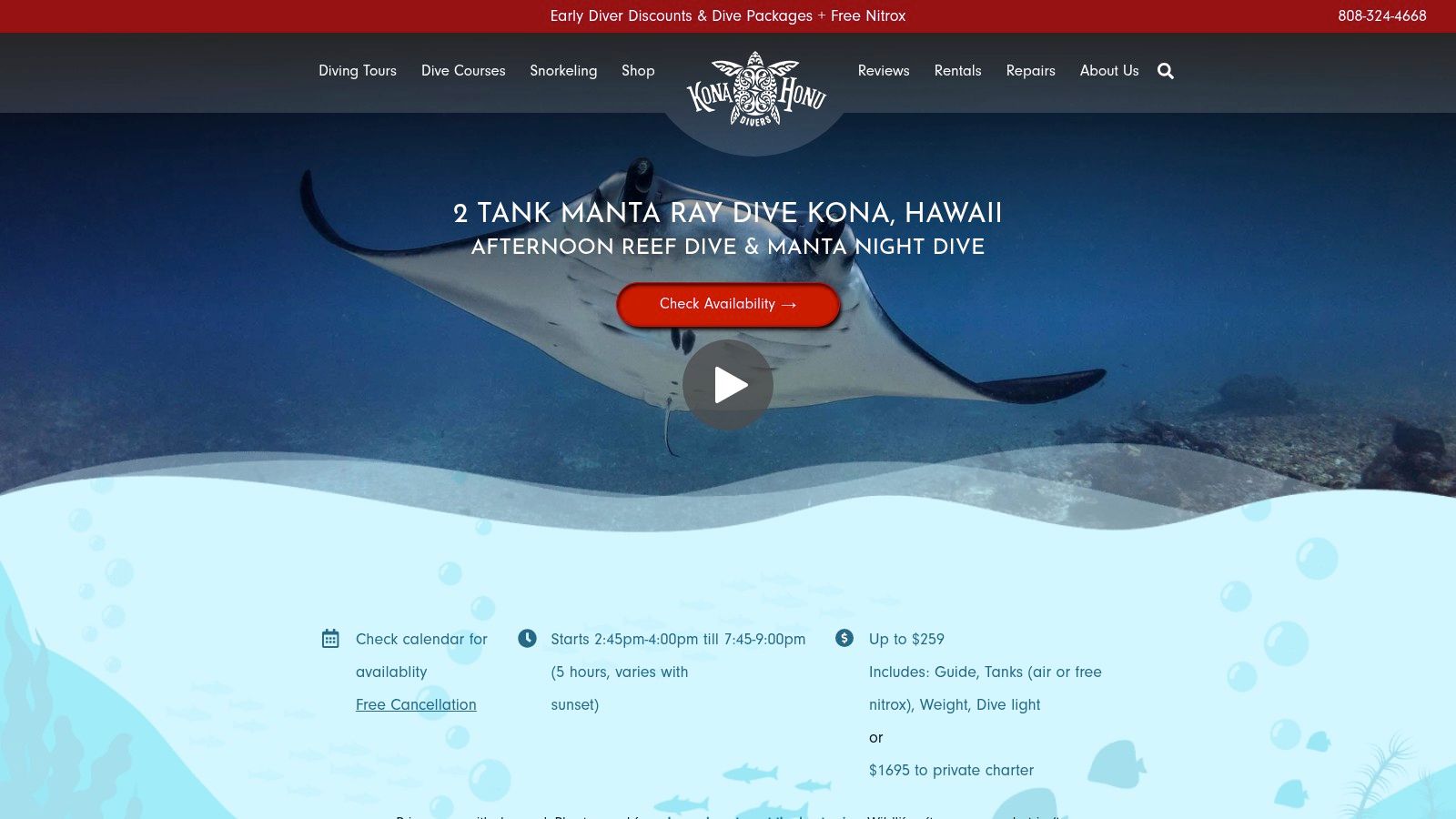
If this dive is high on your list, compare trip style, in-water expectations, and certification requirements on this Kona manta ray night dive tour page.
When the mantas are active, don't chase the show. Hold position, keep your light discipline clean, and let the animals control the distance.
The blackwater dive
Blackwater is a different decision entirely. You are suspended in open ocean at night, usually over very deep water, watching larval and pelagic life rise out of the dark. There is no reef to orient on and no lava wall beside you. For the right diver, that is the whole appeal.
For the wrong diver, it is a long hour of trying to calm down.
Book blackwater if you are already comfortable at night, can hold depth without constant correction, and stay relaxed when normal reference points disappear. Skip it if you are still working on buoyancy, have not dived in a while, or want an easy first night dive in Hawaii. Kona is one of the few places where both the manta dive and blackwater are realistic options on the same trip, but they scratch completely different itches.
Lava tubes and volcanic structure
The volcanic topography is what makes Hawaii look and dive like Hawaii. Swim-throughs, arches, lava fingers, mini amphitheaters, and sudden drop-offs change the workload underwater. A site can look calm from the surface and still punish sloppy trim once you are inside tighter structure or moving along a wall with surge.
That is the trade-off with Hawaii's dramatic terrain. It is memorable, photogenic, and often full of life. It also rewards control.
Newer divers usually enjoy these sites more after a simple first dive to dial in weighting and breathing. Experienced divers who want the bigger topography should look for trips built around advanced profiles rather than hoping a standard boat will turn into a high-complexity dive day by chance.
That is the framework for Hawaii's signature dives. Pick the one that fits your desired trip. Mantas for wonder, blackwater for curiosity, volcanic structure for classic Hawaiian terrain. If you are choosing with a clear head instead of a bucket list mindset, Kona gives you the best range of high-value options in one place.
Planning Your Perfect Hawaii Dive Trip
A good Hawaii dive trip starts with honesty. How many days do you really have, how recently have you dived, and are you trying to collect famous experiences or settle into consistent, enjoyable diving?
Seasonal choices change comfort more than they change viability
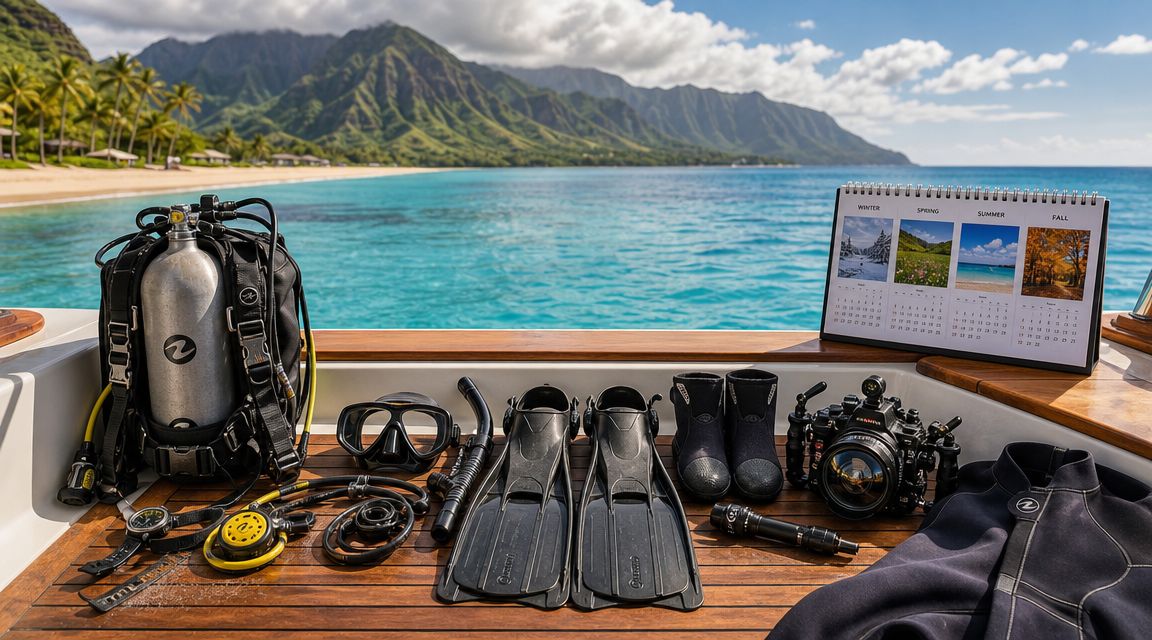
Mainstream guidance often mentions that summer water temperatures are around 83°F and winter averages around 76°F, but the useful part is what that means for comfort, surface intervals, and dive selection, as discussed in this seasonal Hawaii dive planning guide.
Summer usually feels easier for long boat days, repetitive diving, and lighter exposure protection. Winter can still be excellent, but some divers feel the difference between dives more than they expected, especially after a night charter or a breezy ride back.
Match the diving to your current skill, not your aspirational skill
A lot of bad vacation dives happen because people book for the story they want to tell later. Book for the diver you are on day one.
- If you're newly certified, prioritize straightforward morning reef dives first. Build comfort, tune weighting, and get your breathing under control before adding specialty dives.
- If you haven't dived recently, treat the first dive as a skills reset. Mask clear, buoyancy check, controlled ascent, and good gas habits matter more than the site name.
- If you're experienced and current, then start layering in night dives, advanced topography, and longer offshore profiles.
Budget and trip length
Hawaii is not bargain-basement diving. One industry overview describes a standard two-tank boat dive in Hawaii as costing about $150-$225 per person, and separate consumer-facing guidance places many popular Hawaiian dives around $170 on average. Those figures are summarized in this breakdown of Hawaii scuba pricing.
That pricing reality should shape how you plan. A shorter trip with carefully chosen charters usually beats a longer trip padded with low-value dives.
Booking advice: If you only have a few diving days, reserve your highest-priority charter early and leave at least some schedule flexibility around it.
A simple planning sequence
| Trip type | Better approach |
|---|---|
| Short dedicated dive trip | Choose one island, stay close to the harbor, book priority dives first |
| Mixed family vacation | Protect one or two dive mornings, keep the rest flexible |
| Advanced-focused visit | Add specialty dives only after confirming recent experience and comfort |
Essential Gear Packing and Safety Notes
On Kona boats, I can usually spot the first-time Hawaii diver before we leave the harbor. They packed for tropical postcards, not for a real dive day. By the second tank, the diver with no hooded vest, no water, and an unfamiliar rental mask is the one shivering, squinting, or burning extra gas because small comfort problems turned into bigger ones.
Hawaii is warm-water diving, but it still rewards thoughtful packing.
What to bring and what to rent
Bring the items that directly affect comfort, fit, and task loading. Rent the bulky gear unless you know you dive better in your own setup and you are willing to haul it.
- Bring your mask: A mask that already fits your face is the easiest way to avoid a ruined dive.
- Bring your dive computer: You already know its alarms, layout, and conservatism.
- Bring fins if you have room: Good fin control helps around lava rock, surge, and tight coral heads.
- Rent BCD and regulator if needed: Good operators maintain rental life-support gear well, and for many travelers that trade-off beats paying bag fees.
- Pack exposure protection with some margin: A full 2.5 mm to 3 mm suit works well for many divers, especially on repeat dives, longer boat rides, or night dives. Some cold-natured divers are happier with a hooded vest.
As noted earlier, Hawaii water often sits in the mid-to-upper 70s. That sounds warm until you do multiple dives, sit in wind on a wet boat ride, or drop in after sunset. The practical mistake is under-packing exposure protection because the vacation itself is tropical.
If you are choosing what to leave at home, leave the least personal gear. Mask, computer, and exposure protection usually matter more than bringing your own BCD.
Seasickness is easier to prevent than recover from
A strong diver can still get seasick in Hawaiian chop. I have seen very competent divers lose a whole charter because they waited until the boat was already rolling to do something about it.
Useful options include the Ship-EEZ Seasickness Patch, Dramamine pills, Bonine pills, Sea Band wristbands, and ginger chews. Pick one approach before trip day. Test medications at home first if you have never used them.
A few habits help on the boat:
- Eat light: A small breakfast usually works better than skipping food.
- Hydrate early: Start before boarding, not after you already feel drained.
- Watch the horizon: Looking down at a phone is an easy way to make things worse.
- Tell the crew early: They can often move you, cool you down, or help before the problem snowballs.
Safety habits that matter in Hawaii
The biggest Hawaii safety mistake is reading the surface and assuming the whole dive will be easy. Calm blue water can still hide surge, depth, sharp lava structure, and swim-throughs that increase task loading fast.
Buoyancy matters more here than many visiting divers expect. Volcanic topography is beautiful, but it is unforgiving if your trim is sloppy. Keep off the bottom, stay clear of coral and rock, and avoid chasing marine life into tighter terrain than your skills justify.
Listen closely to the site briefing. Entries and exits can be the most technical part of the dive day, especially when surge is pushing at the ladder or current is running along the coast. If a dive does not match your comfort level, skip it. The right call in Hawaii is often choosing the dive you can do cleanly and calmly, not the one that sounds most impressive on paper.
That same mindset should guide your packing. Bring the gear that makes you predictable underwater, rent the gear that is easy to verify on a good boat, and plan for the conditions you will dive, not the vacation photo in your head.
How to Choose the Best Dive Operator in Hawaii
The operator shapes the whole day. Good sites can still turn into mediocre dives if the boat flow is rushed, the briefings are vague, or the crew isn't matching divers well.
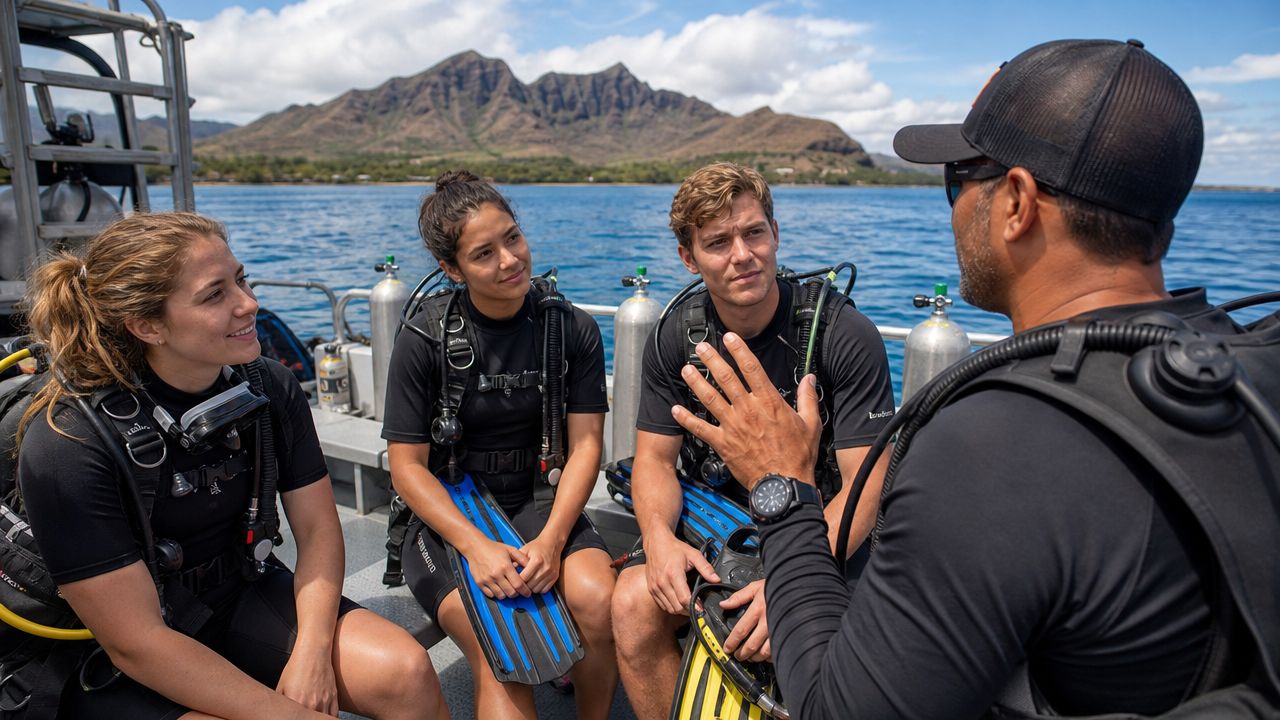
What to look for first
Start with operational basics, not glossy marketing photos.
- Clear diver screening: The shop should ask about certification, recency, and comfort level.
- Useful briefings: You want specifics on profile, conditions, navigation, and emergency procedures.
- Well-organized deck flow: Calm setup and predictable entries reduce stress.
- Site matching: Better operators adjust groups and objectives to the divers on board.
What separates a polished crew from an average one
A polished crew notices the small things. They catch overweighting before it turns into a bad dive. They don't oversell site difficulty. They can explain why one charter suits a diver and another doesn't.
If you're comparing options on the Big Island, Kona Honu Divers is one local example of a company offering day dives, night dives, courses, rentals, and specialty charters from Kailua-Kona. That range can be useful when you want one operator that can support both easier reef dives and more advanced experiences within the same trip.
Don't choose the boat based only on the site list. Choose the crew that's most likely to run that site well for your level.
Frequently Asked Questions About Hawaii Scuba Diving
Can I try scuba in Hawaii without a certification
Yes, many operators offer introductory experiences for non-certified guests. The key is choosing a conservative, well-supervised option and being honest about your comfort in the water. If you already know you get anxious with masks or equalization, handle that first instead of forcing a vacation dive.
Is shore diving popular in Hawaii
Yes, but shore diving in Hawaii isn't automatically easy. Entries can involve rock, surge, timing, and exit judgment that catch visitors off guard. If you're unfamiliar with the site, local guidance matters a lot more than it would on a sandy beach entry.
What's the best way to book a dive trip
Book around your highest-priority dive first. If the manta night dive is the reason you came, reserve that early, then build daytime dives around it. If you're rusty, schedule an easier charter before your specialty dive, not after.
Are there dangerous animals divers should worry about
Most concerns are manageable if you dive normally and respect wildlife. The actual risk for most visitors isn't dramatic animal behavior. It's poor buoyancy, task overload, overconfidence, and bad decisions on entries, exits, or conditions.
Is Hawaii good for beginner divers
It can be, especially when beginners choose protected, well-run dives and don't rush into advanced profiles. New divers usually have the best trips when they focus on calm mornings, simple objectives, and crews that care more about fit than about filling every spot on the boat.
If you want a Hawaii scuba diving trip that's organized around real conditions, skill-appropriate planning, and iconic Kona experiences, take a look at Kona Honu Divers. They offer a practical mix of reef dives, night dives, training, and specialty charters that can help you build a trip that fits your actual goals instead of a generic bucket list.