
You're on the dock before sunrise, fins clipped, wetsuit half-zipped, and somebody in your group is already asking the question that matters: do you book the manta dive, chase a wreck, or keep the whole thing simple because half the family just wants a safe, memorable first dive? hawaii scuba diving rewards the people who make those decisions early. It punishes the ones who pick a boat from a pretty photo and hope the ocean cooperates.
The good news is that Hawaii isn't a random tropical market. A 2017 Hawaii Dive Association economic impact study measured 356,148 divers, an estimated $519,887,657 in annual economic impact, and 1,079,460 room nights tied specifically to scuba diving, with broader industry descriptions putting the state at roughly 1.5 million scuba dives annually across 215+ licensed dive shops (Hawaii Dive Association economic impact study summary). That's not brochure fluff. That's a mature dive economy with real boats, real logistics, and real expectations.
Why Hawaii Scuba Diving Stands Apart
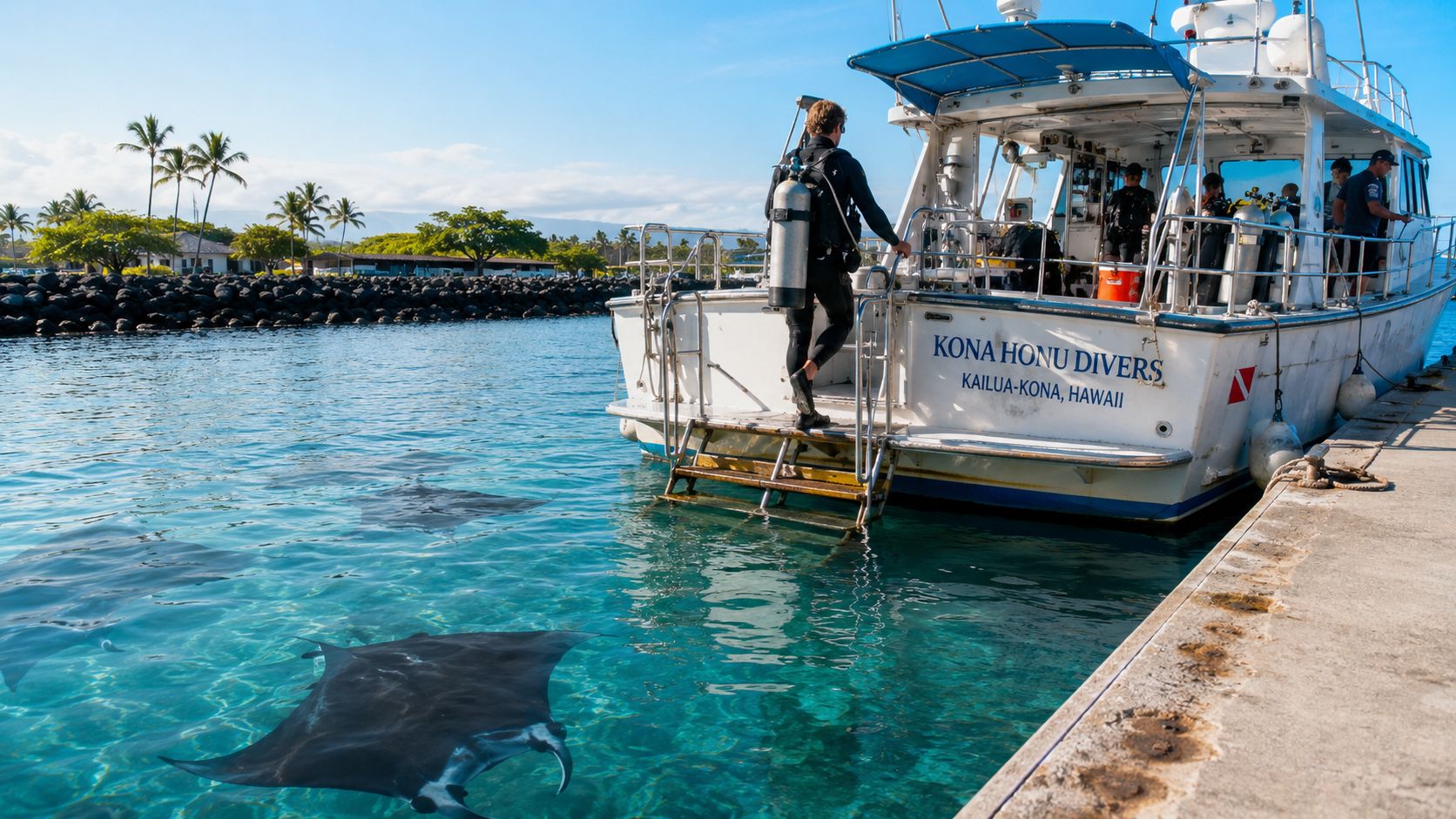
A Kona boat at sunrise tells you what kind of trip you are on. Tanks are lined up, the crew is checking clips, and the day already has a plan. That matters in Hawaii because the operators are established, the dive economy is mature, and the water delivers enough repeatable quality that people come back for specific dives, not just a warm-weather outing.
The scale is real. The 356,148 divers and $519,887,657 in annual impact from the Hawaii Dive Association study point to a destination where scuba drives stays, rentals, instruction, and tours, not just incidental recreation. The broader estimate of 1.5 million dives annually across 215+ licensed dive shops says the same thing from another angle, there is enough demand to support a deep operator base and enough infrastructure to make trip planning straightforward.
What that means in the water
Hawaii's appeal is the water itself and the way it is run. 75–80°F water, visibility that often clears 100 feet, and a safety record of 28 scuba diving fatalities in the decade leading up to 2020, which averages to fewer than three deaths per year, create a setting where local crews can run clean charters and divers can relax underwater. That combination gives you warm dives, clear sightlines, and conditions that are forgiving enough for newer divers while still interesting for experienced ones (Kona Honu Divers safety overview).
Hawaii also rewards good trip planning. Choose the island first, then the site, then the operator. On the Big Island, what's unique about diving in Kona is the clearest example of why that order matters, because local conditions and site selection shape the whole experience.
If you book that way, Hawaii stops being a generic tropical dive destination and starts acting like the specific place it is. The rest of the guide should follow that same logic.
Certification and Skill Level Basics
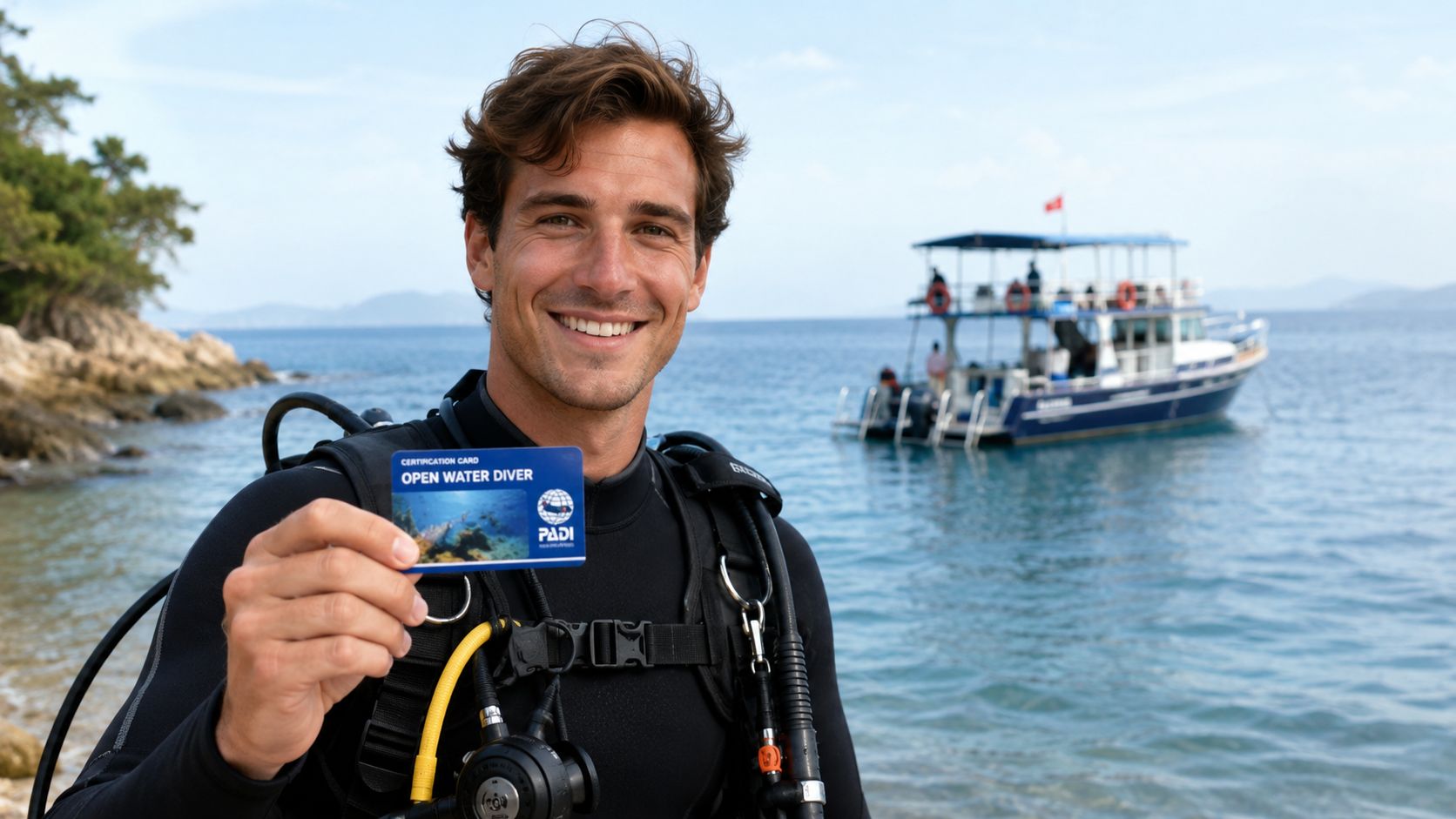
Start with the rule that matters. Certification determines what you should book, and Hawaii rewards divers who match the dive to the card in their pocket. If you are certified, you have real options. If you are not, you still have good options, but only if you choose them carefully.
Open Water is the entry point for most recreational diving. It gets you into the water, but it does not make every Hawaiian site appropriate for you. Kona Honu Divers' learning page is a useful reminder that training matters, yet the primary question is what kind of diving you want to do once you land.
Match the card to the dive
Recreational training agencies classify dives deeper than 18 meters, or 60 feet, as deep dives, and Hawaii quickly separates casual reef profiles from more demanding ones at that point (University of Hawaiʻi dive-planning guidance). That matters because some of Kona's signature sites sit well below that threshold, including the Sea Tiger wreck at about 80 to 130 feet (Sea Tiger depth reference). If depth, buoyancy, and gas management are not already comfortable for you, skip it. There is no reward for forcing a dive your training does not support.
The University of Hawaiʻi guidance makes the planning side just as plain. Before you go, account for site location, depth, access method, seasonal weather, boat traffic, riptides, and emergency actions (University of Hawaiʻi dive-planning guidance). Certification gets you through the gate. Judgment decides whether the dive is a smart one.
Straight answer: if your logbook is thin, book guided reef dives and manta trips. If you are already steady at depth, start looking at wrecks, blackwater, and longer boat profiles.
Three realistic entry paths for first-timers
- Discover Scuba: the right call if you are curious, not certified, and want one supervised ocean dive without committing to a full course.
- Guided beginner dive: better if you are traveling with certified friends and want a structured first experience in real water, not a pool.
- Full certification: the smart move if you already know scuba is something you will keep doing after the trip.
That decision tree is more useful than the usual advice to just get certified first. If you are visiting for a short stay, book the experience that matches your actual comfort level. If you are an experienced diver, do not burn the trip on a shallow itinerary unless the rest of your group needs it.
Top Dive Regions Across the Hawaiian Islands
Kona is the first place serious divers should look because it's the state's most complete dive market. A Hawaii guide says the Big Island has the greatest number of dive sites in the state, and Kona is especially tied to manta ray night dives and blackwater diving, which makes it the clearest anchor for advanced and signature experiences (Kona region guide). If you're flying all the way to Hawaii for scuba, that matters more than a generic “tropical reef” label.
Hawaii Dive Regions Compared
| Region | Signature Experience | Best For | Typical Conditions |
|---|---|---|---|
| Kona, Big Island | Manta night dives, blackwater, lava formations, deep wrecks | Certified divers, advanced travelers, mixed skill groups with a clear operator plan | Warm water, strong visibility, site-specific depth and surge considerations |
| Oahu | Wreck and shore diving | Divers who want accessible urban diving and easier logistics | More variable, site choice matters a lot |
| Maui area | Molokini-style reef profiles and Lanai trips | Reef photographers, intermediate divers, day-trip planners | Condition dependent, boat-based selections are key |
| Kauai | Quieter, more exploratory dive trips | Divers who want a less crowded, more selective schedule | Highly weather-dependent and operator-specific |
Hawaii's underwater biodiversity is part of why the islands don't all feel the same. One article notes that scientists log more than 12,000 research dives annually there and that the islands contain about 25% of all U.S. coral species (diving biodiversity overview). That's not just a science stat. It explains why each island supports a different style of trip.
Kona is the blunt recommendation for travelers who want one island that can cover reef, night, deep, and specialty diving without forcing you to guess. Oahu works if wrecks and shore entries are your thing. Maui is better if you want a mixed boat itinerary and don't mind building around conditions. Kauai is for the traveler who wants fewer crowds and more patience.
If you're still deciding whether the Big Island is your move, this island comparison is worth your time before you lock flights or hotels.
The Manta Night Dive and Why Garden Eel Cove Wins
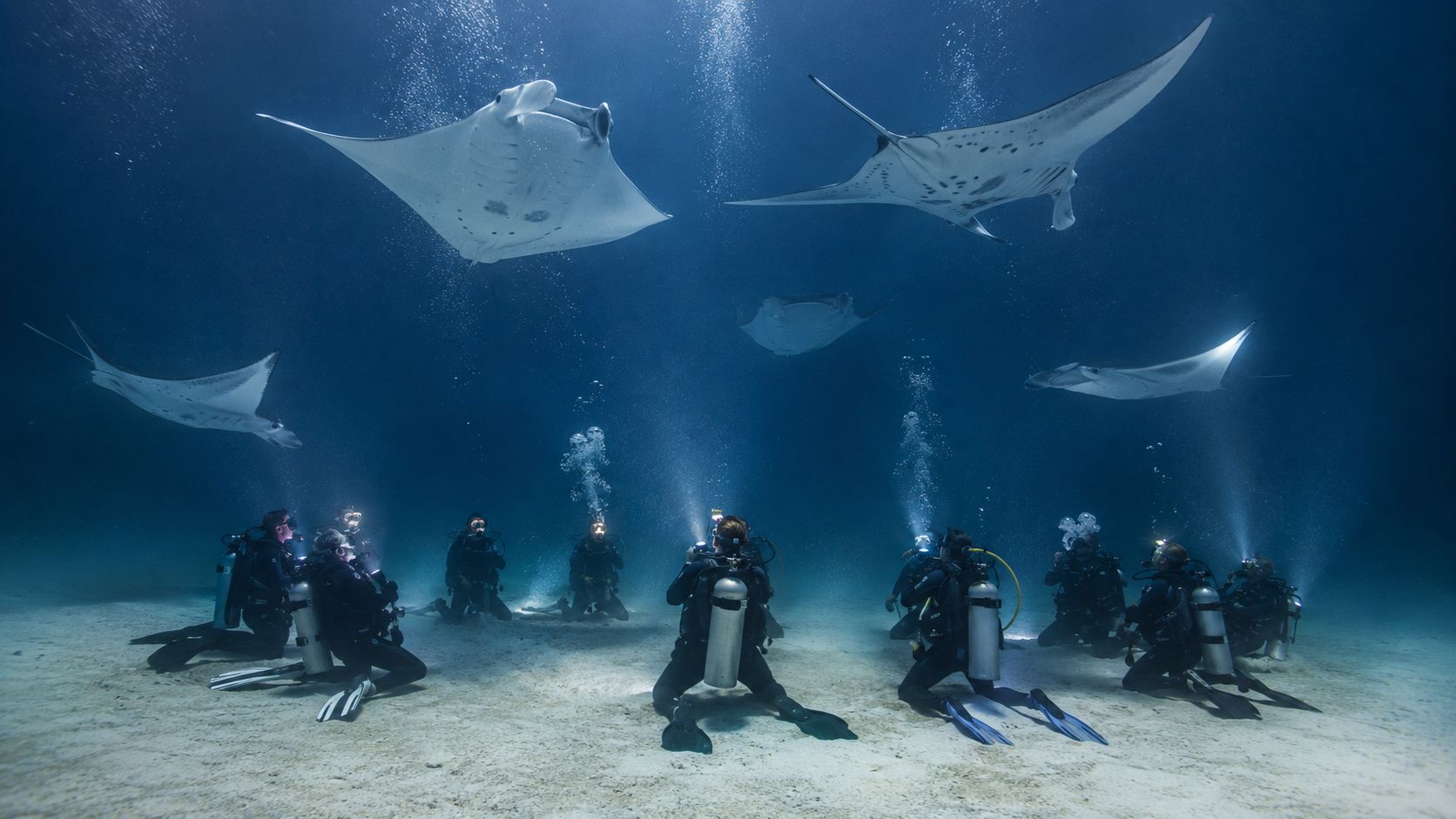
If you only book one wildlife dive in Hawaii, make it the manta night dive in Kona. This is the one experience that consistently rewards disciplined divers, and it does not require you to chase anything. You hold position, the crew sets the lights, and the mantas come in to feed above you.
The setup only works if divers behave. Lights concentrate plankton in the water column, then the mantas sweep through the lit area overhead. Stay still, keep your beam where the guide asks, and do not turn the dive into a drifting swim. That position discipline is the difference between a polished encounter and a messy one (Kona manta mechanics).
Why Garden Eel Cove is the site to book
Garden Eel Cove is the site I would book without hesitation. It sits in a more protected location, gives you a broader viewing area, and tends to feel less cramped than tighter manta setups. That matters for three reasons. Photographers get a cleaner frame. Newer divers get a calmer environment. The mantas get more room to work the light column without bumping into a crowd of sloppy divers.
The other manta sites can be more exposed and more compressed. That means a smaller viewing box, less forgiveness for poor buoyancy, and a higher chance that one badly placed diver spoils the shot line for everyone else. If you want a clean manta dive, pick the site that gives the animals room and gives the boat crew a real chance to control the scene.
Best practice: treat the dive like quiet wildlife observation, not a stunt. The more still you are, the better the encounter.
If manta is the reason you are flying to Kona, book a manta ray dive tour page that puts you at the right site and on the right kind of boat. For a clear breakdown of the setup and what the night looks like, read the Kona manta dive guide.
Blackwater Diving and Other Advanced Experiences
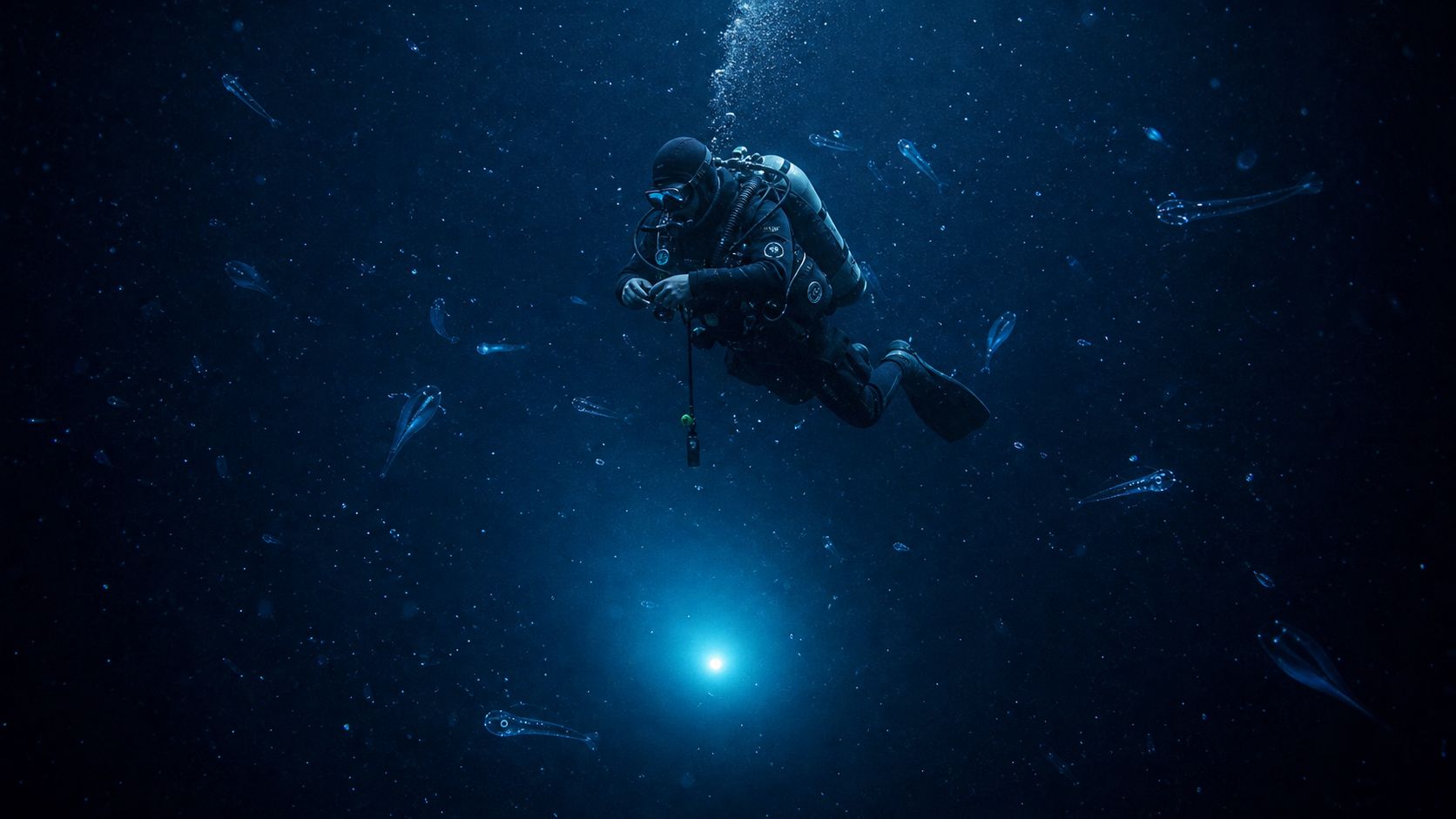
Blackwater diving is the Kona trip for divers who want the strangest, most technical night session on the water. The boat sits over deep open ocean after dark, the lights go down, and the action comes to you as pelagic larvae, juvenile fish, and other deep-water life rise through the water column. It is a very different experience from reef diving, and anyone who treats it like a darker version of a normal night dive is missing the point.
Book it only if your buoyancy is solid and you are comfortable in open water at night. If depth, drifting conditions, low visibility, or a suspended setup make you tense, skip this trip and stay on the reef. The goal is simple, you should have enough control to watch the water, not spend the whole dive managing your nerves.
What belongs in the advanced bucket
- Blackwater dives: for divers who want the weirdest, most science-fiction part of Kona's night diving.
- Deep wrecks: the Sea Tiger belongs here because it sits at about 80 to 130 feet (depth reference).
- Structured long-range boat trips: good for divers who already have buoyancy control and want fewer compromises in site selection.
If that is the kind of dive you want, book accordingly. You need a crew that can brief an advanced profile clearly and a boat that is set up for divers who are not there to do the same shallow, casual circuit. The right place to start is the blackwater dive tour page, because that is the format built for this kind of open-ocean night dive.
A second point matters here. Beginner-friendly Kona is controlled reef diving, manta nights, and easy confidence. Advanced Kona is depth, precision, and longer-range decision-making. Book the wrong category and you waste a day.
Seasons, Conditions, and Safety Planning
Hawaii gives you a year-round dive window, but the conditions still change enough to affect what you should book. Water temperatures usually stay in that 75–80°F range, and visibility often clears 100 feet in good stretches of the year, as noted in the condition summary. That does not make every month interchangeable. It means you can plan with intent instead of waiting for a perfect week that never really arrives.
The practical question is not whether you can dive. It is which season gives you the kind of day you want underwater and on the boat.
Winter often brings whale season overlap, which changes the mood more than the dive itself. Summer usually feels calmer on some leeward coasts, while trade winds can make the boat ride rougher and the surface interval less pleasant. None of that matters as much as site choice. A protected reef and an exposed offshore site can feel like two different islands.
Safety is site-specific, not generic
University of Hawaiʻi guidance puts the focus where it belongs, on site location, depth, access method, seasonal weather, boat traffic, riptides, and emergency actions (UH planning guidance). That is how you should plan in Hawaii. One calm reef on one side of an island can feel easy and predictable, while a different site a short boat ride away can demand much tighter judgment.
The wider safety picture is still reassuring. Hawaii recorded 28 scuba diving fatalities in the decade leading up to 2020, which averages to fewer than three per year (safety overview). I am not going to pretend diving is low-risk. I am saying the state has a long safety track record, and divers who plan carefully usually stay out of trouble.
If you get seasick, handle it before you step on the boat. Waiting until your stomach is already turning is how you lose a day. A layered approach works best, and the options worth having on hand are the Ship-EEZ Seasickness Patch, Dramamine pills, Bonine pills, Sea Band wristbands, and ginger chews. Anyone who has lost a boat day to motion already knows this is not optional.
Gear, Packing, and Choosing a Dive Operator
Operator choice matters more in Hawaii than many admit. I'd rather see a diver pick a solid crew with careful briefings and clean gear than chase a cheap price and hope the boat makes up for the rest. Start with the checklist, then book.
What to inspect before you pay
- Boat condition and maintenance: look for a clean deck, organized tank setup, and gear that doesn't look beaten up.
- Group size: smaller groups usually mean less waiting, better attention, and cleaner site control.
- Briefing quality: the crew should explain entries, exits, depth, currents, marine life etiquette, and emergency procedures clearly.
- Nitrox availability: useful if you're doing repeat dives or want a more comfortable gas plan.
- Advanced-trip capability: if the shop offers blackwater or deep wreck trips, ask how they handle those profiles.
- Crew experience: you want people who've run Hawaiian diving, not just sold it.
For packing, keep it practical. Bring reef-safe sunscreen, a light rashguard, a 3mm wetsuit for most divers, a surface marker buoy, and basic save-a-dive items like spare mask straps and o-rings. Hawaii doesn't reward overpacking, but it does punish forgetting the little things.
Kona Honu Divers fits the operator criteria cleanly. The shop offers early diver discounts, free nitrox, custom dive boats, and over 200 years of combined crew experience, which lines up with what most divers need on the Big Island. If you're comparing options, that combination is the kind of practical detail that changes the booking math.
Sample Itineraries and Booking Strategy
A good Hawaii dive trip has a plan, not just a wishlist. If you're a beginner or traveling with someone who isn't deep into scuba yet, keep the first few days simple. Book a shallow reef day, then save the manta night dive for when everyone's settled and comfortable in the water.
For a 3-day Kona beginner week, I'd do one easy reef day, one manta night dive, and one flexible half-day for either a repeat reef or a snorkel session for the non-divers in the group. For a 5-day advanced itinerary, add a blackwater dive and a deep wreck day, but only if the diver qualifies and wants the profile. Mixed groups should stop trying to force one itinerary on everyone. Certified divers can book the boat, while snorkelers or non-divers do a separate surface option.
Sequencing is key. Put the most special dive after you've settled in, not on your first day in the water. That gives your ears time to adjust, your buoyancy time to settle, and your group time to stop feeling rushed. Free nitrox and early diver discounts matter most on multi-day bookings because they make repeat diving easier to justify without overcomplicating the schedule.
Good trip planning beats hype every time. Pick the dives that fit your skill level, then leave room for weather, comfort, and reef protection.
Responsible diving still matters on the best days. Hold a stable hover, keep your fins quiet, and don't touch marine life. That's how you protect the sites you came to see and avoid being the diver everyone else has to work around.
If you want a Hawaii dive trip that's built around the actual conditions, not the postcard version, Kona Honu Divers has the boats, the training, and the trips that fit this island properly. Book the manta dive if that's your priority, add an advanced trip if your certification allows it, and use Kona Honu Divers when you're ready to turn the plan into a reservation.