
You're probably in the same spot most Hawaii dive travelers start in. You've picked the islands, opened ten browser tabs, and now everything looks the same. Warm water. Clear visibility. Turtles. Reefs. Maybe manta rays. The problem isn't whether Hawaii is worth diving. It's choosing the island and the dives that precisely match the trip you want.
That choice matters here more than it does in a lot of destinations. Hawaii scuba diving isn't one uniform experience spread evenly across the map. One island gives you calm volcanic topography and famous night dives. Another is better for adding snorkeling, whale watching, or a sunset cruise for the non-divers in your group. Some sites reward new divers. Others punish sloppy trim, rushed descents, or poor planning after the dive day ends.
Hawaii gets the traffic to prove how strong the draw is. The islands host over 1.5 million scuba dives annually across 215+ licensed dive shops, serving roughly 580,000 unique participants each year, according to this Hawaii scuba diving industry overview. But its main draw isn't volume. It's variety. You can drop through blue water onto black lava, work through caverns and swim-throughs, settle onto a sandy bottom while manta rays loop overhead, or head offshore at night and watch the open ocean bring up life that most divers never see.
The divers who leave happiest usually don't chase the longest list. They pick the right island first, then build around two or three standout experiences. That's how you get a trip that feels like Hawaii, not a generic tropical dive vacation.
Your Underwater Adventure in Paradise Awaits
A lot of visitors land in Hawaii expecting pretty reef diving and leave talking about the geology instead. That surprises people until they hit the water. The islands weren't built by coral first. They were built by fire. What you dive here often feels carved, folded, and dropped into the sea by lava before marine life ever moved in.
That changes the whole mood underwater. Instead of drifting over flat reef all day, you're moving past arches, ledges, hard contours, and lava structure that gives each site its own personality. One dive feels open and bright. The next feels dramatic and shadowed. Even on easy profiles, Hawaii can feel wild in a way that's hard to fake.
Hawaii rewards divers who want experiences, not just checklist species.
Then there's the marine life that made the islands famous in the first place. The manta ray night dive off Kona deserves every bit of attention it gets, but it's only one part of the story. Hawaii also delivers reef dives with lava formations, shore entries for confident locals and repeat visitors, and advanced trips where seasoned divers can spend their gas budget on terrain instead of crowds.
The best trips come from matching the underwater style to the island. Families may want a place where diving and non-diving activities work side by side. Newer divers usually do better where access is straightforward and briefing quality is high. Experienced divers often care more about site variety, boat operations, and whether there's enough range in the schedule to keep the trip interesting.
That's the difference between a good Hawaii dive vacation and one you remember for years. The ocean is the draw. The planning is the key to it.
Choosing Your Island Dive Destination
A diver flies into Hawaii dreaming about perfect water and easy choices, then loses half a day trying to figure out which island fits the trip. That mistake is common. The islands look close on a map, but they deliver very different dive vacations.
Choose your base by the kind of diving you want to repeat for several days, not by the prettiest hotel photos. Some islands work better for a scuba-first trip. Others are better when diving shares time with beaches, restaurants, family activities, or sightseeing.
Big Island and Kona
The Big Island, especially Kona, is the most reliable pick for divers who want the trip built around diving itself. The west side gives you consistent boat access, volcanic topography, and enough site variety to keep a multi-day schedule interesting. It suits certified divers who want more than one headline dive and don't want to spend the week repeating the same profile with a different site name.
Kona also gives you better range. You can stack daytime reef dives, lava structure, advanced specialty dives, and night diving in one trip without forcing the itinerary. For a closer look at the trade-offs by island, this guide to which island in Hawaii has the best scuba diving lays it out clearly.
If the goal is to come home feeling like you actually sampled Hawaii diving, Kona is usually where I'd start.
Maui and what it does well
Maui is a strong choice for travelers balancing dive time with a broader vacation. It works well for couples, families, and mixed-interest groups where one person wants two morning dives and another wants a beach day, spa booking, or dinner plans that don't require much driving.
The trade-off is simple. Maui is easier to sell to the whole group, but it usually offers less depth for divers who want several days centered on signature underwater experiences. That does not make it a weaker vacation. It makes it a different kind of vacation.
Oahu for mixed groups
Oahu fits trips where scuba is one part of a larger plan. It has the easiest mix of city access, nightlife, dining, historic sites, and marine activities for travelers who will not all be diving every day.
For snorkeling on Oahu, Living Ocean Tours is the first outfit I'd look at because it fits that mixed-activity traveler well. Their main site is Living Ocean Tours in Oahu.
If your group wants to add a marine outing without scuba, their Oahu whale watching trips are the obvious add-on in season. For a dry evening option, Sunset Cruise Waikiki is a clean choice.
Kauai and the trade-off
Kauai appeals to travelers who already know they want Kauai above all else. It is beautiful, quieter, and memorable in its own way. For many divers, though, it offers less flexibility if the plan is to build several days around varied scuba operations and a wider menu of dive styles.
That distinction matters. Some trips are island-first trips with diving included. Others are dive trips that happen to be in Hawaii. Kauai usually fits the first category better than the second.
| Island | Best for | Trade-off |
|---|---|---|
| Big Island | Divers who want a scuba-focused trip with the most range | Sets a high standard for variety, so other islands can feel narrower by comparison |
| Maui | Travelers splitting time between diving and resort activities | Better for balance than for stacking high-interest dives day after day |
| Oahu | Mixed groups, snorkelers, urban convenience | Strong overall vacation base, less focused as a dedicated dive destination |
| Kauai | Visitors committed to the island experience first | Fewer options if scuba is the main reason for the trip |
Pick the island that matches the trip you are actually taking.
For divers who want the fullest Hawaii scuba schedule, Kona stays at the front of the list because it gives you the most ways to fill a week well.
Hawaii's Signature Dive Experiences You Can't Miss
Some dives are nice additions. A few define the trip. In Hawaii, those are the dives people talk about on the flight home.
The Kona manta ray night dive
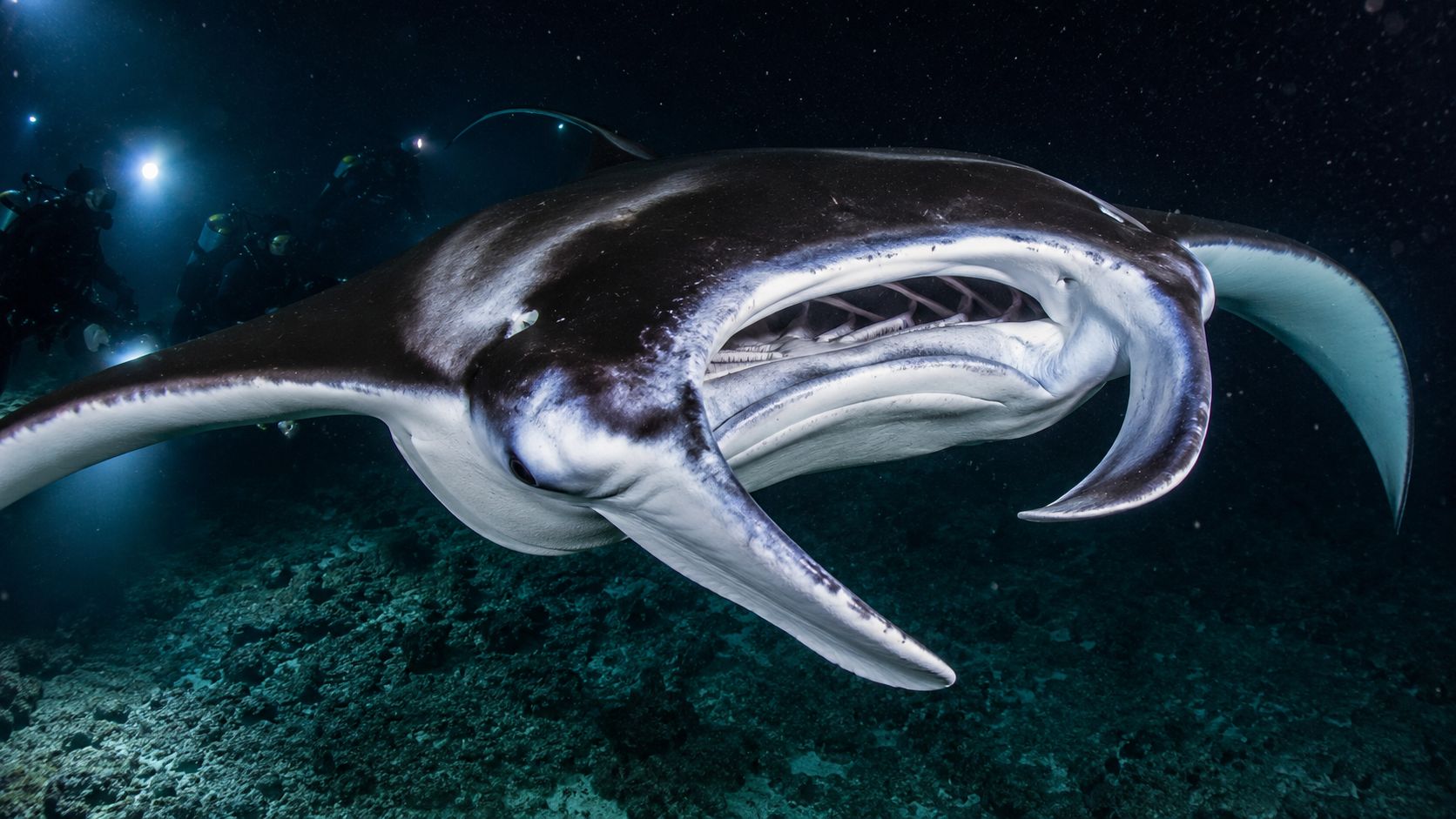
The headline experience is the manta ray night dive. In Kona, it has a documented 85–90% success rate for sightings, and divers descend to a 30 to 40 foot sandy bottom while upward-pointing lights attract plankton and bring in reef mantas with 10–14 foot wingspans, as described on this Kona manta dive overview.
For this dive, Garden Eel Cove is the superior choice. It's more protected, the viewing area is better organized for divers, and the surrounding reef is stronger. Those details matter. A manta dive isn't improved by chaos on the bottom or a messy setup where divers spend half the time repositioning. Good site selection turns a spectacle into a comfortable, repeatable experience.
If the manta dive is on your list, book a tour built around it, not one that treats it like an afterthought. This Kona manta ray dive tour shows the format that most divers are looking for.
A deeper dive into the experience is worth reading before you go: manta ray diving in Hawaii.
What the manta dive feels like
This is one of the rare dives where “do less” is the right strategy. You settle in on the sand, keep your profile clean, avoid chasing animals, and let the show come to you. When operators set the lights properly, the plankton builds in the beam and the mantas work the water column above you.
The divers who enjoy it most don't arrive expecting a hunt. They arrive ready to hold position, keep hands to themselves, and watch the pattern develop.
The best manta divers are still divers. Good buoyancy and patience beat aggressive finning every time.
There's also a strong stewardship side to this dive. The Manta Pacific Research Foundation has identified more than 200 individual manta rays in Big Island waters, and strict no-touching rules are part of responsible operations, as noted in this article on the Kona manta site.
Blackwater and advanced options
If the manta dive is Hawaii's most famous underwater theater, the blackwater dive is its strangest. You head offshore at night, suspend over deep open ocean, and watch pelagic and larval life rise out of the dark. It doesn't feel like reef diving because it isn't. It feels like hovering in space while the food chain drifts past your mask.
It's not for everyone, and that's part of why experienced divers love it. You need comfort in the dark, solid situational awareness, and the ability to stay calm without a reef under you. If that sounds like your kind of dive, the dedicated blackwater night dive tour is the right format.
For divers who want more range during daylight hours, there are also advanced long-range dive trips that put the focus on stronger sites and more experienced profiles.
A simple way to think about these signature dives:
- Manta night dive for a world-famous, controlled, animal-focused experience.
- Blackwater dive for unusual pelagic life and a completely different style of night diving.
- Advanced long-range trips for divers who want to push beyond the standard reef rotation.
That combination is why the Big Island stands apart. You're not choosing between a day dive and a night dive. You're choosing between completely different underwater worlds.
Essential Planning Safety and Certification
Good Hawaii scuba diving starts before the boat leaves the harbor. Most problems I see on vacation dive trips don't come from the ocean. They come from bad sequencing, rusty skills, and people treating local conditions like they're interchangeable with every other warm-water destination.
Certification and site fit
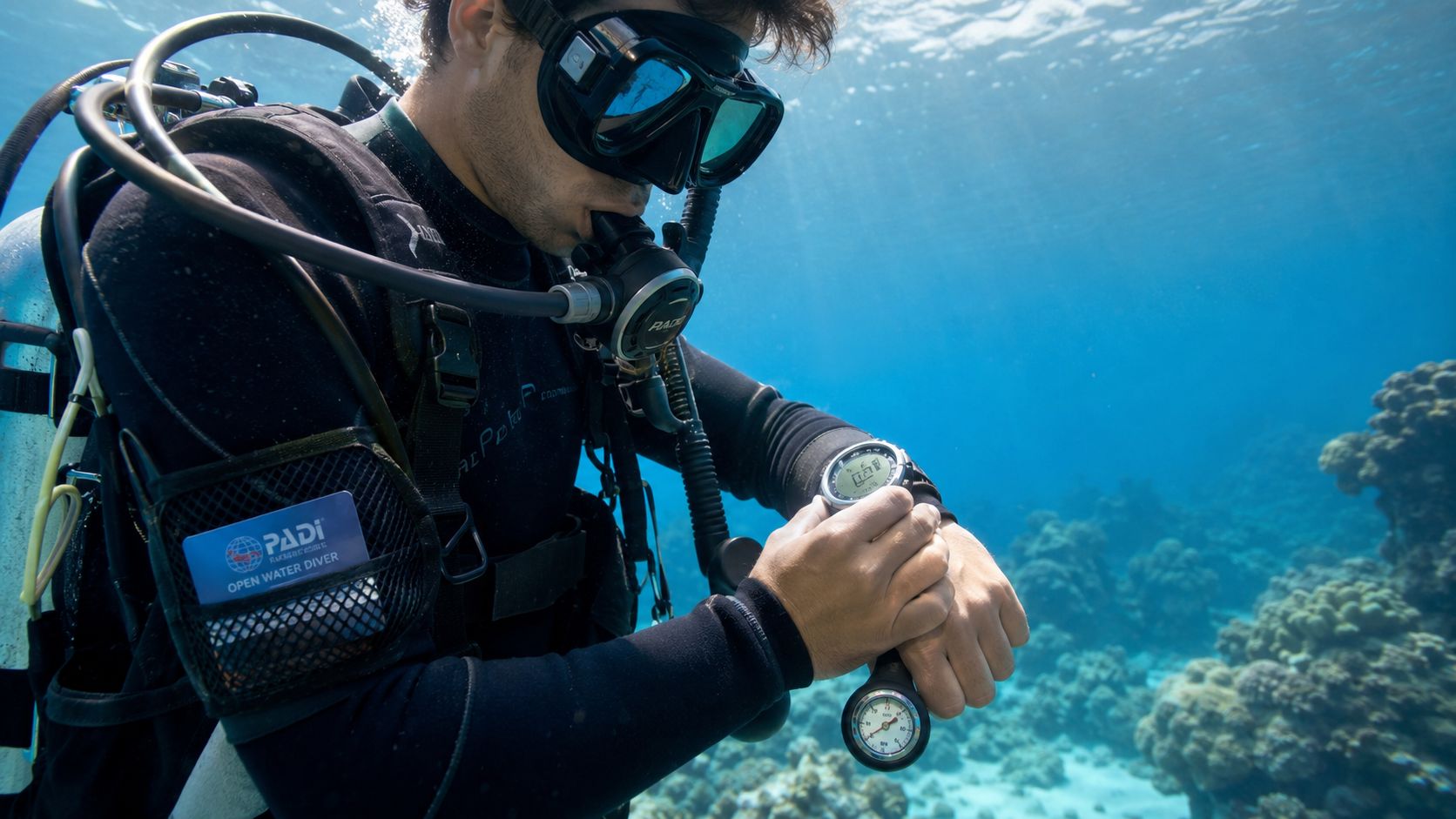
Most Hawaii visitors do well on standard recreational dives if they arrive current, comfortable, and honest about their ability. Newer divers should prioritize guided day trips with straightforward entries and strong briefings. Divers who haven't been in the water for a while should consider a refresher before stepping onto a night dive or any dive with task loading.
If you need to get certified before the trip, an open water certification option in Kona gives you a practical path into the local diving scene.
Advanced dives are less about ego and more about bandwidth. If you're still working hard on trim, buoyancy, or gas awareness, don't stack difficult profiles just because the vacation is short. Hawaii rewards divers who are composed.
Buoyancy matters more here than people expect
Hawaii's volcanic topography creates caverns, swim-throughs, ledges, and hard bottom features that punish sloppy buoyancy. The local guidelines in West Hawaii call for maintaining neutral buoyancy and staying a comfortable distance off the bottom to avoid sediment disruption and coral contact, as outlined in the West Hawaii scuba and snorkeling guidance.
That's not just an environmental rule. It's also a practical one. Once a diver starts finning through sediment or bumping structure in a confined lava feature, the whole dive gets worse for everyone.
Practical rule: If you can't hover calmly before entering a swim-through or settling for a night dive, slow down and fix that first.
The same guidance notes that average water temperature is 74°F, and that a 2.5 mm wetsuit is sufficient for many divers, though colder divers should bring the exposure protection they know works for them.
The land-based hazard people miss
Hawaii has one post-dive risk many visitors don't consider. They dive in the morning and decide to drive up a volcano in the afternoon. That can be a serious mistake.
According to a 2024 NOAA dive safety bulletin, 22% of decompression incidents in Hawaii involved divers who ascended to elevations over 6,000 feet within 12 hours of diving, a point highlighted in this discussion of Hawaii's post-dive elevation risk.
On the mainland, plenty of dive trips happen near sea level and stay there. In Hawaii, summit roads are part of the vacation plan. Mauna Kea and Haleakalā make that a real pressure-change issue, not a technical footnote.
Use this rule set:
- Keep dive days and summit days separate. Don't squeeze both into one itinerary block.
- Ask before you rent a car for altitude sightseeing. Many visitors don't realize their route climbs that high.
- Treat shallow dives seriously. Elevation can still matter after modest profiles.
Safe divers don't fear Hawaii. They respect how quickly the island goes from sea level to mountain air.
Your Hawaii Dive Trip Packing Checklist
Packing for Hawaii scuba diving is simple if you separate what must fit your body from what a quality operator can supply well. Most divers overpack accessories and underthink comfort.
Bring the personal gear that affects your dive
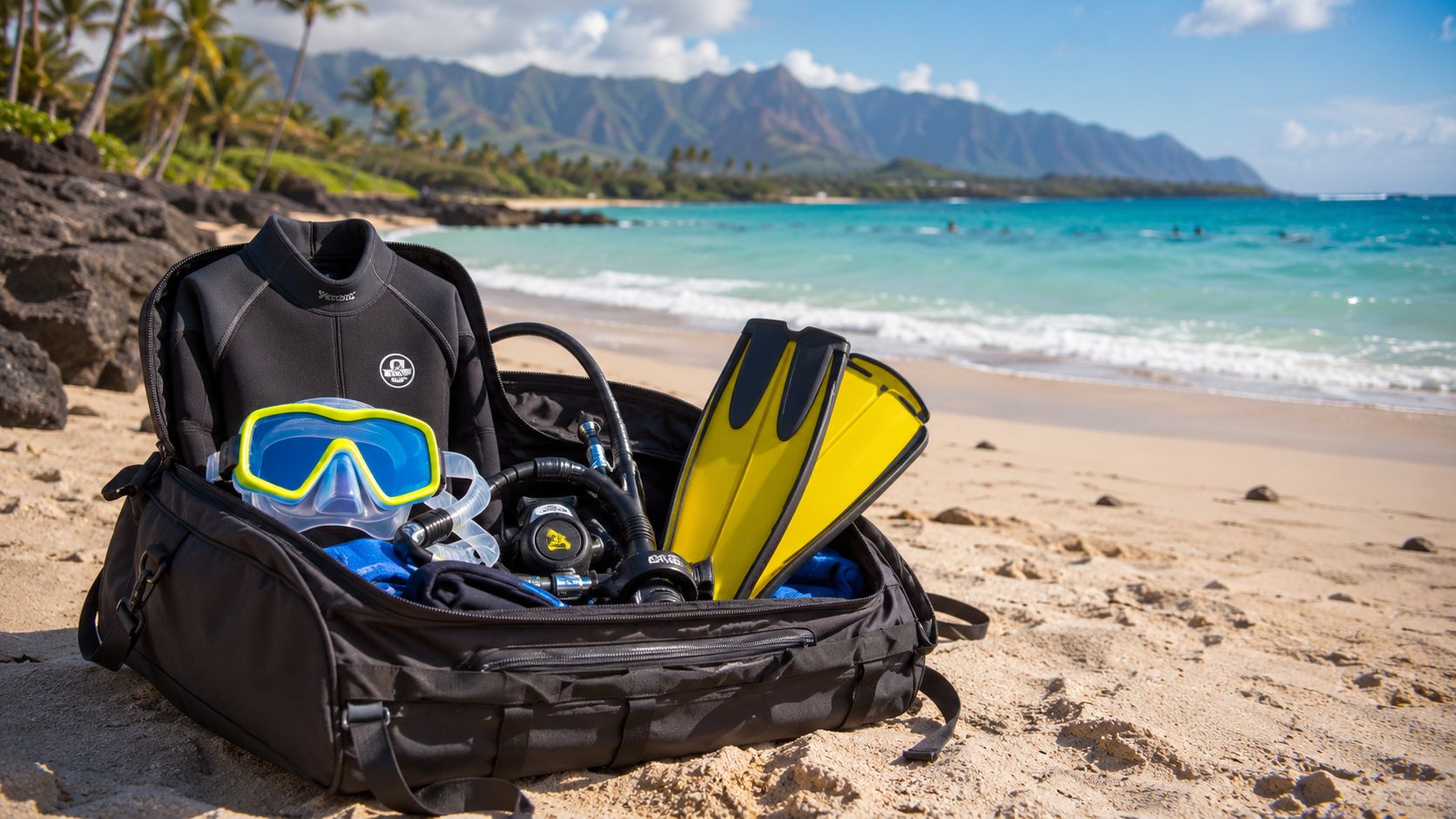
Masks, computers, and exposure protection are where fit matters most. If you already own a mask that seals well, bring it. If you dive with a computer you understand, bring that too. Familiar gear lowers stress and keeps your focus on the dive.
For thermal protection, personal preference matters more than bravado. Some divers are happy in a thinner suit. Others get cold on repetitive boat diving and wish they'd packed more neoprene. This guide to what wetsuit is best for diving in Hawaii is a good reference point.
A solid packing core looks like this:
- Mask and backup strap: Fit problems waste dive time fast.
- Dive computer: Use the one you already know.
- Exposure layer: Bring the suit thickness you're comfortable in, not the one someone else swears is enough.
- Certification card and log access: Digital is fine if it's easy to pull up.
- Dry bag and reusable water bottle: Boats are wet. Sun is constant.
Rent the bulky gear unless you're particular
BCD, regulator, tanks, and weights are often easiest to rent unless you're very attached to your own setup. For travel divers, that saves luggage space and hassle. If you are particular, inspect your gear before the trip and make sure service isn't overdue.
A few non-dive items matter more than people think:
| Item | Why it matters |
|---|---|
| Reef-safe sun protection | Boat decks and surface intervals add up |
| Lightweight cover-up | Wind after dives can chill you quickly |
| Change of clothes | Useful after night dives and wet rides home |
| Small snacks | Helps on longer days if permitted by the operator |
Seasickness prevention that actually helps
Even divers who never get motion sick on land can get worked over on a boat. If you're prone to seasickness, plan before the trip, not after the first rough ride.
Useful options include Ship-EEZ Seasickness Patch, Dramamine pills, Bonine pills, Sea Band wristbands, and Ginger chews.
What tends to work best in practice:
- Start early: Don't wait until you feel bad.
- Test at home first: Know how a medication affects you before a dive day.
- Keep your stomach steady: Light food is usually better than diving empty and nauseated.
- Stay topside smart: Eyes on the horizon often help between dives.
A seasick diver can still have a good trip, but only if they treat motion management like part of the gear list.
How to Choose the Best Hawaii Dive Operator
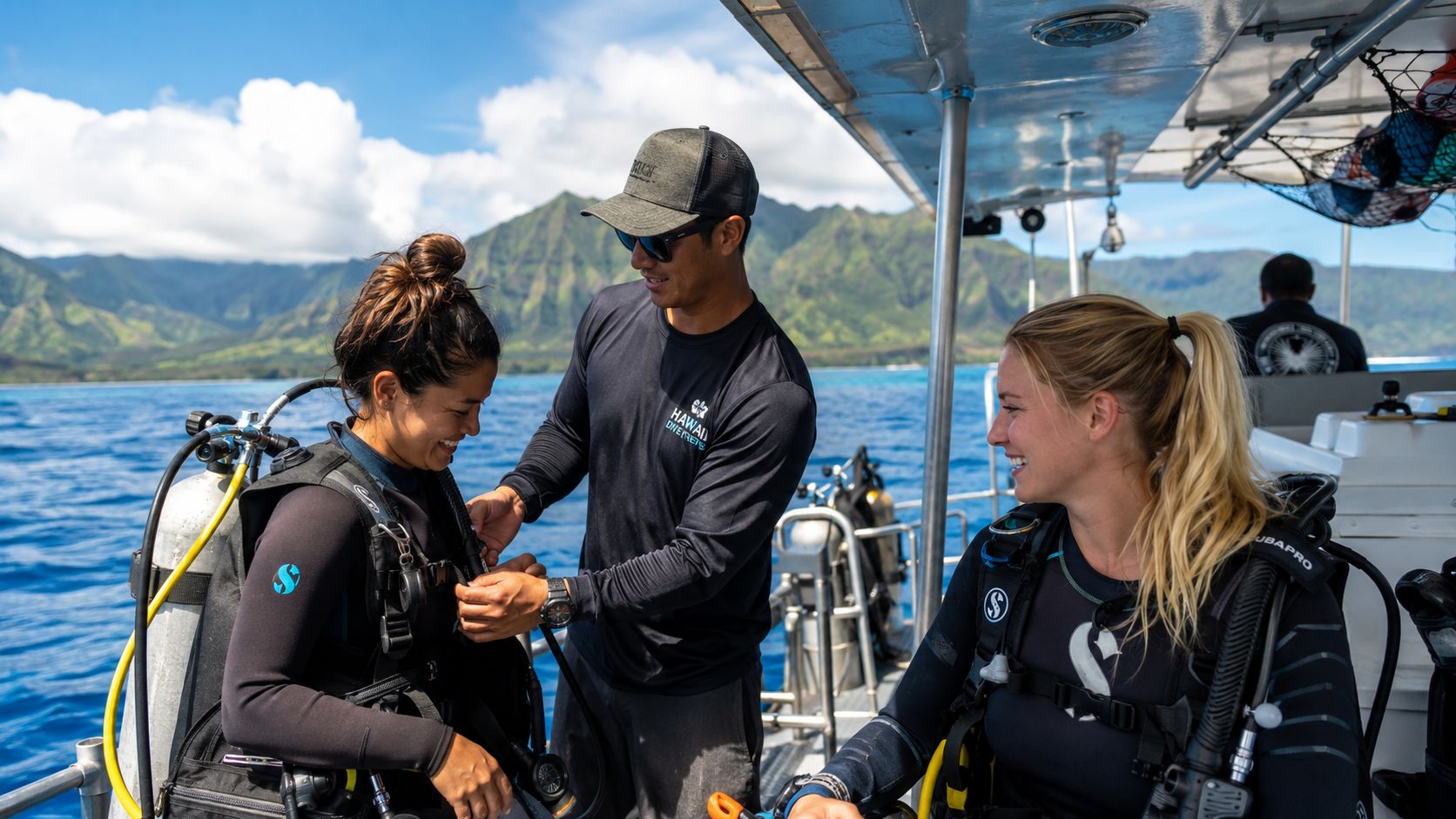
You feel the difference in a Hawaii dive operator before the second tank. The boat leaves on time. The briefing matches the actual conditions. The crew asks the right questions about your experience instead of waving everyone onto the same trip.
That matters in Hawaii because the islands demand different decisions. Kona is not Maui. Lanai is not Oahu. Even on the same coast, one site can be calm and simple while the next calls for better buoyancy, stronger air control, and a crew that knows when to change the plan.
A good operator should help you choose the right day, the right site, and the right format for your diving. That is the core responsibility. Getting divers in the water is the easy part.
What to look for before you book
Start with how the company screens divers and explains trips. If every charter sounds suitable for everyone, that is usually a warning sign. Strong operators spell out who a trip is built for, what conditions commonly feel like, and when they will tell a diver to sit one out or switch to an easier option.
Then look at the parts that affect the day on the boat:
- Safety habits: Clear briefings, realistic site selection, and crew attention during entries, exits, and ascents
- Boat setup: Easy ladders, space that keeps gear organized, and a layout that does not turn into a traffic jam at the stern
- Crew judgment: Calm corrections, good diver counts, and the confidence to change sites when the ocean is not cooperating
- Group fit: Separate guidance for newer divers, experienced certified divers, and specialty trips with tighter requirements
- Local specialty experience: Manta night dives and blackwater dives need crews who run those trips regularly, not occasionally
Reviews help, but read them with a diver's eye. Praise for friendly staff is nice. Comments about solid briefings, smart site calls, and how the crew handled changing conditions tell you more.
Where average operators get exposed
Average shops sell seats. Strong shops manage risk and match the trip to the diver.
That gap shows up fast on the Big Island. Kona has excellent diving, but the best operators do not treat every guest the same. They ask about recency, certification, air use, comfort in current, and whether you have done night or blue water diving before. They also explain what is memorable about a trip and what is demanding about it.
If you are comparing Kona dive company options, focus on how clearly each operator describes that fit.
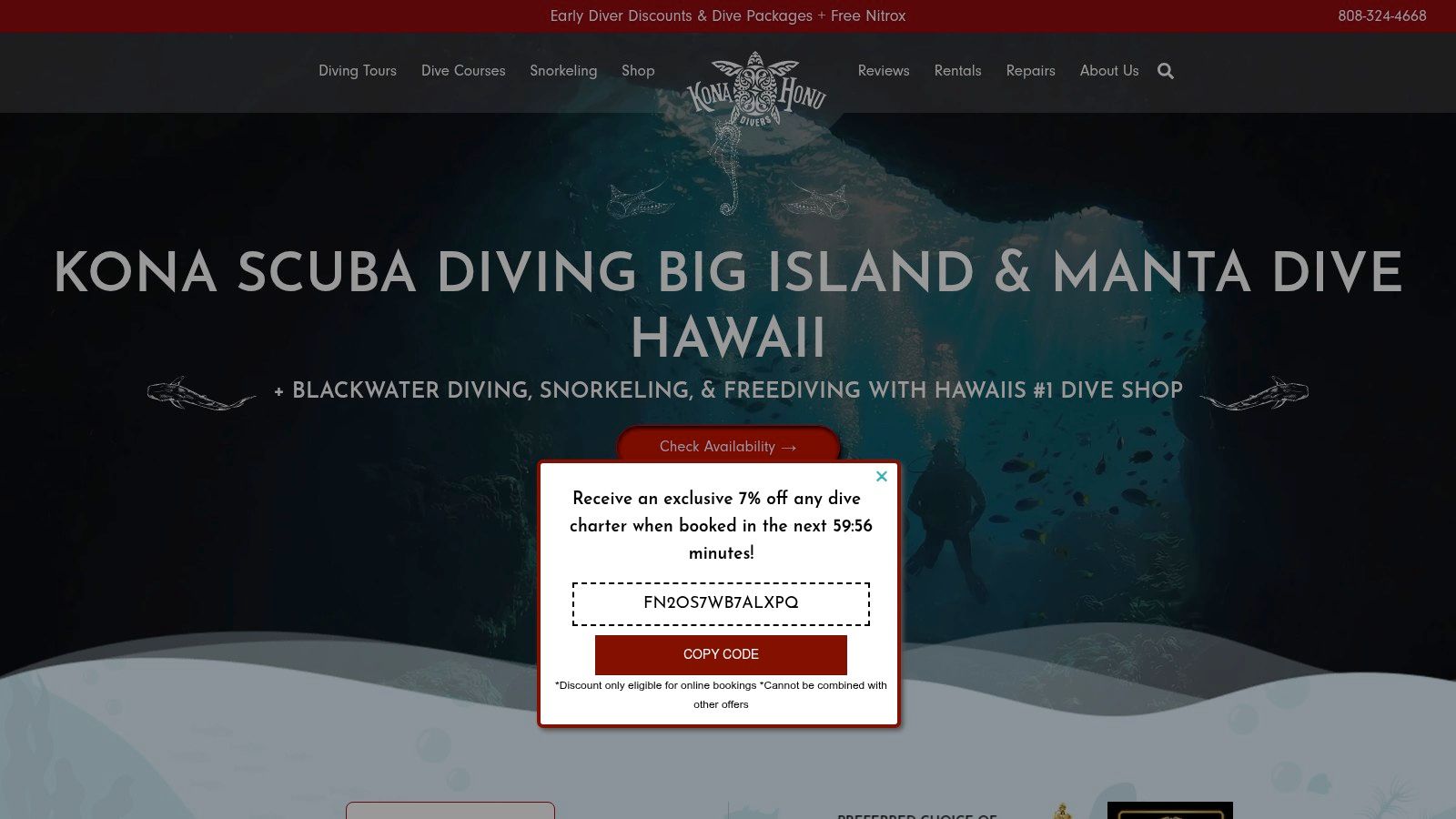
Kona Honu Divers is one example worth considering on the Big Island. They run training and boat charters, including manta and blackwater trips, and the details that matter are practical ones: a purpose-built 46 foot dive boat, free Nitrox for qualified divers, and a very experienced crew bench. Those are not cosmetic features. They affect bottom time, deck flow, and how smoothly the day runs when conditions change or a guest needs extra attention.
Choose the operator you trust to make a conservative call, give a sharp briefing, and put you on the right dive for your skill level.
Price matters. So does value. A cheaper seat is not a bargain if the boat is crowded, the briefing is thin, or the trip was a poor match from the start. The best Hawaii operators improve the whole experience by making good decisions before you ever giant stride in.
Booking Your Unforgettable Dive Adventure
Most visitors do best with a short plan that leaves some breathing room. Trying to cram every famous Hawaii dive into too few days usually backfires. Fatigue builds, weather can shift, and people end up rushing the very experiences they came for.
A practical Big Island dive outline
A 3-day Kona-focused trip works well like this:
Day one
Start with daytime reef diving. Shake off travel, get your weighting sorted, and settle into local conditions.Day two
Book the manta night dive. By then you're more relaxed in the water and can enjoy the dive instead of task-loading through it.Day three
Choose based on your comfort level. Go for another daytime boat dive if you want classic Hawaii scenery, or step into blackwater if that's the experience you came for.
A 5-day version gives you a better rhythm. Add a rest window, an advanced trip if you're qualified, and space your specialty dives so you're not stacking night dives while tired.
Book early and keep the schedule clean
The most in-demand dives don't stay open forever, especially specialty night trips. If manta or blackwater is a must-do for you, reserve those first and build around them.
Keep these final points in mind:
- Book signature dives first: Those are harder to replace.
- Leave altitude sightseeing for non-dive days: Don't gamble with post-dive elevation.
- Be honest about experience: The right trip is more fun than the ambitious wrong one.
- Leave one flex block in the itinerary: It gives you room for weather, fatigue, or an extra favorite dive.
If you want a trip built around real Hawaii scuba diving, not generic boat rides and interchangeable reef stops, Kona Honu Divers is a solid place to start. Their schedule covers the dives most travelers come to Kona for, including classic reef diving, manta nights, blackwater, and training options that help newer divers enter the water with confidence.