
You booked the Kona dive trip. You’ve checked your mask, charged your camera, and pictured the reef already. Then a different thought sneaks in on the ride to the harbor: what if the boat ride makes you sick before you even hit the water?
That concern is common, and it has nothing to do with toughness or dive experience. I’ve seen brand-new divers feel great in the water but turn pale on the surface interval, and I’ve seen seasoned travelers get queasy the moment the boat starts rolling. Seasickness is a body response, not a character flaw.
For many divers and families, ginger tablets sea sickness is one of the most practical tools to pack. The reason is simple. Ginger can help calm nausea without making you groggy, which matters on a dive day when you need to listen to briefings, handle gear, and stay aware.
Don't Let Seasickness Ruin Your Perfect Kona Dive
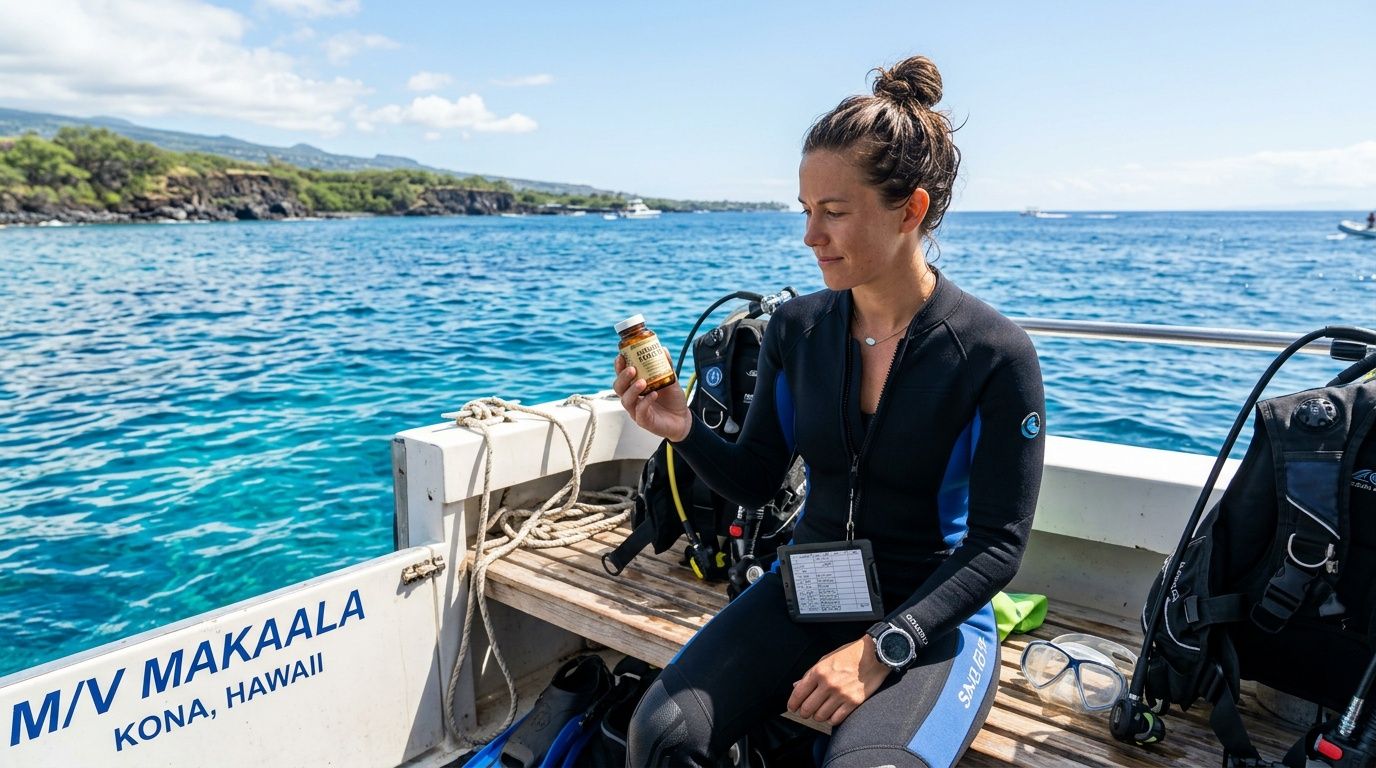
You can feel seasickness coming before you can explain it. The boat leaves the harbor, the wind feels great, and everybody’s looking toward the coast. Then your stomach starts that slow, uneasy shift. You stop chatting. You sit down. Suddenly the whole trip feels fragile.
That’s why many Big Island visitors look for a plan before departure, not after symptoms start. A practical place to begin is this guide on ginger tablets sea sickness, which explains why so many people reach for ginger before time on the water.
A Kona dive day is too good to spend focused on your stomach. Reefs, lava formations, turtles, and clear water deserve your attention. If you’re researching the area and the local diving scene, this overview of Kona scuba diving helps frame why boat comfort matters so much here.
Why divers worry about this for good reason
Boat motion can catch people off guard in Hawaii. You might feel perfectly fine on land, then discover that the combination of swell, heat, gear prep, and anticipation pushes your body in the wrong direction.
That’s especially frustrating for divers because nausea doesn’t just feel bad. It can drain your energy before the first giant stride.
Seasickness is one of the few problems that can ruin a dive before the dive even starts.
The good news is that many people manage it well with preparation. Ginger has become a favorite because it fits the rhythm of a dive morning. It’s simple, portable, and doesn’t ask you to trade comfort for alertness.
For readers planning actual trip logistics, Kona Honu Divers diving tours show the kinds of outings people often prepare for when they’re trying to avoid losing a great day to nausea.
How Ginger Calms Your Stomach and Fights Nausea
Seasickness starts with a mismatch. Your inner ear feels motion. Your eyes may be fixed on the boat, a tank rack, or your phone. Your brain gets conflicting messages and your stomach often pays the price.
Divers usually understand this quickly once they’ve experienced it. If you stare into the cabin while the boat rocks, your body may interpret the situation as chaos. If you look out at a stable horizon, the signals line up better and you often feel steadier.
What your stomach is doing
A lot of people think nausea is only “in your head.” It isn’t that simple. Your stomach rhythm can become irregular during motion sickness, and that physical disruption is a big part of the miserable feeling.
A useful explainer on herbs for sea sickness can help if you want the broader natural-remedy context. Ginger stands out because it appears to work at the level of the digestive system itself.
According to PeaceHealth’s motion sickness summary, in a laboratory study simulating motion sickness, pretreatment with 1,000 mg of ginger significantly suppressed tachygastric activity, lowered plasma vasopressin levels, and reduced overall nausea scores. That matters because it suggests ginger helps by targeting gastrointestinal dysrhythmias directly rather than central brain pathways, which is why it’s considered non-sedating.
Why non-sedating matters underwater
This is the part divers care about most. If a remedy helps your stomach but leaves you mentally dull, that’s not a great trade on a dive day.
You need a clear head for:
- Gear checks before departure and before entry
- Briefing details about depth, current, and exit procedures
- Buddy awareness on descent and ascent
- Boat movement while carrying fins, exposure protection, and tanks
Practical rule: For diving, a remedy that supports alertness is usually easier to build into a safe routine than one that makes you sleepy.
That’s why ginger gets so much attention from active ocean travelers. It doesn’t work like a sedative. It works more like a stomach stabilizer.
The Evidence for Ginger Its Clinical Effectiveness

A natural remedy only matters if it holds up when conditions get rough. Ginger does have real clinical support behind it, and one study is especially relevant for people heading onto a boat.
According to this review of ginger tablets for seasickness, a landmark 1982 study on 80 naval cadets in rough seas found that those who took 1 gram of ginger had a 72% lower risk of vomiting compared to placebo. The same source notes that later studies supported 1,000 mg as an optimal dose for reducing nausea severity and shortening recovery time, with a typical duration of effect of around 4 hours.
What that means for a dive morning
That set of findings is useful because it answers three questions divers ask:
| Question | Practical takeaway |
|---|---|
| Does ginger work in real motion? | Yes, the cadet trial took place in rough seas rather than only in theory. |
| How much should I consider? | The evidence highlighted 1 gram to 1,000 mg as a practical target. |
| How long might it help? | About 4 hours, which often matches a standard boat outing. |
You can also use that timing to think ahead. If your departure is early, take ginger before you arrive at the harbor rather than waiting until you feel the boat move.
A diver-friendly routine
For many people, the most sensible use pattern looks like this:
- Take ginger before departure, not after symptoms build.
- Aim for the evidence-backed amount rather than guessing.
- Bring a backup dose if your day on the water will run long.
If you want a clearer sense of how motion symptoms can linger once they start, this explainer on how long sea sick lasts is worth reading.
The best seasickness plan is preventive. Once nausea gets momentum, every fix feels less effective.
One caution matters here. More isn’t always better. The verified data indicates 2,000 mg offered no additional benefit in the lab setting where 1,000 mg already worked well. That’s a helpful reminder to dose thoughtfully, not aggressively.
Is Ginger Safe for Scuba Divers and Families?
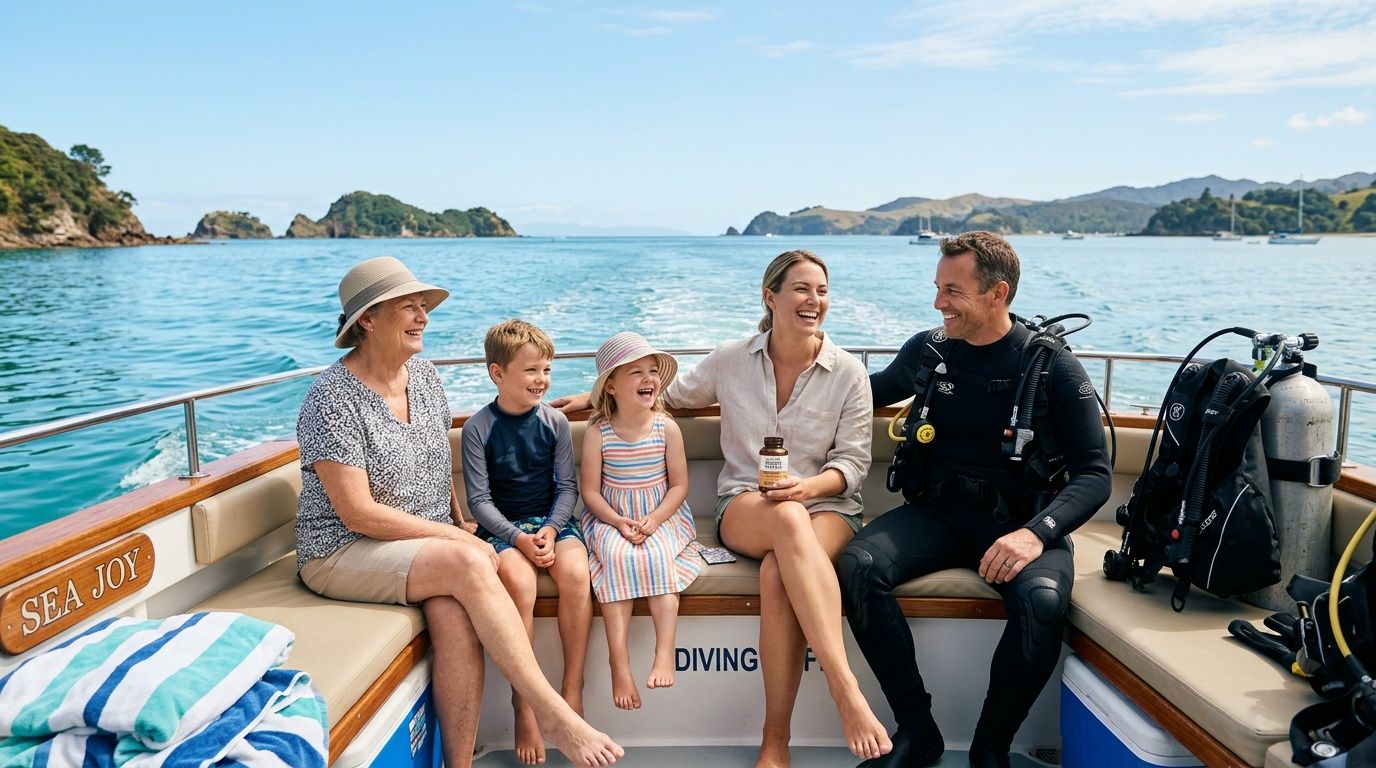
The boat has just cleared Honokohau Harbor. Tanks are secured, kids are pointing at spinner dolphins, and one person in the group has gone quiet because the swell feels stronger than it did at the dock. That is where ginger can make sense for Kona dive days. It may calm nausea without the sleepy, slowed-down feeling that many divers want to avoid.
That non-drowsy point matters more on a dive boat than it does on a casual ferry ride. Divers need to hear the briefing clearly, keep track of gear, move carefully on a wet deck, and make good decisions before entry. If a seasickness remedy settles your stomach but leaves you foggy, that tradeoff is not ideal for scuba.
What safety usually means in real life
For healthy adults, ginger is generally treated as a low-risk supplement when used as directed on the label. It is still a supplement, though, not a mint or a snack. Different products use different amounts, and capsules, chews, and tablets are not always equivalent.
A simple rule helps here. Use the label, not guesswork.
If you already know you are sensitive to supplements, have a medical condition, or take regular medications, check with your clinician before a trip. The same common-sense habits that apply to any supplement apply here too. This guide to general supplement safety practices is a helpful reminder.
What about children and mixed family boat trips?
This question comes up often in Kona because one boat may have certified divers, snorkelers, grandparents, and kids all sharing the same ocean motion. Ginger can be appealing in that setting because families often want the mildest effective option first.
The catch is that evidence for children is less specific, especially in dive-trip settings. Some family-oriented guidance suggests lower amounts may be used for children, but parents should not treat adult products as automatically child-friendly. Product strength varies, and children are smaller, more sensitive, and more likely to dislike swallowing tablets in the first place.
For that reason, cautious use makes sense:
- Check the label closely. “Ginger” on the front does not tell you the exact amount per tablet.
- Do a dry run before the trip. Try it on a normal day first, not during a rushed harbor check-in.
- Keep it out of reach. Supplements can look harmless to children.
- Ask about special situations. If pregnancy is part of the picture, this guide on sea sickness and pregnancy covers the extra questions families often have.
For scuba divers, the practical takeaway is reassuring. Ginger is often a reasonable first option if your goal is stomach support without sedation. For families, the same idea applies with more caution around age, dose, and product choice.
That balance fits Kona well. You want everyone comfortable enough to enjoy the ride, and you want divers alert enough to dive safely.
Comparing Ginger to Other Seasickness Remedies
If ginger sounds promising, that doesn’t mean it’s the only option. Different people respond to different tools, and some divers like to combine a primary remedy with backup support such as a wristband or chew.
The main tradeoff is usually this. Some products are strong but may cause drowsiness. Others are gentler or drug-free but may not feel sufficient for every person.
Seasickness Remedy Comparison
| Remedy | How It Works | Pros | Cons |
|---|---|---|---|
| Ginger chews | Ginger works through the digestive system rather than as a sedative | Non-drowsy, easy to carry, useful if you dislike swallowing tablets | Harder to measure an exact dose than tablets |
| Dramamine pills | Common motion sickness medication | Familiar option, widely available | Can cause drowsiness, which many divers dislike |
| Bonine pills | Another common motion sickness medication | Popular alternative for people who want a medication option | May still leave some users feeling less sharp |
| Ship-EEZ Seasickness Patch | Patch format for motion-sickness prevention | Convenient if you prefer not to take pills during the day | Patch-based products may not suit everyone |
| Sea Band wristbands | Acupressure on the wrist | Drug-free, reusable, simple to pack | Relief can feel subtle for some users |
Which option fits which diver
Some quick patterns tend to show up on dive boats:
- The alertness-first diver usually prefers ginger because staying clear-headed matters as much as stomach comfort.
- The heavy-motion traveler may prefer a medication option if they already know ginger alone isn’t enough for them.
- The family packer often brings more than one tool, such as ginger plus Sea Bands, because different people in the group respond differently.
- The sensitive traveler may test options at home first instead of gambling on departure morning.
A broader discussion of dive-friendly medication choices lives in this guide to the best sea sickness med.
My practical take as a dive educator
For scuba, I usually like the logic of starting with the least impairing effective option. That’s why ginger gets so much attention. If it works for you, you get symptom support without building grogginess into the day.
If your seasickness remedy makes you too sleepy to enjoy the briefing, it solved one problem by creating another.
That doesn’t make ginger “best” for every person. It makes it a very sensible first option for many divers.
On-Boat Strategies to Prevent Seasickness in Kona
You took ginger before the boat left the harbor, the ocean looks gorgeous, and then the ride to the site starts bouncing more than you expected. That is the moment small boat habits matter. For Kona divers, the goal is not only feeling better. It is staying clear-headed enough to listen to the briefing, gear up safely, and enjoy the dive with your family instead of spending the surface interval fighting your stomach.
Sea sickness starts when your eyes, inner ear, and body send mixed signals to the brain. A boat can make that mismatch worse fast. The good news is that a few simple choices often reduce the load. Ginger helps from the stomach side. Your on-boat routine helps from the motion side. Together, they usually work better than either one alone.
Simple moves that help
- Sit near the center of the boat. That part usually has less up-and-down motion than the bow or stern.
- Keep your eyes on the horizon. A steady visual reference helps your brain match what your body is feeling.
- Drink water regularly. Kona sun, salt air, and pre-dive excitement can dry you out, and dehydration makes nausea harder to manage.
- Eat a light meal before boarding. A small, bland breakfast often sits better than greasy food or an empty stomach.
- Put the phone away during the ride. Looking down at a screen is one of the fastest ways to stir up symptoms.
- Get fresh air if you can. Moving air and an open view usually feel better than sitting low in a stuffy cabin.
I tell divers to treat sea sickness prevention like equalizing. Early, steady, and boring works better than waiting until you are already uncomfortable.
What I tell divers before departure
Pick your seat with intention. If you know you are motion-sensitive, do not claim the bow just for the view. Save sightseeing for when the boat is settled and your stomach is happy.
Keep your face out of your gear bag unless you need something. Fiddling with cameras, reading messages, or digging through pockets while the boat rocks gives your brain even more conflicting input. Families can help here too. If a child or spouse starts looking pale, get them looking outward, sipping water, and breathing fresh air early rather than hoping it passes on its own.
For divers using ginger tablets, this is one reason they are so practical in Kona. You get nausea support without the sleepy feeling that can come with some medication options. That matters on a dive boat, where attention and balance are part of safety.
If you are planning a longer or more exposed outing later in the trip, this advanced long-range dive tour is the kind of day where smart preparation pays off.
Frequently Asked Questions About Seasickness and Diving
Can I use ginger for a night dive or manta trip
Yes, many divers choose ginger specifically because it’s non-drowsy. That makes it a practical option when you still need to gear up, listen carefully, and move safely around a boat after dark. If manta diving is on your list, Garden Eel Cove is widely valued for its protected location, better viewing area, and better reefs.
What if I forgot to take anything before the boat left
You can still try ginger chews or another remedy once you’re onboard, but prevention works better than rescue. If symptoms start, get to the center of the boat, face the horizon, hydrate, and avoid reading your phone.
Are some dive activities easier on motion-sensitive people
Usually, shorter and more protected boat runs feel easier than longer exposed rides. Site choice and sea state both matter. Ask the operator what the transit is like instead of assuming all trips feel the same.
Should I mix remedies
Some people do, but you should be thoughtful. Mixing products without understanding what each one does can create more confusion than relief. If you’re sensitive to medications, test your plan before vacation rather than during it.
If you want a Big Island operator that takes dive comfort, safety, and trip planning seriously, take a look at Kona Honu Divers. They offer a wide range of Kona experiences, from classic reef dives to advanced adventures, and they’re a strong choice when you want a well-run day on the water.