
You're probably staring at flight tabs, a certification card, and a short Hawaii itinerary, trying to figure out how to get the most out of diving Kona Big Island without wasting days on the wrong trips. That's the right question to ask.
Kona rewards good planning. The coast offers three very different world-class experiences: manta night diving, blackwater diving, and bright daytime reef diving over volcanic structure. They are not interchangeable. Each one suits a different comfort level, certification level, and travel style. Pick well, and Kona can deliver some of the most memorable dives of your life.
Welcome to Kona The Pinnacle of Pacific Diving
You finish a checkout dive in the morning, watch mantas feed that night, and two days later drift offshore in open ocean darkness with nothing below you but blue water. Very few destinations can support that kind of range in one short trip. Kona can.
The coast has a practical advantage that visiting divers feel right away. The massive volcanoes block much of the prevailing wind and swell, so operators often have usable conditions when other Hawaiian coasts are rough. That protection, combined with clear Pacific water and steep underwater topography, gives Kona the kind of diving that rewards both first-time Hawaii visitors and divers who have logged years in the water.
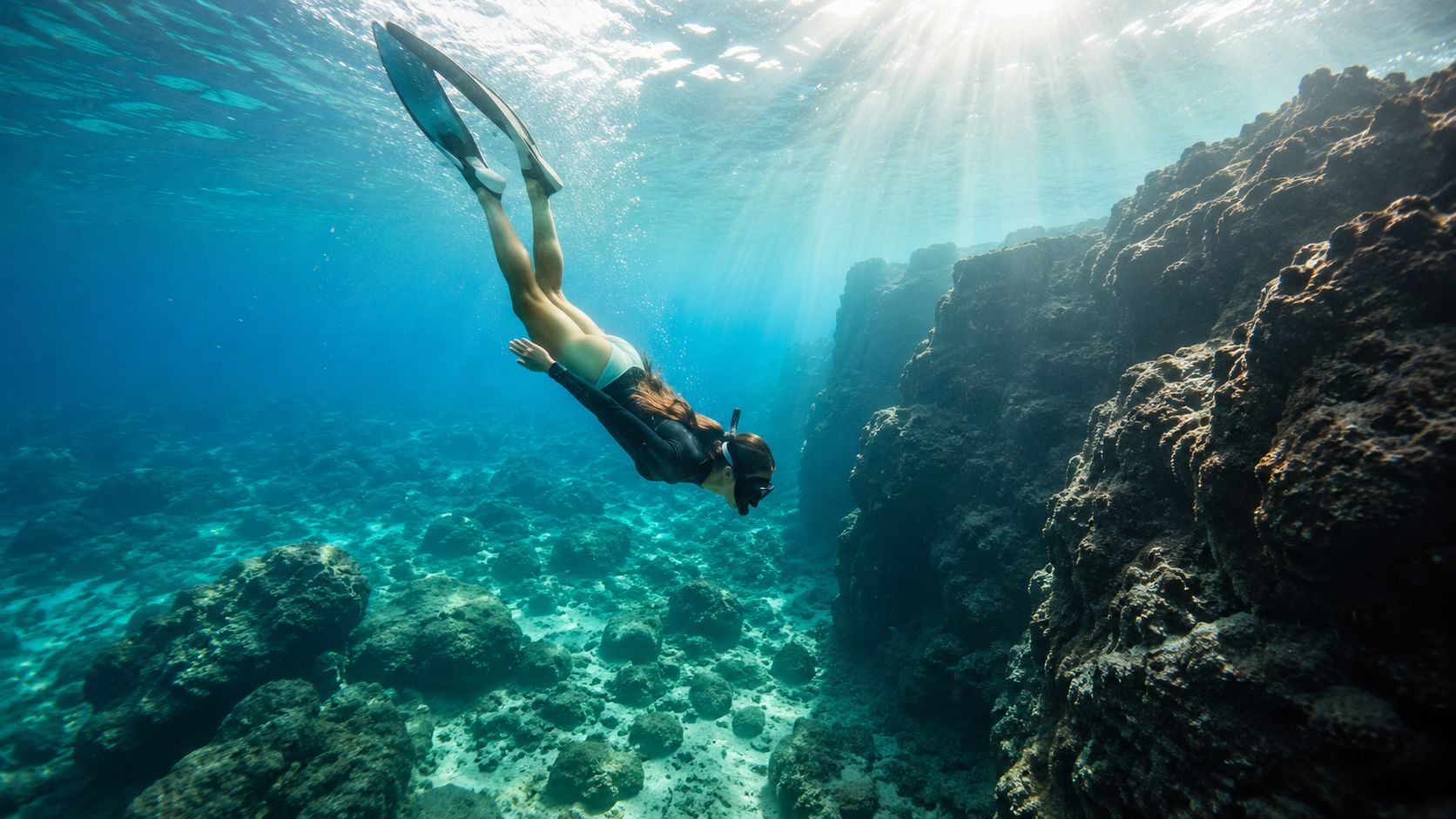
What separates diving Kona Big Island from a lot of tropical destinations is not one signature site. It is the quality of three very different experiences, each with its own ideal diver, timing, and skill set.
Three experiences that define Kona
Reef diving gives you the broadest access and the most bottom time around volcanic structure. Expect lava fingers, arches, caverns, and fish life that stays interesting even for divers who have done plenty of Pacific reef diving. This is usually the right starting point, especially if you want to settle in, check weighting, and get comfortable with Kona conditions before adding night dives.
Manta night diving is the trip nearly everyone asks about, and for good reason. It is one of the most reliable big-animal encounters in diving, but it works best for divers who can stay still, control buoyancy, and follow a tight site plan. Divers who are not scuba certified can still get a close look through a manta ray night snorkel in Kona, which is a smart option for mixed groups.
Blackwater diving is the most specialized experience of the three. It is not physically hard in the usual sense, but it demands comfort in darkness, midwater positioning, and a calm head when there is no reef, no wall, and no bottom reference.
I tell visiting divers to plan Kona by experience, not by checking boxes.
That matters because the best schedule is usually not the fastest schedule. A diver who does a daytime reef charter first often gets more out of the manta and blackwater trips afterward. You learn how the local entries work, how much exposure protection you want, and whether your weighting is dialed in. Good operators build trips around those details, not around a generic vacation template.
Why Kona keeps divers coming back
The marine life feels different here because the habitat is different. Young lava creates sharp relief, old lava creates pockets and shelter, and the coast drops into deep water quickly. That combination produces reef dives with strong visual structure and offshore night dives that are available without a long run.
It also means there are real trade-offs to handle well:
- Choose reef days first if you are new to Hawaii diving, recently out of the water, or traveling with a mixed-skill group.
- Reserve manta and blackwater early if those are priority experiences, because they shape the rest of the itinerary.
- Leave some flexibility for site selection, since the smartest captains match the ocean conditions to the divers on board.
- Book with an operator that runs all three well so your progression from reefs to night dives makes sense, instead of feeling pieced together from separate vendors.
That is one reason Kona Honu Divers is a useful reference point for planning. They run the full range of Kona's headline experiences, so you can build a trip around what you want from the water, whether that is an easy first reef day, a manta night, or a more advanced blackwater schedule.
The World-Famous Manta Ray Night Dive
The manta dive works because the setup is simple and the animal behavior is consistent. After dark, divers settle into a shallow viewing area around a light source. The lights attract plankton. The plankton attracts manta rays. Then the whole site turns into a feeding zone.
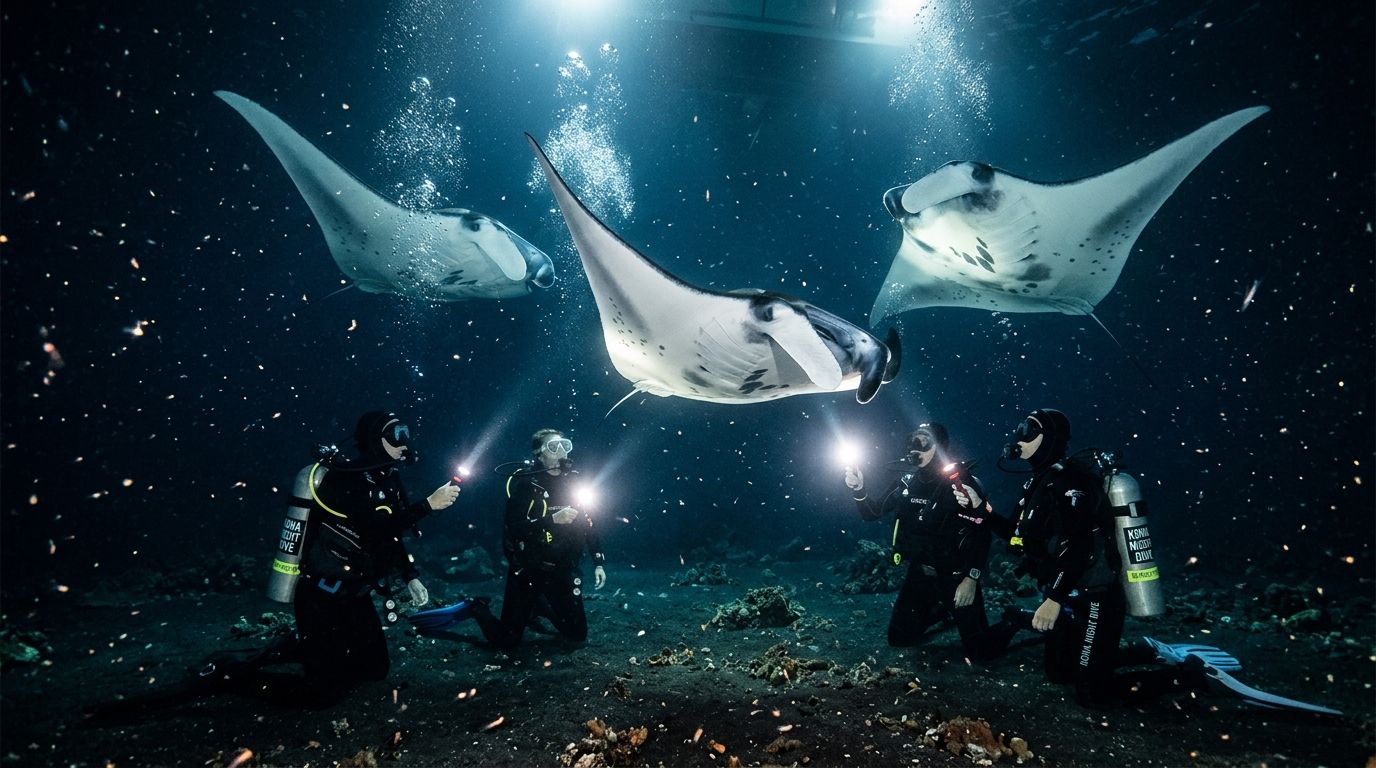
This is the part many first-time visitors underestimate. The dive isn't a random search. It's built around the campfire effect, where underwater lights draw in dense concentrations of plankton. Verified operator data states that encounter rates exceed 95%, divers often see 10 or more mantas, and the animals can have wingspans up to 12 feet in shallow water around 30 to 40 feet.
What the dive actually feels like
Once everyone settles, the movement is above you, not out in the distance. Mantas loop through the light beams, bank hard, and glide over the group in repeated passes. Good buoyancy matters here, but discipline matters even more. The best divers on a manta dive are the still ones.
The shallow profile is one reason this trip has such broad appeal. You're not dealing with depth as the main challenge. You're dealing with excitement, night conditions, and staying calm while large animals move close.
Stay low, keep your hands in, and don't chase. Chasing mantas usually gives you a worse view, not a better one.
Why Garden Eel Cove is the smarter pick
If you have a choice, Garden Eel Cove is the stronger option for most divers. Its protected location generally gives it a better viewing area and better reefs than more exposed alternatives. That matters more than people think. On a manta dive, site shape affects the entire experience, from how comfortably you settle in to how clean your sight lines stay once the rays start feeding.
For people traveling with non-divers, this is also one of Kona's easiest shared wildlife experiences. Divers and snorkelers can both participate, which makes it much easier to keep a mixed group happy. If someone in your party wants to stay on the surface instead of scuba diving, the dedicated guide to snorkeling with manta rays in Kona helps clarify the difference.
What works and what doesn't
A few choices make this trip much better:
- Do this after at least one daytime dive if you're new to Kona: It helps you dial in weighting and buoyancy.
- Use an efficient setup: Dangling gear and poor trim make night dives harder for everyone.
- Listen carefully to the pre-dive positioning brief: On this dive, small placement mistakes have big viewing consequences.
What doesn't work:
- Treating it like a mobile reef dive: You're there to hold position and watch behavior develop.
- Overweighting yourself: It's common at night, and it makes the dive clumsy.
- Waiting too long to book: Manta trips are one of the first Kona experiences to fill.
If the manta dive is the centerpiece of your trip, book the manta tour at Garden Eel Cove early and build your other dives around it.
Venture into the Abyss The Kona Blackwater Dive
You drop into calm black water off Kona, descend to the line, and then the bottom disappears completely. At 45 feet, suspended over thousands of feet of open ocean, every small movement stands out. Then the first strange shape drifts through the lights. A larval fish, a paper nautilus, a juvenile squid, something most divers never see in a lifetime of reef diving.
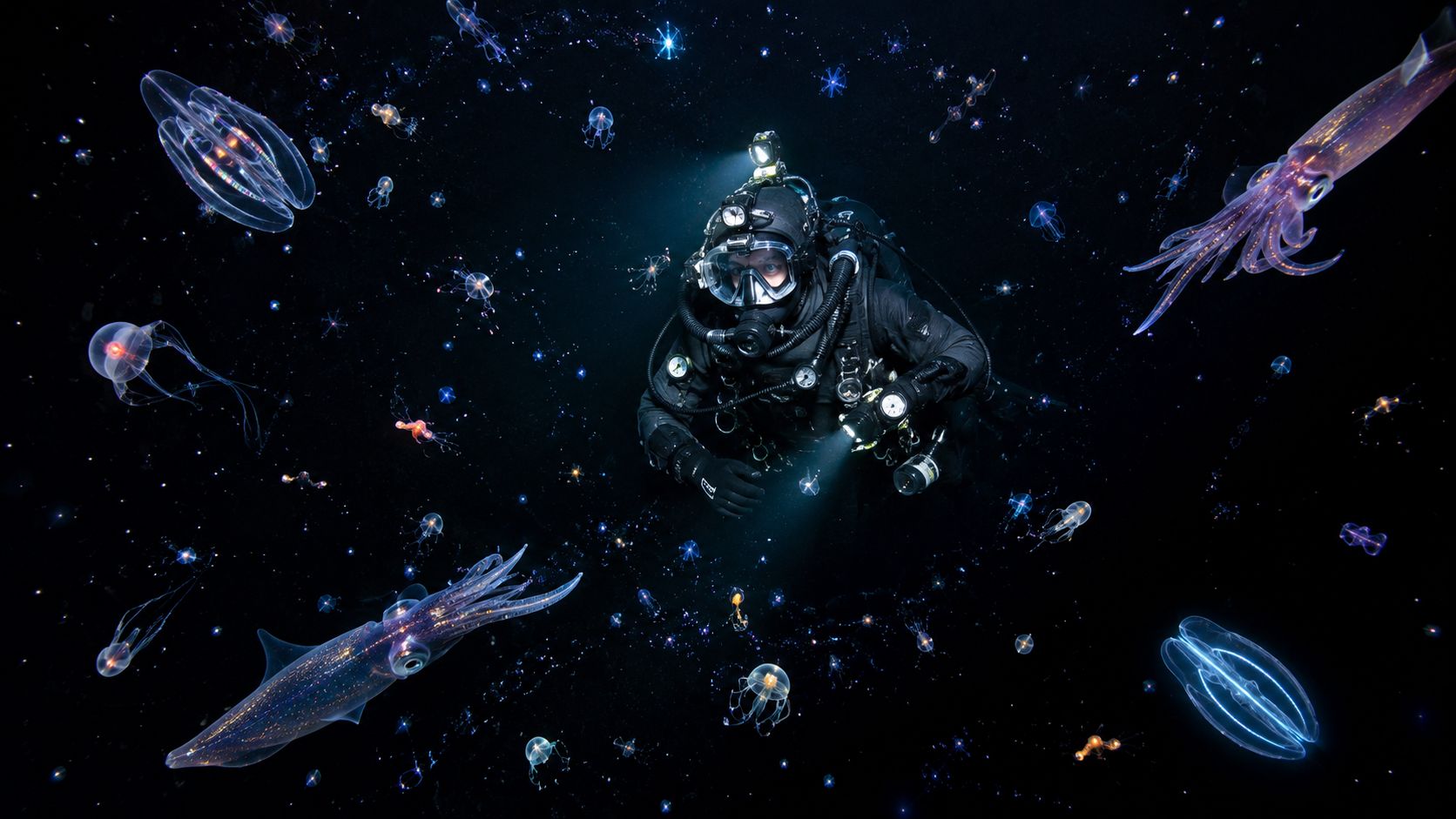
Blackwater in Kona is one of the island's three signature dive experiences, and it deserves to be planned differently from both manta and reef dives. You are clipped in on a lit downline in blue water, watching the nightly vertical migration bring deep pelagic animals toward the surface. There is no reef to reference and no terrain to settle your eyes on. That changes the dive more than many visitors expect.
The skill requirement is real. Divers who do well here already have solid buoyancy, comfort in the dark, and enough situational awareness to stay calm when the environment offers almost no visual landmarks. Good air consumption helps too, but control matters more than athleticism.
What makes Kona blackwater special
Kona is unusually well suited to blackwater because deep water sits close to shore, which gives operators access to serious blue-water habitat without a long offshore run. That is part of why experienced divers travel here specifically for this dive. The animals can be exceptional, but the format is what makes it work. Strong lights attract plankton and larval life, and patient divers get the best sightings.
This is also a dive where operator procedure matters more than marketing. Clean line setup, clear light protocols, appropriate diver spacing, and guides who know what to watch for all make a measurable difference. Kona Honu Divers has built much of its reputation on that kind of disciplined execution, which is exactly what you want on an open-ocean night dive.
Who should book it, and who should wait
Book blackwater if you can already do these things without stress:
- Hold depth precisely: Small buoyancy swings feel bigger in open water.
- Stay composed at night: You should not be sorting out basic night-dive nerves here.
- Manage your own gear cleanly: Flashlights, clips, gauges, and hoses need to stay organized.
- Focus for the full dive: The best encounters are often brief and easy to miss.
Wait on blackwater if you still rely on the reef for orientation, tend to flutter your hands to stay in place, or get task-loaded once lights and cameras come out. In that case, a few daytime reef dives and a manta night dive usually set you up better for success later in the trip.
One pattern I see often is divers assuming this will feel easier than a current dive because you are on a line. It does not. The physical workload is low, but the mental load is higher. Calm divers usually love it. Divers who need constant visual reference often do not.
Blackwater rewards patience and control. The divers who get the most from it are usually the steadiest ones on the line.
If you are ready for it, review the Kona blackwater night dive details before choosing your dates. If your interests run more toward deeper daytime profiles and advanced site selection, the advanced long-range dive tour is the other in-water experience worth comparing.
Exploring Daytime Reefs Lava Tubes and Endemic Life
Day dives are where you learn Kona. They show you how the island's volcanic geology shapes everything underwater, from swim-throughs and lava folds to fish traffic, coral placement, and current flow.
A lot of visitors arrive with tunnel vision for the night dives. That's a mistake. The reef diving is not filler between marquee experiences. It's the foundation of a good Kona trip.
What reef divers should look for
Kona reef diving is strongest when you pay attention to structure, not just animal checklists. Ancient lava formations create the terrain, and that terrain shapes where fish school, where eels hold, and where coral gardens stay healthiest.
On a normal day, divers often spend more time than expected just exploring texture and relief. Lava tubes, arches, fingers of rock, and coral heads give each site a different rhythm. Some are easy and open. Some feel like a guided tour through volcanic architecture.
A good operator adjusts site choice to the day's conditions rather than forcing a preset route. That's one reason many divers get more out of boat diving than trying to piece together shore dives from scattered online advice. There's also a practical gap in shore-diving information for visitors, especially around safe entries, surge, and local navigation.
Kealakekua Bay deserves its reputation
Kealakekua Bay is one of the standout examples. It's located about 12 miles south of Historic Kailua Village in South Kona and serves as one of the most important diving and snorkeling sites on the island. It's also historically significant as the place where Captain James Cook landed in 1779, and it is protected as a Marine Life Conservation District, which helps preserve its underwater conditions, according to the GoHawaii page on Kealakekua Bay.
That protected status shows. The bay is known for pristine conditions, strong visibility, ancient lava formations, and coral gardens that have endured for centuries.
If you want a deeper look at what makes these reefs distinct, this guide on what is unique about diving in Kona gives useful local context.
How to choose your daytime dives
Use these filters when planning reef days:
- If you're newly certified: Start with standard two-tank reef dives before adding a night specialty.
- If you love photography: Favor calmer reef dives over high-motion adventure profiles.
- If you want variety: Mix one iconic historical site with one or two less famous reef runs chosen for conditions.
The divers who come back happiest usually don't ask for one exact reef. They ask for the right reef for that day.
Planning Your Dive Trip Logistics and Safety
You land in Kona at noon, grab your bags, and board a night boat a few hours later. That plan looks efficient on paper. In practice, it is how divers end up tired, cold, queasy, and disappointed on dives they were most excited about.
The best Kona trips are built around the three experiences that matter most here: manta, blackwater, and reef diving. Put your hardest-to-book dive first on the calendar, then build the rest of the week around recovery, weather flexibility, and your actual comfort level. That is how we set up schedules at Kona Honu Divers when guests want the trip to feel strong on day one and still strong on the final day.
Match the dive to the diver
Start with an honest read on your recent experience, not the dive that sounds most impressive.
Day reef dives are the easiest entry point for many visiting divers. They let you settle your weighting, check how you feel on local boat rides, and get used to Kona's water movement before adding a night profile. Manta night dives also work well for a lot of certified divers because the plan is controlled and the depth is modest.
Blackwater deserves stricter self-screening. You are in open ocean at night, usually with no bottom reference, managing buoyancy by feel and by light discipline. Divers who enjoy it most are calm in the dark, current on their skills, and comfortable following a precise briefing without needing a lot of in-water coaching.
If you are unsure, ask the operator to place you. Good crews would rather steer you onto the right dive than watch you grind through the wrong one.
Build your schedule around fatigue and seasickness
Kona rewards divers who pace themselves.
A common mistake is stacking every marquee dive back-to-back, especially after travel day. A better approach is to book the dive you care about most, usually manta or blackwater, early enough in the trip that you still have room to shift if conditions or your energy call for it. Then use reef days to fill in the schedule.
Seasickness is part of trip planning too. Plenty of experienced divers get seasick here, especially after a long flight, poor sleep, dehydration, or too much coffee and not enough food. Handle it early. If you know you are prone to motion sickness, read this practical guide on how to avoid sea sickness before a Kona boat dive.
Kona dive experience comparison
| Dive Experience | Best For | Required Certification | Typical Depth |
|---|---|---|---|
| Reef day dive | Newly certified and recreational divers | Open Water | Recreational depths vary by site and briefing |
| Manta night dive | Divers who want a structured wildlife experience | Open Water, with comfort at night strongly recommended | 30 to 40 feet |
| Blackwater dive | Experienced divers with night experience | Advanced experience level and recent night-diving comfort | 45 feet |
A few planning habits make a real difference:
- Book manta and blackwater early: Those trips usually have the least schedule flexibility.
- Leave room after demanding dives: A packed calendar looks good until you are trying to enjoy your third boat ride in two days.
- Use Nitrox if you are certified: It often makes multi-day diving feel better, especially on repetitive profiles.
- Keep one open buffer slot: On the Kona coast, that extra half day often becomes your most useful piece of the schedule.
- Tell the crew about long gaps since your last dive: That helps them place you on the right trip and brief you accordingly.
Good logistics make the fun parts better. They also make the advanced parts safer.
Why Choose Kona Honu Divers
Operator choice changes the trip more than most visitors realize. Boats, group management, brief quality, and site judgment all shape your experience long before you giant stride in.
The practical reasons divers compare operators in Kona usually come down to a few factors: how well the crew screens divers onto the right trips, whether the boats are set up for comfort and efficiency, how disciplined the briefings are, and whether the operation can handle both first-time Kona visitors and advanced divers without turning the whole day into chaos.
What matters most in a Kona operator
Look for these things first:
- Experience on this specific coast: Local judgment matters because site selection is condition-dependent.
- Small in-water groups: Wildlife dives and night dives both improve when groups stay manageable.
- Clear standards for advanced trips: Blackwater especially needs honest screening, not soft selling.
- Well-maintained gear and calm deck procedures: That's not glamorous, but it's what keeps the day smooth.
Kona Honu Divers is one local option that offers reef dives, manta trips, blackwater dives, training, rentals, and free Nitrox for certified divers. If you want to look into crew background and local experience, their dive team page is the best starting point.
A good operator makes trade-offs for you
That's the hidden value. Strong crews will move sites, say no to a poor diver-fit, simplify a gear problem, or change the flow of the day without making the trip feel compromised. Weak crews stick to schedule and hope the ocean cooperates.
For visitors planning diving Kona Big Island for the first time, that difference is huge. You want a boat and crew that can match the dive to the diver, not force the diver into the wrong dive.
Sample Itineraries and Booking Your Adventure
You land in Kona, grab your gear, and want to do everything at once. That is the fastest way to turn a great dive trip into a tired one.
Kona dives are better when you build around the three experiences that make this coast special. Reefs get you dialed in. Manta gives you the signature night. Blackwater belongs later, when you are settled, rested, and ready for a more technical kind of fun.
A smart three-day plan
For a short trip, I'd keep the order tight and practical:
Day one
Start with a daytime two-tank reef charter. Use it to fine-tune weighting, check how much exposure protection you need, and get comfortable with Kona's entries, exits, and typical conditions.Day two
Book the manta night dive. With one day already in the water, divers usually arrive calmer, use less gas, and spend more of the dive watching mantas instead of fussing with gear.Day three
Go back to the reefs. This is a good place for a second two-tank morning, especially if you want lava tubes, cleaner camera work, or a final relaxed dive before your no-fly window starts.
A stronger five-day version
More time gives you room to sequence the trip properly instead of stacking high-excitement dives back to back.
- Arrival day or day one: Easy reef diving
- Day two: Light schedule, snorkeling, or a topside island day
- Day three: More advanced daytime reef sites for experienced divers
- Day four: Manta night dive
- Day five: Blackwater, for qualified divers who are comfortable in open water at night
That order works for a reason. Reefs are the easiest way to settle in and assess how everyone is diving. Manta is accessible to a wide range of divers and makes a strong mid-trip or late-trip night. Blackwater asks for more focus, better trim, and more comfort in the dark, so it usually fits best after a few days in the water.
Mixed groups can still plan this well. Divers can build the trip around the three headline experiences, and non-divers can often join selected manta outings in snorkel format so the whole vacation does not split in half.
If you want one operator to handle reef dives, manta, blackwater, rentals, and training under one booking system, Kona Honu Divers is a practical choice. The crew runs this coast every day, which matters when weather, diver comfort, or site conditions call for a change. Use the availability button below to match the right trip to your dates and experience level.
If you're ready to turn a Hawaii trip into a real dive trip, Kona Honu Divers is a straightforward place to book reef dives, manta nights, blackwater dives, and training with one crew that works this coast every day.