
You're probably doing what most certified divers do before a Hawaii trip. You open ten tabs, compare islands, read a bunch of recycled “top 10 dive sites” lists, and still don't have a clear answer to the question: how should you structure your Kona diving days so you don't waste time, money, or great conditions?
That's the right question.
Diving Kona Big Island isn't hard to book. It's hard to book well. The coast offers easy reef dives, night dives, manta encounters, long-range options, and one of the strangest specialty dives anywhere in the Pacific. If you just pick random charters and hope for the best, you can still have a decent trip. But if you match your schedule to your skill level, your interests, and the local conditions, Kona turns from a good vacation into one of those dive trips you keep talking about for years.
If you want the broadest look at what's available, start with the Kona Honu Divers home page and the full list of Kona diving tours. Then come back and build your trip the smart way.
Your Ultimate Guide to Diving in Kona
A lot of divers arrive on the Big Island thinking they just need to choose a day boat and show up. That works if your standards are low. It doesn't work if you care about getting the right dives for your ability, avoiding blown-out plans, and making room for the experiences that define Kona.
Kona is where I send divers who want variety without sacrificing quality. You can spend one day on calm reef structure with lava topography, another on a night manta dive, and another offshore doing something far more technical and unusual. That mix is the reason diving Kona Big Island keeps pulling people back.
Who Kona is for
Kona works especially well for three kinds of divers:
- Certified vacation divers: You want easy logistics, warm water, and wildlife without needing a technical setup.
- Experienced recreational divers: You're bored by generic reef tours and want dives with personality.
- Mixed groups: Some people want classic reef diving. Others want signature Hawaii experiences like manta or blackwater.
That last point matters more than people think. On many trips, divers are trying to fit their plans around non-divers, short stays, or family schedules. Kona is one of the easier places to do that because operators run different formats instead of one rigid itinerary.
Practical rule: Don't ask “What's the best dive in Kona?” Ask “What should I do with the number of days I actually have?”
My blunt recommendation
If you only have 2 days, do one daytime reef charter and one manta night dive.
If you have 4 days, add a second daytime charter plus either a long-range advanced day or blackwater if you've got the skills.
If you have a week, stop trying to cram every famous dive into back-to-back days. Build in flexibility so the crew can put you on the right sites for the conditions.
That's the main advantage of planning your trip around outcomes, not around random site names. Site lists are helpful. Structure is what saves a trip.
Why Kona is a World-Class Dive Destination
Kona isn't just popular. It's biologically and geographically unusual in ways that you can experience underwater.
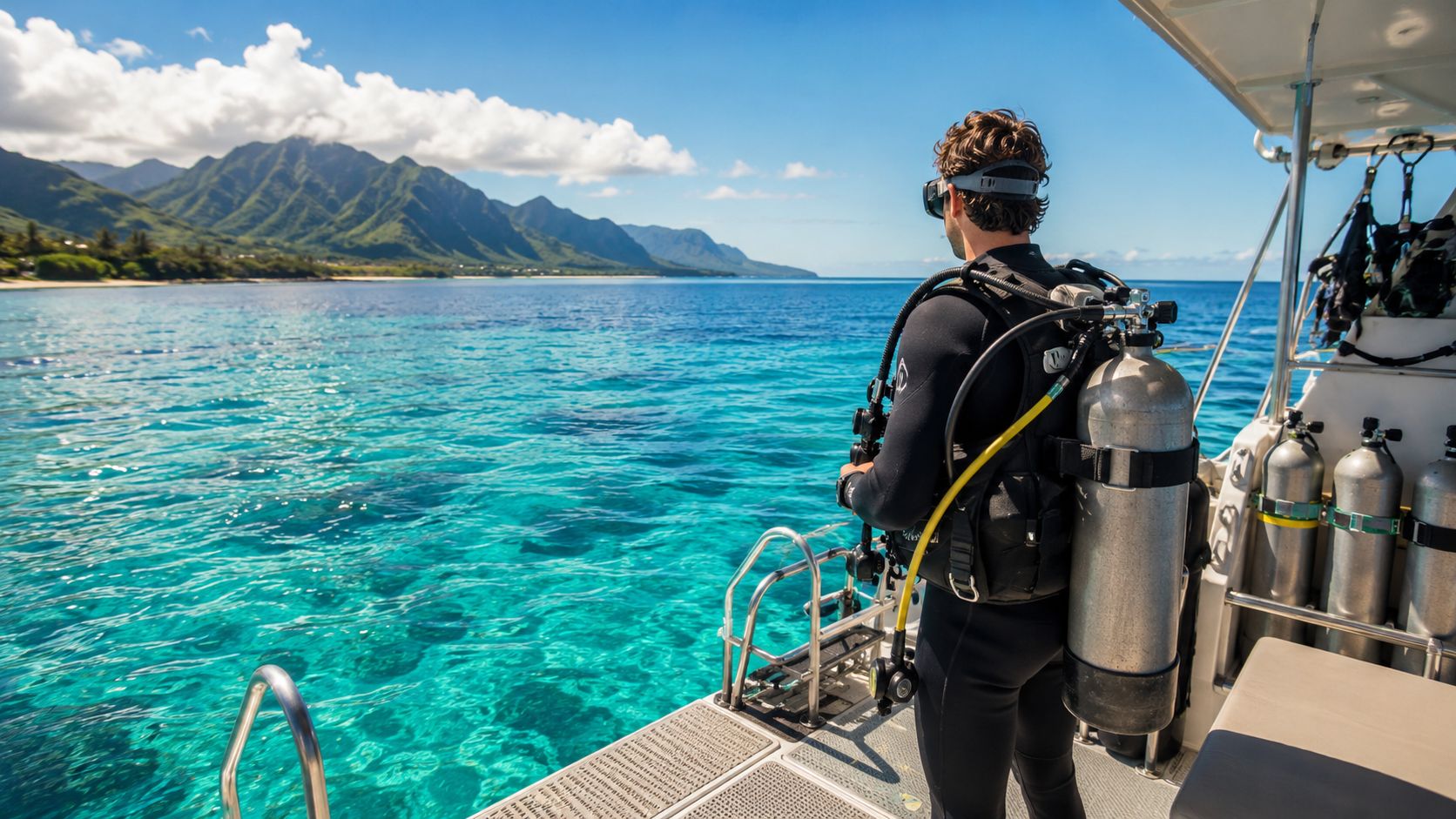
The coastline was shaped by lava, and that matters. You don't get a soft, featureless reef experience. You get ledges, fingers of lava, swim-throughs, arches, broken structure, and dramatic contrasts between dark volcanic rock and clear blue water. That underwater terrain gives Kona dives a strong sense of place. You know you're not in the Caribbean, and you're not on a generic tropical reef.
For a deeper overview of what sets this coast apart, read what is unique about diving in Kona.
Endemism is the big deal
Most travelers skip past the science. That's a mistake.
According to Divers Alert Network's Kona overview, Kona has the world's highest rate of endemism for both marine fish and invertebrates. In plain English, a big share of what you see underwater lives nowhere else.
That changes how you should think about your dives. You're not just logging pretty reef time. You're diving in a place where local life is unusually distinct. If you care about fish identification, behavior, or just seeing something that isn't standard tropical wallpaper, Kona rewards slow, observant diving.
The manta population is not a gimmick
Kona's reputation for manta encounters didn't appear out of thin air. The same DAN article notes that the Manta Pacific Research Foundation has identified more than 270 manta rays in Kona's study area. That long-running identified population is one reason the manta night dive became such a signature experience here.
A lot of destinations market rare wildlife encounters as if they happen on command. Kona's manta culture is different. The encounter is wildlife, not theater, but it's supported by a place with a well-known resident population and an established night-dive format.
| What makes Kona different | Why it matters to you underwater |
|---|---|
| Volcanic underwater terrain | Dives feel dramatic, varied, and visually distinct |
| Exceptionally high endemism | You see marine life with real local identity |
| Identified manta population | Signature night dives have a strong ecological foundation |
The best Kona dives reward divers who pay attention. Don't just chase big animals. Watch the reef closely.
Planning Your Trip Seasons Conditions and Seasickness
Kona is a year-round destination, which is one reason people love booking it. But “year-round” doesn't mean “every day feels the same,” and pretending otherwise is lazy advice.
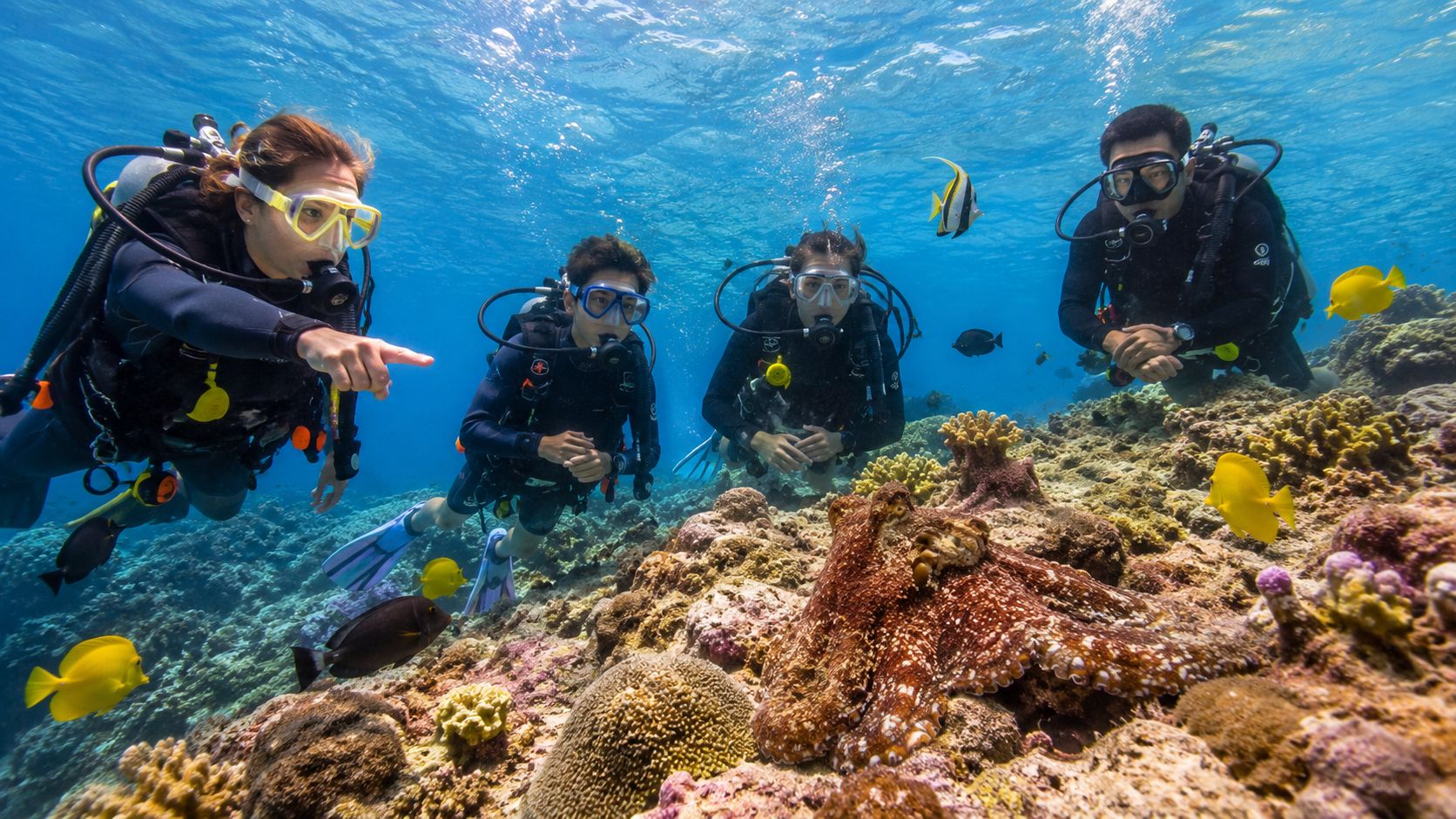
A neutral guide to Big Island diving notes that Kona water temperatures typically range from 72 to 80°F, and that diving is strong all year while conditions still vary by season and recent ocean state. That same guide also points out that calmer summer conditions can improve experiences like the manta ray night dive. You can read that summary in this Big Island diving guide from Holualoa Inn.
When I'd go based on trip style
If your main goal is easy conditions and a smooth trip, summer is a strong choice. Calmer water makes boat days easier for many divers, and that matters even more if you're bringing a spouse, buddy, or newer diver who doesn't love surge.
If your goal is just getting in the water no matter what month you travel, Kona still works. You just need to stay flexible and let the operator pick the right sites for the day instead of showing up attached to one exact plan.
What to pack for comfort
A lot of bad dive days aren't caused by bad diving. They're caused by divers being cold, dehydrated, underfed, or nauseous.
Bring:
- Exposure protection that matches your tolerance: Some divers are fine in lighter exposure. Others get cold fast even in warm water.
- Dry layers for the boat ride back: Night dives and windy rides can feel colder than you expect.
- Water and light food: Small, steady fuel beats a heavy meal before the boat leaves.
- Seasickness backup: Even divers with hundreds of dives can get queasy on the wrong day.
If you know motion hits you, prepare before the boat leaves the harbor. The best resource I'd point you to is this guide on sea sickness medication for Kona diving.
My no-nonsense seasickness advice
Don't act tough about it. Seasickness ruins more dives than weak air consumption.
Here are the common options:
- Patch option: Ship-EEZ Seasickness Patch
- Classic tablet: Dramamine pills
- Another popular choice: Bonine pills
- Non-medication option: Sea Band wristbands
- Simple backup: Ginger chews
If you think you might get seasick, treat that as a planning issue, not a personality test.
Konas Must-Do Dives Top Sites for Every Skill Level
A good Kona trip is built in the right order. Book dives that match your current skills on day one, then add more demanding terrain after you see how you handle local conditions. That is how experienced divers get the best of Kona instead of spending half the trip overestimating themselves or playing it too safe.
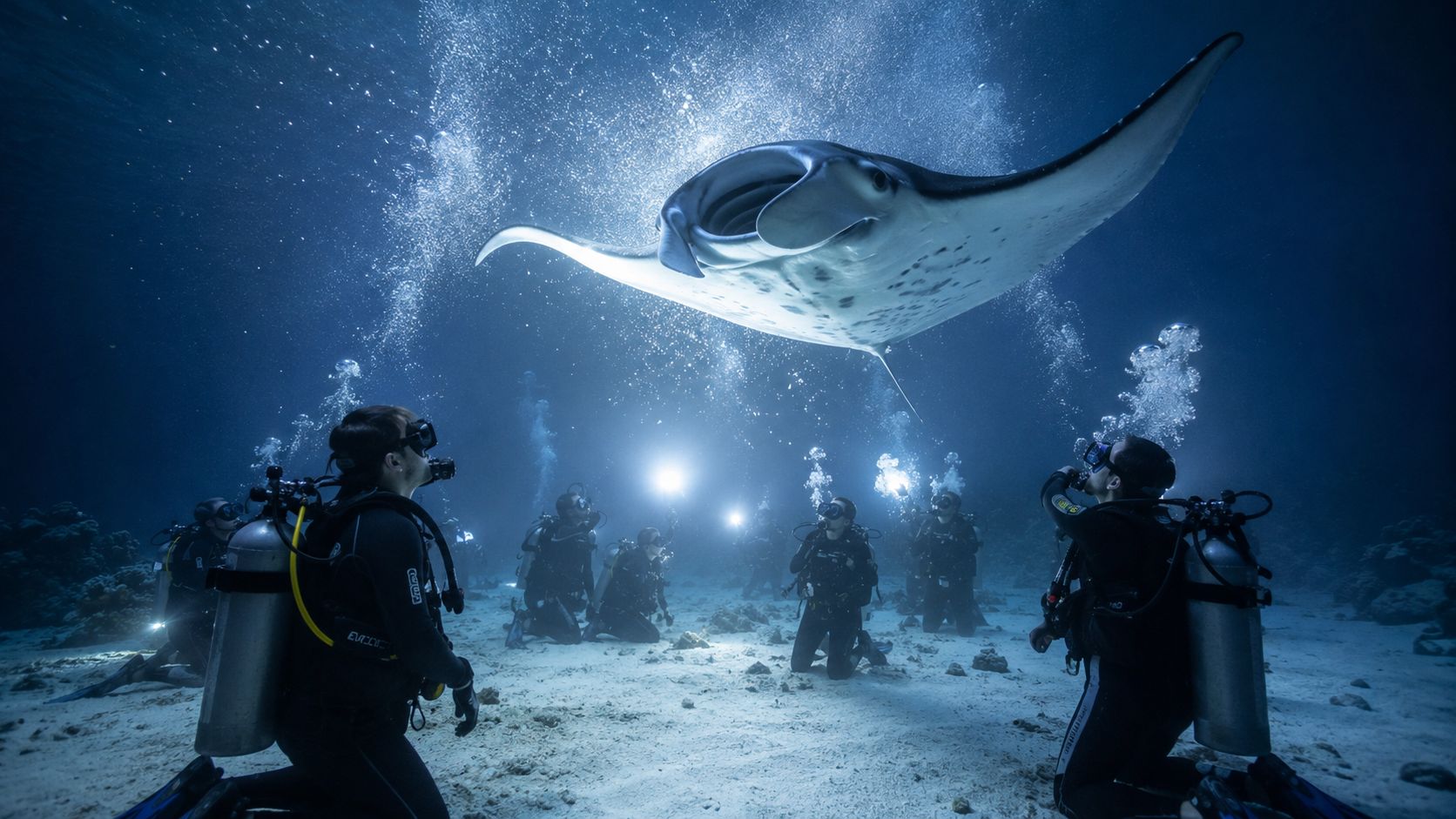
If you want a broader local take on standout options, this guide to the best dive in Kona is a useful starting point.
Best fit for newer certified divers
If you were certified recently, keep your first dives simple. Pick sites with easy descents, obvious topography, and enough shelter that you can settle your breathing and buoyancy before you start chasing fish.
The right beginner-friendly Kona dive still feels like Hawaii. You will see healthy reef, lava structure, eels, turtles, and plenty of movement without dealing with the kind of surge or current that turns a vacation dive into a task.
Prioritize these site traits:
- Protected reef layout
- Straightforward navigation
- Calm entries and exits
- Visibility that keeps the whole dive relaxed
My advice is blunt. Do not book based on the flashiest site name on the board. Book the dives that let you look up, slow down, and enjoy the reef.
Good choices for intermediate divers
Intermediate divers should start looking for sites with more shape and more decision-making. Kona gets interesting once you move into lava fingers, arches, swim-throughs, and reef sections where surge and positioning matter a little more.
That does not mean you need a hero dive. You need a site that rewards good trim, decent air consumption, and calm awareness around volcanic structure.
A smart four-dive progression usually looks like this:
- First charter: easy reef, familiar profile, get comfortable
- Second charter: add more terrain and mild movement
- Third dive day: ask for swim-throughs or more textured lava structure
- Final dives: choose based on how you performed, not what your logbook says
That last point matters. Plenty of certified divers arrive with enough cards and not enough recent experience. A good crew will notice fast and steer you toward the sites you will enjoy most.
What advanced divers should prioritize
Advanced divers should stop chasing depth for its own sake. Kona is at its best when you use your skills on dives with strong topography, changing light, and enough range to explore the reef properly.
Look for sites that offer:
- Complex lava formations
- Swim-throughs and caverns with clean, controlled access
- Areas where surge or current changes your timing
- Longer profiles that reward gas management and awareness
If your buoyancy is solid, ask for the sites with character. The volcanic architecture is what separates Kona from generic tropical reef diving, and the right operator will match you to terrain that fits your skill level instead of forcing the same plan on every boat.
Better trip planning beats collecting famous site names.
My sample site strategy by trip length
| Trip length | What I'd book |
|---|---|
| 2 days | Start with a forgiving daytime reef charter, then do a second day of stronger reef structure if you feel good |
| 4 days | Use day one to calibrate, spend day two on more interesting lava sites, then add a night or specialty dive later in the trip |
| 1 week | Build the trip in layers: easy warm-up dives, stronger reef days, then your specialty dives once you are fully settled in |
That structure works because Kona is not a destination you rush. The divers who get the most out of it are the ones who treat the first dives as a skill check, trust the crew's site calls, and build toward the signature experiences instead of burning themselves out on day one.
Beyond the Reef Konas Unforgettable Specialty Dives
By your third or fourth Kona dive, the question changes. You stop asking which reef to do next and start deciding which signature experience deserves a slot in your trip plan.
That is the right way to approach specialty diving here. Don't stack every famous dive into the first 48 hours. Build toward them. If you have a short trip, pick one marquee specialty dive and do it well. If you have a week, pair the famous experience with one that shows you a completely different side of Kona.
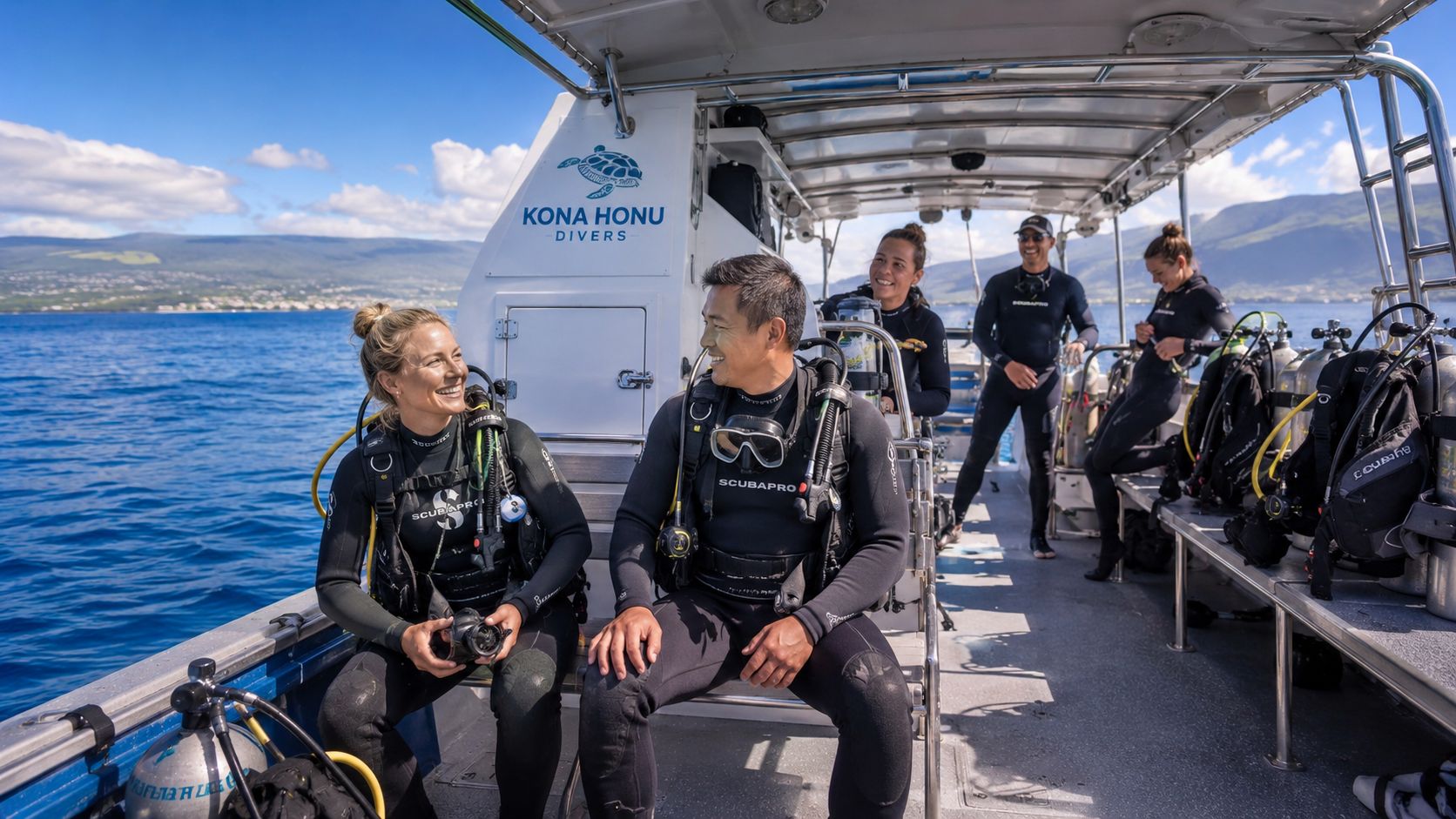
The manta night dive
If you are certified, comfortable after dark, and want the classic Kona memory, book the manta dive.
This is the specialty dive I recommend for the widest range of divers because the task load stays manageable when the operation is organized well. You are not chasing animals through the water column. You are settling in, holding position, keeping your light discipline clean, and letting the encounter happen in front of you. That makes it a smart first specialty dive in Kona for divers who want something memorable without jumping straight into a high-demand profile.
Site choice matters. Garden Eel Cove is usually the better call when conditions cooperate. It is more protected, the viewing setup tends to be cleaner, and the surrounding reef gives the whole dive more substance instead of feeling like a one-note attraction.
My advice by trip length is simple:
- 2-day trip: Make manta your one specialty dive.
- 4-day trip: Put manta in the middle of the trip, after a daytime checkout of your weighting, buoyancy, and comfort level.
- 1-week trip: Do manta first, then add a more demanding specialty later.
The blackwater dive
Blackwater is the dive that separates curious visitors from divers who really want to experience Kona.
Scuba Diving magazine describes the Kona blackwater as an open-ocean night drift over very deep water, with divers tethered below the boat to watch pelagic animals rise from the depths during their nightly migration. That description is accurate, but it still undersells how strange and impressive the dive feels once you are in the water. There is no reef, no wall, and no familiar frame of reference. Just darkness, controlled light, and creatures that look built for another planet.
If that sounds appealing, read the local overview of the Kona blackwater dive. Then decide whether it fits your skill set.
Who should book blackwater
Book it if you are already solid in the water and want a dive that feels completely different from standard tropical reef diving.
- You hold depth precisely without chasing your inflator
- You stay calm at night
- You are comfortable without a reef below you
- You want a true specialty experience, not just a variation on a reef dive
Skip it for now if any of these apply:
- You were certified recently and still feel task-loaded
- Night diving raises your stress level
- You rely on the bottom for orientation
- You want a relaxed wildlife spectacle more than a skills-focused experience
That is not a knock on your ability. It is good trip planning. Blackwater rewards control, patience, and composure. Divers who force it too early usually spend the whole dive managing themselves instead of enjoying what is in front of them.
The specialty mix I recommend
If you only have room for one specialty dive, do manta.
If you have time for two, book manta and blackwater. They complement each other perfectly. One is iconic, social, and easy to explain to non-divers back home. The other is pure diver candy.
If you already know reef diving is your comfort zone but still want something more advanced during the day, add an advanced long-range dive trip. That works especially well later in the week, once you are fully acclimated and ready for stronger site selection.
Kona rewards divers who structure the trip instead of collecting random bookings. A good operator will help you place these dives in the right order, match the day to the conditions, and keep the experience feeling polished instead of rushed. That is exactly what you want with specialty charters.
Booking Your Dives with Kona Honu Divers
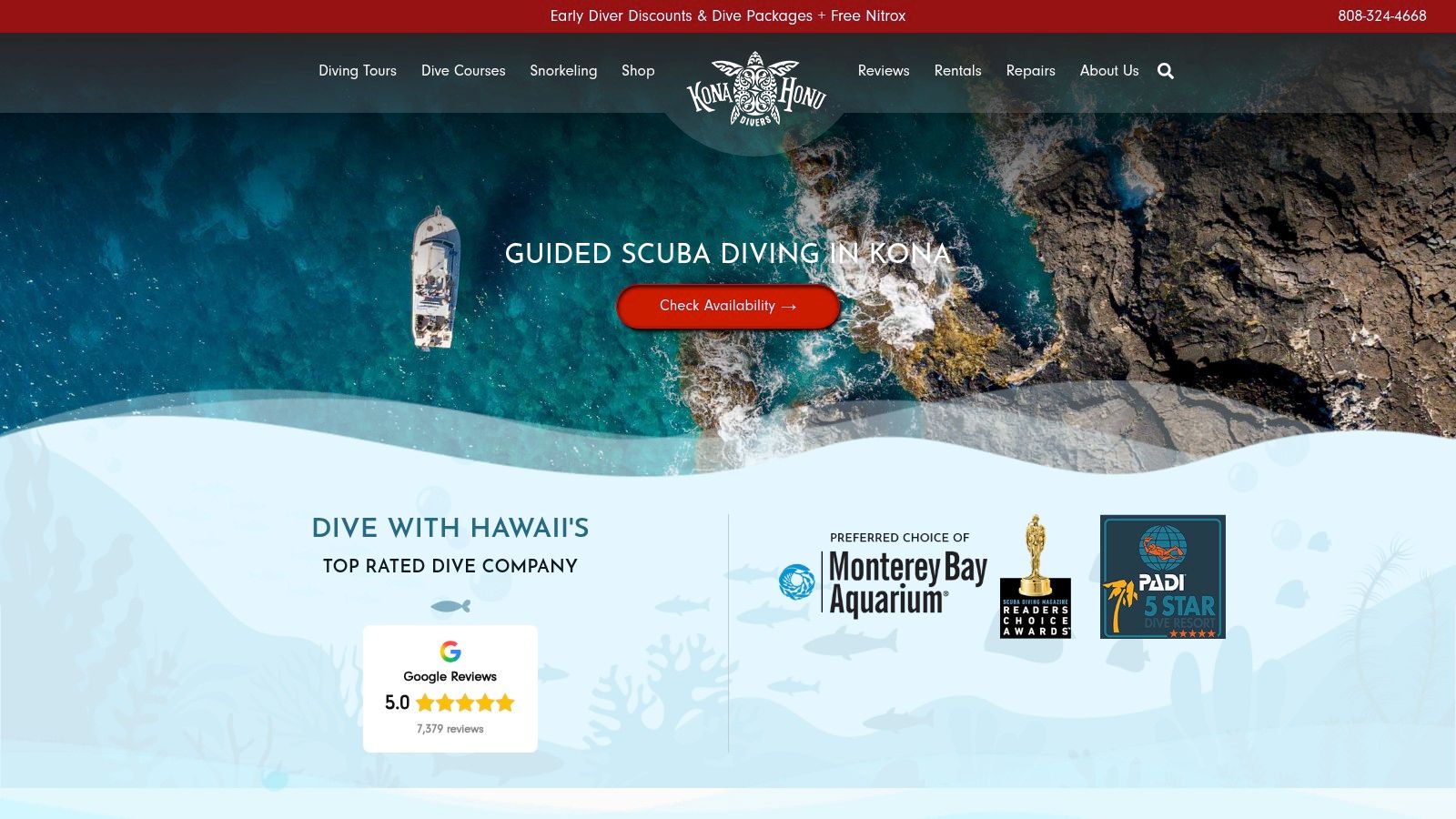
Operator choice matters more in Kona than first-time visitors expect. Hawaiʻi has more than 215 licensed dive shops, and one independent guide notes that Kona Honu Divers limits groups to six divers, offers dives up to 70 minutes, and runs local two-tank trips from $179. That same guide presents Hawaiʻi as a large statewide dive market with many options, which is exactly why you should compare format, group size, and trip style instead of just clicking the cheapest boat. Here's the original Big Island scuba diving guide with those operator details.
What to compare before you book
Don't compare operators by homepage photos. Compare them by how the day is likely to feel.
| What to compare | Why it matters |
|---|---|
| Group size | Smaller groups usually mean less crowding and simpler in-water management |
| Dive duration | Longer dive times matter if you value actual bottom time |
| Trip format | Some boats fit beginners better, others fit advanced divers better |
| Specialty options | Manta, blackwater, and advanced charters are not interchangeable products |
One local operator worth considering is Kona Honu Divers, especially if you care about small groups and trip variety. The six-diver limit and longer dive format are practical differences, not marketing fluff.
What you should bring and confirm
Before your trip, make sure you have:
- Certification card and log details: Especially if you're booking advanced or specialty dives.
- Exposure gear plan: Know whether you're renting or bringing your own.
- Medication sorted before departure: Don't buy motion-sickness relief after you feel sick.
- Flight timing: Leave enough surface interval before air travel or going to altitude.
Small-group diving usually feels calmer before the dive, during the dive, and after the dive. That alone changes the trip.
Making Your Kona Dive Adventure a Reality
You land in Kona with four dive days, one must-do manta night, and just enough flexibility to either build a smart trip or waste prime conditions on the wrong schedule. Good planning thus separates a decent vacation from the kind of dive trip you keep talking about for years.
Kona stands out because you can shape the week around your goals instead of forcing your goals into a generic boat schedule. A certified diver with two days should keep it simple. Do two daytime reef trips and one specialty dive, usually manta, unless blackwater is your main objective. A diver with five to seven days should pace the trip more carefully. Start with easier daytime dives, put the most weather-sensitive or specialty charters in the middle of the week, and leave your final day conservative so you are not squeezing in one more dive before flying.
Book for the trip you want.
If your priority is easy conditions, long bottom time, and classic Kona reef diving, stack morning boat dives first and add a night dive after you have settled in. If you want the full Kona experience, build around variety. Reef, manta, blackwater, then another reef day to reset. That order works well because specialty dives feel better when you are already comfortable with local entries, exits, and boat rhythm.
Skill level matters here. Newer certified divers usually get more out of Kona by choosing forgiving reef profiles and avoiding the urge to overbook advanced charters. Experienced divers should do the opposite. Use the week to mix signature sites with specialty dives that you cannot easily replicate elsewhere.
As noted earlier, Kona Honu Divers is a strong fit if you care about smaller groups and a schedule built for divers rather than crowds. That matters in Kona. Less chaos on the boat usually means a calmer brief, better timing at the site, and a more enjoyable dive day from start to finish.
Then commit to dates and book early. The best trip plans are built in order, not patched together after the popular charters fill up.
If you're ready to stop researching and start diving, take a look at Kona Honu Divers. Pick the trip format that fits your experience, lock in your dates early, and build the kind of Kona dive week you'll still be talking about long after your gear is dry.