
You're probably in the same spot most divers hit when planning Hawaii. You know the Big Island has a huge reputation. You've heard about manta rays, lava tubes, blackwater, turtles, maybe even those dreamlike reef scenes with clear blue water and volcanic structure everywhere. But you're also trying to answer the question that matters more than hype.
Which dive should you book?
That's where a lot of Kona content falls short. It sells the destination, but it doesn't help you match the experience to your comfort level, your interests, or the season you're visiting. If you're researching diving Kona Big Island, that's the difference between a good trip and one you'll talk about for years.
Why Your Next Dive Trip Should Be in Kona
A lot of divers arrive in Kona wanting the headline experience. They ask for the manta dive first, blackwater second, and only after that do they start asking about the daytime reefs. That order makes sense if you're dreaming big. It's also how people accidentally book the wrong trip for themselves.
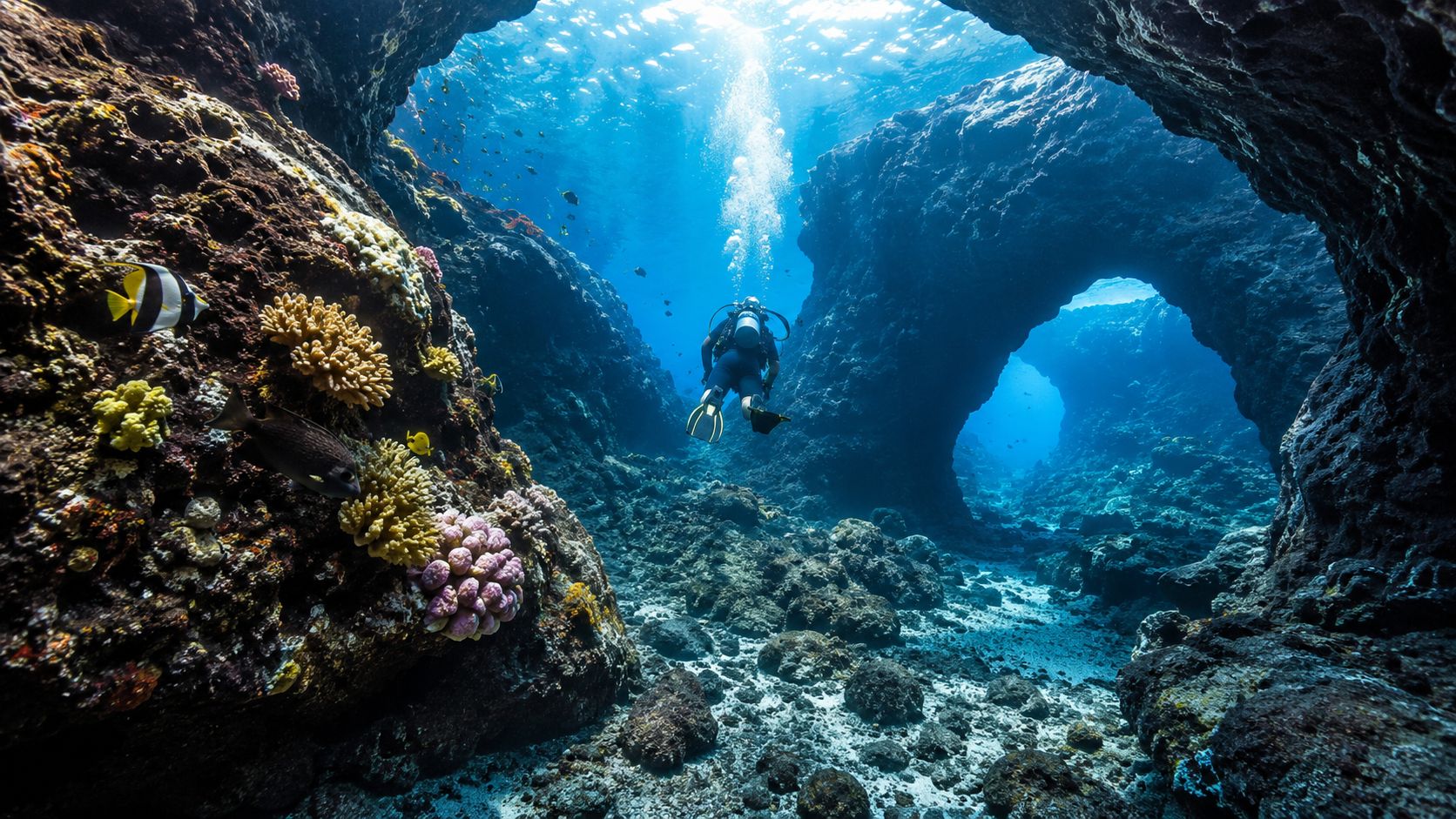
Kona is absolutely worth the trip. The water can be remarkably clear, the volcanic coast creates dramatic underwater terrain, and the marine life feels different from a lot of mainland diving. But a major strength of Kona isn't that every single dive is automatically perfect. It's that there's enough variety to build a trip around what you enjoy.
Many travel pages market Kona as uniformly world-class without helping you judge when conditions, visibility, and species encounters line up with that promise. A more useful way to think about it is this: the highest-value dive for many visitors isn't always the most famous one. Sometimes it's a calm nearshore reef, especially if you're newer, traveling with mixed-skill family, or you want a relaxed dive with lots of bottom time, as noted in this Big Island diving guide from Scuba Diving.
What makes Kona different for trip planning
If you want the short version, Kona works because it gives you options.
- You can build around comfort. Some divers want protected reefs and easy entries into the day.
- You can build around wildlife. Others are willing to plan around night dives and more specialized profiles.
- You can build around conditions. Seasonal changes matter, even in a destination with reliable diving.
Practical rule: Don't start by asking for the most famous dive. Start by asking what kind of dive day you want to have.
That's also why it helps to understand what makes diving in Kona unique before you book. Once you know how the coastline, marine life, and site protection all fit together, your choices become much easier.
The Underwater Magic of Kona's Volcanic Coast
The reason Kona keeps divers coming back starts with the coastline itself. This isn't a soft, gradual reef system where every site blends into the next. The Big Island's west side is volcanic. Underwater, that means lava tubes, arches, fingers of old flow, caverns, ledges, and sudden changes in relief that keep even simple reef dives visually interesting.
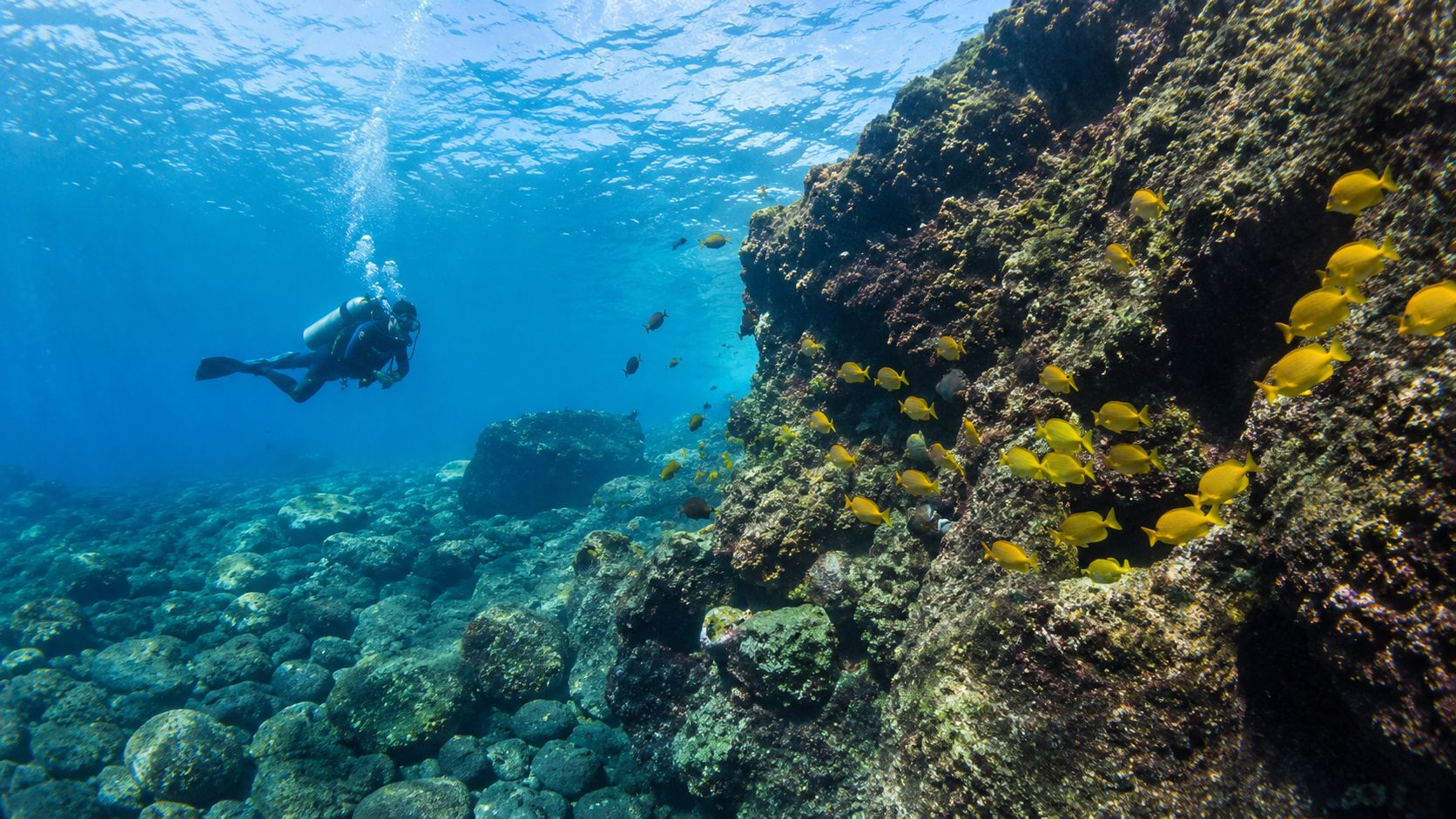
Why the water often looks so good
Kona's setting does a lot of the work for it. The region sits in the lee of two massive seamounts, which helps create currents that bring in clear blue water. That same environment supports one of the world's highest rates of marine endemism, which is a big reason divers see animals here that they won't find in other destinations. The Manta Pacific Research Foundation has also identified over 270 individual manta rays in the Kona area, supporting the island's reputation for standout manta encounters, according to DAN's coverage of Kona diving.
That combination matters. Good diving isn't just visibility. It's visibility plus topography plus life density plus species you can't casually replace by going somewhere else.
What you'll notice underwater
Kona reef dives tend to feel layered. You're not only looking out across coral and fish. You're looking into structure.
A typical day can include:
- Lava architecture: Swim-throughs, overhangs, and old flow formations that turn a reef cruise into exploration.
- Endemic fish life: Species that make Kona feel distinct rather than interchangeable with Caribbean or Indo-Pacific resort diving.
- Blue-water contrast: Dark lava, bright reef fish, and open-ocean blue in the background. Photographers love that mix.
Clear water helps, but structure is what gives Kona dives their memory. Divers remember the arch they swam through or the lava tube they surfaced beside.
If you're comparing destinations, that's the main reason why diving Kona Big Island earns so much attention. It's not one signature animal. It's a coast where geology and biology reinforce each other on almost every dive. For a broader look at site variety and trip styles, the overview of Big Island scuba diving is useful before narrowing things down.
Manta Rays and Blackwater Two Dives You Cannot Miss
There are two dives that define Kona for many visiting divers. They are not interchangeable, and they are not aimed at the same diver.
The first is the manta night dive. The second is blackwater. If you can do both, you'll experience two completely different versions of the same coastline.
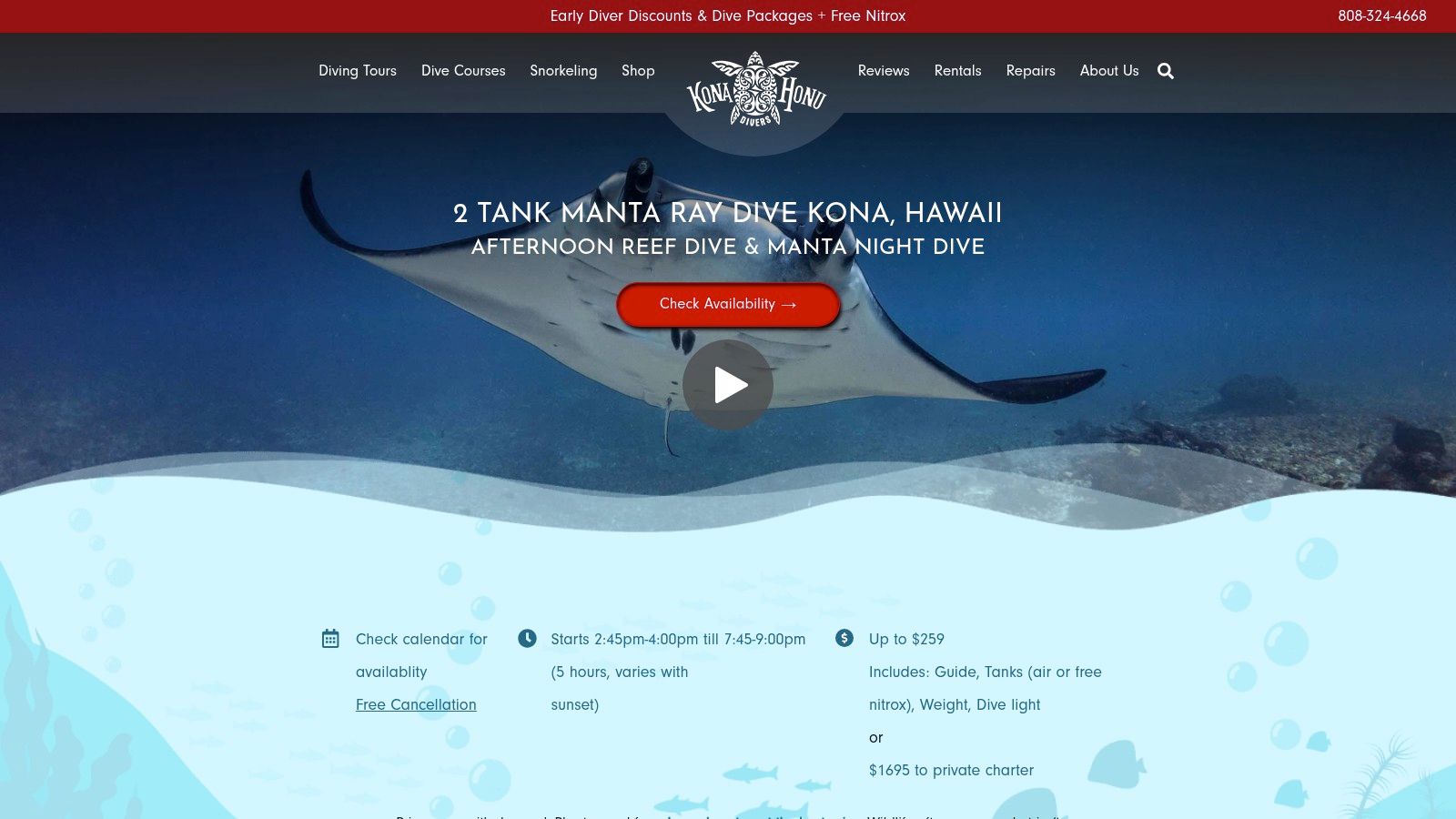
Why the manta dive deserves the hype
The manta night dive is famous for a reason. Divers gather near the bottom with lights pointed upward, plankton collects in the beam, and manta rays sweep through the illuminated water to feed. When it all lines up, the viewing is close, dramatic, and surprisingly graceful for such large animals.
If you're booking this experience, site choice matters. Garden Eel Cove is the stronger option because its protected location usually gives divers a better viewing setup and better surrounding reef than more exposed alternatives. If the manta dive is your priority, book the trip built for that experience through the manta ray night dive tour page.
For readers still deciding whether the experience is right for them, the guide to the manta ray night swim in Kona gives a good sense of how the encounter works in practice.
Why blackwater is a completely different animal
Blackwater is not a reef dive at night. That's the first thing experienced divers should understand.
On a Kona blackwater dive, divers are tethered at about 45 ft above ocean depths of 3,000 to 6,000 ft at night. They watch vertically migrating larvae, jellies, siphonophores, and cephalopods rising from far below. It requires strong buoyancy control and situational awareness because the open-ocean setting is markedly different from reef diving, as described in this overview of top Kona dives.
That's what makes it so addictive for the right diver. There's no reef line, no shoreline reference, and no casual drift along a wall. Your whole field of view becomes the water column.
Here's how I'd separate the two:
| Dive | Best for | What works | What doesn't |
|---|---|---|---|
| Manta night dive | Divers who want iconic marine life and a memorable night experience | Good for many certified divers, especially if they're comfortable at night | Not ideal if you strongly dislike night diving or want lots of movement |
| Blackwater dive | Experienced divers who want something rare and technically different | Great for strong buoyancy, creature hunters, and photographers who enjoy challenge | Not a smart choice if your buoyancy is rusty or you expect a standard reef profile |
If blackwater is on your list, use a trip designed specifically for it through the Kona blackwater dive page.
Exploring Kona's Diverse Daytime Dive Sites
Night dives get the attention, but daytime diving is where many visitors get their best overall value. That's especially true if you want more total dive time, easier logistics, and a broader look at the coast.
The three daytime dive styles that matter
I think about Kona day diving in categories, not in “top ten site” lists. That makes trip planning much easier.
Lava tube mazes
These are the dives people remember for shape and movement. You're not just finning over reef. You're following contours, peeking through openings, and working around old lava formations.
They're ideal for divers who like exploration and underwater scenery as much as marine life.
Coral gardens and protected reefs
These are often the best picks for newer divers, mixed-experience couples, and anyone who wants an easy, satisfying dive day. A protected reef doesn't sound as dramatic as a specialty night dive, but in the right conditions it can be the smarter booking.
A calm reef with long, relaxed bottom time often beats a famous dive that doesn't match the diver.
Walls and deeper profiles
Some sites feel more expansive. More blue water. More vertical relief. More of that volcanic drop-off character that makes the west side of the island distinct.
These work well for divers who already know they're comfortable with less sheltered conditions and a slightly more serious feel.
How to choose a daytime charter
The best way to book daytime diving is to think in terms of your goal for the day.
- If you want easy and scenic: choose a standard reef-focused two-tank morning.
- If you're traveling with varying experience: favor protected sites and let the operator match conditions to the group.
- If you want more range: look for charters that can access a wider mix of site types.
For browsing daytime options, training dives, and night schedules in one place, the main Kona diving tours page is the most practical starting point. If your trip also includes time around South Kona, the broader context around Kealakekua Bay and Kona waters helps clarify how different parts of the coast feel underwater.
When to Go Diving in Kona A Seasonal Guide
Kona is one of those destinations where people overcomplicate the calendar. There isn't one magic month that makes every dive perfect. What changes more noticeably is the style of day you're likely to get.
Hawaii supports over 1.5 million scuba dives annually across more than 215 licensed dive shops, and a big reason that volume is sustainable is the steady water temperature range of 75 to 80°F (24 to 27°C) year-round, according to this overview of Hawaii's scuba market and conditions. That means you're not dealing with the kind of hard seasonal shutdown some destinations have.
Summer versus winter in practical terms
Summer is generally the easier sell for visitors who want calmer days and the highest odds of smooth boat conditions. It's warmer, often calmer, and it's the season many divers prefer for manta-focused trips.
Winter can still deliver excellent diving, but surface conditions may be choppier and the water may feel a bit cooler. You can still have very good dives. You just want to be more flexible and realistic about which sites make sense that day.
Visibility is often strong in Kona, but rainfall and runoff can affect what you get. That's another reason rigid “must-do this exact site” planning doesn't work as well as choosing the right type of dive for the week you're there.
A simple timing guide
| If you want | Better approach |
|---|---|
| Calmer overall conditions | Lean toward summer dates |
| A wider comfort margin for newer divers | Prioritize more protected daytime reefs |
| Signature night experiences | Build your schedule with flexibility rather than locking every dive around one evening |
| Maximum trip satisfaction | Mix one marquee dive with easier daytime charters |
Seasickness is a real planning issue
Boat diving off Kona is usually very manageable, but if you know you're sensitive, prepare before the trip. The worst approach is hoping it won't matter.
Useful options include Ship-EEZ Seasickness Patch, Dramamine pills, Bonine pills, Sea Band wristbands, and Ginger chews.
- If you're very prone to motion sickness: use a preventive option before boarding, not after you start feeling bad.
- If you prefer non-medication backup: wristbands and ginger are easy to pack.
- If you're planning a night dive after a daytime charter: stay hydrated and avoid showing up depleted.
Finding the Right Kona Dive for Your Skill Level
This is the part most divers need. Kona has enough site variety that “best dive” is the wrong question. The right question is which dive fits the diver you are right now.
Independent guidance on Kona repeatedly points to the same truth: the coast has both shallow, protected beginner sites such as Eel Cove and deeper, more advanced options, so matching site conditions to diver capability matters more than chasing a famous name. In many cases, a protected reef is the better call, as described in this Kona diving guide for underwater photographers and trip planners.
If you're new or recently certified
Start with protected reef diving. That's where you'll enjoy the fish life, volcanic structure, and warm water without spending the whole dive managing stress.
Good beginner decisions usually look like this:
- Choose easy profiles: calm reefs beat advanced signatures every time when confidence is still developing.
- Book training or a refresher first: especially if it's been a while since your last dive.
- Learn the local style: entries, descents, and boat routines all feel easier once the first day is behind you.
For that stage, the local overview of beginner scuba diving on the Big Island is worth reading before you commit.
If you're solid but not chasing extremes
Most visiting divers typically fit this profile. You're comfortable in open water, probably enjoy two-tank charters, and want a mix of reef structure, wildlife, and one signature experience.
A good formula is one or two daytime charters, then add manta if night diving sounds appealing. That gives you variety without turning the whole trip into a stress test.
If you're experienced and want more challenge
Advanced divers should look beyond the famous names and ask for profile-specific trips. Deeper sites, more exposed conditions, and longer-range options can be more rewarding than repeating the same easy reef circuit.
If that's your lane, the premium advanced long-range dive tour is the type of booking to consider because it's aimed at divers who want a more serious day than a standard introductory charter.
The strongest Kona itinerary usually mixes one aspirational dive with several dives you know you'll enjoy, not several dives you think you should do.
Booking Your Ultimate Kona Diving Adventure
Once you know what kind of diving fits you, booking gets simpler. You're not searching for the biggest promise anymore. You're looking for a boat operation that can match conditions, site choice, and dive style to the actual group on board.
That matters in Kona because the destination offers such a wide spread of experiences. A first-timer on a protected reef, a vacation diver doing a manta night dive, and an experienced diver looking at blackwater or a longer-range day trip are all asking for different things from the crew.
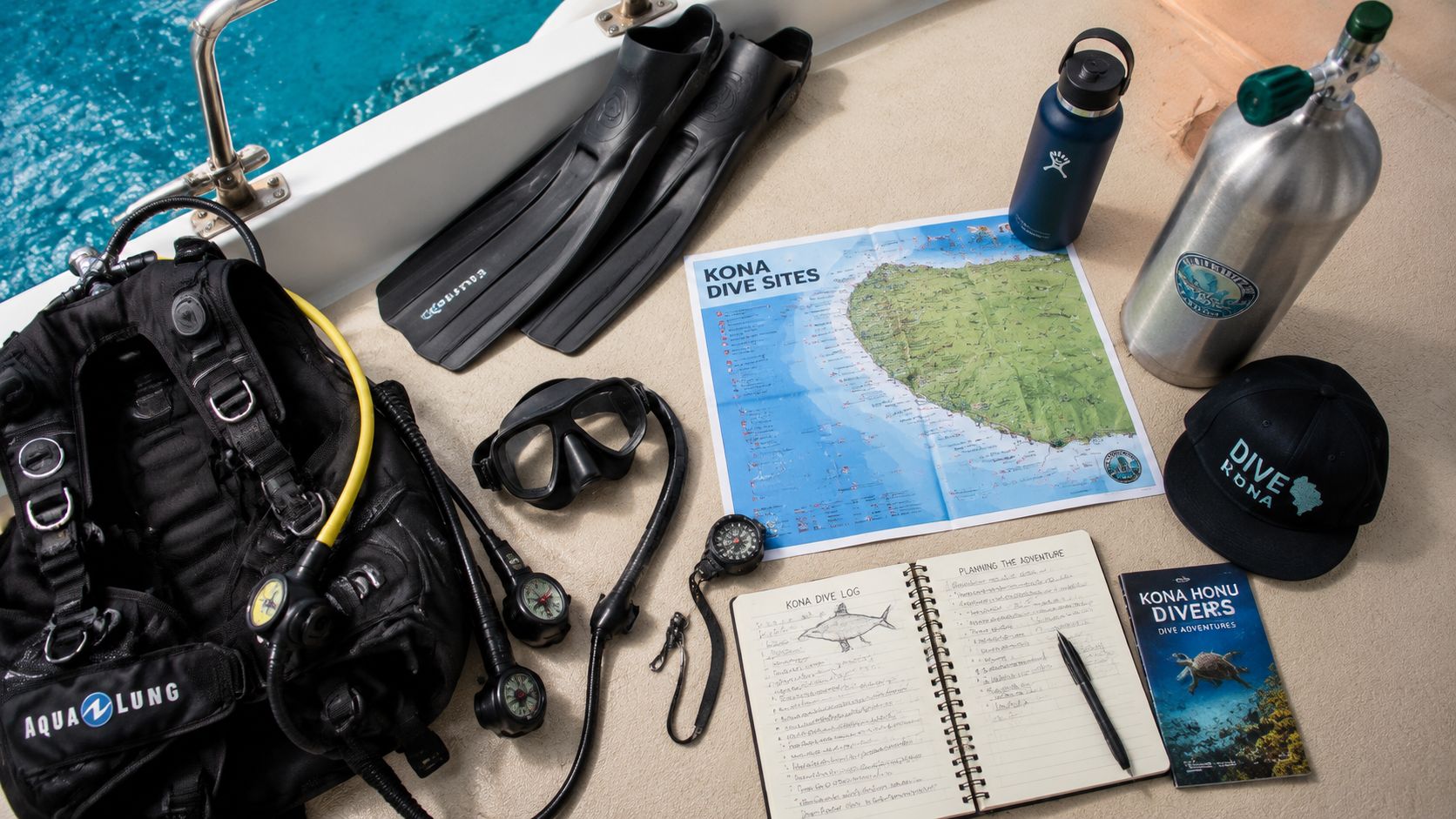
What to look for before you book
I'd keep the checklist practical.
- Boat fit matters: A comfortable boat day changes the whole trip, especially if you're doing multiple charters.
- Crew judgment matters more: The right crew doesn't force a famous site on a marginal day.
- Gear quality matters if you're renting: Good rental gear reduces friction and keeps your attention on the dive.
- Trip menu matters: You want one operation that can cover daytime reefs, manta, courses, and advanced options without making you piece the week together from scratch.
That's where Kona Honu Divers fits naturally for many visitors. They offer boat-based Big Island scuba diving, guided manta trips, blackwater dives, courses, and standard reef charters from Kailua-Kona, which makes trip planning easier if you want one operator to handle several different kinds of dives.
Book with the plan, not with the hype
The right booking sequence is usually simple:
- Pick your trip dates.
- Decide whether you're reef-first, manta-first, or advanced-profile first.
- Leave some room for conditions.
- Book enough diving to settle in, not just one headline night.
If you're ready to plan a trip that matches your skill level, interests, and the season you're visiting, Kona Honu Divers is a straightforward place to start. Browse the schedule, compare tour types, and build a Kona dive week that actually fits the way you like to dive.