
Hawaii hosts over 1.5 million scuba dives annually and has more than 215 licensed dive shops, but the question most divers are really asking isn't whether scuba is big here. It's why so much of that attention keeps circling back to Kona on the Big Island. The short answer is that diving Kona Big Island isn't one thing. It's a set of very different experiences, and the smart way to plan a trip is to choose the right one for your skill level, budget, and appetite for adventure.
A lot of travel content flattens Kona into a generic highlight reel. Mantas. Lava tubes. Clear water. All true. Not enough. A shore diver, a first-time boat diver, a night manta diver, and a blackwater diver are not signing up for the same day, and they shouldn't plan the same way.
Why Kona is a World-Class Scuba Diving Destination
Visibility past 100 feet and water in the mid-70s to around 80°F change the whole trip before you even talk about specific sites. Kona gives divers a rare mix of comfort, clarity, and variety, which is why so many visitors end up doing more than one kind of dive while they are here. If you want a closer look at the local conditions and what sets this coast apart, Kona Honu Divers explains what makes diving in Kona different.
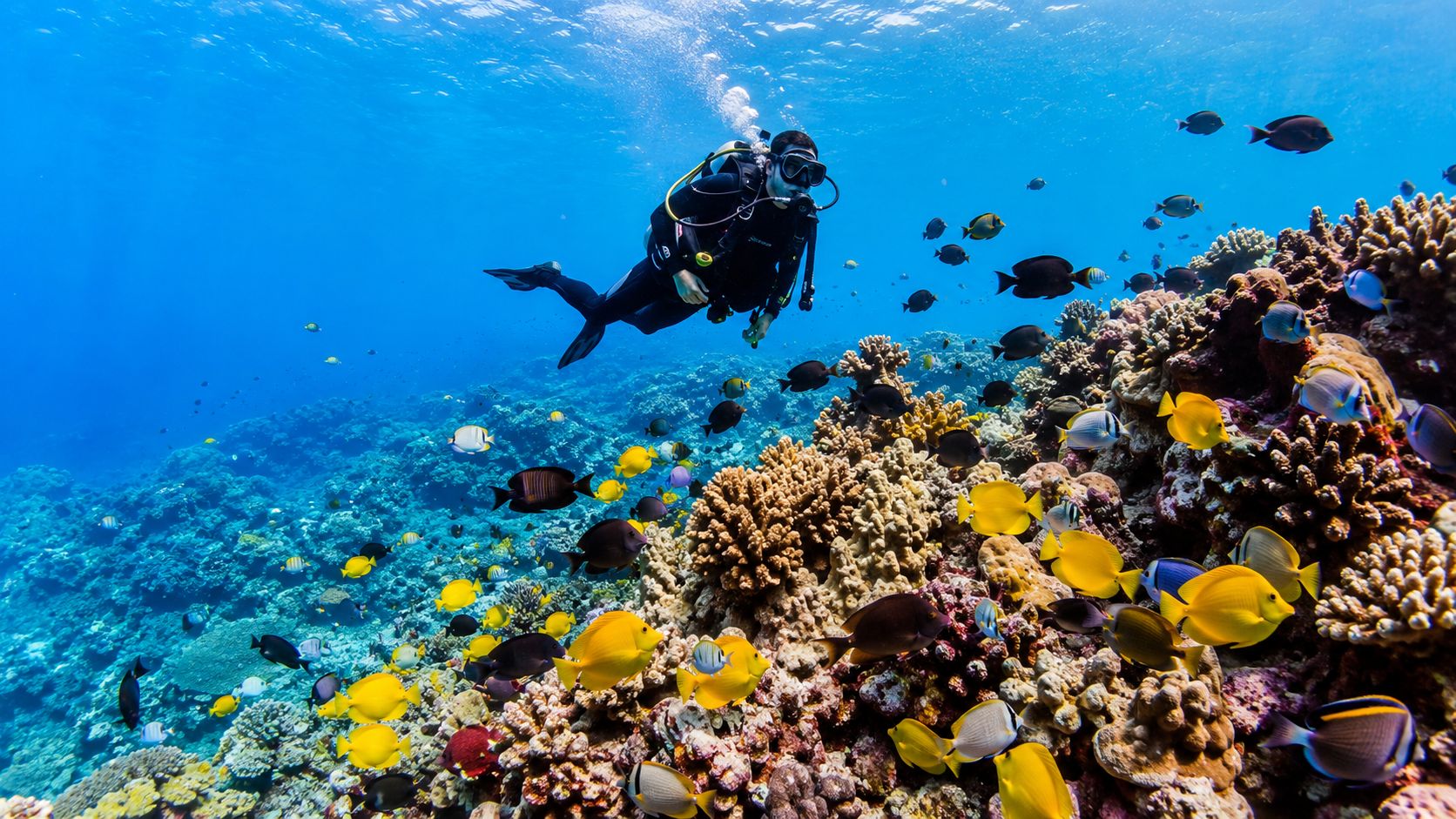
From a working diver's perspective, Kona's biggest advantage is consistency. The leeward coast is protected from the rougher conditions that hit other parts of the island, so operators can run a wide range of trips more reliably. That matters if you are choosing between a simple two-tank morning, a manta night dive, or a more specialized outing. A destination earns “world-class” status when it supports all three well, not just when it has one famous animal encounter.
The underwater terrain helps just as much as the weather. Kona is built on volcanic geology, so dives here have shape and structure. You get lava fingers, arches, caverns, steep drop-offs, and reef systems that feel different from one mooring to the next. For newer divers, that usually means easier orientation and less stress in clear water. For experienced divers, it means repeat dives stay interesting because the topography keeps changing.
Marine life here also feels local, not interchangeable. Hawaii's endemic species give Kona dives their own identity, and that shows up on ordinary day charters, not only on headline dives. You can spend the morning on a calm reef with excellent visibility, then choose a completely different product at night if you want something more dramatic.
That range is the central point. Kona is not one generic scuba destination. It is one of the few places where a newly certified diver, a vacation diver who wants a famous night experience, and an advanced diver looking for something unusual can all find a trip that fits. Operators such as Kona Honu Divers build around that reality, offering separate experiences rather than treating every diver like they want the same boat day.
Kona's Signature Dives You Cannot Miss
If you only know Kona by reputation, you probably know it for two dives. That reputation is earned. The manta night dive and the blackwater dive are not minor variations on regular reef diving. They are separate products with separate demands, and each one attracts a different kind of diver.
The manta dive is the crowd favorite. The blackwater dive is the one experienced divers talk about for years.
The manta night dive
The Kona night manta ray dive is a unique local innovation with high success rates year-round, and summer is the peak season when surge is lower and manta numbers are highest, according to DAN's Kona diving feature. The basic setup is simple. Divers settle in and lights draw plankton into the water column. Mantas then loop, glide, and barrel roll through the beams as they feed.
When people say this dive is unforgettable, they usually mean the perspective. You are stationary. The mantas do the moving. That changes the whole emotional feel of the dive. Instead of chasing an animal, you become part of a feeding station and the show unfolds overhead.
For this experience, the manta ray night swim and dive at Garden Eel Cove is the one I'd point divers toward first because Garden Eel Cove is the superior choice. Its protected location usually gives a better viewing setup and better reef structure around the site than more exposed alternatives.
What works well for the manta dive:
- Divers comfortable at night: You don't need to be an expert, but you should already feel calm after dark.
- Trip planners seeking a signature experience: This is the dive non-divers in your group will understand instantly.
- Photographers who can manage light discipline: Good etiquette matters more than fancy gear here.
What doesn't work:
- Treating it like a reef tour: The point is the interaction, not swimming site to site.
- Booking only on price: Manta logistics, site choice, and group handling matter.
The best manta dives feel organized on the surface and quiet underwater.
The blackwater dive
Blackwater is different in every possible way. It happens offshore, suspended over deep water, and the subject is not a reef at all. DAN describes Kona Blackwater, often called Pelagic Magic, as a front-row seat to the world's largest migration because tiny creatures rise from depths of thousands of feet toward the surface at night in this region's calm seas. For divers who want something rare, Kona Honu's blackwater dive trips are the right category to look at.
This dive appeals to a narrower audience for good reason. It is surreal, dark, technical, and far less intuitive than a normal reef dive. You are watching larval and pelagic life in open ocean, often seeing shapes and motions that don't resemble anything from a daytime dive.
Which one should you choose first
Here's the blunt answer.
| Dive type | Best for | Main appeal | Main challenge |
|---|---|---|---|
| Manta night dive | Certified divers who want a famous Kona experience | Large animals, predictable format, memorable visuals | Night comfort |
| Blackwater dive | Experienced divers who want something unusual | Pelagic migration, rare subjects, open-ocean setting | Buoyancy, darkness, situational control |
If you're visiting Kona for the first time, start with the manta dive. If you already dive often, stay calm in the dark, and want something that doesn't feel like anywhere else, book the blackwater.
Exploring Kona's Diverse Underwater Landscapes
Kona is not a one-dive destination. The famous night dives get the headlines, but daytime diving is where many visitors end up logging most of their underwater time. Independent coverage notes that Kona's leeward geography brings reliably calm conditions and visibility often past 100 feet, and that the reef diving filled with lava tubes and volcanic structures stands on its own as a world-class experience in this Kona reef dive guide.
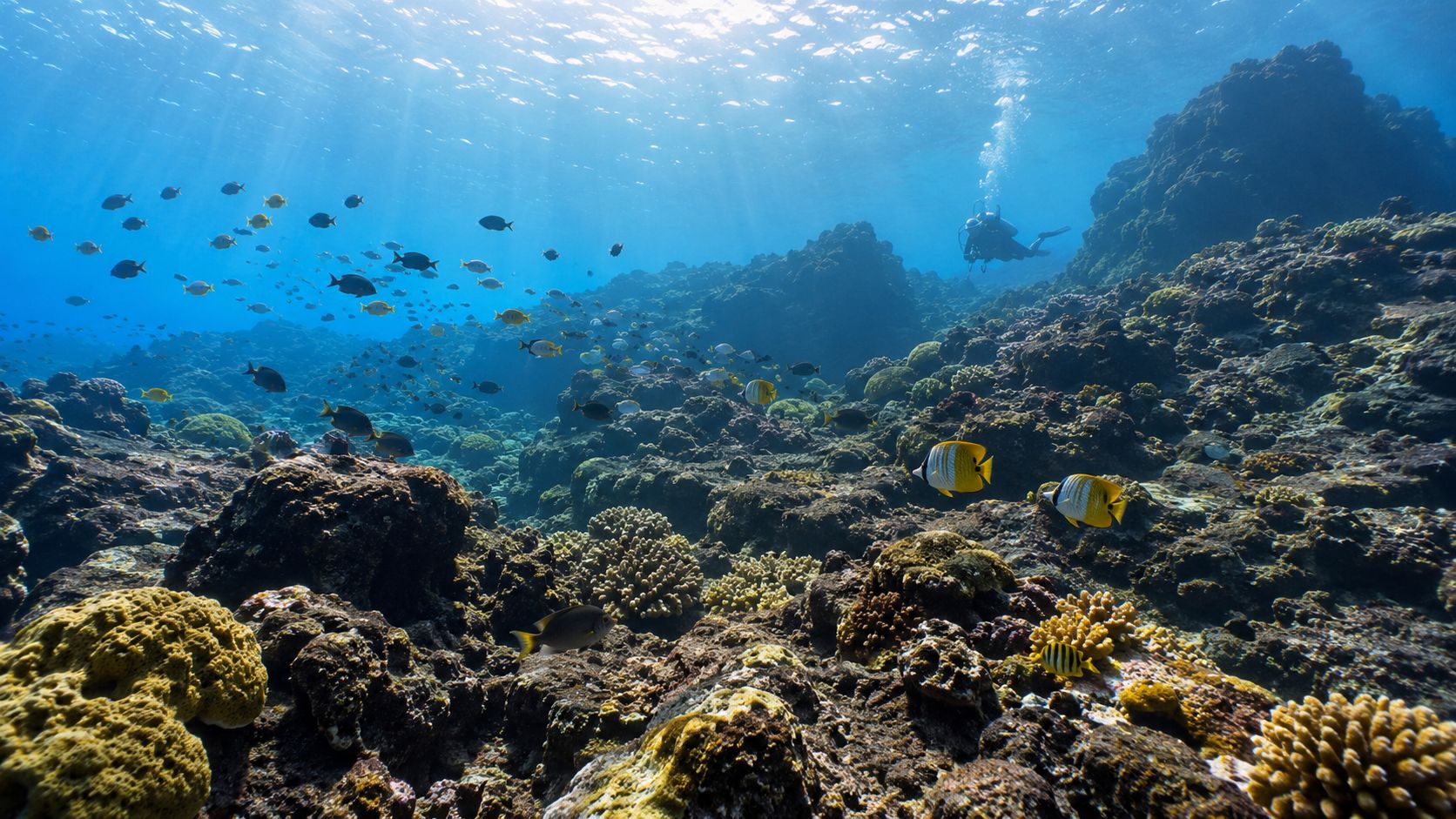
Volcanic structure is the main event
A lot of tropical reef diving blends together after a few trips. Kona usually doesn't. The lava-made topography keeps changing the feel of the dive.
You'll see features such as:
- Lava tubes and swim-throughs: These create the exploration factor many divers want.
- Arches and overhangs: Good for both composition and fish congregation.
- Reef growth on volcanic base: The contrast gives Kona its distinct look.
That's one reason divers who came for mantas often add more daytime dives than they originally planned. The terrain rewards repeat diving.
Not every diver should choose the same entry style
Now, planning gets more practical. If you're deciding between shore and boat diving, the right answer depends less on “best site” and more on how you like to dive.
Shore diving can make sense if you're experienced, comfortable with entries, and want flexibility. Boat diving makes more sense if you want easier access to site variety, less hassle with navigation, and a crew handling logistics.
A diver who loves self-directed shore entries can still have a better vacation on a boat if the goal is to maximize underwater time and minimize planning friction.
For broad trip options, Kona diving tours on the Big Island are the easiest way to see how the experience breaks out by trip type rather than treating all diving as one bucket.
Day diving pairs well with night diving
One of the better Kona itineraries is not “all advanced” or “all easy.” It's mixed. Do a reef morning. Add a manta night. If you've got the experience, layer in a blackwater later in the trip. That sequence lets newer visitors settle in before attempting the more specialized outings.
For divers curious about the deeper end of Kona's night scene, this overview of the Kona black water dive gives the right context before booking.
Planning Your Dive Trip Conditions and Skill Levels
The easiest mistake in Kona is booking by excitement instead of fit. Divers see mantas, blackwater, lava tubes, and advanced long-range charters on the same menu and assume they're choosing between equally suitable options. They aren't.
The blackwater dive is the clearest example. It's Kona's most technically distinctive night dive, with divers tethered over thousands of feet of open ocean and maintaining precise buoyancy in darkness while creatures rise from hundreds to thousands of feet below, as described in Scuba Diving Magazine's guide to diving Hawaii's Big Island. That's not a “why not try it” dive. That's a dive for people who already know how they perform in low-visual-reference conditions.
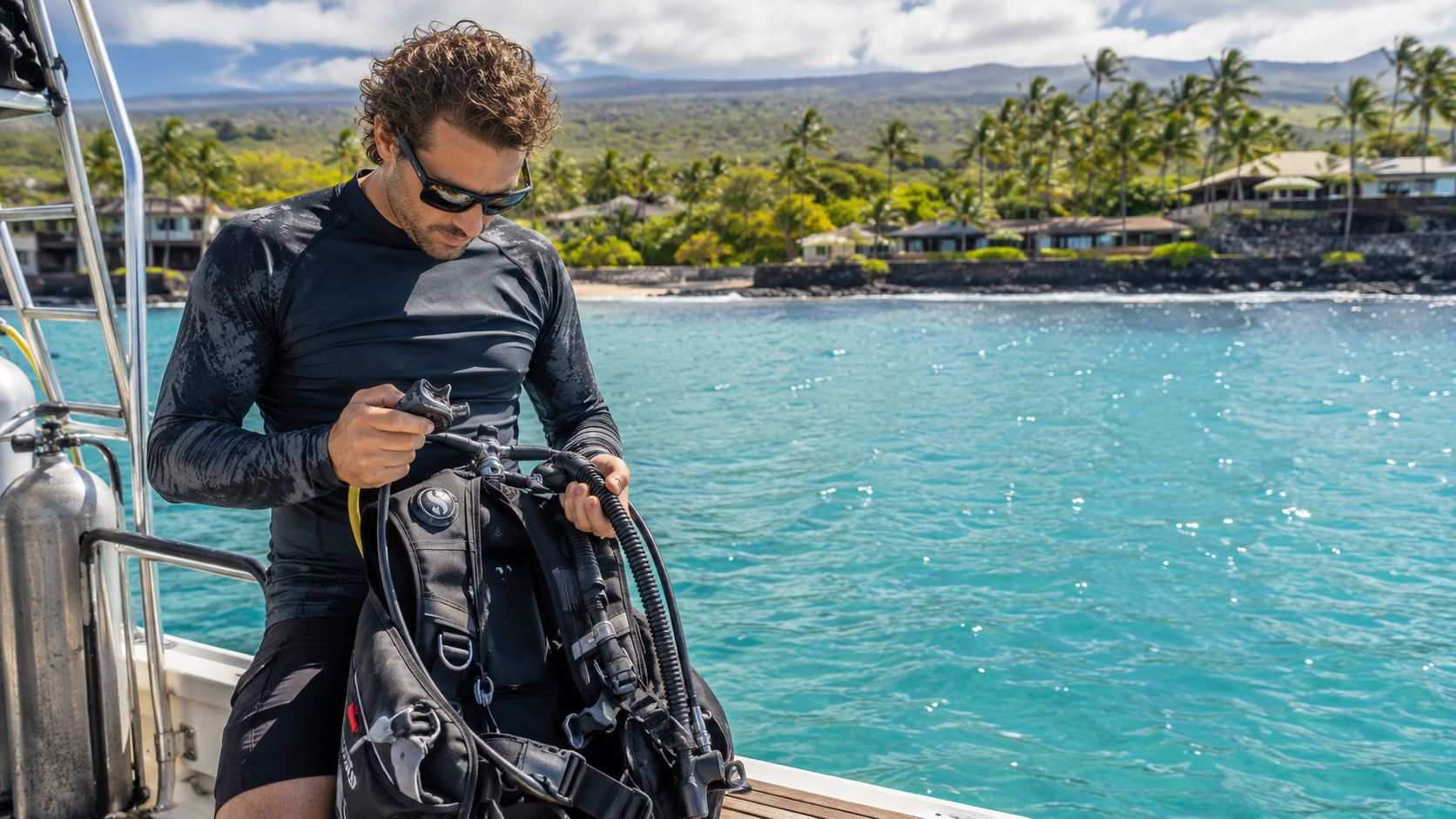
Match the trip to your actual readiness
A quick self-check is more useful than wishful thinking. Before booking, ask yourself:
- Recent dive activity: Have you been in the water lately, or are you rusty?
- Night comfort: Are you calm after dark, or merely curious?
- Buoyancy discipline: Can you hold position cleanly without visual clutter?
- Boat tolerance: Do long rides and surface intervals treat you well?
If you're unsure, this guide on whether diving experience is needed for Big Island dives is worth reading before you lock anything in.
A simple trip-choice framework
Here's the practical version.
| If this sounds like you | Start here |
|---|---|
| Newly certified or returning after time off | Daytime reef dives |
| Comfortable diver wanting a signature Kona memory | Manta night dive |
| Experienced diver seeking challenge and unusual subjects | Blackwater dive |
| Experienced diver wanting more demanding site profiles | Advanced long-range dive trips |
The right progression usually gets better results than trying to do the hardest thing first.
Seasickness can ruin a good plan
Boat diving and night diving don't mix well with untreated motion sickness. If you know you're susceptible, prepare before the trip instead of hoping for the best. Common options include Ship-EEZ Seasickness Patch, Dramamine pills, Bonine pills, Sea Band wristbands, and ginger chews.
A few habits also help:
- Eat lightly: Don't board on an empty stomach, but avoid a heavy meal.
- Hydrate early: Start before check-in, not after symptoms begin.
- Stay topside when needed: Fresh air and a horizon line help many divers.
- Tell the crew: A good crew would rather help early than react later.
Booking Your Adventure with Kona Honu Divers
One of the least discussed parts of diving Kona Big Island is that booking can feel fragmented. Different operators package morning boats, manta dives, intro dives, and specialty charters separately, and that makes apples-to-apples planning harder than it should be. Independent travel coverage points out that guided boat dives can start around $169 and intro dives around $275, which makes operator choice a real decision, not a cosmetic one, in Love Big Island's scuba diving overview.
What a good operator solves
The right operator does more than supply tanks and take you offshore. They reduce bad-fit bookings.
That means they should make it easy to understand:
- Which trips suit newer divers
- Which trips assume recent experience
- How day and night schedules fit together
- What gear, transport, and arrival logistics look like
When that information is unclear, divers either underbook and miss good opportunities or overbook and end up on dives they don't enjoy.
Why trip packaging matters
A polished operation usually handles sequencing better. If a diver wants to do reefs, mantas, and something more advanced, a competent booking team should be able to guide that plan logically instead of treating every charter as a separate sale.
Kona Honu Divers offers day dives, night dives, and blackwater diving from one place, which is useful if you want one operator to manage the moving parts instead of stitching together multiple bookings on your own.
Good booking support is a safety feature. It keeps divers off trips that don't match their comfort level.
What to look for before you confirm
Not every diver needs the same boat or guide style. Ask practical questions.
- Group handling: How are divers grouped by experience?
- Trip clarity: Is the listing specific about who the dive is for?
- Specialty support: Do they regularly run the advanced product you're booking?
- Operational logic: Can they help sequence a multi-day plan without guesswork?
Essential Logistics Pricing Transport and Gear
Once the trip type is settled, most of the remaining stress comes from logistics. Here, divers either make the trip easy on themselves or create unnecessary friction.
Pricing and what it means
The most useful baseline is simple. Independent coverage notes that shore sites like Puakō, 2 Step, and Kealakekua Bay are free or low cost, while guided boat dives start around $169 and intro dives around $275. If you want a practical cost breakdown for Hawaii diving overall, this guide to how expensive scuba diving is in Hawaii is a solid reference point.
That price gap tells you something important. Shore diving saves money, but boat diving buys convenience, site access, and logistics support. Whether that's worth it depends on your confidence level and how much vacation time you want to spend organizing entries, parking, navigation, and carrying gear.
Gear choices that affect your day
For most visitors, the smartest split is to bring personal-fit items and rent the bulkier gear if needed.
A practical packing list:
- Mask and computer: Familiar fit and familiar data matter.
- Exposure protection: Bring what keeps you comfortable, or rent locally.
- Boat basics: Towel, water, sun protection, and dry clothes for after the dive.
- Certification materials: Have your card and relevant credentials ready.
One value point many divers care about is Nitrox. If you're certified for Enriched Air, free Nitrox can meaningfully improve the day by supporting longer no-decompression profiles within normal recreational limits and helping some divers feel less fatigued after repetitive diving. It's not magic, but on a multi-dive trip it can be a worthwhile inclusion.
Transport and timing
For boat charters, transportation is usually straightforward once you know your departure harbor and check-in routine. The important part is not cutting it close. Harbor check-ins, gear setup, waivers, and buddy organization all go better when you arrive early and unhurried.
The smoothest dive days usually start on land. Late arrivals tend to stay rushed all morning.
Frequently Asked Questions About Kona Diving
Is Kona good for diving year-round
Yes. Kona is one of the few places where diving stays consistently attractive throughout the year because of the protected leeward coast, stable temperatures, and generally clear water. Conditions still vary by day and trip type, but there isn't a narrow “only go now” window.
Is diving Kona Big Island only for advanced divers
No. That's one of the biggest misconceptions. Kona has products for very different experience levels. Straightforward reef dives suit many recreational divers, while blackwater and some advanced charters belong to divers with stronger buoyancy control and more confidence in open-ocean or night conditions.
Should I choose shore diving or a boat dive
Choose shore diving if you're experienced, comfortable with entries, and want lower cost with more independence. Choose a boat if you want easier logistics, site selection handled for you, and a simpler vacation day. Most visitors enjoy the trip more when they're honest about how much setup they want to manage themselves.
What marine life should I expect besides mantas
Expect a broad mix rather than one guaranteed checklist. Reef fish, turtles, and eels are part of the normal visual texture of Kona diving. The area's high endemism also means attentive divers often notice species that feel distinct to Hawaii rather than interchangeable with any tropical reef.
Is Nitrox worth using in Kona
If you're certified for it and doing repetitive recreational dives, yes, it often is. The value isn't drama. It's margin. Many divers appreciate the added flexibility on multiday dive schedules, especially when they want to stay comfortable and conservative.
If you want one operator that can help sort the various choices in Kona, from daytime reefs to manta nights to blackwater, take a look at Kona Honu Divers and match the trip to your experience instead of booking by hype alone.