
You're probably in one of two situations right now. Either you're planning your first Big Island dive trip and trying to sort out what's beginner-friendly, or you already dive and you want to know which Kona experiences are worth building a vacation around.
That's a smart question, because diving Kona Big Island isn't one single experience. It's a menu. One day can mean a bright reef with easy entries and calm water. Another can mean sitting on sand after sunset while manta rays loop overhead. For experienced divers, it can even mean drifting in open ocean at night with no reef, no shoreline, and no visual horizon.
What makes Kona different is how many of those experiences sit close together along one coast. Lava geology shapes the underwater terrain. Protected bays make some sites welcoming for newer divers and snorkelers. Offshore water depth creates unusual advanced options that many destinations can't offer.
If you want a broad look at local options before choosing a site or course, the Kona diving overview from Kona Honu Divers is a useful starting point.
Introduction to Diving and Snorkeling Kona
The first thing to understand is that Kona works well for both snorkelers and scuba divers, but they move through the same coastline in very different ways. A snorkeler experiences the reef like looking through a skylight. A diver steps inside the room.
That difference matters when you're planning your trip. If you're traveling with family or a mixed-skill group, some people may want an easy reef snorkel while others want a boat dive or night dive. Kona can accommodate that, but only if you match the activity to the person instead of assuming everyone should book the same thing.
How the coastline helps beginners
The Kona side of the Big Island has many areas protected from rougher conditions, which is one reason newer visitors often start here. Beginners usually care about a few simple things:
- Easy visibility: Clear water lowers stress because you can see the seafloor, your guide, and your buddy.
- Predictable entries: Sandy areas and calmer bays feel much less intimidating than surge-heavy shore breaks.
- Simple marine life viewing: You don't need a deep or technical dive to enjoy reef fish, coral structure, and nighttime plankton activity.
A lot of first-time visitors get confused about certification. Here's the plain-English version. If you're snorkeling, you don't need scuba certification. If you want to do scuba dives, your training level shapes which trips are available to you.
Practical rule: Book the experience that matches your current comfort in the water, not the one that sounds most impressive on paper.
A good way to think about Kona
Think of Kona as a ladder with wide, stable rungs.
You might start with a daytime snorkel. Then move to a standard reef scuba dive. Then try a manta night dive after you're comfortable underwater in low light. Only after that should you consider a blackwater dive, which is a separate category altogether and asks much more from your buoyancy, composure, and situational awareness.
For trip planning, travelers need answers to five questions:
- What are conditions like when I'm visiting?
- Which sites fit my skill level?
- Do I want a reef dive, manta night dive, or blackwater dive?
- What certification do I need?
- Should I bring gear or rent locally?
Those answers get much easier once you understand how Kona's conditions shape everything else.
Overview of Kona Dive Conditions
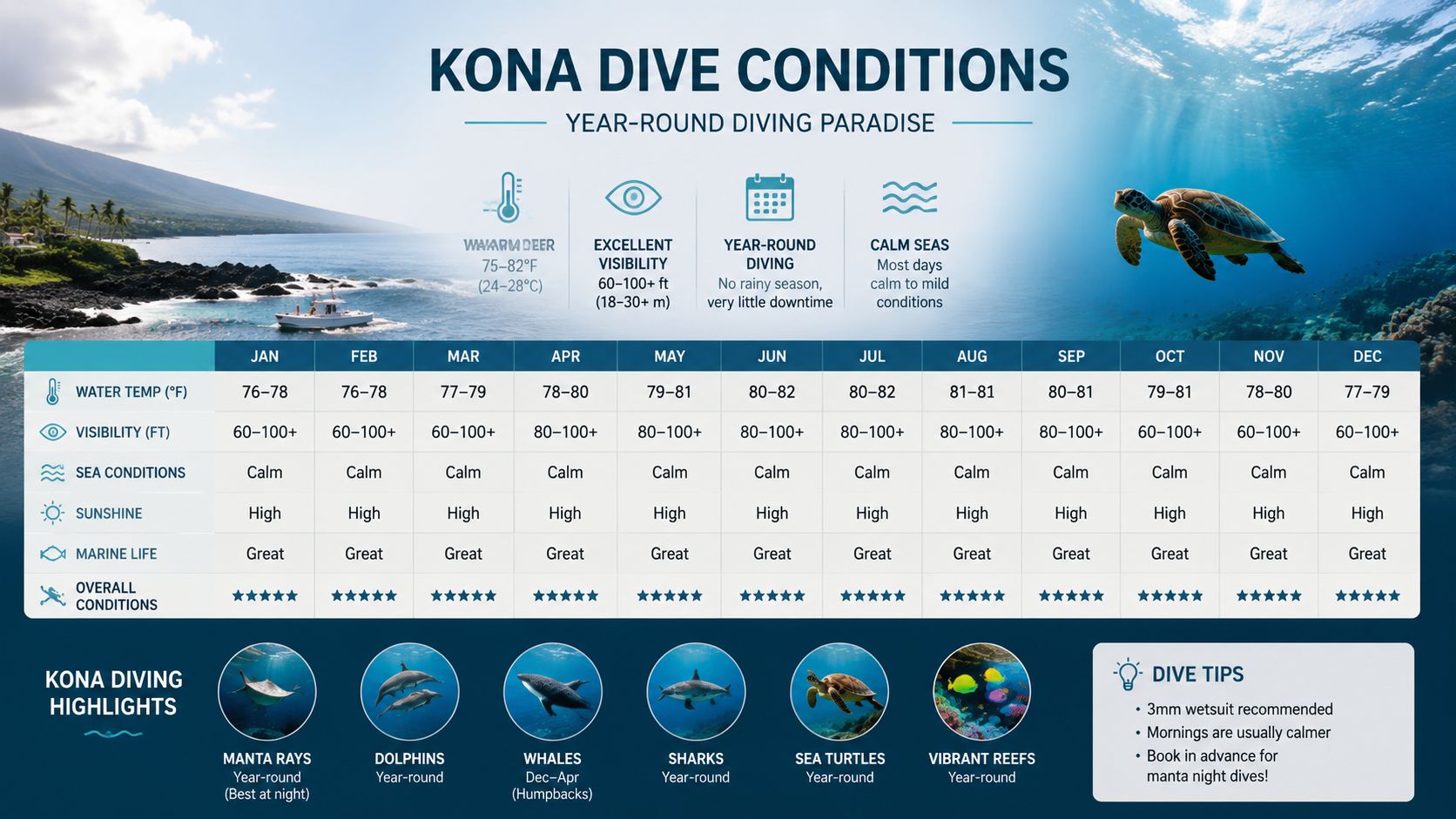
Kona's conditions are easier to understand if you think of the coastline as an underwater calendar. The ocean doesn't give every diver the same version of Kona every month. The same site can feel relaxed on one trip and much more exposed on another.
What visibility feels like in real life
At the famous manta night dive area, local reports describe water clarity averaging 80 to 100 feet, with summer conditions occasionally exceeding 120 feet according to this Hawaii manta dive overview. That kind of clarity changes how the ocean feels. Instead of peering into blue-green haze, you often get a long, open view that makes depth and spacing easier to judge.
For beginners, that usually means less anxiety. For photographers, it means cleaner backgrounds and better light penetration. For snorkelers, it often means the reef feels closer and more vivid from the surface.
How to match conditions to your comfort
If you're choosing dates, focus less on chasing a mythical “perfect week” and more on matching your trip goals to likely conditions. The best season for diving in Kona depends on whether you care most about smooth boat rides, reef visibility, or night diving comfort.
A few practical patterns help:
- If you're new to diving: Prioritize calmer days and simpler boat plans.
- If you're snorkeling with kids: Look for protected areas and flexible scheduling.
- If you're experienced: You may care less about small changes in swell and more about access to advanced sites.
Clear water helps, but calm logistics matter just as much. A short, comfortable ride can shape your whole day more than a few extra feet of visibility.
Why Kona often feels easier than people expect
Kona's west side often offers a more forgiving setup than visitors imagine when they hear “ocean diving in Hawaii.” You're not always dropping into heavy current or deep blue immediately. Many dives begin in a structured, guided way with clear descent points and familiar group positioning.
That's especially useful if you haven't dived in a while. Rusty divers often worry they've “forgotten everything.” In practice, what they usually need is good briefing, manageable conditions, and a site that doesn't punish small mistakes.
Top Dive and Snorkel Sites
Choosing a site in Kona is less about finding the “top” place and more about picking the right fit for your day. Some sites reward patience and buoyancy control. Others are better because they're easy, scenic, and forgiving.
For snorkel planning, a local page on Kealakekua Bay snorkeling helps explain why that area stays on so many itineraries.
Comparison of Kona Dive and Snorkel Sites
| Site | Depth Range | Skill Level | Highlights |
|---|---|---|---|
| Garden Eel Cove | Shallow to moderate | Beginner to advanced | Night manta activity, sandy viewing area, strong choice for underwater viewing |
| Kealakekua Bay | Shallow to moderate | Beginner to intermediate | Coral gardens, clear water, popular for snorkeling and scuba |
| Kahaluʻu Beach | Shallow | Beginner | Easy snorkeling, reef fish, approachable shore experience |
| La Perouse Bay | Moderate | Intermediate to advanced | Lava structure, dramatic terrain, stronger appeal for divers than casual snorkelers |
| Keauhou Bay area | Moderate | Beginner to intermediate | Alternate manta access, busier feel in some sessions |
How to read the table
A common mistake is to treat depth as the only indicator of difficulty. It isn't. A shallow site can still be awkward if the entry is rough or the crowding makes new snorkelers nervous. A deeper boat dive can feel easier if the descent is controlled and the bottom is stable.
Garden Eel Cove stands out because of how purpose-built it feels for night viewing. Kealakekua Bay wins people over during the day because the reef scenery is easy to appreciate even if you're not an advanced diver. Kahaluʻu Beach is often the simpler choice when you want low-stakes snorkeling without making the whole day revolve around a boat.
Site-by-site notes
- Garden Eel Cove: This is the famous manta setting for many visitors. It's known more for the night experience than for checking off a generic reef dive.
- Kealakekua Bay: Great for travelers who want a classic “clear water and reef life” memory. It works well for mixed groups.
- Kahaluʻu Beach: Good for travelers who want a simple snorkel session close to shore.
- La Perouse Bay: Better if underwater terrain excites you as much as marine life.
- Keauhou Bay area: Worth knowing as an alternate manta region, though some divers prefer the viewing setup farther north.
If you only have a few water days, don't stack every iconic site back to back. Mix one big experience with one easier day so you stay fresh and enjoy each one more.
Signature Underwater Experiences
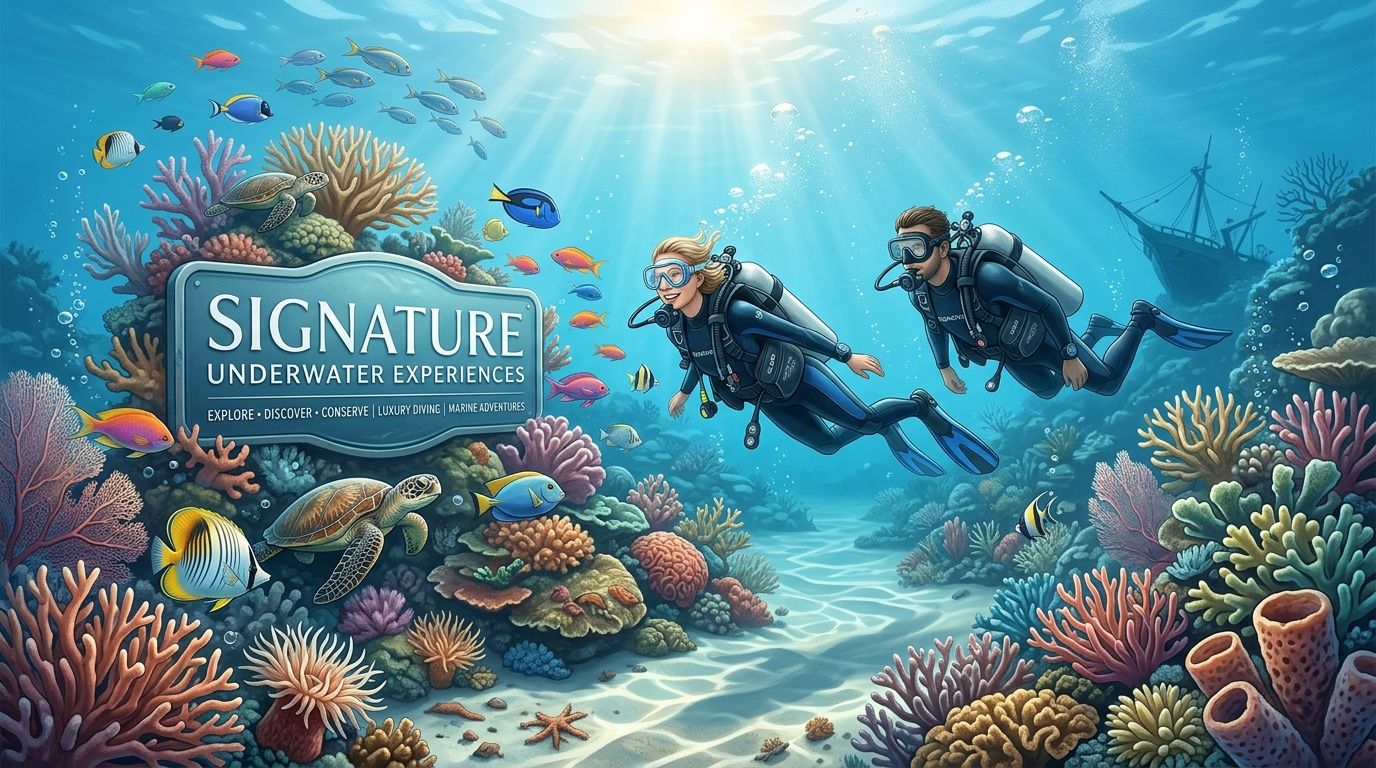
Some destinations have good reef diving. Kona has that, but what people remember most are the night experiences. They feel less like sightseeing and more like stepping into a natural theater.
The manta night dive at Garden Eel Cove
For many divers, this is the signature memory of diving Kona Big Island. At Garden Eel Cove manta tours, the site is described as an amphitheater-style setting with 85 to 90% sighting success and up to 23 rays per session. That amphitheater shape matters. It creates a more organized viewing pattern, so divers can stay settled while mantas move overhead through the light.
Garden Eel Cove is also widely regarded as the stronger choice because the bay is protected, the viewing area is better, and the reefs are healthier than the alternative site in Keauhou Bay, as described in this Garden Eel Cove dive feature.
The setup is simple once you understand it. Divers descend onto a sandy area and look upward while lights attract plankton. The plankton draws in the mantas. It works a bit like putting a porch light on during a summer evening and watching insects gather, except here the result is giant rays barrel-rolling through the beam.
If you want a fuller look at how the experience works, this guide to manta ray diving in Hawaii is a helpful companion.
The blackwater dive offshore
Blackwater diving is different enough that it shouldn't be treated like “just another night dive.” Offshore operations use a weighted downline, and divers descend to about 50 feet in open water to observe pelagic migration, according to this Kona blackwater description. There's no reef to orient you. No bottom to reassure you. Just the water column, your buoyancy, the tether system, and whatever drifts upward through the light.
That's why experienced divers call it mind-bending. Larval fish, squid, and gelatinous drifters can appear from darkness with no warning. The scene feels less like a reef and more like floating beside a slow-moving conveyor belt from the deep ocean.
Stay mentally anchored to the system, not the scenery. In blackwater, your reference points are the line, your buoyancy, your light, and your breathing rhythm.
Certification and Skills Requirements
Certification is the filter that keeps the right diver in the right experience.
Kona offers a mix of dives that can sound similar on a booking page but feel very different once you enter the water. A manta night dive is often a realistic goal for a newer certified diver. Blackwater is a different category. It asks for the kind of comfort that usually comes from repetition, not enthusiasm.
If you are still at the beginning, the Open Water scuba certification course in Kona shows what skills you are expected to have before joining entry-level boat dives.
What you need for manta dives
For the manta night dive, the usual starting point is Open Water certification. The reason is simple. You need enough control to descend calmly, stay in position near the bottom, monitor your air, and avoid drifting into other divers or the animals.
A good way to picture the skill level is this: you do not need advanced technique, but you do need the scuba equivalent of steady handwriting. If your buoyancy is jumpy, every small correction turns into another correction after that. On a manta dive, that can stir up sand, crowd the viewing area, and make the experience harder for everyone.
You also need the discipline to follow wildlife rules. Mantas are observed, not touched.
For beginners, operator choice matters here more than many guides explain. Small-boat crews often make this learning curve easier. With six-diver limits, guides can spot buoyancy problems quickly, give simple corrections, and keep the group organized without the rushed feeling that sometimes comes with larger boats. If you are certified but still building confidence, that extra attention can matter as much as the site itself.
Why blackwater requires more experience
Blackwater diving calls for a broader skill base. You are in open ocean at night with no reef, no bottom in view, and fewer visual reference points. It works a bit like trying to hold a ladder steady while floating in a dark pool. The task is manageable if your body position and breathing are already second nature. It feels much harder if you are still actively thinking through every step.
Divers who do well on blackwater usually already have three habits:
- Stable buoyancy: They can hold depth without constant finning or inflating.
- Comfort in darkness: Night conditions change their focus, but not their judgment.
- Mental spare capacity: They can track the line, their computer, their buddy, and their breathing rhythm at the same time.
That last point is the one newer divers often underestimate. Blackwater is not physically intense in the way current diving can be. The challenge is mental workload. If ordinary night diving still feels busy, blackwater will probably feel busier than fun.
A sensible progression
The strongest path is gradual.
Start with Open Water. Add a few straightforward reef dives. Try a manta night dive once your buoyancy feels predictable. Build experience across several days, not just one dramatic vacation dive. Then consider blackwater after low-light diving feels familiar.
This is another place where small-boat operators can offer hidden value. Free nitrox can support longer no-decompression time for certified nitrox divers on daytime trips, which means more practice and more observation time before you move into advanced experiences. Local guides also know which conditions are forgiving for newer divers and which ones are better saved for later.
That progression usually leads to better judgment, calmer dives, and a trip that feels exciting for the right reasons.
Gear Checklist and Rental Options
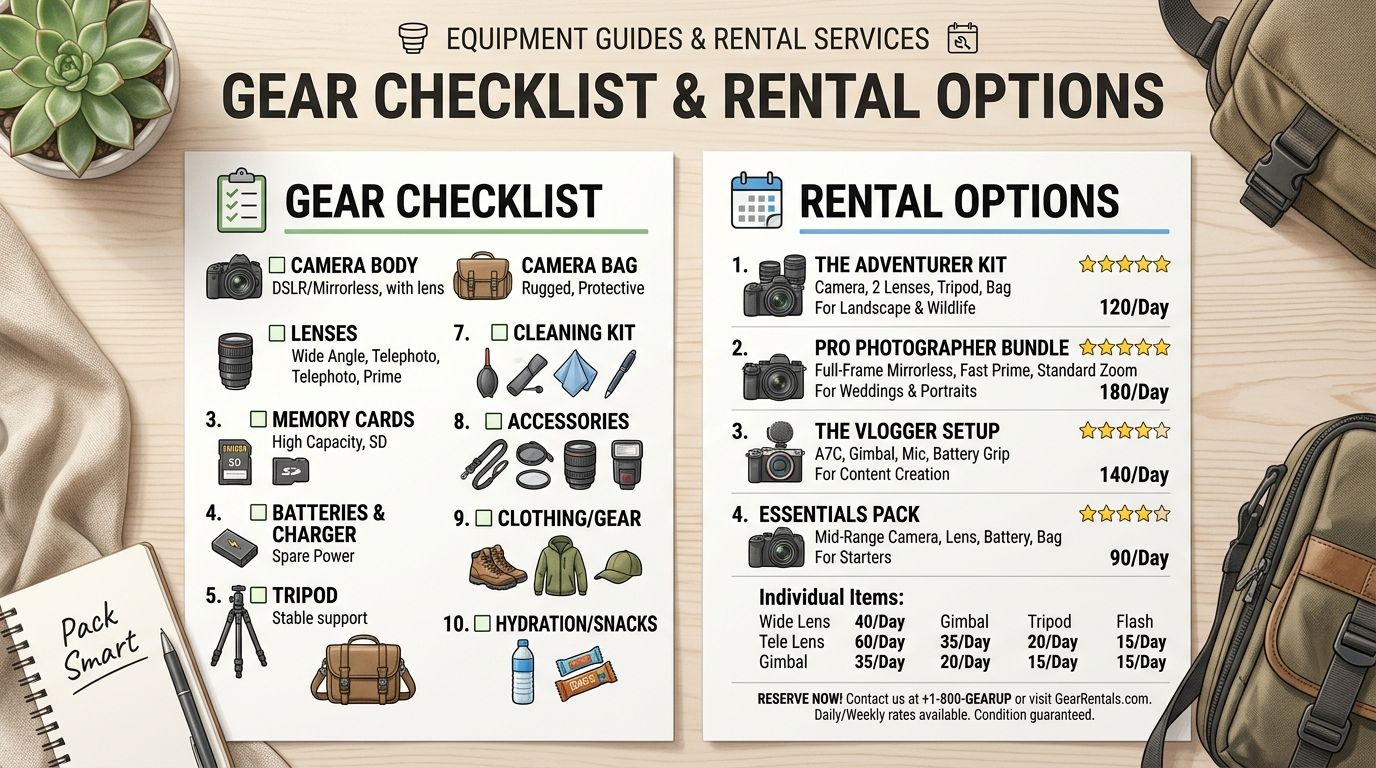
A good Kona packing plan starts with one simple question: what gear helps you feel calm and familiar once you hit the water? Warm water and easy boat access tempt people to pack light, but the smarter approach is to separate gear by purpose. Bring the items that affect fit and confidence. Rent the bulky items that travel badly. Then add a short specialty list for dives that change the workload, such as manta night dives or blackwater.
Gear worth bringing yourself
Personal gear works like your car's seat and mirrors. If the fit is off, you notice it the whole time.
Start with the pieces that directly affect comfort and awareness:
- Mask: A mask that already seals on your face removes one of the fastest ways to turn an easy dive into an annoying one.
- Dive computer: Your own computer means you already know the screen layout, alerts, and button logic.
- Exposure basics: If you know the wetsuit thickness or hooded vest that keeps you comfortable, bring it.
- Small save-a-dive items: Spare mask strap, fin strap, mouthpiece, and defog take up very little room and solve common problems fast.
If you are unsure what belongs in the "bring it" category, use this test: if poor fit would distract you for the whole dive, pack your own.
Gear that usually makes sense to rent
Rental gear is often the better choice for the large, heavy pieces, especially on a short Kona trip. BCDs, regulators, tanks, and weights are the standard examples. Many divers also rent fins if they do not mind a little adjustment time on the first dive.
Lights usually belong in this rental group too, especially for travelers who do not regularly night dive at home. The key question is not just "Can I rent it?" but "Will the operator set it up in a way that matches the dive plan?" That matters more on specialty trips than many beginners expect.
One operator relevant to this topic is Kona Honu Divers dive tours, which include standard boat dives and specialty charters. Small-boat operators can offer practical value that generic gear advice often misses. Free nitrox for certified divers can support longer daytime bottom time, six-person limits usually make pre-dive gear checks less rushed, and local guides often spot setup problems before they become underwater distractions.
That last point matters. A crowded boat can make rental gear feel random. A smaller boat with attentive crew often makes the same rental process feel much more controlled.
Specialty extras people forget
Specialty dives add a second layer to your checklist. The goal is not to carry more equipment. The goal is to carry the right extra item for the specific job.
- For manta night dives: Pack a dry shirt or warm layer for the ride back. You may feel colder on the boat than you did underwater.
- For blackwater: Ask what light, lanyard, and attachment setup the crew expects before trip day. Blackwater is a poor place to improvise clips and cords.
- For cameras: Keep your rig simple if you are still building comfort with buoyancy, darkness, or task loading.
- For sun protection: Apply reef-safe sunscreen well before the dive and cover up on the boat between entries.
Your gear should lower workload, not increase it. If a camera, extra clip, or unfamiliar setup makes you fuss on the surface, leave it off for the first dive.
Booking Strategies and Safety Tips
You book a Kona trip, arrive excited, and then spend the morning squeezed between too many tanks, trying to hear a briefing over engine noise. The reef may still be good, but the day feels hurried before you even giant stride in. Booking well helps you avoid that problem.
The simplest way to choose an operator is to start with the kind of dive day you want, then work backward. A beginner who wants calm coaching needs something different from a certified nitrox diver trying to stretch daytime bottom time. Price matters, but it is only one piece of the picture. Boat size, group size, guide attention, and gas options affect how the day feels underwater.
A small-boat operator can change the whole rhythm of the trip. It works like choosing a small class instead of a packed lecture hall. Questions get answered faster. Gear issues are easier to catch. Entries and exits feel more orderly. For many divers, that difference is worth more than a small gap in headline price.
How to compare operators before you book
| Feature | Standard tours | Kona Honu Divers |
|---|---|---|
| Group size | Often larger groups | Six-person limits |
| Dive pace | Can feel tighter on the clock | Longer-feeling dives with more personal pacing |
| Nitrox | Sometimes extra or not offered | Free nitrox for certified divers |
| Guide style | Broader group management | More direct local guidance and easier communication |
Those details are not luxury add-ons. They shape safety and comfort in practical ways. Free nitrox can help certified divers get more out of daytime profiles. Smaller groups usually mean less waiting on the surface and less confusion during briefings. Local guides often notice small problems early, like a loose strap, an awkward weight setup, or a diver who looks confident on paper but uneasy in the water.
Safety thinking for advanced experiences
Specialty dives deserve a second layer of honesty during booking. Blackwater is the clearest example. It places you in open ocean at night with fewer visual reference points, so comfort with darkness and orientation matters just as much as logged experience. Holualoa Inn's guide to diving on the Big Island notes that blackwater diving involves open-ocean night conditions that can feel disorienting even for experienced divers.
That is why the right question is not “Can I technically sign up?” The better question is “Will I stay calm and task-focused if the environment feels unfamiliar?”
Use these booking habits to lower risk and improve the trip:
- Book advanced or weather-sensitive dives early in your trip. You leave room for rescheduling if ocean conditions change.
- Ask how the operator screens divers for specialty charters. Good operators want a fit match, not just a full boat.
- Leave recovery space between demanding dives. Two challenging experiences in a row can turn excitement into fatigue.
- Judge the trip by your weakest skill. If your air use is solid but your night-diving comfort is shaky, book accordingly.
- Confirm what is included. Ask about lights, exposure protection, nitrox policies, and whether guide ratios change at night.
One more point catches beginners off guard. The safest booking choice is not always the most famous or the biggest operation. In Kona, smaller boats can offer real advantages that mainstream roundups often miss. More room per diver, free nitrox for those certified to use it, longer bottom time, and guides who know local conditions closely can make a demanding dive feel more controlled.
If you want one place to sort through reef dives, manta trips, certification options, and advanced outings, Kona Honu Divers is a practical place to start. You can compare day diving with specialty experiences, check trip fit against your certification level, and choose an option that matches the kind of Kona underwater trip you actually want.