
You're probably in the same spot a lot of divers hit when they start planning Hawaiʻi. You know you want clear water, memorable marine life, and dives that feel different from the last trip. You also don't want to burn vacation days on guesswork, crowded boats, or sites that only sound good online.
That's where diving the Kona Big Island stands apart. This coast gives you easy reef diving, dramatic lava structure, one of the world's most dependable manta encounters, and a true blackwater dive that serious divers travel across oceans to do. If you plan it right, you can stack a trip with relaxed daytime reef dives, a manta night dive, and an advanced open-ocean experience in the same visit.
Embark on Your Ultimate Kona Diving Adventure
A lot of guests arrive with one big goal and one hidden concern. The goal is simple. They want one trip that feels worth the flight. The concern is whether Kona will deliver once they're standing on the boat in full gear.
It usually clicks fast. The surface looks calm, the water is that deep Pacific blue people hope for, and the site options aren't repetitive. One day you're dropping onto reef and lava topography. Another night you're on the bottom looking up while manta rays bank through the lights. If you're an experienced diver, you can add a blackwater dive and get a completely different kind of immersion in the same week.
For divers researching diving Kona Big Island, the biggest mistake is treating it like a one-note destination. It isn't. Kona works because it supports several kinds of trips well, from easy charter diving to highly specialized night dives.
For a sense of the local operation and conditions, start with Kona diving resources from Kona Honu Divers.
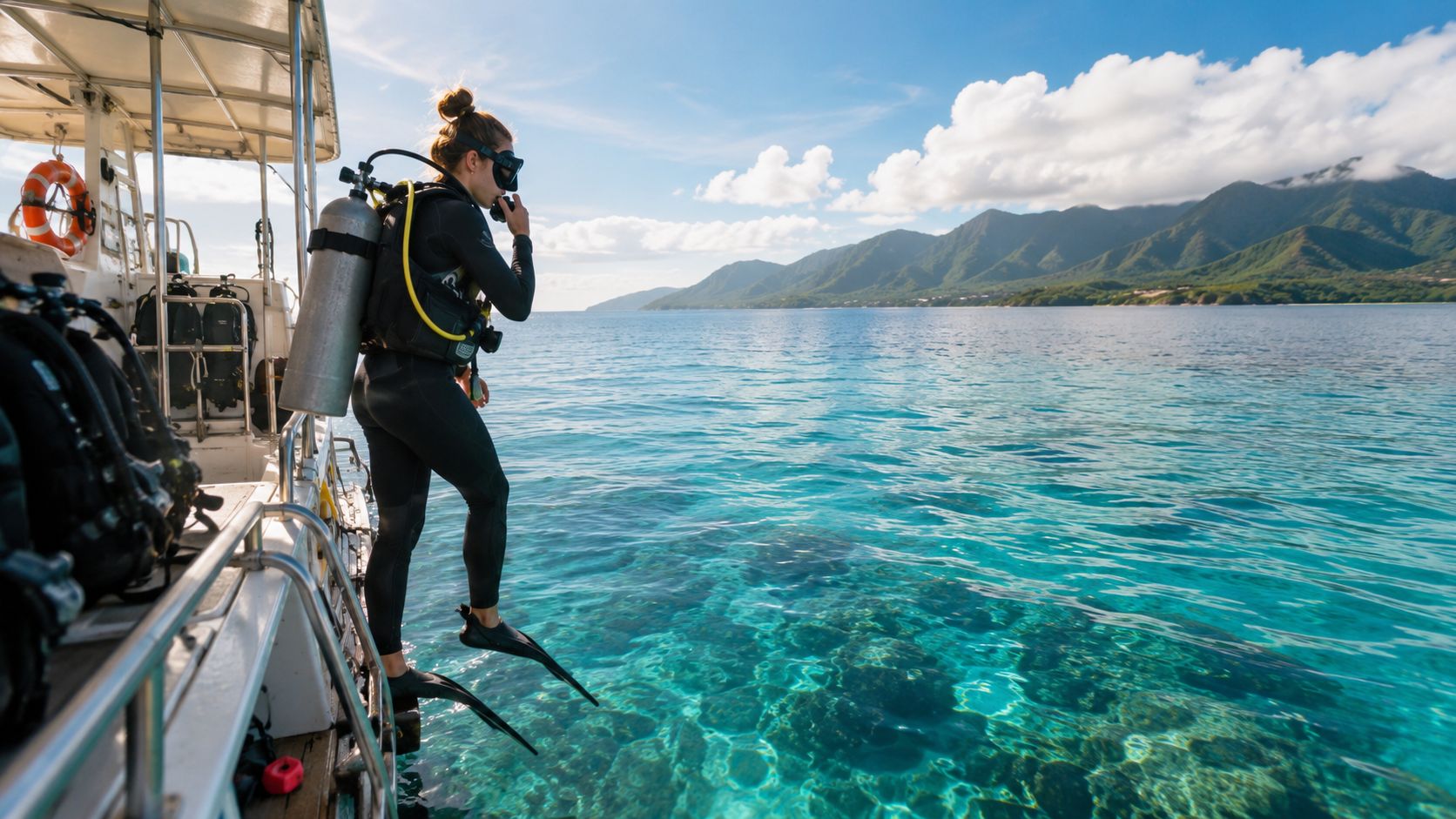
What makes this trip different
Kona rewards divers who want variety without constant logistics changes. You're not driving all over the island to piece together good diving. Most visitors can base themselves on the west side and access a wide spread of experiences from there.
Three types of divers usually get the most out of Kona:
- Newer certified divers who want forgiving conditions, strong briefings, and wildlife-focused dives.
- Returning vacation divers who want one signature night dive and several easy daytime charters.
- Advanced divers who want to mix reef structure with blackwater or longer-range diving.
Practical rule: Book your signature dives first, then build the rest of the week around them.
That order matters. Manta and blackwater are the dives people remember most. Standard daytime charters are easier to fit in around them.
What a solid Kona dive plan looks like
A well-built trip usually balances effort and recovery. Night diving is exciting, but it can turn into fatigue if you schedule every high-focus dive back to back.
A practical approach is:
- Start with a daytime reef charter to settle in, check weighting, and get comfortable in local conditions.
- Add the manta night dive early so you have flexibility later in the trip.
- Save blackwater for when you're rested and fully dialed with buoyancy and situational awareness.
That's the difference between just visiting Kona and diving it properly.
Why Kona is a World-Class Diving Destination
Step off the boat on a calm Kona morning, drop onto a lava shelf, and within minutes you can be swimming past hard reef, lava rock, and open blue water all on the same dive. That range is what gives Kona its reputation. From an operator's side, it also makes trip planning far more reliable than in destinations where one or two sites carry the whole week.
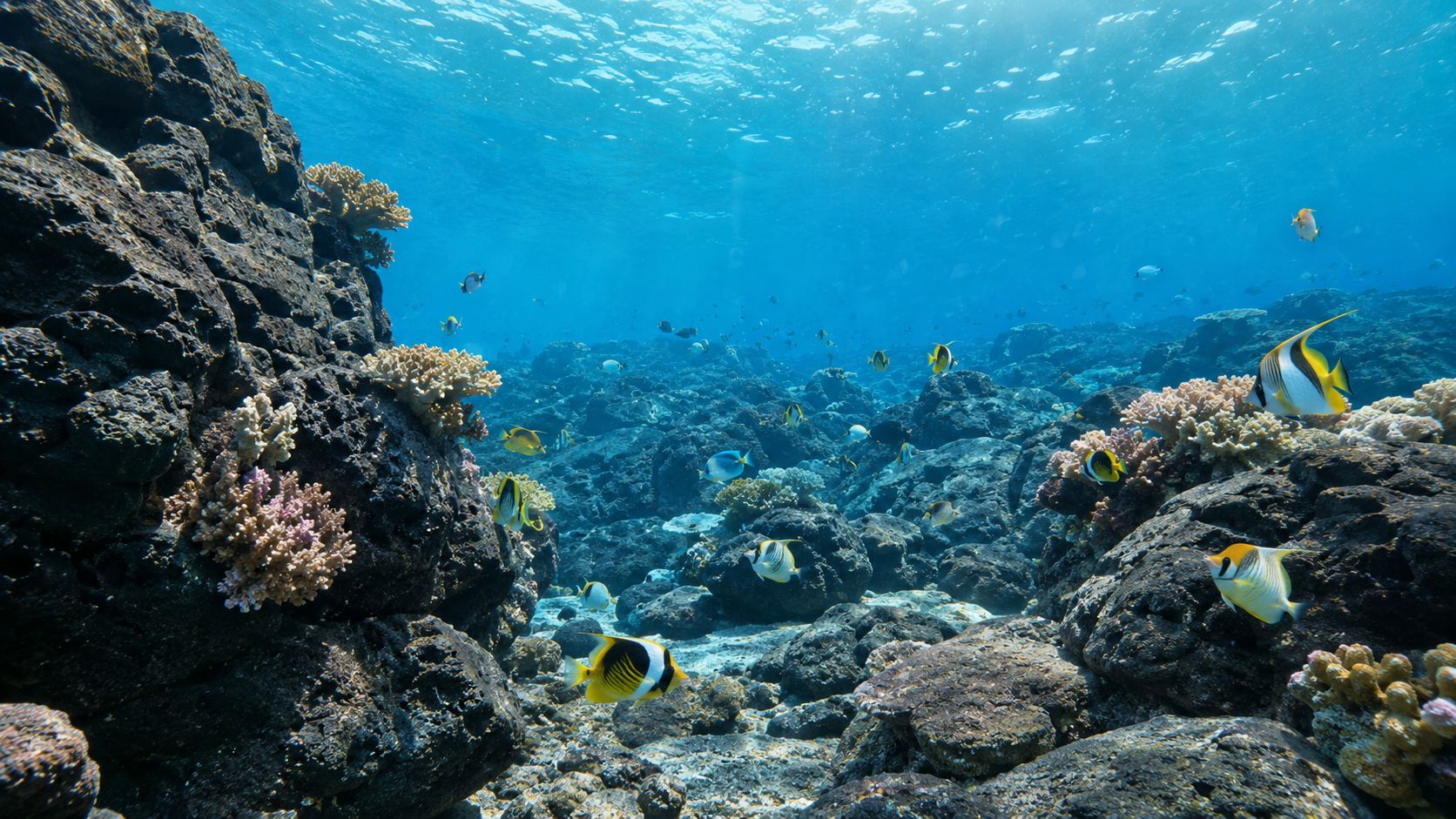
The geography does the heavy lifting
The west side of Hawaiʻi Island is protected by massive volcanic slopes, and that shapes the diving in practical ways. Boats often have more workable site options. Surge and wind exposure are easier to manage than in many open-coast destinations. For divers, that usually means more days where the plan holds together and fewer days lost to marginal conditions.
Kona also has unusual site density. You are not running long overland transfers or rebuilding the trip every morning. A single base on the Kona coast gives access to a wide spread of reef profiles, lava formations, and wildlife encounters, which is a big part of what makes diving in Kona unique and is also reflected in Big Island diving conditions and site diversity.
That matters more than visitors sometimes realize.
A destination becomes world-class when it serves different diver types well on the same coastline. Kona does that. Newer certified divers can have comfortable reef dives with clear structure and straightforward briefings. Experienced divers can add sites with stronger topography, more exposure to blue water, or specialized night diving without changing islands or operators.
What works better in Kona than many places
Volcanic diving can be dramatic but sparse. Tropical reef diving can be colorful but flat. Kona often gives you both on the same charter.
Site planning here usually balances three things:
- Lava structure: Tubes, arches, caverns, and old flow patterns give the dive shape and make each site feel distinct underwater.
- Healthy reef life: Coral growth, endemic fish, eels, and turtles keep the dives biologically interesting, not just scenic.
- Blue water access: Pelagic life can show up even on standard reef routes because the offshore drop-offs are never far away.
From a divemaster's perspective, that mix creates real flexibility. If the group has newer divers, it is easy to choose sites with simple entries, protected terrain, and plenty to see at modest depth. If the boat is full of experienced divers, it is just as easy to build the day around stronger structure, longer profiles, or more exposed locations.
Why divers keep coming back
Kona is famous for manta rays and blackwater, but repeat visitors do not return only for those marquee dives. They come back because the daytime diving holds up over several days. One morning can be lava architecture and turtles. The next can be reef fish, eels, and a completely different bottom profile a short boat ride away.
That consistency is a major reason Kona Honu Divers books so many multi-day itineraries. Guests are not just checking off one famous dive. They are building a full week around a coastline that keeps producing solid, varied diving with sensible logistics.
Kona's Unmissable Signature Dives
Kona has plenty of strong reef diving, but two experiences define the destination for many divers. The first is the manta ray night dive. The second is blackwater.
They're completely different. One is stable, communal, and spectacle-driven. The other is quiet, technical in feel, and built around observation in open water at night. If you only have room for a couple of marquee dives, these are the ones people plan around.
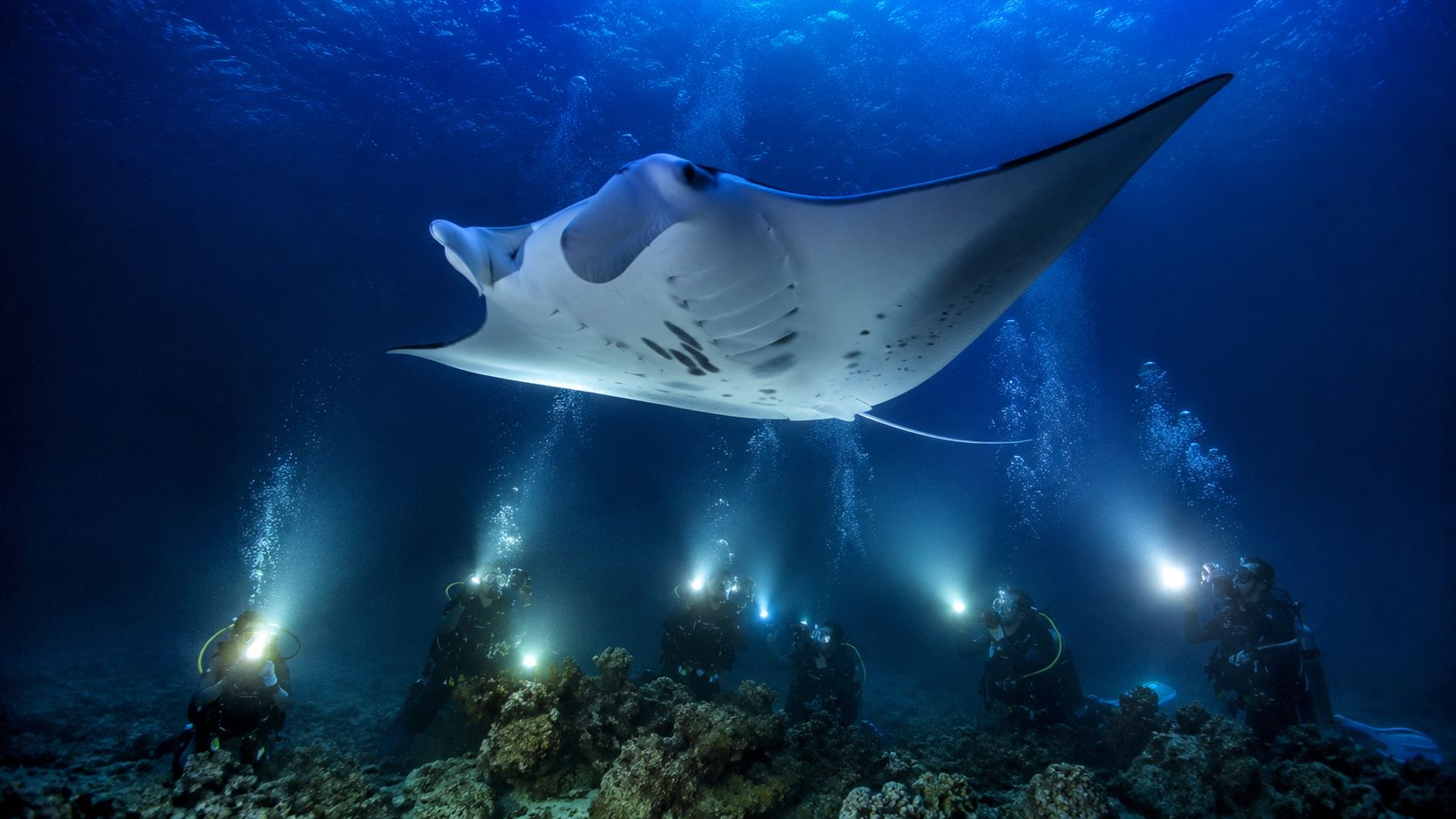
The manta ray night dive at Garden Eel Cove
If you're choosing a manta dive site, Garden Eel Cove is the stronger call. Its protected location, better viewing area, and better reef environment make it the more reliable operational choice for many divers who want a clean, well-run experience.
The broader Kona coast manta dive has an 85 to 90 percent encounter rate on any given night, the local manta population includes over 270 identified individuals, and some animals reach wingspans up to 18 feet according to Kona manta ray diving information and the underlying encounter data from Kona coast manta research and dive conditions.
The experience itself is simple. Divers settle on the bottom, lights shine upward, plankton gathers, and mantas sweep through the beam above the group. What doesn't work is chasing them, drifting upward into the water column, or treating it like a mobile dive. Good manta diving is stationary, disciplined, and patient.
If manta diving is your priority, browse manta ray dive tours.
Stay low, stay still, and let the encounter come to you. That's how the best manta dives unfold.
Why Garden Eel Cove tends to dive better
Not every manta site feels the same underwater. The strongest setup gives divers room to settle, keeps the viewing geometry clean, and limits avoidable chaos in the water.
Garden Eel Cove stands out because:
- The site is protected, which helps the dive feel more controlled.
- The viewing area is better organized for looking up into the light column.
- The surrounding reef is stronger, so the site still feels like a quality dive location and not just a staging area.
That last point matters more than people think. A site with better reef character usually feels better before and after the main action starts.
The blackwater dive
Blackwater is the opposite kind of thrill. Instead of sitting on a bottom watching a known attraction, you descend into open ocean at night and suspend over deep water while pelagic and larval animals rise toward the surface.
Kona is known for the blackwater, or Pelagic Magic, dive, where divers observe species migrating up from depths of hundreds to thousands of feet in a night setting, and it remains an advanced charter environment in the local dive scene. A practical primer is available through Kona blackwater night dive tours.
What works on blackwater is excellent buoyancy, calm breathing, and comfort without visual reference points like reef or bottom. What doesn't work is signing up because it sounds exotic while ignoring the skills it demands.
Who should and shouldn't book it
Blackwater is a fit for divers who enjoy focus and control. You don't need to be a technical diver, but you do need to be fully comfortable in the water column at night.
A quick comparison helps:
| Dive | Better for | Less ideal for |
|---|---|---|
| Manta night dive | Certified divers who want a signature wildlife encounter | Divers who dislike groups or night diving entirely |
| Blackwater | Experienced divers with strong buoyancy and composure | Divers who are rusty, anxious in open water, or weak on trim |
One is famous because it's visually overwhelming. The other is famous because there's almost nothing else like it.
Exploring Kona's Diverse Reefs and Advanced Dives
The biggest surprise for many visitors is how good the daytime diving is after the manta headlines fade. Reef dives in Kona aren't filler between night charters. They're the backbone of a good trip.
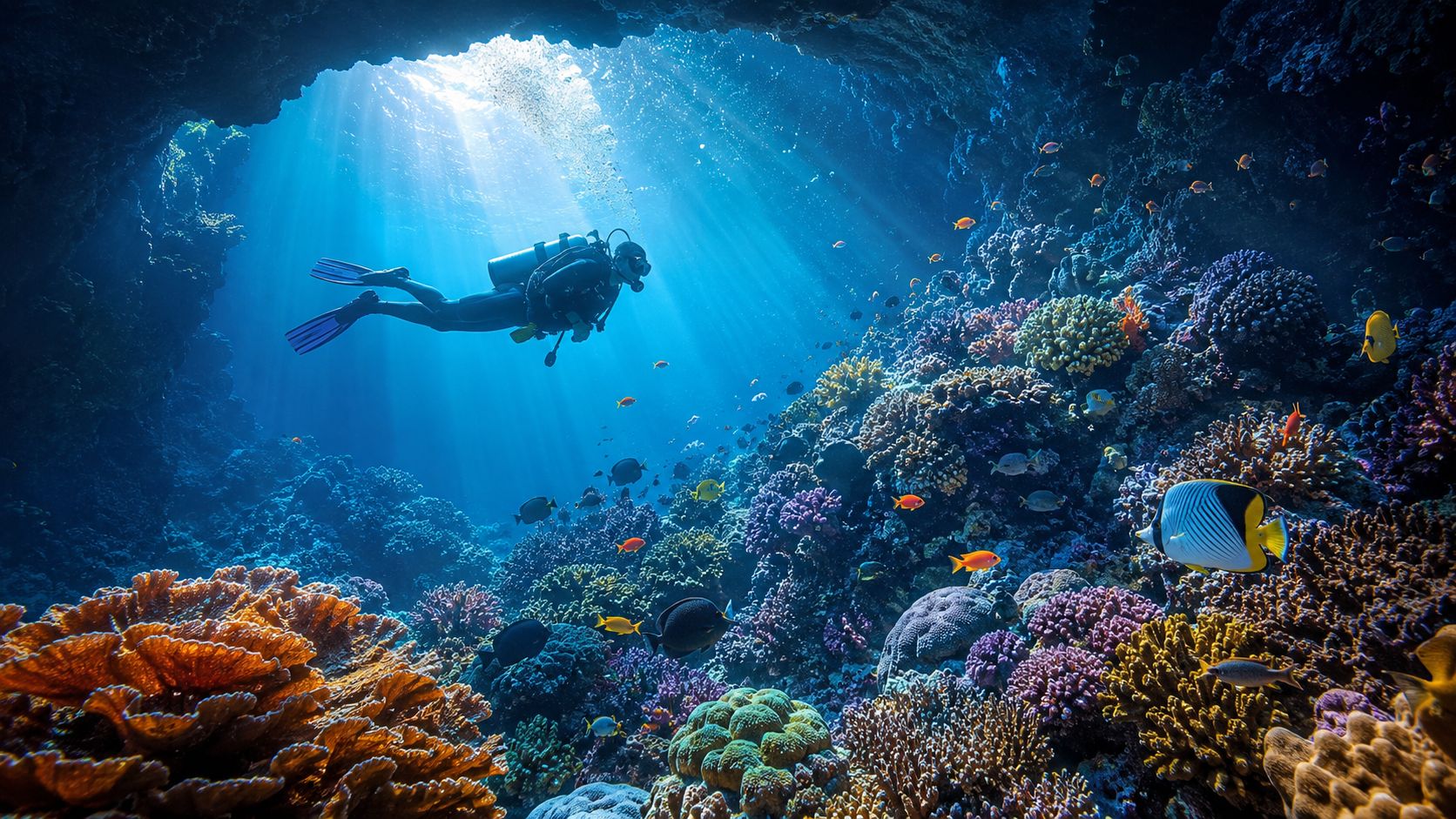
Day diving that actually has range
On a standard Kona charter, the terrain often changes the tone of the dive more than the depth does. Some sites are built around coral gardens and easy cruising. Others are all about lava folds, swim-throughs, and structure that rewards slower exploration.
That's why repeat divers usually enjoy Kona more on the second or third day than the first. Once they stop comparing every site to the manta dive, they start noticing how much variety the coast has.
A practical way to think about daytime options:
- Reef-focused dives are good for relaxed profiles, photographers, and vacation divers easing back in.
- Structure-heavy sites suit divers who like navigation features, shadows, and terrain.
- Longer-range or more advanced plans make sense for divers who want more demanding profiles and less conventional site choices.
Advanced diving needs honest self-assessment
Some advanced divers make the mistake of assuming every unusual-sounding dive is automatically suitable for them. Experience helps, but the right kind of experience matters more.
For blackwater specifically, operators require Advanced Open Water certification and at least 50 logged dives because it's treated as a high-skill charter where divers observe rare bioluminescent species in open ocean at night, as detailed in Kona blackwater requirements and dive overview.
If you're looking for more experienced charter options beyond standard reef diving, a useful planning page is the advanced long-range dive tour.
A diver can be calm at 80 feet on a reef and still feel overloaded in open ocean at night. Treat those as different skills.
What usually works best for trip planning
Don't stack only high-intensity dives. Mix them.
A balanced schedule often looks like this:
- Start with classic reef sites to get weighting, SAC rate, and local rhythm sorted.
- Put advanced dives on days when you're well rested.
- Leave enough surface recovery and mental bandwidth for night operations.
That approach gives you more good dives and fewer “I could have done better on that one” moments.
Planning Your Kona Dive Trip Logistics
You arrive in Kona with four dive days open, a manta night booked, and one friend who gets seasick if the harbor mouth is choppy. That trip can run smoothly, or it can turn into a schedule that looks good on paper and feels rushed underwater. Good logistics fix that before you ever step on the boat.
Kona gives divers workable conditions through the year, but the smart plan depends on what you want from the trip. Some visitors want the easiest boat days and simple scheduling. Others are trying to fit in reef dives, manta, courses, and a higher-skill charter without burning themselves out. We build those weeks every day at Kona Honu Divers, and the best itineraries always leave room for recovery, weather adjustments, and one or two dives that are there because they are fun, not because the spreadsheet said they fit.
Picking the right season for your priorities
Summer and early fall usually make planning easier. The ocean often settles down, boat rides are more comfortable, and newer divers tend to have a better first impression of Kona in those conditions.
Winter still works well for plenty of divers, but it asks for more flexibility. Surface conditions can affect where boats go and how the day feels, even when the diving itself is still very good. The payoff is the broader winter atmosphere, including the chance to hear whale song underwater.
A practical way to choose:
| Priority | Better fit |
|---|---|
| Easier boat days and simpler planning | Summer and early fall |
| Seasonal wildlife atmosphere | Winter |
| Night diving comfort | The part of the year when you'll be rested and comfortable in cooler evening conditions |
Matching the diving to your skill level
Skill level matters, but so does recent experience. A diver with 100 logged dives who has not been in the water for a year often needs a different plan than a newer diver who has been diving every month.
Here is what usually works best:
- Newly certified divers: Start with guided daytime reef diving. Add a manta night dive if you are calm, comfortable at night, and not task-loaded.
- Rusty divers: Put an easy first day on the schedule, or a refresher if needed. That usually improves the rest of the week.
- Experienced divers: Mix signature dives with easier mornings so you stay sharp instead of stacking demanding profiles back to back.
- Families and mixed-experience groups: Plan for the least experienced diver first. That choice usually gives the whole group a better day.
If you want to map out what fits your group and schedule, review the current Kona dive tours and charter options.
What to bring, and what people forget
The forgotten items are rarely dramatic. They are the things that make the second half of the day less comfortable than it needed to be.
Bring your certification materials, any proof required for advanced charters, exposure protection that matches how you personally handle cooler water after multiple dives, and a dry layer for the ride back. Evening trips make that last item matter more than people expect. A personal mask is also worth packing if you have one. Familiar gear removes one avoidable variable.
Water, sun protection, and a towel sound obvious. They still get missed.
If you get cold easily, plan for the ride in and the ride back, not just the time underwater.
Seasickness prep that actually helps
Motion sickness is a logistics issue, not a character test. Divers who know they are prone to it usually do well when they prepare early and poorly when they wait to see how they feel at the harbor.
Common options people use include Ship-EEZ Seasickness Patch, Dramamine pills, Bonine pills, Sea Band wristbands, and Ginger chews.
What works better in practice:
- Take your preferred remedy early: On the dock is often too late.
- Eat lightly and hydrate normally: Too little food and too much food can both make the boat ride worse.
- Protect your best dive day: If rougher conditions are possible for you, do not place your highest-priority charter after a late night or on the most packed day of the trip.
- Say something when you check in: Crew can often suggest the best place to sit and small adjustments that help.
A good Kona dive trip is not built by filling every open slot. It is built by choosing the right days, the right order, and the right pace for the divers on the boat.
Booking Your Dives with Kona Honu Divers
Once you know which dives you want, the booking step should be simple. The biggest planning error is waiting too long on the signature charters and then trying to rebuild the entire trip around limited availability.
For general trip planning and schedules, start with the Kona Honu Divers diving tours page.
Build the trip around logistics that matter
Availability is part of it, but not the whole thing. You also want to think about departure timing, recovery between dives, and whether an advanced charter fits where you'll be mentally and physically in the trip.
One practical example is blackwater. The operation involves a 25-minute cruise from Honokōhau Harbor to a deep-water site where divers observe nocturnal species migrating from the depths, as described in this Big Island blackwater overview. That's not the kind of charter you tack on casually after several overloaded days.
Kona Honu Divers offers day diving, manta trips, blackwater charters, courses, and package options in one booking flow, which makes it easier to line up a full week without juggling multiple operators.
A better way to book
A clean booking sequence usually works like this:
- Reserve manta and blackwater first if those are must-dos.
- Add daytime charters around them based on your energy and skill level.
- Use one operator when possible so briefings, gear setup, and logistics stay consistent.
That reduces friction. It also gives the crew a better read on your experience and preferences across multiple days.
Frequently Asked Questions About Kona Diving
Can a new diver do the manta ray night dive
Yes, many certified divers with modest experience do well on the manta dive. The key is being comfortable at night, following instructions, and staying settled on the bottom. If you're newly certified or haven't dived recently, do a daytime dive first.
Is blackwater only for expert divers
It's for experienced, comfortable divers, not for someone trying to prove a point. If your buoyancy is inconsistent, or open ocean at night sounds stressful rather than exciting, wait until your skills catch up.
What marine life might I see besides mantas
Kona is known for reef life and regular sightings of larger animals depending on conditions and season. Divers often come hoping for mantas and leave talking just as much about turtles, dolphins, reef scenes, and the general quality of the underwater environment.
Is Nitrox worth using in Kona
For certified Enriched Air divers, Nitrox can be useful on repetitive diving schedules because many Kona trips combine several boat dives across multiple days. The main benefit is usually more conservative no-decompression exposure, not a license to push the dive.
Should I book all my diving before I arrive
For signature dives, yes. For the rest, it depends on how fixed your vacation schedule is. If manta or blackwater matters to you, lock those in early and build around them.
If you're ready to turn research into actual dive days, book directly with Kona Honu Divers and line up the mix of reef, manta, and advanced charters that fits your experience level and trip goals.