
You're probably in one of two spots right now. Either you've already decided you want to dive the Big Island and you're trying to sort out which Kona dives are worth your limited vacation days, or you're still deciding whether Kona really lives up to the hype.
It does, but only if you match the dive to the diver.
That's the part most generic travel writeups miss. Diving Kona Big Island isn't one single experience. It's a mix of easy reef dives, iconic manta encounters, demanding open-ocean night diving, and family logistics that matter more than people expect. A newly certified diver, a parent traveling with teens, and a veteran underwater photographer should not build the same itinerary.
The good news is that Kona is one of the easiest places in Hawaii to plan well. Conditions are often calm, the site variety is deep, and the specialty dives here are famous for a reason. If you choose with a little discipline up front, the trip feels smooth from the boat briefing to your last safety stop.
Welcome to the Underwater World of Kona
The first descent in Kona usually resets people's expectations. You drop into blue water, level off, and the reef starts to appear in layers instead of all at once. Lava contours give the site shape. Reef fish fill the edges. Light holds well in the water, so you spend less time squinting into haze and more time reading the terrain around you.
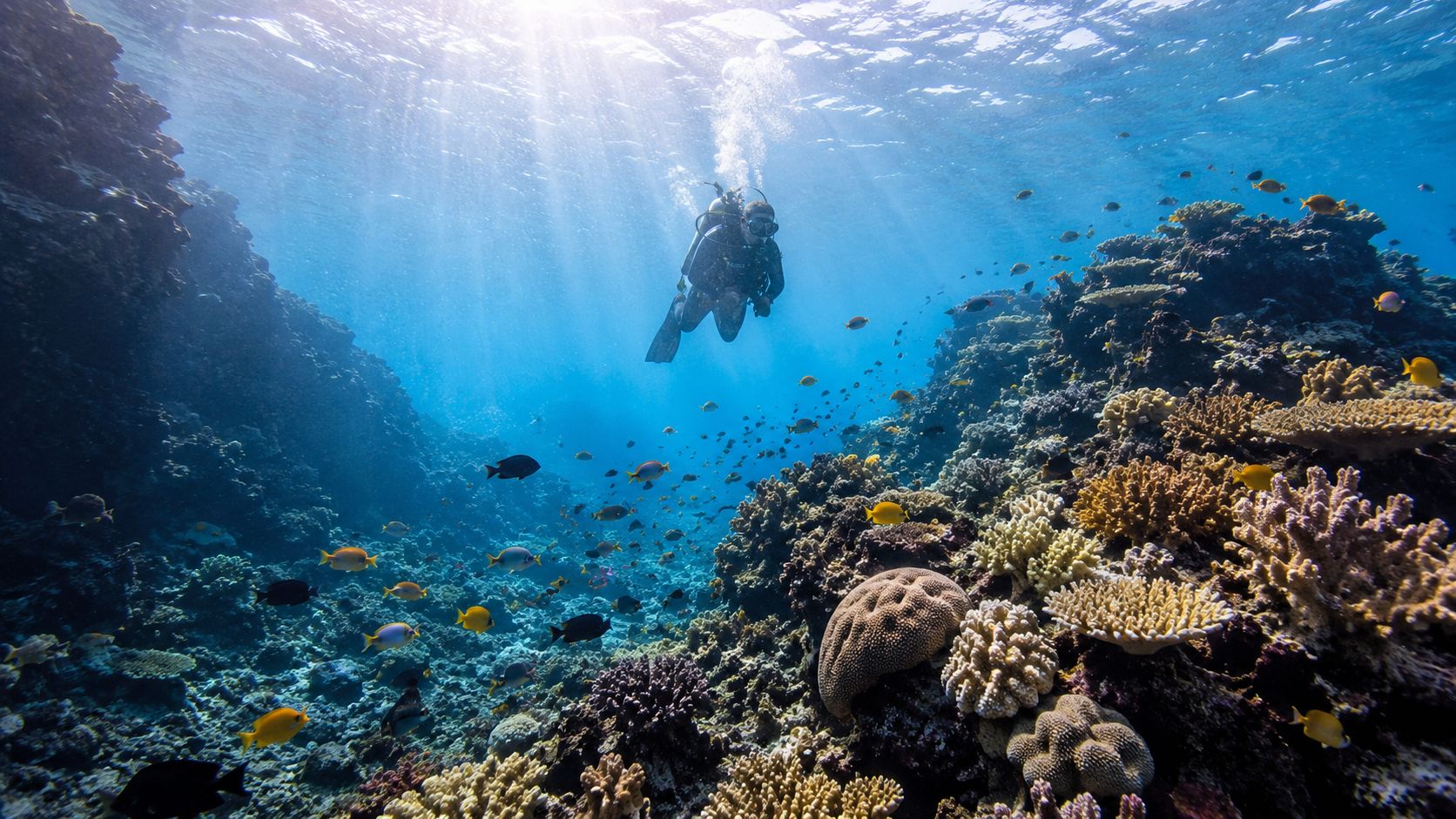
That's why so many visiting divers come away saying Kona felt easier than expected, but more dramatic underwater than they anticipated. The coast gives you reef life and volcanic structure on the same dive. You're not just finning over coral heads. You're moving through a terrain built by lava, shaped by current, and occupied by fish that seem perfectly at home in the cracks, ledges, and arches.
If you're planning your first trip, start with a broad look at Kona diving options. It helps to see the range before locking yourself into the most famous tour on the calendar.
What new visitors usually get wrong
A lot of people book the manta night dive first and then treat everything else as filler. That's backwards. The manta dive may be the headline, but your trip works better when you decide what kind of diver you are first.
- Newly certified diver: Choose protected reef dives and save some energy for night diving.
- Experienced vacation diver: Mix one marquee dive with classic daytime boat dives.
- Advanced diver: Add a blackwater or long-range trip only if your buoyancy and awareness are sharp right now, not just in theory.
Good trip planning in Kona starts with honesty. If a diver says, “I can do it,” but really means, “I hope I can do it,” that's where stress shows up.
What Kona rewards
Kona rewards calm divers more than aggressive ones. The people who get the most out of it aren't the ones kicking hard or chasing every shadow. They're the ones who settle in, listen to the briefing, trim out properly, and let the site come to them.
That mindset matters on easy reef dives. It matters even more on manta nights and blackwater trips.
Why Kona is a Diver's Paradise
Kona works because the setting does a lot of heavy lifting before the boat even leaves the harbor. The west side of the Big Island sits in a protected position that regularly delivers calmer water than many visitors expect from ocean diving. That consistency is a major reason divers can build a real itinerary here instead of gambling day by day.
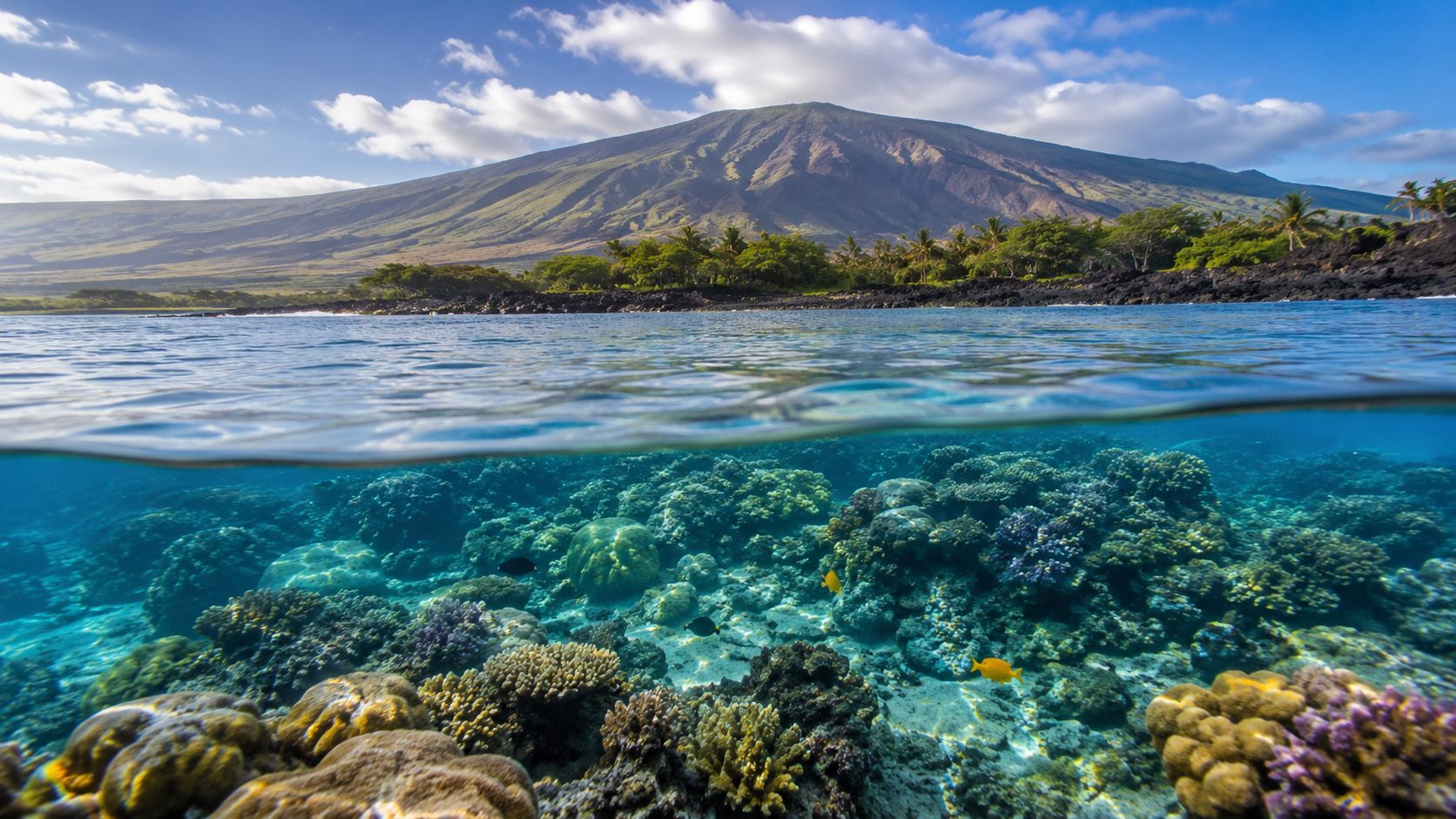
The numbers back that up. The Big Island of Hawaii hosts over 1,000 documented dive sites, with Kona's underwater visibility averaging 80 to over 100 feet on typical days, and summer conditions frequently pushing clarity beyond 120 feet due to calm seas according to this Big Island diving overview.
Why those conditions matter in real life
Good visibility isn't just a bragging point for vacation photos. It changes how a dive feels and how much work it takes to stay oriented. New divers burn less mental energy when they can clearly see the bottom, their buddy, and the reef line. Experienced divers get more out of lava formations, swim-throughs, and fish behavior when the water column stays clean.
That's also why Kona supports such a wide range of diving styles. On one trip, a diver can do a relaxed reef morning, a specialty night dive, and a more technical-feeling open-water experience without changing islands.
What makes the underwater terrain different
Kona's reef scenery doesn't read like a soft-coral destination. It reads like a volcanic coastline submerged in clear water.
You'll notice a few recurring features:
- Lava structure: Finger reefs, arches, shelves, and broken ledges create natural navigation lines.
- Useful topography: Sites often have obvious contours, which helps newer divers maintain orientation.
- Photographer-friendly water: Clear conditions and strong ambient light make it easier to compose wide reef scenes.
The easiest way to explain Kona to a first-timer is this. The water often feels forgiving, but the terrain still feels wild.
Seasonal trade-offs that actually matter
Summer is usually the cleanest, simplest choice for straightforward dive conditions. If your priority is comfort, visibility, and easier scheduling, that's the season many divers prefer.
Winter adds another kind of appeal. Certain dives have an 80% detection rate for humpback whale sightings during winter months in Kona, as noted in the same verified Kona-region data set summarized earlier. Even when whales aren't the target, hearing them underwater can change the whole mood of a dive.
So yes, Kona is beautiful. But beauty isn't the main reason it earns repeat divers. Reliability is.
The Legendary Manta Ray Night Dive
If you only do one signature dive in Kona, this is the one most divers circle first. Not because it's trendy, but because it's unusually dependable and unlike almost anything else in recreational diving.
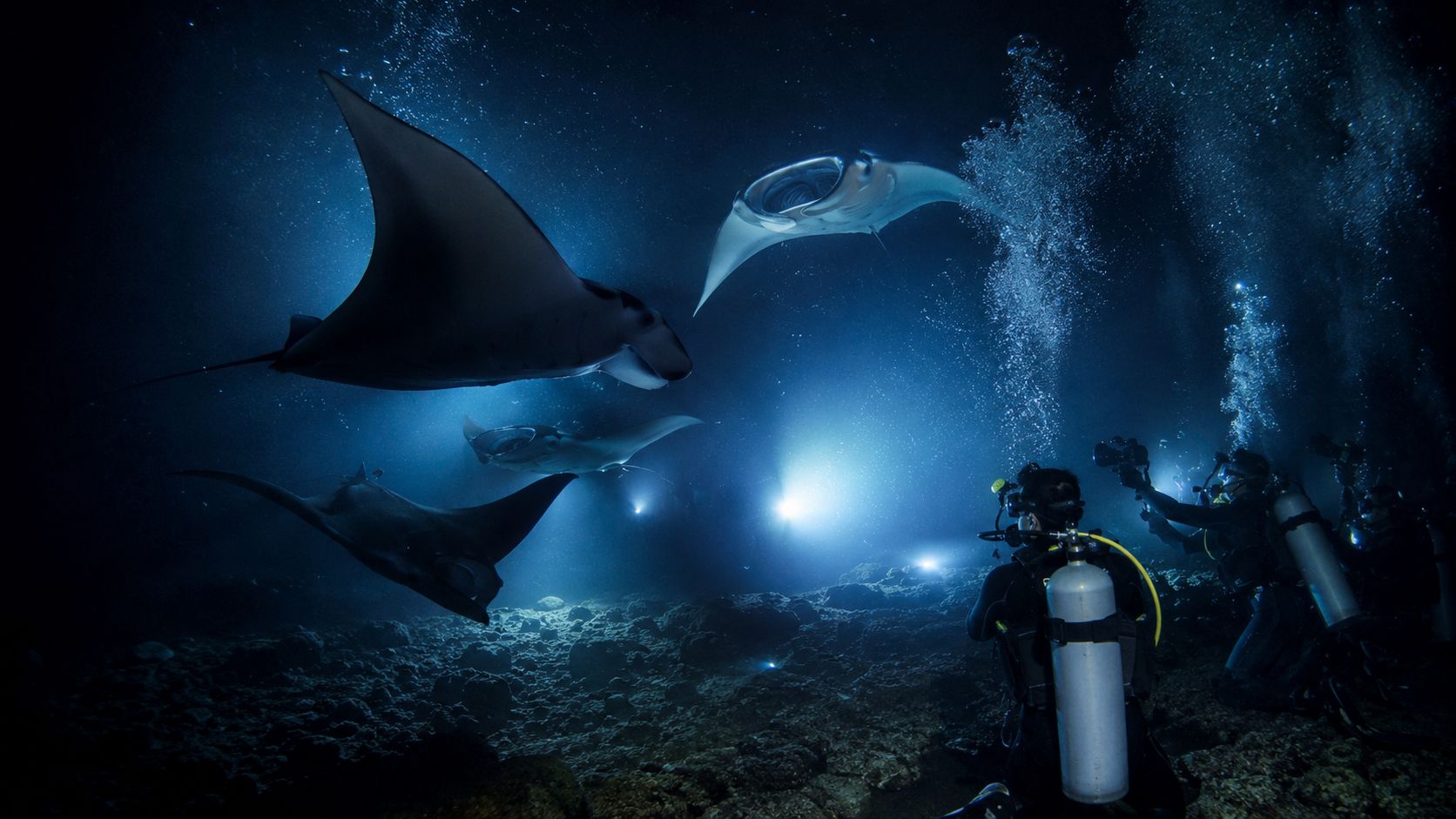
The Kona coast is known worldwide for manta ray night dives with 92% to 96% sighting success rates, about 25 nightly manta tour trips run by 9 dedicated operators, common aggregations of 8 to 12 manta rays per dive, and peak nights reaching 32 individual mantas according to this Hawaii diving article. In the Kona study area, the Manta Pacific Research Foundation has cataloged over 270 individual reef manta rays, and the usual encounter depth is 30 to 40 feet.
How the dive works
The mechanics are simple. Divers settle near the bottom while lights draw in plankton. The plankton draws in feeding mantas. Then the whole scene turns into a looping overhead ballet, with rays banking, rolling, and passing through the light field.
At the operational level, the setup is even more specific. The Kona manta dive runs at 30 to 40 feet, where underwater lights can create local plankton density spikes of 300% to 500%, helping produce operator-reported 95% encounter rates with 10+ individuals per dive during calmer periods, as described in this Kona manta dive explanation.
What works is staying still. What doesn't work is trying to follow the animals.
Practical rule: Plant yourself where the guide places you, keep your fins controlled, and look up. The mantas do the moving.
Why Garden Eel Cove is the smarter pick
Site choice matters more than first-time visitors realize. Kona has multiple manta viewing areas, and the two main named sites are Manta Village in Keauhou Bay and Garden Eel Cove, also called Manta Heaven, with Garden Eel Cove generally offering a longer ride but a less crowded, more photography-friendly setting, as outlined in this site comparison.
For divers, Garden Eel Cove is the superior dive site for the manta ray night dive because it is a protected bay with softer currents and healthier reefs, allowing mantas to spiral freely on its sandy bottom, with divers reporting up to 23 mantas per session and an 85–90% success rate, based on this Garden Eel Cove review.
That protected layout matters. Softer current usually means divers can settle more comfortably, photographers get a cleaner viewing field, and the whole experience feels less hectic.
If you want a closer look at how the experience is run from the guest side, the Kona manta ray night swim guide is a useful planning read, and the dedicated manta ray dive tour page shows current trip options.
Who should book it
This dive suits more people than blackwater does. Certified divers with stable buoyancy usually do well. Mixed groups also like it because snorkel participation is common on manta trips, so not everyone has to scuba dive to share the evening.
There are exactly three established manta ray viewing sites on the Big Island, all within 100 yards from shore but reached by boat because of the rocky coastline, and participants have a 70+ percent chance of seeing at least one manta on a dive or snorkel trip according to this manta site guide. The practical takeaway is simple. This is one of the most accessible big-animal encounters in Hawaii.
Explore More Top Kona Dive Experiences
The manta dive gets the spotlight, but it shouldn't crowd out the rest of your schedule. Kona has enough range that you can build a trip around your actual comfort level instead of chasing whatever sounds rarest.
For many visitors, the smartest plan is one signature dive plus reef diving. For others, it's a reef-and-blackwater combination. A smaller group should look at more advanced charters and treat them as skill-dependent, not aspiration-dependent.
Kona dive experience comparison
| Dive Experience | Best For | Skill Level | Key Sightings |
|---|---|---|---|
| Daytime reef boat dive | New divers, vacation divers, photographers | Beginner to intermediate | Reef fish, turtles, lava formations |
| Manta ray night dive | Divers wanting a signature Kona experience | Intermediate comfort with night diving helps | Feeding manta rays |
| Blackwater night dive | Divers with strong buoyancy and night comfort | Advanced competency | Larval fish, squid, gelatinous pelagics |
| Advanced long-range dive | Experienced divers seeking remoter profiles | Advanced | Remote reef structure and deeper terrain |
The blackwater dive is not a novelty ride
Kona pioneered the blackwater, or Pelagic Magic, style of dive. It's one of the most unusual things a recreational diver can legally and safely do with proper supervision. You descend on a suspended line into open ocean at night, often over water more than 6,000 feet deep, and hover in the dark while tiny pelagic life rises into the lights.
The hard fact is this. Kona's blackwater night dive is a technical open-ocean discipline requiring descent into water columns over 6,000 feet deep, utilizing lit downlines to observe the nightly vertical migration of pelagic larval life. It demands advanced competency, with operators like Kona Honu Divers requiring a logbook of 25+ entries, according to this Kona blackwater dive overview.
That requirement exists for good reason. There's no reef to orient you. No bottom reference. No coral structure to settle your eyes. Divers who thrive on blackwater are usually the ones who can hover calmly, make tiny buoyancy corrections, and stay mentally relaxed in an empty-feeling water column.
The blackwater dive in Kona page is worth reviewing if you're considering it, and the direct Blackwater Dive tour page gives the operational details.
Blackwater doesn't reward bravado. It rewards composure.
Daytime reef dives are the backbone of a good trip
Don't treat the reef dives as filler between specialty nights. They're often the dives that make your trip feel complete. Day dives give you the lava tubes, ledges, schools of fish, and easy natural light that define the Kona coast.
Boat dives are usually the cleaner choice for most travelers because they reduce entry stress and let the crew match the site to conditions. Shore diving can be rewarding for experienced local-style divers, but it's less forgiving if you don't know lava entries, surge timing, and exits.
When advanced trips make sense
Some divers should look beyond standard reef routes. If you're comfortable in changing conditions and want more ambitious site selection, an advanced long-range dive tour can make sense.
That's where I'd put advanced photographers, highly comfortable repeat divers, and people who are already bored by standard resort-style diving. If that's not you yet, skip the ego test and dive the reefs well. You'll see more, and you'll enjoy more.
Planning and Booking Your Dive Trip
The easiest way to plan Kona is to book the dives that are hardest to replace first. Specialty trips have limited space, and they're the ones that can shape the rest of your week.
If your calendar is tight, reserve your marquee dive nights before you do anything else. Then build reef mornings or easy recovery days around them. That order keeps you from ending up with open afternoons and no room on the dives you flew to Hawaii to do.
Choose your season for the experience you want
Summer is the practical choice for many divers because calmer seas often make the trip easier from the moment you board. That matters for reef dives, for manta nights, and especially for anyone in your group who's nervous about boats.
Winter has its own draw. Some divers come specifically for the broader ocean feel of the season, and that's when whale activity becomes part of the atmosphere underwater.
Book with a logistics mindset
Use a full Kona dive tours page instead of browsing random single trips one by one. It's easier to compare what belongs early in the week, what needs stronger skills, and what should be treated as optional if weather shifts.
For general trip planning, Kona boat tours is also useful because the boat day itself matters. Ride length, departure style, and how much time your group spends in open water all affect comfort.
If motion sickness is even a possibility, don't try to tough it out. Pack before you travel. Common options include Ship-EEZ Seasickness Patch, Dramamine pills, Bonine pills, Sea Band wristbands, and Ginger chews.
A simple booking order that works
- Reserve specialty dives first: Manta and blackwater trips fill for a reason.
- Add daytime reef dives next: They give you flexibility and often pair well between night dives.
- Leave a little room: A free morning or afternoon can save a trip from feeling overpacked.
- Think about the whole group: Families and mixed-skill groups need a realistic pace, not a maximal one.
Gear Safety and Certification Essentials
Good Kona diving starts before the giant stride. Gear, certification, and operator fit all work together. If one of those is off, the dive can still happen, but it won't feel easy.
For family travelers, there's one rule people need to know early. Operators like Kona Honu Divers require divers aged 12–17 to dive with a parent or guardian, and preparing non-certified children for the darkness and open-ocean environment of a night trip is a critical logistical step often overlooked, according to this family-focused Kona reef dive guide.
What to bring and what to rent
You don't need to travel with every piece of kit, but you should bring the items that directly affect comfort and familiarity.
- Bring your essentials: Certification card, logbook, mask if you have one you trust, and any personal exposure items you strongly prefer.
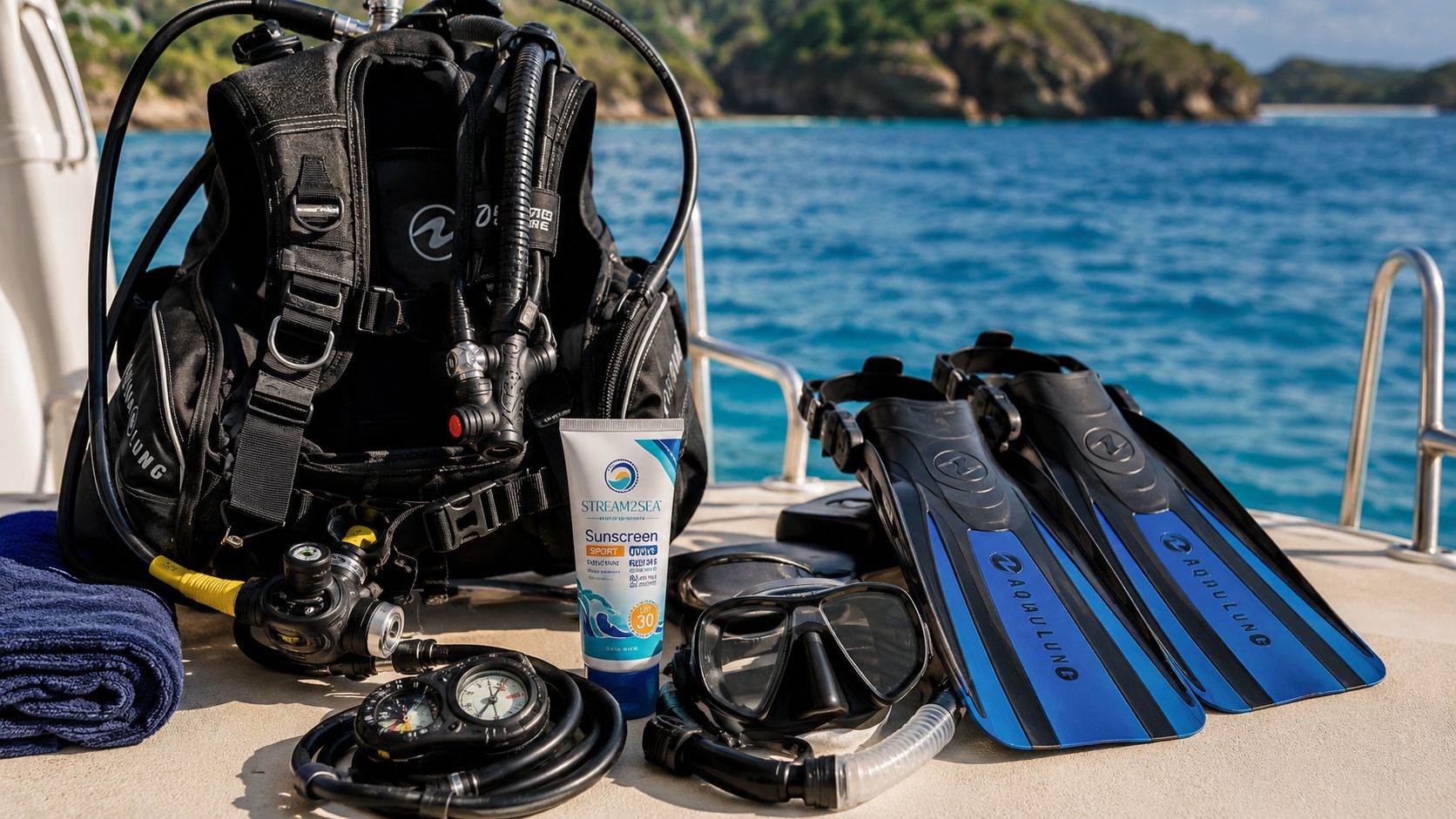
- Pack for the boat day: Reef-safe sunscreen, a towel, dry clothes, water, and something warm for after a night dive.
- Rent the bulky gear if needed: Tanks, weights, and major equipment are often easier to handle through the operator than through airline baggage.
Match the dive to the certification, not the vacation mood
Beginner divers do best when they treat Kona reef dives as skill-building, not as a race toward the most famous night charter. There's no shame in doing simple dives well. In fact, that's the cleanest route to enjoying the bigger experiences later.
Families should be even more conservative. A child who is fine during a daytime snorkel may react very differently to darkness, cooler air after sunset, and a boat sitting offshore. Parents usually focus on age and certification. The more important question is whether the child stays calm when the environment feels unfamiliar.
A night dive is never the right place to discover that someone in the group hates open water after dark.
Training solves more problems than bravado
If someone in your group needs more confidence, the right answer is often a class or refresher before the specialty dive, not encouragement on the dock. Formal training gives divers procedures to lean on when the ocean feels busy or strange.
For people who still need foundational credentials, open water certification in Kona is the right place to start.
Kona Diving Frequently Asked Questions
Is Kona diving good for beginners
Yes, if beginners choose the right dives. Kona's reputation rests partly on conditions that are often calm and clear, and many reef dives suit new divers well. The mistake is assuming every famous Kona dive is beginner-friendly in the same way. Start with daytime reef dives, get comfortable with your weighting and trim, and then decide whether a night dive belongs on this trip.
Can non-diving family members join a manta trip
Often, yes. Manta trips commonly work for mixed groups because snorkel participation is part of the format on many outings. That makes the manta experience one of the easiest ways for divers and non-divers to share the same evening on the water.
What marine life should you expect besides mantas
Kona reef diving is rich enough that most days don't feel dependent on one marquee animal. Divers regularly come for the structure and leave talking about turtles, eels, reef fish behavior, and the way lava topography changes the whole dive.
How should experienced divers choose between reef, manta, and blackwater
Choose based on current skill, not resume pride. If you're sharp, calm in open water, and comfortable at night, blackwater can be one of the most memorable dives of your trip. If you want a signature Kona experience with a more structured format, manta is usually the better pick. If you want relaxed bottom time and classic scenery, reef diving still carries the week.
Is there one operator worth looking at early in planning
If you want to compare trip formats in one place, Kona Honu Divers offers reef dives, manta trips, blackwater dives, and training, which makes it a practical reference point when you're mapping out a full Kona itinerary.
A good Kona trip doesn't come from cramming in every famous dive. It comes from choosing the right dives for your skill level, your family, and the season you're visiting. If you're ready to build a smarter itinerary, start with Kona Honu Divers and match the trip to the diver, not the hype.