
Kona's manta encounter is more than a dramatic night dive. A University of Hawaiʻi study tracked 167 individually identified reef manta rays across 13 years of observations at Garden Eel Cove and Keauhou, documenting a feeding system with recurring site use and measurable ecological patterns (study of Kona's reef manta observations). That matters when you're choosing a dive: Kona's appeal isn't one guaranteed wildlife show, but a collection of reef, lava, cove, and open-ocean environments that work differently depending on conditions and experience.
If you're researching diving Kona Big Island, the useful question isn't which site is “best.” It's which kind of dive fits your certification, comfort in the water, and interest in marine life, and whether the day's conditions suit that plan.
Why Kona Is One of Hawaii’s Best Dive Destinations
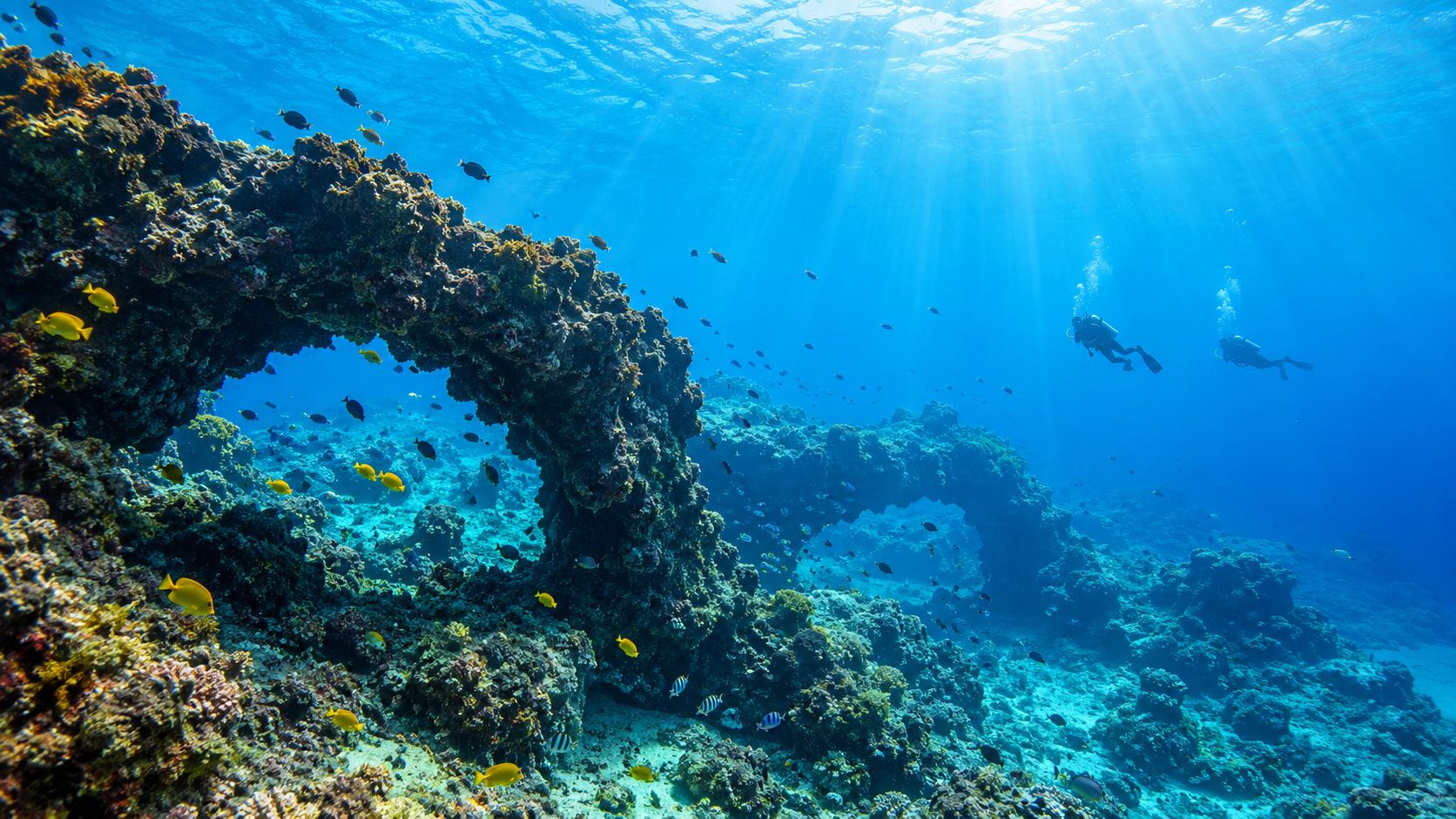
Kona's underwater terrain changes from one dive to the next. Shallow lava fingers and coral-covered ledges give way to arches, pinnacles, and deeper water offshore. On a reef dive, you might spend your time scanning crevices for fish or turtles; on a specialized night trip, you may watch manta rays feed or look for small pelagic animals in open water.
The reef foundation is substantial. NOAA's U.S. Coral Reef Task Force reports that the waters around Hawaiʻi's main islands contain approximately 640 square miles (1,658 square kilometers) of coral reef. Earlier NOAA reef mapping found that live coral covered about 57% of the waters surrounding Hawaiʻi Island, equivalent to more than 29 square miles of living reef (overview of Big Island coral coverage). That habitat supports the structure and variety divers come to see, from reef fish and invertebrates to turtles, rays, and lava-edge communities.
Different terrain, different kind of dive
A protected cove can suit a relaxed reef dive, while a pinnacle or lava formation may call for stronger buoyancy control and comfort with depth. An offshore blackwater trip is a different proposition again: it takes place after dark in midwater rather than over a shallow reef. The right choice depends on what you want to observe and whether your training and recent experience match the environment.
That variety is why generic lists of “top dive sites” can miss the point. A calm shore entry may be convenient, but it won't deliver the same experience as a boat-accessed formation or a planned night dive. For many visitors, a guided boat trip makes sense for sites that require offshore access or careful nighttime logistics; shore diving can work well when you know the entry, exit, and local hazards.
Kona has excellent options, but a wildlife sighting is never something to treat as guaranteed. Read conditions as well as the site description, and choose a dive that suits your ability rather than chasing the most dramatic name on an itinerary.
Understanding Kona’s Dive Environment and Conditions
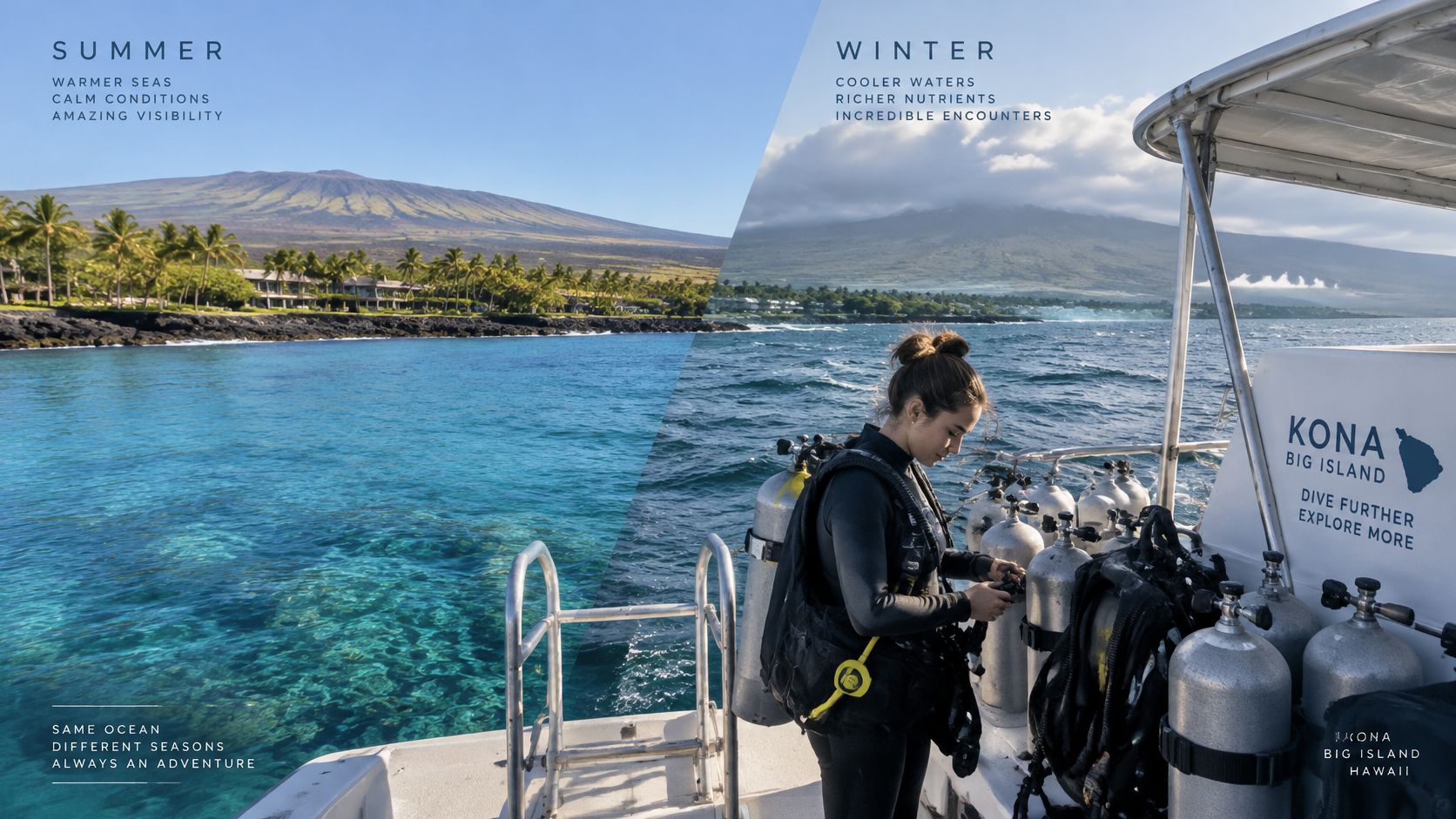
Kona's west coast sits on the leeward side of Hawaiʻi Island. Its relative shelter from prevailing trade-wind chop, combined with few river outlets and limited coastal sand, helps reduce the amount of sediment suspended in the water. Neutral diving references describe typical visibility of approximately 60–100+ feet (18–30+ meters), generally calm surface conditions, and water temperatures around 75°F (24°C) in winter to 81°F (27°C) in late summer (Kona diving conditions and visibility).
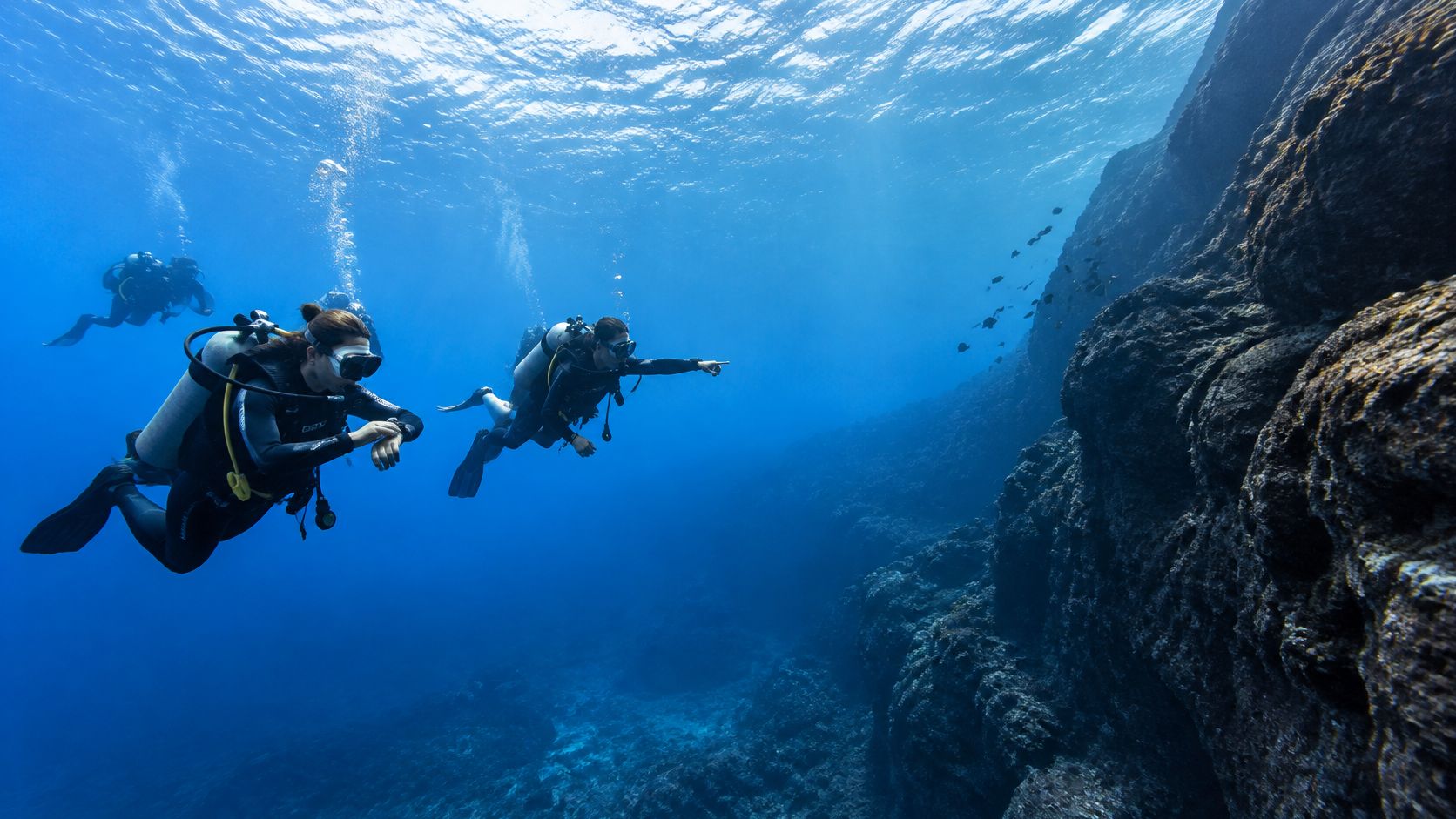
Those figures are a planning guide, not a promise. Heavy rain can send runoff into nearshore water, and winter storm events can stir sediment and swell. A site that looks clear on one day may offer less visibility after weather changes, so check recent marine conditions with your operator before committing to a plan.
Choose equipment for the water you actually expect
Water in the reported range can feel different depending on dive length, repetition, and how easily you get cold. A wetsuit that works for a short single dive might not feel warm enough after repeated dives or a night trip. Ask about rental exposure protection and bring a layer that suits your own tolerance rather than assuming tropical water means no thermal planning.
Good visibility can make it tempting to spread out or move quickly through a site. Don't. Maintain buddy contact, especially around lava structures where the route back to open water may not be obvious. For an explanation of how changing water clarity affects planning, consult this guide to visibility in Big Island scuba diving.
The island's reef scale helps explain why Kona doesn't offer just one uniform kind of dive. Coral habitat sits alongside volcanic features, and the terrain varies from shallow reef to deep offshore water. That gives operators room to choose sites for the day's conditions and a diver's experience, rather than forcing every trip into the same underwater setting.
Signature Kona Dive Experiences Worth Planning Around
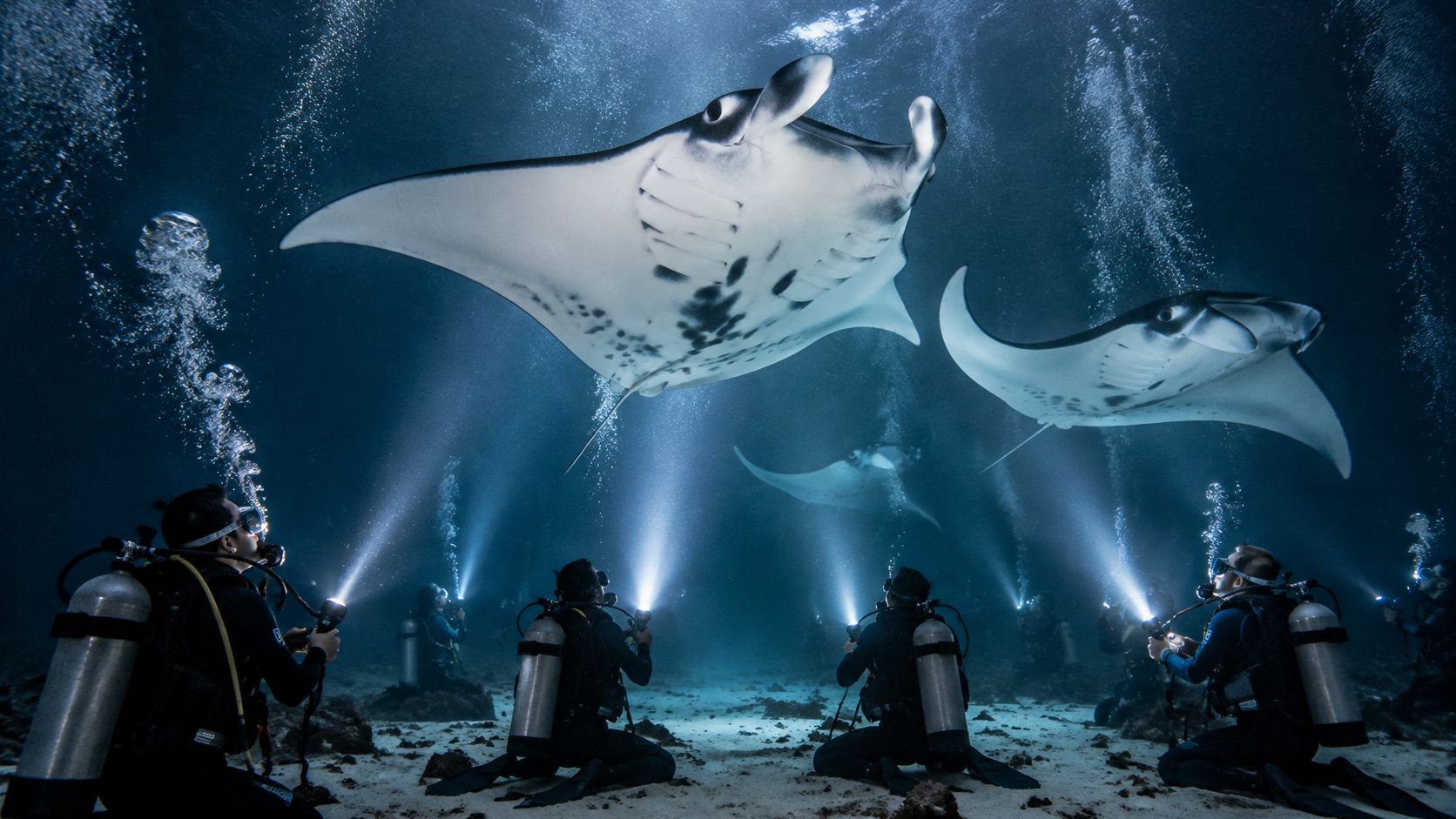
A manta night dive works because of a simple feeding mechanism. After dark, artificial lights in the water attract plankton, and the plankton draw manta rays to feed around the illuminated area. Divers can stay in a set viewing position and observe the animals passing through the light field instead of pursuing them.
Garden Eel Cove, also called Manta Heaven, is a primary Kona manta site. Its protected setting and reef structure create a defined viewing area for certified divers underwater and snorkelers at the surface. Manta rays there can reach wingspans of approximately 15 feet (Garden Eel Cove manta tour information).
What the manta research tells divers
The University of Hawaiʻi dataset covered observations at Garden Eel Cove and Keauhou from 2010 through 2022, with more than 23,000 sightings of 167 identified manta rays. Garden Eel Cove consistently produced larger aggregations than Keauhou, while seasonal and year-to-year changes in aggregation size tracked zooplankton density. The study also reported relative stability in the aggregations during its observation period despite increased tourism (Kona manta research findings).
That doesn't make a sighting certain. Plankton availability influences manta presence, and the animals are wildlife, not performers. Keep buoyancy steady, don't touch or chase them, and follow the crew's positioning instructions. For practical details on the Kona manta ray night dive, confirm whether the trip is set up for divers, snorkelers, or both.
Blackwater diving is not an ordinary night reef dive. NOAA describes it as an after-dark epipelagic scuba dive in relatively deep offshore water, where divers observe pelagic animals moving vertically through the water column. A NOAA-supported study documented 59 night-dive surveys off Kona between November 2013 and May 2015, establishing the coast as a site for observing nighttime open-ocean fauna (background on Kona blackwater diving). This kind of trip suits divers who are comfortable in open water and can maintain controlled buoyancy in darkness.
For divers seeking more challenging underwater terrain, lava tubes, pinnacles, and other advanced sites demand dependable buoyancy and sound judgment. Don't choose an advanced dive just for the name. Ask the operator what the site involves and what recent experience or certification it expects.
Choosing Between Boat Dives, Shore Dives, and Night Dives
Boat and shore diving solve different problems. A boat can reach offshore pinnacles, manta viewing areas, and blackwater sites with crew support and planned access. Shore diving offers independence, but the diver must assess the entry, exit, swell, surge, and underwater route rather than assuming an easy-looking beach means an easy dive.
Old Kona Airport Marine Life Conservation District is a useful example of a shore site that rewards careful planning. Its reef has shallow lava fingers extending offshore to approximately 50 feet, then drops rapidly into deep water. The area includes substantial coral cover, diverse reef fish, and frequent turtle and ray sightings. A partially protected cove is commonly used for snorkeling and shore scuba, while a second entry at the southeastern end of the former airstrip suits calm to moderate conditions (Old Kona Airport MLCD site details).
Kona Dive Formats Compared
| Format | Access | Skill Level | Typical Sites | Best For |
|---|---|---|---|---|
| Morning boat dive | Boat from harbor | Certified divers, site-dependent | Reefs, lava formations, pinnacles | Divers who want guided access to varied sites |
| Shore dive | Walk-in entry | Depends on entry and conditions | Old Kona Airport and other accessible coastal areas | Independent divers comfortable assessing surf and exits |
| Manta night dive | Boat to a viewing site | Open-water certification for scuba; snorkel option available | Garden Eel Cove or another selected manta site | Wildlife viewing in a planned night-dive setup |
| Blackwater dive | Offshore boat trip | Experienced divers comfortable in open water at night | Midwater, over deep water | Divers seeking pelagic life rather than reef structure |
Morning two-tank trips make sense if you want two guided dives and a straightforward boat schedule. Night dives are specialized and require you to manage low-light conditions, listen closely to briefings, and carry the appropriate lighting. For shore options and practical entry considerations, use this guide to shore diving on the Big Island.
Nitrox can be useful for certified divers planning multiple days of diving, provided they're trained and follow the correct oxygen limits. Air remains a valid choice; the right gas depends on your certification, dive profile, and operator procedures. Renting gear can simplify travel, but check fit and function before boarding, especially for a mask, exposure suit, and fins you'll use repeatedly.
Planning Your Kona Dive Trip by Season and Skill Level
Plan around conditions and your own capability, not a calendar promise of wildlife. The manta research described earlier found that changes in aggregation size tracked zooplankton density, so food availability matters alongside season. If seeing mantas is your priority, leave room in your plans for changing conditions and ask how an operator handles a trip when weather or animal behavior makes the encounter unsuitable.
Match the trip to your certification
A manta scuba dive requires open-water certification. Snorkeling doesn't require certification, but participants should be confident swimmers and able to climb a boat ladder without assistance (manta dive and snorkel requirements). If your group includes certified divers and snorkelers, confirm that the trip offers a format suitable for everyone before booking.
Beginners who aren't certified should look into an introductory experience or a full certification course, and be clear about what each option allows. Certified divers who haven't been in the water recently should consider a refresher rather than using a vacation dive to test uncertain skills. Photographers can ask about site selection and light, while advanced divers should discuss the specific terrain, depth, and experience requirements before choosing a trip.
| Time available | Practical focus |
|---|---|
| A short visit | Choose one priority, such as a guided reef trip or manta night dive, and leave flexibility for conditions |
| Several dive days | Mix reef diving with a specialty experience, and plan exposure protection for repeated dives |
| A longer stay | Add shore diving only if you can assess entries and conditions, and build in a rest day or alternate activity |
Choose the operator with questions, not assumptions
Ask where the boat departs, how the crew selects sites, what certification and recent-experience rules apply, and what happens if conditions change. For a manta trip, ask whether the site can shift and what the no-touch and positioning rules are. Before choosing a seasonal window, compare your priorities with this guide to the best months to scuba dive in Hawaii.
Pack exposure protection suited to the reported 75–81°F water range, but ask for a current local assessment because conditions vary. If you plan multiple dive days, ask whether nitrox is available and make sure your certification covers its use. Kona Honu Divers offers guided two-tank morning trips, manta night dives, blackwater excursions, and advanced trips; compare the itinerary and requirements with other suitable operators before booking.
Safety, Rules, and Conservation for Kona Divers
Kona's reputation for relatively calm conditions can make visitors underestimate shore hazards. Old Kona Airport has sharp lava and coral, conditions that can change with seasonal swell and currents, no lifeguard on duty, and a bottom that drops rapidly beyond roughly 50 feet. A calm-looking surface doesn't remove surge, a difficult entry, or the risk of getting separated from your exit.
Use a real go-or-no-go check before entering from shore. If swell is pushing water across the lava, current is stronger than your team can manage, or visibility prevents confident navigation, choose another site or skip the dive. Know where you'll enter and exit, plan surface support, and don't rely on a companion who isn't diving to recognize underwater or entry hazards.
Practical rule: If the entry or exit looks unsafe from shore, don't let the promise of a good reef talk you into the water.
Follow the rules in the water
Hawaiʻi requires a diver flag for scuba and freediving, an illuminated flag from sunset to sunrise, and prohibits surfacing more than 100 feet from the flag in ocean waters. Check the current state requirements before diving, especially for night and independent shore dives.
A federal regulation that took effect in 2021 prohibits approaching Hawaiian spinner dolphins within 50 yards, swimming with them, or causing a vessel to approach them within two nautical miles of the main Hawaiian Islands. If dolphins come near you during a dive, continue the dive and let them pass rather than pursuing or interacting with them. At Kealakekua Bay, protected-area rules prohibit taking or possessing marine life, shells, coral, or rocks, and prohibit fish feeding. Old Kona Airport protections prohibit altering or removing shells, sand, and coral (official conservation and wildlife-rule information).
Manta tourism also calls for restraint. Local reporting puts annual visits to the Kona manta experience at approximately 80,000 people and notes that Hawaiian reef mantas generally remain close to home and rarely cross deep channels between islands (reporting on Kona's manta population and tourism). That makes low-impact positioning and no-touch behavior more than good manners. Review responsible diver etiquette before your trip, and accept a changed plan when conditions or animal behavior call for it.
Your Next Step Toward Diving Kona
Kona's strength is its variety: coral reef, volcanic structure, protected coves, and open-ocean night diving all offer different experiences. Choose based on your certification, comfort in the water, and whether you want a guided boat dive, a carefully assessed shore entry, or a wildlife-focused night trip.
Plan around actual conditions rather than assuming a particular date guarantees clear water or manta activity. Confirm the site, certification requirements, equipment, and cancellation approach before booking. The documented manta observations, protected reef areas, and leeward setting make Kona worth planning for, not squeezing into an unprepared afternoon.
Kona Honu Divers offers guided reef trips, advanced dives, manta night dives, and blackwater excursions, with options for different experience levels. Compare the trip details and confirm the requirements for your chosen dive, then visit Kona Honu Divers to plan your Kona underwater adventure.