
You're probably staring at tabs full of dive shops, manta videos, gear checklists, and a weather app that isn't helping much. That's a normal place to start. Those planning diving Kona Big Island often seek clear water, memorable marine life, and a trip that runs smoothly once they hit the harbor.
Kona rewards good planning. It also punishes lazy assumptions. The coast looks easy from shore, but the difference between a forgettable day and an excellent one usually comes down to site choice, timing, and whether you booked the right kind of boat for your experience level.
Why Kona Is a Top Tier Diving Destination
Kona stands out because the underwater terrain feels built for divers. The Big Island's volcanic history left behind lava tubes, arches, caverns, abrupt ledges, and reef systems that don't look like the softer coral scenes many visitors expect from a tropical destination. You're not just drifting over reef. You're moving through geology.
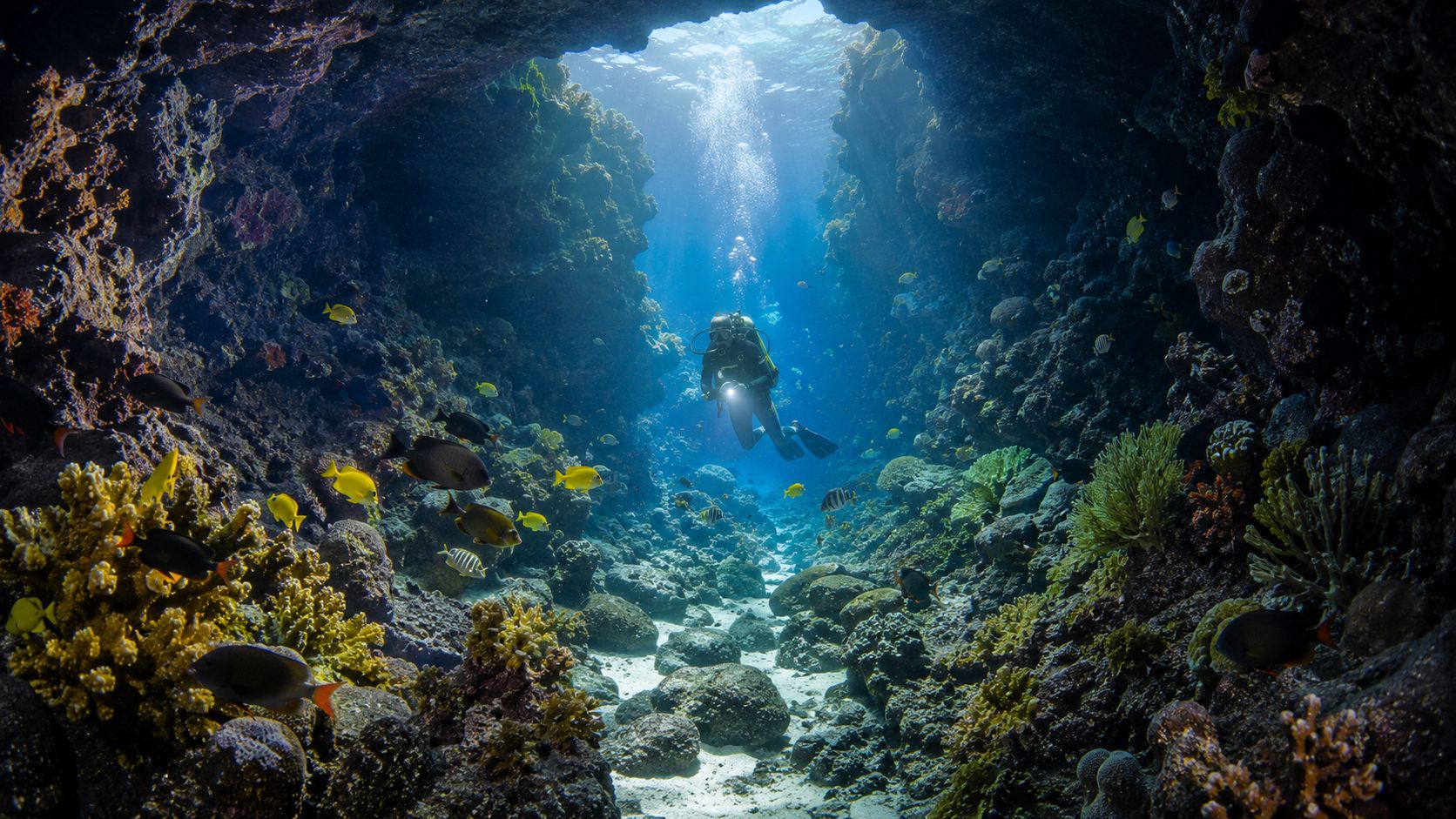
The leeward side is the key. Median underwater visibility at leeward sites near Kona consistently reaches 100 to 150 feet during peak summer months, making it about 40% clearer than comparable Caribbean or Florida dive regions, according to this Kona visibility overview. That kind of clarity changes the whole dive. Navigation is easier, marine life appears sooner, and photographers get cleaner, more usable frames.
Geology shapes the experience
A lot of destinations give you one strong lane. Kona gives you several in the same week.
- Volcanic structure: Lava shelves and swim-throughs create the kind of topography that keeps experienced divers interested.
- Accessible conditions: The calm leeward coast usually gives recreational divers a friendlier entry into dramatic terrain than they'd get elsewhere.
- Depth close to shore: The bottom falls away quickly, so the scenery shifts fast once you leave the shallows.
The marine life feels local
Kona also has a strong identity underwater. Reef life here doesn't feel interchangeable. Fish behavior, lava-formed habitat, and the rhythm of the west side all give these dives a distinct Hawaiian feel.
Practical rule: If you want postcard reef only, many places can do that. If you want reef plus lava architecture plus signature night diving, Kona moves to the front of the list.
If you want a wider look at what makes this coast different from other Hawaii diving destinations, this guide on what is unique about diving in Kona is worth reading before you book.
The Unmissable Kona Diving Experiences
The boat leaves Honokohau before sunset, the ocean is flat, and by the time you roll in after dark the whole water column feels alive. That range is what makes Kona stand out on a real dive trip. You can do a world-famous night dive one day, a pelagic blackwater the next, then spend the following morning weaving through lava structure that would be a headline site in plenty of other destinations.
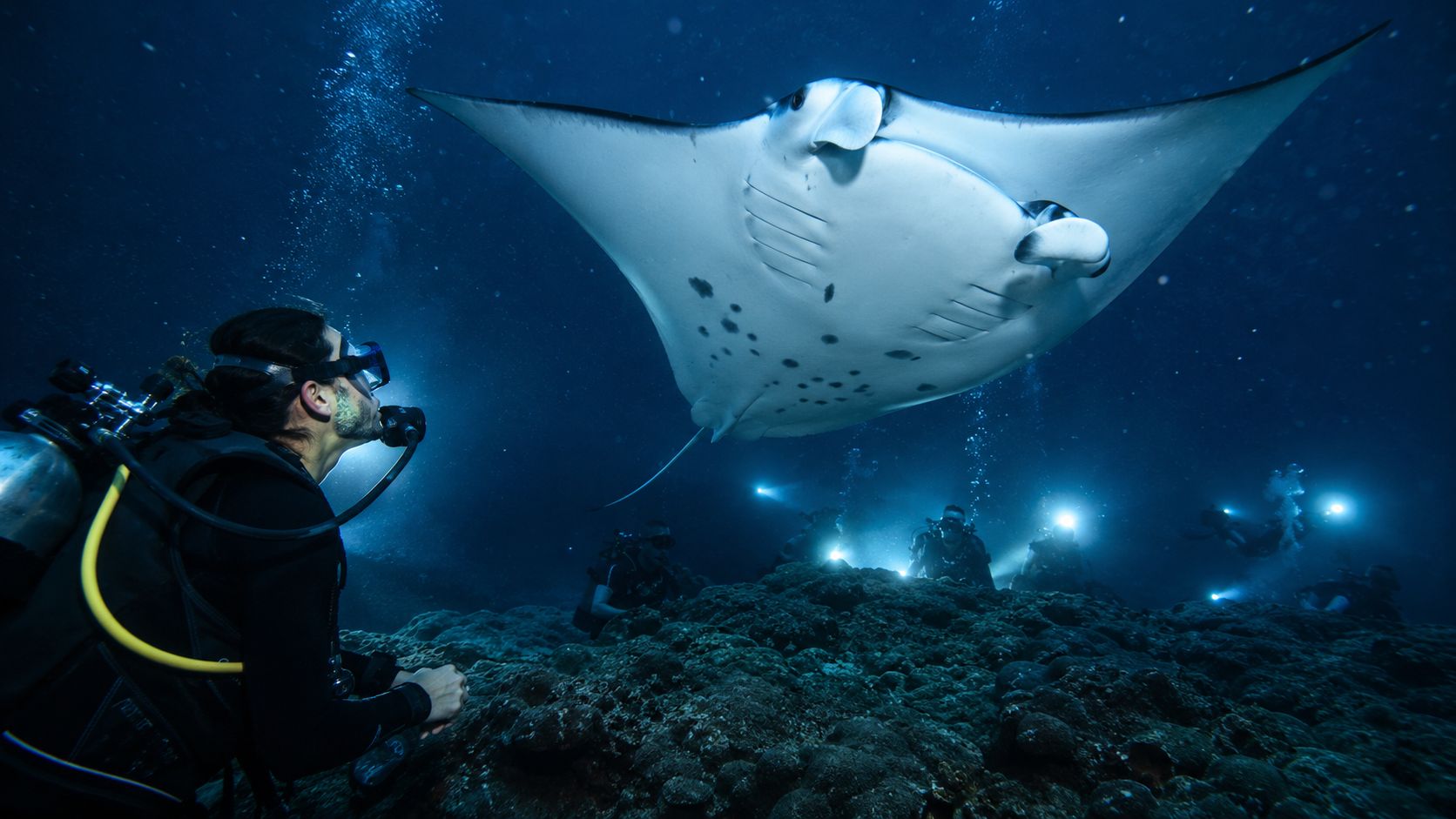
The manta ray night dive
This is Kona's signature experience for a reason. You descend, settle on the bottom or a designated viewing area, point your light up, and wait for the plankton to collect. Once the mantas start feeding, the dive becomes a steady series of close passes, barrel rolls, and last-second turns right over the group.
Site choice matters more than many visitors realize. I'd pick Garden Eel Cove first for most divers because the setup is usually more forgiving and the viewing area tends to work better for both divers and snorkelers. Keauhou can still be excellent, but it is not the automatic first choice that generic travel roundups make it sound like.
If you want to compare schedules and formats, start with these Kona manta ray tours on the Big Island and the dedicated manta ray dive tour page.
One practical note. Put the manta dive after you already have one daylight dive under your belt in Kona. Divers who sort out weighting, mask fit, and buoyancy first almost always enjoy the night more.
The blackwater dive
Blackwater is the dive experienced divers talk about long after the trip ends.
You are suspended over deep open ocean at night, attached to a lit downline, watching larval fish, squid, jellies, and other pelagic life rise out of the dark. Nothing about it feels like a standard night reef dive. The skill set is different too. Good buoyancy, calm breathing, and comfort without a visible bottom matter a lot more here than finning ability or air consumption on a normal charter.
Kona is one of the few places where this can be run regularly enough that operators and photographers have really refined it. That shows in the briefings. A good crew will tell you exactly where to hold position, how to manage your light, and when to stop chasing subjects and let the animals come to you.
If that dive is on your list, book a dedicated Blackwater Dive tour. Do not tack it on as the fourth dive in a long day and expect to get the best from it.
Blackwater rewards relaxed divers who can stay still, follow light discipline, and handle open-water darkness without tension.
Volcanic reefs and lava tubes
Day dives are where Kona's underwater geology really earns its place. The west side gives you lava fingers, arches, hard edges, swim-throughs, and reef sections where the structure does half the storytelling before the fish even show up.
This is also where local site knowledge pays off. Some lava tubes are wide and friendly. Others are tighter than they look from the entrance and punish sloppy trim fast. A diver who kicks through the ceiling silt turns a beautiful feature into a cloudy hallway for everyone behind them. Listen to the guide, maintain a compact profile, and skip any overhead section that feels outside your comfort level.
The easier reef dives deserve more respect than they get. They are often the dives where visiting divers start spotting the details they missed on day one, including leaf scorpionfish, nudibranchs, octopus tucked into cracks, and eels that blend perfectly into the lava.
Advanced profiles and long-range options
Divers with a little experience often book standard two-tank charters and stop there. That leaves some of Kona's strongest diving on the table.
The coastline drops off fast, so advanced charters can reach more dramatic terrain without turning into an all-day run. That changes the kind of dive you get. Expect steeper structure, deeper profiles, and a little less margin for poor buoyancy or slow descents. These trips are a better fit for divers who are current, comfortable, and honest about their air use.
For that style of diving, the premium advanced two tank tour is the type of trip to look for. If you are still comparing formats, this general Kona diving tours page lays out the main options clearly.
Planning Your Kona Dive Trip Logistics and Schedule
You land in Kona, see flat water from shore, and assume every dive day can be booked on the fly. That is how visitors end up doing the manta dive on day one with bad weighting, or stacking too many late nights and early boat calls into the same week. Kona rewards a trip plan with some order to it.
Timing and water conditions
Kona is a year-round destination, but the trip does not feel the same in every season. Summer usually brings warmer water and easier exposure choices. Winter can still be excellent, especially on the leeward coast, but repeated boat dives feel better with a little more thermal protection.
The bigger scheduling factor is not the calendar. It is your energy, recent dive history, and how much boat time you want to stack back to back. Kona makes it easy to reach good sites quickly, which is great for logging a lot of diving in a short trip. It also tempts people to overbook.
If you have not dived in a while, protect the first day. A simple charter or a Kona open water certification or refresher-focused training option is a better use of time than burning a premium spot while you sort out trim, weighting, and air consumption again.
Build your week like local crew do
A solid Kona schedule usually starts simple and gets more ambitious once you know how you are diving in local conditions.
- Day one: Book a standard morning two-tank trip. Use it to dial in weight, check how your gear is riding, and get comfortable with the entries and exits.
- After that: Schedule the manta night dive. Garden Eel Cove is the site divers ask for by name for a reason. The setup is consistent, the viewing works well from the bottom, and it is a much better experience when you arrive calm and trimmed out instead of rusty.
- Later in the week: Add blackwater, deeper profiles, or other advanced trips once you know you are feeling good in the water and on the boat.
- Before your flight: Keep your no-fly window clean. Do not squeeze in “one last dive” and hope the timing works out.
That order saves your best dives for the days when you can enjoy them.
Booking and gear choices that matter
Bring the gear that affects comfort and decision-making. Mask, computer, and exposure suit top that list if yours fit well. Fins can go either way depending on baggage limits and whether you already know they work for boat diving in current.
Rent the bulky items if you want to travel lighter, but ask what is included before you book. Some operators run well-maintained rental kits and some do not. A cheap rental is not a good deal if the BCD fit is poor or the reg breathes wet on every descent.
A few habits make the week run smoother:
- Reserve manta and blackwater early. Those are the trips that fill first.
- Leave one open block. Weather, fatigue, and last-minute site changes happen.
- Ask how the operator groups divers. A boat organized by experience level usually produces a better dive than one mixed too broadly.
- Check departure times against your dinner and sleep schedule. Night diving followed by an early advanced charter is fun until day three.
Kona is easy to dive logistically. The best trips still come from choosing the right order, not just the right operator or the right site name.
Safety First Certifications and In-Water Comfort
The diver who struggles most in Kona is rarely the least certified. It is usually the diver who has the card, has not been in the water for a year or two, and books a manta night dive or a deeper charter as dive one.
Certification and refresher reality
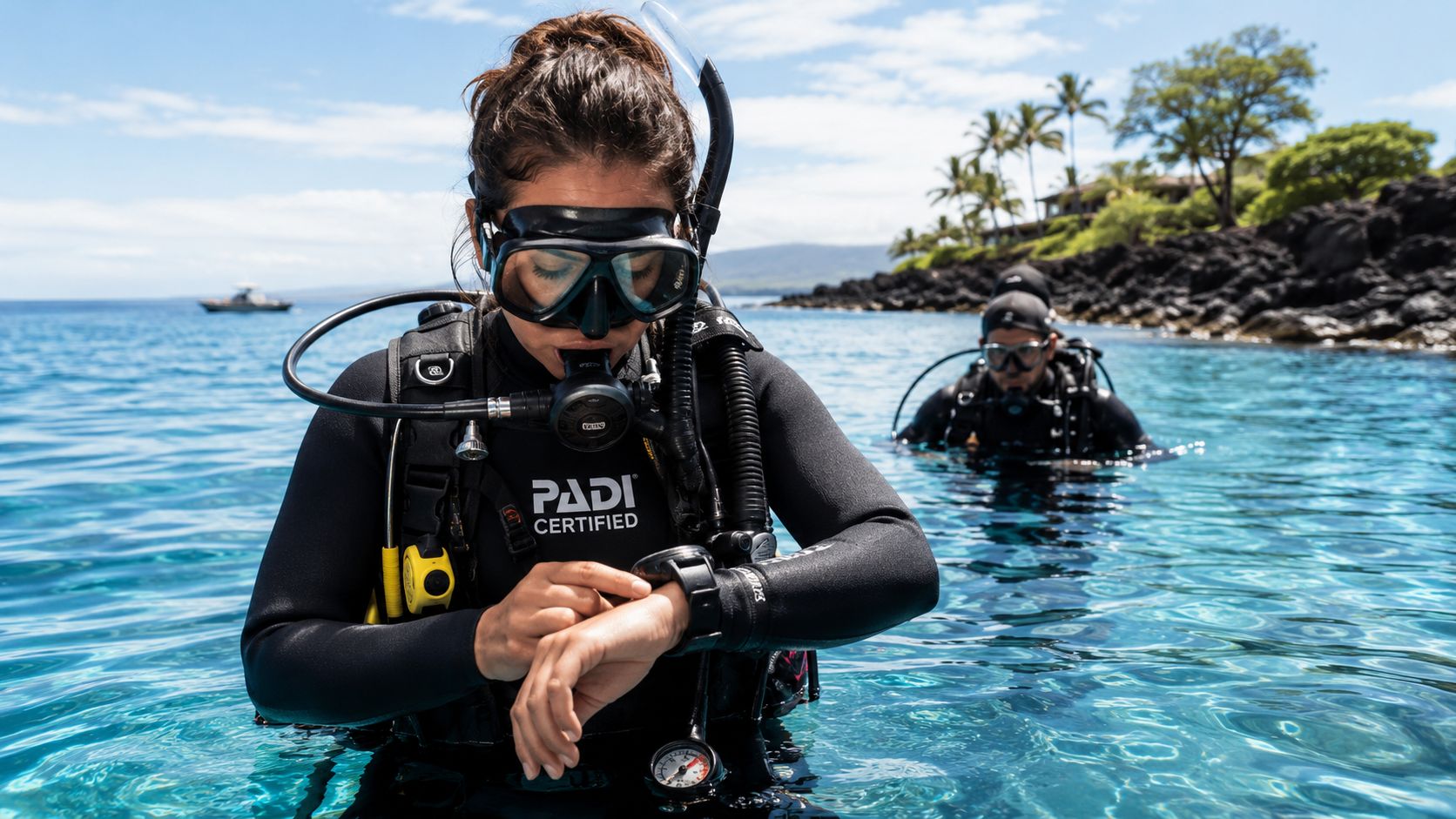
Kona gives certified divers a lot of access, but ocean comfort matters more here than many visitors expect. Entries are usually easy, visibility is often excellent, and that can hide rusty skills until you are negative on descent, chasing buoyancy, or working harder than you should in surge.
Open Water is enough for many reef dives. The better question is whether you can hold depth, clear calmly, manage your gas, and stay settled in the water without needing a long reboot. If the answer is "probably," book a refresher first.
A local refresher is usually the right call because the conditions are specific to this coast. You get back into gear in warm water, sort out weighting for Kona exposure protection, and see quickly whether your trim and breathing are where they need to be. If you need structured rebuild time before booking premium trips, start with Open Water certification and training options in Kona, then ask the operator exactly what a refresher session covers.
Seasickness is easier to prevent than to fix
I see this mistake every season. Divers worry about looking inexperienced, skip prevention, and spend the boat ride trying to hold it together instead of enjoying the dive.
The official manta guidance is direct. Divers and snorkelers who have not been on or in the ocean at night for more than an hour at least twice in the past two years are strongly recommended to use seasickness medication or herbal remedies like ginger during the manta ray night experience, according to the Manta Ray Advocates guide for Hawaii.
Use what has worked for you before. Common options include:
- Patch option: Ship-EEZ Seasickness Patch
- Classic medication: Dramamine pills
- Another medication choice: Bonine pills
- Wristband option: Sea Band wristbands
- Ginger support: Ginger chews
If you're deciding whether you “might be fine,” you probably won't be. Prevent motion sickness before the boat leaves.
What works in practice
Good dive planning gets very simple once you are honest about your current comfort level.
| Situation | Better call |
|---|---|
| You haven't dived in a long time | Book a refresher before any marquee dive |
| You get carsick or boat sick easily | Use prevention before departure |
| You haven't done ocean night activity recently | Treat the manta trip like a seasickness-risk event |
| You're uncertain about a deeper or advanced dive | Start with an easier charter and assess after dive one |
How to Choose the Best Kona Dive Operator
The operator matters as much as the site. Good Kona diving can turn mediocre with poor boat setup, rushed briefings, or crews that are trying to manage too many people at once.
What to evaluate before you book
Most travelers compare price first. Experienced divers usually compare operations first. That's the right instinct.
Look at these factors:
- Boat layout: You want enough room to gear up without chaos, plus an easy ladder and a sane entry routine.
- Guide style: Some crews are excellent with newer divers. Others are better for self-sufficient divers who don't need much hand-holding.
- Site matching: Good operators pick the right dive for the conditions and the group. Weak ones just run the schedule.
- Rental quality: If you're not bringing your own kit, gear maintenance matters.
- Specialty depth: Not every shop handles manta, blackwater, training, and advanced diving with the same level of competence.
Ask better questions
Most customers ask, “What sites do you go to?” I'd ask these instead:
- How many divers are typically with one guide?
- How do you handle divers who are certified but rusty?
- Which trips fit a cautious diver, and which fit a very comfortable diver?
- What happens if conditions don't match the plan?
Those answers tell you more than a brochure ever will.
Motion comfort is an operator issue too
Seasickness isn't only about your body. It's also about site choice, ride length, and whether the crew is honest about exposure. One useful benchmark comes from a non-drug prevention approach. A regimen beginning 4 to 6 hours before departure with 1g of ginger root extract, followed by Sea-Band acupressure wristbands 1 hour prior, prevents motion sickness in up to 67% of scuba divers without medication, according to this seasickness prevention guide. That won't solve every case, but it's practical and easy to test.
One operator many divers compare is Kona Honu Divers. They run local dive tours, training, and specialty trips on the Kona coast. If you're benchmarking shops, this roundup of top Kona diving companies ranked gives a useful starting point.
Booking filter: If the shop can't explain who a trip is for, how they manage rusty divers, and what makes one manta site better than another, keep looking.
More Than Diving Kona for Snorkelers and Families
Your group meets at breakfast and the split is familiar. Two people want a morning two-tank charter. One wants turtles in clear, shallow water. Another wants the manta experience but has no interest in scuba. Kona handles that mix better than many dive destinations, if you plan the days around comfort level and boat time instead of trying to keep everyone on the same schedule.
The mistake I see most often is forcing the whole family into one activity format. That usually means divers feel rushed, non-divers feel pressured, and somebody ends the day tired or seasick. A better plan is simple. Put certified divers on morning charters when conditions are usually calmest, then save one shared wildlife experience for everyone.
Good mixed-group planning
The most workable rhythm looks like this:
- Give divers their own mornings: Certified divers can get the offshore time they came for without asking beginners or kids to sit through a long boat block.
- Use a manta snorkel as the group event: It delivers the same headline animal encounter without requiring certification or scuba comfort.
- Pick easy-entry snorkel spots on non-dive days: That keeps the trip social and gives everyone water time without making every outing a production.
If your group wants calm entries, short swims, and spots that still have a good chance for fish and turtles, this guide to the best snorkeling in Kona is a solid starting point.
The manta snorkel is usually the easiest crossover
For families and mixed groups, the manta snorkel wins because the bar to entry is lower and the payoff is still huge. You hold position at the light board, watch the plankton collect, and the mantas come to you. No scuba skills, no equalization issues, no task loading.
It also solves a real scheduling problem. A diver in the group can do daytime boat dives and still join the manta snorkel later, while non-divers get the signature Kona experience without feeling like spectators on a dive trip.
Kona Honu Divers is one local option for sorting out daytime diving, manta trips, blackwater outings, and training questions before arrival. For mixed groups, that matters. The smoother the schedule looks on paper, the smoother the week usually goes on the water.