
You've booked a trip to the Big Island, and now the practical questions start: Which dives suit your experience? Is shore diving a good idea, or should you take a boat? And how do you fit the manta encounter around the reefs and the rest of your plans?
Diving Kona rewards divers who match the site and trip to the day's conditions, not just the postcard view. The leeward coast offers lava-shaped reefs, boat and shore options, and distinctive night dives, but calm-looking water doesn't make every entry or specialty dive suitable for every diver.
What Makes Diving Kona Stand Out
You step off a dive boat into sunlit water, descend past a reef edge, and see black volcanic rock giving way to coral and pockets of marine life. The scene feels calm, but Kona's character comes from more than easy-looking surface conditions. The coast sits on Hawaiʻi Island's leeward side, where volcanic topography helps shelter it from the trade winds and often reduces surface chop compared with more exposed shores. Conditions still change, and sheltered doesn't mean guaranteed calm.
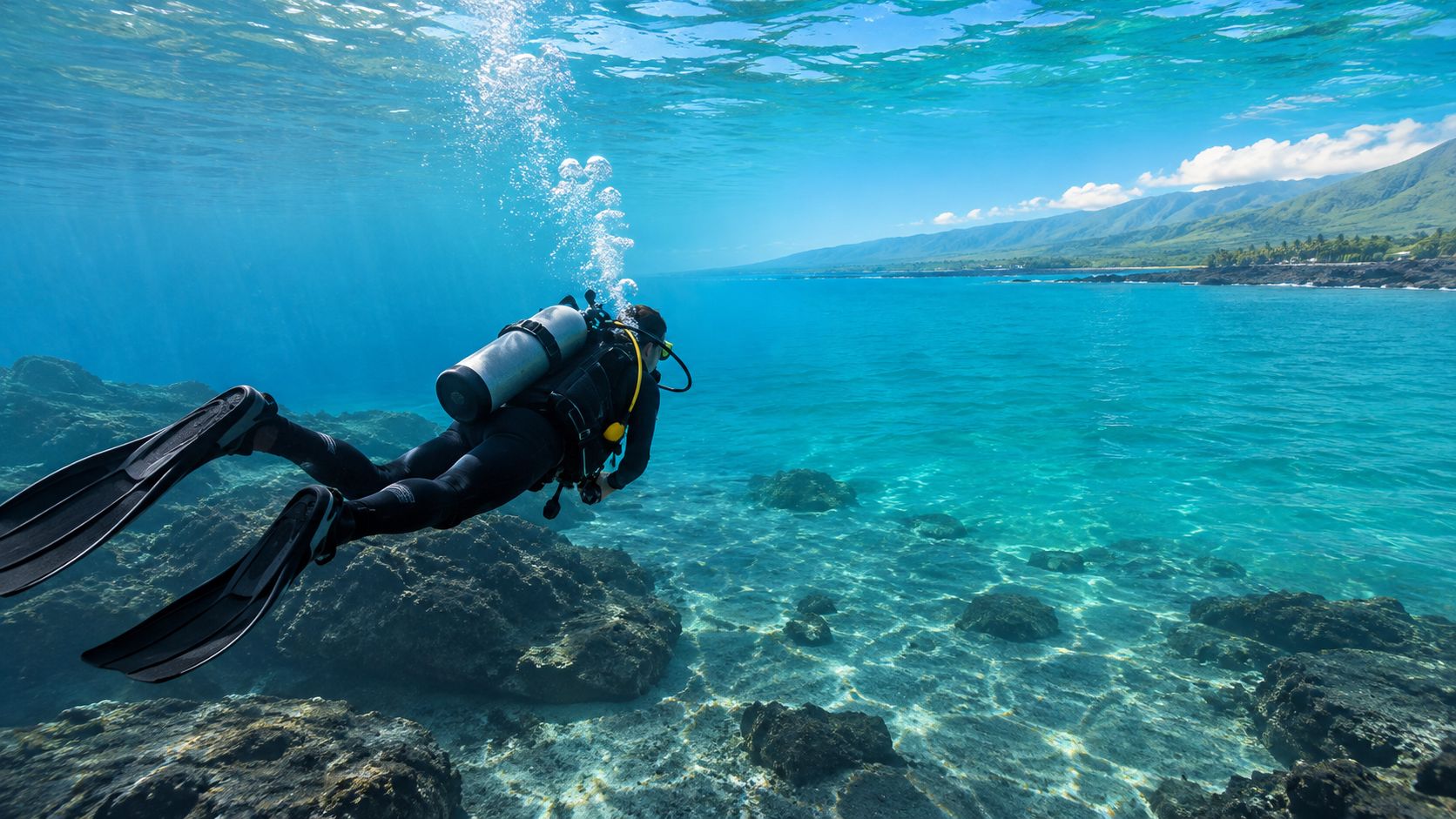
Kona's underwater terrain reflects the island's volcanic origins. Divers can encounter coral reef, lava formations, arches, and tubes, with boat trips opening access to sites that aren't practical as shore dives. That variety is why a straightforward reef dive, an advanced lava feature, and a night excursion can all be part of the same destination, while demanding very different preparation.
The coast's sheltered position often supports clear water and comfortable diving, but visibility and surface conditions aren't fixed. Swell, runoff, sediment, and local current can change what a site is like on a given day. Choose a trip based on the conditions your guide reports, your comfort in the water, and the kind of diving you want, not on the assumption that Kona is always placid.
Kona's manta tourism also grew from local circumstances rather than an old commercial tradition. In the late 1980s, lights at the former Kona Surf Hotel attracted plankton, which drew manta rays close to shore; organized diving followed in the early 1990s. State testimony records surveys along the Kona Coast from 1992 through 2007, during which researchers identified 106 individual mantas and estimated the local population likely numbered fewer than 200 animals. The history is a reminder that this is a wildlife encounter, not a guaranteed performance. (Hawaiʻi State Legislature testimony)
Kona Conditions, Visibility, and Tides
Start with the conditions on the day, not the destination's reputation. Kona's leeward geography can reduce trade-wind exposure and chop, but swell, runoff, sediment resuspension, and localized current can quickly alter a particular site. Visibility near 30 m (about 100 ft) is commonly reported at places such as Old Kona Airport, but it isn't an operational guarantee. (Old Kona Airport site conditions and hazards)
Clear water can make navigation and buddy contact easier, especially for photographers who want long sightlines. It can also distort depth perception: distant marine life may appear closer than it is. Keep checking your depth and your buddy, and don't let a clear view tempt you away from the planned route or a safe gas reserve.
At Old Kona Airport, tide-driven exchange through the narrow lagoon mouth can create strong flow and make the exit difficult or impossible after the tide changes. Use the designated ocean-side route for entry and exit, not the lagoon. On arrival, ask a local professional about the day's current, swell, and exit plan, especially after storms or when surf is high. (Old Kona Airport site conditions and hazards)
For seasonal context, use this guide to the best months to scuba dive in Hawaiʻi, then confirm the actual conditions before committing to a site. A seasonal guide can help with broad planning, but it can't replace a same-day assessment of entry, exit, current, and visibility.
Top Kona Dive Sites by Diver Profile
Pick a site by access and experience, not just by name. Garden Eel Cove is a boat-accessible option used for daytime and night dives. Old Kona Airport offers a partially protected cove used by shore divers and snorkelers, but its narrow lagoon mouth is a real tide-related hazard. The designated ocean-side route is the appropriate entry and exit. (Old Kona Airport marine area rules)
The table is a planning guide, not a promise about a particular site's depth or conditions. Garden Eel Cove's reported dive range is about 30–70 feet, and its manta viewing area is commonly around 35 feet. (Garden Eel Cove site details) The other entries below are best treated as broad access and profile guidance. Ask the operator to confirm the planned site and depth for the day.
| Site | Best for | Typical depth | Access |
|---|---|---|---|
| Garden Eel Cove | Boat divers, reef exploration, and manta-night participants | Reported range about 30–70 feet; manta viewing commonly around 35 feet | Boat |
| Old Kona Airport | Shore divers and snorkelers prepared for a site-specific entry assessment | Varies by route and dive plan | Shore, use the designated ocean-side route |
| Pinnacle sites | Experienced divers looking for more challenging profiles | Confirm with the operator | Usually boat |
| Lava tube sites | Divers comfortable with overhead terrain and controlled buoyancy | Confirm with the operator | Usually boat |
Newly certified divers should tell the operator their experience and ask for a site that suits their training and comfort. A family with snorkelers may prefer a boat trip that can accommodate both divers and surface participants, rather than arranging separate activities. Photographers should consider whether the site offers room to position safely without obstructing other divers or wildlife.
Advanced divers can ask about pinnacles and lava features, but a site name alone doesn't establish that a dive is appropriate. Confirm depth, current, overhead conditions, and the operator's requirements before booking. For shore-entry planning and site ideas, use this guide to Big Island shore diving, then make the go-or-no-go call based on the day's actual entry and exit conditions.
Manta Ray Night Dives at Garden Eel Cove
At Garden Eel Cove, underwater lights gather plankton, and manta rays feed as they glide through the illuminated water. The experience works best when the group holds a steady viewing formation. Divers remain on or near the bottom, while snorkelers stay at the surface rather than freediving into the manta area. That division gives the animals space to move through the water column. (Kona manta dive participant guidelines)
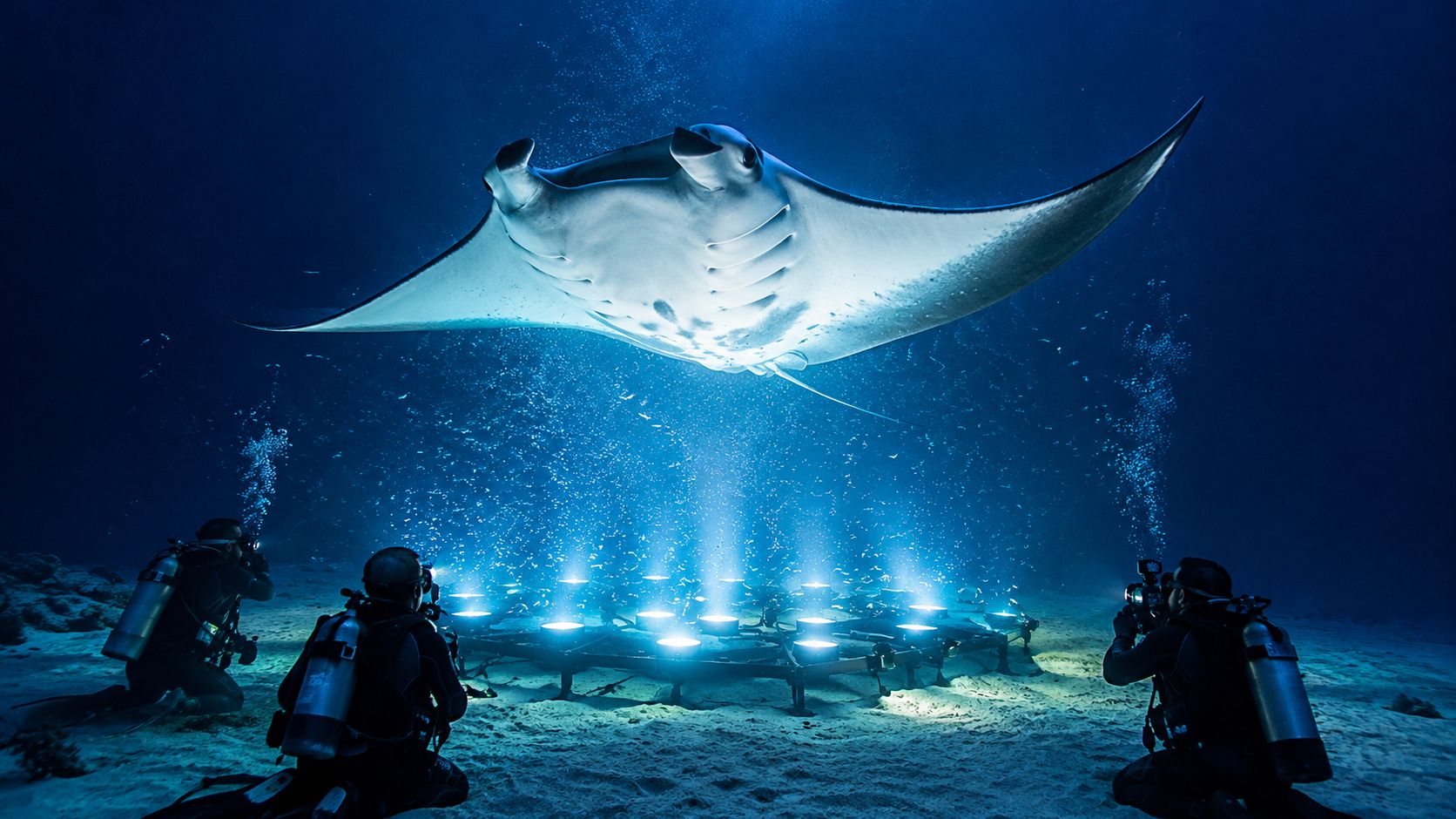
Garden Eel Cove is the superior choice for this dive tour because its protected position and dedicated viewing area support a more organized encounter, with reef structure that adds interest beyond the lights. During the day, its shallow black-sand bottom is known for Hawaiian garden eels; after dark, lights concentrate plankton and draw mantas to feed. (Garden Eel Cove site details) The stationary setup also works well for divers who'd rather observe than chase animals.
Follow the crew's instructions, use only the provided lights, and move slowly. Don't touch, block, or pursue mantas. Close passes can happen, but maintaining your position lets the animals choose their path and reduces disturbance to feeding behavior. (Garden Eel Cove site details)
Before you book: Check whether the trip is suitable for your certification and night-diving comfort. If you're traveling with snorkelers, confirm that the operator can accommodate both participant types on the same outing.
Bring the equipment you normally rely on for a night dive, and check lights and buddy procedures before entering the water. Plan the manta outing early enough in your stay that you have flexibility if weather or animal behavior makes the encounter unsuitable. To compare the surface experience with the dive, see this guide to snorkeling with manta rays.
Blackwater Diving in Deep Open Water
A blackwater dive isn't a reef night dive with the bottom removed. It takes place over deep offshore water, where organisms associated with the deep-scattering layer migrate toward the surface after sunset. In the illuminated observation zone, divers may encounter gelatinous zooplankton, larval fishes, cephalopods, and other pelagic life. The migration is biological, not a fixed-depth schedule, so what appears in the lights can vary with moonlight, weather, plankton availability, and water-column conditions. (Kona blackwater diving overview)
With no nearby bottom to reference, you can't use the reef to judge your position or depth. Reliable computer monitoring, buoyancy control, disciplined light use, and a controlled ascent matter more than following a reef route. Current and drift planning are also central: stay within the operator's tethered or supervised formation and follow the crew's instructions throughout the dive. (Kona blackwater diving overview)
This is a specialist experience for divers who can manage themselves in open water, not a casual extension of a reef dive. Before booking, ask what qualifications and recent experience the operator expects, how the team is supervised, how the tether or formation works, and what happens if conditions change. If you're uncertain about buoyancy, depth monitoring, or staying oriented in darkness, build those skills on a reef first. For an operator-led trip, review the details of the Kona blackwater dive and make sure its requirements match your actual experience.
Certification, Courses, Gear Rental, and Photography
If you're not certified, decide whether you want an introductory experience or a full course. An introductory dive is guided and doesn't replace certification for independent diving. A full open-water course takes a more substantial commitment but gives you training to continue diving within the limits of your certification. If you're certified but haven't dived recently, a refresher is a practical way to rebuild comfort with buoyancy, equipment, and procedures before joining a boat trip.
Explore available scuba classes in Kona and tell the shop what you've done recently, not just what certification card you hold. Ask whether the planned site and depth suit your training. For advanced or specialty trips, confirm the operator's prerequisites before booking; your certification level alone may not establish that you're ready for a demanding dive.
Choose and check your gear
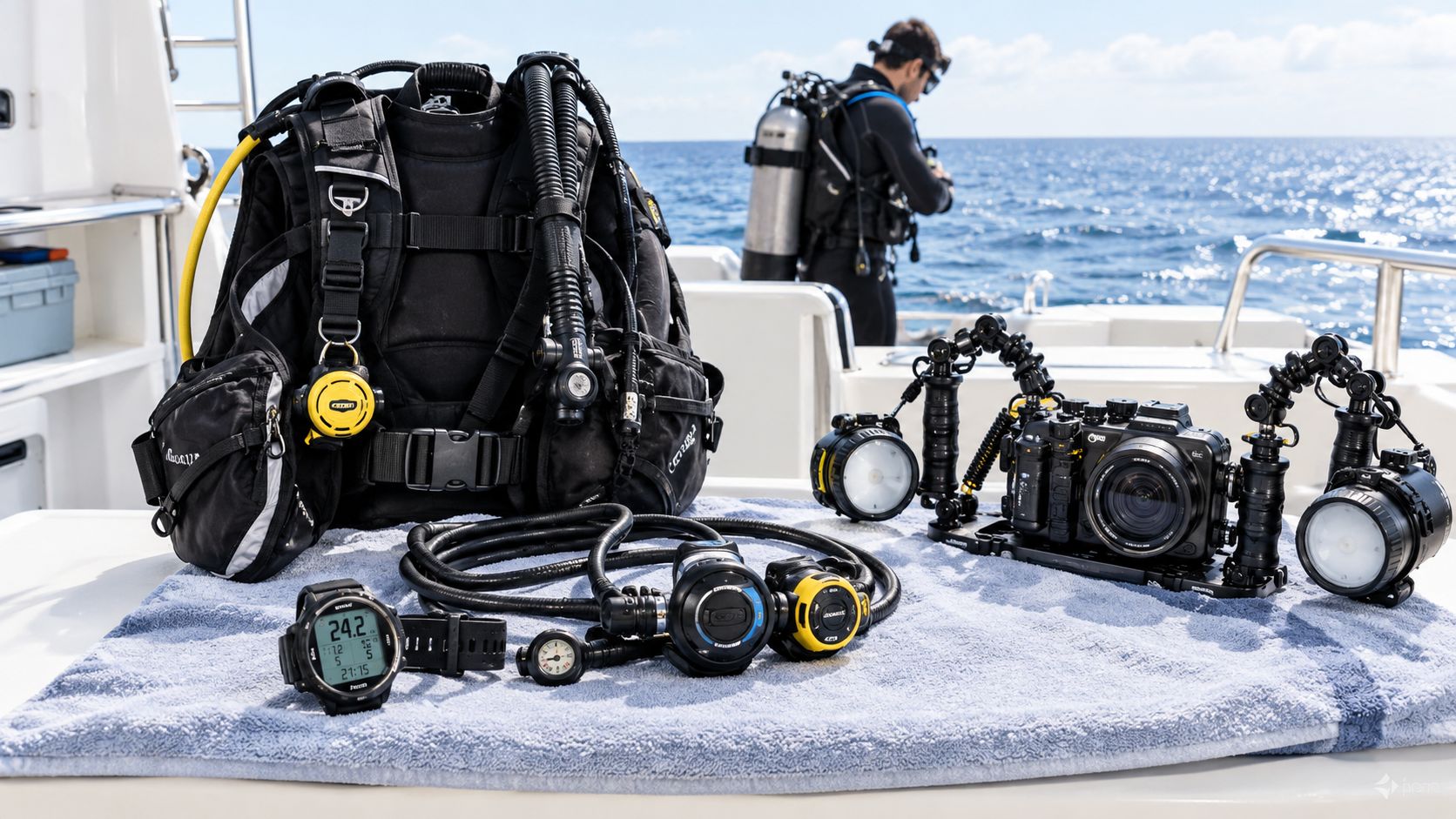
Rental equipment should fit properly and function as expected. Check your mask seal, buoyancy control, exposure protection, and regulator setup before leaving the dock. Ask which items are included and whether nitrox is available to divers who are certified to use it. If you bring personal equipment, assemble and test it before the trip instead of discovering a problem at the entry point.
Set up for the subject
For reef photography, a wide-angle setup can help with broad scenes and larger animals, while macro equipment suits small reef life. At night, lighting discipline matters: aim only where permitted, avoid sweeping other divers' eyes, and don't crowd an animal for a frame. Keep the camera from becoming a reason to abandon buddy contact or your depth and gas checks.
Before travel, consider the housing, ports, batteries, and charging needs of your camera system. A large rig can make entries and exits harder, particularly on exposed lava-rock shore sites. If the access looks awkward, a boat dive may be a better match for a photographer carrying substantial equipment.
Choosing a Kona Operator and Why Kona Honu Divers Fits
A useful operator is one that matches its trip to your experience and explains the plan clearly. Ask about the boat, group arrangement, site selection, rental equipment, and what happens if the crew decides conditions aren't suitable. If you're comparing shops, this overview of Kona scuba dive shops can help you frame the questions.
Kona Honu Divers offers two-tank morning dives, advanced trips, manta ray night dives, blackwater dives, courses, rentals, and private charters. That range can be practical for a visitor who wants to arrange different kinds of diving through one shop. Its fleet amenities include hot showers, shaded seating, and storage; the company also describes its rental gear as proactively serviced and offers free nitrox to divers who are qualified to use it.
The important question isn't whether a boat has a long list of trips. It's whether the specific trip fits your certification, recent experience, goals, and comfort. For advanced diving, ask about the profile and prerequisites. For night or blackwater trips, ask how the crew manages lights, position, and supervision. For a family or mixed group, confirm whether divers and snorkelers can join the same outing and how each will be supported.
The company's dive tours and trip options provide a starting point for comparing formats. Read the trip details, ask about anything unclear, and use the review widget below as another way to assess guest feedback.
Booking, Sample Itineraries, Seasickness, and Conservation
Book the dives that matter most to you first, then leave room to adjust around weather, sea state, and how you feel after each outing. A two-day plan might pair a daytime reef trip with a separate manta night dive. With three days, add a shore dive only if the entry and exit are suitable for your experience. On a longer stay, reserve a blackwater trip for a night when you're rested and meet the operator's requirements. These are planning ideas, not guarantees that every activity will run in any conditions.
If you're prone to motion sickness, prepare before boarding and follow product directions. Options include a Ship-EEZ Seasickness Patch, Dramamine pills, Bonine pills, Sea Band wristbands, or ginger chews. Check medication warnings and suitability with a qualified health professional, especially if you take other medicines or have a medical condition.
Conservation is part of the dive plan. At the Old Kona Airport marine area, rules prohibit taking, injuring, killing, possessing, or removing marine life and other listed natural material except where specifically permitted. Keep buoyancy under control, don't collect specimens, and give living habitat space. (Old Kona Airport marine area rules) At manta sites, stay in your assigned position, avoid contact, and follow the crew's light and crowding guidance. Hawaiʻi prohibited the harvest or capture of manta rays in state waters in 2009, while later management efforts considered vessel traffic, site capacity, and operating practices. (Hawaiʻi State Legislature testimony)
Kona Honu Divers offers guided reef, advanced, manta, and blackwater trips, along with courses and equipment rentals. Review the trip requirements and visit Kona Honu Divers to choose an outing that fits your experience and plans.