
You're probably narrowing down the same questions most divers ask before booking Hawaii. Which island fits your experience level? Which dives are worth building a trip around? And how do you avoid wasting valuable vacation days on the wrong operator, the wrong site, or a boat ride that looked better in photos than it feels at check-in?
That matters more in Hawaii than people think. The islands aren't one interchangeable dive destination. A first-time certified diver, a wreck diver, a family with mixed skill levels, and a night-diving addict should not plan the same trip. Good diving in Hawaii starts with matching the island, the dive style, and the day's conditions to the diver you really are, not the diver you hope to be on vacation.
Your Ultimate Guide to Diving in Hawaii
You back-roll off the boat on the Kona coast just after sunrise. The water is warm, the entry is easy, and within minutes you are following a lava ridge that feels more like a canyon wall than a reef line. A turtle slips past at cruising speed. The visibility stays open enough that newer divers relax and experienced divers start scanning the blue for what else might appear.
That mix is why Hawaii keeps people coming back. The diving is approachable on a good day, but it is not generic. Volcanic structure gives the underwater terrain real shape, and each island puts a different spin on that foundation. Some trips are built around easy reef dives and short boat runs. Others make more sense for advanced divers chasing current, depth, wrecks, or specialty dives.
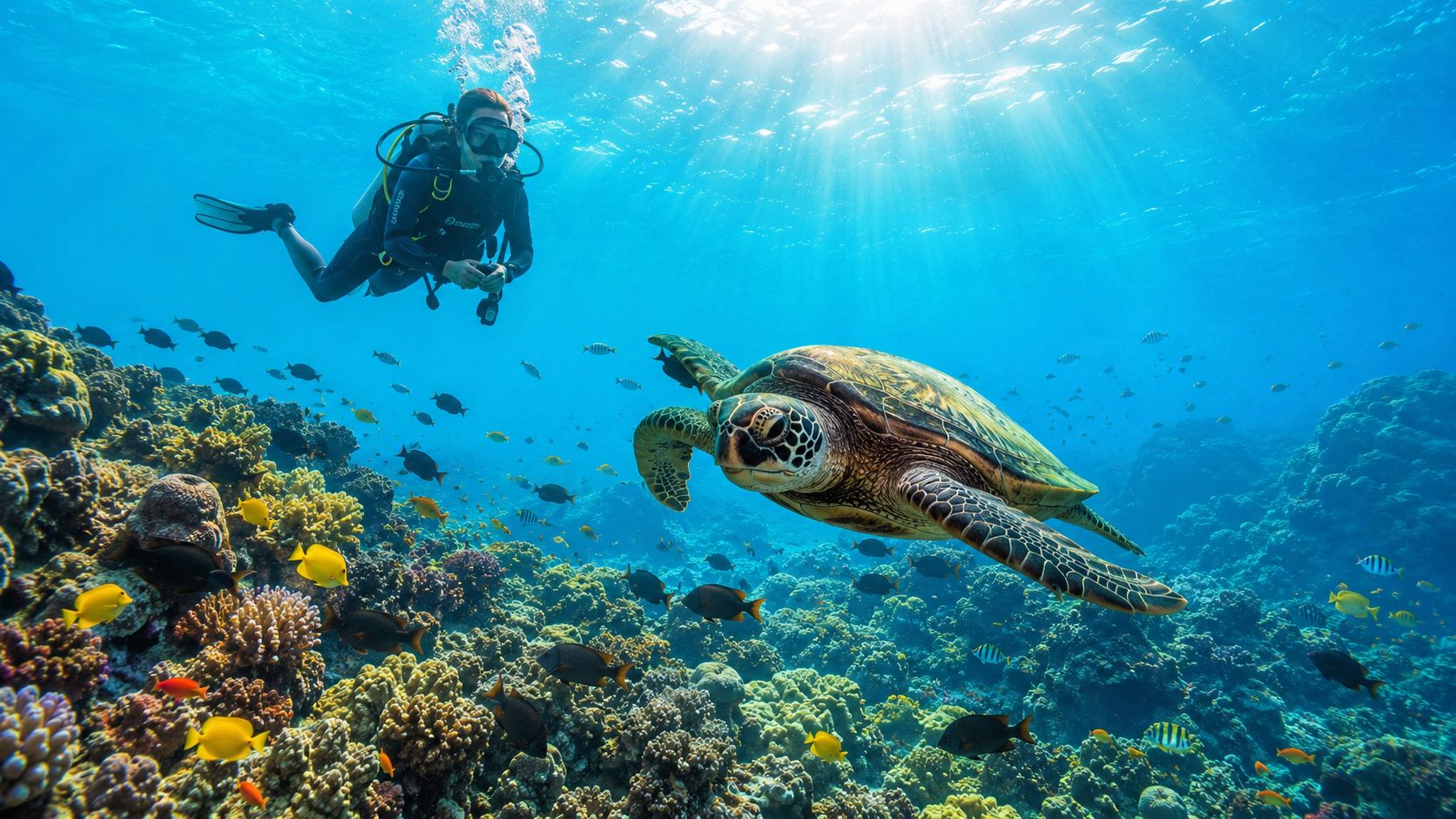
A good Hawaii dive plan starts with three decisions. Choose the island that matches your goals. Choose the type of diving you enjoy, not just the site name you saw on social media. Then choose an operator whose schedule, briefings, and site selection fit your experience level.
That matters even more if you are new to scuba. A rushed resort add-on can leave beginners overloaded before they ever settle into the dive. A supervised intro or a full certification course, like the options available if you want to learn to scuba in Kona with a structured training program, usually leads to a safer and much more enjoyable first experience.
What makes Hawaii different
Hawaii stands out because the diving rewards different kinds of divers for different reasons.
- Volcanic topography: Lava tubes, arches, fingers, and steep drop-offs create dives with strong navigation lines and memorable terrain.
- Comfortable conditions: Warm water helps divers focus on buoyancy, breathing, and awareness instead of managing cold stress.
- Marine life with local character: Turtles, reef fish, eels, and pelagic visitors are part of the draw, and Kona adds night experiences that are hard to match anywhere else.
- Real range across the islands: You can spend one trip doing forgiving reef dives, or build the whole week around advanced profiles and signature charter dives.
My rule is simple. Match the first dive day to your current skill, not your vacation ambition. If your buoyancy is rusty, start easy, dial yourself in, and let the trip get better from there.
Hawaii Diving Island by Island A Divers Decision Guide
A lot of Hawaii dive content pushes famous sites without helping you decide where to go. That's backward. The island choice comes first. As SCUBAPRO's Hawaii diving guide notes, much of the existing online coverage is promotional and site-centric rather than decision-centric, and it often skips the practical tradeoffs between boat-only access, shore access, beginner suitability, and advanced options.
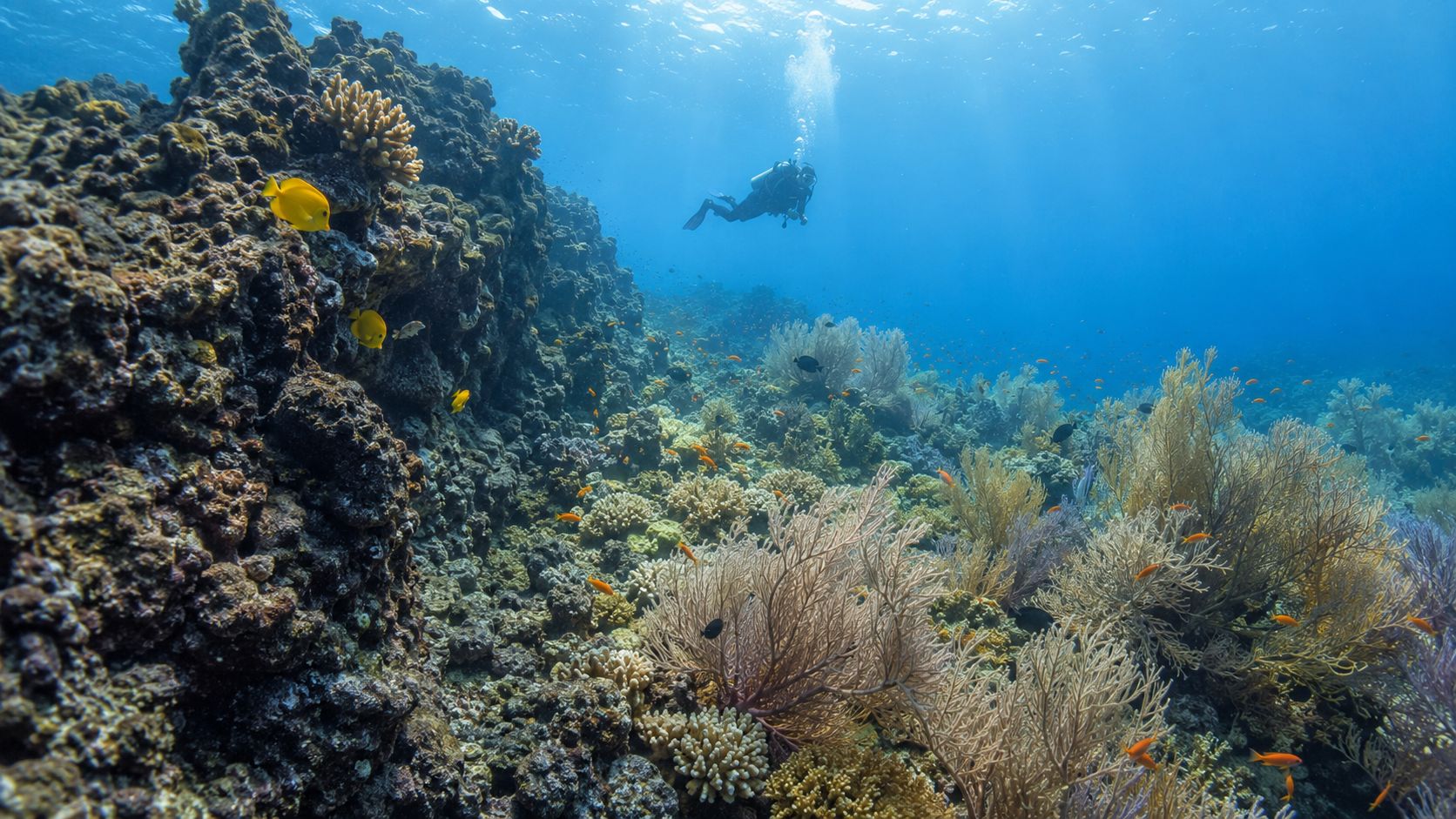
If you want a broader comparison focused specifically on the state's options, this breakdown of which Hawaiian island is best for scuba diving is useful. The short version is that each island has a clear dive personality.
Quick island comparison
| Island | Underwater character | Best fit |
|---|---|---|
| Big Island | Lava formations, specialty dives, broad range of conditions | Divers who want variety and iconic experiences |
| Maui | Resort-friendly reef diving and Molokini access | Families and mixed vacation groups |
| Oahu | Strong wreck scene and lots of operator choice | Wreck fans and experienced recreational divers |
| Kauai | Beautiful but more seasonal and condition-sensitive | Flexible travelers who can time the trip well |
The Big Island for range and reliability
If someone asks me for the strongest all-around recommendation for diving in Hawaii, I usually point to the Big Island, especially the Kona coast. It gives divers a practical combination that's hard to beat: dependable access, distinctive volcanic terrain, easy-to-plan boat diving, and specialty dives you can build a whole trip around.
Kona also works for mixed groups better than many people expect. Beginners can stay on conservative reef profiles. More experienced divers can branch into night diving, more demanding terrain, and longer-range site choices. That flexibility matters when not everyone in the group has the same comfort level.
Explore the available Kona diving tours if you're planning around the Big Island.
Maui for straightforward vacation diving
Maui is a strong choice when diving is important, but not the only reason for the trip. Molokini is the headline draw, and for many travelers it delivers what they want: clear water, easy logistics, and an experience that works well for recreational divers.
Maui also fits family trips well. You can dive in the morning and still have a normal vacation day afterward without too much transit or planning friction.
Oahu for wreck-focused divers
Oahu stands out when the priority is wreck diving. If that's your thing, Oahu deserves serious consideration over the more commonly promoted reef-heavy itineraries. The tradeoff is that some travelers expecting a calm, lava-reef style Hawaii trip may find the island's urban pace and busier marine tourism scene less relaxing.
Decision filter: Choose Oahu when the wreck itself is the point of the trip, not just one item on a longer wish list.
Kauai for divers with timing flexibility
Kauai can be beautiful underwater, but I wouldn't recommend it as the safest default for every diver. Conditions are more seasonal. Some of the most appealing opportunities depend more heavily on swell direction and time of year than the average visitor realizes.
That doesn't make Kauai a poor choice. It makes it a less forgiving one if you only have a few dive days and no flexibility.
Signature Hawaiian Dive Experiences You Cannot Miss
Your light beam hits the bottom, the plankton thickens, and a manta passes inches over your head without touching you. That is the Hawaii dive many people remember for years. The mistake is assuming every signature dive fits every diver. The right choice depends on how comfortable you are at night, how much task loading you can handle, and whether you want a wildlife encounter, open-ocean strangeness, or terrain.
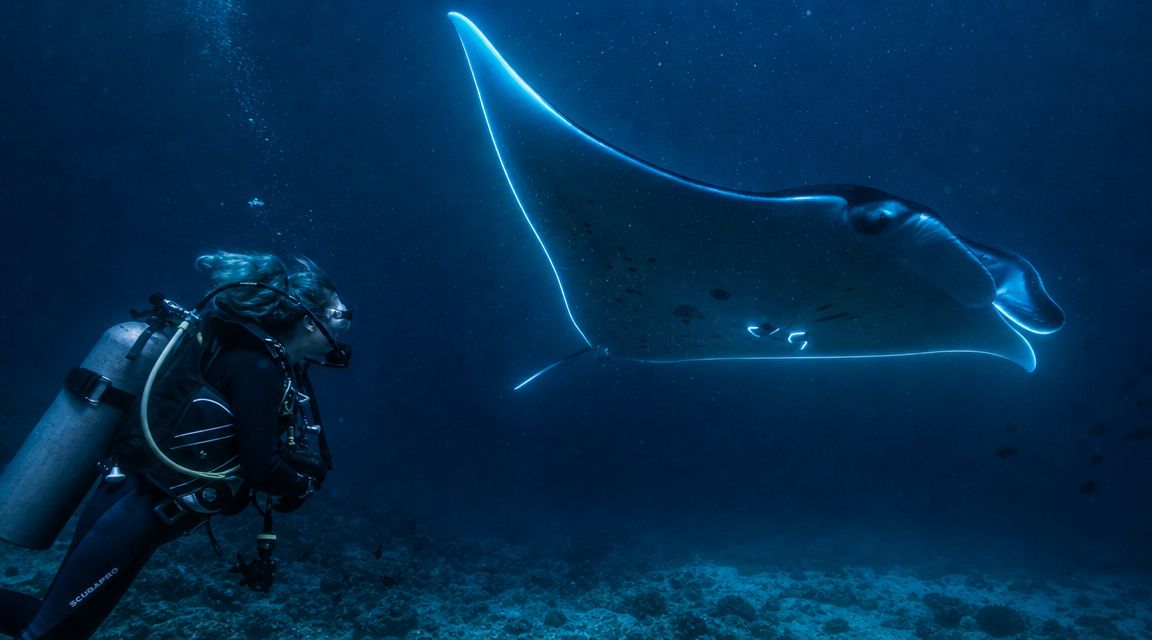
If manta diving is high on your list, this guide to the manta ray tour on the Big Island covers the planning details that matter before you book.
Manta ray night diving in Kona
Kona's manta night dive earns its reputation because the experience is repeatable when conditions line up. Divers settle into a fixed viewing area while lights attract plankton. The mantas come to feed, circling overhead again and again. For many certified divers, this is the easiest signature dive to say yes to because the task load is low once you are in position.
Site choice still matters. The manta ray dive at Garden Eel Cove is a strong option because the site is usually protected and the layout gives divers a cleaner view of the action. That makes a real difference underwater. A calm setup means less finning, less crowding, and less chance of turning the dive into a mess of silt and wandering lights.
A few habits separate a good manta dive from a frustrating one:
- Dial in buoyancy before the show starts: If you are still adjusting weights on the bottom, you will spend the best part of the dive fixing problems.
- Follow the crew's light instructions: The lighting pattern concentrates plankton and keeps the viewing area organized.
- Stay planted and keep your fins quiet: Mantas come close when divers are predictable.
Skip this as your first night dive if you already know darkness raises your stress level.
Blackwater diving for adventurous divers
Blackwater is the most unusual dive Hawaii offers. You descend on a tethered lighting system in deep open water at night, with no reef and no wall beside you. Small pelagic animals and larval creatures rise from the depths after dark, and the whole dive feels more like observation than touring a site.
This is not the right signature dive for every advanced diver. Some divers are fine at depth and still dislike blackwater because there is no bottom reference. Others love it immediately. The deciding factor is comfort in the water column, not bravado.
If that sounds like your kind of dive, the Kona blackwater dive belongs near the top of your list.
Blackwater works best for divers who can hold position without constant correction, manage a flashlight calmly, and stay relaxed when the ocean feels very large. If your night diving is rusty, do a standard night dive first and treat blackwater as the next step, not the warm-up.
Advanced lava formations and deeper profiles
Day dives can be every bit as memorable as the headline night dives. Hawaii's lava topography gives experienced divers swim-throughs, arches, ledges, and steep volcanic structure that reward clean buoyancy and careful gas planning. On the right charter, these dives feel less theatrical than the manta dive and more satisfying for people who care about the shape of the reef itself.
The trade-off is straightforward. As profiles get deeper or more complex, small mistakes become more expensive. Air goes faster, no-stop time shrinks, and a diver with sloppy trim can turn a beautiful lava tube into a silted-out disappointment for the whole group.
For divers who want that kind of site selection, advanced long-range dive tours are worth a serious look.
Which signature dive should you choose first
Use the dive that matches your real skill set, not the one that sounds most impressive.
- Choose the manta dive if you want the classic Hawaii experience and a strong chance of a memorable wildlife encounter without a heavy workload underwater.
- Choose blackwater if you are already comfortable on night dives and want rare marine life more than scenery.
- Choose an advanced daytime lava dive if terrain, structure, and sharper dive profiles matter more to you than a single marquee animal encounter.
If you only book one signature experience on the Big Island, I usually point divers toward the manta dive first. If they come back asking for the strangest thing Hawaii offers, I send them blackwater.
Planning Your Dive Trip What to Know Before You Go
The easiest Hawaii dive trips are the ones that look simple on paper because the diver made the right decisions early. The water is often welcoming. Your itinerary still needs to be realistic.
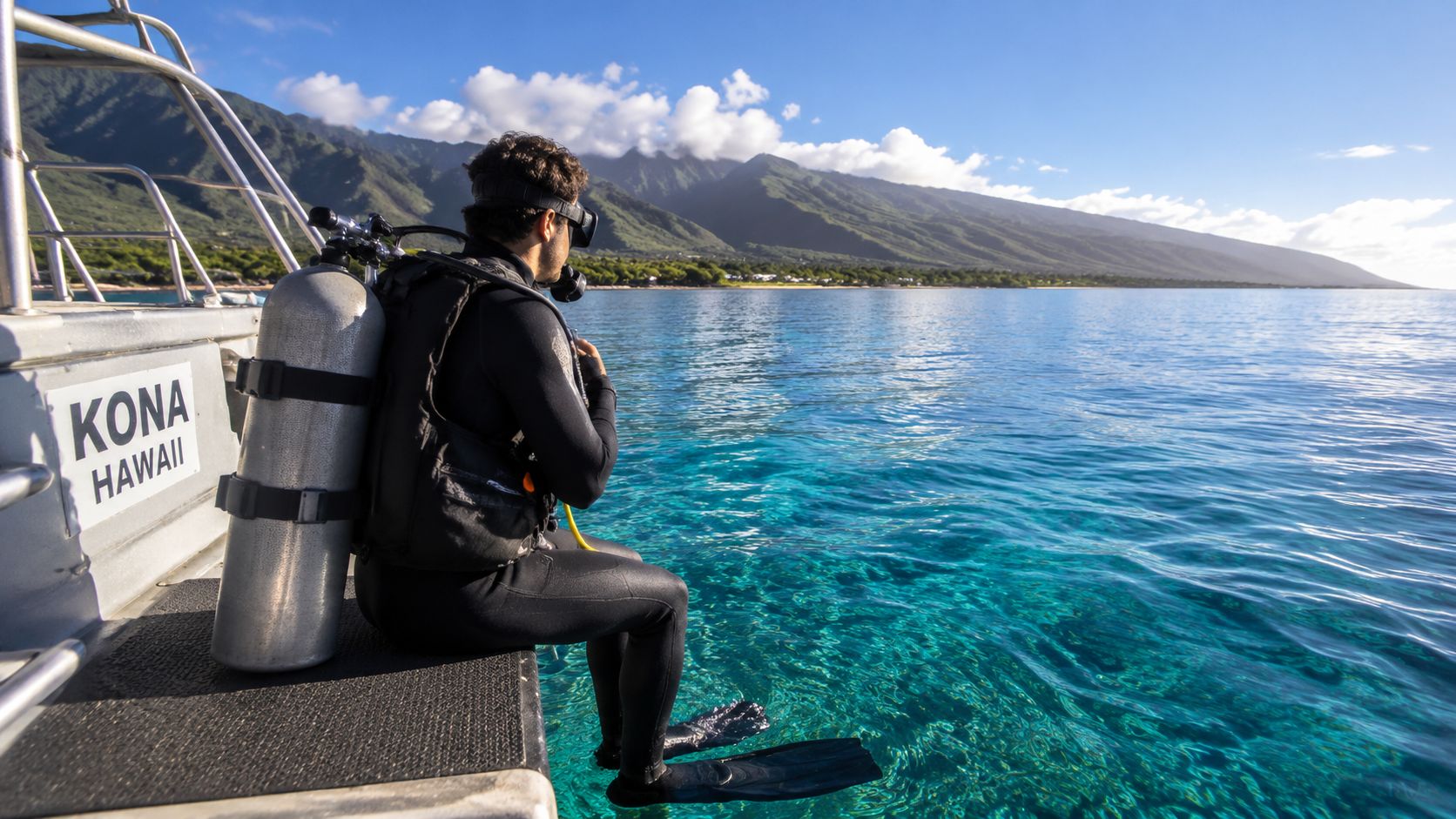
Conditions and exposure protection
Hawaii stays diveable year-round, but that doesn't mean every month feels the same at every site. Recent planning guides consistently note that rainfall, runoff, swell, and island geography can change visibility and access in ways many generic travel articles gloss over. Protected leeward coasts are often the easiest starting point when you want consistency.
For gear, PADI's Hawaii diving page reports typical water temperatures of 75–80°F (24–27°C) year-round, and independent Hawaii guides commonly cite visibility around 75–100 ft (25–30 m) in good conditions. That same planning guidance commonly points divers toward a 3 mm wetsuit in winter and a 1 mm rash vest in summer.
Certification and trip design
A lot of divers overbook specialty experiences and underthink the first day. Don't make your arrival dive the hardest dive of the trip. If you haven't been in the water for a while, treat the first charter like a warm-up day even if you're technically certified for more.
A simple planning approach works well:
- Fresh Open Water diver: Book easy daytime dives first.
- Comfortable night diver: Add manta later in the trip.
- Experienced diver with solid buoyancy: Consider blackwater or more advanced site selection after a check-out style first day.
Seasickness is a dive problem, not just a boat problem
Once a diver gets seasick, breathing rate goes up, attention narrows, and the whole dive day gets harder. If you know you're sensitive on boats, deal with it before boarding. Practical options include the Ship-EEZ Seasickness Patch, Dramamine pills, Bonine pills, Sea Band wristbands, and ginger chews.
If you're prone to motion sickness, don't wait until the boat leaves the harbor. By then, you're behind.
How to Choose a Top Dive Operator in Hawaii
You can tell a lot before the boat leaves the harbor. The crew either has a clear system or they do not. In Hawaii, where conditions can shift by island, season, and even the hour, that matters more than a polished website or a long equipment list.
The first decision is fit. Choose the operator for the kind of diving you are going to do, not the kind of diving you hope you are ready for on vacation. A shop that runs excellent discover scuba trips may not be the right call for blackwater. A crew that shines on advanced small-group charters may be a poor fit for a nervous Open Water diver who needs extra attention on entries and descents.
Start with how they run the day
Good operators are easy to spot because the day feels organized from the first interaction. Waivers are handled cleanly. Gear questions get answered directly. The briefing covers the parts that matter underwater. Entry, exit, depth range, current, likely visibility, and what changes if conditions are different than expected.
I pay close attention to whether a crew can be calm and exact at the same time.
Look for these signs:
- Briefings with real substance: You want site hazards, navigation plan, turnaround pressure, and how the group will handle separation.
- Gear checks that are active: Good crew members notice loose tank bands, missing clips, poorly routed octos, and weighting problems before they become underwater problems.
- Boat control: Head counts, exit timing, and clear recall procedures tell you a lot about standards.
- Honest site selection: Strong operators change the plan when surge, current, or visibility makes the original site a poor fit.
Match the operator to your trip, not just your island
Practical aspects of trip planning come into play. Oahu, Maui, Kauai, and the Big Island all have good diving, but the operator still shapes the experience more than the island name on your itinerary. If Kona is your priority, especially for manta night dives or blackwater, compare shops that run those trips often and explain them clearly. This breakdown of Kona diving companies and trip styles is a useful starting point for sorting options on the Kona coast.
Ask direct questions before you book. Good shops answer them without dancing around the details.
| Ask this question | Why it matters |
|---|---|
| How do you split groups underwater? | Newer divers and experienced divers need different pacing, depth, and gas management |
| Who leads the dive, and what is the guide-to-diver ratio? | Supervision changes the whole feel of the trip |
| What sites do you run most often in current conditions? | Repetition at local sites usually means better judgment |
| What rental gear is included, and what costs extra? | The cheapest seat can become an expensive charter fast |
| What happens if conditions are not right for the planned dive? | A serious operator has an alternate plan, not a sales script |
One option many divers consider on the Big Island is Kona Honu Divers, particularly for Kona boat diving, manta trips, and blackwater. They are one of several established operators on the Kona coast, which is why comparing trip format, group style, and specialty experience matters more than picking the first shop you see online.
What Divers Say About Kona Honu Divers
Read reviews like a diver
A five-star review only helps if you know who wrote it. A guest who loved a first-time resort dive is judging something different from a diver booking a three-day Kona schedule with manta and blackwater.
Look for patterns in the comments:
- Clear safety communication: Guests mention briefings they could follow and crew who stayed attentive without hovering.
- Clean workflow on deck: Divers talk about smooth entries, exits, and gear handling.
- Good judgment: Reviews mention plan changes when weather or ocean conditions called for it.
- Skill-level fit: Newer divers felt supported, while experienced divers still got a useful dive instead of a watered-down profile.
The right operator gives you the dive day you need. Safe if you are rusty. Efficient if you are experienced. Flexible enough to adjust when Hawaii does what Hawaii does.
Essential Packing and Safety Guidelines
Packing for diving in Hawaii doesn't need to be complicated. It needs to be disciplined. The divers who forget small items are usually the same ones borrowing gear accessories on the dock, skipping hydration, or realizing too late that their certification card isn't easy to pull up.
What to bring
- Certification proof: Bring physical and digital access if you have both.
- Personal fit items: Mask, computer, and any exposure gear you know works for you.
- Boat basics: Water bottle, hat, sunglasses, and a light layer for the ride back.
- Sun protection: Use reef-conscious choices and cover up on deck when possible.
If you bring your own life-support gear, inspect it before the trip, not the night before the charter.
Hawaii-specific safety points
Hawaii has clear diver-safety rules. The state requires a diver's flag for free diving or SCUBA diving, with the flag size set at at least 12 inches by 12 inches for individual use, and divers must stay within 100 feet of the flag in ocean waters, according to this summary of Hawaii diving history and safety rules. Reputable boat operators handle this for guided charters, but shore divers need to understand it themselves.
That rule is a good reminder that Hawaii rewards disciplined diving. Strong visibility can make people casual. Don't let it.
The habits that protect reefs and improve dives
Good conservation practice and good dive technique are usually the same thing.
- Hold trim, not the reef: If you need to steady yourself with your hands, your buoyancy needs work.
- Give animals room: Turtles, rays, and reef fish show better behavior when divers stop crowding them.
- Slow your finning: Volcanic terrain and reef structure punish sloppy movement.
Understanding Costs and Booking Your Dives
You book two Hawaii dives at first glance. One is a basic two-tank reef charter. The other is a manta night dive or a farther-run Kona charter with stricter experience requirements. The price gap is not markup for the sake of markup. It reflects boat fuel, site access, staff attention, timing, and how much margin the operator needs to run the dive safely.
That matters because Hawaii is not one uniform dive market. Shore-heavy trips on Oahu or Maui can keep costs down for independent divers. Kona often delivers the strongest menu of boat diving and specialty trips, but those options usually come with higher charter prices. The right question is not “What is the cheapest dive?” It is “Which island and which dive type fit my training, goals, and vacation schedule without wasting money on the wrong day?”
Why some dives cost more
Operators charge more when the dive day asks more of the crew and the boat.
A simple local reef run is usually the lowest-friction option. Specialty trips, advanced profiles, and longer runs often cost more because they require tighter site planning, more detailed briefings, closer in-water supervision, and in some cases a smaller diver-to-guide ratio. Night departures add their own logistics. So do dives that depend on narrow weather windows or precise timing.
You will usually see the difference in a few places:
- Boat run and fuel use: Farther sites and repositioning time cost more to operate.
- Crew workload: More demanding dives need more hands-on briefing and diver management.
- Group size: Better operators often keep advanced or specialty groups smaller.
- Rental setup: Lights, thicker exposure gear, or specialty equipment can change the final total.
What to check before you book
The quoted price only helps if you know what it includes. Ask direct questions before you put a card down.
- Rental inclusions: Confirm whether BCD, regulator, wetsuit, weights, tanks, and computer are included or priced separately.
- Certification fit: Ask for the actual requirement for that charter, not a vague “advanced preferred.”
- Departure and return times: Morning, afternoon, and night dives affect your surface interval, driving plans, and non-diving activities.
- Boat pace and headcount: A fast boat is useful. An overloaded boat with rushed entries is not.
- Cancellation policy: Hawaii weather can change plans quickly, especially in winter.
If you want a practical pricing breakdown before you start comparing operators, this guide on how expensive scuba diving is in Hawaii gives useful context.
Booking strategy that works
Book the dives that are hardest to replace first. In Hawaii, that usually means manta night dives, blackwater trips, and any charter tied to a short weather window or limited weekly schedule.
Then build the rest of the trip around recovery, flexibility, and your actual energy level. I usually recommend an easier reef day early in the trip, a signature dive once you are settled, and the more demanding profiles later if conditions and comfort line up. That order works well for many visitors because it gives you time to dial in weighting, get used to local conditions, and avoid burning your best dive day on travel fatigue.
Leave at least a little room in the schedule. The divers who get the best Hawaii trips are often the ones who can shift a day and let the operator choose the site that suits the conditions.
If you want a practical starting point for diving in Hawaii, Kona Honu Divers offers Kona boat diving, manta trips, blackwater dives, and training options that fit both newer certified divers and experienced visitors building a Big Island dive itinerary.