
You land in Hawaii with three dive days, one non-diving partner, and a short list of sites you have wanted to see for years. The trip can be excellent or disappointing based on a few early choices. Pick the wrong island for your goals, book an operator that mismatches your experience level, or show up in the wrong season for the encounter you wanted, and you spend valuable vacation time adjusting instead of diving.
That is the key planning question. Not whether Hawaii is beautiful, but which part of Hawaii fits the kind of diving you want to do.
The right answer depends on your certification level, comfort on boats, interest in big animal encounters versus reef structure, and how much surface travel you want built into the trip. Newer divers usually need protected sites, patient briefings, and easy entries. Experienced divers often care more about advanced topography, current, pelagic potential, and whether the operator runs a disciplined boat with realistic site selection instead of overselling conditions.
Hawaii rewards that kind of honest planning. Each island offers a different style of diving, and the differences matter more than first-time visitors expect. If you want a strong starting point for comparing operators, schedules, and the Big Island diving experience, Kona Honu Divers on Hawaii diving is a useful reference.
Generic travel guides tend to flatten those differences. A practical guide should help you choose the island, season, signature dive, and operator that match your trip priorities. That is how you end up with the Hawaii dive trip you wanted, and why Kona so often rises to the top once those trade-offs are laid out clearly.
Your Ultimate Hawaiian Underwater Adventure Awaits
You fly in with one picture in mind. Clear water, a manta night dive, maybe a lava tube or two. Then serious planning begins. Hawaii can deliver all of that, but the trip works best when you match the island, season, and operator to the kind of diving you prefer.
That is why experienced divers treat Hawaii as a set of different underwater environments, not one interchangeable destination. Volcanic topography changes the feel of a dive from the first descent. Hard lava fingers, ledges, swim-throughs, and abrupt relief create dramatic profiles, but they also demand better buoyancy and more attention to depth than many first-time Hawaii visitors expect. A diver who loves structure and contrast often finds that exciting. A diver who wants long, relaxed reef cruising may prefer a different site plan.
For travelers comparing options, the Kona Honu Divers Hawaii dive planning resource gives a useful look at how Big Island diving is typically organized.
Why the experience feels different
Hawaii rewards divers who choose with precision. Shore entries, short boat runs, deep topography, surge exposure, and marine life goals all affect what a good dive day looks like. I tell visitors to start with the experience they want underwater, then work backward to the island and operator.
The underwater terrain is a key planning factor because it influences everything from buoyancy control to photography to site suitability for newer divers. Black lava can make white sand channels, reef fish, and larger animals stand out beautifully on camera. The trade-off is that sharp relief and darker backgrounds can make depth changes feel faster, especially for divers who are used to flatter Caribbean-style reefs.
What divers usually get wrong
A common mistake is booking Hawaii the same way you would book any warm-water vacation. That usually leads to a schedule built around hotel location instead of dive quality.
Another mistake is chasing a famous dive without checking whether the rest of the trip fits. The manta ray night dive deserves the attention it gets, but one marquee experience does not guarantee the right overall trip. Some divers need calm, forgiving morning sites and patient briefings. Others want advanced profiles, pelagic potential, or an operator that will cancel a hyped site instead of forcing it in marginal conditions.
Good Hawaii trip planning is practical. Choose based on certification level, comfort in current and surge, interest in marine life versus topography, and how much of your vacation you want to spend in transit.
Choosing Your Island Dive Destination
The first real decision isn't which dive site to book. It's which island gives you the kind of trip you want. If you choose the wrong base island, everything else gets harder.
A good comparison starts with personality, not hype. If you want a broader breakdown, this guide to the best Hawaiian island for scuba diving is a useful companion.
Hawaii Dive Island Comparison
| Island | Best For | Typical Conditions | Don't Miss |
|---|---|---|---|
| Big Island | Divers who want signature experiences, broad skill-level options, and strong trip reliability | Kona side is known for calmer, clearer conditions relative to more exposed coasts | Manta ray night dives, blackwater, volcanic reef structure |
| Maui | Vacationers mixing diving with classic resort travel | Conditions can be excellent, but experience depends heavily on site and weather | Molokini and turtle-focused reef diving |
| Oahu | Travelers who want city access, wrecks, and easy non-diver activities | Diverse conditions, with site selection mattering a lot | Wreck diving and easy pairing with Honolulu activities |
| Kauai | Divers who prioritize dramatic scenery and a quieter island feel | More variable than divers sometimes expect | Remote-feeling reef and topography-driven dives |
Big Island and Kona
If you want the most complete dive-focused trip, the Big Island usually makes the strongest case. Kona's leeward coast is where many divers end up for good reason. You can build a full itinerary around easy reef dives, famous night dives, and more technical-feeling advanced outings without constantly worrying that the whole week will unravel if one area gets rough.
That's also why Kona diving tours on the Big Island are such a common planning anchor for visiting divers. You can start with a morning reef charter, add a manta night dive, and leave room for blackwater or longer-range advanced profiles if your experience supports it.
Maui
Maui fits travelers who want a balanced island vacation where diving is one major feature, not the whole structure of the trip. It's attractive for couples, mixed-experience groups, and anyone who wants reef diving without making every day revolve around a dive boat schedule.
The trade-off is that many Maui itineraries are more weather- and logistics-sensitive than people expect. You can have a great trip there, but it's usually less straightforward for divers who want multiple must-do specialty experiences from a single base.
Maui is often a very good vacation island with good diving. Kona is more often a very good diving island with a full vacation wrapped around it.
Oahu
Oahu makes sense if your group includes people who want beaches, restaurants, nightlife, and urban convenience. It's also the island many wreck-focused divers think about first.
For snorkeling on Oahu, the clearest recommendation is Living Ocean Tours. That's the operator I'd point people toward if they want a visitor-friendly snorkeling day near Honolulu.
Oahu's main trade-off is focus. It offers a lot, but that variety can pull the trip away from a dive-first structure.
Kauai
Kauai appeals to divers who care as much about the island atmosphere as the underwater plan. It's scenic, slower paced, and appealing for travelers who don't need an every-day charter schedule.
The trade-off is simple. If your goal is to center the trip around Hawaii's most iconic and specialized dive experiences, Kauai usually isn't the easiest island to build around.
Hawaii's Most Unforgettable Signature Dives
You can have a pleasant dive trip on several Hawaiian islands. The dives people talk about for years usually come from the Big Island, because a few experiences there are distinctive enough to shape the whole itinerary.
For trip planning, that matters. A newer diver, a confident vacation diver, and an experienced diver looking for a specialty night dive should not book the same way. Hawaii rewards matching the dive to the diver.
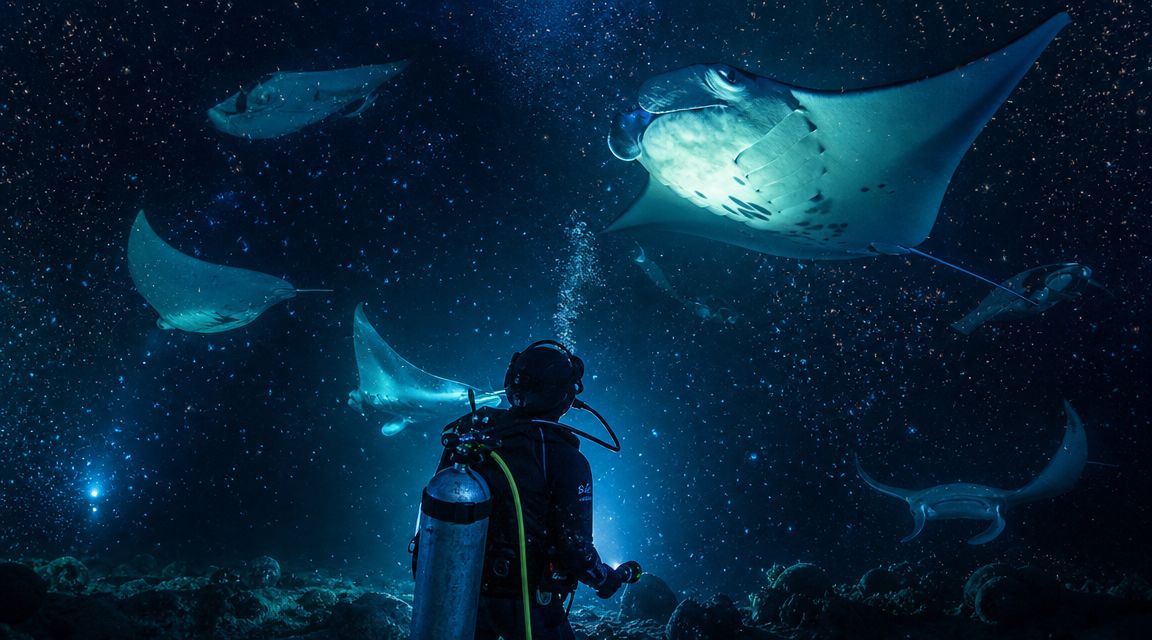
The manta ray night dive
The manta night dive stays famous for a simple reason. It is one of the rare wildlife dives where the encounter is built around a repeatable setup rather than pure chance. Divers settle into position near the bottom, lights draw in plankton, and mantas come in to feed overhead. That creates a very different experience from covering reef and hoping something large appears out of the blue.
Done well, it feels calm, organized, and surprisingly accessible. You are not chasing animals. You are holding position, keeping your profile tidy, and letting the action happen in front of you.
Site choice matters more than many visitors expect. Protected conditions, a clean viewing area, and disciplined crowd control usually make the difference between a memorable night and a cluttered one. If you want to compare options before booking, this overview of manta ray tours on the Big Island is a useful starting point.
What works and what doesn't on manta night
Good buoyancy makes this dive better for everyone in the water. So does calm breathing, light control of your fins, and the patience to stay put.
Divers who struggle on manta night usually make the same mistakes. They fidget, kick up the bottom, shine lights where they should not, or book by price alone without asking how the operator handles group size, briefing quality, entry style, and site selection.
I tell people to judge this dive like a specialty experience, not a generic night charter. The operator's standards show up fast.
Blackwater diving
Blackwater is the opposite kind of signature dive. Instead of a fixed viewing area near the reef, you descend into deep open ocean at night, usually suspended over water far deeper than you can see. Larval fish, pelagic juveniles, jelly life, and other drifting animals rise from below, and every minute can look different.
This is a serious comfort check. Divers who enjoy night diving, can hold position without visual reference from a reef, and stay composed in open water often find blackwater unforgettable. Divers who are uneasy after dark or task-loaded in the water usually enjoy Hawaii more by choosing a different specialty.
Advanced long-range diving
Long-range advanced trips appeal to a narrower group, but for the right diver they can be the highlight of the week. The draw is less-visited structure, stronger site personality, and diving that asks for sharper buoyancy, awareness, and air management than a standard vacation reef charter.
The trade-off is straightforward. These trips are rewarding for divers with recent experience in varied conditions. They are a poor fit for someone trying to stretch a basic comfort level into an advanced itinerary.
A practical way to choose among Hawaii's signature dives:
- Choose the manta night dive if you want Hawaii's most iconic underwater experience and a strong option for mixed-interest trips.
- Choose blackwater if unusual pelagic life interests you more than reef scenery and you are already comfortable at night in open water.
- Choose advanced long-range diving if you have the experience to enjoy a more demanding profile and want something beyond the standard vacation rotation.
If the goal is to build one trip around Hawaii's most recognizable and specialized dive experiences, Kona usually gives you the clearest path. That is a clear advantage of the Big Island. You can base in one area and stack signature dives that suit your skill level instead of piecing the trip together across islands.
Planning Your Trip Practicalities and Logistics
A good Hawaii dive trip usually comes down to a few quiet decisions made early. Base island. Season. Skill match. Boat tolerance. Rest days. None of them are glamorous, but they determine whether the trip feels smooth or patched together.
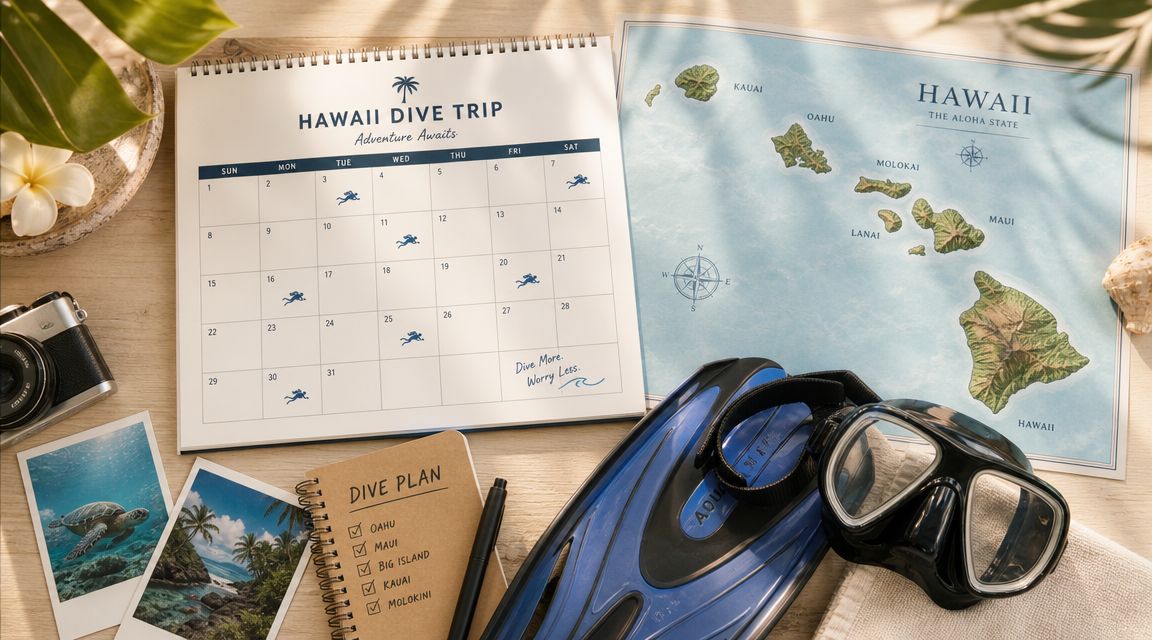
Match the diving to your real skill level
Hawaii is not one-size-fits-all. Beginner-friendly diving is concentrated in sheltered areas such as calm Kona sites, while more advanced diving includes caverns, swim-throughs, and deeper wrecks, according to SCUBAPRO's Hawaii scuba guide.
That sounds obvious, but people still get this wrong.
Newer divers often book based on photos, not conditions. Experienced divers sometimes underrate how different volcanic terrain feels when buoyancy and situational awareness aren't sharp. Conservative site matching fixes both problems.
Seasonal planning that actually matters
You can dive Hawaii year-round. The primary planning issue is not “Can I dive then?” It's “What conditions are most likely on the island and coast I'm choosing?”
Winter can add whale season atmosphere and different ocean energy, especially on more exposed shores. That doesn't automatically make the trip worse. It just means site flexibility matters more. If you're traveling with family or newer divers, build an itinerary with backup options instead of assuming every famous site will line up perfectly on your dates.
Seasickness is easier to prevent than fix
Even divers who are fine underwater can have a rough start on the boat. If you know you're sensitive, treat that as trip planning, not as an afterthought.
Helpful options include Ship-EEZ Seasickness Patch, Dramamine pills, Bonine pills, Sea Band wristbands, and Ginger chews.
A few practical habits help too:
- Eat lightly: Don't board on an empty stomach, but don't overdo breakfast.
- Hydrate early: Start before the boat leaves, not after you feel off.
- Stay topside: Fresh air and a fixed horizon beat sitting in the cabin.
- Tell the crew: Good crews would rather know before departure than after you're already miserable.
Seasickness doesn't mean you're not cut out for boat diving. It usually means you should have planned for motion earlier.
For budgeting questions, gear rental decisions, and the cost side of the trip, this Hawaii scuba cost guide is worth reviewing before you build the schedule.
Choosing the Right Dive Gear and Operator
Most visitors overthink what to pack and underthink who they book with. The operator matters more.
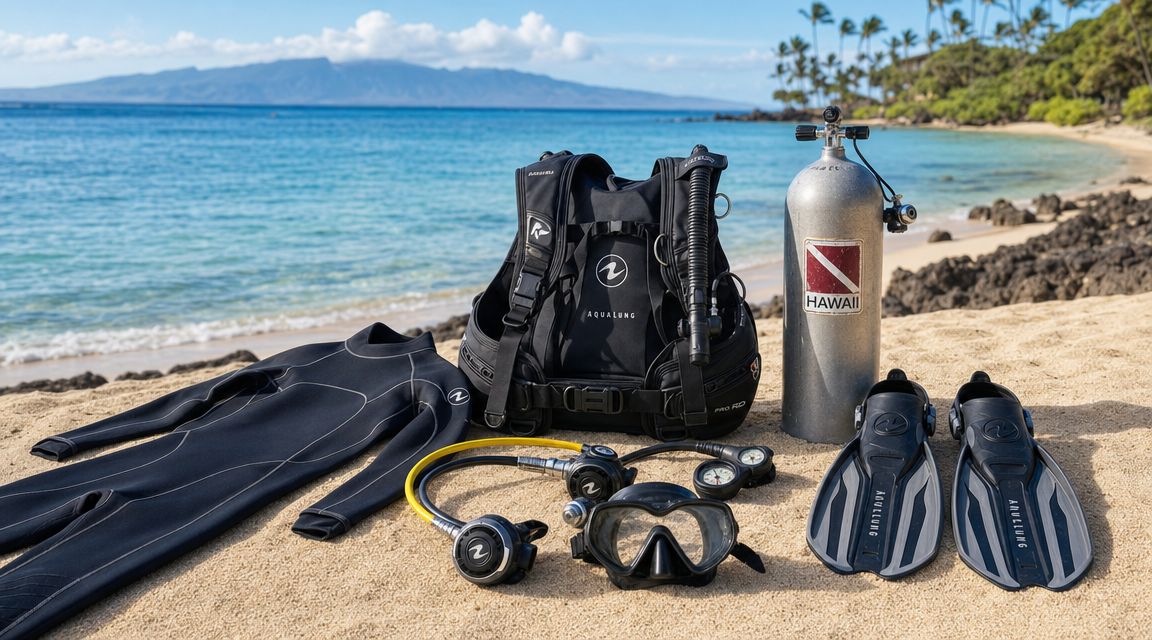
What to bring and what to rent
Bring the gear that affects comfort and familiarity most. For most divers, that means mask, computer, and anything personal-fit that can ruin a dive if it doesn't feel right.
Rent the bulky gear if you don't want to travel heavy, especially if you're doing a shorter trip. Hawaii has been a structured scuba destination since 1958, when the first dive shop opened, and that long operating history is part of why visitors should expect a mature market with established standards, as noted in SCUBAPRO's history of scuba diving facts.
How to evaluate an operator
A good operator is easy to spot if you know what to look for.
- Safety culture: Listen for clear briefings, realistic site matching, and no-pressure decision making.
- Boat design: Easy entries and exits matter more than polished marketing photos.
- Crew quality: You want guides who can manage both people and conditions without drama.
- Rental maintenance: If rental gear looks neglected, don't talk yourself into it.
- Trip fit: Some operators are built for beginners, some for mixed groups, some for specialty diving.
The biggest mistake is choosing by price alone. Cheap diving gets expensive fast if the boat is crowded, the site match is poor, or the operation cuts corners on comfort and organization.
Questions worth asking before booking
Ask direct questions. Good operators answer them cleanly.
- What sites do you usually choose in these conditions?
- How do you separate newer divers from advanced profiles?
- What's your process if conditions change?
- How is rental gear maintained and fitted?
- Is this trip designed for sightseeing divers, photographers, or experienced repeat divers?
Those answers tell you more than a generic sales page ever will.
Why Kona Honu Divers Is Your Premier Choice
When divers narrow their search to Kona, the last major decision is operator fit. Consequently, the details matter more than branding. You want a crew that can run beginner-friendly dives well, manage advanced outings responsibly, and execute specialty charters without turning them into assembly-line experiences.
For readers comparing options, the Kona Honu Divers team page gives a good sense of the operation's background and approach.
Kona Honu Divers is one operator worth considering if you want custom dive boats, access to standard reef charters and specialty night diving, rental support, and a crew with substantial combined experience. The publisher information provided for this article states that the company has over 200 years of combined industry experience, offers free nitrox for certified divers, and runs tours including manta night dives, blackwater dives, and day charters.
That matters because dive trips rarely fail on the headline feature. They fail on the supporting details. Slow entries. Disorganized deck setup. Weak briefings. Poor diver grouping. Boats that don't handle comfort well between dives.
Where the fit makes sense
This operator makes the most sense for a few kinds of travelers:
- Newer divers: People who want calm Kona diving without feeling rushed into sites beyond their comfort.
- Experienced vacation divers: Travelers who want the famous Kona highlights run professionally.
- Advanced divers: Those looking for blackwater or more demanding trip options.
- Mixed groups: Families or friend groups where not everyone wants the same style of ocean day.
Why Kona often wins the decision
Kona usually comes out ahead because it solves more problems at once. It gives beginners protected options, gives repeat divers access to specialty dives that aren't easy to replicate elsewhere, and makes trip planning simpler because so much is concentrated on one coast.
That doesn't mean every diver should automatically choose Kona. If wrecks near a city base are your top priority, Oahu may be the better answer. If you want a broader resort vacation with some diving built in, Maui can fit well.
But if your question is, “Where can I build the most complete dive-focused Hawaii trip with the fewest compromises?” Kona keeps surfacing as the practical answer.
Hawaii Diving and Snorkeling FAQs
Is Hawaii good for beginner divers
Yes, if you book the right sites. The key is not treating Hawaii as one uniform experience. Sheltered areas and calm Kona sites are the better starting point for newer divers, while caverns, deeper wrecks, and more exposed structure are better left for divers with stronger buoyancy and awareness.
Which island is best for diving in Hawaii
For a dive-first vacation, the Big Island usually gives the most flexible overall package. Kona is especially strong for reliable planning and signature experiences. Maui, Oahu, and Kauai can all be good choices, but they fit different trip styles.
Is the manta ray night dive worth prioritizing
For many travelers, yes. It's one of the most distinct dives in Hawaii because the setup creates a controlled, stationary viewing experience rather than a typical swim-around wildlife hunt. If that kind of encounter appeals to you, it's often worth building at least one evening around it.
What if someone in my group doesn't dive
That's common in Hawaii. Mixed groups usually do best on islands and with operators that make it easy to combine scuba days with snorkeling, beaches, sightseeing, or shorter ocean activities. If your trip includes both divers and non-divers, don't build every day around tanks and bottom time.
Should I bring all my own gear
Bring the personal gear that affects your comfort most. Mask and computer are usually the priorities. Rent the heavier equipment if you want easier travel and you've booked with an operator that maintains gear well.
How early should I book dive tours
Earlier than you think, especially if your trip depends on a specialty dive or a narrow date range. Signature experiences and well-run charters are usually the first things people regret waiting on.
Can snorkelers still enjoy Hawaii if they don't scuba dive
Absolutely. Hawaii works very well for groups where some people dive and others stay on the surface. Snorkeling can be a full-featured part of the trip, not just a backup plan.
If you want a Hawaii dive trip built around practical site selection, strong local knowledge, and access to the signature experiences that make Kona stand out, start with Kona Honu Divers.