
You're on the boat ramp in Kona, or maybe you're still in the hotel room staring at five island options on your phone, trying to figure out which Hawaii trip is worth your dive money. One friend wants mantas, another wants a mellow first dive, and you don't want to book the wrong island and spend half the vacation fixing a bad plan.
Diving in Hawaii is easy to overcomplicate because the postcard version and the working-diver version are different things. The postcard says warm water and pretty reefs. The working-diver version says a dense dive economy, real operator choice, gear support, and enough variety that the island you choose matters more than the marketing copy.
Why Hawaii Is a Serious Dive Destination
The first thing to understand is that Hawaii isn't a casual snorkel stop with scuba tacked on. It's a real dive market with the infrastructure to match. One industry write-up says the islands host over 1.5 million scuba dives annually across 215+ licensed dive shops, and the Hawaii Dive Association economic-impact study put scuba activity at 356,148 participants in 2017, $519,887,657 in annual economic impact, and 1,079,460 room nights tied to diving (industry write-up and study summary).
That scale changes your trip in practical ways. It means you can book same-day boats, compare operators instead of settling for the only shop on the island, and expect real gear support rather than vacation-grade improvisation. It also means quality varies. A dense market gives you better choices, but it also gives you weak operators hiding in plain sight.
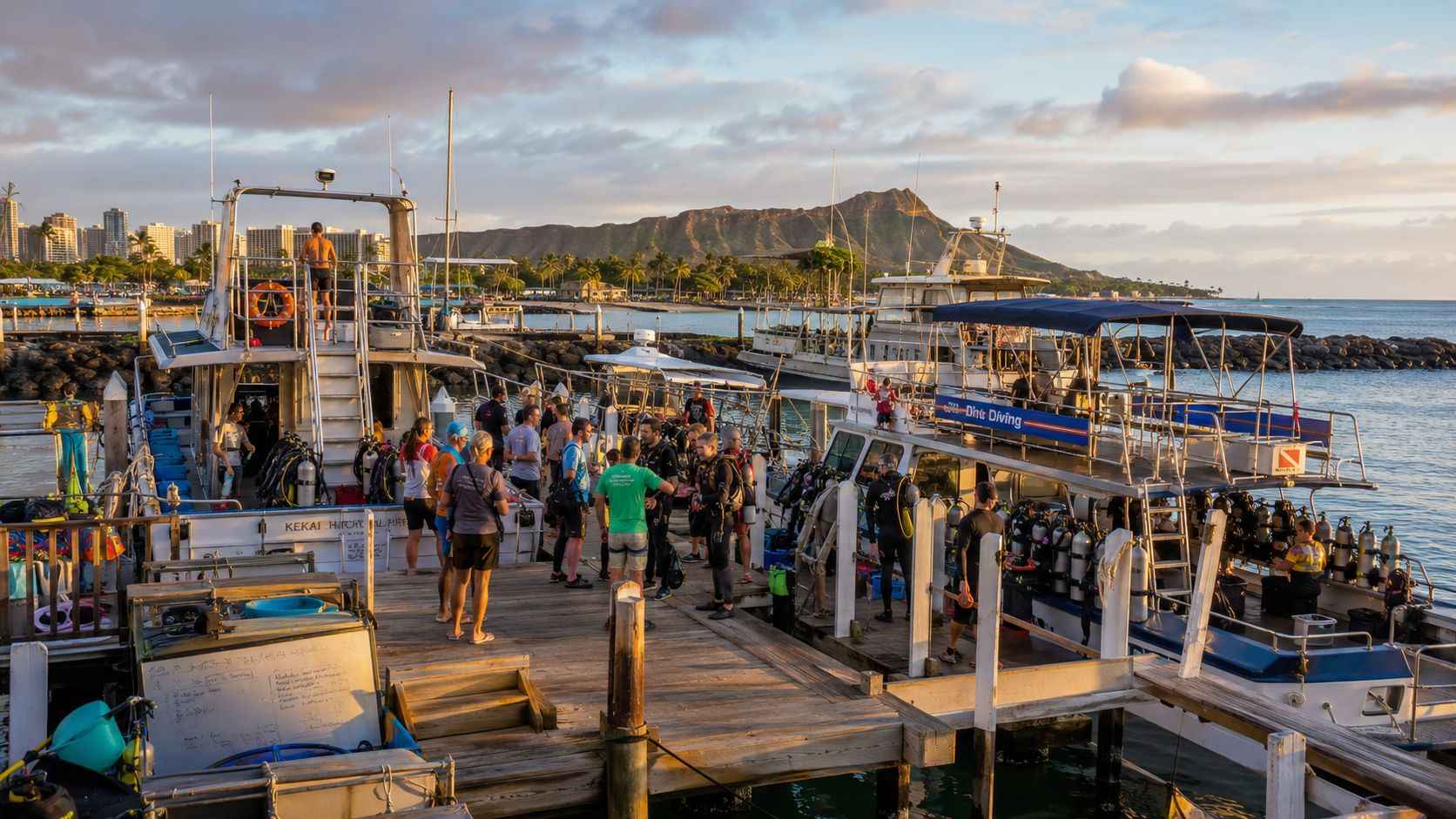
Practical rule: In Hawaii, don't pick the island first and hope the shop is good. Pick the operator first, then let the island serve your goals.
That's why I tell divers to think like buyers, not tourists. If you're diving in Hawaii because you want a memorable underwater week, you're not shopping for a generic tropical vacation. You're choosing between operators, sites, boat styles, and the type of trip your group can handle.
A quick read on the island's scale is here: why scuba diving is so big in Hawaii.
Conditions You Can Plan Around
Hawaii is year-round dive territory, but the water still has a personality. Average water temperature sits around 75-80°F (24-27°C) and peaks in September, which is warm enough that a 3mm full suit makes sense for most divers while still giving you enough insulation for longer or less active dives like night dives (PADI Hawaii overview).
What that means for your packing list
Warm water doesn't mean you can get lazy. On the boat, especially after multiple dives, the wind and surface intervals matter more than the bottom time. A thin suit feels fine until you're wet, shaded, and riding home.
You don't pack for the first ten minutes underwater. You pack for the last thirty minutes on the boat.
That's the part most visitors get wrong. They see “Hawaii” and assume swimsuit conditions. Divers who stay comfortable are usually the ones who bring the right exposure protection for the ride back, not just for the dive itself. If you're unsure what thickness fits your trip, this breakdown will keep you from overbuying or underpacking: what wetsuit works best for diving in Hawaii.
Reading the calendar like a diver
Hawaii is still a year-round destination, but the feel changes. Summer usually gives you a calmer surface and simpler boat days. Winter can bring a livelier ocean, which is fine if you're prepared and annoying if you expected glassy water every morning. The useful habit is to match your dates to your tolerance for chop, not to chase some mythical perfect month.
I'd also stop treating “year-round” as a vague slogan. It means you can plan around your trip style. Want the smoothest water and the least complicated packing? Go in the calmer part of the year. Want to pair diving with a broader island vacation and don't mind a little more motion? You still have options.
For timing decisions, this guide is the one I'd use: best months to scuba dive in Hawaii.
Certification, Depth Limits, and Gear Rules
Hawaii does not legally require a scuba diving license or certification to get in the water, but that doesn't mean every dive is open to everyone. Operators set the rules, and those are what matter on your vacation (license and certification overview). If you want a guided intro, that's one path. If you want the good sites and the deeper profiles, certification is the normal route.
What beginners can actually do
A supervised Discover Scuba-style dive is usually kept no deeper than 40 feet (12 meters), which is the right place to keep first-timers anyway (beginner depth limit). That depth keeps the experience shallow, controlled, and suitable for people who are still learning what breathing underwater feels like.
If you're not certified, don't pretend that makes you a disadvantage. It just means you need the right entry point. For a lot of travelers, a resort course or guided intro dive is enough to decide whether they want to pursue full certification later.
Why computers and depth control matter
For deeper diving operations in Hawaii, the University of Hawaiʻi's dive guidance requires dive computers as standard equipment for all participating divers and says they must be the primary decompression-control device on dives deeper than 30 fsw. Hawaii Pacific University's scientific-diving manual separately states that air diving is not permitted beyond 190 feet, which is a good reminder that depth and nitrogen loading stop being abstract once you move past easy reef profiles (diving guidance PDF).
That's not bureaucratic fussiness. That's the line between a fun trip and a preventable problem. If you're booking anything with real depth, don't treat a wrist computer as optional decoration. Treat it as part of the plan.
Don't fly with everything
Most visitors shouldn't be dragging a full kit across the Pacific. Bring your own mask if fit matters to you, maybe your own computer, and leave the heavy stuff to the operator unless you're doing a very gear-specific trip. If you want to simplify the packing side, this wetsuit guide helps you keep it practical: what wetsuit is best for diving in Hawaii.
Which Island Matches Your Dive Goals
If your main reason for coming is diving, I'm blunt about this, Big Island, with Kona as your home port, is the strongest default. Kona is the best all-around base because it gives you reliable conditions, volcanic terrain, manta access, and the kind of operators that can handle both newer divers and people who want unusual dives. If you're not making diving the center of the trip, the answer changes.
| Hawaii Diving by Island at a Glance | |||
|---|---|---|---|
| Island | Signature Dive | Best For | Trade-off |
| Big Island, Kona | Mantas, blackwater, reef and lava terrain | Dive-first travelers, mixed-skill groups | You may wish you booked more days |
| Oahu | Wrecks and urban-access diving | Wreck lovers, short city-based trips | The trip is less dive-centered |
| Maui | Reefs and crater-style diving | Vacation-first travelers | Better as part of a broader stay |
| Kauai | Terrain-driven shore diving | Divers who like a wilder island feel | More variable conditions |
Kona wins because it's the least compromised choice. Oahu is the smart pick if wrecks are your main obsession. Maui is the one I'd choose when diving is important, but not the whole reason you're flying. Kauai works for certain divers, but I don't send a first-time Hawaii dive planner there as the default.
My honest recommendation
If you have only a few dive days and you want the highest odds of a satisfying trip, go to Kona. If you're already committed to Oahu or Maui for other reasons, dive there and stop second-guessing it. But if the question is, “Which island should I choose for diving in Hawaii?”, Kona is the answer I'd give my own guests.
For a dive-first trip, this is the operator context I'd start with: Kona dive company overview.
The Dive Experiences That Define a Hawaii Trip
The reason people keep talking about Kona isn't just “nice reefs.” It's the special dives that change the whole trip. The big one is the manta night dive, and the local version that keeps getting recommended for Garden Eel Cove is the one with the better protected location, better viewing area, and healthier reef structure. That protected setting matters because a manta dive is about positioning and calm observation, not fighting site conditions.
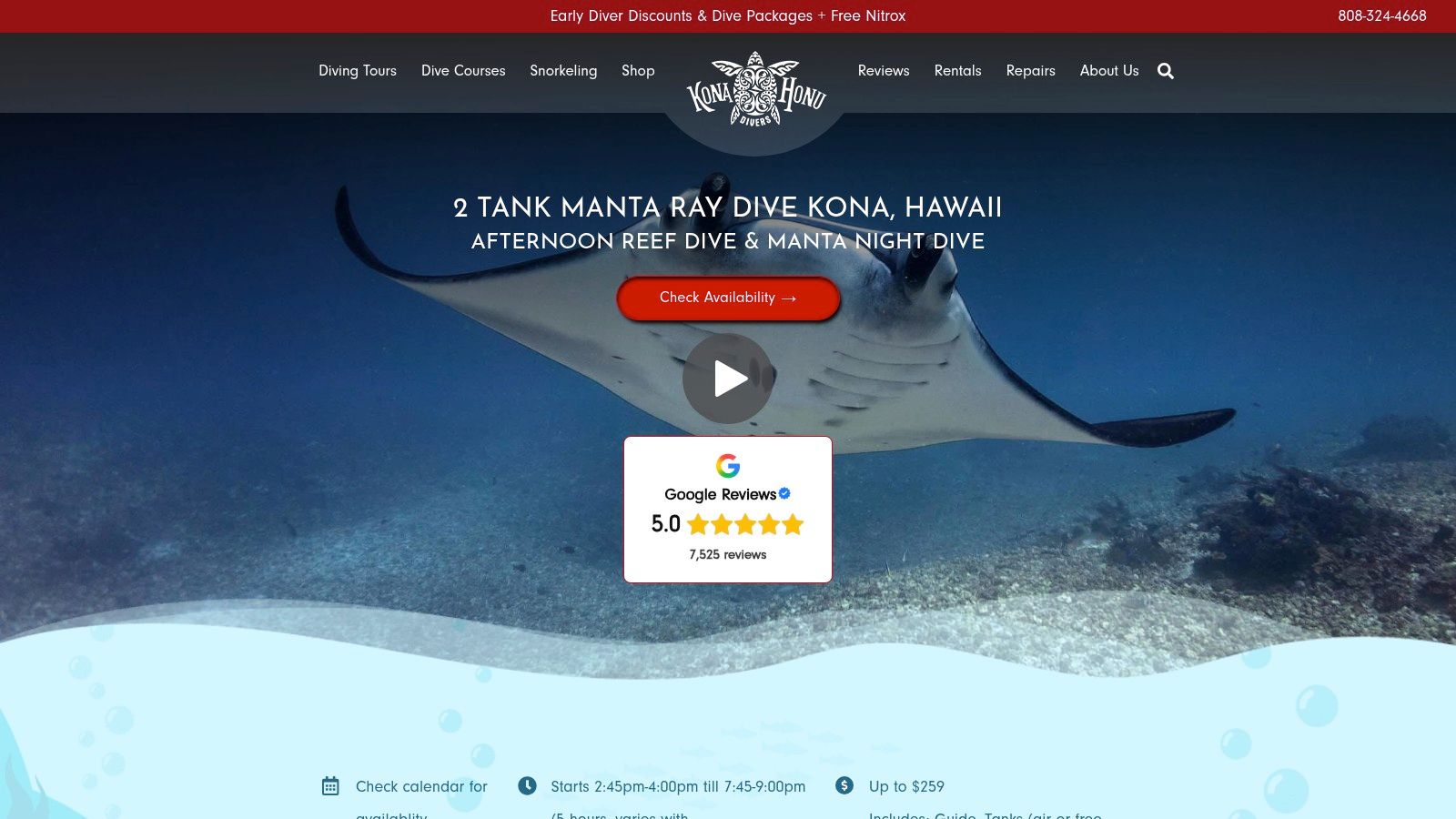
Mantas are the signature, not the whole story
The Kona manta dive is built around repetition and control. You settle in, let the light draw the action, and watch the rays pass through the beams. If you're trying to force movement or chase the animals, you're doing it wrong. That's why good briefings matter so much.
For planning the manta side of the trip, this is the direct reference: Kona manta ray dive overview.
Blackwater is for divers who want something stranger
Kona's Black Water Dive is the other trip that belongs on a serious Hawaii list. It runs offshore over water with the seafloor around 6,000 feet below, and the standard shorthand you'll see is that it's usually aimed at divers with 25+ logged dives (Big Island blackwater coverage). That logged-dive number is useful, but it's not the whole story. Comfort in the dark, buoyancy control, and sea tolerance matter just as much.
If you want that style of dive, review the specific trip here: Blackwater Dive tour.
Wrecks and reefs still matter
Oahu's wrecks are the obvious contrast. They give you historical structure, sunken steel, and a different kind of dive day. Maui and Kauai lean more toward reef and terrain, which keeps them relevant if your trip lands there for other reasons. But if you want a Hawaii dive trip that feels unmistakably special, mantas and blackwater do more heavy lifting than generic reef scenery.
Kona packages pair naturally because the manta dive and blackwater trip scratch different itches. One is graceful and iconic. The other is weird, technical, and unforgettable. If you've got the time, do both.
Seasickness, Safety, and the Buddy Rule
Seasickness is the easiest way to ruin a boat day, and it's also the most preventable. If you already know you get queasy, handle it before you get on the dock. Common options divers use include the Ship-EEZ Seasickness Patch, Dramamine pills, Bonine pills, Sea Band wristbands, and ginger chews.
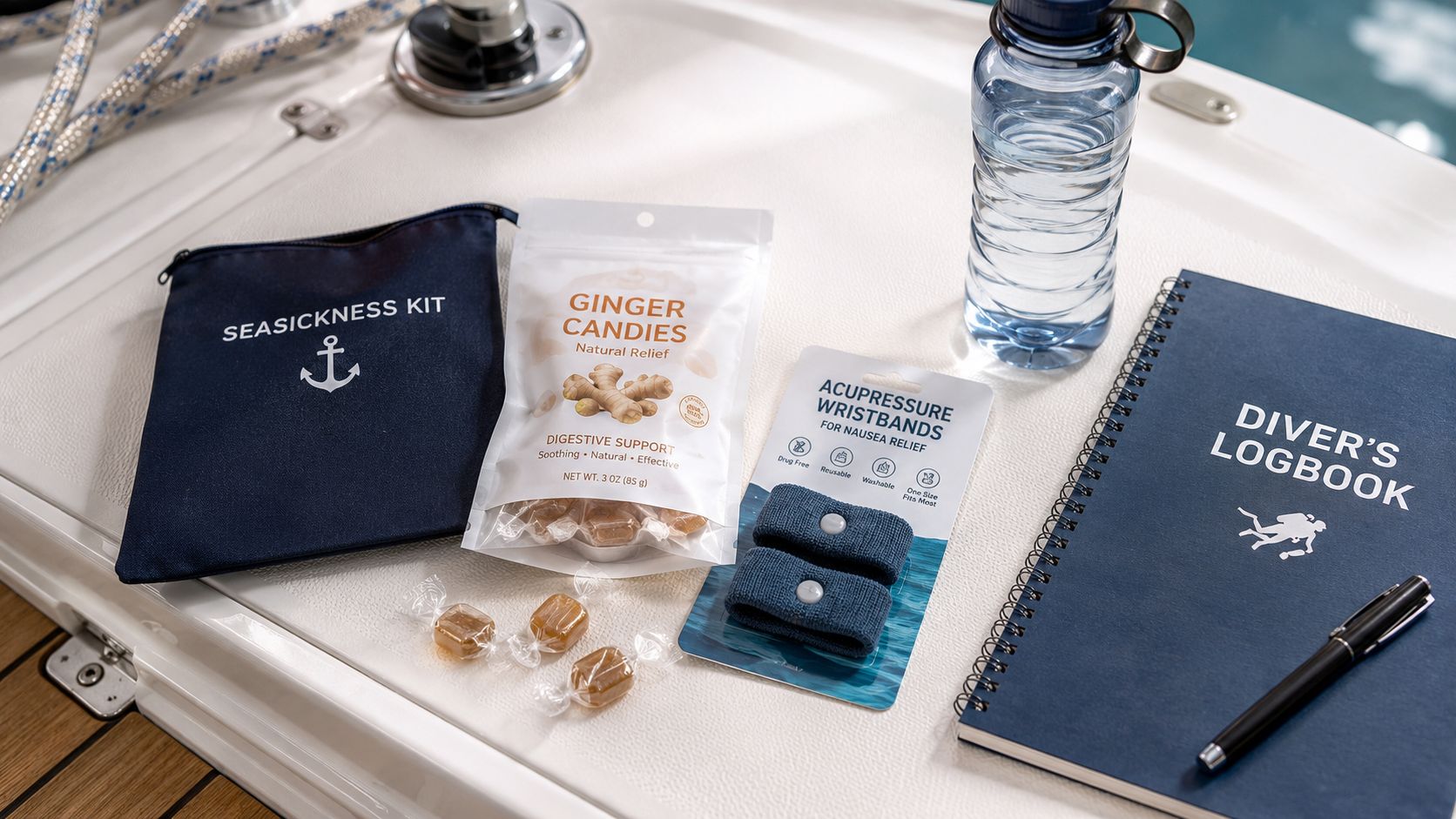
Don't be the person who “waits to see”
That's how people end up miserable. If you know you're prone to motion sickness, use a preventative plan before departure, not after nausea starts. Once you're already sick, you've lost the day.
Practical rule: Pick your prevention before breakfast, not after the boat leaves the harbor.
The same logic applies to the rest of the safety basics. HOST Hawaii's reminder is clear about the buddy system, and it says never dive alone (HOST Hawaii safety reminder). That's not a social preference. It's the standard.
Surface safety matters more here than people think
Hawaii adds boat traffic, changing currents, surf entries, and dive-flag awareness to the usual scuba rules. Use a dive flag when required, watch the water before you enter, and surface carefully if you're anywhere near boat lanes or surf. Hawaiian water can feel calm and still punish sloppy exits.
A good diver in Hawaii is boring in the best way. Calm entry. Clean ascent. Clear buddy contact. No heroic nonsense.
The mistakes I see most
People ignore the boat ride, skip the patch or pills, and then wonder why they're miserable by the second site. Others treat surface safety like a shore-diving issue only and forget that boat traffic, currents, and surf can turn a simple day into a bad one fast. The fix is simple, and it starts before you leave the hotel.
How to Choose a Hawaii Dive Operator
A good operator makes Hawaii feel easy. A sloppy one makes even a great site feel rushed and noisy. I'd judge a shop on five things: boat condition, briefing quality, dive master-to-diver ratio, gear maintenance, and whether the operator is honest about prerequisites for advanced dives.
What separates a professional shop from a risky one
The briefing tells you almost everything. If the operator explains entries, exits, currents, depth plans, and what happens if a diver gets uncomfortable, that's a good sign. If the boat feels maintained and the crew talks like they've done the dive a thousand times, even better.
My filter: If a shop can't explain the dive cleanly on land, I don't trust them to manage it at sea.
Advanced trips deserve even more scrutiny. Blackwater and deeper Kona dives should not be sold like generic reef outings. Good operators are upfront about experience requirements, conditions, and what they expect from the diver in the water.
Use the trip style to judge the operator
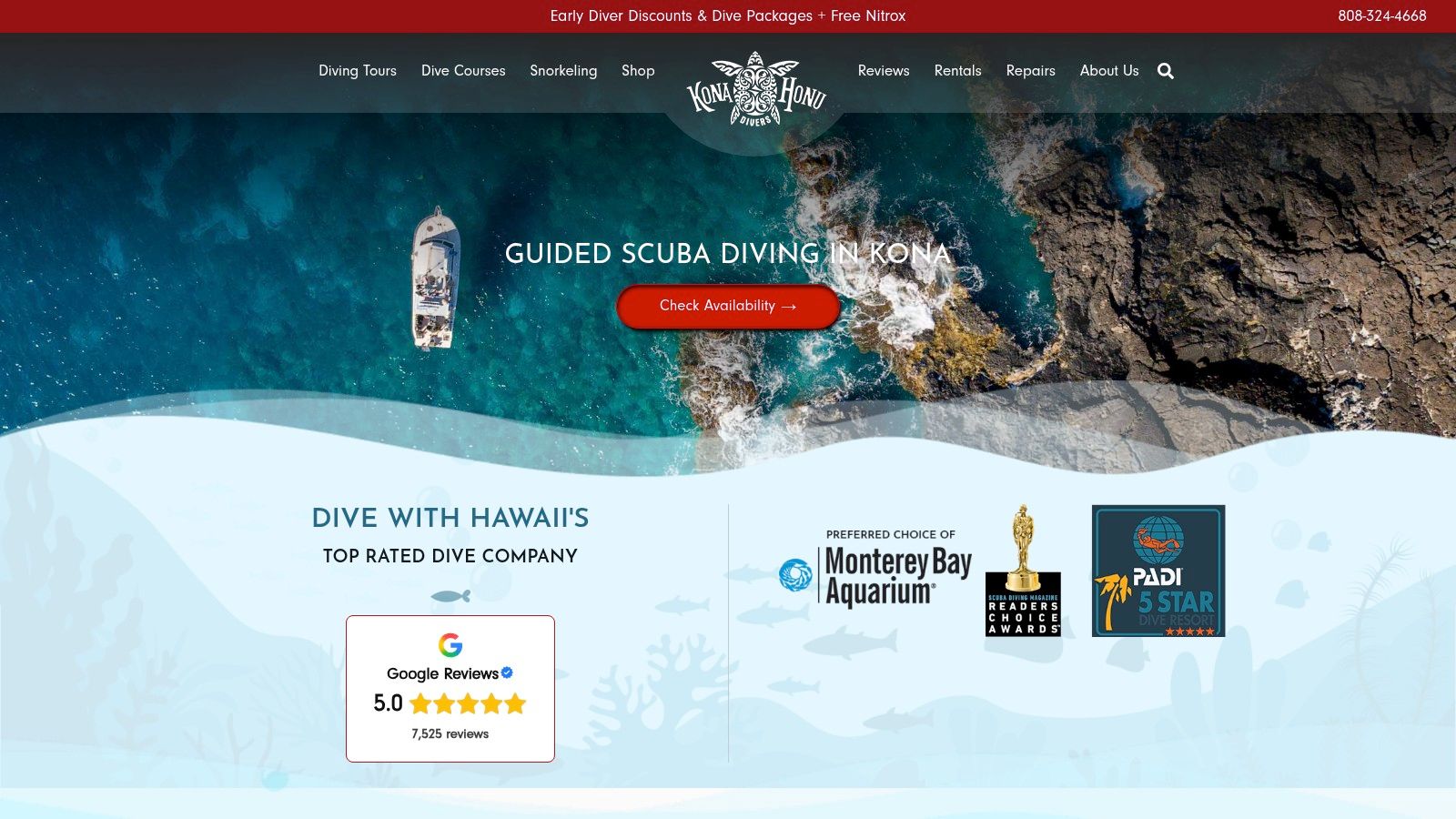
Don't ask only, “Is this shop popular?” Ask whether the operation fits your goal. For the Big Island, Kona Honu Divers runs manta dives, blackwater dives, and advanced long-range trips, which is the kind of focused menu that tells you what they're built to do. That doesn't mean every shop should do everything. It does mean you should book the operator that matches the dive you want.
For a sense of the company and its local dive focus, use this page: Kona diving company.
The pricing reality
In a 2026 guide, two-tank boat dives are listed at $130–$180, and introductory dives are listed at $100–$150 (2026 Hawaii scuba pricing guide). That gap is real. Certified diving costs more because it gives you access, autonomy, and better site choice. Intro dives cost less because they're shorter, shallower, and supervised more tightly.
If a shop is wildly outside those ranges, ask why. Sometimes there's a good reason. Sometimes you're paying more for marketing than for the dive.
Your 2026 Hawaii Diving Plan
If I were planning a Kona-centered trip this week, I'd keep it simple. Day one is a check-out reef dive. Day two is the manta night dive. Day three is for blackwater if you've got the logged dives and comfort for it. Day four is the advanced long-range trip if you want to push harder. Day five is your buffer day, because the best dive plans leave room for weather, fatigue, or a second run at the site you loved most.
Pack like someone who's done this before
Bring reef-safe sunscreen, a thin rashguard for surface time, your seasickness medication, and a logbook. Add your mask if you care about fit, and don't forget a light layer for the boat ride home. The trip feels a lot smoother when you stop treating the dock like the end of your packing list.
If you want a trip that's centered on real diving instead of vague island hopping, make Kona the base and build around the dives that matter. Kona Honu Divers runs guided scuba trips, manta dives, blackwater dives, and advanced options that fit the way serious visitors dive in Hawaii. Book the trip, then let the island do the rest, and start here at Kona Honu Divers.