
The sun is barely up in Kona. You're stepping onto a boat with a mesh bag in one hand, coffee in the other, and that mix of excitement and nerves that shows up before a dive in a new place. You've checked your mask three times already. You're wondering if Hawaii will feel easy and relaxed, or advanced and humbling.
Diving in Hawaii can be both.
Some sites feel welcoming from the first giant stride. Lava rock forms natural reefs, shelves, and swim-throughs that make the underwater world feel organized instead of overwhelming. Then there are the experiences most first-time visitors don't hear much about until they talk to local crews, especially night diving with manta rays and the far more technical blackwater drift dives off Kona.
That contrast is what makes Hawaii special. You can spend one day on a calm reef watching reef fish move over volcanic formations, and another night suspended over deep ocean watching strange pelagic life rise from below. Most travel guides focus on turtles and postcard water. Fewer explain how to choose the right island, what conditions feel like underwater, or how to prepare for advanced trips without stress.
Introduction to Diving in Hawaii
A first Hawaii dive often starts with a simple surprise. The water looks bright from the boat, but once you descend, the structure becomes the main feature. Instead of soft, rolling reef shapes, you see lava-built terrain. Fingers of rock. Shelves. Cracks. Bowl-like spaces where fish hold position out of the current.
That volcanic layout changes how a dive feels. It gives beginners visual reference points, which helps with buoyancy and orientation. It also gives experienced divers more texture to explore, because Hawaii isn't only about colorful reef scenes. It's about topography.
Why Hawaii feels different underwater
Hawaii supports an enormous amount of diving activity. The islands host over 1.5 million scuba dives annually across 215+ licensed dive shops, which means visitors can usually find training, rentals, and guided trips that fit their comfort level and schedule, as noted in this overview of scuba diving popularity in Hawaii.
A lot of new visitors ask the same question first. Which island gives me the right mix of easy access, good visibility, and memorable marine life? This guide on which Hawaiian island is best for scuba diving is a helpful starting point if you're still deciding where to base your trip.
The overlooked experience most guides skip
Divers often arrive envisioning manta rays, turtles, and sunny reef dives. Those are worth thinking about. But there's another side of diving in Hawaii that deserves more attention.
Few guides explain advanced blackwater diving protocols and gear requirements, even though that experience is offered by only a handful of operators like those described in this Big Island scuba diving guide. That matters because blackwater isn't just “a night dive in deep water.” It's a specialized open-ocean dive with very different mental and physical demands.
Practical rule: If a Hawaii trip includes both reef dives and a blackwater dive, treat them as two separate sports that happen to use scuba gear.
That mindset makes planning easier. You stop asking, “Can I scuba dive in Hawaii?” and start asking better questions. Which site matches my skill level? What will the water feel like in that season? Do I want a calm reef, a manta night dive, or an advanced pelagic experience?
Best Dive Sites Across the Islands
Choosing dive sites in Hawaii gets easier when you sort them by experience, not by hype. Some places are forgiving and shallow. Others are famous because the marine life encounter is highly specific. A few are great precisely because they stay protected when other areas get rough.
Hawaii has the infrastructure to support almost any kind of recreational diver. The state hosts over 1.5 million scuba dives annually across 215+ licensed dive shops, which helps keep guides, charters, rentals, and instruction widely available, according to this Hawaii scuba diving industry summary.
For a Big Island focused trip, this local guide to the best place to dive on the Big Island helps narrow down the strongest options.
Big Island favorites
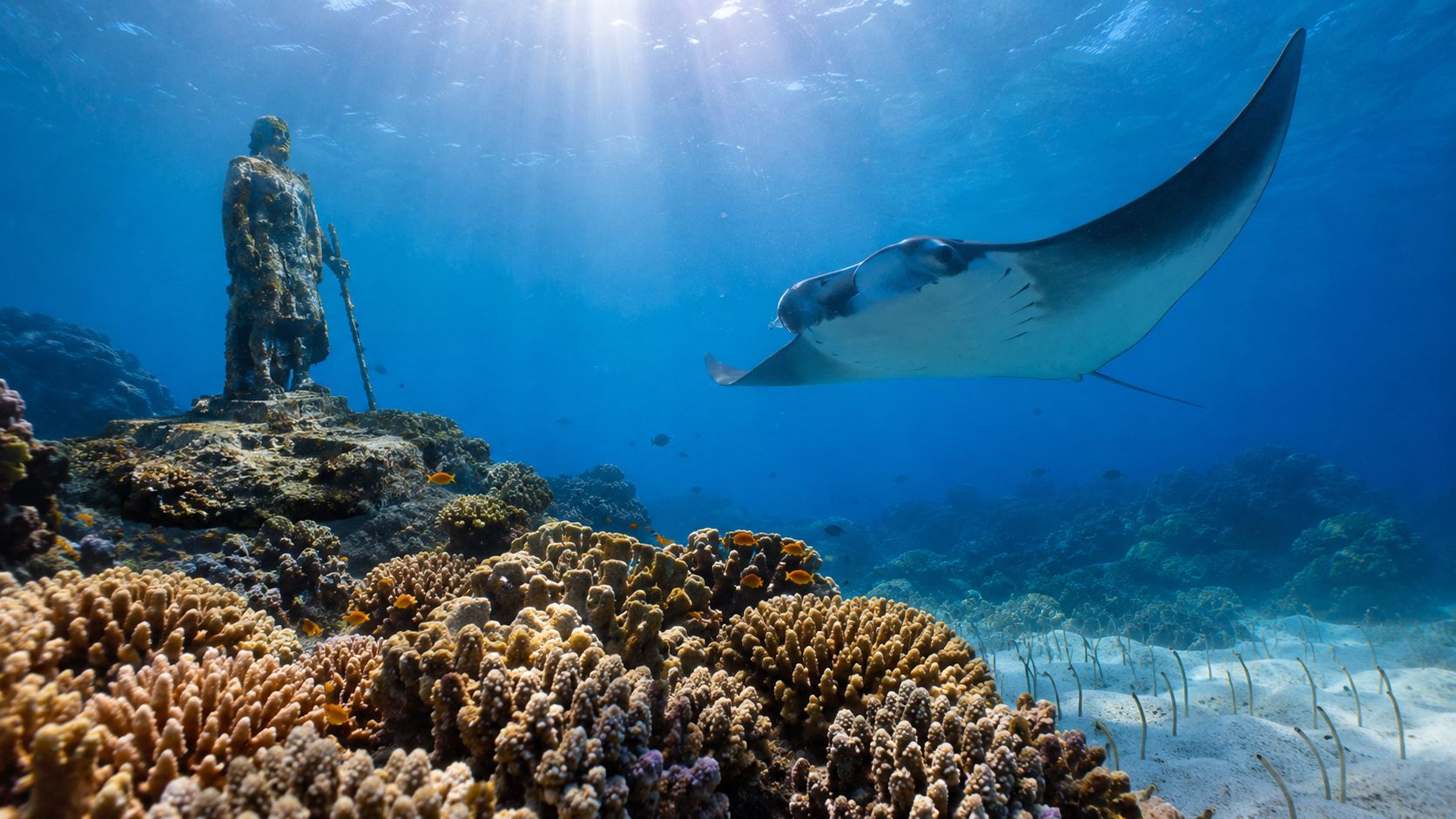
Kealakekua Bay and the Captain Cook Monument area appeal to divers who want clear water and healthy reef structure. Boat access is common, though some experienced divers also explore shore-access options in the broader bay area when conditions cooperate. It's a good match for certified divers who enjoy long reef profiles and relaxed fish watching.
Garden Eel Cove is the site many divers associate with the manta night dive. What makes it stand out is protection. A protected site matters at night because calmer water improves both comfort and viewing. When divers settle in place and lights attract plankton, the experience feels less like chasing wildlife and more like letting the encounter come to you.
Two Step is one of the easiest names to remember because the entry itself explains it. The lava ledge entry can be approachable in calm conditions, and that makes it popular with beginners and shore divers who want an easy first Hawaii entry. The key is not speed. The key is timing your movement with the water and treating the lava like a staircase that happens to be wet and alive.
Entering at Two Step is a lot like stepping onto a moving escalator. If you rush, you create the problem. If you wait, watch, and commit cleanly, it often feels simple.
Maui and Oahu standouts
Molokini Crater is famous for clarity and open-water appeal. Many divers love it because the crater shape creates a dramatic sense of place before you even descend. It's often the answer for travelers who want a classic boat-dive day with broad visibility and reef life.
Shark's Cove on Oahu sounds more intimidating than it usually is for daytime reef exploration. Its appeal lies in its reef topography. You get channels, pockets, and structure that reward slow movement and patient observation. It's a site where good fin control matters more than bravado.
How to choose the right site
If you're unsure where to start, use this simple filter:
- Choose protected sites if you're new to ocean diving, uneasy on entries, or worried about surge.
- Choose boat dives if you want less stress around entry and exit logistics.
- Choose site-specific wildlife dives when you care more about one signature encounter, such as mantas, than a general reef tour.
- Choose shore dives carefully if you're experienced and comfortable reading swell, footing, and exits.
A lot of first-time visitors overfocus on the name of the site. A better question is, “What kind of dive day do I want this to be?” In Hawaii, that answer usually matters more.
Seasonal Conditions Visibility and Marine Life
Conditions shape the whole mood of a Hawaii dive. The same site can feel like a broad blue cathedral in one season and a more intimate reef dive in another. Neither is automatically better. It depends on what you want to see and how much surface motion you're comfortable with.
On leeward Kona sites, median underwater visibility reaches 100 to 150 feet during peak summer months, which is about 40% clearer than Caribbean or Florida sites, based on this review of Big Island scuba visibility. That kind of visibility changes diver behavior. People breathe slower, settle faster, and spot movement farther off the reef.
For timing your trip, this local month-by-month guide to the best months to scuba dive in Hawaii is useful for matching conditions to your priorities.
Seasonal dive conditions
| Month Range | Water Temp (°F) | Visibility (ft) |
|---|---|---|
| Winter | 72 | qualitative: often lower than peak summer at some sites |
| Late summer | 80 to 86 | 100 to 150 on leeward Kona in peak summer |
| September | 80 | 100 to 150 on leeward Kona in peak summer |
What summer usually feels like
Summer often gives divers the “Hawaii postcard” version of the ocean. Blue water looks bigger. Light penetrates farther. The reef has more contrast, so fish, lava contours, and open-water silhouettes all stand apart more clearly.
That doesn't just make photos nicer. It helps new divers. Better visibility reduces task loading because you can keep track of your buddy, the bottom, and the boat's direction with less effort.
What winter changes
Winter doesn't mean poor diving. It means you need to think more carefully about location and exposure. On some days, bigger swells affect entries, exits, and comfort even if the underwater portion is still enjoyable.
Water temperatures in Hawaii range from 22°C (72°F) in winter to 30°C (86°F) in late summer, with 27°C (80°F) recorded in September, according to this Hawaii scuba diving guide. That's why many divers still choose a 3 to 5 mm wetsuit for longer dives. Warm air and warm-looking water can fool people into underdressing.
A Hawaii dive can look tropical from the deck and still feel cool by minute forty underwater.
Marine life timing and expectations
Many divers arrive hoping for one headline animal and forget to enjoy the rest of the water column. Hawaii rewards the slower observer. Reef fish use lava structure differently than they would on a flatter reef, and that makes behavior easier to watch if you stop kicking and hover.
For shark concerns, context matters. Hawaii guides often mention tiger sharks and whitetip reef sharks, but many articles don't give beginners enough practical interpretation. Divers usually benefit more from neutral buoyancy, calm movement, and respectful distance than from memorizing species names.
A good trip date isn't just the month with the warmest water. It's the month that matches your comfort with boat motion, entry conditions, visibility preferences, and the type of encounter you want most.
Certification Courses Gear Rental and Nitrox
A lot of travelers wonder whether they should get certified before the trip or handle it after arriving. The simplest answer is this. If your vacation time is short and you already know you want to dive, completing academics and pool work before travel usually gives you more ocean time. If you want local instruction in Hawaii conditions from the start, finishing training on island can make the first dives feel more relevant.
Picking the right certification path
For beginners, Open Water is the standard starting point. It teaches basic dive planning, buoyancy, mask clearing, regulator recovery, and controlled ascents. If you already have that certification and feel comfortable underwater, Advanced Open Water is usually the next practical step because it builds confidence through guided experience rather than heavy classroom work.
Specialties matter in Hawaii because many memorable dives happen in specific conditions.
- Night Diver helps if you want to move from daytime reef comfort into manta or evening dives with better awareness.
- Deep Diver can be useful if you want more comfort managing depth, gas, and attention.
- Enriched Air Nitrox is worth considering for repetitive vacation diving because it can support more conservative profiles when used properly.
One local resource on Nitrox diving benefits explains why many experienced vacation divers choose it for multi-day dive schedules.
Renting the right gear
Rental gear should feel boring in the best way. You don't want surprises. You want equipment that fits, breathes comfortably, and disappears from your attention underwater.
Start with thermal protection. Hawaii water is warm by global standards, but extended dives can still chill you. A 3 to 5 mm wetsuit is standard for many divers during longer dives in local conditions, as noted earlier in the article.
Then think through the rest:
- BCD style: Jacket-style BCDs often feel familiar to occasional divers. Back-inflate models can feel less cluttered in front, but they may feel different on the surface if you haven't used one.
- Regulators: Ask for a setup that breathes comfortably at depth and includes gauges or an integrated computer display you understand.
- Mask and fins: Bring your own if possible. Fit issues in either one can turn a relaxed dive into an annoying one fast.
Booking smart for training and rental
If you're booking a certification trip, ask practical questions instead of broad ones.
- How much is pool or confined-water time versus ocean time?
- What gear is included, and what counts as an upgrade?
- Will the ocean training happen from shore or boat?
- If I add Nitrox, when is that course completed?
One operator many visitors look at is Kona Honu Divers diving tours, which include day and specialty diving options on the Big Island. For students and newly certified divers, the useful part isn't hype. It's knowing whether one shop can handle training, rentals, and later fun dives without forcing you to rebuild your whole plan mid-trip.
Day Dives Night Dives and Special Experiences
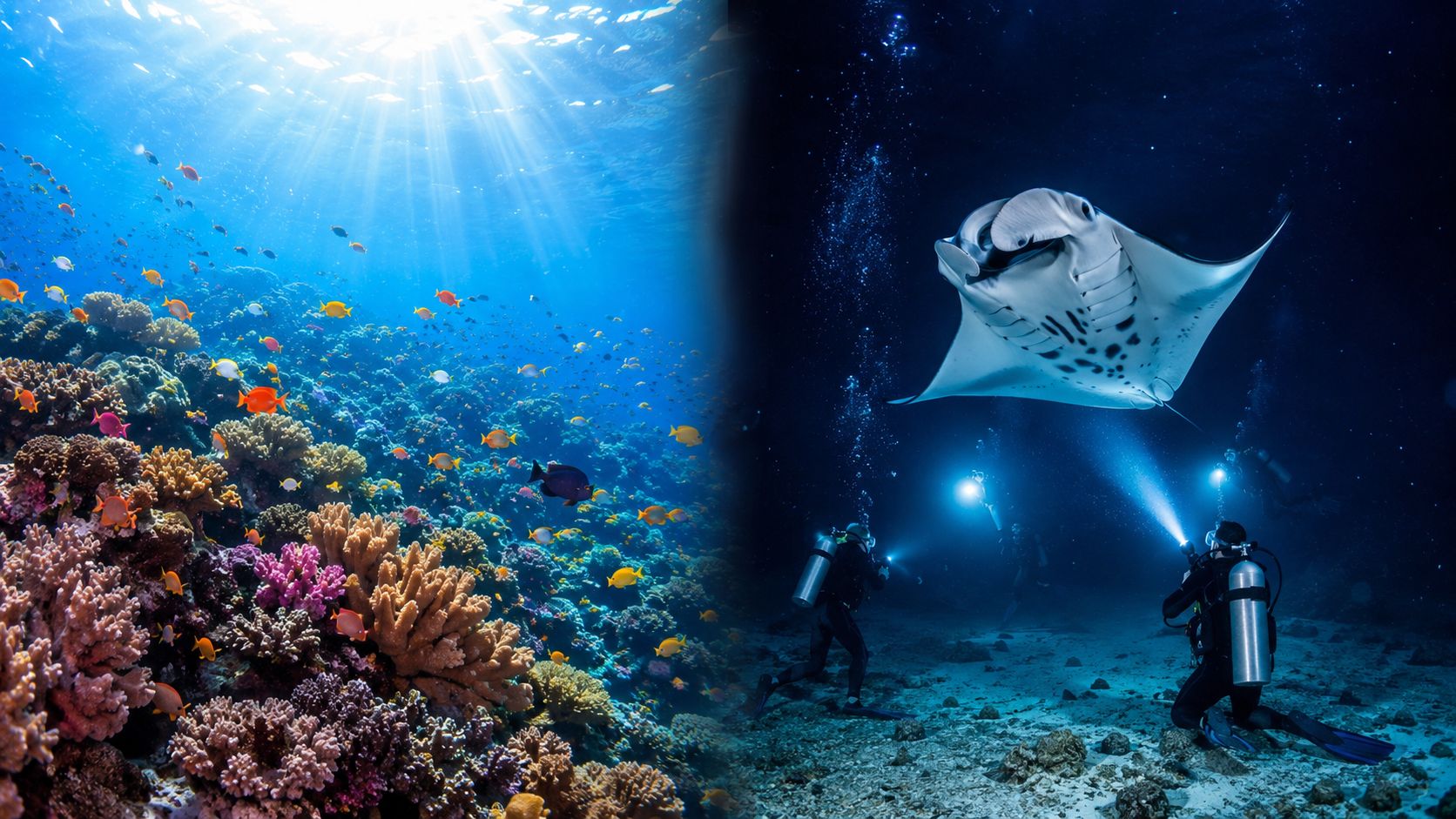
The biggest mistake people make with diving in Hawaii is treating every dive as a reef dive with different lighting. That isn't how it works. A daytime reef dive, a manta night dive, and a blackwater drift dive ask very different things from your body and your attention.
Day reef dives
Day dives are usually the easiest place to build confidence. You can read the reef quickly, monitor your buddy without a light beam, and use the sun to stay oriented. Newer divers can fine-tune buoyancy and breathing on these dives before trying more specialized trips.
These dives tend to reward patience. Hawaii's volcanic structure creates ledges and pockets, so fish often reveal themselves only after you stop moving.
Manta night dives
A manta night dive feels almost theatrical, but the best divers approach it with minimal disturbance. At sites such as Garden Eel Cove, divers settle into position, lights draw plankton, and the mantas move through the illuminated water column to feed. Garden Eel Cove is a strong choice because its protected location often makes the experience calmer and the viewing area easier to enjoy.
If you want a closer look at how that experience works, this manta ray diving in Hawaii guide gives a useful overview. If you're ready to browse a trip directly, the manta ray dive tour page is the relevant booking page.
Stay low, keep your fins still, and let the mantas control the distance. The less you try to “get the shot,” the better the encounter usually becomes.
Blackwater diving
Blackwater is the overlooked jewel of Kona diving. It is not about the reef at all. You descend into open ocean at night, tethered to a float system, with deep water below and pelagic life rising through the darkness.
Blackwater drift dives off Kona descend into 5,000+ feet of water and require advanced certification because of nitrogen loading and buoyancy control risks, as described in this guide to Hawaii blackwater and advanced diving. That's the hard line many generic travel articles miss.
Here's what experienced divers should prepare for:
- Buoyancy discipline: Without a reef below, your body loses the visual cues it normally uses.
- Lighting awareness: Your beam becomes part of how you search, signal, and keep orientation.
- Mental readiness: The open-water darkness can feel spacious in a way that surprises even seasoned reef divers.
- Secure gear: Dangling accessories become more distracting in blackwater than on a reef.
For divers who want that kind of advanced trip, the blackwater dive tour page is the relevant place to look. If you want additional advanced options beyond blackwater, this advanced long-range dive tour is also worth reviewing.
Which experience fits you
Use this simple match-up:
- Choose day dives if you're new to ocean diving, shaking off rust, or traveling with mixed experience levels.
- Choose manta night dives if you're comfortable in basic night conditions and want a signature Hawaii experience with a fixed focal point.
- Choose blackwater only if you're comfortable with buoyancy, darkness, and open-ocean task loading.
Safety Health Seasickness and Family Considerations
Hawaii is a good place to dive, but “good place” doesn't replace judgment. The strongest safety habit is honest self-assessment before the boat leaves the harbor. If your ears aren't clearing well, your chest feels tight, you're exhausted, or you're trying to push through anxiety, that matters more than the reservation on your phone.
State data shows that diving in Hawaii records fewer than three scuba fatalities per year on average, and one summary states it's safer than horseback riding and table tennis according to the data discussed in this Hawaii diving safety video. That should reassure people, but only in the right way. Diving is safe when divers train, stay honest, and make conservative decisions.
Your pre-dive checklist
Before any Hawaii dive day, run through this list:
- Health check: Don't dive congested, feverish, unusually fatigued, or with unresolved chest symptoms.
- Medication review: If you use any medication that affects alertness or hydration, think through how it interacts with heat, motion, and pressure.
- Buoyancy reality check: If you haven't dived in a while, ask for a simple, conservative first dive.
- Surface conditions: Calm underwater conditions don't always mean calm entries, exits, or boat rides.
- Post-dive plans: Don't stack dives carelessly next to altitude travel.
Sharks and realistic concern
Many first-time Hawaii visitors ask about sharks because the names of sites and the media coverage can make the risk feel larger than it is. The more useful question is not “Will there be sharks?” It's “How should I behave if I see one?”
The answer is usually straightforward.
- Stay calm: Fast, panicked finning creates confusion for you and your buddy.
- Hold neutral buoyancy: Good trim helps you stay controlled and observant.
- Give space: Don't chase, block, or corner any animal on a reef.
- Follow the guide's lead: Local briefings matter more than internet fear.
Seasickness prevention that actually helps
Seasickness ruins more Hawaii dive days than marine life ever will. The basics work because they reduce sensory conflict.
Sit in the center of the boat where motion is minimized, look at the stationary horizon, and avoid diesel fumes, perfumes, or smoke by staying in fresh air on the leeward side of the vessel, as explained in this guide on how to avoid sea sickness on a dive boat.
Ginger is also worth taking seriously. It's a scientifically supported natural remedy because it reduces stomach contractions that cause nausea, and DAN notes that ginger can help suppress motion-induced nausea.
If you want over-the-counter options or simple backups, these are common choices to review before your trip:
- Patch option: Ship-EEZ Seasickness Patch
- Tablet option: Dramamine pills
- Another tablet option: Bonine pills
- Non-medication option: Sea Band wristbands
- Natural option: Ginger chews
If you think you “might” get seasick, treat that as a yes and plan early. Prevention works better than recovery.
Diving with kids, seniors, and mixed groups
Family dive travel works best when nobody tries to force the same pace on everyone. A teenager who just got certified, a parent who dives once a year, and a grandparent who prefers snorkeling shouldn't all be pushed onto the same intensity level.
A few simple rules help:
- Pick the easiest first day. Let everyone settle in.
- Separate confidence from certification. A card doesn't tell you how current someone feels.
- Use buddy teams thoughtfully. Pair calm divers with newer ones.
- Leave room for rest. Fatigue makes every small problem larger.
For mixed groups, shallow sightseeing-style dives and boat days with comfortable support often create the best memories because no one feels rushed or out of place.
Booking Sample Itineraries and Kona Honu Divers Services
A good Hawaii dive trip doesn't need to be crammed full. It needs the right sequence. Most divers enjoy the island more when they start easy, build confidence, and place the most demanding experience later in the week.
A simple five-day Big Island plan
Here's a practical shape for a Big Island itinerary:
Day 1
Arrive, hydrate, and avoid trying to prove anything. If you dive at all, make it a conservative checkout-style reef dive.
Day 2
Schedule a morning two-tank boat dive. This lets you adjust weighting, refresh hand signals, and get used to local reef structure.
Day 3
Use the daytime for rest or light activity, then do a manta night dive in the evening. By this point your buoyancy and breathing should feel smoother.
Day 4
Take another daytime reef dive or a more advanced site if the prior days felt easy. Don't underestimate the value of a lower-stress day before a specialized night dive.
Day 5
If you're properly qualified and feeling sharp, schedule blackwater. Put it late in the itinerary, not first, because it helps to arrive mentally settled and physically adjusted to local diving.
Adjusting for Maui or Oahu
If your trip includes another island, keep your plan simple. Use Maui for broad-appeal boat diving and Oahu for reef variety and topside flexibility. Don't try to recreate the exact Kona experience everywhere. Hawaii rewards island-specific planning.
Booking details that matter
When you book, pay attention to the details people often skip:
- Departure harbor and check-in time: Dawn departures come early after travel days.
- What the trip includes: Tanks, weights, lights, and rental pieces vary.
- Certification requirements: Specialty dives can have stricter prerequisites.
- Nitrox availability: Useful if you're diving repeatedly and certified to use it.
- Weather flexibility: Site plans can shift with conditions.
One operator that offers day dives, manta dives, blackwater trips, training, and gear support on the Big Island is Kona Honu Divers. For trip planning, the useful part is that a diver can line up several different Hawaii experiences with one shop rather than juggling separate calendars and paperwork.
If your interest leans toward specialty experiences, the direct planning pages are often the fastest route. You can browse Kona dive tours, the dedicated blackwater night dive, the manta dive and snorkel option, or the premium advanced two-tank trip.
A clean booking process makes a bigger difference than many people expect. When your check-in, gear, certification status, and specialty requirements are already sorted, you step onto the boat focused on diving instead of paperwork.
Conclusion and Next Steps
Diving in Hawaii works best when you match the trip to the kind of diver you are right now, not the diver you hope to be by day two. If you're new, protected reef dives and calm boat procedures make the learning curve feel manageable. If you're experienced, Hawaii gives you room to stretch into specialized experiences that go well beyond standard tropical diving.
The memorable parts usually come from contrast. Morning lava reefs. Night manta encounters. Then, for the right diver, blackwater drifting over deep ocean with nothing below but darkness and rising pelagic life. That range is what keeps Hawaii from feeling repetitive.
The practical side matters just as much. Choose your island carefully. Match your season to your comfort with visibility and surface motion. Dress for the water temperature instead of the postcard. Plan for seasickness before you need to. Build your itinerary in a sequence that lets confidence grow instead of forcing it.
The smoothest Hawaii dive trips are rarely the busiest ones. They're the ones where each day prepares you for the next.
If you've been staring at maps, comparing islands, and wondering whether this is finally the trip to book, that early-morning boat scene in Kona is closer than it seems. You can make this easy on yourself. Pick the kind of dives you want. Leave room for rest. Ask smart questions. Then let Hawaii do what it does well underwater.
If you're ready to turn that sunrise-boat idea into a real trip, Kona Honu Divers is a practical place to start for day dives, manta dives, blackwater experiences, training, and rental support on the Big Island.