
You're probably doing one of two things right now. You're comparing islands and wondering where the diving is worth your time, or you've already booked Hawaii and you don't want to burn a precious vacation day on the wrong boat, the wrong site, or a dive that doesn't match your skill level.
That's the right mindset.
Diving in Hawaii can be extraordinary, but only if you plan it like a diver, not like a generic tourist. The islands are not interchangeable. Conditions change. Site style changes. Entry style changes. One island gives you wrecks. Another gives you lava tubes. One coast is dependable. Another is highly condition-dependent. If you want a trip that feels smooth instead of improvised, you need to pick your base, your dives, and your operator carefully.
Your Hawaiian Underwater Adventure Awaits
You giant-stride off the boat, look down through clear blue water, and see black lava ledges dropping away beneath you. That first descent tells you what Hawaii does better than almost anywhere else. The diving has shape, texture, and attitude.
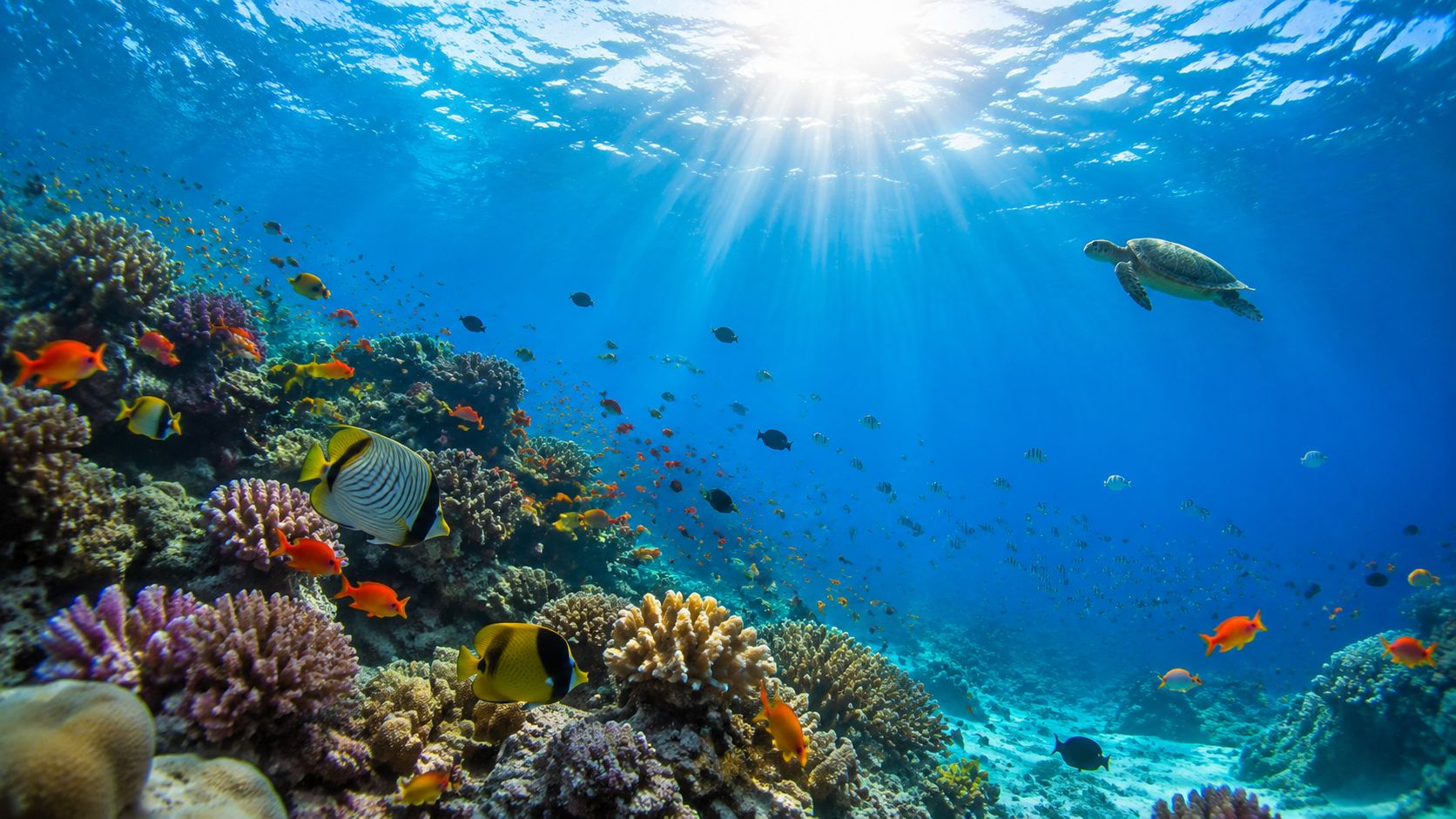
Forget the generic postcard version of tropical diving. Hawaii gives you volcanic topography, sharp relief, caverns, arches, lava fingers, and blue-water drop-offs that feel dramatic from the first minute to the safety stop. You are not drifting over a flat reef hoping something interesting appears. You are diving terrain that was built by fire and then claimed by the sea.
That difference matters. It shapes the kind of trip you should book, the island you should stay on, and the operator you should trust.
What Hawaii feels like underwater
Hawaii stands out because several things come together at once:
- Volcanic structure: Lava shelves, tubes, overhangs, and broken reef lines give each site a distinct look and a stronger sense of movement.
- Comfortable conditions: Warm water and good visibility make Hawaii appealing for divers who want long, relaxed days in the ocean without heavy exposure protection.
- Wildlife variety: A single trip can include reef fish, turtles, pelagic encounters, and night dives that feel completely different from your daytime dives.
- Year-round diving: You can plan a strong trip in any season if you choose the right island and coast.
My advice: Make your first dive in Hawaii a checkout for comfort, weighting, and buoyancy. Save the ambitious profile for day two.
What experienced divers do before they arrive
They start with the experience they want, then build the trip around it. That is how you avoid wasting a vacation day on the wrong coast, the wrong boat, or a site that looks good in photos and disappoints underwater.
If your priority is iconic Hawaii diving, build the trip around Kona. If you want help choosing the right island before you book flights, start with this guide to which Hawaiian island is best for scuba diving. It will save you time and help you plan like a diver instead of a general tourist.
That is the insider approach we use at Kona Honu Divers. Do not chase a long list of random sites. Pick a base that gives you reliable conditions, book the dives that define Hawaii, and leave room for one or two specialty experiences that turn a good trip into a memorable one.
Done right, a Hawaii dive vacation does not feel improvised. It feels dialed in from the first giant stride.
Choosing Your Base A Diver's Guide to the Islands
You land in Hawaii, rent a nice condo, and then realize the best diving is an hour away, blown out, or booked solid. I see that mistake all the time. If diving is the reason for the trip, choose your island like a diver first and a vacationer second.
Hawaii Dive Island Comparison
| Island | Best For | Typical Visibility | Signature Experience |
|---|---|---|---|
| Big Island | Divers building the trip around diving | Often excellent on the Kona coast | Manta night dive, blackwater, lava formations |
| Maui | Couples and families mixing dives with classic island touring | Variable by site and weather | Molokini and south-side reef diving |
| Oahu | Wreck fans and travelers who want city access | Variable by coast and swell | Wrecks, reef dives, easy topside logistics |
| Kauai | Divers who like dramatic terrain and accept more weather risk | More condition-dependent | Caverns, lava structure, bold topography |
Why Kona is the smartest base for a real dive trip
For a dive-first vacation, book Kona.
It gives you the most reliable conditions, the strongest lineup of signature dives, and the easiest way to stack multiple great dive days without wasting time chasing the wrong coast. That matters more than travelers expect. A trip looks very different when your operator can run consistently, your sites are close, and your backup plan is still a good dive instead of a consolation prize.
Water is comfortably warm year-round, so packing is simple and diving stays pleasant without dragging heavy cold-water gear across the Pacific. More important, Kona offers range. You can do easy reef dives, lava tubes, advanced offshore profiles, night diving, and the two experiences that define Hawaii for serious divers.
If you are still comparing islands before booking flights, read this guide to which Hawaiian island is best for scuba diving. It will help you choose based on the diving you want, not generic travel marketing.
The straight answer on each island
Big Island: Start here if diving is the priority. Kona is the closest thing Hawaii has to a purpose-built dive base. You get variety, better consistency, and access to the dives people talk about for years afterward.
Maui: Choose Maui if your trip has competing priorities. It works well for visitors who want good diving, but also want beach days, scenic drives, and a broader resort vacation feel. Good island. Better vacation-diving mix than pure dive mission.
Oahu: Oahu deserves more respect than it gets. If wrecks are high on your list and you want restaurants, nightlife, and easy logistics off the boat, it makes sense. I recommend it for travelers who want solid diving without giving the whole trip over to diving.
Kauai: Kauai is beautiful and raw. Underwater, that can be fantastic. It can also be limiting when weather and swell do not cooperate. Go there if you like dramatic terrain and can accept a narrower margin for conditions.
Match the island to the dives you want to log, not the hotel photos you want to post.
My recommendation
Here is the clean call.
Book Kona for a dedicated dive trip. Choose Maui for a vacation where diving shares the schedule. Pick Oahu for wrecks and city convenience. Go with Kauai if scenery and rugged conditions are part of the appeal.
If a guest asked me where to base one Hawaii dive trip and get the strongest overall experience, I would send them to Kona without hesitation.
Two Dives That Define a Lifetime Manta and Blackwater
Some dives are good stories. These two are the reason people reorganize entire Hawaii trips.
The manta ray night dive
The manta night dive in Kona deserves its reputation. You settle in position, lights attract plankton, and the mantas come to feed. When it's done right, it doesn't feel chaotic. It feels precise. The best encounters happen when divers stop trying to manufacture the moment and hold good position.
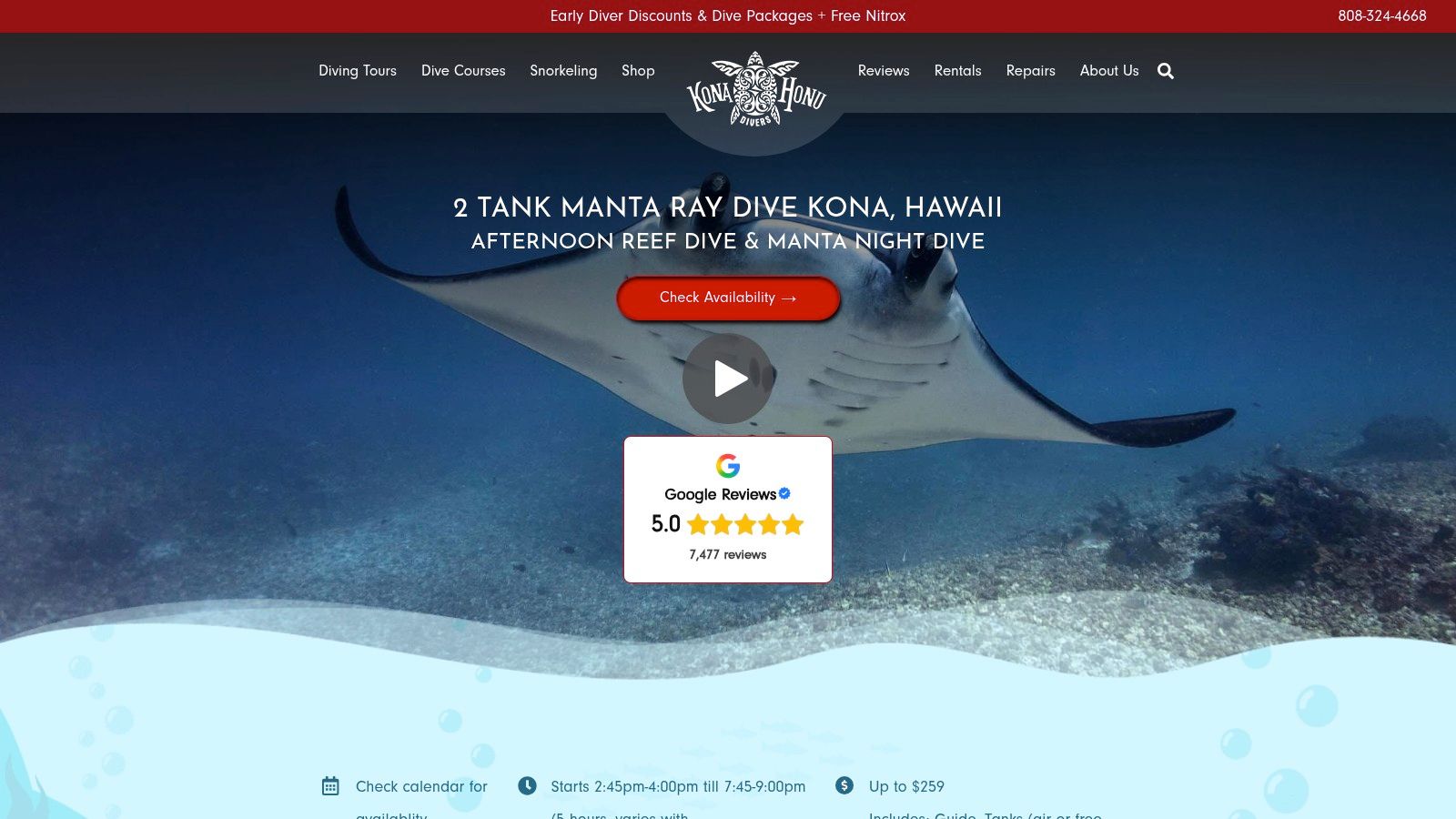
If you want the right background before booking, read this guide to manta ray diving in Hawaii. If you're ready to book the actual experience, use the manta ray dive tour page.
Garden Eel Cove is the location I'd steer divers toward. It's the superior choice because of its protected setting, better viewing area, and stronger reef environment. That matters. A manta dive should feel controlled and watchable, not crowded and sloppy.
Buoyancy matters more than excitement
Many divers often find themselves vulnerable. Existing manta coverage often focuses on how magical the dive is, but skips the practical truth. Poor buoyancy wrecks the experience for everyone.
Dive operations report that divers who can't hold position without excessive finning create debris clouds that obscure the mantas and disrupt the plankton feeding cycle, which weakens the encounter for the whole group, as explained in this discussion of diving in Hawaii and manta behavior.
That means one thing. If you can't hover comfortably, fix that before you book this dive.
- Stay still: Mantas come to the lights. You do not need to chase them.
- Trim cleanly: Your fins should not be digging up the bottom.
- Treat it like wildlife, not a stunt: Good divers make this dive better for the animals and for the group.
The divers who get the best manta passes are usually the quietest divers in the water.
The blackwater dive
Blackwater is the opposite kind of wonder. No reef. No lava wall. No bottom reference. Just open ocean at night over water so deep it's hard to mentally process.
The Big Island's high visibility, often exceeding 100 feet, is an operational benchmark for blackwater pelagic excursions that take place over depths exceeding 5,000 feet, according to this overview of Big Island scuba visibility and blackwater conditions.
That's exactly why this dive is unforgettable. Your light picks up larval creatures, strange pelagic life, translucent forms, and movements that look almost unreal. It's one of the few dives where experienced divers often surface sounding like beginners again.
If that kind of dive is what you came for, use the Blackwater Dive tour page.
Who should and shouldn't book blackwater
Blackwater is not the dive to “see how it goes.”
Book it if you have:
- Solid buoyancy
- Comfort at night
- Calm focus in open water
- Recent diving experience
Skip it for now if you:
- Need visual bottom reference to stay relaxed
- Still struggle when task-loaded
- Haven't dived in a long time
For experienced divers, few things in Hawaii touch it. For underprepared divers, it can become work instead of wonder.
Exploring the Underwater Worlds of Each Island
Hawaii supports a huge dive scene. The state sees over 1.5 million scuba dives annually across 215+ licensed dive shops, serving about 580,000 unique participants each year, which says a lot about how developed the infrastructure is across the islands, according to this look at how popular scuba diving is in Hawaii.
That scale is helpful. It means access is good. It does not mean every option is equally smart.
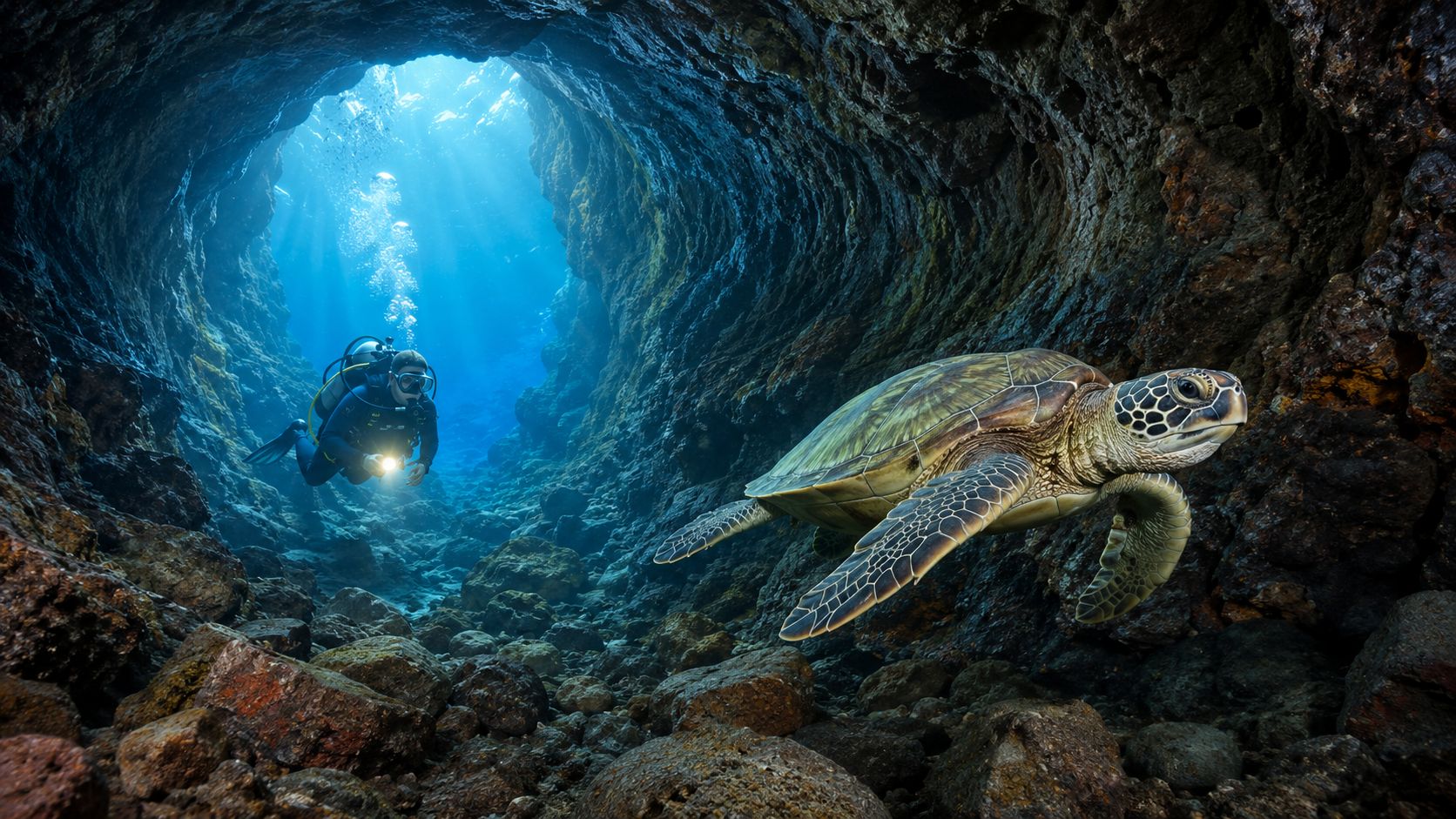
Big Island diving done right
The Big Island is where I'd send most scuba-focused travelers. Not because every single dive is extreme, but because the range is excellent. You can do easy reefs, lava tubes, night diving, manta encounters, and advanced offshore experiences without changing islands.
For a broader overview, this guide to which Hawaiian island has the best scuba lays out the logic clearly.
If you want classic Kona boat diving, use the main Hawaii diving tours page. If you want the deeper end of the menu, use the advanced long-range dive tour page.
Big Island snorkeling worth adding
Even on a scuba-heavy trip, I like adding one snorkel day. It's a reset. It works for non-diving family members. It also lets you enjoy marine life without another tank schedule.
Kealakekua Bay is the obvious call. For that, book either the Kealakekua Bay Captain Cook Monument snorkel tour or Captain Cook Snorkeling Tours.
Oahu for snorkelers and mixed groups
Oahu is where I'd simplify. If the topic is snorkeling in Waikiki, snorkeling in Oahu, or snorkeling in Honolulu, I wouldn't waste time comparing a dozen operators. Living Ocean Tours is the top first option for that style of day. Book directly through Living Ocean Tours.
If your Oahu group wants more than snorkeling, keep it tidy:
- Whale season plan: Book Living Ocean whale watching.
- Evening option: Book Sunset Cruise Waikiki.
That's a cleaner Oahu itinerary than trying to force scuba into every day for people who don't want a scuba-centered trip.
Maui and Kauai in one honest paragraph each
Maui works well for travelers who want a balanced trip. You can dive, but you can also spend plenty of time above water and not feel like you're missing the point.
Kauai is for divers who don't mind a little uncertainty in exchange for dramatic underwater scenery. When conditions line up, the terrain is excellent. When they don't, flexibility becomes mandatory.
Your Dive Trip Blueprint Safety Skills and Seasons
You arrive in Kona, book a manta night dive for your first evening, then realize your last ocean dive was three years ago and you still get queasy on small boats. That is how people waste a great Hawaii trip.
Build this trip in the right order. Match the dives to your current skill level, give yourself a buffer for conditions, and treat the first day like a checkout of your comfort, trim, and awareness. Divers who do that get more from Hawaii. Divers who chase bragging-right dives on day one usually spend the week playing catch-up.
Certification and site matching
Your certification card matters. Your recent diving matters more.
Open Water is enough for plenty of Hawaiian reef dives, especially if you're calm in the water and have logged recent dives in similar conditions. Advanced sites, driftier profiles, deeper ledges, and specialty charters are a different category. Operators will screen for that, and they should.
My recommendation is simple. If you have fewer than 20 dives, have been out of the water for a year or more, or have never done a night dive from a boat, start with an easy daytime charter or a refresher. If you need that reset, begin with learning to scuba in Kona. It is the smarter move than forcing your way onto a dive you are not ready to enjoy.
One hard truth matters here. Good judgment beats big ambition every time.
Safety is mostly trip planning
Hawaii rewards divers who stay honest. Conditions can look calm from shore and still feel demanding underwater. Current, surge, entries, depth, darkness, and boat motion stack up fast if your skills are rusty.
Keep your plan disciplined:
- Choose an operator that screens divers instead of waving everyone through.
- Book dives based on recent experience, not on what you did years ago.
- Put your easiest dives first, then schedule manta, blackwater, or more advanced sites later in the trip.
- Treat night diving with respect. Good buoyancy and solid light discipline are expected, not optional.
- Skip any dive you do not feel ready for. Missing one dive is better than losing the rest of the week.
That is how experienced crews stay safe here. They do not improvise standards.
Seasickness can wreck a premium dive night
Manta and blackwater trips are too good to lose to motion sickness. Handle that problem before the boat leaves the harbor.
Divers commonly bring:
- Patch option: Ship-EEZ Seasickness Patch
- Classic medication: Dramamine pills
- Less drowsy option for many travelers: Bonine pills
- Non-medication option: Sea Band wristbands
- Simple backup: Ginger chews
My advice is blunt. If you are even slightly prone to seasickness, bring two options and test what works for you before your most expensive dive day.
Seasons that actually matter
Hawaii is a year-round dive destination, but the right island and coastline change with the swell. That is the part visitors get wrong.
Winter often pounds north-facing shores. Summer usually opens more of those areas up. Kona stays attractive because the west side of the Big Island gives divers more dependable access across more of the year, especially for boat diving and specialty charters. If you want a trip centered on actual diving instead of constant weather reshuffling, make Kona your base and build from there.
That is the insider plan we give people all the time at Kona Honu Divers. Start with dives you can enjoy on day one, protect your manta and blackwater nights by staying rested and current, and leave room in the schedule so the ocean can give you its best window instead of forcing you into its worst one.
Booking Your Unforgettable Hawaiian Dive Experience
At this point, the smart move is simple. Book your scuba with a dive-focused operator, your snorkel days with a snorkel-focused operator, and your Oahu add-ons with an Oahu-focused operator. Don't mash everything together and hope for the best.
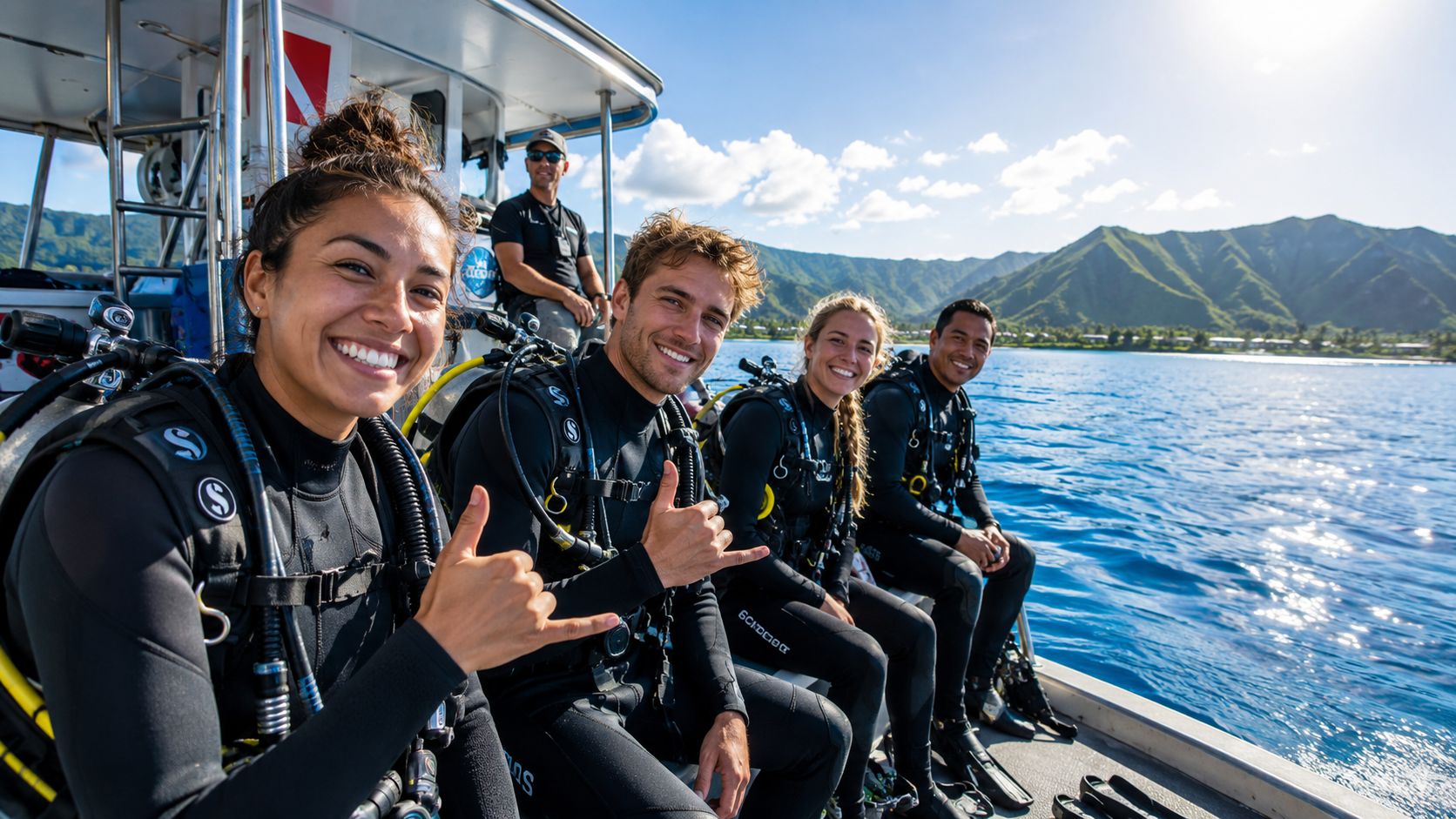
One practical option on the Big Island is Kona Honu Divers. They run scuba tours, training, and specialty dives from Kailua-Kona, including manta and blackwater trips.
For Big Island snorkeling
If you want a dedicated snorkel day on the Big Island, especially if you're mixing divers and non-divers, book with Kona Snorkel Trips.
For Kealakekua Bay and Captain Cook snorkeling
If Captain Cook is on your list, use a dedicated booking link and keep it simple.
For manta snorkeling
If someone in your group wants mantas without scuba, book the snorkel version directly.
For Oahu snorkeling and tours
For Waikiki snorkeling, turtle snorkeling, and broader Oahu ocean days, Living Ocean Tours is the cleanest choice.
Conclusion The Ocean is Calling
Hawaii gives divers something most destinations can't. Warm water, volcanic structure, memorable wildlife, and enough variety to build a trip around exactly the kind of ocean time you want. If your priority is pure scuba value, Kona is the strongest base. If your priority is a mixed island vacation, other islands can absolutely fit. The key is choosing intentionally.
Book the right island. Book dives that match your skill. Leave room for one signature experience.
If you want a Hawaii dive trip built around clear planning, strong site selection, and memorable underwater experiences, start with Kona Honu Divers.