
You're probably planning this trip the way most divers do. A few days on one island, maybe a quick hop to another, a manta dive somewhere in the middle, and a vague idea that you'll “leave the last day open” before the flight home. That rough plan works fine until you start stacking boat schedules, rental cars, altitude sightseeing, and no-fly windows.
That's where diving in Hawaii gets easier or harder. The water is welcoming. The logistics are what catch people out.
Your Ultimate Hawaiian Underwater Adventure Awaits
Hawaii has a way of pulling divers in long before the first giant stride. You book the flight because you want warm water, lava topography, turtles on the reef, and that clean blue visibility you don't get everywhere else. Then the questions start. Which island should be your base? Is the manta dive worth building a trip around? How much can you safely fit into one week?
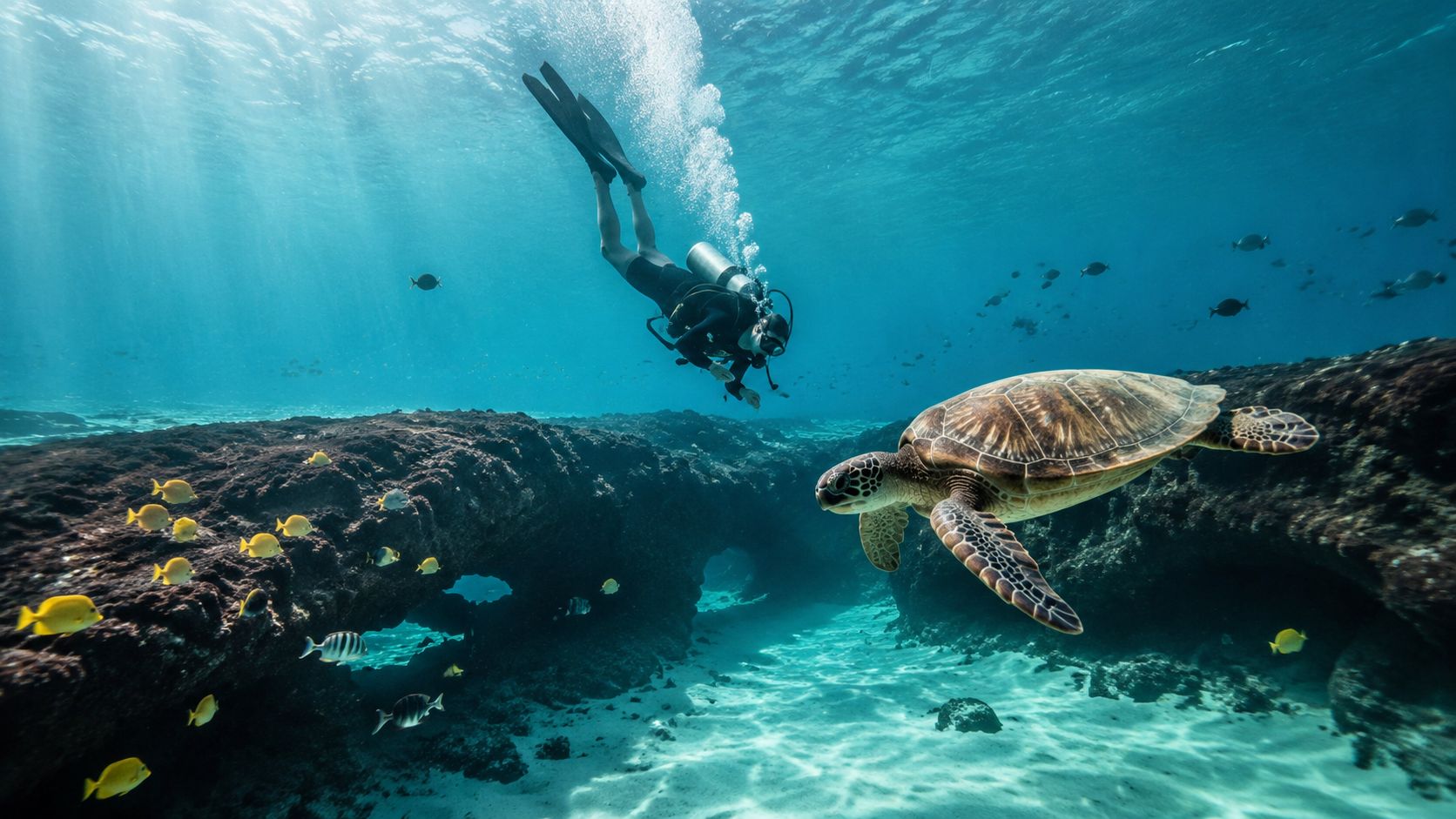
Those aren't small details. Hawaii supports over 1.5 million scuba dives per year, has more than 215 licensed dive shops, and offers typical water temperatures of 75-80°F with visibility that can exceed 100 feet, according to this Hawaii diving overview from Kona Honu Divers. That matters because it tells you Hawaii isn't a fringe destination with a short season. It's a mature dive market with enough boats, instructors, and site options to support beginners, photographers, and experienced divers on the same trip.
Why Hawaii works for so many divers
Some destinations are great if you hit the weather right. Hawaii is different. Warm water and year-round diving conditions make it easier to plan without gambling your whole vacation on one narrow weather window.
A few things keep divers coming back:
- Consistent access: You can dive in Hawaii year-round instead of trying to force everything into one short season.
- Wide site variety: Reef dives, lava formations, night dives, and deeper advanced profiles all exist within the same island chain.
- Strong infrastructure: A large, established dive industry means training, rentals, guided trips, and backup options are easy to find.
Practical rule: Hawaii rewards divers who plan the trip like a real dive itinerary, not just a beach vacation with tanks added on.
The real goal of a Hawaii dive trip
The best Hawaii trip usually isn't the one with the longest site checklist. It's the one that keeps your dive days efficient, your surface intervals conservative, and your travel stress low.
That's the difference between a trip that feels rushed and one that lets you enjoy the diving. If you build around conditions, island geography, and safe sequencing, Hawaii delivers exactly what people hope for when they book it.
Hawaii's Signature Dive Experiences You Can't Miss
Some Hawaiian dives are excellent. A few define the destination.
The first is the Kona manta night dive. The second is the Kona blackwater dive. They're completely different experiences, and that's part of why serious divers often try to do both on the same trip.
The manta night dive
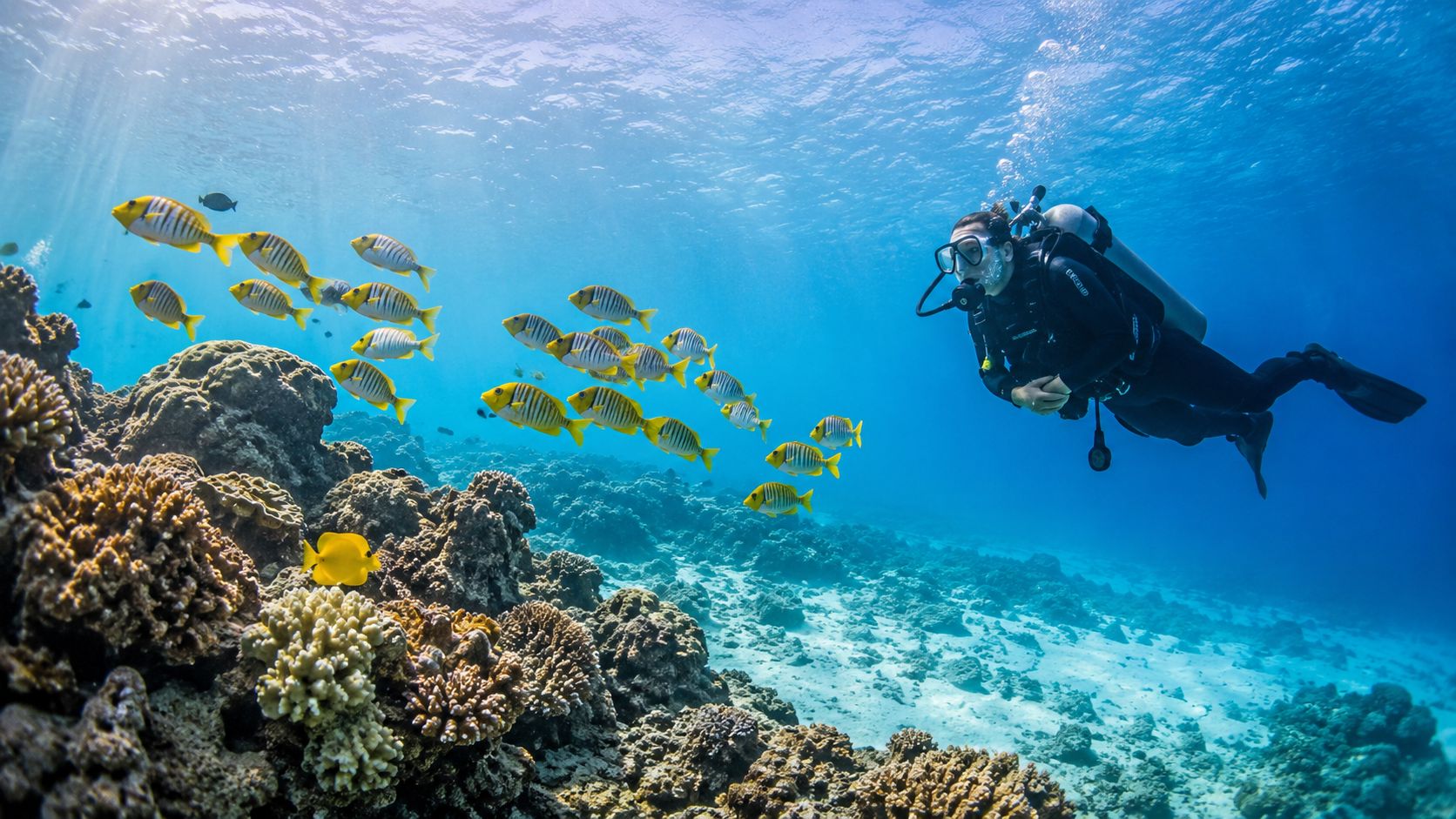
If you only do one famous dive in Hawaii, this is the one most divers remember years later. The mechanics are simple. Divers settle into position below while lights attract plankton, and manta rays move through the lit water column to feed.
Garden Eel Cove stands out because the site's protected location usually makes the whole operation cleaner and easier. Calmer water means an easier entry, a steadier viewing setup, and less task loading once you're down. It also gives divers a better chance to stay settled and watch the action instead of managing surge and distraction.
That matters more than people think. On a manta dive, the quality of the viewing area matters as much as the animal encounter itself. A well-run “campfire” setup gives you a broad, stable view of the rays looping overhead. If you want to understand the experience before booking, this guide to diving with manta rays in Kona is useful.
The blackwater dive
Blackwater isn't a reef dive at night. It's a different category of diving.
You're suspended in deep offshore water after dark, usually focused on the strange pelagic life that rises toward the surface under cover of night. Larval fish, transparent hunters, drifting invertebrates, and animals that don't look real in a flashlight beam all show up in that space. It's one of the most unusual dives in Hawaii and one of the few that can change how you think about the open ocean.
For divers who want that experience, Kona blackwater night dive trips are the right kind of format because this is not a dive to improvise.
The manta dive gives you spectacle. Blackwater gives you mystery.
Which one belongs on your trip
Choose based on what kind of diver you are:
- Want iconic Hawaii wildlife: Book the Kona manta ray dive tour.
- Want something rare and technical-feeling: Book blackwater.
- Can do both: Put the manta dive earlier in the trip if you're still dialing in weighting and comfort, then do blackwater once you're settled.
The common mistake is treating these like interchangeable night dives. They aren't. One is stable, theatrical, and wildlife-focused. The other is open-ocean, mentally demanding, and best for divers who enjoy unusual conditions.
Best Diving in Hawaii A Guide to the Islands
The islands don't dive the same. That's the first planning decision to get right.
If your priority is the strongest all-around scuba trip, the Big Island, especially Kona, is the easiest recommendation. If your trip is mixed with family activities, snorkeling, or non-divers, another island may make more sense. The right answer depends on whether you're building a dive vacation or a general Hawaii vacation with diving included.
For a broader island-by-island breakdown, this comparison of which Hawaiian island is best for scuba diving is a helpful starting point.
Hawaiian Islands Dive Comparison
| Island | Best For | Typical Visibility | Key Sites |
|---|---|---|---|
| Big Island | Variety, lava topography, night diving, reliable boat diving | Clear conditions are a major draw, especially on the Kona coast | Kona reefs, lava tubes, arches, manta sites |
| Maui | Combining diving with a resort-style vacation | Often good, depending on site and weather | Molokini and nearby coastal sites |
| Oahu | Divers mixing wrecks, city access, and non-dive activities | Variable by coast and conditions | Wrecks, reef dives, south shore options |
| Kauai | Scenic reefs and a quieter island feel | Variable by season and exposure | Reef systems and wildlife-focused dives |
Why Kona usually wins for divers
Kona's main advantage isn't hype. It's efficiency.
The west side of the Big Island gives divers easier access to a wide mix of sites without constant long transfers or fragile weather windows. That means you can do a morning reef charter, an advanced lava-structure dive, or a night specialty without spending half the trip repositioning yourself. If you're choosing one island as a serious dive base, that practical edge matters more than brochure language.
If you're focusing your trip there, Kona dive tours on the Big Island give you the broadest range of useful scheduling options.
Where other islands fit
Maui works well when the group wants more than diving. It's easy to build a trip that includes a few strong dive days without making the whole vacation revolve around tanks.
Oahu is different. If some people in your group snorkel rather than dive, Living Ocean Tours on Oahu is the one snorkeling recommendation I'd make for that side of the trip.
Kauai appeals to divers who don't mind a looser, less dive-centric rhythm. It's less about checking marquee specialty dives off a list and more about enjoying the island and getting in the water when conditions line up.
Pick one island as your diving base. Add a second island only if your flight schedule and surface intervals still make sense.
When to Go Seasonality and Conditions
Hawaii is a year-round destination, but that doesn't mean every month gives you the same diving experience. Water time may stay comfortable, while boat rides, visibility, and site selection still change with season and exposure.
On the Big Island, the Kona coast gets its reputation from geography as much as marine life. The leeward side is protected from the prevailing trade winds, which usually means calmer water and more dependable diving conditions than more exposed coasts.
The cleanest window for Kona diving
Independent Hawaii dive guidance notes that the Kona side offers optimal diving from May to October, with water around 75-80°F and visibility often in the 75-100+ ft range. The same guidance notes that a 2.5 mm wetsuit is often sufficient and that buoyancy control matters around volcanic structures where contact can damage the site, as explained in this Kona conditions guide.
That dry-season window matters for practical reasons:
- Calmer surface conditions: Easier boat rides and easier entries.
- Better light and clarity: You get more out of lava formations and wide reef scenes.
- More predictable scheduling: Operators can usually run cleaner plans when swell is low.
What to expect by season
From late spring into early fall, Kona tends to be at its easiest. If you want the least friction trip, this is the range I'd target first.
Winter doesn't shut diving down, but it can tighten your options. Exposed north-facing and east-facing areas around the state can get rougher, and even when Kona remains divable, the ride and site selection may narrow. That doesn't make winter bad. It just means you should build more flexibility into the itinerary and avoid overpacking the schedule.
For month-by-month timing help, this guide to the best months to scuba dive in Hawaii gives a useful planning frame.
What to wear and how to dive it
Don't pack by calendar alone. Pack for the water you'll be in.
- Wetsuit choice: Many divers are comfortable in lighter exposure protection in Kona's warmer water.
- Buoyancy matters: Lava tubes, caverns, and hard reef punish sloppy trim fast.
- Stay adaptable: If surge or swell shifts, changing the site is smarter than forcing the original plan.
A lot of divers obsess over “best month” and ignore site fit. Local conditions on the day matter more than a perfect seasonal label.
How to Choose the Right Hawaiian Dive Operator
You can burn a full vacation day in Hawaii with the wrong operator. A late departure, a cattle-boat group, or a crew that forces a marginal site because it was on the schedule can turn an expensive trip into two average dives and a long ride home.
A good operator does more than put you on a boat. They help you sequence the trip properly, match dives to your actual skill level, and protect your options later in the week if you're also flying interisland or planning altitude sightseeing. That matters even more on a multi-island itinerary, where one bad scheduling decision can affect the rest of the trip.
What to look for first
Start with how the operation runs day to day.
Ask how they brief, how they build groups, and who makes the final call when conditions shift. Ask what happens if someone shows up underweighted, overconfident, rusty, or badly seasick after the first dive. Experienced crews answer those questions quickly and specifically because they deal with them all the time.
Use this checklist:
- Safety systems: Emergency oxygen onboard, clear predive briefings, realistic go or no-go decisions, and staff who look prepared instead of hurried.
- Boat setup: Clean gear stations, sensible entries and exits, and enough space that divers are not climbing over each other to kit up.
- Group management: Dive guides assigned at a ratio that lets them monitor the group underwater.
- Trip fit: Reef dives, manta nights, blackwater, advanced profiles, refreshers, and training all require different staffing and planning.
What usually goes wrong
Price shoppers often focus on the day rate and miss the bigger cost. Lost bottom time, poor site picks, and weak diver screening can waste days you cannot replace.
I see the same failure points over and over. Boats leave full but not organized. Briefings sound fine on deck, then half the group hits the water without a clear plan for navigation, turn pressure, or current. Shops that market every trip to every diver usually end up flattening the experience for everyone, especially on advanced or specialty dives.
If you're comparing local options on the Kona coast, this overview of Kona diving company options is a practical place to start.
Kona Honu Divers is worth considering if you want one shop that can cover guided day diving, training, and specialty charters from a single base. That simplifies logistics, which is useful if you are trying to avoid cramming difficult dives too close to a flight or a summit day on another island.
Questions worth asking before you book
Ask what they do on a bad-condition day. A serious operator will explain how they change sites, adjust the plan, or call the dive if the conditions are wrong.
A few useful pre-booking questions:
- How do you choose sites on the day, and who makes that call?
- Do you separate advanced divers from newer recreational groups?
- What rental gear and exposure protection do you stock in my sizes?
- Which dives should I schedule early in the trip if I need a no-fly buffer later?
- How do you handle refreshers or checkout dives for divers who have been out of the water for a while?
The primary goal of a Hawaii dive trip is not just getting on famous sites. It is finishing the trip with good dives, no preventable safety mistakes, and an itinerary that still works when weather, flights, and fatigue start competing for space.
Essential Safety and Conservation in Hawaiian Waters
Most divers spend too much time choosing sites and not enough time sequencing the trip safely. In Hawaii, that's backward.
The diving itself is often straightforward. The risky part is trying to stack dives, interisland flights, summit drives, and sightseeing without enough margin. Short Hawaii vacations encourage exactly that kind of compression.
Air travel and altitude are the real planning problem
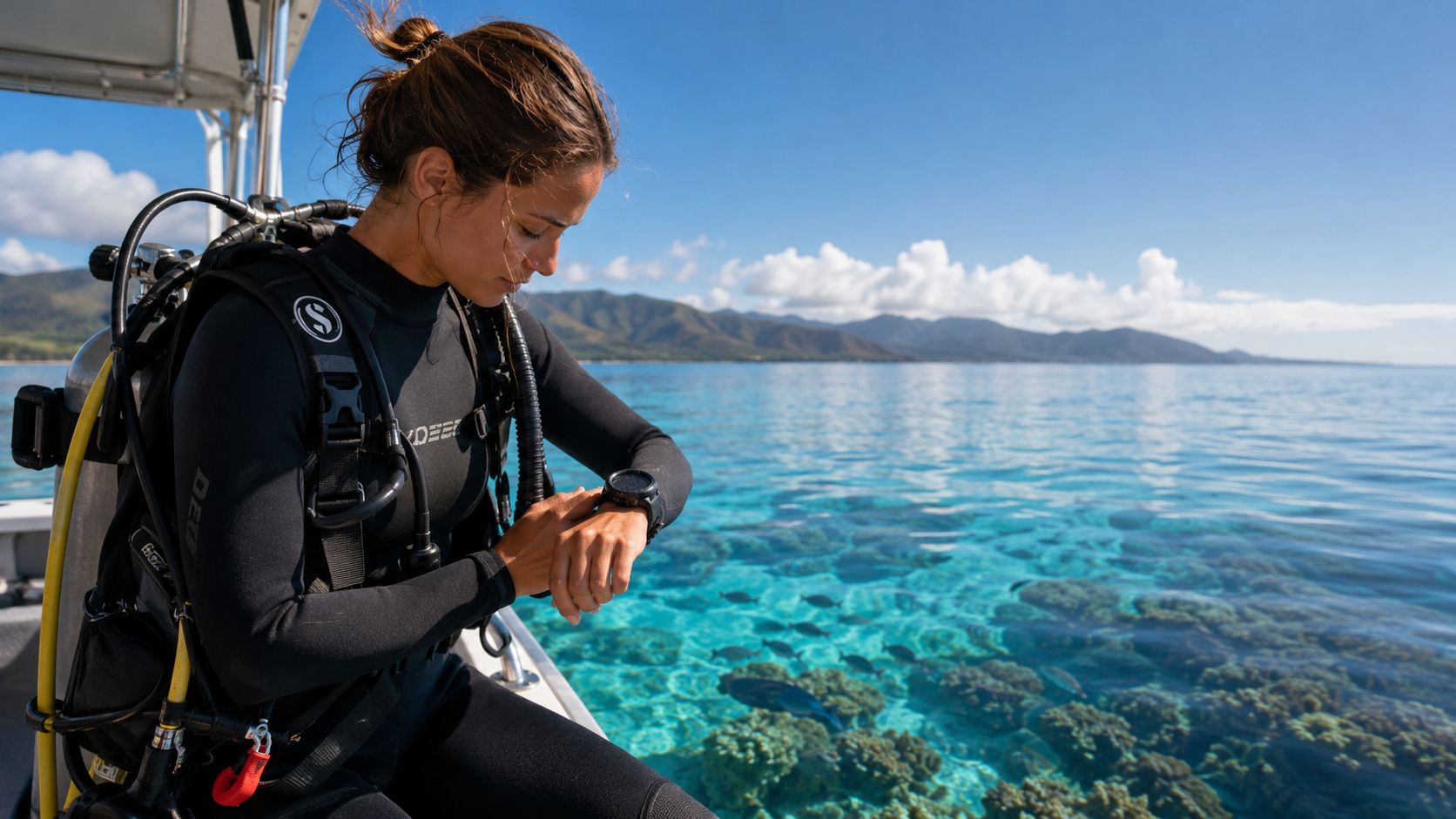
A key point from PADI's Hawaii travel guidance is that divers on short, multi-day trips must carefully manage nitrogen load and surface intervals before flying between islands or going to high-altitude attractions. That practical risk is outlined in PADI's discussion of scuba diving in Hawaii travel planning.
That means your itinerary should work like this:
- Dive early in the island stay: Put your higher-frequency dive days near the front.
- Leave a buffer day later: Use the end of the stay for beaches, driving, or lower-risk activities.
- Treat altitude seriously: A summit or crater drive can affect the safety margin just like a flight does.
- Don't improvise the final day: Last-minute “one more dive” decisions are how people back themselves into bad timing.
Seasickness can wreck a dive day fast
Even on the leeward coast, some people get queasy during gearing up, during the ride out, or while waiting on the surface. If you know you're susceptible, deal with it before it starts.
Useful options include Ship-EEZ Seasickness Patch, Dramamine pills, Bonine pills, Sea Band wristbands, and Ginger chews.
A few habits help too:
- Eat lightly: Don't board on an empty stomach, but skip heavy greasy food.
- Hydrate early: Start before the boat ride, not after you already feel off.
- Stay topside if needed: Fresh air and a horizon line help more than staring at your gear bag.
- Tell the crew early: They can often place you where the ride feels easier.
If you think you might get seasick, plan for it before the boat leaves the harbor. Waiting until you feel bad is usually too late.
Reef etiquette is part of dive safety
Good buoyancy is not just about looking polished. In Hawaii's lava structures and reef zones, careless finning breaks things and reduces visibility for everybody behind you.
Keep your profile clean. Don't touch turtles. Don't chase marine life for a photo. If surge picks up, increase your spacing and slow the dive down instead of trying to force the shot.
Required Skills and Gearing Up for Your Dives
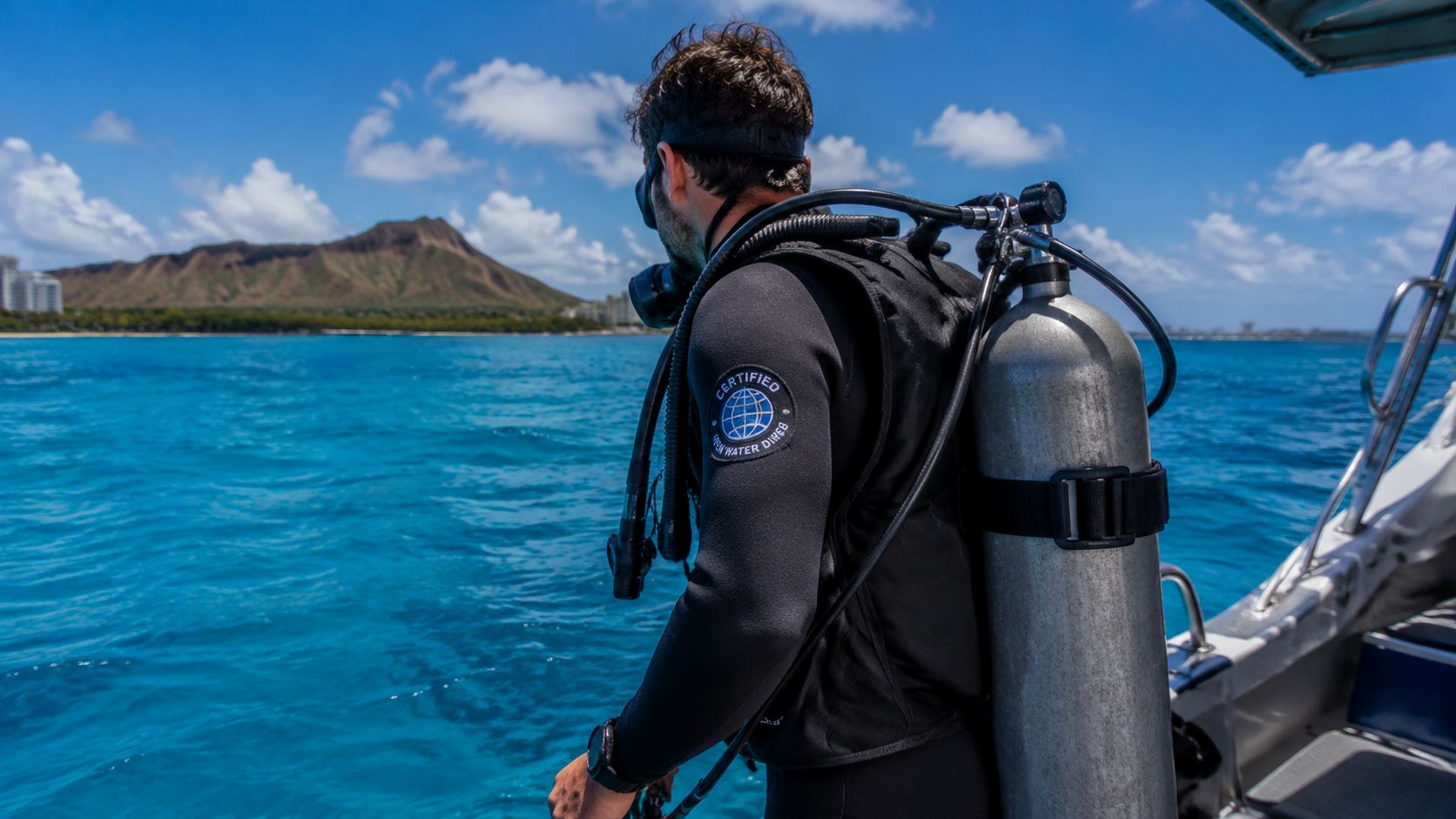
Most Hawaii dives are accessible to certified Open Water divers who are comfortable in the ocean. That said, certification level isn't the whole story. A diver with solid buoyancy, calm situational awareness, and recent experience will usually do better than someone with a higher card and rusty skills.
What skill level you really need
For standard reef dives, an entry-level certification is often enough. For deeper profiles, more exposed conditions, lava structures, and specialty night dives, extra training helps a lot.
That's why divers planning more demanding trips should think in terms of ability, not ego:
- Open Water level: Good for many guided reef dives if you're current and comfortable.
- Advanced training: Useful for navigation, depth confidence, and more complex site profiles.
- Recent diving: If you haven't been in the water for a while, do a refresher before making Hawaii your first dive back.
If you're still building your foundation, this page about learning to scuba is a solid place to evaluate next steps.
What to bring and what to rent
Don't drag every piece of gear across the Pacific unless it improves comfort or safety for you.
The usual smart split is:
- Bring your own mask: Fit matters, and a leaking mask ruins easy dives.
- Bring your computer: Familiarity helps on repetitive dive days.
- Bring fins if you love them: Especially if you're picky about stiffness or fit.
- Rent heavy gear: BCDs, regs, and tanks are easier to leave local unless you need your exact setup.
A practical packing list
The best gear choice is the one you already know how to use well.
Keep the checklist simple:
- Certification cards and log details
- Mask, snorkel, and computer
- Exposure protection that matches your comfort
- Reef-safe sun protection
- Reusable water bottle and dry clothes for after the dive
Experienced divers looking for more challenging site access should also look at advanced long-range dive trips in Kona. That kind of charter makes more sense once your gas management, trim, and comfort level are already solid.
Sample Itineraries Putting Your Dive Plan into Action
A workable Hawaii itinerary protects the diving first, then fills the land time around it. That's the opposite of how many visitors plan. They lock in hotels, luaus, crater drives, and island hops, then try to squeeze the diving into the gaps.
Seven-day recreational diver plan
This works well if the Big Island is your base and you want a strong trip without rushing.
Arrival day
Land, hydrate, settle in, and don't dive tired if travel was long.First dive day
Start with an easy two-tank reef charter. Use it to check weighting, trim, and comfort.Specialty night day
Schedule the manta trip once you're dialed in and relaxed.Surface interval day
Good time for lower-risk sightseeing and a break from repetitive profiles.Second main dive day
Go after lava structure sites or a more ambitious daytime charter.Final dive day
Keep it conservative. Don't end the trip with the most task-loaded profile.Departure day
Fly after a proper surface interval.
Ten-day diver plan with more range
If you want variety, extend the dive window without creating a dangerous back end.
- Start with several days on the Big Island.
- Add one advanced charter or a blackwater trip if your skill level matches.
- Build a no-dive buffer before any interisland flight or high-altitude sightseeing.
- If you move islands, treat the next island as a new phase of the trip, not a continuation of compressed repetitive diving.
If you want a Hawaii dive trip that's built around realistic scheduling, good site access, and safer sequencing, Kona Honu Divers is a practical place to start on the Big Island. Their tour lineup makes it easier to keep your itinerary on one coast instead of losing dive time to extra transfers and fragmented planning.