
You're in Kona with a mask bag, a boat reservation, and one question that matters more than the rest, should you spend your limited underwater time on a boat dive, a shore dive, or a night trip that everyone talks about but few people plan well? That decision is where most visitors waste a perfect Big Island dive vacation. The island rewards divers who choose deliberately, and it punishes people who book by hype.
Why the Big Island Is a World-Class Diving Destination
Arrive in Kona after a long flight and you can feel the difference immediately. The west side is built for diving, with operators, harbors, and sites that make underwater logistics feel easy instead of improvised. That matters, because Big Island scuba diving is not a side activity here, it's a major part of the local marine tourism economy, with about 100,000 certified scuba dives per year, more than 50 dive shops and charter operators, and over 150,000 dive tourists annually visiting the island according to an industry summary on Kona Honu Divers' site (source).
What makes Kona different
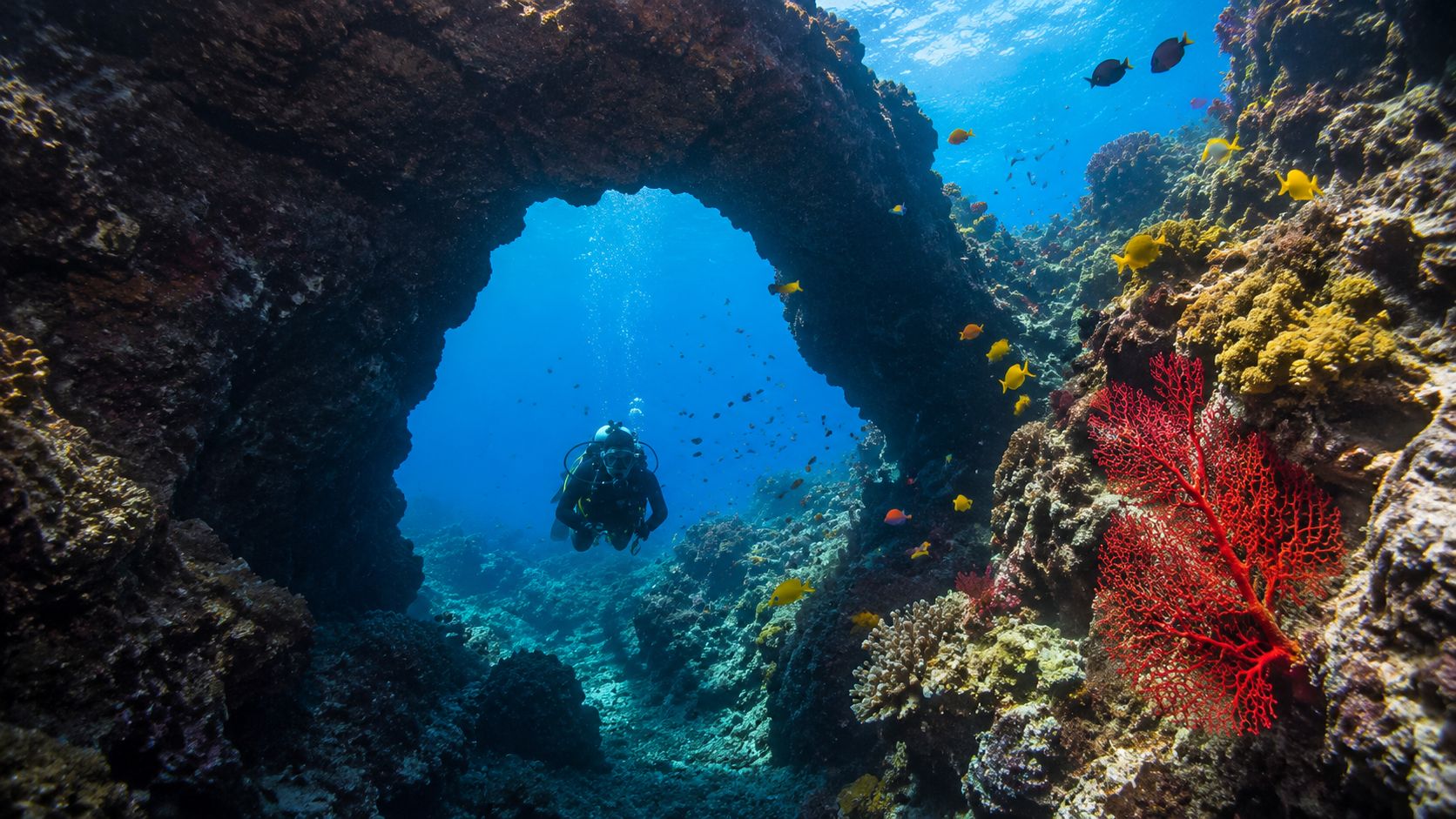
The island's volcanic backbone is the primary draw. Lava has carved arches, tubes, ledges, and drop-offs that you won't get in flatter tropical destinations, and the result is a dive environment that feels rugged, varied, and unmistakably Hawaiian. That geological structure is why the island can support both easy reef tours and more demanding specialty dives without forcing you to leave the same coast.
Kona also has the practical advantage most vacation divers care about but rarely articulate well, protected water. The west side consistently gives operators the most reliable conditions, and the sheer number of active charters means you're not gambling on whether someone can run a trip that day. If you want a broad dive overview, start with this Kona diving guide and then use it to narrow your trip style.
Practical rule: if you only have a few dive days, spend them on the Kona side first. That's where the infrastructure, site access, and dependable operator base are concentrated.
The industry scale matters for another reason, quality control. A market that supports this much diving tends to produce better briefing habits, better boat handling, and better trip variety. You're not choosing between “a dive company” and “the ocean”, you're choosing between operators that know how to use this coastline well and those that merely advertise it.
Signature Dive Experiences You Cannot Miss
The Big Island gives you three very different dives, and choosing the wrong one wastes water time. Pick the right one for your comfort level, and you get the kind of dive people talk about long after the vacation ends.
Manta, blackwater, and daytime reef diving compared
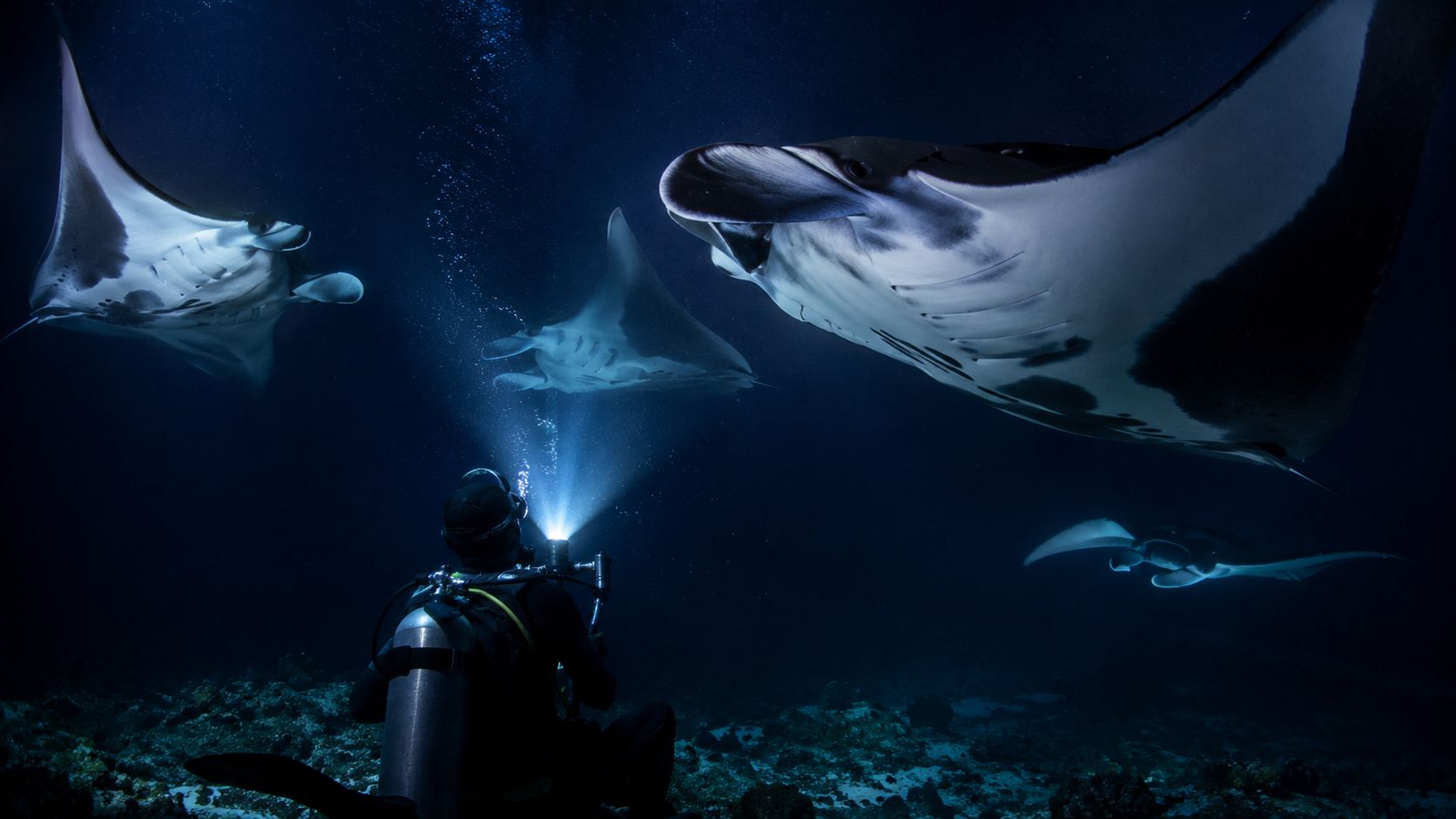
The manta ray night dive is the island's signature encounter, and it earns that status. A major dive publication describes a shallow shelf near Keauhou Bay where divers sit at roughly 35 feet while 10 or more manta rays may glide overhead feeding on plankton drawn in by underwater lights, and another Big Island guide describes mantas here with 16 to 20 feet of wingspan (source) (same source). This is a structured observation dive, year-round, and the key decision is whether you want a calm, controlled night show or a more variable open-water experience. If you want the practical rundown before you book, use this manta diving resource and compare the site setup with the operator's briefing style.
The blackwater dive is a completely different kind of trip. You head into open ocean at night and watch deep-sea life rise through the water column, which gives the dive a strange, floating-in-space feeling that reef divers do not get. Book this only if your buoyancy is solid and you are comfortable in darkness, because the appeal is the open-water weirdness itself.
Daytime reef and drift dives are the reliable workhorses. They give you lava formations, turtles, ledges, and steady bottom time without the pressure of a night excursion. They also make sense if you want to get a clean, relaxed dive in before trying a specialty experience.
If you want one night dive and one daylight trip, do the manta dive first, then a reef boat. That order gives you the island's most famous experience without making the rest of your trip feel underwhelming.
Who should book what
- Newer certified divers: start with reef boats. You get structure, clear expectations, and less risk of overcommitting.
- Confident night divers: choose manta or blackwater based on whether you want predictable wildlife or open-ocean oddity.
- Advanced divers: save the deeper and more technical site options for after at least one relaxed Kona boat trip.
The simple rule is this. Match the dive type to your headspace, not to the most dramatic thing on the brochure.
Best Seasons and Conditions for Diving
The Big Island is worth diving in every season, but the water does not behave the same way all year. If you want fewer hassles, better entries, and less wasted time waiting on conditions, plan like a local diver. Pay attention to swell, wind, and which coast can handle the day.
Summer usually gives you the calmest window for the manta ray night dive. It is offered year-round, and summer often brings lighter surge and easier in-water positioning, which helps if you are bringing newer night divers or anyone who gets tense after dark. Winter is still diveable, but it asks more of you, especially if the ocean is running up and down.
For daytime diving, the Kona side is the smart first choice when the sea settles down. The west coast is more protected, so it gives you better odds of getting in the water instead of staring at whitewater from shore. Exposed entries can turn ugly fast when winter swell pushes in, and that is where boat dives start looking a lot smarter than shore plans.
Use the site, not the calendar, to make the call. Boat operators can shift to a more protected spot. Shore divers have to accept what the entry gives them, and that means reading the conditions carefully before you commit. If you are still learning how to judge that, start with Kona Honu Divers' scuba basics guide and learn how conditions change the dive before you book the wrong experience.
Day trip logic beats calendar superstition
Visitors make the same mistake over and over. They pick dates around airfare, then assume every site will work the same way. It does not. A good boat crew can change the plan. A shore diver gets one shot at the entry.
Rule for shore divers: if the entry looks wrong from the parking area, it is wrong. Do not talk yourself into it.
That is why flexible planning matters on the Big Island. Keep one dive day open so you can choose based on the water, not on stubbornness. When the ocean stays calm, shore sites can be excellent for experienced divers. When the swell comes up, the boat is the better call every time.
Put the manta dive somewhere in the middle of the trip, then leave room before and after it. Use your daytime dives to work with the conditions, not against them. That gets you more time underwater and fewer wasted check-ins.
Certifications and Gear Requirements
Don't show up to Kona assuming every dive works the same way. Certification level decides what you can do, and gear choices decide how comfortable you'll be while doing it. If you're underprepared, you'll spend money to sit out opportunities you could've handled.
Match the dive to your certification
For standard reef boat dives, Open Water certification is the baseline. If you want to dive independently with rented gear, you need a PADI or NAUI card, and that part doesn't bend just because you're on vacation. A full open water course on the island takes three to four days and qualifies you to dive independently to 60 feet, according to the island dive overview at Love Big Island (source).
If you're not certified, you still have options. A resort course or discover scuba program gives you a guided ocean taste without a full certification process, and it's the right move for someone who wants the experience now rather than after a course. Snuba exists too, but if your goal is actual scuba diving, I'd treat that as a fallback rather than a substitute.
For advanced night or deep experiences, go only when your buoyancy and comfort are solid. Manta dives are accessible to certified divers who can stay calm and hold position. Blackwater is for experienced divers who already understand night procedures and don't panic when the water column goes dark.
Bring the right personal gear
Most operators provide the core equipment, but don't assume every rental setup feels the same. Bring your own mask if you have one that seals well, because a bad mask ruins dives faster than bad weather. A small, comfortable dive computer also matters if you want cleaner tracking and less guesswork.
Use this simple packing mindset:
- Mask and personal fit items: bring what touches your face or hands.
- Exposure comfort: choose the wetsuit thickness the operator recommends and don't overthink it.
- Camera gear: only bring it if you're comfortable managing buoyancy and task loading at the same time.
- Certification proof: keep your card accessible, not buried in checked luggage.
If you're still learning, this scuba training resource is the right place to start before you book a harder trip. It's better to earn your comfort in advance than discover your limits halfway through a paid dive day.
Garden Eel Cove Is the Superior Manta Ray Dive Site
If you're going to do the manta dive, do it at Garden Eel Cove. That's the site that gives the cleanest combination of access, viewing, and repeatable structure. It's not just a famous name, it's the most sensible place to put divers who want to see the show instead of fight the current or wrestle for a bad angle.
Why the site works better
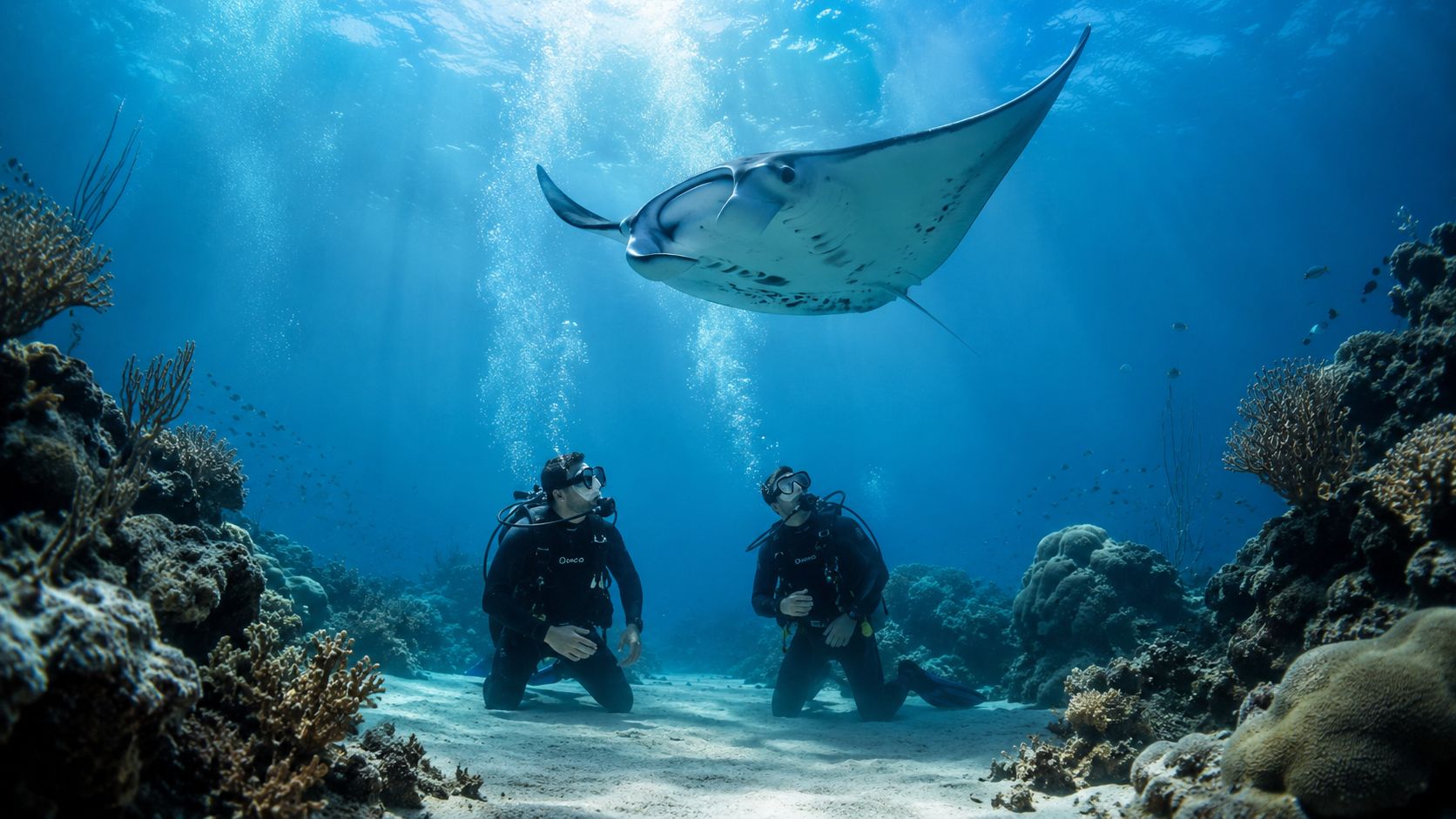
The bottom setup is the big reason. Divers typically settle around 35 feet, which keeps the interaction shallow enough for comfortable observation while still giving the mantas room to glide overhead. A major dive guide describes the feeding loop clearly, mantas cruise through plankton gathered by lights and sweep through the observation zone in a predictable pattern (source). That predictability is what makes the site valuable for both divers and photographers.
Garden Eel Cove also benefits from its geography. The protected location gives you a calmer working environment than many exposed entries, which means better positioning and less wasted energy. When the ocean is cooperating, that extra stability makes a real difference in how much of the encounter you enjoy.
A second point gets ignored too often, the reef environment matters. Guides consistently frame this as a boat-access manta site rather than a casual shoreline hangout, and that matters because good boat placement improves light control, diver spacing, and the quality of the viewing area (source). Better structure means better visibility for your group and less crowding at the bottom.
What to expect on the dive
You're not swimming around hunting mantas. You're settling in, staying composed, and letting the scene come to you. The experience works because it is organized, not chaotic.
Expect the following:
- Fixed observation depth: around 35 feet, which keeps the dive easy to manage.
- Lighting-based attraction: lights draw plankton, plankton draws mantas.
- Overhead action: the best viewing is usually above you, not in front of you.
- Photography opportunity: stable bottom positioning makes wide-angle shots much easier than on a drifting reef dive.
If you want a manta trip and you're choosing between whatever site a brochure names and Garden Eel Cove, choose the cove. Site quality is the difference between a good memory and a sloppy night on the water.
Choosing the Right Dive Operator
Most tourists shop by price and miss the variables that control the dive. That's the wrong filter. A good operator doesn't just get you in the water, it controls how calm, organized, and useful the whole day feels once the boat leaves the harbor.
What matters more than marketing
Start with boat design and stability. A well-laid-out boat makes gearing up easier, keeps gear organized, and reduces the little frustrations that pile up before a dive. Crew experience matters just as much, because experienced staff can read conditions, brief clearly, and handle small problems before they become trip killers.
Then look at group size. Small groups almost always mean better attention, cleaner site management, and fewer bottlenecks at entry and exit. Safety protocol is next. If the crew briefs clearly, checks certifications carefully, and explains the plan without rushing, that's a good sign.
Good operators reduce friction. Bad ones make you feel like you're being processed through a checklist.
For a concrete example, Kona Honu Divers publishes a six-diver cap, free nitrox for certified users, and custom boats with comfort features built for long dive days. Their own site also highlights over 200 years of combined crew experience, which is the sort of operational depth that usually shows up in better briefings and less chaos at the dock (source). Those details matter because they translate into more bottom time, better gas planning, and fewer compromises once you're aboard.
How to separate value from noise
A bargain boat is only a bargain if it doesn't cost you time, comfort, or safety margin. Ask what's included, ask how big the group is, and ask how the crew handles changing conditions. If the answers are vague, keep looking.
Use reviews as a consistency check, not a trophy count. You want patterns, clear briefings, easy logistics, and divers saying they felt looked after. If an operator can't explain who the dive is for, that's a red flag.
The right company doesn't need to brag. It just needs to run the day well.
Sample Itineraries and Booking Strategy
A good Big Island dive trip is built around energy management. Too many visitors stack the hardest dive first, leave no room for recovery, then wonder why the second half of the vacation feels rushed. Don't do that. Sequence your dives so the first one builds confidence and the later one gives you the signature experience.
A practical three-day plan
Day one should be a daytime boat dive. Use it to get calibrated to local conditions, gear, and boat procedures. If you haven't dived Kona before, you will learn how the water feels and how the operator runs the day.
Day two is your manta night dive. Keep the schedule light before the trip, eat sensibly, and don't try to cram in another tiring excursion beforehand. The manta experience works best when you arrive rested and attentive.
Day three can be either a shore dive, if conditions are calm and you're experienced, or a second boat trip if you want a different site profile. That's the best way to avoid overcommitting to a single dive style before you know how your body handles the island.
A five-day plan with more breathing room
With five days, you can do one reef boat, one manta night dive, one advanced or specialty-oriented trip, and still leave time for a shore window. That gives you flexibility without turning the vacation into a dive-marathon. Mix in a non-diving day if you're doing deeper or more tiring trips, because fatigue is what ruins good decisions underwater.
Booking strategy is straightforward. Reserve the signature trips first, then leave the flexible ones open until you've seen the forecast and talked to the shop. If a trip is clearly in demand, don't assume you can walk up and grab a seat.
For planning and departure style, this Kona boat tour page is worth checking before you lock dates. It helps you match your itinerary to the trip format instead of forcing every dive into the same mold.
Book the must-do trip first, then build the rest of the vacation around it. That's how you protect the one dive you can't replace.
Kona Honu Divers runs guided Big Island scuba trips, manta-focused dives, and advanced options that fit the way the Kona coast actually works. If you want a dive day built around solid logistics instead of guesswork, visit Kona Honu Divers and choose the trip that matches your certification and your time in the water.