
You've got a Kona trip on the calendar, the flight's booked, and now you need to decide what kind of underwater day is worth your time. Don't treat dive Kona like a generic reef vacation. Pick the lane that fits your certification, your tolerance for nighttime or deeper water, and whether you're traveling with snorkelers, newer divers, or people who just want easy, reliable ocean time.
Kona's reefs aren't just pretty, they're a measurable economic asset. NOAA's valuation put Hawaiʻi's reefs at about $363.71 million in annual benefits, with $304.16 million from recreation and tourism, roughly 84% of the total, and a net present value of about $9.72 billion at a 3% discount rate. For the Kona Coast itself, annual reef benefits were estimated at $17.68 million, with $8.06 million tied to recreation, which is why reef care isn't soft talk, it's the difference between a strong dive product and a degraded one NOAA reef economic valuation.
What Kind of Kona Trip Are You Planning
Book the experience first, then pick the site. A Kona trip usually falls into four lanes: a calm two-tank reef morning, the signature manta night dive, an advanced pinnacle or lava tube day, or a blackwater run over the deep ocean. If your group mixes certified divers and snorkelers, that choice matters more than the hotel. Use the Kona Honu Divers diving tours page to sort the options, then narrow by comfort level and schedule.
Match the lane to the diver, not the brochure
A first-timer or rusty diver should start with reef structure that stays simple and readable. A family trip usually goes better with a reef morning or a manta evening, because both are easy to brief and easy to pace. A photographer or repeat visitor who wants depth, structure, and tougher water should look at advanced diving or blackwater, if the skills are there.
Practical rule: book the dive that matches your weakest diver, not your strongest one.
If you have three or more dive days, do not stack the same experience back to back. Start with a gentle reef morning, add the manta night dive, then choose either an advanced charter or blackwater if everyone is still comfortable. That order gives you range without turning the trip into a stress test.
For staying close enough to keep dive days simple, use the Big Island stay guide for divers.
Why Kona Visibility and Reef Conditions Are Different
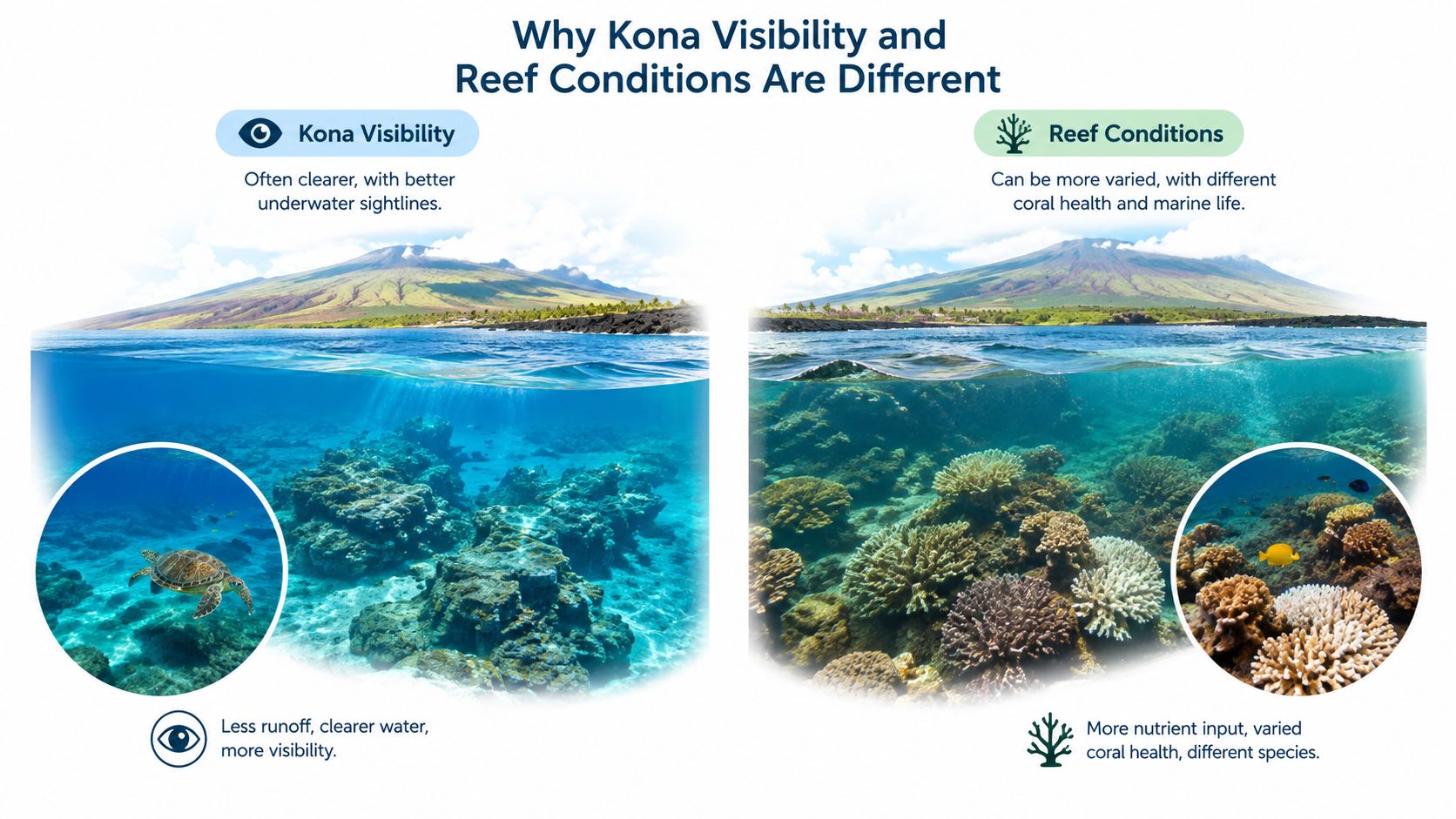
Kona's west coast works because the geography favors the diver. The leeward side sits behind Hawaiʻi's volcanic mountains, so prevailing trade-wind energy is reduced. Steep volcanic bathymetry also puts deep water close to shore, which helps keep fine sediment from getting stirred and suspended for long periods. That's why calm, dry weather usually translates into the kind of clarity people travel here for visibility in Big Island scuba diving.
Read the water like a local
The useful mental model is simple. Calm weather improves surface comfort and usually helps visibility. Recent rain does the opposite, because runoff can carry suspended sediment and reduce clarity, especially near drainage outlets. If you've had steady rain, choose a more open-coast boat site and stop assuming a shore entry will behave the same way.
That's also why reef health matters to the diver experience. The NOAA valuation above shows these reefs aren't a side note, they're the asset underneath the whole tourism product. Healthy coral habitat, fish populations, and access to the coast are what keep the diving worth booking in the first place.
A good Kona day isn't just “blue water.” It's stable water, low runoff, and a reef system that still looks alive when you drop in.
You don't need a miracle forecast. You need a decent weather window, a sensible site choice, and enough discipline to skip the wrong entry when the ocean says no.
The Four Kona Dive Lanes Compared
| Kona Dive Lane | Min. Cert. | Typical Depth | Best For | Time of Day |
|---|---|---|---|---|
| Gentle reef two-tank | Open Water | Shallow to moderate | Newer certified divers, families, relaxed photographers | Morning |
| Manta night dive | Open Water | Moderate | Certified divers who want a signature Kona night experience | After sunset |
| Advanced pinnacle and lava tube trip | Advanced or strong Open Water, depending on operator | Deeper and more exposed | Experienced divers who want structure and more demanding profiles | Morning or afternoon |
| Blackwater dive | Advanced comfort, deep-water confidence | Open ocean, tethered in the dark | Research-minded divers, night-diving veterans, underwater photographers | Late night |
The best Kona trips don't all feel the same, and they shouldn't. A reef morning is about comfort and time in the water. Manta is about one unforgettable wildlife behavior. Advanced trips are about sharper buoyancy, bottom time management, and harder site selection. Blackwater is its own category entirely, more mental than muscular.
If you've got several dive days, pair one easy day with one signature night, then add depth or blackwater only if everyone in the group still looks eager after day one. That keeps the trip fun instead of turning it into a certification exam.
Manta Night Dives at Garden Eel Cove
A Kona manta night works because the lights pull plankton into the water column, and the plankton brings reef manta rays into view. Researchers documented that effect in NOAA manta light study. For divers, the rule is simple, stay low, stay calm, and let the animals set the pace.
Garden Eel Cove is where I send most visiting divers. The site gives you a cleaner viewing setup and a better sense of where the action is, which matters when you are trying to watch mantas without crowding the feeding lane. If you are booking a run, use the Kona Honu Divers manta dive page and pick a departure that keeps the group relaxed instead of rushed.
How to behave in the water
The rules are straightforward. Do not chase, touch, block, or thrash around trying to improve your position. Keep your buoyancy quiet and your fins clear of the lane. A long-running study recorded 25,444 manta observations involving 118 individuals at two Kona sites, which is why site fidelity and repeated use matter so much. That evidence is why I treat manta nights as managed wildlife viewing rather than a novelty dive.
Keep your buoyancy quiet and your fins out of the lane. If the manta wants to come closer, let it.
Photographers should keep flash use disciplined and framing simple. Newer divers should focus on holding position cleanly. The encounter improves when the divers stop trying to direct it.
Blackwater Diving After Dark Over the Deep
Blackwater is not just “night diving offshore.” It's a different mental game. You're tethered over deep water, the bottom is gone, and what you see is a rotating cast of pelagic life rising through the dark. That can be jaw-dropping for the right diver, and it can feel empty and disorienting for the wrong one. If you want to understand the format before booking, start with the Kona Honu Divers blackwater diving page.
Who should book it
This lane suits divers who are calm in open water, comfortable in low reference environments, and genuinely curious about pelagic behavior. It's not the trip for someone who needs a reef wall, a sandy bottom, and constant visual anchors. It's also not where you go to relax after a tiring travel day.
The Old Kona Airport marine conservation area gives you the opposite lesson. It offers a partially protected cove and a semiprotected basin for shore entries, but the protected area strictly prohibits taking, injuring, killing, possessing, or removing marine life, including coral and limu Old Kona Airport marine conservation area rules. That's a good reminder that Kona's interesting diving isn't just about depth, it's also about respecting the place you're in.
If blackwater sounds exciting because it's unusual, good. If it sounds exciting because you want a flexible challenge and you've got strong buoyancy already, even better. If it sounds exciting because you're hoping it'll feel like a standard night dive with a few extra fish, skip it.
Certification, Courses, Nitrox, and Rentals
If you're not certified, don't try to improvise your way into a serious charter. Get the card first, or book a guided intro if that's the right fit for your trip. Certified divers should also be honest about rust, because shops in Kona care less about your ego than about whether you can descend, hold trim, and return to the boat cleanly.
What to book based on your skill
Beginner divers should look at entry-level training or a refresher. Experienced divers who want deeper or more demanding terrain should check the Big Island scuba certification page and line up the right course before the trip gets busy. If you're already competent and just need gear, go rental-first and save your energy for the water.
Nitrox makes sense for divers who'll repeat multiple dives or want a little more breathing margin on longer profiles. Gear quality matters too, especially on boats where repeated use can turn sloppy fast. I'd rather see a guest spend a little time choosing a clean rental setup than waste a dive because a mask leaks or a fin strap fails.
Don't overbuy gear you won't use
- If you're newly certified: book a simple reef charter first and keep the first day easy.
- If you haven't dived in a while: book a refresher before you pay for the more technical trip.
- If you're chasing deeper Kona sites: reserve the advanced charter only after you know your weighting and trim are still dialed.
- If you're doing multiple boat days: ask for nitrox if you're certified for it, because it's useful on longer schedules.
Seasonal Conditions and the Post-Rain Visibility Rule
Kona diving is possible year-round, but that doesn't mean every month behaves the same way. Your real variable is weather, especially surf, swell, and runoff. West-side sites usually stay more manageable than the windward side, but exposed entries still get punished when the ocean or the rain changes fast.
The rule that saves bad dive days
Safety guidance for Kona identifies runoff-related bacterial contamination at inshore beaches after heavy rain, with Kahaluʻu described as particularly vulnerable, and recommends staying out of the ocean for at least 72 hours after significant rainfall even when discoloration is not obvious Kona beach safety guidance. That rule is the one most glossy travel pages skip, and it's the one I want visitors to keep in mind.
Brown water is an obvious warning, but it's not the only one. Stream outlets, fresh rain on the windshield, and beach advisories all matter. If you've had significant rainfall, I'd rather put you on a boat site with cleaner water than have you gamble on a shore entry that looks “okay enough.”
Clear-looking water isn't a safety test. The clock after rain matters more than your eyes do.
For shore divers, the safest mindset is flexible. Have a boat alternative ready, and don't treat the original plan as sacred if the conditions turn. That's how you keep a Kona schedule from becoming a missed dive and a bad mood.
Booking Logistics, Group Contact, and FAQs
Book the trip around your weakest constraint. That might be a mixed-certification group, a child in the party, a travel day that can't absorb delays, or one diver who gets seasick if the boat gets choppy. Pack the basics, keep the plan simple, and choose an operator that can handle the logistics without turning them into a puzzle.
What to bring and how to handle motion
For seasickness, use the tool you'll definitely take on time. The Ship-EEZ Seasickness Patch, Dramamine pills, Bonine pills, Sea-Band wristbands, and ginger chews are all reasonable options for travelers who know they're sensitive Ship-EEZ, Dramamine, Bonine, Sea-Band wristbands, and ginger chews. Kona boat dives are usually calmer than rough open-ocean trips elsewhere, but I still tell guests to treat prevention like part of the booking, not an afterthought.
Pack a towel, dry clothes, a reusable water bottle, and the certification card you'll need for the dive you picked. If you're bringing a mixed group, confirm in advance who is diving, who is snorkeling, and who is just riding along. A clean headcount prevents last-minute dock drama.
FAQ
How early should certification be handled?
Before you get on the plane. If you need a course or refresher, don't squeeze it between beach days and hope it goes smoothly.
Are manta dives sensitive to visibility?
Less than reef sightseeing is, because the encounter depends more on light, plankton, and calm positioning than on wide-open bluewater scenery.
What happens if conditions change?
Change the plan. A flexible boat day is better than forcing a bad shore entry or a marginal night dive.
Kona Honu Divers offers guided reef charters, manta nights, blackwater dives, courses, and rental support, so the whole trip can be built around one operator instead of stitched together from random pieces. If you want to keep it simple and book around the right mix of intensity and safety, visit Kona Honu Divers and lock in the dive that fits your group, not someone else's highlight reel.