
You're probably in the same spot most divers hit when they start planning Hawaii. You want more than a pretty reef. You want the trip that gives you stories you'll still be telling years later. Mantas at night. Lava topography you won't find on a flat tropical shelf. Maybe even that open-ocean blackwater dive you've heard described as outer space with fins.
That's why Big Island scuba diving stands apart. It isn't just about checking off a destination. It's about choosing the Hawaiian island where dive planning matters, because the range of experiences is so broad. Pick well and you can build a trip around reefs, rare night dives, and advanced offshore adventures. Pick poorly and you can end up on a boat that doesn't match your experience or your goals.
Why Your Next Dive Trip Should Be the Big Island
The biggest reason divers keep coming back to the Big Island is variety with consistency. You can do a calm reef dive in the morning, a world-famous night dive after sunset, and still feel like you've barely scratched the surface. The underwater terrain is volcanic, dramatic, and distinctly Hawaiian. Instead of long stretches of uniform reef, you get ledges, arches, lava formations, and fish life tucked into rugged structure.
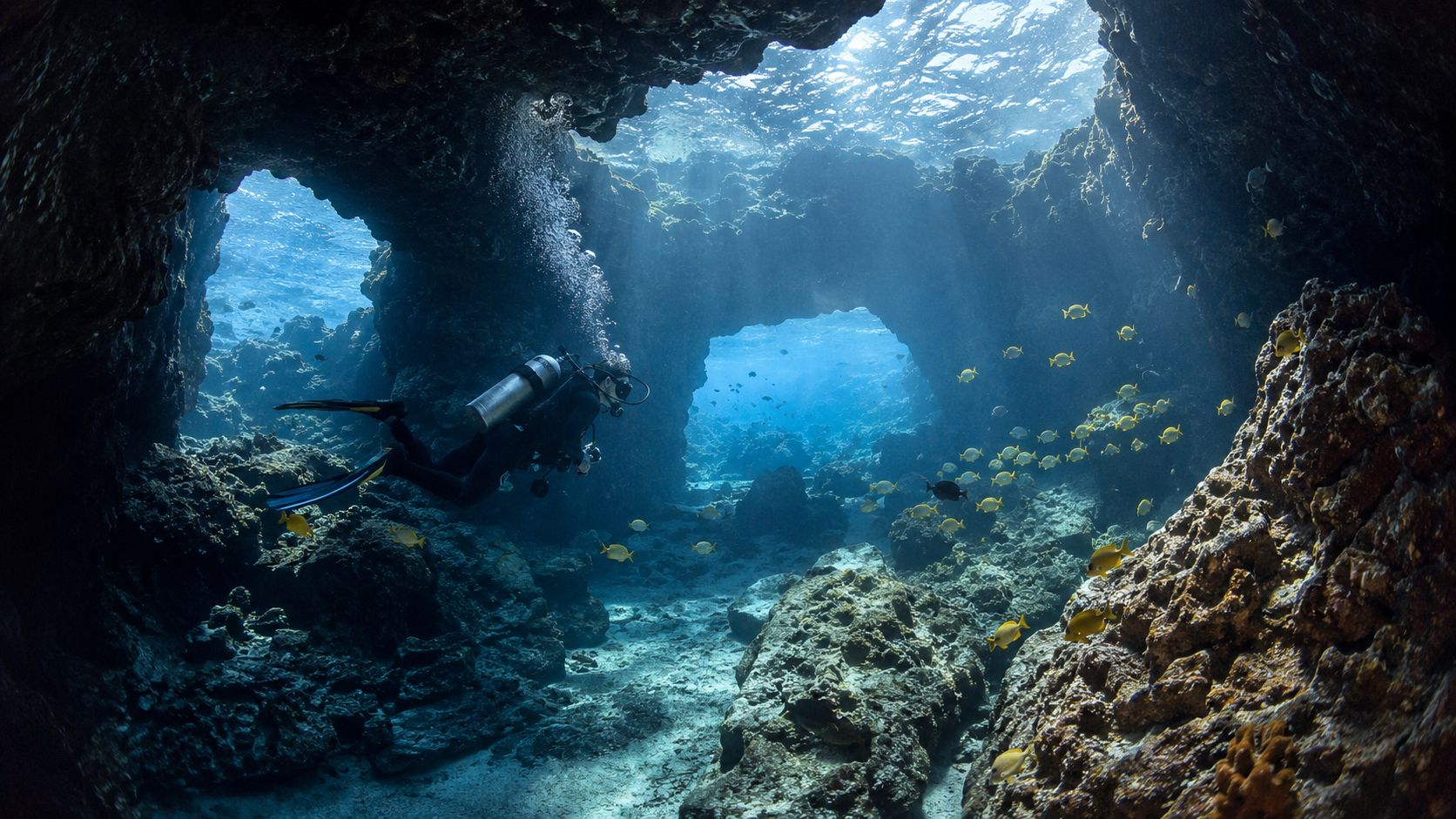
The island also has the operating scale to support serious dive travel. The Big Island hosts approximately 100,000 certified scuba dives annually, with over 50 dive shops and charter operators serving access to more than 50 unique dive sites, according to this Big Island diving overview. That matters because high-quality diving destinations need more than good water. They need reliable boats, experienced crews, and enough site options to adapt to conditions.
The Kona Coast makes the difference
Most visitors diving the island end up focused on Kona, and for good reason. The west side is where logistics get easier and site selection gets better. Boats can reach a broad range of dives without turning the day into a long transit, and the local diving culture is built around getting people in the water year-round.
If you're still deciding whether this island fits your trip, this guide on whether the Big Island is good for scuba diving is worth reading.
Practical rule: If your vacation has limited days, choose the island where operators can shift sites efficiently and still deliver standout dives. That favors Kona.
It's not just scenic. It's strategically strong.
A lot of destinations give you one signature experience and a handful of filler dives around it. The Big Island isn't like that. Its appeal comes from the combination of headline dives and strong everyday diving. The manta night dive gets the attention, but a key aspect of the island is that your non-manta days can still be excellent.
That's what makes Big Island scuba diving easy to recommend. You're not traveling here for a single lucky encounter. You're traveling here for a destination with enough depth, structure, and operational support to build a full dive trip around.
Kona's Unmissable Dives Mantas Blackwater and Reefs
A strong Kona dive trip usually hinges on three very different experiences. One gives you a near-vertical view of giant mantas feeding overhead. One drops you into open ocean at night to watch larval and pelagic life rise from the depths. One fills the rest of the week with lava topography, reef fish, turtles, and easy daytime bottom time. If you choose these well, Big Island scuba diving stops being a checklist and starts feeling like a well-built trip.
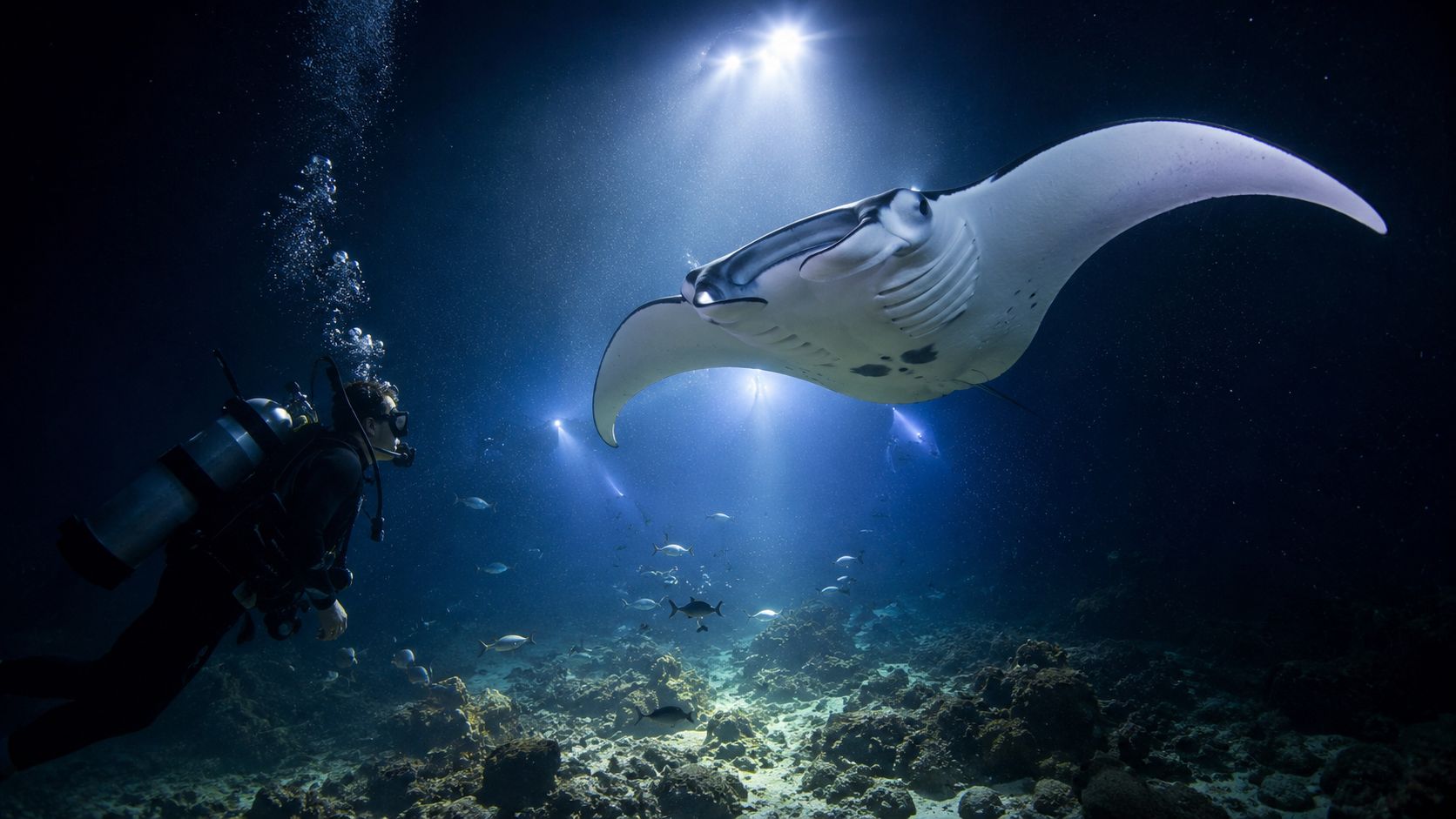
The manta dive earns its reputation
The Kona manta night dive is famous because the encounter is structured around a predictable feeding pattern. Divers settle on the bottom in relatively shallow water, lights attract plankton, and the mantas come in to feed above the group. That setup creates a much more reliable wildlife experience than a standard night dive where everyone just hopes something large swims by.
It also helps that the viewing is simple. Stay low, keep your light where the guide wants it, and avoid kicking up the bottom. The mantas do the rest.
For a closer look at how the experience works underwater, this guide to manta ray diving in Hawaii lays out what divers can expect.
Garden Eel Cove stands out for good reason
Site choice matters on manta dives. A lot.
Garden Eel Cove is the site I point divers toward because it tends to offer a cleaner viewing angle and a more controlled overall experience. The layout suits the way manta dives work. Divers stay in place, look upward, and let the animals pass repeatedly through the light column. That is a better fit for newer night divers than a looser format with more swimming and less structure.
The other advantage is operational. Crews who run this site regularly know how to position divers, manage lights, and keep the group settled so the encounter stays calm for both people and mantas. Kona Honu Divers has built much of its reputation on delivering that kind of polished manta experience, and it shows in how efficiently these dives are run.
Stay low, stay still, and watch the water above you. Chasing mantas always makes the dive worse.
Blackwater is the rare dive that changes how people see the ocean
Blackwater diving is not a reef dive at night. It is a blue-water drift over deep ocean with no bottom reference, no lava ledges, and no familiar visual frame. The draw is the strange, delicate life that migrates upward after dark. Larval fish, transparent jellies, siphonophores, pelagic juveniles. Many divers finish their first blackwater dive realizing they spent years looking past an entire part of the ocean.
That said, this is not an entry-level novelty dive. Divers need solid buoyancy, comfort in darkness, and enough experience to stay relaxed when suspended in open water. As explained in this article on whether diving experience is needed for Big Island dives, blackwater diving is generally better suited to advanced divers with enough logged dives to be comfortable without a bottom reference.
Kona is one of the few places where this experience is not treated as a fringe specialty. It is a real part of a serious dive itinerary, and that matters. A good blackwater operator controls the drift, keeps the descent and ascent disciplined, and knows how to brief divers for what can otherwise feel disorienting. That is a major reason experienced visitors seek out Kona Honu Divers for the true blackwater dive.
Reef dives hold the trip together
The daytime reefs are not filler between headline dives. They are what make the trip feel complete.
Kona reef diving gives you volcanic structure, swim-throughs, coral growth tucked into old lava, turtles under ledges, eels in cracks, and enough fish life to keep even a simple profile interesting. These dives also serve a practical purpose. They let divers get weighted correctly, settle into local conditions, and build confidence before a night manta or blackwater booking.
The smartest way to view Kona is as a three-part system:
- Manta dives for big-animal behavior and a signature night experience
- Blackwater dives for advanced divers who want something rare
- Reef dives for variety, skill-appropriate diving, and the rhythm of the trip
That mix is what separates a well-planned Big Island itinerary from a vacation built around one famous dive.
Choosing Your Adventure A Guide to Big Island Dive Sites
You can build a great Kona dive trip, or you can burn valuable boat days on dives that do not match your skill set or interests. The difference usually comes down to site selection.
I tell visiting divers to choose dives by goal first, then by certification and comfort in local conditions. That approach works better than chasing the site name everyone else mentions. Big Island scuba diving has enough range to build very different trips for a new Open Water diver, an underwater photographer, and an experienced diver who wants demanding profiles and rare encounters.
Match the site to the experience you want
If you want dramatic terrain, pick dives known for lava fingers, arches, caverns, and long reef contours. These sites reward slow finning and good buoyancy. They also tend to be more interesting for photographers who want framing, contrast, and subjects tucked into the rock.
If your priority is marine life, choose calmer reef dives with steady fish activity, cleaning stations, and ledges where turtles and eels regularly settle in. These are often the right call for newer divers, families traveling with mixed experience levels, or anyone who wants an easier first day to dial in weighting and air consumption.
Some divers want challenge more than scenery. For them, the right choice may be deeper profiles, longer boat runs, or sites that demand better situational awareness in current and surge. Those dives can be excellent, but only when the diver has the experience to enjoy them instead of manage stress. Kona Honu Divers offers trips that fit both ends of that range, from straightforward reef diving to advanced profiles like the true blackwater dive and long-range charters for divers ready for more demanding days.
Big Island Dive Types and Recommendations
| Dive Type | Typical Depth | Required Certification | Best For |
|---|---|---|---|
| Reef dives | Recreational depths | Open Water | Easy entries into Kona diving, fish life, turtles, relaxed profiles |
| Lava tubes and arches | Recreational depths, sometimes condition-dependent | Open Water or Advanced Open Water depending on site and conditions | Divers who want volcanic topography, swim-throughs, and dramatic structure |
| Manta night dive | Shallow night profile | Certification required by operator standards | Divers focused on animal behavior and Kona's signature night experience |
| Blackwater dive | Open-ocean night profile | Advanced certification and strong comfort in open water | Experienced divers seeking pelagic larvae and a specialized offshore drift |
| Advanced long-range dives | Deeper or more demanding profiles | Advanced Open Water or comparable experience | Skilled divers who want remote sites, longer runs, and broader site access |
A good Kona itinerary usually mixes categories instead of repeating the same type of dive every day. Reef dives build familiarity with local conditions. Specialty dives give the trip its headline moments. Advanced days belong later in the schedule, once gear, weighting, and comfort are sorted out.
For a broader look at how these options fit together, this guide to diving Kona and the Big Island gives useful context.
Volcanic terrain adds one more layer to site choice
Kona's underwater topography is the reason many divers fall in love with the Big Island. It is also why flexibility matters. Lava structure creates beautiful swim-throughs, sharp relief, and protected pockets full of life, but local conditions can change how those features are dived on a given day.
That is why experienced operators adjust plans based on the morning's conditions, the group on board, and the site's current profile. A site that is excellent for one boatload of divers may be the wrong choice for another. Good operators make that call early, explain it clearly, and move the group to a site that offers a better dive rather than forcing a bucket-list stop.
Local judgment beats a fixed wish list. On the Big Island, the smartest dive plan is the one that matches the conditions and the divers actually on the boat.
Planning Your Dive Trip When to Go and What to Pack
You fly in, book a manta night dive for your first evening, and realize on the boat that your thin rash guard is not enough once the sun drops and the wind picks up. That kind of mistake is easy to avoid. Kona is diveable year-round, but comfort and trip flow depend on choosing the right days, building in recovery time, and packing for boat life, not just bottom time.
The Big Island rewards a flexible plan. Conditions are often good, yet the experience changes with swell, wind, sun exposure, and the kind of dives you want to prioritize. If mantas and blackwater are high on your list, leave room in the schedule for a second attempt. Those are premium experiences for a reason, and they are better enjoyed when you are not forcing them into a tight itinerary.
What time of year works best
There is no single perfect season for Kona diving. Water stays comfortable by most divers' standards, and marine life is strong throughout the year. Key differences include surface conditions, weather on the ride out, and how much extra clothing you want after the dive.
Winter can bring more wind and a bumpier ride, especially for divers who are sensitive to motion. Summer often feels easier on the boat, with warmer air and calmer mornings, though sunny days can wear people out faster than they expect. Shoulder seasons are a good middle ground if your schedule allows.
For trip planning, I'd match the calendar to the dives you care about most.
- Newer divers: Favor calmer forecast windows and keep the first day simple.
- Manta and blackwater divers: Schedule these early enough that you have backup nights available.
- Photographers and experienced divers: Leave room for operators to move days around based on the forecast and visibility.
A smart Kona schedule usually starts with straightforward daytime reef diving, then adds specialty dives once weighting, buoyancy, and local conditions feel familiar.
What to pack for comfort, not just for diving
Packing for Kona is less about bringing more gear and more about bringing the right small items. Divers often remember fins and certification cards, then forget the things that make a three-dive day pleasant.
Exposure protection is the first decision. Many divers are happy in a 3mm full suit, while others run cold on repeat dives, night dives, or blackwater trips and prefer more coverage. If you are unsure, this guide on what wetsuit is best for diving in Hawaii gives a practical starting point.
Bring these every time:
- Dive documents and personal gear: Certification card, logbook if you use one, dive computer you already know, and prescription mask if needed.
- Boat protection: Rash guard or cover-up, hat, polarized sunglasses, towel, and dry clothes for the ride back.
- Hydration and sun items: Reusable water bottle, reef-safe sunscreen, and lip balm.
- Small fixes that save the day: Dry pouch, spare hair ties, motion sickness remedy, and a light snack.
One more tip. Pack a second swimsuit or an extra base layer if you are doing day diving followed by a manta or blackwater trip. Getting back into a cold, wet suit after a break is one of the fastest ways to drain your energy.
Plan for motion sickness before the boat leaves
Even strong divers can have a rough morning if the surface is lumpy. Kona departures are often comfortable, but comfort changes fast once wind and swell line up the wrong way, especially on longer runs or after dark.
Useful over-the-counter options include Ship-EEZ Seasickness Patch, Dramamine pills, Bonine pills, Sea Band wristbands, and Ginger chews.
Use whatever has worked for you before, and take it early enough to matter. If you are trying a product for the first time, do that before your trip, not on the afternoon of a manta dive.
Build your schedule around real energy levels
The Big Island is not the place to stack every headline dive back-to-back without thinking about fatigue. Manta night dives are easy in one sense because the profile is controlled, but they still make for a long day if you also did morning charters. Blackwater requires focus, comfort in open water at night, and enough energy to enjoy the dive instead of just getting through it.
I usually recommend spacing specialty nights apart if the trip allows. Day reef dives first. Then mantas. Then blackwater once you are settled, weighted correctly, and comfortable with local procedures. That order gives divers a better experience and makes site selection easier for the operator based on the group on board.
Good planning is simple. Pack for the boat, not only the water. Leave room for weather and second chances. Put your highest-value dives on nights when you will arrive rested.
How to Choose the Best Dive Operator in Kona
Choosing the operator shapes the entire trip. The site list matters, but the boat, crew, and how the day is run matter more once you're on board. Good operators make small decisions that improve the whole experience. Gear setup, entry timing, site briefings, and group control are what separate a smooth dive day from a sloppy one.
What to look for first
Start with safety and fit, not marketing. You want a crew that gives clear briefings, keeps groups manageable, and chooses sites based on conditions rather than trying to force a plan. Boat layout matters too. A platform built for divers is easier to live with than a vessel that feels adapted as an afterthought.
I'd evaluate Kona operators with this short checklist:
- Boat design: Look for easy entries, stable deck space, and a setup that makes gearing up organized.
- Crew style: Calm, direct, and observant beats theatrical every time.
- Trip match: Some boats are ideal for newer divers. Others suit advanced guests who want more independence.
- Equipment standards: Well-maintained rental gear and tidy tank handling are essential.
Where operator quality really shows
The true test comes when conditions shift or the group mix is uneven. That's when experienced crews stand out. They adjust the site, rebalance buddy teams, and keep the atmosphere relaxed without getting casual about the dive plan.
One local option to compare is Kona Honu Divers, which offers day trips, manta dives, blackwater diving, custom-built boats, and free Nitrox for certified divers.
A good dive operator doesn't just get you underwater. They help you arrive calm, briefed, and matched to the right dive for your skill level.
Sample Itineraries and Booking Your Dives
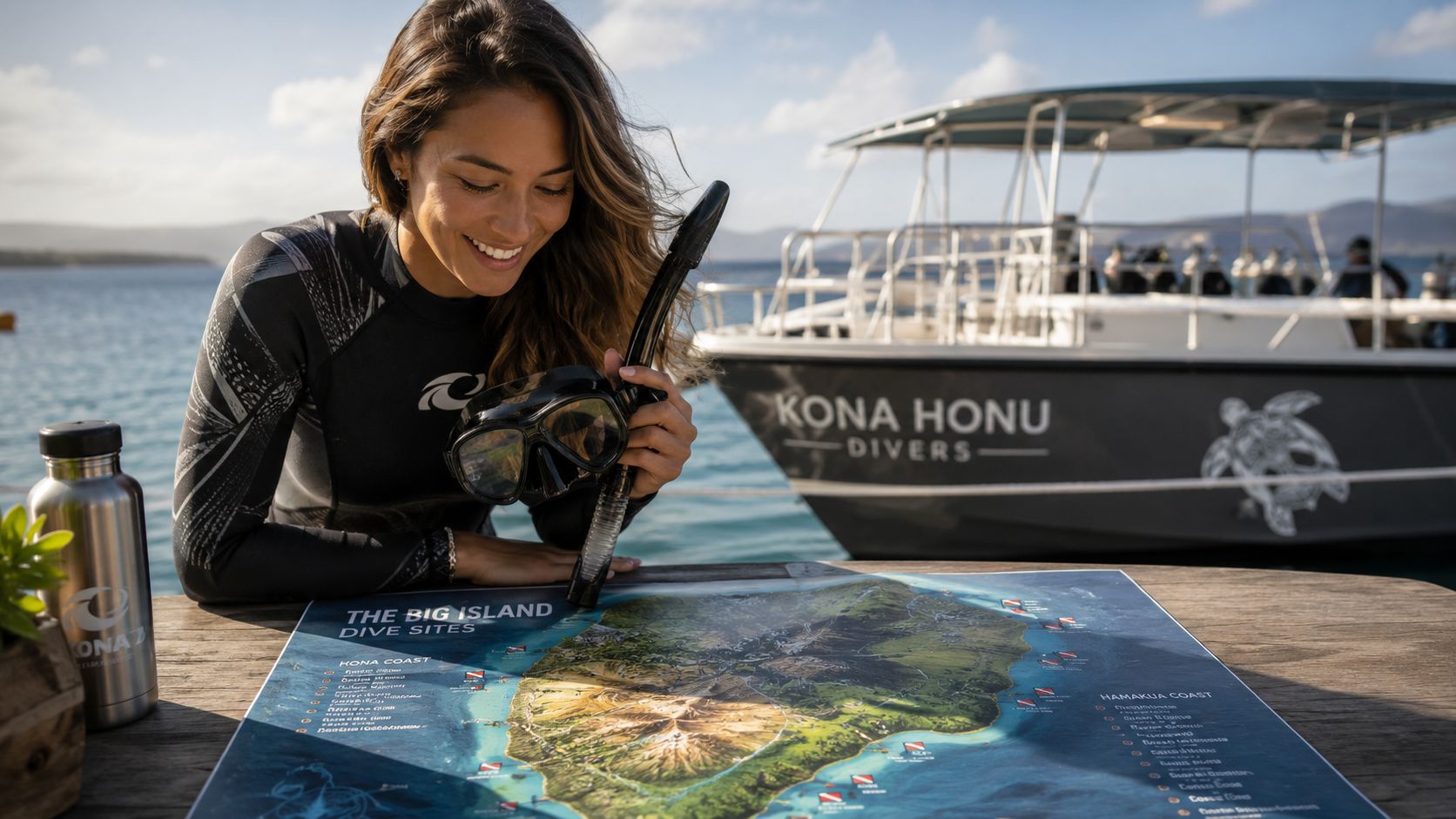
A good Kona plan has rhythm. You do not want to stack your most demanding dives back to back, and you do not want to leave your signature dive for the final slot where weather, fatigue, or a missed boat can spoil the trip. The best itineraries build from familiar to specialized.
3-Day Kona Dive Express
This schedule suits divers with limited time who still want range.
Day 1
Start with a two-tank morning reef trip. That gives you a low-stress first day to check weighting, dial in buoyancy, and get used to Kona's lava structure, entries, and boat routine.
Day 2
Do the manta night dive. Putting it in the middle of the trip gives you a buffer if conditions shift, and it keeps one of the island's headline experiences from feeling rushed.
Day 3
Finish with blackwater if your experience and comfort level fit the dive profile. This sequence works well because you start on the reef, then move into two very different night experiences with a clear progression in task loading and environment.
5-Day Ultimate Big Island Immersion
This is the stronger plan for divers who want to choose sites strategically instead of just filling calendar space.
- Day 1: Morning reef diving to get settled and give the crew a read on your air use, trim, and confidence in current.
- Day 2: A second daytime charter aimed at your interests, such as turtle cleaning stations, lava arches, or fish-rich reef structure.
- Day 3: Manta night dive while energy is still high.
- Day 4: Light day. Sleep in, snorkel, or stay dry if you know another night dive is coming.
- Day 5: Blackwater or another advanced charter, depending on how comfortable you felt earlier in the week.
That rest window matters. Divers often underestimate how much a late night manta trip or blackwater changes the feel of the next day.
Booking strategy that works
Reserve specialty dives first. Manta and blackwater are the dives people build the trip around, and they have fewer substitutes if weather or scheduling forces a change. Daytime reef charters are easier to place around them.
It also helps to book with one operator when possible, especially if you want the crew to match later dives to how you perform in the water. That matters on the Big Island. A diver who looks fine on paper may be a better fit for a relaxed reef schedule than for true blackwater, while another diver may settle in quickly and be ready for more ambitious planning after the first day.
Kona Honu Divers is a strong fit for that kind of trip design because the lineup can cover easy reef diving, the Garden Eel Cove manta experience, and blackwater without forcing you to piece the week together across multiple boats.
Frequently Asked Questions About Big Island Diving
Do I need to be Nitrox certified and is it worth it on the Big Island
You don't need Nitrox certification to enjoy Kona. Standard air is still completely workable for many recreational dives. But if you already have the certification, it's often worth using on multi-dive days because many divers prefer the added flexibility that enriched air can provide within recreational limits. Some operators include it as part of the trip value, and that's worth noticing when you compare bookings.
What's the diving like on the Hilo side compared to Kona
Kona is the easier choice for most visiting divers. Boat diving access is simpler, conditions are usually friendlier for regular operations, and the trip-planning ecosystem is built around diving. Hilo has its own appeal, especially for divers curious about a different side of the island, but it's more condition-dependent and often better suited to shore diving when everything lines up.
Can I dive and fly on the same day
No. Don't schedule a dive for the day you're flying out. Standard diver safety guidance is to leave a proper surface interval before air travel, and many divers use a conservative full-day buffer when planning departure. Treat this as fixed travel logic, not optional flexibility.
What are the chances of seeing dolphins or whales on a dive trip
You might see them from the boat, and those sightings can be memorable, but they should be treated as bonuses rather than promises. Dolphins can appear during transits. Whales are seasonal and are better thought of as part of the surface experience during the right time of year, not something a dive boat can guarantee. If whales are a major priority, a dedicated whale-focused outing is usually the better tool for the job.
If you're ready to turn this from research into a real dive plan, Kona Honu Divers is a practical place to start for reef diving, manta trips, blackwater dives, and trip logistics on the Big Island.