
Table of Contents
- The encounter depends on patience
- A familiar group, not a random parade
- What to bring
- Expect to share the site
- Ask about conditions, not promises
- Do I need scuba certification?
- What if I feel seasick?
- What happens if mantas don't appear?
- Is the dive physically demanding, and what should I wear?
The Big Island manta ray night dive is one of the most reliable wildlife encounters on earth, with manta sightings on 80% of dives at Garden Eel Cove. For a calmer, better-positioned dive tour, choose Garden Eel Cove, where the protected setting and sandy viewing area give divers room to settle in and leave the feeding corridor open.
You descend as daylight fades, find a stable place on the sand, and aim your light into the water above. The darkness feels complete until plankton gathers in the beams and a manta sweeps into view, banking through the illuminated water. The encounter can feel close and cinematic, but it works best when divers stay still and let the ray choose its path.
Crowds can shape the experience as much as visibility or manta activity. Knowing how the site works, what to ask an operator, and how to behave once you're in the water helps you make a sound choice. Kona's dive is also distinctive for its long history and the continuing identification of individual rays, a topic explored in this guide to what makes diving in Kona unique.
Why the Big Island Manta Ray Night Dive Is Unforgettable
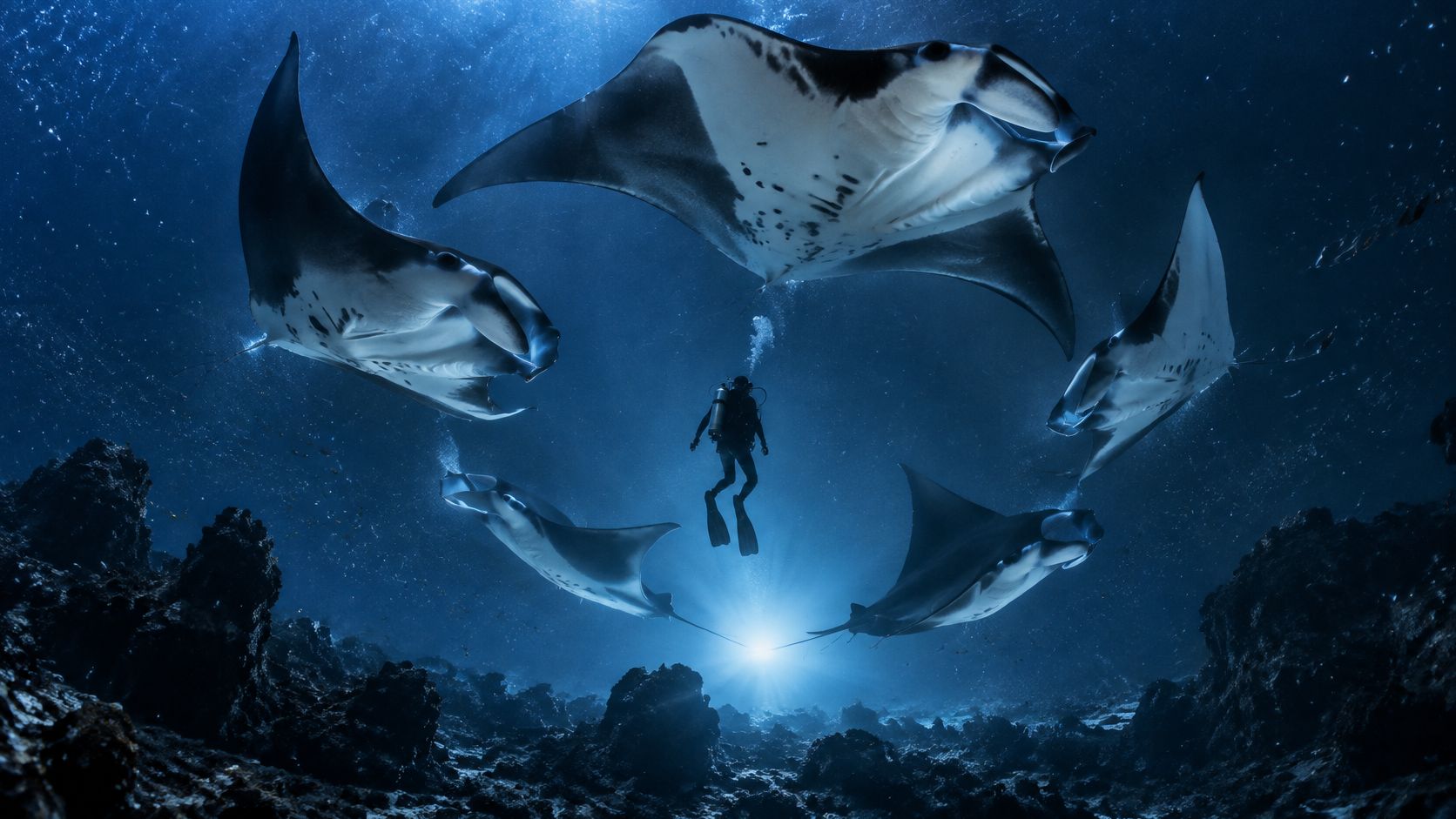
A diver settles onto the sandy bottom and holds position while the crew's lights gather plankton overhead. Then a manta glides through the glow, turns, and makes another pass. The animal's movement is smooth and unhurried, a striking contrast to the busy surface and the bright beams below.
The draw isn't just seeing a large ray at close range. It's watching feeding behavior unfold in a predictable viewing area, while staying still enough that the manta can move freely. Garden Eel Cove has a reported 80% manta sighting rate on dives, recorded in testimony on Hawaii's manta tourism and viewing sites (Los Angeles Times). That's a strong reason the dive has become a bucket-list experience, but a sighting rate is not a guarantee for any individual outing.
The encounter depends on patience
The best view often comes when you resist the urge to follow the ray. Divers who stay low, keep their lights directed upward, and let the manta travel through the lighted corridor can observe repeated feeding passes without blocking its route. The ray may bank or change depth as it feeds, so the scene can shift quickly even when the group holds position.
This is a wildlife encounter, not a staged performance. Some nights bring more activity than others, and the quality of the experience depends partly on how well guests follow the crew's positioning instructions. Calm, attentive divers usually get more out of the encounter than people who try to chase the action.
The darkness, light, and movement make the dive memorable, but careful planning matters too. Choosing a site with a defined place for divers to settle helps turn an exciting night into a comfortable, responsible one.
How the Manta Ray Night Dive Works
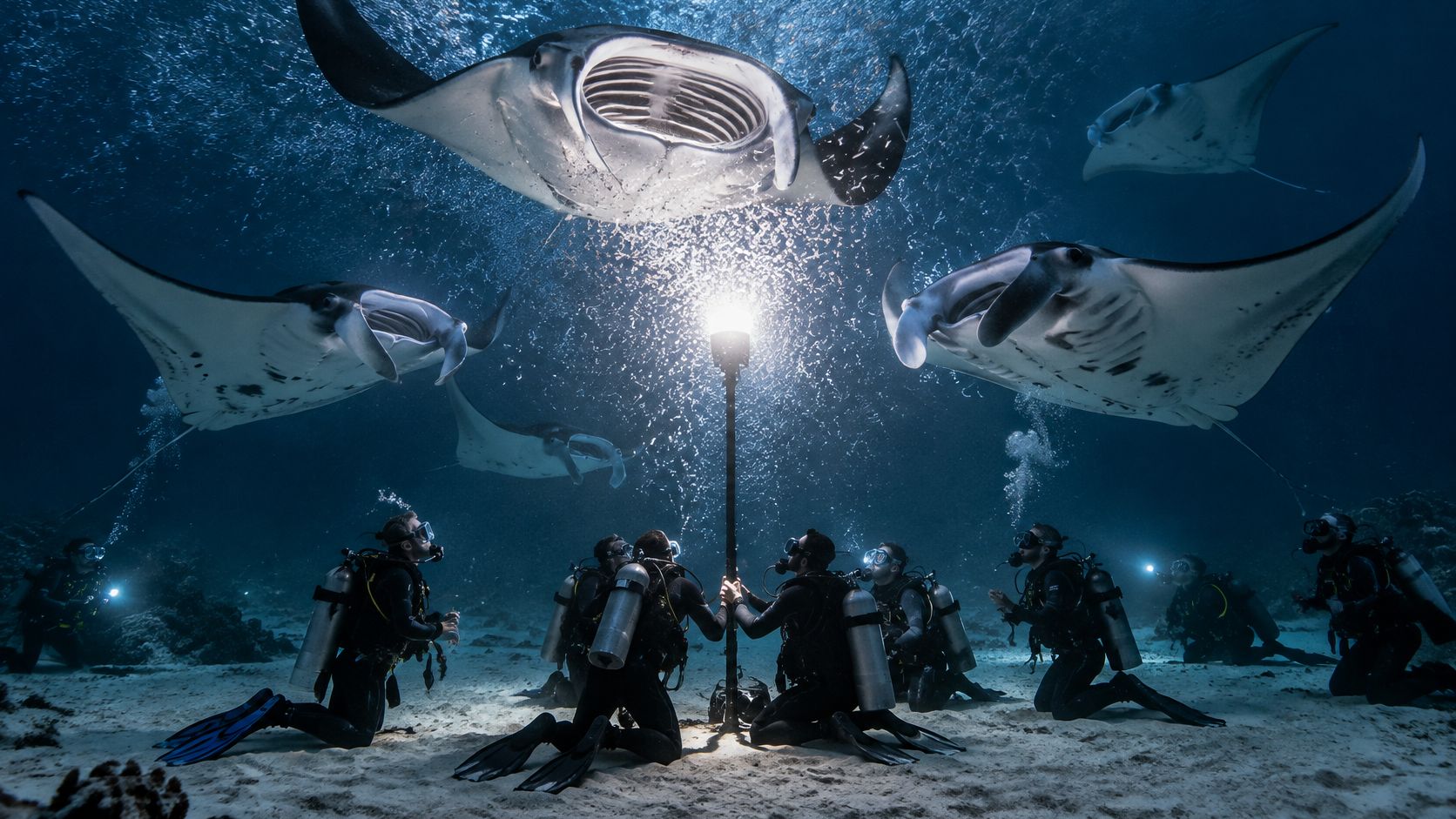
The manta encounter begins with plankton, not bait. Underwater lights increase illumination and concentrate phototactic zooplankton in the water column. Reef manta rays, Mobula alfredi, feed on that prey, making passes through the lit area. Think of a porch light drawing insects toward a house, except here the light gathers food and a manta arrives to feed.
The practice grew from an accidental attraction. Floodlights at the Sheraton Keauhou Bay Resort began drawing plankton and manta rays as early as 1971. When the hotel closed for remodeling in 1999 and switched off the lights, rays reportedly moved about 16 miles north to another feeding location near the Kona airport. After the hotel reopened and restored its lights in 2005, mantas returned to the area (Los Angeles Times).
A familiar group, not a random parade
Kona's manta aggregation has been observed and documented over decades. The first identified Kona manta, called Lefty, was documented in 1979. The Manta Identification Project began in 1991, building a photographic catalog based on each ray's distinct ventral spot pattern.
A University of Hawaiʻi research record describes a 13-year analysis of community-sourced observations from 2010 through 2022, documenting more than 23,000 sightings involving 167 identified reef mantas at Garden Eel Cove and Keauhou (University of Hawaiʻi research record). Researchers and divers have also identified approximately 318 unique manta rays around Hawaiʻi Island since 1979, according to reporting on local manta research (Big Island Now).
These records point to a regional population whose members return to familiar places, rather than a constantly changing crowd of animals. The lights help concentrate prey, but they can't guarantee the same feeding conditions every night. Current, clarity, wind, moonlight, and plankton depth can all affect how the encounter unfolds.
Garden Eel Cove vs. Keauhou Bay: Choosing the Best Site
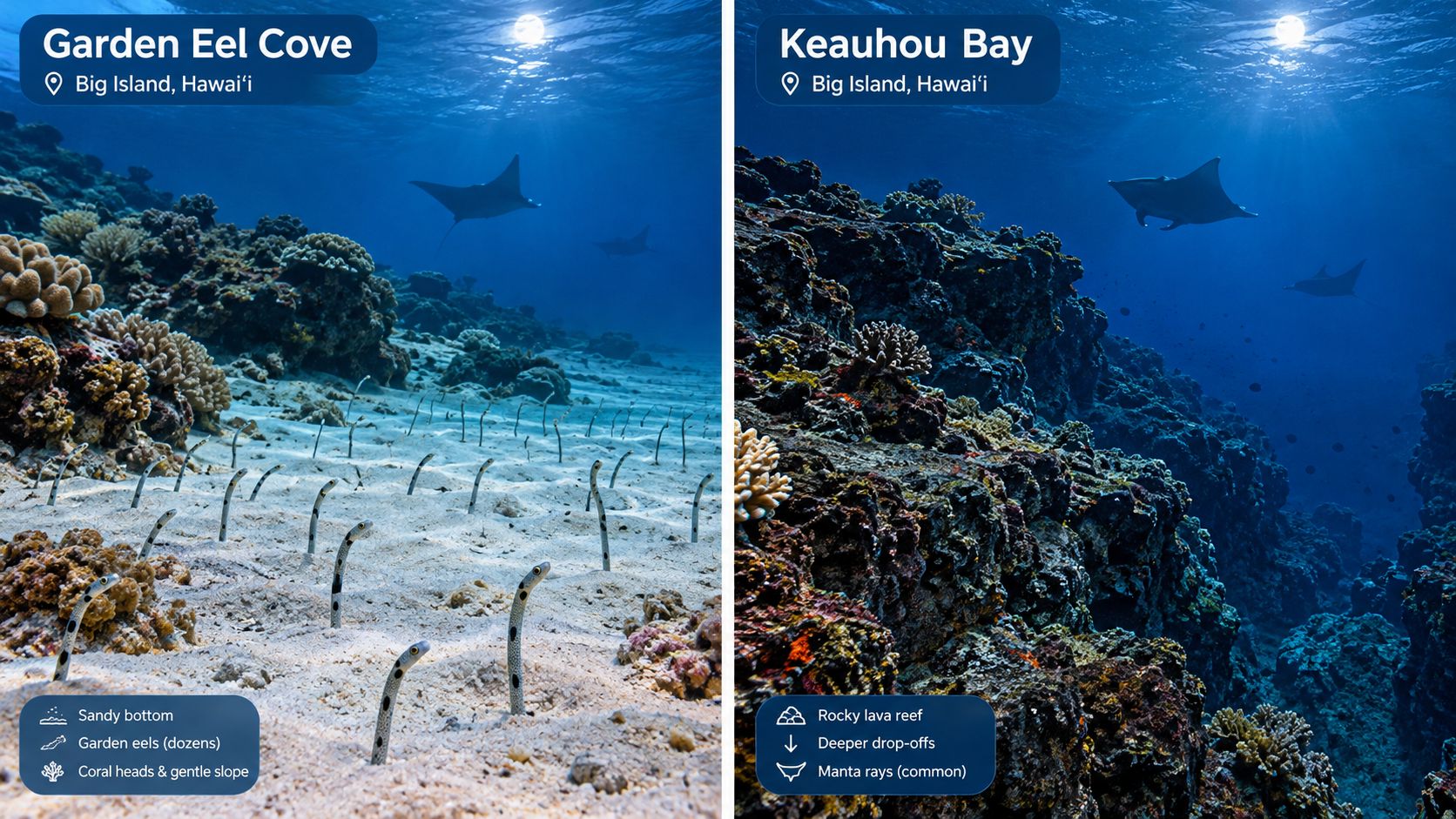
Both Garden Eel Cove and Keauhou Bay are designated manta viewing zones in West Hawaiʻi. For a dive tour, Garden Eel Cove is the stronger choice when comfort, positioning, and a defined viewing area are priorities. Also known as Manta Heaven or Makako Bay, it lies off Kona International Airport within the West Hawaiʻi Ocean Recreation Management Area. Its more protected setting can make getting into the water and settling in more comfortable than at an exposed open-ocean site (site overview).
The bottom is a gently sloping sandy plain with scattered coral heads and lava-rock formations. Divers can position themselves on sand or rubble instead of spreading across living reef, while the open water above stays available for feeding passes. That layout gives the group a practical place to hold position and makes it easier to see where other divers are.
| Site | What it offers | Practical consideration |
|---|---|---|
| Garden Eel Cove | Protected location and a defined sandy viewing area | Clear positioning and buddy awareness still matter when boats share the site |
| Keauhou Bay | A well-established viewing area with documented manta activity | Research notes stronger female site fidelity here |
The research also indicates that Garden Eel Cove generally has larger manta aggregations, while Keauhou shows stronger female site fidelity (University of Hawaiʻi research record). Those are differences in observed patterns, not promises about what you'll see on a particular night.
Garden Eel Cove isn't automatically quiet. A site guide reports that as many as 10 boats and roughly 80 divers and snorkelers may share the area at once, which makes orderly positioning and awareness of your buddy important (Garden Eel Cove site guide). Its defined sandy area and protected location make it the superior choice for the dive tour, but your operator's approach to group management still matters.
What to Expect on the Dive: Logistics and Timing
An evening manta trip starts with check-in and a crew briefing. The team explains the entry, descent, light placement, and where each diver should settle. After boarding, the boat heads to the site as daylight fades. Use that ride to get comfortable with your gear and ask the crew about anything unclear before you enter the water.
Divers descend and take a stationary position on sand or rubble. They aim their lights upward to concentrate plankton above them. Snorkelers stay at the surface and direct their lights down, creating a separate viewing position above the feeding area. The group's formation helps keep the water column open, which is why following your crew's placement instructions matters more than finding a spot directly beneath a manta.
What to bring
Wear swimwear under your dive gear and bring a towel and a light jacket for the boat ride home. The return can feel cool when you're wet and the boat is moving, even after a comfortable dive. Bring any personal mask or other equipment you prefer, but confirm with the operator what gear is supplied and what you're expected to bring.
The logistics can vary by operator, so don't assume every trip follows an identical schedule. Ask where to check in, how the crew handles gear, and how long the group expects to be in the water. If you're new to night diving, this guide to scuba diving at night will help you understand why controlled movement and clear communication become especially important after dark.
Expect to share the site
Other boats and groups may be present. That means you'll likely see other lights, divers, and snorkelers around the viewing area. Stay close to your buddy and keep your space compact rather than drifting into another group's position. If you need to leave the formation, signal your guide and follow the crew's instructions instead of swimming across the feeding corridor.
Safety Rules and Etiquette for the Night Dive
The essential rule is simple: hold your assigned position and leave the manta's route open. Divers should stay low on or near the bottom and aim lights upward. Snorkelers should remain at the surface rather than descending into the feeding column. When a diver rises into that corridor, a manta may need to change its depth, bank, or approach, increasing the chance of contact with a person, reef, or another diver.
A compact line or semicircle works better than a scattered group. Keep your light steady, avoid pointing it into a manta's face, and don't exhale bubbles directly toward the ray during a close pass. A manta may respond by changing course, so give it room instead of moving after it.
Position first: Settle on sand, rubble, or a suitable boulder, then stay still and let the manta approach.
Avoid sitting on live coral or disturbing urchins and other bottom-dwelling life. Don't touch, grab, chase, or attempt to steer a ray. Hawaiʻi Revised Statutes §188-39.5 prohibits knowingly capturing, taking, possessing, abusing, entangling, or killing a ray in state marine waters. Reported penalties range from $500 for a first offense to $10,000, with a possible additional administrative fine of up to $10,000 per animal (Hawaiʻi ray-protection guidance).
The no-touching rule is therefore more than etiquette. Your actions affect the animal's space and the safety of everyone in the water. Review the practical principles in this guide to responsible and considerate diver etiquette before the trip, then follow the crew's briefing once you reach the site.
Best Times and Conditions for the Dive
There isn't a guaranteed perfect night. Manta attendance depends on conditions that affect where plankton collects and how accessible it is to feeding rays. Current direction, water clarity, wind, moonlight, and the depth of the plankton layer can all shape what divers see. Research on manta behavior identifies flow and moonlight as predictors of site attendance because they influence prey distribution and the energy mantas spend feeding versus doing other things.
That's why a low-manta night doesn't automatically mean the crew or operator did something wrong. The lights create an opportunity for plankton to gather, but they don't control ocean conditions. If prey is sparse or distributed differently, the rays may make fewer passes or choose another area.
Ask about conditions, not promises
Before booking, ask how the operator chooses a site and how the crew responds when weather or water conditions shift. A useful answer explains the factors they monitor and how they make the call, without guaranteeing a particular number of rays. Check the forecast close to your trip and follow the operator's advice about changes to timing or location.
There's no need to fixate on a single season as the only time to go. The mantas are residents, and the feeding encounter depends on changing prey and ocean conditions rather than a simple calendar formula. If your schedule allows, booking early in your stay gives you more flexibility to discuss alternatives if weather disrupts a trip.
A good encounter isn't measured only by how many close passes you see. Staying in position, protecting the feeding corridor, and watching natural behavior without pursuing the animals all contribute to a successful, responsible dive. For more planning context, see this guide to the best time to see manta rays in Kona.
Booking Tips and What to Look For in an Operator
Crowding deserves a place near the top of your booking checklist. In an independent study, 82% of surveyed participants felt crowded by snorkelers, 78% by boats, and 69% by scuba divers. The same research reported interpersonal conflict among 79% of snorkelers and 53% of scuba divers on manta-viewing trips (Hawaiʻi County testimony and study). Mantas can be spectacular even when the people around you make the experience feel crowded.
Before you reserve, ask how the crew organizes divers around the lights, how snorkelers are kept together, and what happens if multiple boats converge. Find out whether the briefing covers safe exit from the formation and how the crew keeps the feeding corridor clear. Boat capacity matters, but so does how well the team manages people once everyone is in the water.
Kona Honu Divers offers a two-tank manta dive and snorkel trip that pairs an afternoon reef dive with a night manta dive at Garden Eel Cove. When comparing it with other operators, focus on the actual trip setup, the site, and the crew's crowd-management procedures rather than relying on broad claims about sightings or comfort.
A direct answer about group size and positioning is a better sign than a promise of an uncrowded encounter. Use the manta ray dive and snorkel tour details to compare the itinerary and ask any remaining questions before you book.
Frequently Asked Questions About the Manta Night Dive
Do I need scuba certification?
Yes, you need the appropriate scuba certification to join the dive portion of a manta trip. If you aren't certified or don't want to dive, snorkeling lets you watch from the surface. The two experiences use different positions in the water, so choose the one that suits your training and comfort level. This guide compares snorkeling or diving with manta rays.
What if I feel seasick?
Tell the crew before departure if you're concerned about the boat ride. Follow the operator's instructions and any medication label or medical advice relevant to you. Bring a warm layer for the return and keep your attention on the crew's directions when boarding and moving around the boat.
What happens if mantas don't appear?
The crew can't control whether mantas feed at the site that night. If no rays show, ask the operator what its rebooking or trip policy provides, and check the terms before you reserve. A quiet encounter can reflect natural changes in prey and conditions, not necessarily a problem with the service.
Is the dive physically demanding, and what should I wear?
The dive requires you to manage scuba equipment, descend with your group, and remain settled in position while the encounter unfolds. Ask the operator about any requirements for guests who are unsure about their comfort or mobility in the water. Wear swimwear under your gear, bring a towel, and pack a jacket for the boat ride back.
Manta trips reward guests who arrive prepared, listen carefully, and accept that wildlife doesn't perform on demand. Stay with your group, leave the feeding space open, and treat a quiet night as part of a real ocean encounter rather than a failed show.
Kona Honu Divers offers a two-tank trip that combines a reef dive with a manta night dive at Garden Eel Cove, with options for divers and snorkelers. Review the tour details, ask about the group setup, and visit Kona Honu Divers to plan your manta dive.