
A 2025 University of Hawaiʻi study confirmed more than 23,000 sightings of 167 individual reef manta rays at two key Kona sites. That evidence shows that Big Island diving isn't based on occasional luck alone, but on a well-researched marine ecosystem with recurring wildlife behavior.
Kona's underwater world combines volcanic coastlines, shallow reefs, offshore walls, and open-ocean habitats within a compact area. The experience changes dramatically depending on whether you enter from shore, travel by boat, descend beneath a manta viewing light, or suspend yourself over deep water after sunset. Good planning helps you choose the right setting while protecting the animals that make these dives exceptional.
Welcome to Kona – The Science of Big Island Diving
A 2025 University of Hawaiʻi study tracked community observations collected over 13 years, from 2010 through 2022, at Garden Eel Cove and Keauhou. Researchers recorded more than 23,000 sightings involving 167 individually recognized reef manta rays, Mobula alfredi, giving Kona one of the clearest long-term records of nighttime manta use at active dive sites (University of Hawaiʻi study).
For divers, that changes the way a manta night dive should be understood. These encounters happen within a documented feeding system where mantas return to known locations and individual animals have been recorded using the same sites repeatedly. The study also found differences between sites. Garden Eel Cove produced larger aggregations more consistently, while Keauhou drew females disproportionately, a useful reminder that two nearby sites can play different ecological roles.
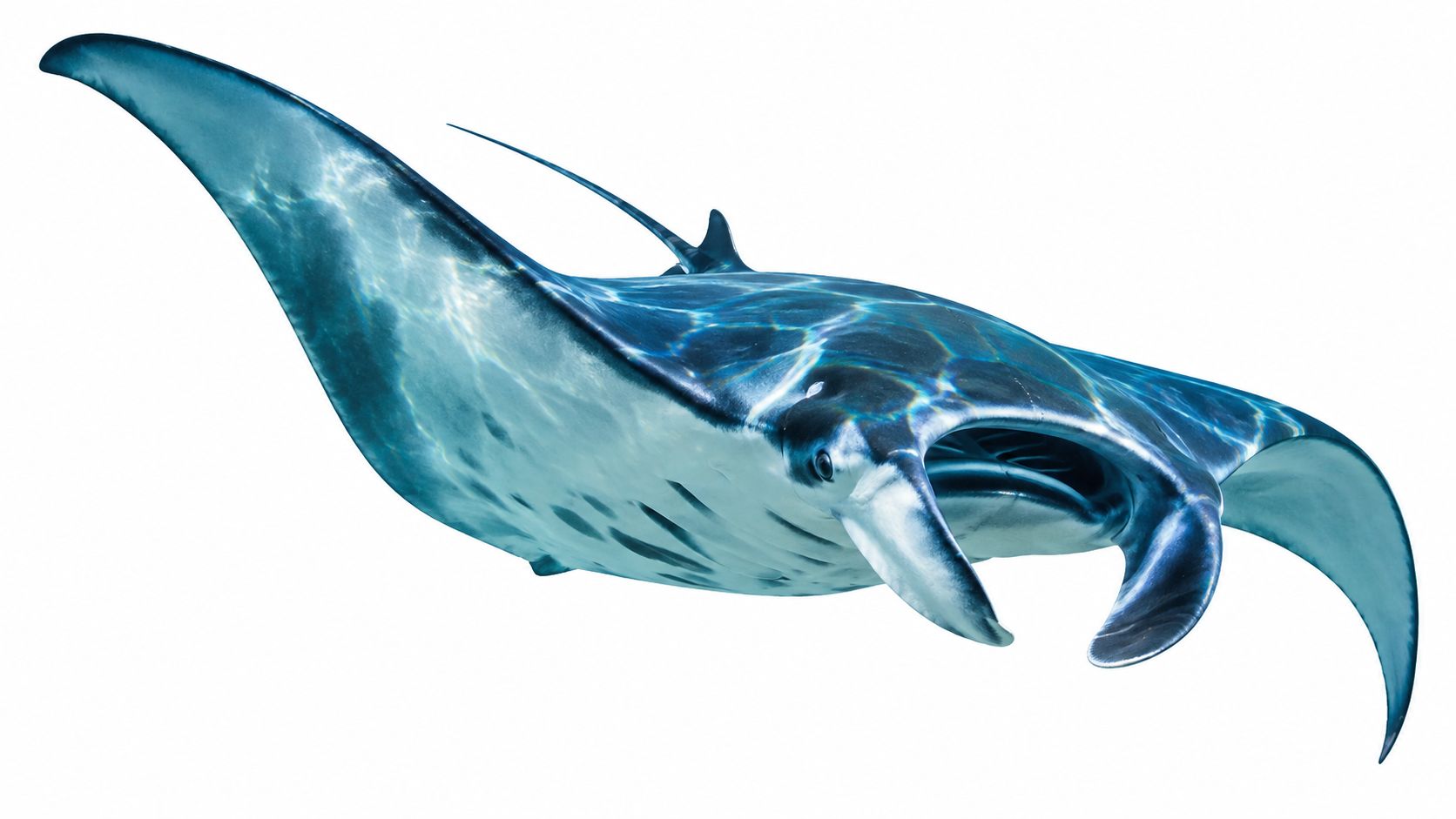
Why the lights bring mantas close
Manta rays are filter feeders. At night, dive and snorkel operators place lights in the water column, and those lights concentrate zooplankton drifting through the area. The mantas are following food. Divers are just observing a feeding response that becomes more predictable because prey gathers where the light is strongest.
That pattern helps explain why Kona's manta dives can be reliable without ever being guaranteed. The study linked seasonal and annual aggregation size with zooplankton density. More prey can support more mantas, but current, visibility, swell, and other natural conditions still shape what happens on any given night. Wild animals keep their own schedule.
Respect the pattern: The more reliably mantas use a site, the more carefully divers should behave. Do not touch, block, chase, or crowd them.
The same ecological logic applies beyond manta sites. Kona's volcanic shoreline drops into habitats that shift quickly from shallow reef to deeper water, which is part of what is unique about diving in Kona. A short boat ride or even a different entry point can place you in a very different biological setting, with different species, currents, and visibility patterns. For a visiting diver, that means site choice is never just about scenery. It is also about how the habitat functions and how your presence fits into it.
Hawaiʻi's reef life is unusually distinctive. Around the main Hawaiian Islands, the U.S. Coral Reef Task Force reports about 640 square miles, or 1,658 square kilometers, of coral reef habitat, supporting about 80 coral species and more than 1,500 reef-fish species (U.S. Coral Reef Task Force information). More than 1,250 marine species are endemic to Hawaiʻi, which means they occur naturally only here.
Protection in Hawaiʻi also has legal nuance that many visitor guides skip. Hawaiʻi has 13 marine managed areas, and NOAA reports that 41% of the 1,021 square kilometers of mapped coral-reef ecosystem in the main Hawaiian Islands lies within marine protected areas (NOAA coral-reef assessment). Less than 1% lies within no-take protected areas. In plain terms, many areas still allow recreation, but access comes with rules and with a higher standard of diver behavior.
Choosing Between Shore and Boat Diving
Shore and boat diving reveal different parts of Kona's underwater geography. Volcanic lava flows formed arches, ledges, cavities, and reef shelves along the coast, while boat trips can reach deeper walls, offshore habitats, and specialized night-diving locations. The better choice depends less on which format sounds more exciting and more on your entry skills, comfort in changing conditions, and target wildlife.
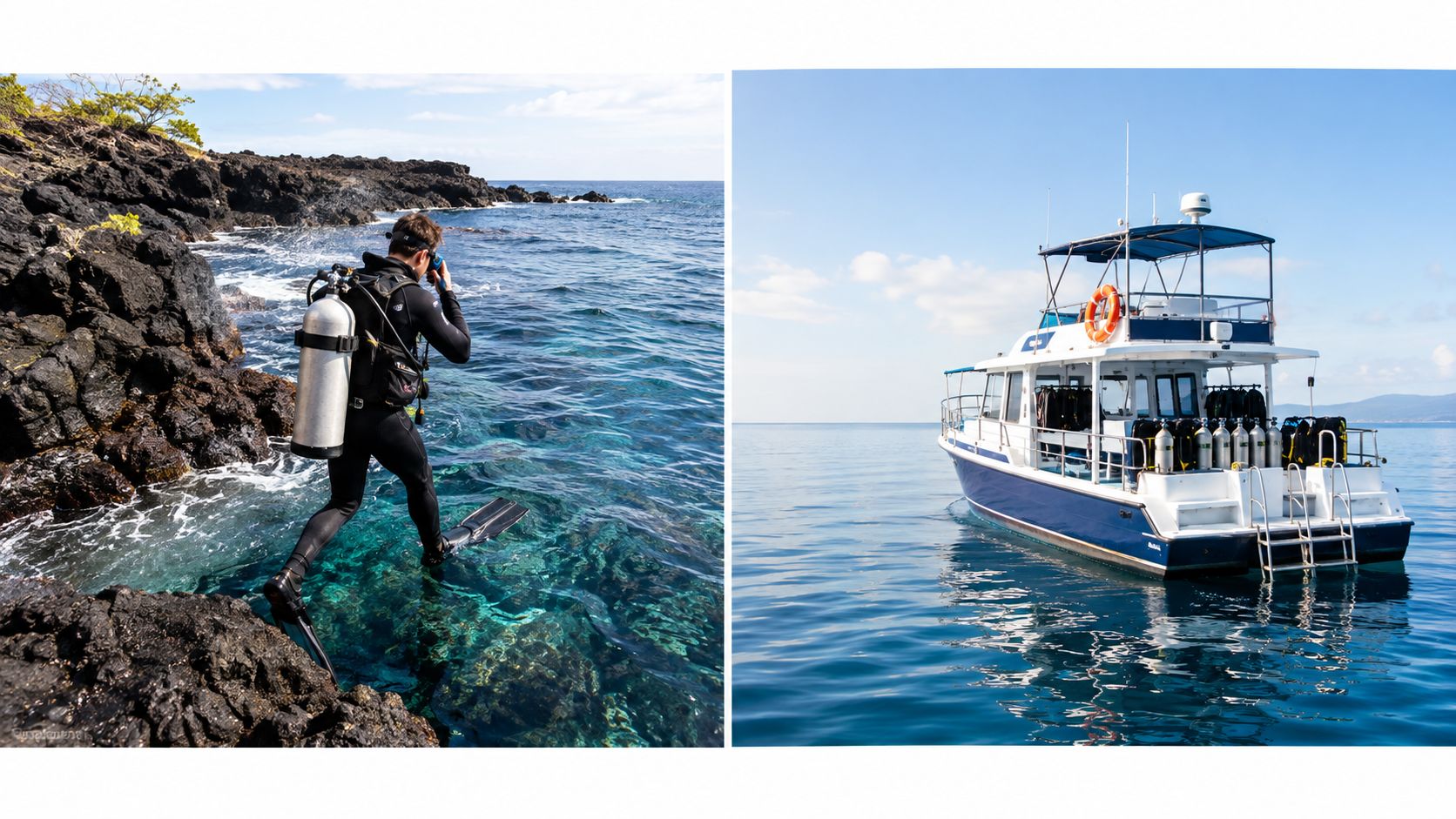
Shore diving rewards preparation
A shore entry gives you control over timing and site selection. You can explore a nearshore reef without coordinating with a boat schedule, but that freedom comes with more responsibility. Lava-rock entries can become difficult when swell reaches the shoreline, and a calm-looking surface doesn't guarantee an easy exit.
Before choosing a shore site, assess:
- Entry and exit: Identify where you'll gear up, where you'll enter, and how you'll leave before committing.
- Surface conditions: Check the west-facing surf and marine forecast, then compare it with the actual shoreline.
- Runoff exposure: Nearshore sites close to drainage channels can lose clarity after heavy rain.
- Buddy readiness: Carry signaling equipment and keep your plan realistic for the least comfortable diver.
The best shore diving on the Big Island suits divers who can manage equipment over uneven volcanic ground and make conservative decisions when conditions change. Shore diving can feel intimate because the reef begins immediately at the coastline, but that intimacy also puts you closer to the effects of swell, runoff, and limited visibility.
Boat diving expands the habitat menu
A boat removes the most demanding part of many shore dives, the surf-zone entry, and can place you over deeper or less accessible terrain. Kona's western coast offers shallow reef habitats, offshore walls, and pelagic environments within a relatively compact tourism region. Boats also make specialized experiences possible, including manta night dives and blackwater diving.
A useful decision model looks like this:
| Your priority | More suitable access |
|---|---|
| Flexible timing and nearshore exploration | Shore diving |
| Deeper walls or offshore habitats | Boat diving |
| Manta viewing at an established night site | Boat operation |
| Open-ocean pelagic animals after dark | Specialized boat trip |
| Maximum control over entry conditions | Shore, when conditions are suitable |
| Reduced exposure to difficult volcanic entries | Boat |
Boat access doesn't eliminate environmental judgment. The crew still needs to evaluate wind, swell, current, visibility, and site conditions. You should also disclose your certification level, recent diving experience, and comfort with current before departure. A diver who is relaxed on a protected reef may need a different site plan for an exposed wall or open-ocean night dive.
Combining both formats often produces the clearest sense of Kona. Shore diving shows how lava and reef interact at the coastline, while boat diving reveals habitats that aren't practical to reach from land. Neither is automatically superior for every diver. The right match is the one that keeps you calm, prepared, and able to observe rather than struggle.
Iconic Experiences – Manta Rays and Blackwater
Kona's manta night dive and blackwater dive both happen after sunset, but they reveal completely different ecological systems. The manta experience centers on resident reef animals returning to established feeding areas. Blackwater diving moves away from the reef and into the open water column, where planktonic animals and larval fish migrate vertically through the night.
The manta light circle
NOAA guidance describes a clear positioning system for the manta encounter. Divers move to the designated light circle, hold their lights above their heads, and shine upward into the water column. Snorkelers stay at the surface and shine lights downward, while avoiding the feeding zone below (NOAA manta viewing guidance).
The arrangement creates two viewing perspectives. Divers look upward from the seafloor as mantas pass through the illuminated water, while snorkelers observe from above. Breathing technique matters because bubbles rising directly into a manta's path can interrupt its movement. Divers should maintain neutral buoyancy, stay in their assigned area, and never reach toward an animal.
Garden Eel Cove, also called Makako Bay, is the superior choice for a manta dive tour because its protected location, organized viewing area, and surrounding reef create a more controlled setting for observing feeding behavior. The site fronts Sheraton Keauhou Bay, and documented operations illuminate the water column from the surface and seafloor to concentrate zooplankton (Hawaiʻi DLNR manta assessment).
The animals are harmless to people, but that doesn't make contact acceptable. Mantas don't have teeth or tail stingers, and NOAA guidance prohibits contact and harassment. Your responsibility is simple: stay still, keep your hands to yourself, and let the manta choose its path. Details about the manta ray dive experience help explain why positioning matters more than chasing a closer view.
Blackwater reveals a hidden life stage
Blackwater diving changes the setting completely. Divers suspend offshore at night and observe the open water column rather than sitting over a reef. The animals may be tiny, transparent, gelatinous, or in early life stages that rarely appear during ordinary reef surveys.
A study of larval fishes collected by Kona blackwater divers examined 76 specimens and obtained DNA-barcode samples from all of them. Researchers identified 44 specimens to species or genus with at least a 99% match to reference barcodes in GenBank and BOLD, while 26 specimens were photographed alive in place before collection (Ichthyology and Herpetology blackwater study).
NOAA-supported research also recorded 59 nighttime scuba surveys off Kona between November 2013 and May 2015. Salps, siphonophores, and ctenophores were among the most abundant organisms observed, and a related model found that water temperature, bathymetry, and the El Niño-Southern Oscillation index were the strongest predictors of pelagic biodiversity. The model explained 43% of the variation in biodiversity (NOAA blackwater survey).
That evidence gives blackwater diving a different identity. It isn't a reef dive with unusual scenery. It's a structured night observation of a moving pelagic ecosystem, and the species mix can change with environmental conditions. The Kona blackwater night dive is best suited to divers who can maintain excellent buoyancy, stay self-reliant, and remain composed in open water after dark.
Planning Your Dive Trip – Logistics and Regulations
A safe Kona itinerary begins with matching the dive to your training and recent experience. Certified divers should provide accurate information about their last dive, comfort with current, and experience in low-light conditions. New divers may be able to complete an introductory experience with direct supervision, while a full certification course requires more time and skill development.
Build the schedule around conditions
Use this checklist before booking:
- Confirm your training. Open Water certification supports standard recreational diving. Advanced training, Nitrox education, and a night-diving specialty can make deeper, longer, or darker environments more manageable, but training doesn't replace judgment.
- Check rainfall. Heavy rain can carry sediment, microorganisms, and other contaminants through drainage channels and nearshore runoff. Hawaiʻi guidance recommends avoiding ocean recreation for 48 to 72 hours after heavy rain, especially near stream mouths, outlets, or visibly brown water (Hawaiʻi water-safety guidance).
- Compare site exposure. Exposed shallow shore entries respond more quickly to runoff and swell than open-ocean or leeward offshore locations. Don't assume an offshore trip is suitable without a current conditions check.
- Pack for control. Bring certification details, a surface signaling device, exposure protection appropriate to your comfort, and a primary and backup light for night diving.
- Protect the buddy team. Agree on gas limits, lost-buddy procedures, entry signals, and emergency actions before entering the water.
Practical rule: After intense rainfall, postponing a shallow shore entry is often the simplest way to reduce visibility, navigation, and water-quality risks.
Know the diver-flag rules
Hawaiʻi rules require a diver flag for scuba and freediving in navigable waters. Those waters extend from the high wash of waves to three miles offshore. In ocean waters, divers generally must surface within 100 feet of the displayed flag, and vessels must remain at least 100 feet from a displayed flag (Hawaiʻi DLNR diving rules).
Night operations add another requirement. The diver flag must be illuminated between sunset and sunrise. A group of two or more divers may share one flag, but sharing doesn't remove the obligation to display it correctly or maintain the required distance.
For independent shore divers, the decision is straightforward:
- Shore entry: Carry and display the required flag, remain within the permitted distance, and ensure the flag stays visible to boat traffic.
- Small-boat diving: Follow the operator's flag and surface procedures, even when the crew manages the equipment.
- Night diving: Confirm who supplies the illuminated flag and how the group will remain together after dark.
Check the best season for diving in Kona before finalizing dates, but don't treat a seasonal preference as a guarantee. Rainfall, swell, wind, currents, and visibility can change the plan on any day.
Selecting Your Dive Operator – A Comparative Look
Compare operators by the details that affect your actual dive, not by a generic promise of adventure. Ask how groups are managed, how sites are selected, what recent-dive experience is expected, whether Nitrox is available, and which night activities the crew regularly operates.
The table below uses only attributes specifically associated with the operators and offerings described in the available research. It isn't a ranking, and it doesn't suggest that one operator suits every diver.
Kona Dive Operator Comparison
| Operator | Specialties | Key Perks |
|---|---|---|
| Kona Honu Divers | Two-tank morning dives, manta night dives, blackwater diving, advanced trips | Early diver discounts and free Nitrox are offered as part of the publisher's stated product information; specialized night experiences are available |
| Big Island Divers | Day boat diving and advanced or blackwater options | Multiple boats and a broad scheduling structure are described in the research |
| Jack's Diving Locker | Day trips, advanced diving, pelagic night diving | Offers reef, advanced, and open-ocean night formats |
| Kohala Divers | Kohala Coast boat diving and courses | Resort-area access and site selection based on conditions are described in the research |
| Kona Diving Company | Two-tank morning boat diving | Uses a smaller boat format with an open-water certification requirement |
| Kona Shore Divers | Shore-diving services | Relevant for divers specifically comparing land-based access |
Kona Honu Divers offers guided scuba tours, courses, equipment services, two-tank morning dives, manta night dives, blackwater excursions, and advanced long-range options. Its stated product information also includes early diver discounts and free Nitrox, while research describing the operation identifies custom boats, maintained gear, and a crew focused on guided recreational and advanced experiences.
A useful comparison question is, “What does the operator do when conditions don't suit the original site?” A professional answer should involve reassessing the location, explaining the change, and matching the replacement to the group's ability. Site flexibility matters because Kona's volcanic coast includes sheltered reefs, exposed walls, and open-ocean settings that don't carry the same demands.
Use the Kona diving company insider guide to compare operators against your own priorities. A family group may value calm logistics and a clear briefing. A recently certified diver may need a conservative reef. An experienced diver seeking a pelagic night environment should focus on buoyancy, recent-dive requirements, and self-reliance rather than choosing the most dramatic-sounding trip.
The broad Kona diving tours selection includes different ways to access the coast, but you should verify current availability, requirements, departure details, and conditions directly before reserving.
Your Unforgettable Big Island Diving Adventure Awaits
Big Island diving rewards the diver who pays attention. A manta ray moving through a light circle is not an isolated spectacle. It belongs to a long-observed pattern shaped by zooplankton, site fidelity, seasonal conditions, and repeated use of the same feeding grounds. A tiny larval fish drifting through blackwater reveals another side of Kona, one that exists above the reef and changes throughout the night.
The islands' marine biodiversity makes every dive more meaningful. Hawaiʻi supports coral communities, reef fish, and endemic marine life found nowhere else naturally, while managed areas remind visitors that access and protection must work together. Responsible diving means maintaining neutral buoyancy, leaving animals untouched, keeping clear of feeding paths, and accepting that wild encounters vary.
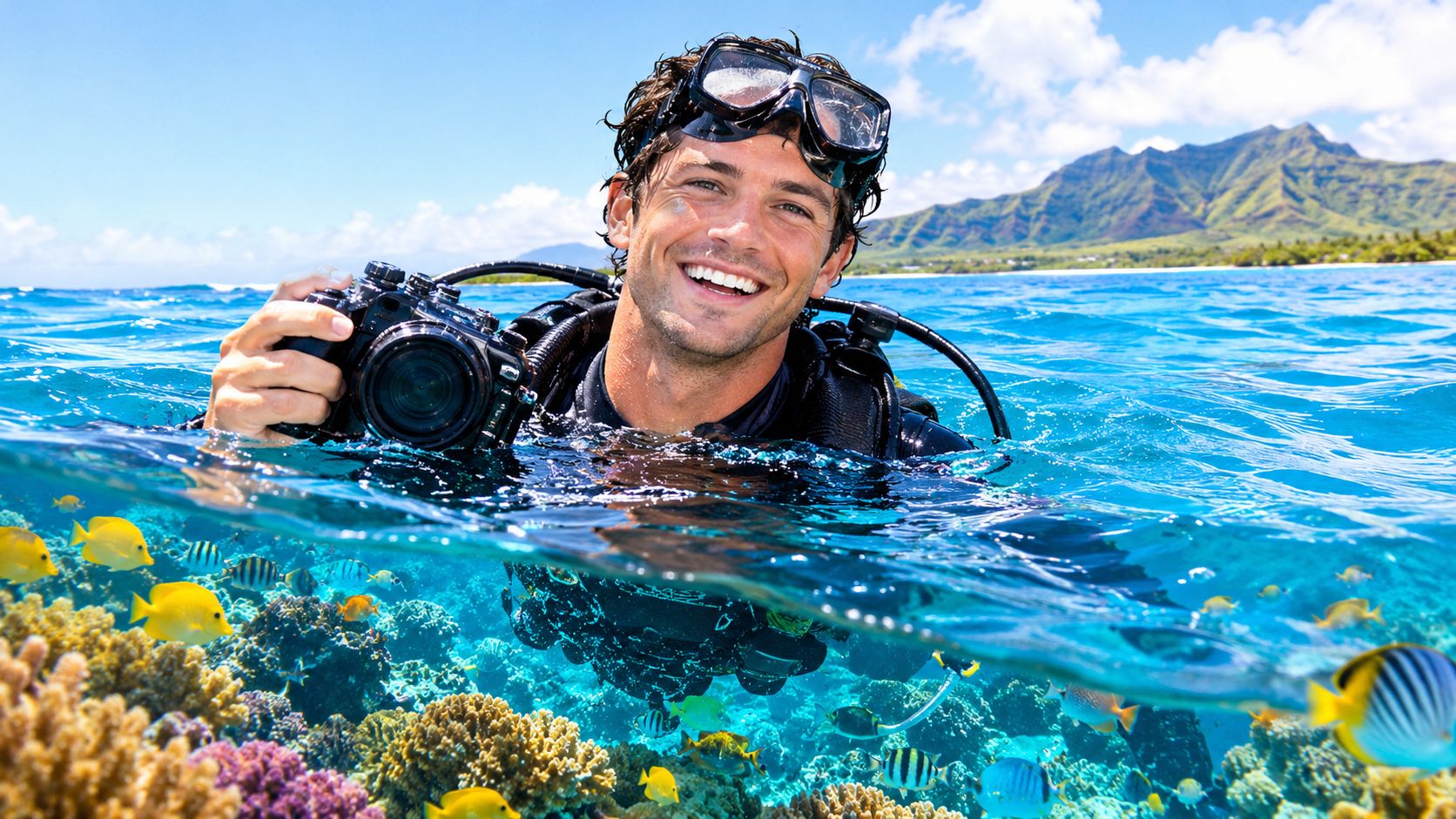
Choose the experience that fits your ability
A first visit might combine a calm reef dive with a manta night dive. A diver with strong buoyancy and open-water confidence may prefer blackwater diving or an advanced long-range trip. A shore diver may choose a nearshore lava habitat, provided rainfall, swell, entry conditions, and flag requirements all support the plan.
The right itinerary doesn't chase every available experience. It gives each dive enough preparation, surface interval, and attention to remain enjoyable. That approach also improves wildlife encounters because a calm diver can observe behavior instead of creating unnecessary disturbance.
Kona's best moments often arrive without warning. A manta banks through the light and disappears into the dark. A translucent animal drifts past your focus point. A reef fish slips into a lava opening. These moments feel extraordinary because the setting is real, the animals are wild, and the diver has entered on the ecosystem's terms.
If you're ready to plan a scientifically grounded, safety-focused Kona trip, choose a dive format that matches your training and contact Kona Honu Divers to explore guided reef dives, manta night dives, blackwater excursions, advanced options, and practical support for your Big Island diving adventure. Their crew can help you align the experience with your certification, recent dive history, and marine-life goals so you arrive prepared to enjoy the water responsibly.