
You’ve booked the cruise. You can already see the wake behind the ship, the first sunset dinner, maybe a snorkel stop or a dive day you’ve been looking forward to for months. Then one practical worry creeps in. What if the boat starts rolling and your dream trip turns into a fight with your stomach?
That concern is common, and it’s smarter than pretending you’ll just “tough it out.” Seasickness can hit first-time cruisers, occasional boaters, and even travelers who feel fine in cars and planes. The trick is choosing the right tool before the ship leaves the dock.
Don't Let Seasickness Spoil Your Dream Cruise
A lot of travelers make the same mistake. They spend weeks planning excursions, dining reservations, and what to pack, then give seasickness about thirty seconds of thought in the pharmacy aisle the night before departure.

That’s how people end up with the wrong remedy for the wrong trip. Some need all-day coverage and buy a short-acting pill. Others need to stay alert for snorkeling, diving, or shore excursions and take something that leaves them foggy. If you’ve wondered whether you’re likely to get sick at all, that’s a fair question. This practical guide on getting seasick on a cruise ship is a useful place to start.
Why a personal choice matters
Medication choice isn’t one-size-fits-all. Medication effectiveness varies significantly by individual susceptibility, and Kona Snorkel Trips notes that up to 80% of first-time cruisers experience seasickness in rough water, yet most advice still treats every passenger the same.
That misses the practical question: what kind of traveler are you? If you’re heading to the buffet and a deck chair, a little drowsiness may be fine. If you’re climbing into a tender, gearing up for a dive, or trying to enjoy a full active day, it matters a lot.
What actually helps
The best sea sick medicine for cruise travel depends on three things:
- Your history with motion sickness: If you get queasy in cars, ferries, or small boats, assume the ocean can trigger the same response.
- Your trip length: A short harbor cruise and a multi-day ocean crossing are different problems.
- Your activity level: If you’ll be diving, snorkeling, or moving around the boat, side effects matter almost as much as the nausea prevention itself.
Seasickness is easier to prevent than to chase once you’re already green and miserable.
Why Your Brain Gets Confused at Sea
Seasickness doesn’t start in your stomach. It starts in your sensory system.

Your eyes, inner ear, and brain are supposed to agree on whether you’re moving. On a boat, they often don’t. That disagreement is what makes even tough, experienced travelers suddenly go pale.
The sensory argument
Here's how it happens: Your inner ear feels the ship rising, dropping, and rolling. At the same time, your eyes may be fixed on a cabin wall, your phone, or a plate of food that looks perfectly still.
Your brain gets two conflicting reports. One says you’re moving. The other says you’re not. That mismatch is the trigger for dizziness, nausea, cold sweats, and the classic “I need air right now” feeling.
Why some situations make it worse
Certain choices make that mismatch stronger.
- Looking down at a phone or book: Your eyes lock onto something still while the boat keeps moving.
- Staying inside too long: Enclosed cabins can make the motion feel more confusing.
- Picking the wrong spot on the vessel: The further from the boat’s most stable area, the more motion you’ll feel.
That’s why simple tactics can help, even before medication kicks in.
| Problem | What your body senses | Smarter move |
|---|---|---|
| Reading below deck | Eyes say still, inner ear says moving | Go outside and look at the horizon |
| Standing in a high-motion area | Strong rolling or pitching | Move toward a steadier part of the boat |
| Stuffy indoor space | Motion plus heat and odor | Get fresh air |
Why this matters for treatment
Every good remedy tries to calm that system down in one way or another. Pills act on the pathways involved in nausea. Patches block a different signal route. Drug-free options help your senses line up better or make the symptoms easier to manage.
If you want the plain-English version of how long this can linger, this breakdown of how long sea sickness lasts is worth a read.
Motion sickness isn’t weakness. It’s your brain reacting to bad sensory data.
Your First Line of Defense OTC Options
The first bad call I see on cruise boats is taking the strongest-looking pill on the shelf without thinking about the day ahead. If you plan to lounge by the pool, that mistake is usually manageable. If you plan to snorkel, shore dive, or get on a small tender at 7 a.m., the wrong OTC medicine can leave you foggy, slow, and off balance.
For most cruise passengers, the first over-the-counter choices are Dramamine and Bonine. Both can help. They do not perform the same way once you are out on the water.
Dramamine and where it fits
Dramamine pills contain dimenhydrinate. It is easy to find, familiar to many travelers, and often works well for shorter rides or as a backup in your bag.
The trade-off is sedation. That matters more on an active cruise than many general travel guides admit. A pill that settles nausea but leaves you tired, dry-mouthed, and mentally dull can interfere with excursions and water activities. For divers, that trade-off deserves extra respect. You do not want anything that blunts alertness before a briefing, a gear check, or a boat entry.
Bonine and why it usually suits active cruisers better
Bonine pills use meclizine, and in practical boat use it is often the better OTC starting point for active passengers. Review authors in the Journal of Travel Medicine reported that seasickness can affect a substantial minority of cruise passengers, with rates around a quarter even on large vessels, depending on sea state and traveler susceptibility (Oxford Academic). Bonine is commonly favored because it tends to last longer and is often less sedating than dimenhydrinate.
That lines up with what I have seen on dive boats and snorkel charters. Passengers who still want a full, functional day usually do better with the less-sedating option, provided they test it ahead of time and take it early enough.
Side-by-side comparison
| Option | Active ingredient | Main advantage | Main drawback | Best fit |
|---|---|---|---|---|
| Dramamine | Dimenhydrinate | Easy to find, works for many travelers | More sedating for many people | Quiet cruise days, shorter rough crossings |
| Bonine | Meclizine | Longer-lasting, often less drowsy | Can still cause sleepiness, works best if taken before motion starts | Excursion days, snorkeling days, more active itineraries |
If you want a deeper look at pill options, this guide to sea sickness pills helps sort out the basics.
How to use OTC medicine without ruining the day
A few habits matter more than brand loyalty.
- Take it before the boat starts moving. Prevention works better than trying to catch up once nausea is established.
- Test it at home first. Some people get mild dry mouth. Others get knocked flat. Find that out before embarkation day.
- Match the medicine to the activity. A sedating antihistamine and a dive boat schedule are a poor combination.
- Read the label if you drink alcohol or take other sedating medications. Stacking sleepy drugs is where people get into trouble.
Cruisers who need a clinician before travel can also arrange a UK online doctor prescription if stronger prevention may be necessary.
My practical read on OTC choices
For a low-key day, Dramamine can be enough. For a cruiser who wants to stay functional for tenders, snorkel stops, or diving, Bonine is often the cleaner first move.
Practical rule: If you need steady feet, clear thinking, and decent coordination, start with the least-sedating option that has worked for you before.
When You Need Stronger Prevention
The roughest calls usually happen on day one. A guest steps onto the dive boat already queasy from the cruise transfer, then asks for the strongest thing available after the swell has started working on them. By that point, prevention would have been the smarter play. For cruisers with a known history of bad motion sickness, especially those booking long crossings, tender rides, or scuba charters, the conversation often needs to move past OTC pills.
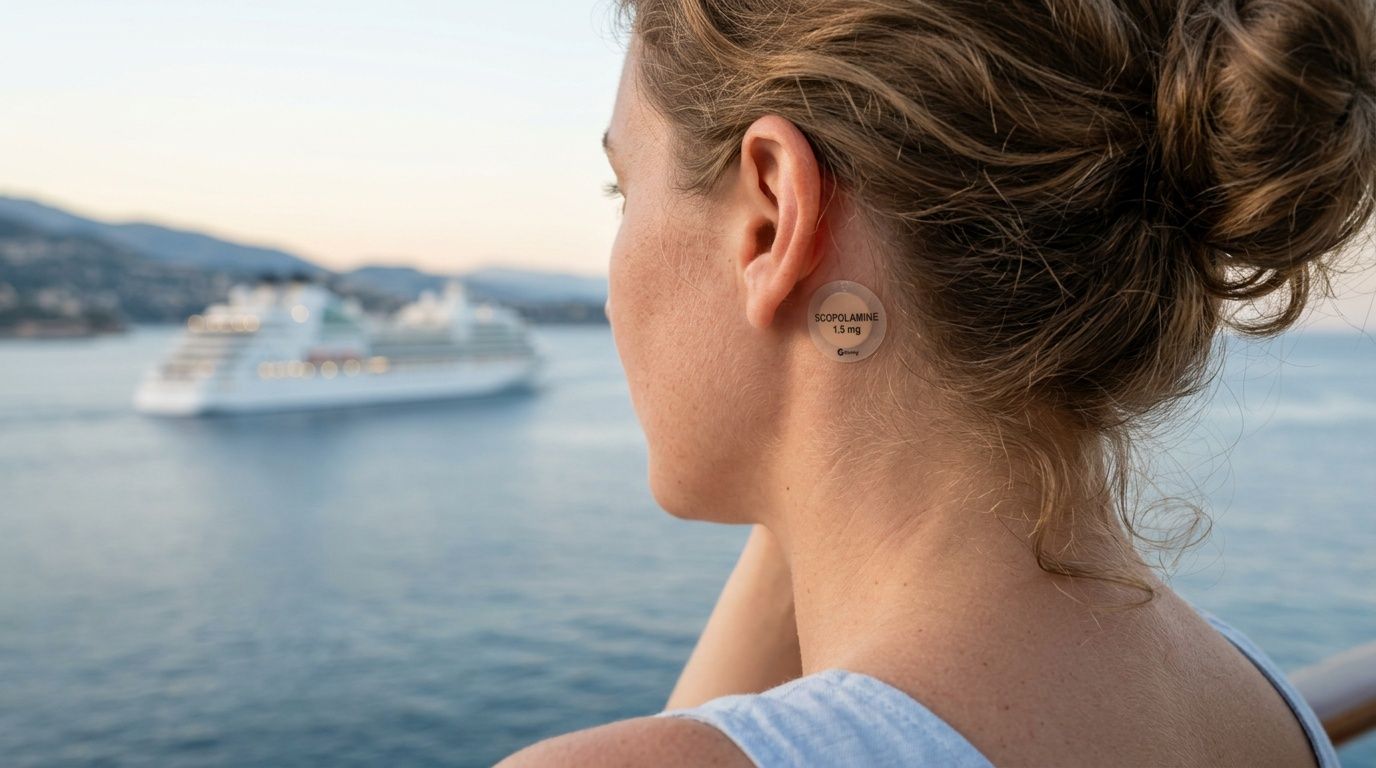
Why the patch stands apart
The scopolamine transdermal patch works through a different pathway than antihistamine tablets. It delivers medicine through the skin behind the ear and reduces motion signals coming from the vestibular system. That matters on a cruise because the patch keeps working for up to 72 hours without asking you to remember another dose during a rough night or an early shore excursion.
Evidence for scopolamine at sea has been around for decades. A controlled trial published in Clinical Therapeutics found the patch provided meaningful protection against motion sickness during sea travel, and the CDC Yellow Book guidance on motion sickness lists scopolamine as a standard option for longer-duration motion exposure.
Where it fits best
The patch makes the most sense for cruisers who already know they get sick on boats, ferries, or tenders, and for passengers on itineraries with repeated sea days. It is also useful for people who want steady coverage instead of chasing symptoms with repeat doses.
For active cruisers, there is one more layer. Divers need to care not only about nausea control, but also about alertness, focus, and vision. A medication that keeps your stomach calm but leaves you foggy on a ladder or blurry-eyed while checking gauges is a poor trade.
If you’re comparing options before travel, this guide to the Ship-EEZ sea sickness patch explains timing, placement, and what to watch for. If you need to sort out prescriptions before departure, a UK online doctor prescription can help you handle that in advance.
Real trade-offs you need to respect
Scopolamine is effective, but it is not a free pass. Dry mouth is common. Blurry vision can happen, especially if you touch the patch and then rub your eye. Some travelers feel a little spacey or mentally slowed down.
That last point matters more on dive days than general cruise guides usually admit.
I do not like seeing a diver try a new prescription patch for the first time on the morning of a two-tank trip. Test it before the trip, on land, and see how your body handles it. If it affects your vision, balance, or concentration, that is a safety issue, not a minor inconvenience.
Best use habits
| Patch habit | Why it matters |
|---|---|
| Apply it several hours before motion starts, following your clinician’s instructions | The patch works best as prevention, not as a rescue fix |
| Wash your hands after touching it | This lowers the chance of getting medicine in the eye and causing pupil dilation or blurry vision |
| Test it before any diving day | You need to know how alert, coordinated, and visually sharp you stay |
| Review your medical history with a clinician | Scopolamine is not right for everyone, including some travelers with eye, urinary, or medication interaction concerns |
For cruisers with severe, repeat motion sickness, the patch is often the strongest practical option. For scuba divers and other active passengers, the best choice is the one that controls nausea without compromising judgment, coordination, or vision.
Drug-Free Ways to Keep Your Stomach Settled
Not everyone wants medication. Some passengers can’t tolerate side effects. Others just want a backup plan they can use alongside a pill or patch. That’s where drug-free options earn their place.
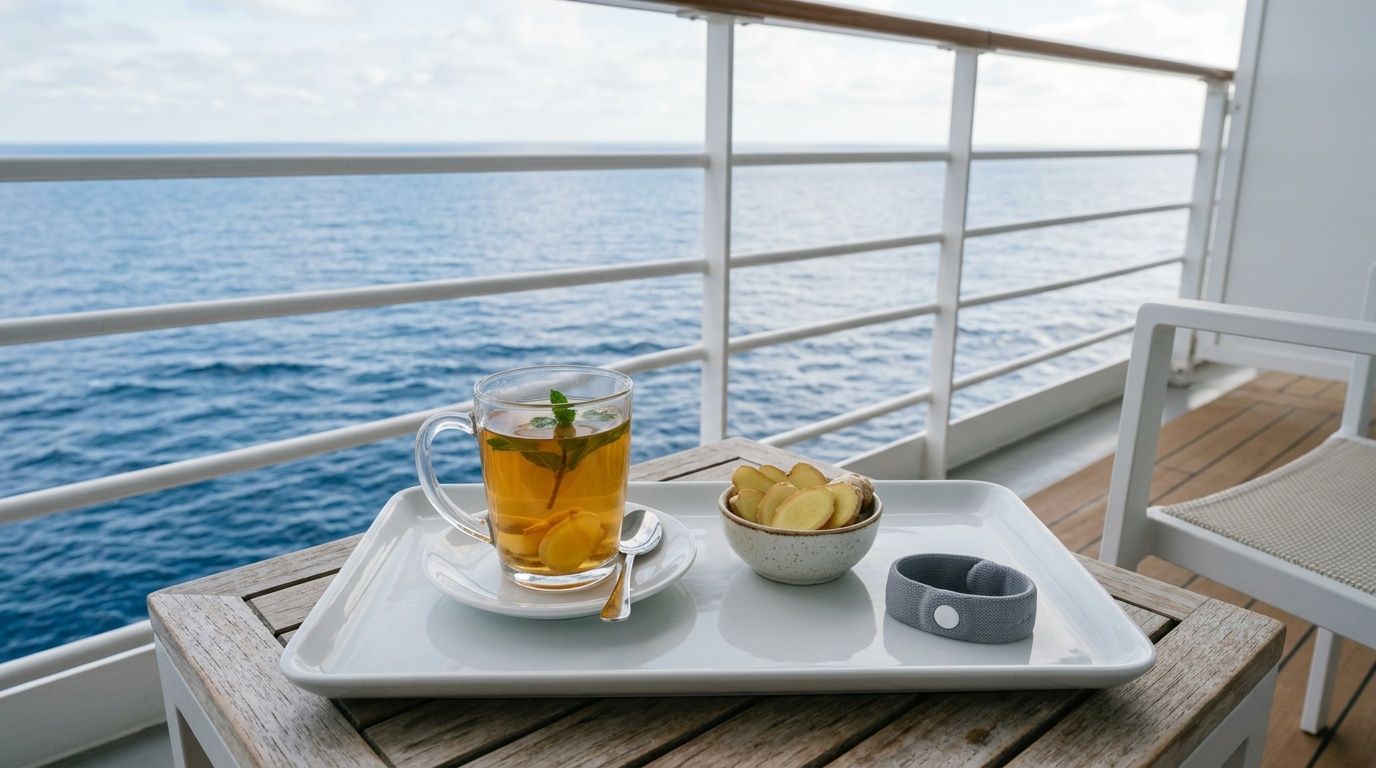
Wristbands and acupressure
Sea Band wristbands are simple, reusable, and easy to pack. They work by applying pressure to the wrist point commonly used for nausea relief. Some travelers swear by them. Others find them better as support than as a standalone answer.
That’s the honest captain’s take. They’re low risk, drug-free, and worth carrying, especially if you’re sensitive to medication or want something safe to combine with other strategies. If you want help with fit and use, this guide to sea sickness acupressure bands covers the basics.
Ginger and why it stays popular
Ginger chews are one of the easiest natural tools to keep in a pocket or day bag. They won’t replace prescription prevention for someone who gets badly seasick, but they can settle mild nausea and serve as a helpful backup.
Ginger tea, ginger candies, and ginger chews all have the same practical advantage. They’re easy to take, they don’t make you sleepy, and they can be used the moment you feel your stomach start to turn.
Boat habits that matter more than people think
Drug-free prevention isn’t just about products. The way you behave on board can make a big difference.
- Look at the horizon: Give your eyes a stable reference that matches the boat’s motion.
- Get into fresh air early: Don’t wait until you feel terrible.
- Stay off your phone: Reading and scrolling often make symptoms worse.
- Eat light, not empty: A small, simple meal is usually better than a greasy breakfast or no food at all.
Best use for natural remedies
| Remedy | Best use |
|---|---|
| Acupressure wristbands | Mild symptoms, medication backup, drug-free preference |
| Ginger chews | Breakthrough nausea, gentle support, easy carry option |
| Fresh air and horizon focus | First response when symptoms start |
| Light food choices | Prevention and comfort |
Natural options work best when your expectations are realistic. They’re often enough for mild cases. They’re also smart as a second layer, even if medication is your main defense.
Staying Safe Seasickness and Diving
General cruise advice often falls short in this regard. A medication that’s acceptable for lounging on deck may be a poor choice before a dive. Underwater, small side effects become bigger safety issues.
If you’re scuba diving, your goal isn’t only to avoid nausea. You need to stay clear-headed, stable, well-hydrated, and able to follow directions exactly.
Why diving changes the equation
Drowsiness, dizziness, and blurred vision are nuisance side effects on land. In the water, they can interfere with judgment, buoyancy control, situational awareness, and comfort during entry and exit.
That doesn’t mean divers can’t use seasickness prevention. It means they need to be much more selective. Less-sedating options generally make more sense for active dive days, and anything that affects vision or leaves you feeling strange deserves extra caution.
Seasickness Medication Safety for Divers
| Medication Type | Active Ingredient | Key Side Effects | Diving Safety Recommendation |
|---|---|---|---|
| OTC antihistamine | Dimenhydrinate | Drowsiness, grogginess | Use caution. Poor fit when alertness matters |
| OTC antihistamine | Meclizine | Less drowsiness, possible mild dry mouth | Often a better fit for active divers, but test response before trip |
| Prescription patch | Scopolamine | Dry mouth, blurry vision, dizziness | Discuss with a physician before dive travel. Be cautious if vision feels altered |
| Drug-free options | None | Minimal to none | Good support tools, especially as part of a layered plan |
What I’d tell any diver before the boat leaves
- Don’t try a new medication for the first time on dive morning: You want to know how your body reacts before you’re gearing up.
- Tell the crew what you took: Dive staff need the full picture if you feel off.
- Don’t ignore blurry vision or heavy fatigue: Those are not “push through it” symptoms before a dive.
- Watch dehydration: Dry mouth and tropical conditions can push you the wrong way fast.
If the medicine makes you feel unlike yourself on land, it has no business being ignored underwater.
For dive planning, trip options, and timing around ocean conditions, Kona dive tours are worth browsing before you finalize your schedule.
How to Choose the Right Seasickness Medicine
You feel fine at the dock. An hour later the boat starts rolling, your stomach turns, and now you are supposed to decide between a patch, a pill, or ginger while trying to keep breakfast down. That is the wrong time to make the call.
The right choice depends on three things. How easily you get motion sick, how alert you need to stay, and what you plan to do on the cruise. For active cruisers, especially divers, the best option is usually the least sedating medicine that still keeps symptoms under control.
Match the medicine to the day
A passenger headed for a pool chair can tolerate more drowsiness than someone gearing up for a checkout dive, handling a camera rig, or climbing in and out of small boats. I have seen plenty of people pick the strongest option on paper, then spend the day foggy, dry-mouthed, and disappointed.
Use this quick filter before you pack:
How often do you get motion sick?
If ferries, tenders, or winding car rides already bother you, plan ahead instead of hoping a big cruise ship solves it.How long will you be on the water?
A short excursion and a week of sea days are different problems. Longer exposure usually favors prevention over last-minute treatment.Do you need a clear head?
Divers should be strict here. Alertness matters on ladders, during briefings, and underwater.Have you taken it before without side effects?
Familiar and tolerated usually beats unfamiliar and theoretically stronger.
A practical starting point
| Your situation | Better starting point |
|---|---|
| Mild, occasional motion sickness | Ginger, wristbands, behavior changes |
| Mild to moderate symptoms on active days | Bonine |
| Short trip, less concern about sleepiness | Dramamine |
| Strong history or multi-day cruise | Scopolamine patch with medical guidance |
If you want a broader consumer overview, Best Sea Sick Medicine for Cruise compares the common options in plain language.
Trade-offs that matter
No seasickness medicine is perfect. The key question is which downside you can live with.
Scopolamine often works well for people with a strong history of motion sickness, but it can bring dry mouth, blurred vision, and mental fog in some users. Dramamine helps many travelers, but sleepiness is common. Bonine is often a better fit for active days because it tends to be less sedating, though some people still feel slowed down. Ginger and acupressure tools are lower risk, but they are often better for mild symptoms or as backup rather than your whole plan if you already know you get sick.
For divers, that trade-off is sharper. A medicine that keeps your stomach settled but leaves you dull, unfocused, or visually off is a poor choice for dive day.
Common selection mistakes
- Picking by brand name alone
- Assuming stronger always means better
- Ignoring side effects because nausea is the bigger fear
- Using a diving or excursion day as your test run
- Choosing the same product your cabin mate uses without considering your own tolerance
A good choice should feel uneventful. You take it early, it does its job, and you stay comfortable enough to enjoy the boat, the water, and the day you paid for.
Your Seasickness Questions Answered
Cruise passengers ask broad seasickness questions. Divers usually need sharper answers, because a choice that is acceptable for a pool day can be a poor choice before a boat dive, a shore entry, or a two-tank morning off Kona.
Here are the calls I see people get wrong most often.
I only get mildly seasick. Do I need medicine for a dive boat?
Maybe not, but mild seasickness can turn into a bad dive day fast if the boat ride is bouncy, you are gearing up in heat, and your stomach is already off before the first backward roll. For divers with only occasional symptoms, a lower-sedation option or a non-drug backup can make sense. The mistake is waiting to find out how you handle a rough crossing on the same morning you plan to descend.
Is the patch the best choice for scuba diving?
Sometimes. It is often a strong option for people with a reliable pattern of getting sick on boats, especially on multi-day trips or crossings where prevention matters more than rescue. The trade-off is side effects. If scopolamine gives you blurred vision, dry mouth, or mental fog, that matters more underwater than it does at the buffet.
Test it before your dive day, on land and with your doctor's guidance.
What should I avoid before diving?
Anything that leaves you sleepy, mentally slow, or visually off. That includes alcohol mixed with motion sickness medicine, but it also includes taking a product for the first time right before a charter. A medication can control nausea and still be the wrong call if it dulls your awareness or makes mask clearing and gauge checks feel harder.
What about kids or teens on a cruise that includes snorkeling or beginner diving?
Use age-appropriate guidance from a pediatrician or pharmacist. Do not guess with adult dosing and do not assume an over-the-counter product is automatically fine for a young passenger headed into the water. For families, the safest plan is usually to sort this out before the trip, not at the marina.
What if I start feeling sick after the boat leaves, but I still want to dive?
Reconsider the dive if symptoms are building and you are already distracted, weak, or dehydrated. I have seen divers push through nausea, suit up anyway, and enter the water flustered. That is not a good setup. Missing one dive is better than forcing a bad one.
Which option is usually the best fit for active cruisers?
The least sedating option that reliably works for you. That answer is different for a passenger reading by the pool than for a diver climbing a ladder in current, handling gear on a moving deck, or trying to stay sharp through a second tank.
If your cruise includes diving in Hawaii, Kona Honu Divers is a smart place to book with a crew that understands both ocean conditions and the practical realities of keeping divers comfortable, safe, and ready to enjoy the day.