
Your flight lands at KOA in the afternoon. By evening you're on a lanai in Kailua-Kona with a certification card in your wallet, four open days, and a group chat full of opinions about what to book.
One friend wants the manta night dive. Another wants a two-tank morning. Someone in the group has never breathed underwater and hasn't said out loud whether they want to try.
Kona suits groups with different experience levels because its west coast offers warm water and a range of dive options, from shallow reef dives to night dives over deep water. The hard part isn't finding a dive. It's matching the trip to each diver's certification and comfort level, then adjusting for the conditions on the day.
Scuba Diving in Kona at a Glance
Kona's west coast often has warm, comparatively sheltered water, but conditions vary. The right trip depends on your certification and your comfort in the water after dark.
Kona Honu Divers runs dive trips in Kona, from introductory scuba experiences to blackwater diving. Its Kona diving tours page lists the options side by side, making it easier to compare trips before you book.
The Hawaiʻi Department of Land and Natural Resources recorded more than 7,600,000 participants in commercial ocean activities across the state in 2024 on its marine activity dashboard.
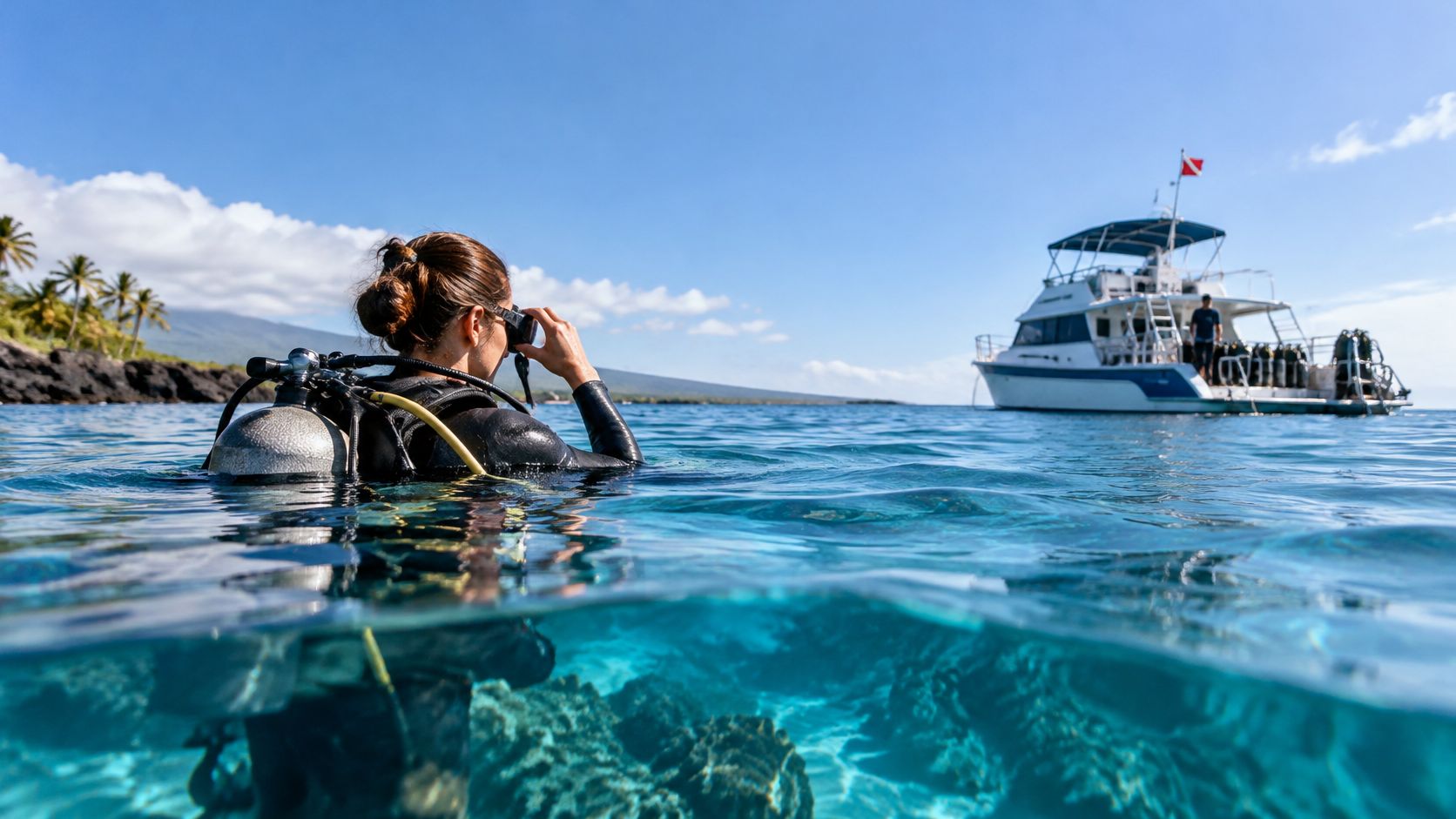
Most mornings on this coast look roughly like this.
| Dive Option | Who It Suits | Certification Needed | Best For |
|---|---|---|---|
| Morning Introductory Scuba Dive | Non-certified beginners | None | Trying scuba on the Big Island |
| 2-Tank Morning Dive | Open Water divers | Open Water, 60 ft with buddy | Reef and lava terrain |
| Manta Night Dive | Certified divers and night snorkelers | Open Water for divers; confirm requirements | Feeding manta rays under lights |
| Blackwater Night Dive | Certified divers comfortable at night | Confirm with the operator | Open-water drifting plankton and marine life |
| Premium Advanced 2-Tank Trip | Certified divers ready for advanced sites | Certified diver; confirm requirements | Remote, pristine dive sites |
| Private Charter | Families, groups and VIP travelers | Matched to the group's cards | Custom schedule and sites |
Find your row and read across. No card at all means starting with the Morning Introductory Scuba Dive, which takes place in Kona and has no certification requirement. Open Water with a few logged dives puts the 2-Tank Morning Dive in range, and it's a practical first choice for certified visitors who want reef and lava terrain without taking on a night dive.
Then come the night trips. The manta night dive takes certified divers and snorkelers to a lit feeding site. The blackwater dive heads offshore, where there's no reef to orient by. The Premium Advanced 2-Tank Trip is for certified divers seeking remote, pristine sites, while a private charter suits families or groups who want a custom schedule.
For most regular charters, Kona Honu Divers requires at least an Open Water Diver certification from a recognized agency such as PADI, SSI or NAUI. This certification allows diving to 60 feet (18 meters) with a buddy. Bring your C-card. Confirm the requirements for a particular trip before booking.
If you hold Open Water, many trips may be available once you check the specific requirements and your own recent experience. If you don't, start with an introductory dive or a certification course. Save night dives for when you're comfortable with buoyancy and diving in low light.
Certification Paths and Course Requirements
The first decision is whether you hold a certification card. If you do, your recent experience matters too, especially before a deep or night trip.
Path one, try it before you commit. The Morning Introductory Scuba Dive requires no card. It lets a beginner try scuba without first completing a certification course. If you decide scuba isn't for you, you can move on without committing to the full course.
Path two, get certified properly. The PADI Kona Scuba Certification Course takes three days of diving. It includes confined-water skills and open-water training dives, preparing you to continue diving after your holiday.
Path three, refresh your skills. If your last dive was two years ago or your buoyancy needs work, consider a refresher before booking a deep or night trip. A tune-up on mask clearing, weighting and ascent control can help you feel more prepared.
A card is not a skill level. An Open Water card from 2019 with three dives since describes a different level of recent experience from one with sixty logged dives. Tell your guide which describes you.
Hawaii Island residents can take Kamaʻāina dive courses through Kona Honu Divers if they are full-time residents. Non-divers who would rather stay near the surface can take freediving classes, which focus on breath-hold and equalization skills without a tank.
Kona Honu Divers offers scuba certification in Kona, Hawaii. Confirm your card and experience level when you reserve through the Kona scuba classes page. Matching the trip to your recent experience helps you avoid booking a dive that doesn't suit your skills.
Dive Sites and Seasonal Conditions in Kona
Late summer brings warmer water, while late winter is cooler. Winter north swells can make visibility less reliable, so leave some flexibility in your plans.
| Condition Window | Visibility | What It Means for Planning |
|---|---|---|
| Late winter | 60 to 100 ft in favorable conditions | Choose exposure protection for the day's water temperature |
| Late summer | 60 to 100 ft in favorable conditions | Warmest water; still confirm the day's conditions |
| Winter north swell periods | Can drop as sediment suspends | Check swell, wind and surge before booking |
| Wind and runoff days | Reduced after heavy runoff | Verify visibility at the pre-dive briefing |
Choose sites based on the conditions and the dive you want. Garden Eel Cove and Keauhou are manta encounter locations. The Old Kona Airport frontage has shore access over shallow lava fingers. Pawai Arches and Kahaluʻu Beach Park are options for newer divers, photographers and snorkelers when conditions suit.
What the Conditions Actually Do
Kona's nearshore water is comparatively warm and sheltered, but "clear year-round" is not a forecast. Seasonal temperatures run roughly 74 to 76°F in late winter and 82 to 84°F in late summer, with favorable visibility reaching about 60 to 100 feet, according to the Kona Honu Divers conditions guide. Winter north swells, local wind, surge and runoff can all affect the day's conditions.
Suspended sediment scatters light and shortens your visual range, sometimes before the water looks dirty from the surface. Surge adds task loading, makes buoyancy control harder and increases the risk of contact with lava formations or reef.
Plan from the gauge, not the calendar. Choose your wetsuit and weight based on the day's water temperature and the equipment you're wearing, not just the seasonal average.
A 3 mm full suit may suit a diver who runs warm on summer days. In late winter, a 5 mm suit, hooded vest or beanie can help, especially on a night dive when you finish wet and cool down on the ride back.
At the briefing, ask about swell, wind, current and visibility. If surge is up or the water is murky, allow for added gas and navigation reserves rather than assuming the dive will follow the plan you made at breakfast. Photographers and newer certified divers may find those conditions more demanding. Lava tubes also require good trim and clear visual references, both of which can be harder to maintain when conditions deteriorate.
Manta Night Dives and Blackwater Encounters
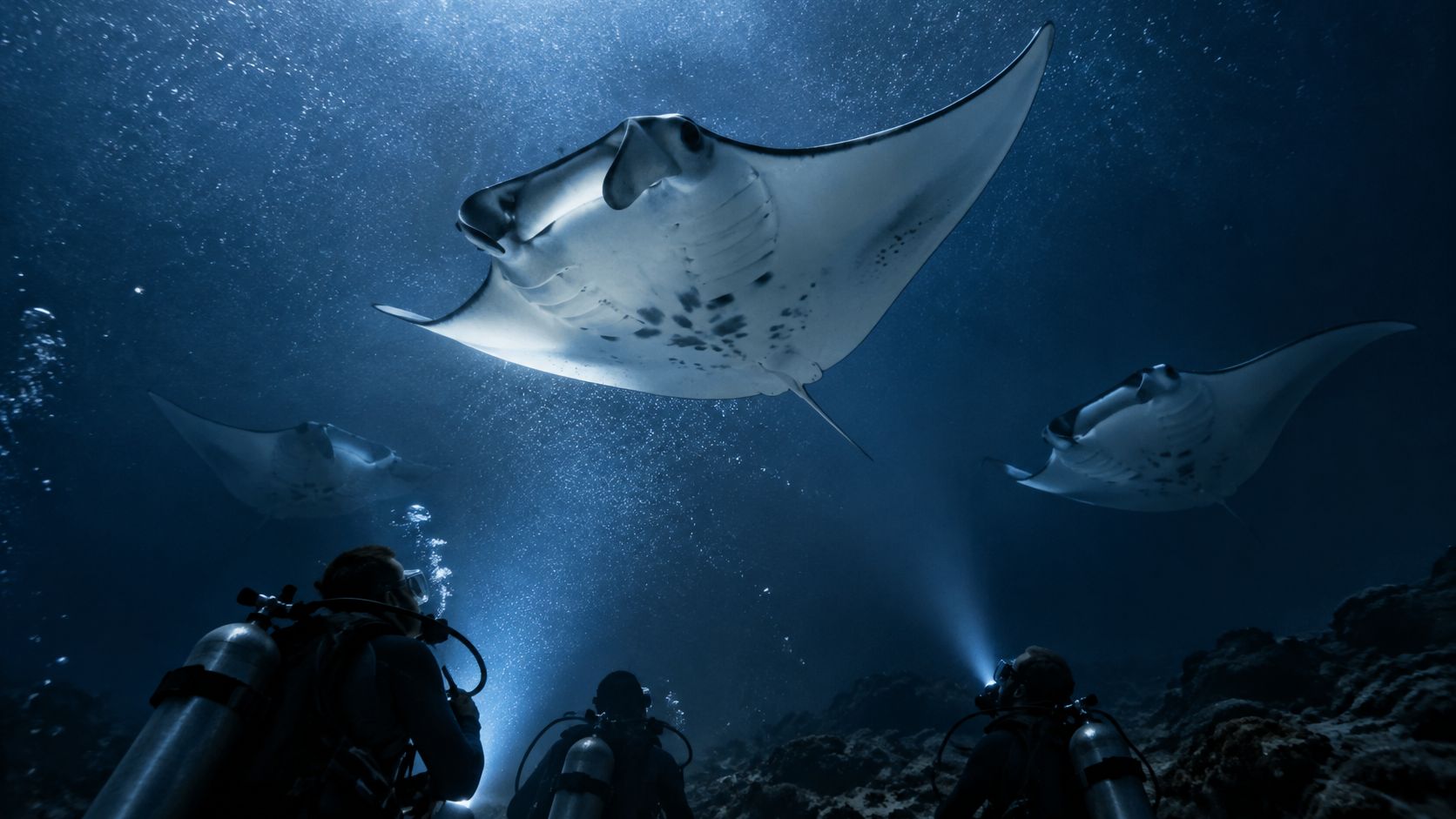
Six lights point up above a patch of sand, turning the water into a column of drifting specks. A manta ray glides across the top of the beam, banks and returns for another pass.
The encounter is prey-mediated aggregation, not feeding by bait and not baiting. Underwater lights concentrate zooplankton in the illuminated water column, and reef manta rays (Mobula alfredi) filter-feed on the plankton, as the University of Hawaiʻi's manta research center explains. Encounter quality depends on nightly prey concentration, so a calendar cannot guarantee what you'll see.
Why Garden Eel Cove Leads the Manta Tour
Garden Eel Cove is a strong option for manta viewing, with a protected location and a viewing area alongside reef life. A University of Hawaiʻi analysis of 13 years of community-sourced records, covering more than 23,000 sightings of 167 individually identified reef manta rays, found that Garden Eel Cove generally supported larger aggregations, while Keauhou drew stronger female visitation, suggesting the two sites serve different ecological purposes (University of Hawaiʻi scholarspace). Both locations had close to a balanced 1:1 sex ratio overall.
The study also found high site fidelity among females and showed that aggregation size tracked zooplankton density, so food availability affects attendance more than any calendar can promise. The researchers reported relative stability in the aggregations across the study period despite rising tourism.
Kona's manta tours have a long history. Testimony submitted to the Hawaiʻi Legislature reported that a survey of nine Kona dive shops recorded approximately 11,000 snorkelers and divers on manta tours in 2002, producing about $920,000 in direct revenue for those businesses. It also reported that manta rays were observed on roughly 80% of dives at Garden Eel Cove. These historical industry estimates help explain the manta dive's place in Kona's dive offerings.
The two-tank manta dive and snorkel trip gives divers a view from the sand. What you do there can affect the manta's approach.
- Hold a stable position on the bottom. Find a patch of sand and stay put rather than drifting into the manta's path.
- Keep the central feeding corridor clear. The space between the lights and open water is the route for manta passes. Avoid blocking it.
- Never touch or chase. Contact can damage a manta's protective mucus layer.
- Secure dangling gear. A console or octopus swinging on a bolt snap can contact a manta or the reef.
- Use lights as instructed. Angle them up to build the plankton column rather than into other divers' eyes.
Blackwater Is a Different Kind of Night
Blackwater diving trades the reef for open ocean. Divers drift in the dark over deep water, with the boat as their fixed reference. Larval fish, jellies and small pelagic animals may rise from depth after sunset.
There's no bottom to kneel on, so buoyancy and light discipline matter throughout the dive. Read the Kona black water dive guide before booking, then confirm certification requirements for the Blackwater Dive tour. The open-water setting and darkness make this a poor first night dive for anyone who feels nervous in those conditions.
Recommended Dive Itineraries and Private Charters
The 2-Tank Morning Dive is a practical starting point for many certified visitors. It covers two dives over reef and lava terrain in one morning, with time for a surface interval and the rest of the day ashore.
Once the local reefs feel familiar, the premium advanced 2-tank trip offers access to remote, pristine sites. It's intended for certified divers who are comfortable with the demands of advanced diving, not for anyone with a certain number of logged dives.
Private charters offer a different kind of flexibility. Kona Honu Divers runs charters along Kona's coast and farther along it for divers who want to go beyond the standard roster. A private boat can suit families, groups and travelers who need a custom schedule. If some of your party wants to snorkel while others dive, or one diver needs a shallow first dive while another wants a wall, a private charter can accommodate different preferences more readily than a mixed-group trip.
The Boat-or-Shore Decision
Kona shore diving has practical constraints that a list of dive sites may not explain. The Old Kona Airport Marine Life Conservation District runs offshore from the Old Kona Airport to the Kailua Lighthouse, with boundaries reaching 500 yards seaward from designated shoreline points. Commercial dive and tour operations are permitted inside it only at the state mooring or from shore when properly permitted. The state mooring is limited to three hours per boat per day for noncommercial use on a first-come, first-served basis.
Anchoring is prohibited inside the MLCD, and motorized boats may not operate in the designated No Boating Zone except for emergencies or enforcement, according to the Division of Aquatic Resources area rules. A guided boat can be the practical choice because the operator can plan around the permit, mooring window and protected coastline.
For custom itineraries, families and mixed-ability groups, the Kona private tours route lets you build the day around your group's needs.
A three-day pattern that works for many visiting divers:
- Day one, two-tank morning. Dive reef and lava terrain, return by lunch and keep the afternoon easy.
- Day two, manta night dive. Leave time to rest before the evening trip. Snorkeling or a shore dive earlier in the day are options if conditions and your energy level allow.
- Day three, advanced or private. Choose remote sites only if your certification and comfort level suit them, and leave a surface interval before your flight home.
Gear, Rentals and Underwater Photography Setup
Start with three questions: what's provided, what should you bring, and what can't you carry?
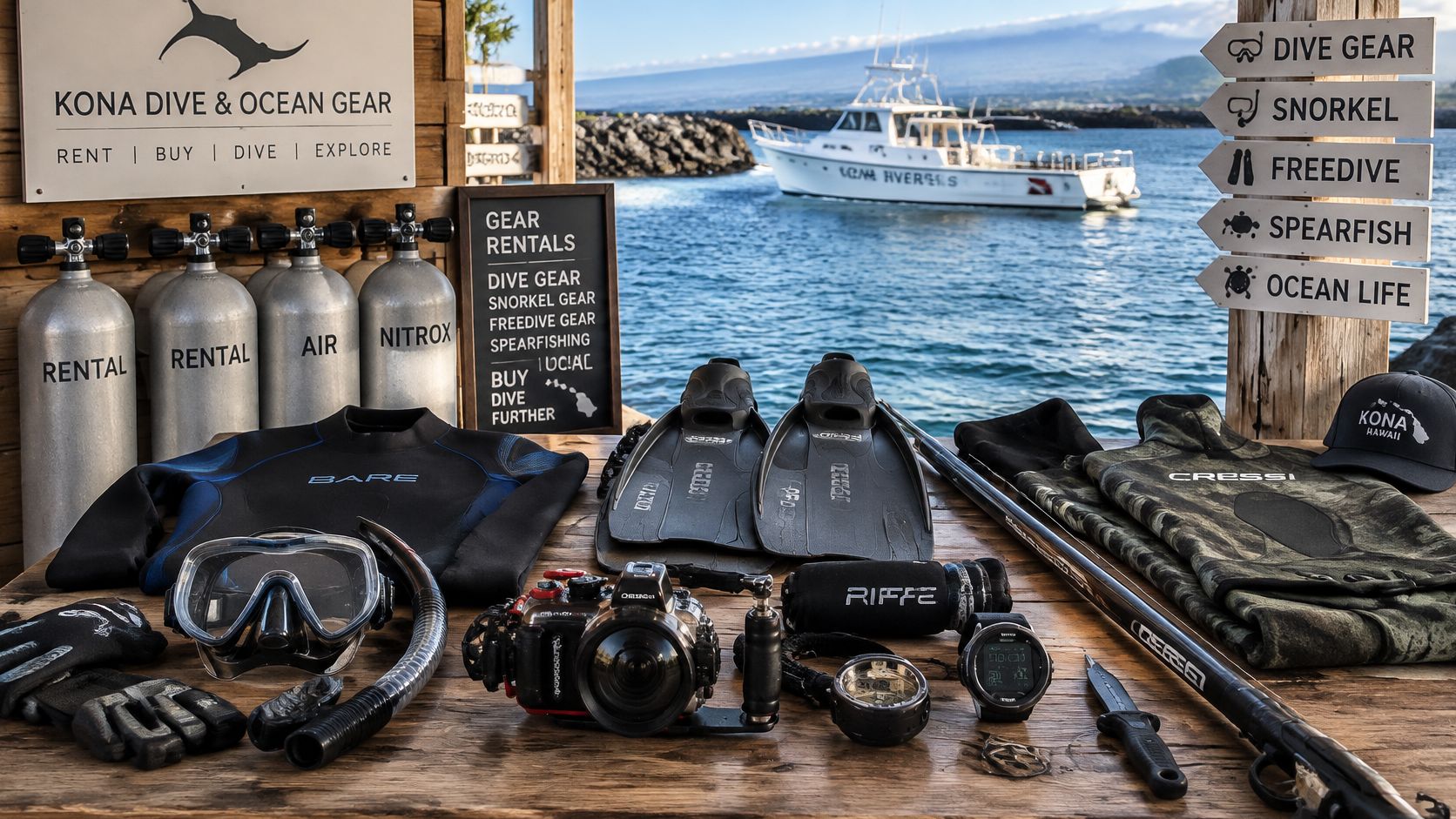
For an Open Water Diver course, Kona Honu Divers provides the instructor and scuba equipment: BCD, regulator, computer, wetsuit, tanks and weights. The shop also offers scuba and freediving rentals, and sells scuba, freediving and spearfishing gear. Reserve rental kit through the Kona scuba rentals page and share your sizes when you book.
What You Can't Carry
Hawaii's fishing rules affect what belongs in your save-a-dive kit. Scuba spearfishing is prohibited in the West Hawaii Regional Fishery Management Area. The rule also prohibits possessing scuba gear and a spear at the same time, or scuba gear together with any speared aquatic life, according to the Division of Aquatic Resources regulated-area rules.
Inside the Old Kona Airport MLCD, taking, injuring, killing, possessing or removing marine life is generally prohibited. That includes live coral, shells, algae, limu and eggs. Leave the pole spear at the condo and treat every Kona reef as observation-only.
Photography That Doesn't Cost You the Dive
Get your buoyancy and trim settled before framing a shot. Keep your fins above and behind you, and back out of a composition rather than settling on the reef.
Angle strobes away from the subject and to the sides to reduce backscatter, which can show up as white specks in photographs. Shoot when conditions allow, keep a spare battery and memory card in a dry pouch, and set a turn pressure that leaves enough air to return to the boat.
Safety, Medical Limits and Shore Entry
Calm offshore water does not guarantee an easy shore entry. Along Kona's coast, the shoreline can be rough even when the water farther out looks calm.
Hawaiʻi's Division of Aquatic Resources identifies sharp coral and lava rock along the Old Kona Airport frontage, says the southeastern entry suits only calm to moderate conditions, and warns that dangerous swells and currents can arrive with seasonal storms, according to its Old Kona Airport MLCD guidance. The same guidance describes shallow lava fingers extending to about 50 feet before the bottom drops away fast.
Run the entry check in this order:
- Read the surge, not the surface. Watch a full set of waves hit the rocks before you commit. If the exit looks harder than the entrance, don't start.
- Abandon the dive if the entry is rough. A shore dive is optional. A rolled ankle or cracked camera housing can disrupt the rest of your week.
- Wear footwear that grips wet lava. Choose booties with tread or dive-specific shoes, not flip-flops carried in one hand.
- Keep a buddy at the surface with you. Coordinate entries and exits so no one is left handling a problem alone.
The flag rule catches visitors out. Divers and freedivers must display a red-and-white diver flag and stay within 100 feet of it in ocean waters. Freedivers can drift farther than they expect, so keep checking your position.
Get cleared before you get wet. Heart or lung conditions, a recent illness, pregnancy or a history of decompression problems warrant medical advice before diving. A boat crew cannot make that decision for you.
Allow at least 18 hours between your last dive and your flight. On a multi-day trip, 24 hours gives you more time between diving and flying.
For site-specific entry planning, the Big Island shore diving guide covers access, hazards and contingencies. When shoreline conditions are poor, a boat dive may offer a safer way to reach a reef.
Pack Your Kit and Book Your Kona Dive
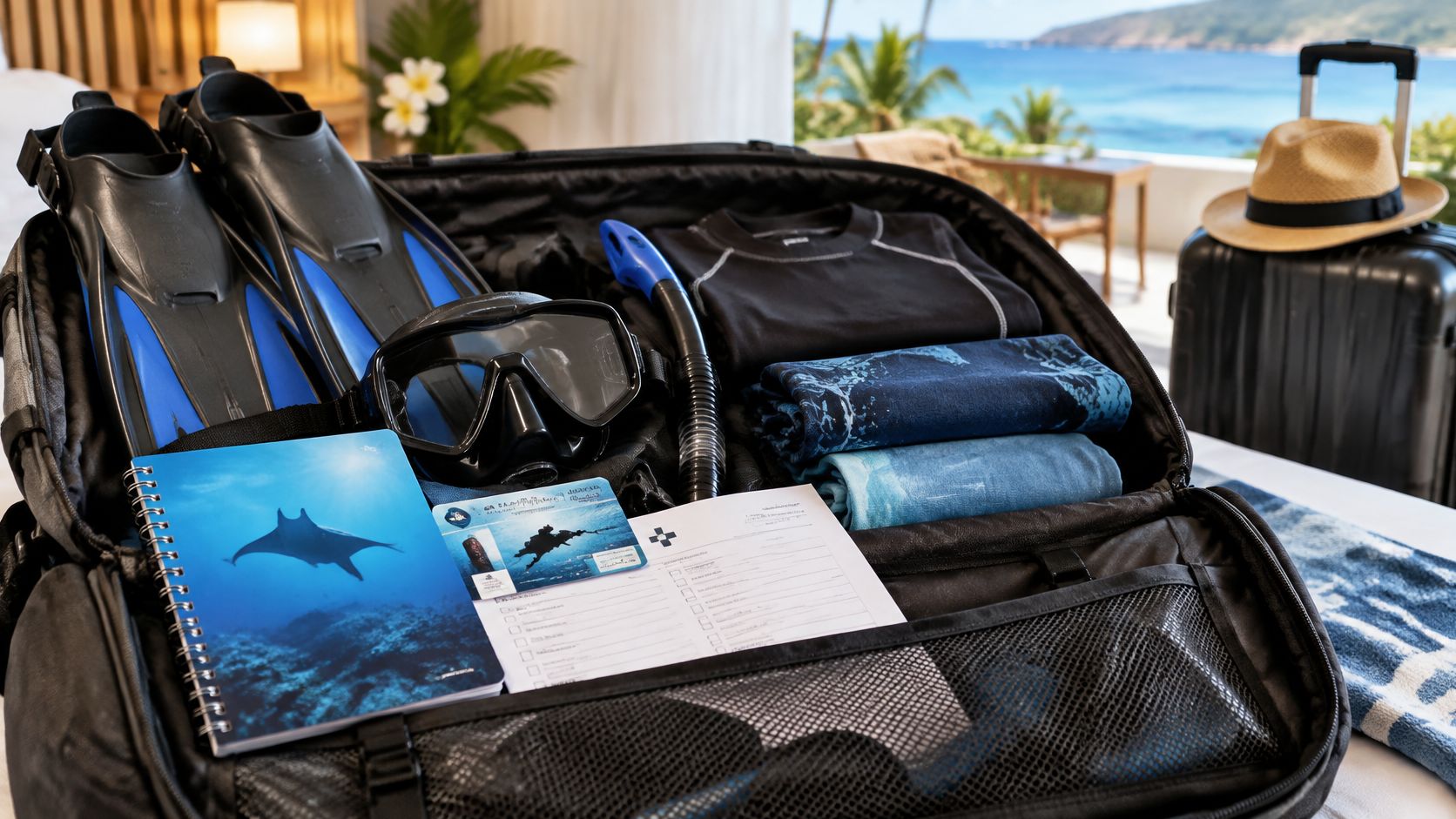
Pack for comfort and the items you rely on. Kona dive shops can supply rental equipment, so check what you need before you travel.
- Certification card and logbook. Bring your C-card for regular charters. Your logbook helps describe your experience level.
- A current medical screening. Complete it before you travel rather than at the shop with the boat waiting.
- A mask, fins and snorkel that fit you. A familiar mask can be more comfortable than a rental.
- Exposure protection matched to the water temperature. A 3 mm suit may suit summer; consider thicker protection for cooler late-winter dives.
- Reef-safe sunscreen, a dry bag, a towel and a change of clothes. Evening boat rides home can feel cool when you're wet.
- A reusable water bottle. Keep drinking water through the day.
- Camera, spare batteries and cards if you shoot.
Then book in this order:
- Confirm your certification level and put your C-card in your wallet.
- Match your row in the options table and compare your plans with the conditions table.
- Choose a morning, advanced or night trip, and confirm any requirements for that specific dive.
- Book through the button below once your dates are set.
- Arrive early at the Kailua-Kona shop for the briefing, with your kit ready.
Kona Honu Divers is at 74-5583 Luhia St A12, Kailua-Kona, HI 96740 and was voted best dive operator in Kona. It offers early diver discounts, dive packages and free nitrox for certified divers. If you're diving for several days, ask about a package before your first trip.
Kona Honu Divers runs two-tank morning charters, manta night dives, blackwater trips and private charters along the Kona coast, from its shop at 74-5583 Luhia St A12 in Kailua-Kona. If you hold an Open Water card and have a few days to dive, book the manta night dive early and plan your mornings around it. Visit Kona Honu Divers to see the schedule and choose a trip that matches your certification.