
Table of Contents
- Who Can Join and Where Each Participant Stays
- Stages of a Manta Ray Night Dive
- A Shallow Window Into a Deep Night
- Garden Eel Cove Compared With Keauhou Bay
- Questions to Ask Before You Book
- Light Direction and Body Position
- Do I Need a Certification to See the Mantas
- Can I Touch a Manta Ray
- Are Manta Rays Dangerous at Night
- How Long Is the Tour
- Will I Always See Manta Rays
- Is the Dive Suitable for Beginners
- Can I Bring a Camera
- Where Can I Read Other Guests' Experiences
- Your Booking Path
- Manta Night Dive at a Glance
You're comparing Kona night tours on your phone, trying to decide if you're qualified, which site is calmer, and whether a crowded dark dive is worth it. Those questions match how the night works. A good manta ray night dive is a managed feeding scene: set positions, set lights, and a crew controlling the space above and below you. Get the site, the positioning, and the operator answers right, and you get close passes without chaos. Get them wrong, and most of the dive is spent managing other people.
What a Manta Ray Night Dive Is and Who Can Join
You're kneeling on sand in the dark, looking into a bright circle on the seafloor. Plankton thickens in the beam. Then a manta ray turns through the light, mouth open, close enough to fill your mask before it banks away and loops back.
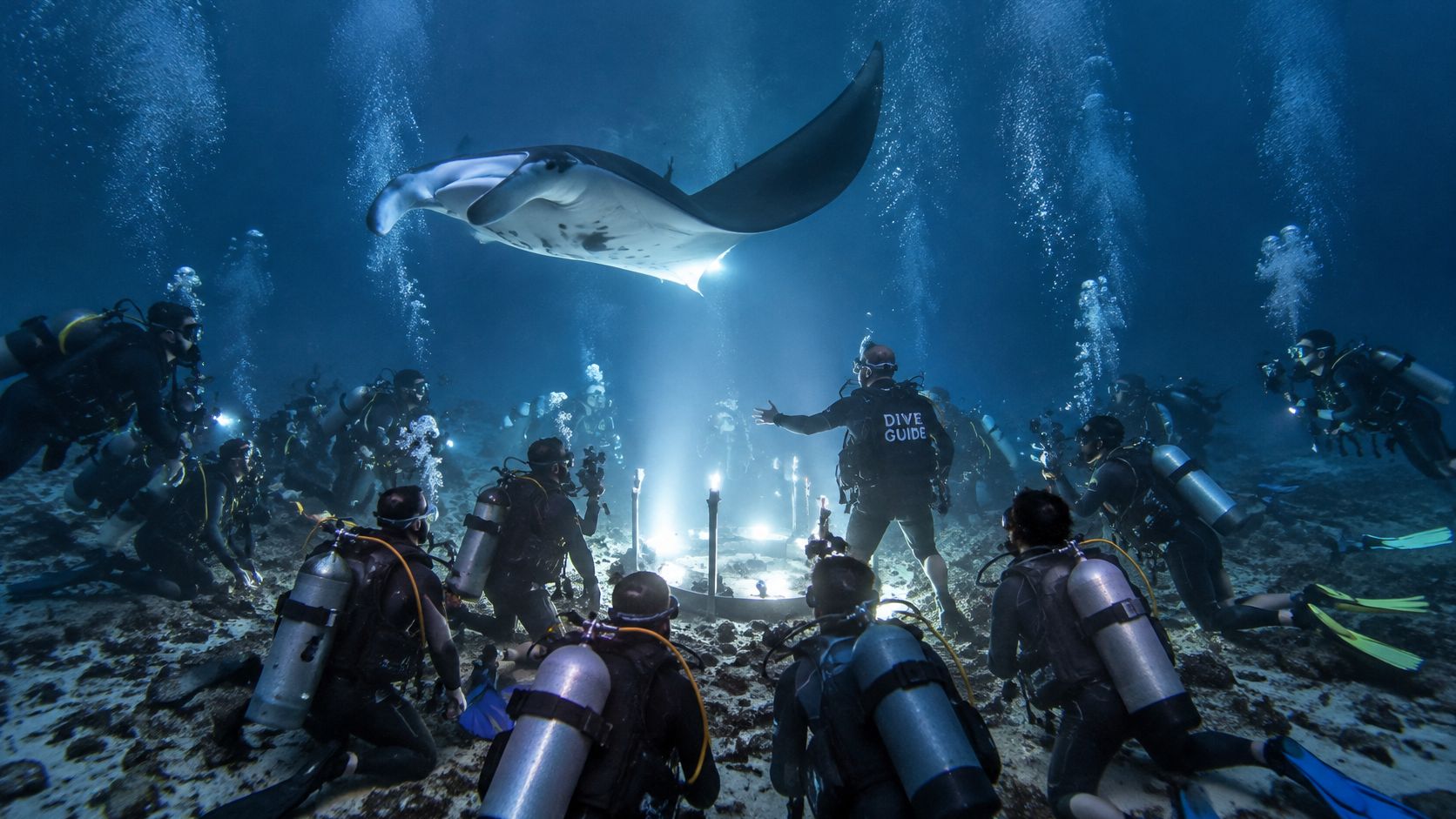
That's the shape of the dive. It's stationary and closely supervised. The crew places a powerful set of lights on the seafloor, divers kneel on the sandy bottom, and snorkelers float on the surface while giant manta rays feed just inches away. You hold one spot so the animals can work a predictable feeding lane.
The Kona version started small. The Hawaii Ocean Watch history of Kona viewing sites records organized viewing beginning in 1991 near the former Kona Surf Hotel with one boat carrying approximately 6 to 8 divers on selected nights. By 1993, as many as five boats and roughly 50 people were in the water. Activity declined after the hotel closed between 2000 and 2004, and mantas returned after shoreline floodlights were restored in 2004.
Who Can Join and Where Each Participant Stays
| Participant | Certification needed | Where they stay | Who it suits |
|---|---|---|---|
| Certified scuba diver | Open-water certification | Kneels on the sandy bottom near the lights | Divers comfortable with buoyancy control at night |
| Snorkeler | None | Floats at the surface | Beginners and anyone who wants to skip dive training |
| Uncertified guest | Not eligible to dive; takes the snorkel option | Floats at the surface | Anyone without a certification card |
The Manta Ray Night Dive is open to all certified divers, and divers have seen manta rays on 92% of Manta Ray Night Dive trips. Without a card, snorkeling still puts you on the same feeding scene, only from above. This comparison of whether it's better to snorkel or dive with manta rays helps if your group is mixed.
How the Night Unfolds, Hour by Hour
The night begins on land. The experience starts with a detailed briefing from the crew explaining the science behind the dive and the golden rules of passive observation. Listen for three things: where you'll sit, how you'll enter and exit, and what you'll do if a ray turns straight toward you. If those answers aren't clear before boarding, ask again.
Boarding happens before dusk so gear checks don't happen in the dark. Confirm your mask seal, fins, light, weights, and buoyancy setup while you can still see. A loose fin strap or a fogged mask is a small annoyance at noon. At night, in a group, it pulls your attention off your position and your buddy.
Stages of a Manta Ray Night Dive
| Stage | Timing | What happens | What you do |
|---|---|---|---|
| Pre-dive briefing | Before boarding | Crew explains the science of the feeding and the golden rules of passive observation | Listen, ask questions, note your group and position |
| Boarding and gear check | Before dusk | Guests board, gear is checked and the group is organized | Confirm your mask, fins, light and buoyancy setup |
| Entry | After dark | Divers and snorkelers enter; lights go down on the seafloor | Descend to your assigned spot and settle low |
| Viewing window | Middle of the tour | Manta rays arrive to feed around the lights | Hold position, keep still and let the animals pass |
| Exit and debrief | End of tour | Group surfaces, returns to the boat and talks through the dive | Stay with your group and report any problems |
After dark, divers go down first to a specific viewing area, while snorkelers settle at the surface. The powerful dive lights create a big, bright circle on the seafloor, so you're never in complete darkness. That circle is your reference point. Settle low, slow your breathing, and resist scooting for a better angle. Moving stirs silt, shifts the group, and rarely improves the view.
Stay in your assigned spot and let the rays set the distance. Chasing a pass almost always gives you a worse one.
During the viewing window, experienced guides stay with the group and manage spacing. Your job is quiet on purpose. Breathe, watch the lane above the lights, and keep your hands and gear tucked in.
Plan the evening around the full outing, not just bottom time. The NOAA manta assessment citing Hawaii marine tourism data reports individual tours generally lasted 3 to 5 hours. At the end, you surface with your group, return to the boat in order, and debrief what you saw. If you're choosing dates, read about the best time to see the manta rays in Kona before you lock in flights.
The feeling changes once the first ray commits to the light. Entry feels busy. Then the column goes quiet, divers stop fiddling with gear, and the only job left is to watch.
Why Mantas Come to the Lights
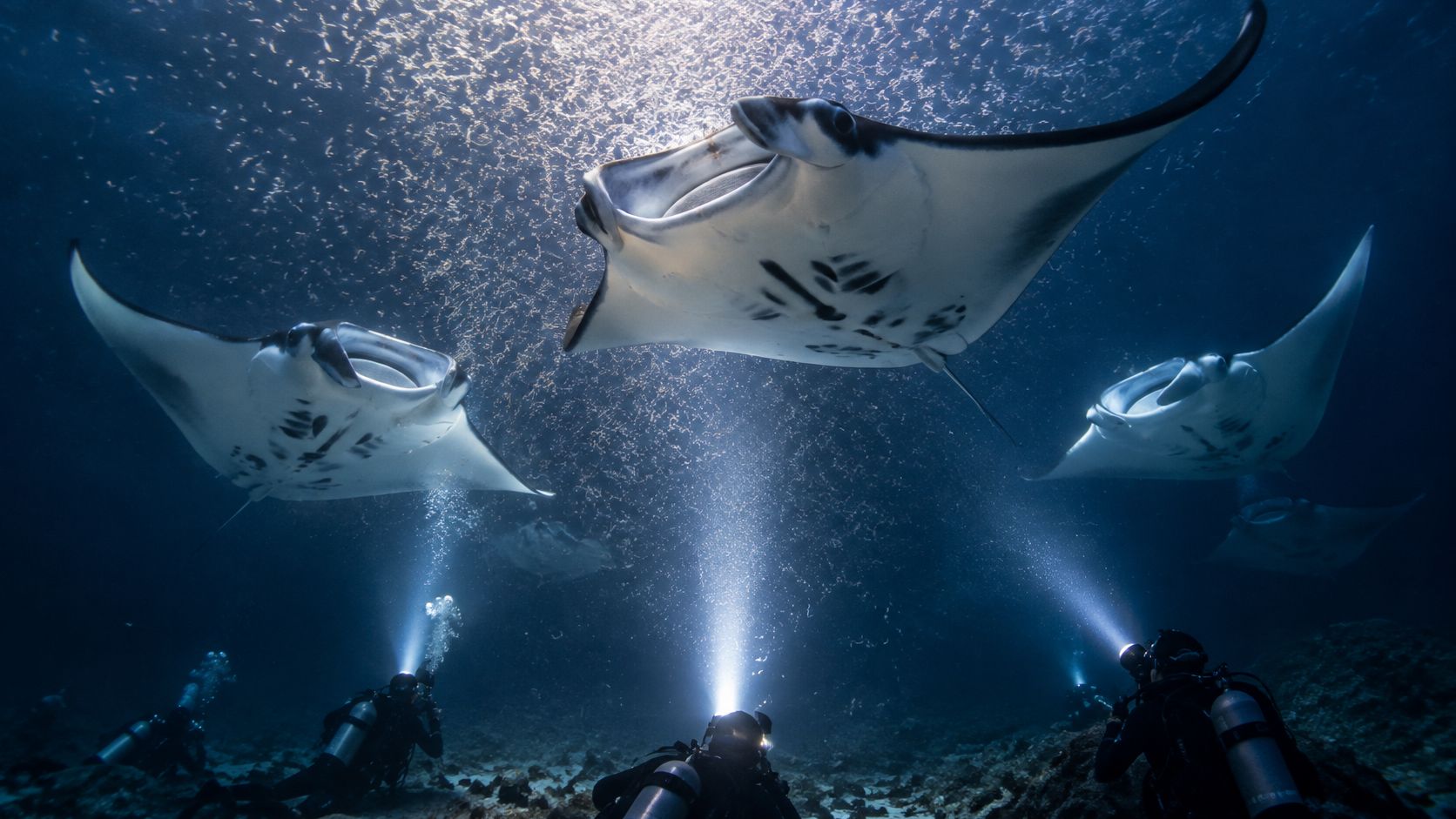
Mantas aren't coming to inspect your torch. They're coming to eat, and the lights change where the food gathers.
The setup sits on the bottom. The state environmental review for Kaukalaelae Point and Makako Bay describes guides placing dive lights around a central basket during manta tours. Those lights illuminate plankton in the water, concentrating the food that draws manta rays into the viewing area. Rays come for that patch of food, not for the hardware itself.
The beam holds a dense patch of plankton in the same place each night, like a buffet set on one table. A ray can sweep through it, turn, and sweep again without searching a wide stretch of reef. When the plankton is thick, the loops tighten and the passes repeat. When it's thin, or scattered by surge, a ray may make one pass and leave.
A Shallow Window Into a Deep Night
The shallow site is only part of what these animals do after dark. The NOAA giant manta ray framework reports giant mantas may feed in shallow water at depths below 10 meters, yet tagging studies document nighttime descents of approximately 200 to 450 meters, with some individuals capable of exceeding 1,000 meters. It also describes nighttime behavior involving repeated vertical oscillations, probably tracking vertically migrating zooplankton.
That sets your expectations. A Kona night dive can intersect feeding mantas when prey is concentrated around illuminated habitat. It does not show their full night range, and it does not mean they'll stay in the beam until your tank is low. They're wild animals using a feeding opportunity.
It also explains why fixed positions work. An animal that moves easily through the whole water column does not need you to follow it. If the food stays in the light and the lane stays open, it has a reason to return. Divers who rise into the column, wave lights around, or push cameras into the turn add obstacles to a feeding path that was working without them.
Judge the night by the conditions in the beam. Some nights the plankton stacks up and several rays feed in sequence. Some nights it's quieter. The mechanism is dependable. The exact show still depends on food, water movement, and the rays choosing to stay.
Why Garden Eel Cove Is the Better Viewing Site
Garden Eel Cove is the stronger choice for a guided dive. It's the go-to site because it's a protected location with a good viewing area, a healthier reef, and generally calmer conditions, and it's consistently more sheltered from open ocean swell.
Hawaii's Department of Land and Natural Resources identifies two primary Kona locations in its DLNR manta viewing announcement, Makako Bay, also called Garden Eel Cove, and Kaukalaelae Point, also called Keauhou Bay. Mantas gather at both sites at night to feed on plankton. The difference for a diver is the setting. Garden Eel Cove gives you a protected cove and an established nighttime viewing area. Keauhou sits closer to a more exposed, open-water encounter.
Garden Eel Cove Compared With Keauhou Bay
| Factor | Garden Eel Cove (Makako Bay) | Keauhou Bay (Kaukalaelae Point) |
|---|---|---|
| Official name | Makako Bay, also called Garden Eel Cove | Kaukalaelae Point, also called Keauhou Bay |
| Setting | Protected cove with an established nighttime viewing area | More exposed, open-water encounter |
| Light setup | Dive lights placed around a central basket | Boat and guide lights set for the group on site |
| Reef condition | Healthier reef and calmer conditions | Reef and conditions more exposed to swell |
| Best use | Guided manta night dives for all experience levels | Viewing when conditions and operator plan suit the site |
Protection matters when you're kneeling still for a long viewing window. Less surge means you aren't bracing, finning, or drifting into your neighbor. The light circle stays usable, the sand stays down, and new night divers can focus on breathing instead of holding position against moving water.
The organized layout matters for the same reason. A separate state manta ray viewing boating operations and safety assessment identified Makako Bay and Keauhou Bay as the two central viewing sites and noted that, at the time of the assessment, no rules restricted the locations where live boating, diving, or swimming could occur. In a place with that history, an established viewing area and a crew that places you deliberately reduce guesswork.
I would ask any operator two questions before booking. Which site do you plan to use, and how do you set the viewing area? A vague answer is useful information. A good crew can explain where divers kneel, where snorkelers float, and how the boat stays clear while people are in the water.
Staying Safe in a Crowded Night Feeding Area
Congestion is the main safety problem, not the ray.
Divers often ask about stingers first. Mantas don't have one. The harder problem is people, boats, ladders, and low light sharing one feeding area. The Hawaiʻi County manta ray viewing boating operations and safety assessment identified significantly increased nighttime manta-viewing activity and raised concerns about congestion among vessels, snorkelers, and scuba divers. It also notes vessels generally must remain at least 100 feet from a displayed dive flag, with a 50-foot buffer in navigational channels, while approaching at slow-no-wake speed when divers or swimmers are present.
Underwater, your workload is higher than the calm posture suggests. Darkness narrows your focus. Excitement speeds your breathing. Surge and repeated repositioning make you work without noticing it. Keep neutral buoyancy even while settled, check your gauge on a steady rhythm, and plan your gas conservatively. Don't spend your reserve trying to squeeze out one last pass.
On these trips, experienced divemasters and instructors are in the water with divers to manage the group. That's the standard to look for anywhere. Surface support matters too. Someone should be tracking who entered, who exited, and where snorkelers are relative to the boat.
Questions to Ask Before You Book
- Loading in the dark: How is the group loaded and unloaded at night?
- Ladders and surface swims: How are ladders and surface swimming handled?
- Entries and exits: How are entries and exits organized?
- Shared space: How many groups share the feeding area at once?
- In-water supervision: Do divemasters or instructors stay in the water with you?
- Cancellation calls: Which wind, swell, current, or visibility conditions trigger cancellation?
Good answers are specific. Bad answers are general reassurance. You want to hear how the crew sequences people off the boat, lights the exit, keeps snorkelers clear of divers surfacing, and calls the night off when conditions turn.
Pair those answers with your own conduct. This guide to responsible and considerate diver etiquette covers the habits that keep a crowded site calm. Judge safety by supervision, spacing, and whether the operator treats the dark as an operational problem they've already solved.
Gear and Camera Setup That Protects the Show
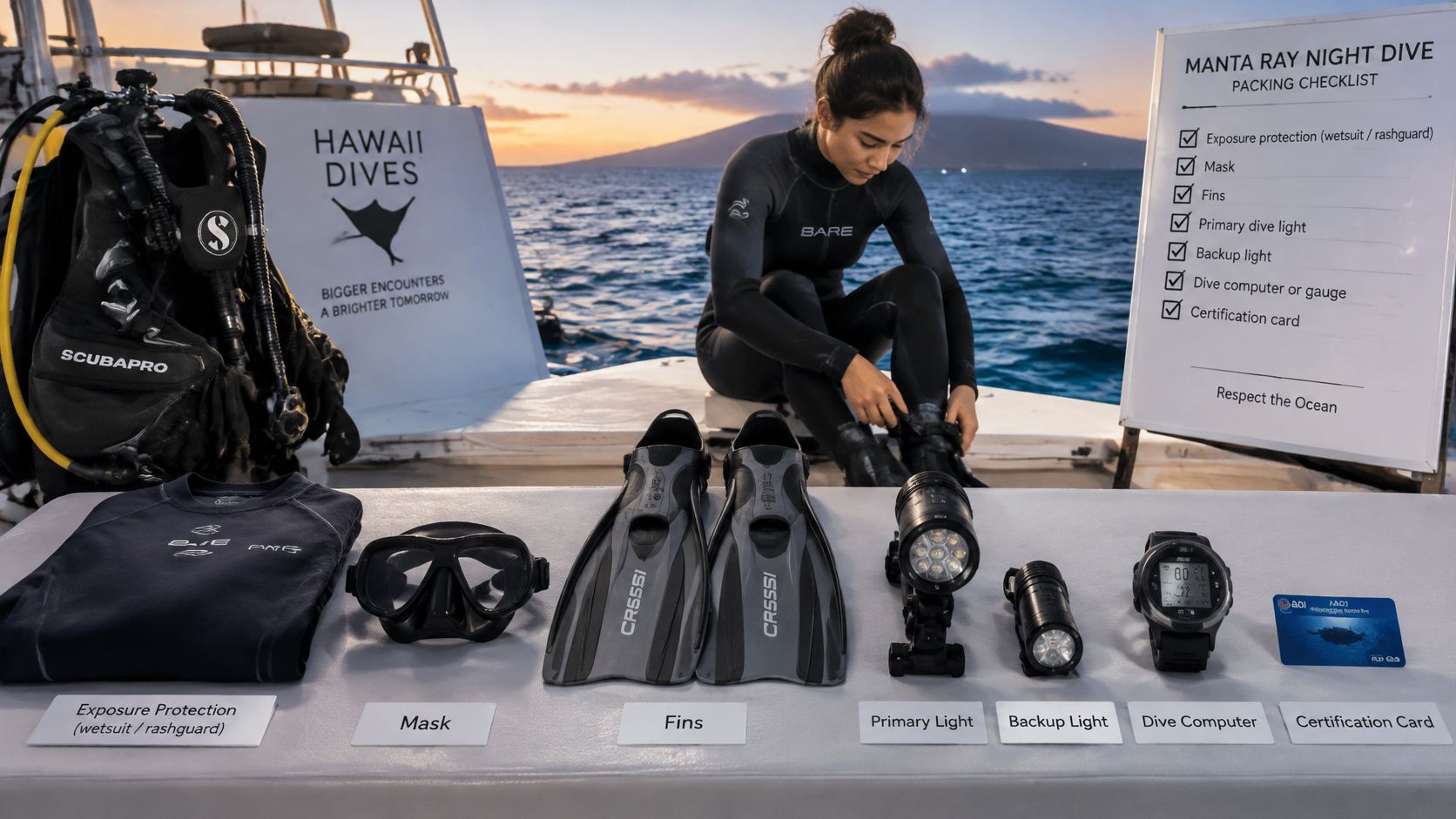
Pack for stillness, not for a swim tour. You'll be in one place, managing light, buoyancy, and loose gear while big animals turn overhead.
- Exposure protection: A wetsuit suited to Hawaiian water, checked for fit before departure
- Mask and fins: Your own if they fit well, with straps checked before dusk
- Lights: A primary dive light plus a small backup, both charged or with fresh batteries
- Computer or gauge: Easy to read in the dark without waving your light around
- Certification card and logbook: For divers, ready at check-in
- Dry bag and towel: For valuables, plus dry layers for the ride back
- Reef-safe sunscreen: Applied well before entry, not on the boat at the last minute
Light Direction and Body Position
Hawaiʻi guidance summarized in this Big Island manta ray night dive guide distinguishes the roles clearly. Divers should remain near the bottom and keep the open water column clear, while snorkelers should remain at the surface. Divers shine lights upward and snorkelers shine them downward, which concentrates plankton without forcing people into the manta's travel lane.
That split is the whole system. Divers build the light from below. Snorkelers add light from above. The middle stays open for the animal. Rise up to get level with a ray and you've put your body, bubbles, and gear in the part of the water the group was supposed to leave empty.
Practical rule: If your light, housing, or bubbles are in the turn, you're in the way, even if you never touch the animal.
For cameras, keep the housing low and close to your body. Use only the light you need, and don't aim bright strobes into a ray's path. Clip hoses, gauges, lights, and lanyards so nothing dangles when you shift your weight. Leave room for a ray to finish its turn. The page on a Kona manta night dive with photo package is a better option if you'd rather watch first and shoot second.
If a manta approaches unexpectedly, stay still and stay low. Tuck your hands in, let it pass, and don't chase the shot as it leaves. Low-impact behavior is more than a no-touch rule. It's group management, light placement, body position, and clear space working together.
Frequently Asked Questions About the Manta Night Dive
Do I Need a Certification to See the Mantas
No. You need an open-water card to dive, but snorkelers see the feeding from the surface with no certification.
Can I Touch a Manta Ray
No. Don't touch, chase, or block one. If a ray passes close, hold still, stay low, and let it choose the distance.
Are Manta Rays Dangerous at Night
They have no stinger. The bigger concerns are darkness, crowding, boats, and your own positioning, which is why supervision and spacing matter more than reassurance about the animal.
How Long Is the Tour
Plan for a full evening outing from boarding to return, including briefing, travel to the site, the in-water viewing window, and the trip back. Tours in the cited Hawaii marine tourism data generally ran 3 to 5 hours. Confirm the exact check-in and return times when you book.
Will I Always See Manta Rays
Wild animals aren't guaranteed. Feeding depends on plankton gathering around the lights, and rays can leave the beam at any point. Strong plankton and calm water give you the best chance of repeated passes.
Is the Dive Suitable for Beginners
It's listed for certified divers and snorkelers from beginner to advanced, and it's open to all certified divers. If you're newly certified and still busy managing basic skills in daylight, the snorkel option is the calmer choice. This overview of scuba diving at night explains the adjustment.
Can I Bring a Camera
Yes, if you can keep the housing out of the feeding lane and manage your lights without blinding the group. If the camera makes you restless, leave it on the boat for your first night.
Where Can I Read Other Guests' Experiences
Read the Google reviews in the booking section below and look for comments about briefings, group control, and how the crew handled the water, not just how many rays showed up.
Book Your Manta Ray Night Dive at Garden Eel Cove
Start with the fit check. If you hold an open-water card and you're comfortable controlling your buoyancy in the dark, book the dive. If you don't, book the snorkel and watch from the surface. Mixed groups don't need to split up for the evening just because only some people are certified.
Kona Honu Divers runs the manta trip at Garden Eel Cove, the go-to site for its protected location, good viewing area, healthier reef, and generally calmer conditions. You can review the 2-tank manta dive and snorkel trip for the manta-specific format, or browse the full range of Kona diving tours if you're building a longer dive schedule.
Your Booking Path
- Check your card: Confirm your certification card and recent experience level.
- Choose your position: Pick the dive from the bottom or the snorkel from the surface.
- Read guest reviews: Use the widget below and look for briefing and supervision details.
- Pick two possible dates: Popular trips often sell out weeks in advance, so keep a backup night.
- Pack from the checklist: Charge lights, check straps, and set aside dry layers.
- Confirm the details: Ask about briefing time and tour length before you pay.
Manta Night Dive at a Glance
| Detail | Manta night dive at Garden Eel Cove |
|---|---|
| Site | Garden Eel Cove (Makako Bay) |
| Typical length | 3 to 5 hours from boarding to return |
| Certification | Open-water card for the dive; none for the snorkel option |
| Departure time | Before dusk; confirm check-in time at booking |
Book the date first, while your preferred night is still open. Then go back to the gear checklist, charge your lights, and arrive ready to listen to the briefing. The calmer you are on entry, the better the night usually gets.
Kona Honu Divers offers guided manta ray night dives at protected Garden Eel Cove, with certified divers settled in a supervised viewing area and snorkelers watching the same feeding action from the surface. If you want a calm, well briefed night in the water with a crew that manages the lights, spacing, and exits for you, visit Kona Honu Divers and reserve your spot before your preferred date sells out.