
You're standing on a Kona dock at dusk, mask bag in one hand and a little nervous energy in the other. The boat crew is setting lights, the sky is fading fast, and everyone around you is asking the same quiet question, will the mantas show tonight? In Kona, that question has a better answer than most wild animal encounters, because local operators report a 90% success rate for sightings, with encounters lasting 45 to 60 minutes and mantas averaging more than 12 feet across the wings from the Kona manta dive guide.
That reliability is why manta ray diving Hawaii usually means Kona on the Big Island, not a vague island-wide activity. The experience is built around a resident population estimated at over 450 identifiable mantas, which helps explain why the area is often treated as the global center for manta ray night diving. It's also why this isn't just a lucky wildlife outing, it's a repeatable, structured encounter that still feels wild.
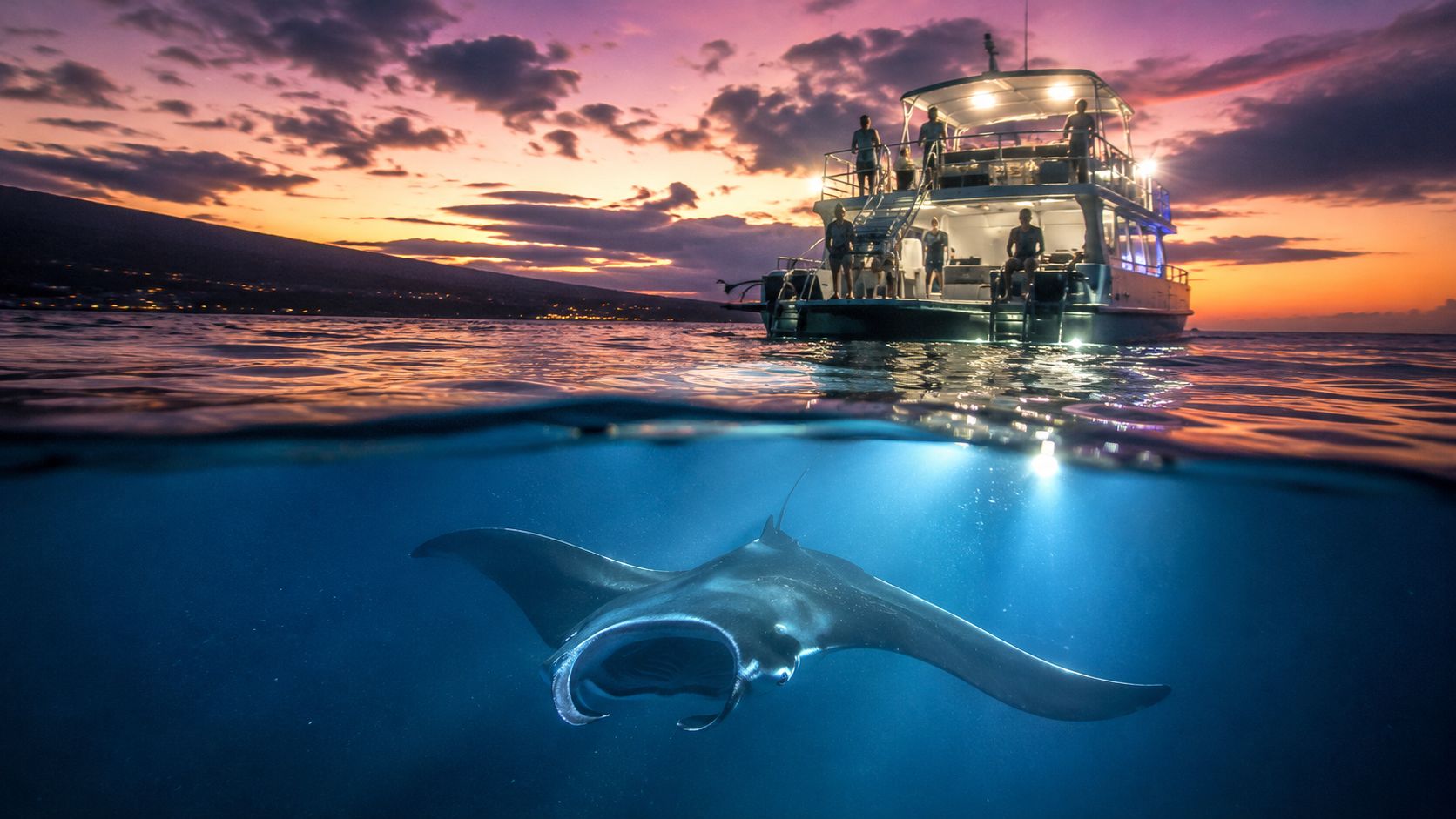
A lot of first-timers assume the mantas are chased into place. They aren't. Kona's night dive is famous because the setup is simple, shallow, and consistent, which is exactly why the encounter has become such a reliable wildlife tourism product. If you're trying to decide where to go, how the dive works, what to pack, and how policy changes may affect the future of the experience, the details below will make the whole night feel a lot less mysterious, and a lot more manageable. For a contrasting view on how the snorkel side compares, see this Kona manta snorkel guide.
Introduction to Manta Ray Diving in Hawaii
A Kona manta night dive often starts with a simple change in atmosphere. You board while it is still light, then the boat reaches the site after dark, and the water suddenly feels different because the lights become the main reference point. The mantas are not there to entertain anyone. They come in to feed, and that is why the encounter feels calm, respectful, and easy to remember.
Kona stands out because the experience is repeatable without feeling staged. The resident mantas are seen often enough that divers can plan with real expectations, and that consistency is a big reason Kona has become the center of manta ray diving Hawaii. The setting is also what makes the experience feel less like chasing wildlife and more like joining a pattern that the ocean already follows. For a contrasting view on how the snorkel side compares, see this Kona manta snorkel guide.
Why Kona feels different from most wildlife dives
Many wildlife outings depend on luck, changing weather, and animals moving through an area by chance. Kona is different because the manta sites are known feeding locations, the water is shallow enough for operators to keep the encounter steady, and the lights draw plankton into a predictable column. That setup gives new divers time to settle their breathing and get comfortable instead of waiting for a brief, distant sighting.
The ocean here can feel dramatic, but the dive itself is controlled in a very practical way. You are not roaming a reef and hoping to stumble into the right animal at the right moment. You are joining a nightly gathering that behaves more like a familiar classroom exercise than a random search, with light, plankton, and stillness working together to shape the encounter. That is also why Kona Honu Divers' manta dive overview is so useful for first-time visitors who want to understand the experience before they get on the boat.
How Manta Ray Night Dives Work
The easiest way to understand the Kona manta dive is to think of the lights as a dinner bell. The light doesn't feed the mantas directly, it attracts plankton, and the plankton attracts the rays. That's why the setup feels more like staging a shared meal than like “going to find” an animal in open water.
The passive aggregation method
Certified divers typically settle at roughly 35 feet while lights create a plankton-rich feeding column above, making it a shallow, passive aggregation dive as described in this dive explanation. The point is to stay still, control buoyancy, and let the mantas come into the light zone on their own. That stillness matters because movement can scatter the plankton and make the experience less predictable for everyone in the water.
Practical rule: If you can hold position without drifting, flapping, or reaching, you're doing the dive the right way.
Many new divers overthink the experience. They imagine they need to “do” something to earn the encounter, but the opposite is true. The best view often comes from becoming the least disruptive object in the scene, a quiet observer in a dark theater where the mantle of light does the work.
What the lights are actually doing
Underwater lights create a bright vertical column, almost like a glowing hallway in the dark. Plankton gathers in that beam, the mantas follow the food, and the result is a smooth, repeated feeding pattern rather than a chase. For divers, that means the best move is simple, stay low, stay calm, and keep your eyes trained upward as the shapes begin to move through the light.
For a snorkel-focused version of the same basic idea, see the manta snorkel experience page. The mechanics differ a little at the surface, but the underlying principle stays the same, lights bring the plankton, and the plankton brings the mantas.
Best Locations and Seasons for Manta Ray Diving in Hawaii
A Kona manta night dive works best when you choose the right site for the conditions in front of you, not the site with the biggest name. On the Big Island, the main viewing areas are Keauhou Bay, Garden Eel Cove near the airport, and the Kohala coast resorts as outlined by Kona Honu Divers. That matters because many visitors hear “Hawaii manta diving” and assume any shoreline will do, yet the reliable encounters are concentrated in a few established night-viewing zones.
Where each site fits
Manta Village in Keauhou Bay is often the first site people hear about. It is one of the original viewing areas and still serves as a familiar reference point for the Kona night dive, much like a main classroom that keeps getting used because it works.
Manta Heaven, near Garden Eel Cove by the airport, is the other primary location. Many divers and snorkelers prefer it because the site is shallow and set up for viewing, so you can focus on holding position and watching the mantas rather than trying to find them.
The Kohala coast, with its resort area sites, completes the Big Island's main manta corridor. Together, these locations create the sense that Kona offers a repeatable night dive experience instead of a one-off event that depends on luck. For many travelers, that predictability is part of the appeal, since the island behaves less like a scattered collection of beaches and more like a few known gathering places after dark.
Why Garden Eel Cove often gets extra attention
Garden Eel Cove often gets extra attention because its protected setting can make the viewing area feel cleaner and easier to read. The reef structure and water conditions may give you a more open look at the water column, which helps if you want to watch the mantas move through the light without visual clutter. If you are deciding between sites, that sheltered feel is a practical reason many guests gravitate toward it.
A good manta site is the one that lets you see the light column clearly and stay comfortable long enough to enjoy the encounter.
Timing without overcomplicating it
The experience is generally available year-round, with peak viewing often described as May through September or April through October depending on the source as summarized in the Kona snorkel guide. The useful question is not which single night is perfect, but which season matches your comfort with dark water, boat motion, and the kind of conditions you want on a night dive. The mantas are present across the calendar, so your own comfort, site choice, and preparation matter more than chasing a narrow window.
Upcoming Kona regulations and conservation choices may also shape that decision. If rules tighten around site use, group size, or viewing practices, the safest plan is to book with an operator that explains current procedures clearly and respects the rules in the water. That keeps the experience steady for you and reduces pressure on the animals, which is the trade-off that matters most when more people want the same small viewing area.
Packing also makes a difference, especially because night conditions can change faster than a daytime dive briefing suggests. A light layer for the boat ride, a towel that dries quickly, and a way to keep your mask and hands comfortable can make the difference between an easy wait on deck and a cold, distracted start to the dive. Kona's manta sites reward divers who show up prepared for the dark, the breeze, and the possibility that the water feels cooler than it looked on shore.
Safety and Certification Requirements
A manta night dive feels dramatic, but the safety framework is straightforward. You don't need to be a technical diver, you need to be comfortable following instructions, holding position, and staying calm in low light. That's why operators emphasize certification, briefings, and buoyancy control before anyone goes in.
What to have in place before the trip
- Certification level: Divers should have the certification required by the operator, and many guests treat Open Water as the baseline for planning. If you're still building confidence, review your training first through this Open Water certification resource.
- Recent in-water comfort: If it's been a while since your last dive, do a refresher first. Night conditions are not the place to relearn your trim.
- Buoyancy skills: You need to hover without dropping onto the bottom or rising into the light column.
- Buddy awareness: Stay close enough to communicate, but not so close that you bump gear in the dark.
- Night-dive composure: It helps if you're already comfortable with darkness, flashlights, and limited reference points.
The reason these skills matter is simple. A manta dive isn't about swimming around the site, it's about becoming a stable observer in a controlled viewing area. The calmer you are, the easier it is for the crew to keep everyone safe and the easier it is for the mantas to move naturally through the scene.
Seasickness and pre-dive comfort
If you're prone to motion sensitivity, deal with it early. That means taking prevention before the boat leaves or before your stomach turns, not after. Popular options include the Ship-EEZ Seasickness Patch, Dramamine pills, Bonine pills, Sea Band wristbands, and ginger chews.
If you know you're motion-sensitive, don't treat the boat ride like a test you can power through. Prepare first, then enjoy the dive with a clear head.
A calm pre-dive routine is more beneficial for your night than often understood. Eat lightly, hydrate, and keep your gear organized so you're not fumbling at the last minute. The goal is to arrive in the water relaxed enough to notice the mantas, not distracted by avoidable discomfort.
Essential Gear and Packing Checklist
Night diving in Kona is less about bringing a mountain of gear and more about bringing the right pieces. Light, fit, and comfort matter more than fancy branding. If your mask leaks or your light fails, the whole evening gets harder fast, so this is the section where practical choices pay off.
What should be in your bag
- Primary dive light: Bring one you already trust. If your beam is weak or the switch is awkward, you'll notice it the moment the water goes dark.
- Backup light: A second light isn't extra, it's insurance. Night dives expose every gear weakness.
- Mask that seals well: A foggy or leaky mask is irritating on a daytime reef, and far worse when you're trying to track moving shadows.
- Appropriate exposure protection: Kona nights can feel cooler once you're stationary on the surface or on the bottom, so choose a suit that keeps you comfortable.
- Dive computer: A lightweight, easy-to-read unit helps you stay oriented without thinking about it.
- Spare batteries and dry storage: Night dives reward the people who packed a backup plan.
For beginners building their kit, this gear guide from Kona Honu Divers is a useful place to compare basics before you spend money on equipment you may not use often.
Small packing habits that make a big difference
Keep your gear grouped by function. Lights with lights, batteries with batteries, mask in a separate dry pouch. That sounds obvious until you're on a rocking boat and someone asks for a spare O-ring or a fresh battery while the sun is going down.
Bring dry clothes for after the dive, and wear something easy to change out of. A warm layer for the boat ride back is smart too, because the night air can feel cooler once you're out of the water. If you're carrying a camera, give it a dedicated place in your bag so sand doesn't end up in the wrong compartment.
One quick pre-boat check
Simple habit: Before you board, test every light, check every strap, and confirm every battery is where you expect it to be.
That one-minute check saves a surprising amount of frustration. It also keeps you focused on the actual experience instead of troubleshooting gear when you should be settling in for the dive.
Conservation and Responsible Manta Diving
Kona's manta nights still work because the encounter stays passive. You are there to observe, not to direct the animals, and that difference matters. Manta rays rely on a protective mucus layer on their skin, so touching them can damage that coating. The “no contact” rule is not a formality, it is basic animal care.
A good way to picture it is simple, you are a guest at a feeding station, not the host. The animals decide how close they come and how long they stay, and your job is to keep the scene calm enough for them to keep returning.
Why policy changes matter to your trip
Proposed West Hawaiʻi rules would cap commercial access at 24 boats and 60 passengers per site per day, require one guide per eight customers, and define viewing hours from 4 PM to 4 AM according to the proposed regulations overview. For visitors, that means the future of the experience may be shaped by crowd control, time limits, and site management, not just weather and demand.
That matters because the most popular viewing areas sit inside a concentrated stretch of the Kona coast. When a few sites carry most of the traffic, regulation affects more than paperwork. It can change how crowded the water feels, how long your group stays in place, and how much room operators have to manage the night responsibly. The practical result is that conservation policy becomes part of the experience you feel on the boat.
The trade-off is straightforward. Tighter rules can protect the animals and reduce pressure at busy sites, but they can also change how flexible a trip feels for visitors and crew. That is why the conservation conversation is not separate from your dive, it shapes the conditions around it.
How to choose responsibly
Choose operators who explain the rules clearly, keep groups organized, and treat the mantas as wildlife, not a photo prop. That does not make the dive sterile. It keeps the encounter grounded in behavior that helps the animals keep coming back.
A good operator also knows when to hold position and when to back off. The best nights are the ones where the crew creates enough structure for everyone to see the mantas without making the site feel crowded or noisy. When someone talks about “the show,” remember the show only works if the animals stay comfortable enough to return.
If you are comparing choices for a future trip, Kona Honu Divers is one example of a local operator to review alongside others. Look at how clearly each company explains wildlife etiquette, light placement, and group management before you book.
Booking Tips with Kona Honu Divers
Booking a manta trip goes smoother when you think like a diver, not like a last-minute tourist. Start by choosing whether you want a scuba dive, a snorkel option, or a trip that combines both styles. Then check how the boat is organized, where you meet, and what's included so you're not trying to solve logistics the night before departure.
A simple booking flow
- Choose the right trip style. If you're certified and want the bottom-up view, book a dive. If you want to float at the surface and still see the action, pick snorkel.
- Check your dates early. Kona's manta nights are popular, especially when travel demand picks up, so don't assume you can walk in and grab a seat.
- Confirm what's included. Ask about gear, lights, and any rental items before you lock the reservation.
- Read the briefing notes. Good operators tell you how to arrive, what to wear, and what the crew expects once you're on board.
How to think about the boat side
The boat matters because the trip doesn't begin in the water. It begins the moment you step on deck, stow your bag, and realize whether the crew is organized enough to make the night feel easy. A calm, well-run boat reduces stress before you even reach the site.
Booking mindset: The right trip isn't just the one with a manta photo. It's the one whose logistics make you relaxed enough to enjoy the dive.
If you're weighing options, pay attention to whether the operator gives clear guidance on meeting points, gear handling, and post-dive comfort. Those small details tell you a lot about how the rest of the evening will feel. In Kona, a good booking process is part of the dive experience, not separate from it.
Frequently Asked Questions
Can kids do a manta night snorkel?
Usually, yes, if they meet the operator's age rules and are comfortable floating at night. For diving, the age and certification requirements are stricter, so check that before you plan a family trip.
What if I lose my light underwater?
Stay calm, signal your buddy or guide, and do not start swimming around blindly. The dive is designed around stable positions, so the crew can help you recover without turning the site into a chase.
How cold does it feel at night?
The water can feel chillier once you stop moving and wait for the mantas, even if the surface looked warm earlier. A good suit and a dry layer for the boat ride back make a big difference.
Will the mantas always show up?
No wild animal encounter is guaranteed, but Kona is unusually reliable. That's what makes the area so famous, and why people plan around the same viewing sites again and again.
If you're ready to turn all this into an actual night on the water, book your Kona manta experience with Kona Honu Divers and choose the trip style that fits your certification, comfort level, and travel dates.