
You're on the boat before sunset, gear checked, wetsuit on, watching the Kona coast darken while the crew explains what happens next. Most first-time divers feel a mix of nerves and anticipation, because this isn't a normal reef dive. It's manta ray diving Hawaii at night, and the reward is one of the most unusual wildlife encounters you can have underwater, if you understand how the site works and how to behave once you're in the water.
The magic starts with simple mechanics, not luck. Lights draw plankton into the water column, manta rays follow the food, and divers settle into position to watch the feeding without interfering with it. That combination is why Kona has become so closely associated with manta encounters, and why local site choice, buoyancy, and etiquette matter as much as the sighting itself.
What To Expect During Your First Manta Ray Night Dive
The first shock is how quickly the daylight disappears. Once you descend, the ocean feels black and quiet, and the beam from your primary light becomes the only thing that looks familiar. Then the bottom appears, a pale sandy stage beneath a column of light, and the entire dive changes from nervous anticipation to focused watching.
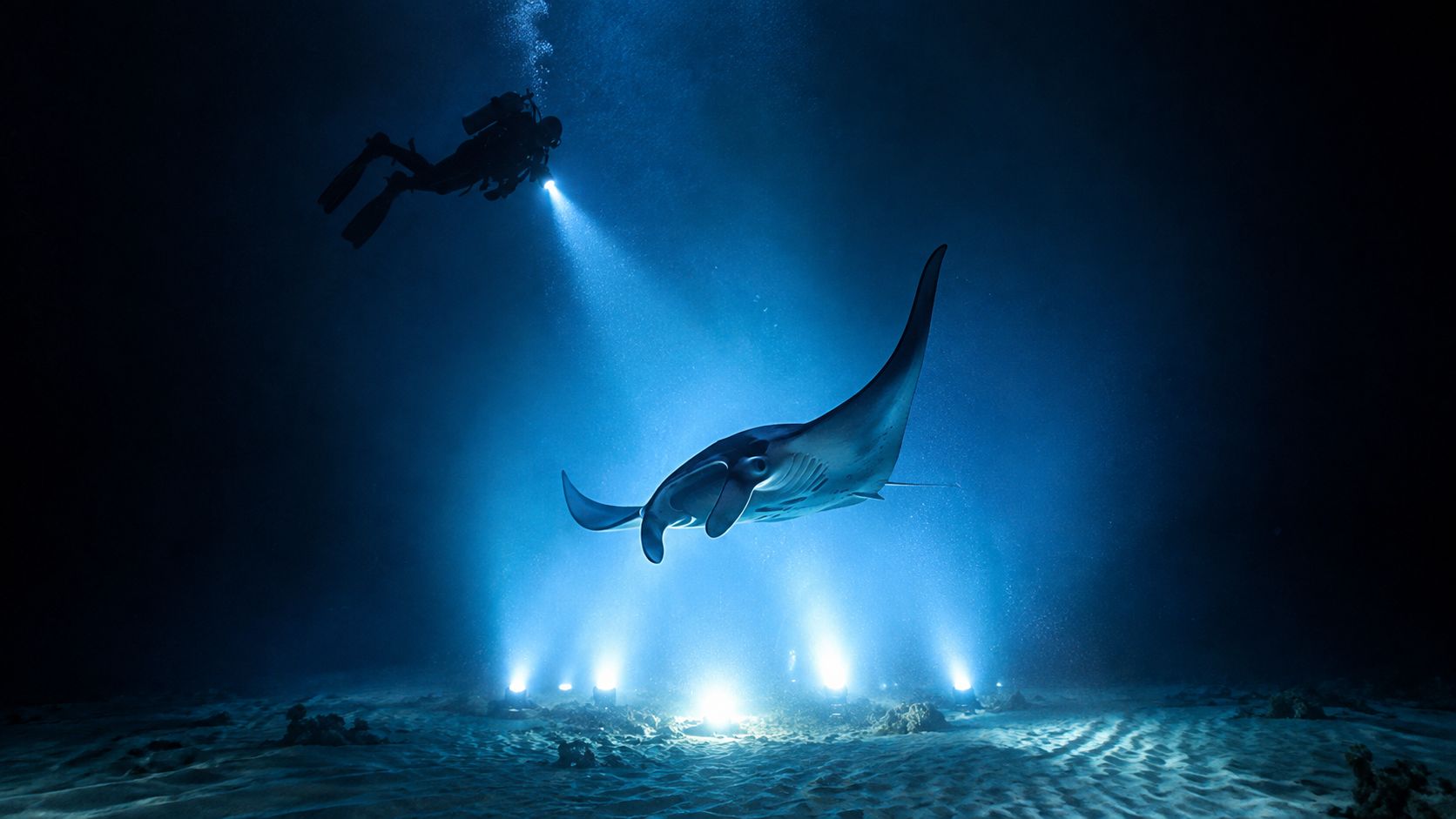
Most tours begin with a sunset boat ride, a briefing, and a calm entry into the water. Divers usually settle on the sand and stay put while the guides manage the lights and spacing, which keeps the experience orderly even when the mantas arrive close overhead. If you're looking for a straightforward overview of the experience from a dedicated Kona dive page, this Big Island manta night dive guide is a useful starting point.
The rhythm of the encounter
The encounter doesn't feel rushed once it starts. You'll see one manta, then another, and sometimes they loop through the same illuminated corridor again and again as they feed. The movement is graceful, but it's also purposeful, which is part of what makes the scene so compelling.
Stay low, stay still, and let the rays do the moving.
For many first-timers, the surprise isn't the size of the animal, it's how calm the whole scene feels once they stop trying to anticipate it. The boat ride home often feels very different from the one out, because by then the dive has already done the work of easing people into the experience. What looked intimidating from the deck becomes something organized, readable, and strangely peaceful once you're under the lights.
How Kona Manta Ray Dives Actually Work
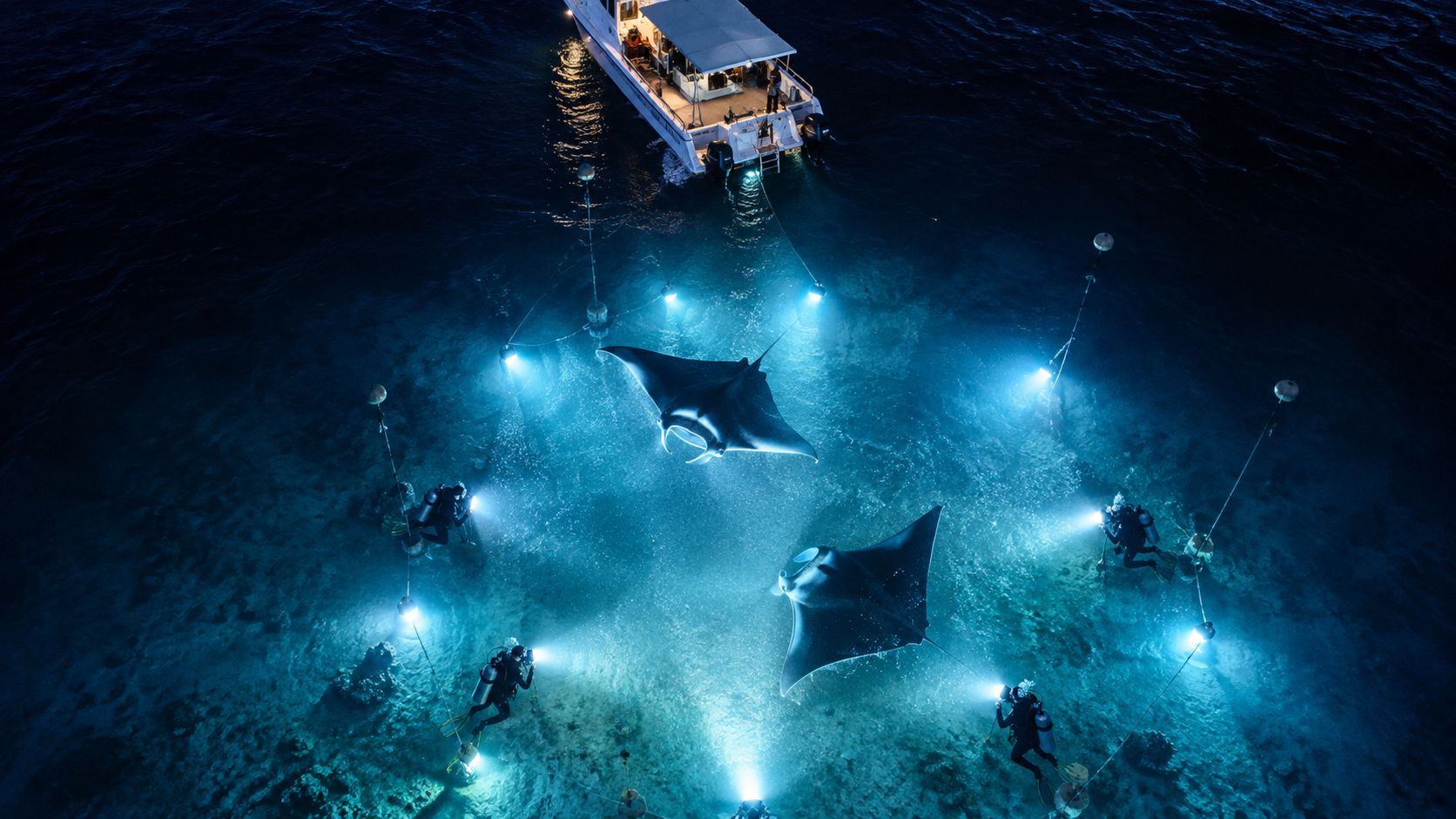
Kona's night manta dive is built on a light-mediated feeding system. Underwater lights concentrate microscopic zooplankton into a visible feeding column, and reef manta rays follow that food source, they're not just attracted to divers. That detail matters because it explains why the encounter can be both predictable and natural at the same time.
Feeding behavior explains the spectacle
The rays use their cephalic fins to funnel plankton-rich water into their mouths, while their gill-filter structures trap the food and let the water pass through. When you see a manta barrel roll or loop repeatedly in the light, that isn't performance, it's efficient feeding. The animal is staying inside the densest part of the plankton patch so it can collect more prey with less effort.
A 2025 University of Hawaiʻi study helps explain why this works so well in Kona. It analyzed 13 years of community-sourced observations from 2010 to 2022 and recorded more than 23,000 sightings involving 167 individually identified reef manta rays. It also found that Garden Eel Cove consistently supported larger aggregations than Keauhou, and that seasonal changes in aggregation size tracked zooplankton density, which points to prey availability as the main driver of manta presence University of Hawaiʻi manta study.
What that means for divers
For divers, the takeaway is simple. You're not there to chase the mantas or try to steer them into view, because the animals are already coming to the food source. Your role is to stay outside the feeding corridor, keep your position stable, and let the manta pass overhead when it chooses to.
That ecological clarity is why this dive feels so reliable. The behavior is driven by food concentration, not guesswork, and the best operators build the entire viewing setup around that fact. If you want to compare the site-specific diving format that supports this style of encounter, the Kona manta night dive page is worth a look.
Comparing Garden Eel Cove And Keauhou Viewing Sites
Kona has two principal manta-viewing locations, and they do not feel identical in the water. Garden Eel Cove, also called Manta Heaven, sits at approximately 19.736° N, 156.054° W, while Manta Village at Keauhou Bay sits at approximately 19.640° N, 155.997° W NOAA-hosted study on Kona manta sites. Both sites can produce excellent encounters, but Garden Eel Cove is the stronger choice for a dive tour because its geography gives it a more protected setting.
Why the cove changes the experience
Garden Eel Cove is a naturally sheltered bay north of Kona International Airport, while Keauhou Bay is more exposed to open-ocean swell Kona Honu Divers comparison of Kona manta sites. That difference matters in practical terms, because calmer water makes it easier to hold position on the bottom, keep a clear view upward, and avoid the little body adjustments that can disturb your trim. A steadier sandy viewing area also helps the dive feel less busy and more controlled.
At both sites, operators shine lights from the surface and from the seafloor at roughly 10 meters deep, which concentrates zooplankton and draws the mantas in for filter feeding NOAA-hosted study on Kona manta sites. The dive itself is usually passive, with divers sitting on the sand and watching the animals overhead rather than swimming after them.
Site comparison
| Site Name | Location | Protection Level | Bottom Type | Typical Conditions |
|---|---|---|---|---|
| Garden Eel Cove | North of Kona International Airport | More sheltered | Sandy amphitheater with scattered coral and lava features | Calmer, steadier, easier to hold position |
| Manta Village | Keauhou Bay | More exposed | Coastal viewing area with more open-ocean influence | Can be livelier and more swell-affected |
The NOAA-hosted study also notes that mantas are observed almost every night at these sites, which is why both remain such dependable choices for nocturnal wildlife viewing NOAA-hosted study on Kona manta sites. For most divers, though, the protected setting at Garden Eel Cove is easier, more comfortable, and friendlier to reef preservation.
Certification And Gear Requirements For Night Diving
Night diving asks for a little more preparation than a daytime reef trip. A standard Open Water certification is the normal baseline, and if you're planning a guided night dive, the difference between feeling comfortable and feeling overloaded usually comes down to buoyancy, lighting, and how well you follow the briefing. If you're still working on your certification, this Open Water certification page is the natural place to start.
What you need in the water
You should expect to carry a primary light and a backup light, maintain buddy contact, and stay inside the illuminated viewing area. A field guide for Hawaii's manta-viewing areas places divers at roughly 30 to 35 feet below the surface, although that can vary with sea state and where plankton accumulates Manta viewing guide for Hawaii. The practical goal is neutral buoyancy before the mantas arrive, because a steady body position keeps the vertical water column open for the animals.
The best manta dive is the one where you forget about moving and remember how to hover.
A few habits make the dive much easier. Keep your fins off the bottom, streamline anything loose on your kit, and listen carefully when the guide points out where to settle. Since plankton patches shift with currents, guides may reposition the group or adjust the viewing area, and that's normal, not a sign that anything's wrong.
Comfort and preparation
Thermal comfort matters more than many first-timers expect, because being still in the dark feels cooler than a daytime swim. Good buoyancy control, conservative gas planning, and simple gear are more useful than trying to do anything fancy underwater. The dive becomes much more enjoyable when you treat it like a stationary wildlife observation rather than a chase.
Safety Protocols And Underwater Etiquette
The best manta dives feel effortless because everyone follows the same quiet rules. Those rules exist for a reason, since the local management discussion notes that research has reported possible impacts from human encounters, including stress, disease, injury, altered feeding behavior, and habituation Hawaiʻi County safety and management document. The same source also notes that a 2025 study reported broadly stable aggregations despite increased tourism, which is why local behavior matters more than abstract arguments.
What respectful diving looks like
Keep your distance, keep your hands to yourself, and stay out of the mantas' path. You should never touch, chase, or block a ray, even when it passes very close, because the encounter works only when the animal feels free to continue feeding naturally. Good buoyancy also matters, since fin wash near the bottom can disturb the water and the organisms in it.
Here are the habits that matter most:
- Hold position calmly: Stay where the crew places you, and don't drift into the feeding lane.
- Avoid contact completely: Manta skin has a protective layer that should stay untouched.
- Use controlled finning: Quick kicks stir up silt and can change the way the animal approaches.
- Follow guide signals immediately: The crew can see spacing and current patterns better than guests can.
- Support observation, not interference: If you're taking photos, keep the camera profile low and the movement minimal.
For a practical code of conduct, this responsible diver etiquette guide matches the kind of behavior that keeps these sites usable over time. It's also the easiest way to remember that the goal isn't to impress the mantas, it's to let them feed undisturbed while you observe.
Underwater Photography Tips For Manta Encounters
Manta photography works best when you stop trying to chase a perfect shot and start working with the dive geometry. The rays usually approach from below and behind, which means the most useful place for a camera is slightly off-axis from the main light column. That angle gives you a cleaner view of the animal without forcing you into its feeding line.
Simple framing choices that work
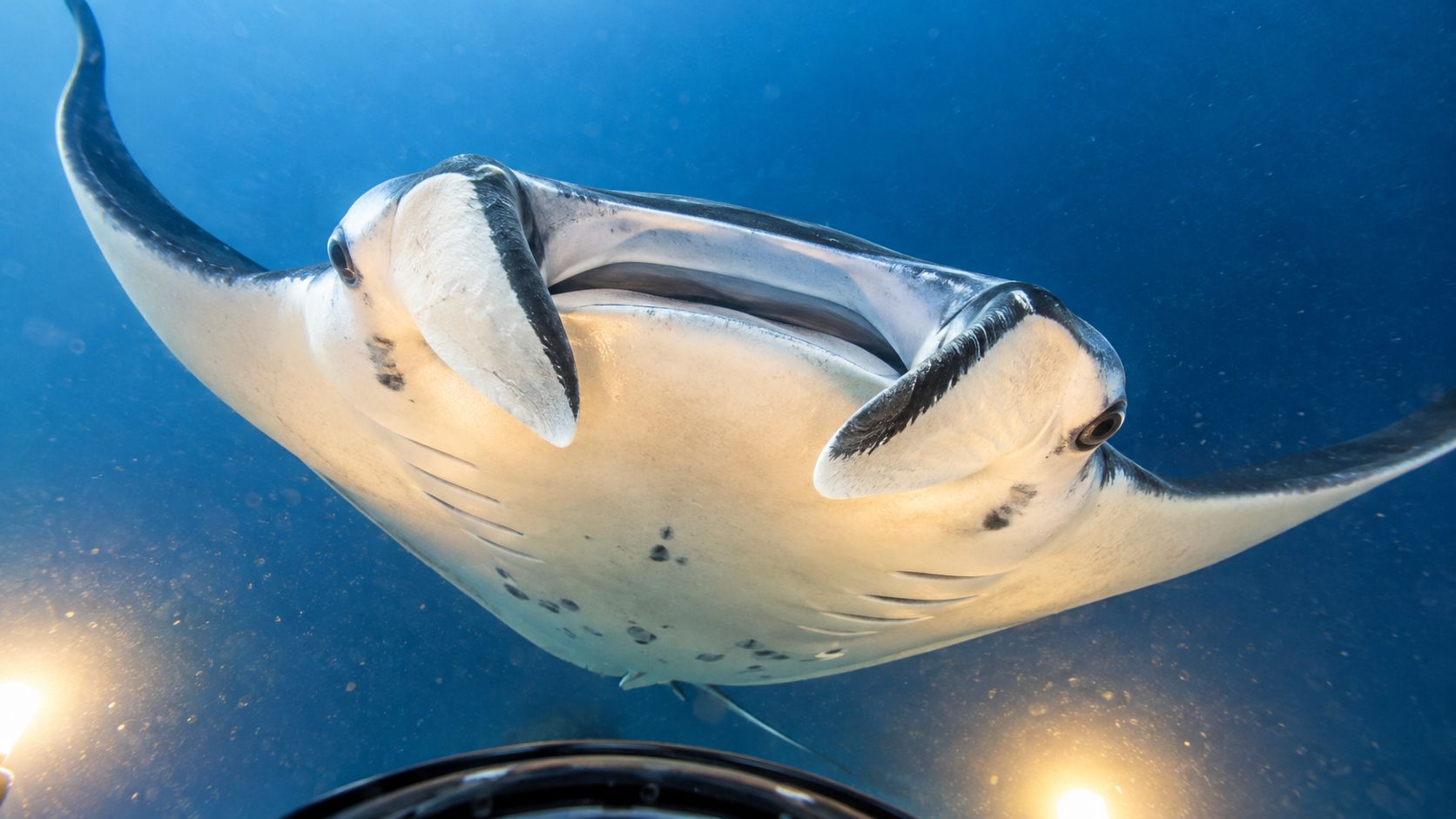
A wide-angle lens is usually the most useful option because it captures the full body shape and the sense of scale. The underside of the manta becomes especially visible during a barrel roll, so those moments often give you the strongest composition and the clearest pattern detail. Direct strobe light can startle animals, so softer ambient light or diffused illumination is usually the safer choice.
Good manta photos look calm because the diver stayed calm.
Keep your camera setup compact so it doesn't snag, and practice holding position before the rays arrive. If you're switching between shooting and watching, use simple hand signals with your buddy so you don't spend the dive managing equipment instead of enjoying the encounter. The strongest images usually come from patience, not from movement.
Choosing Operators And Booking Your Dive Experience
Operator choice changes the whole night. Some companies focus on crowd size or speed, while others build the trip around protected sites, stable viewing, and clear underwater briefings. If you're comparing options for a manta night dive in Kona, look closely at where the boat goes, how the crew manages spacing, and how much time they spend on diver behavior before entry.
Kona Honu Divers is one option in the local market, and it offers guided manta night dives alongside other Kona diving experiences. The useful thing to check is whether the operator favors Garden Eel Cove departures when conditions allow, since that protected setting gives divers calmer water and a better view of the feeding area. If you're booking for a first night dive, this matters more than glossy marketing language.
What to look for before you reserve
- Site selection: Ask whether the trip is planned for a sheltered site or a more exposed one.
- Briefing quality: A strong operator explains buoyancy, spacing, and how to stay out of the feeding corridor.
- Gear handling: Well-maintained lights, wetsuits, and rental equipment reduce avoidable problems.
- Group management: Smaller, organized groups are easier to place on the bottom without crowding.
- Photo support: If you're bringing a camera, check that the crew is comfortable helping with positioning.
If you want a direct booking step, use the red button below to check current availability.
FAQ – Common Questions About Manta Ray Diving In Hawaii
Is manta ray diving dangerous? The animals themselves are not the problem. The main risks are the same ones you face on any night dive, like buoyancy control, staying with your buddy, and following the briefings exactly as given.
What is the best time of year to go? Kona's manta encounters happen almost every night year-round at the main viewing sites, so you don't need to chase a narrow season to have a good trip NOAA-hosted study on Kona manta sites. Conditions can still change with weather and plankton movement, so local guidance matters more than the calendar.
Do I need to be an advanced diver? No. An Open Water certification is usually enough, as long as you're comfortable descending, hovering, and following instructions in the dark.
Can beginners really do this? Yes, because the dive is more about being still and observant than about covering distance. That's one reason this experience feels accessible even to divers who don't have much night diving background.
How do I know which site is better? If you want the calmer, more protected setup, Garden Eel Cove is the clearer choice. The exposed conditions at Keauhou can still produce great sightings, but the sheltered bay is easier for most visitors to manage comfortably.
What should I remember most underwater? Don't chase, don't touch, and don't drift into the feeding lane. If you stay calm and let the mantas come to the light, the experience usually feels much bigger than any checklist of dive skills.
Kona Honu Divers offers guided manta ray night dives in Kona, along with the kind of site knowledge and dive structure that help first-timers feel settled underwater. If you're planning a trip and want a clearer look at what's available, visit Kona Honu Divers and choose the manta experience that fits your comfort level and travel dates.