
You've searched “Kona diving company Kailua Kona HI”, compared glossy boat photos, and still can't tell which operator will make the day safer rather than just cheaper. That's the right concern. Kona rewards divers who choose a crew for its judgment, briefing quality, group management, and respect for wildlife, not for the flashiest listing.
A good Kona dive starts before the boat leaves the harbor. The crew checks the conditions, fits your equipment properly, explains the plan in plain language, and changes the plan when the ocean demands it. That's the standard I'd use for any operator on the Big Island.
Why Kona Honu Divers Leads as a Kona Diving Company in Kailua Kona HI
The first useful test happens on the dock. Watch how the crew handles a guest who's nervous, a photographer carrying delicate equipment, or a family member who'll snorkel while others dive. Serious operators don't rush those conversations. They confirm certification, experience, medical considerations, weighting, and expectations before anyone enters the water.
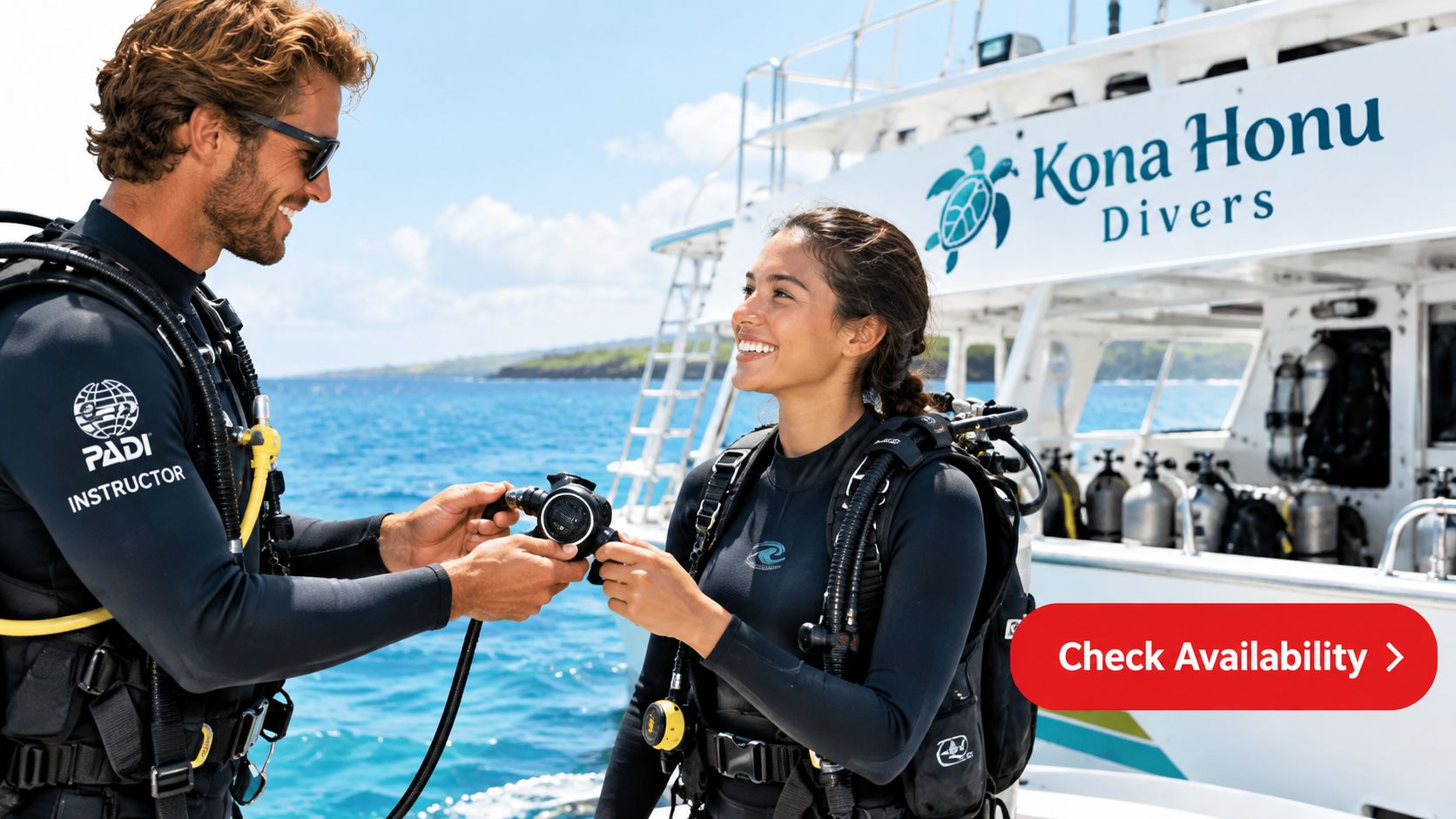
Kona Honu Divers is a practical example of that operating model. Its published offering covers guided scuba trips, certification and refresher courses, snorkeling, equipment rentals, private charters, and repair services. The company also describes a staff with over 200 years of combined experience, a figure supplied by the operator rather than an independent safety statistic. That distinction matters. Experience is useful, but the question is how consistently a crew turns it into careful briefings, equipment checks, and conservative decisions.
Read the operation, not just the homepage
A highly rated shop should be able to answer specific questions without evasive sales language:
- Group management: How many guests will be assigned to each guide, and how are divers positioned during a wildlife encounter?
- Condition decisions: What happens if swell, current, visibility, or wind makes the planned site unsuitable?
- Equipment preparation: How are rental regulators, buoyancy systems, exposure protection, and cylinders inspected and fitted?
- Mixed groups: Can certified divers, snorkelers, photographers, and less experienced family members participate without forcing one group into an unsuitable itinerary?
Kailua Kona gives operators access to a broad range of leeward sites, but access doesn't erase the Pacific. Conditions can change along the coast, and an experienced captain knows when a site is appropriate for a beginner, when it suits a confident advanced diver, and when postponement is the correct call.
Captain's rule: The safest operator is the one willing to change the plan, shorten a dive, or cancel when the conditions no longer support the group.
You can review the company's background and operating focus on the Kona Honu Divers about page. Don't judge a shop only by boat amenities or promotional language. Ask whether the crew listens, whether the briefing is specific, and whether the plan matches your actual ability.
Kona Dive Tours and Snorkel Experiences Explained
Start with your objective, not the tour name. A certified diver wanting reef structure and fish photography needs a different day from a strong diver looking for exposed pinnacles. A family may need a shared boat that accommodates snorkeling and scuba, while a wildlife enthusiast may prioritize a carefully run night encounter.
The regular Kona diving tours give you a useful starting point, but match the trip to your ability and comfort in the water.
Choose by experience and exposure
A two-tank morning dive is the sensible default for certified divers who want a broad introduction to Kona's reefs. You'll typically visit more than one site, which creates opportunities to see lava formations, reef fish, turtles, and changing underwater terrain without committing to the demands of an advanced itinerary.
The advanced two-tank trip belongs to divers who are comfortable with deeper water, current changes, more complex navigation, or exposed sites. It isn't a badge of honor for someone who's recently returned to diving. If your buoyancy, gas planning, or surface-marker skills feel rusty, take a refresher first.
The manta ray night dive is a focused wildlife experience. Divers remain low on the bottom while mantas use the open water above them. For this trip, I favor Garden Eel Cove, also known as Manta Heaven, because its protected viewing area and richer reef setting can provide a more comfortable platform for observation than an exposed, crowded alternative. The captain still makes the final site decision based on conditions.
The blackwater dive is not a standard reef night dive. It takes place miles offshore, with divers suspended from a roughly 60-foot tether above water deeper than 4,000 feet (Big Island Guide describes the blackwater operating environment). The aim is to observe pelagic animals that migrate vertically after dark, including larval fish, invertebrates, siphonophores, and cephalopods. It's intended for confident certified divers with advanced experience and a minimum age of 18. Read the Kona blackwater dive details carefully before booking.
Snorkeling trips suit non-divers and families, but a snorkeler still needs to be comfortable in open water, around boat traffic, and with the crew's flotation and boarding procedures. Private charters make sense when your group has mixed abilities, a photographer needs more flexibility, or you want the captain to build the day around a specific goal.
| Tour Type | Best For | Marine Focus |
|---|---|---|
| Two-tank morning dive | Certified divers seeking varied reef sites | Lava formations, reef fish, turtles, and coastal habitats |
| Advanced two-tank trip | Experienced divers comfortable with greater exposure | Pinnacles, lava tubes, deeper structure, and larger marine encounters |
| Manta ray night dive | Certified divers seeking a guided wildlife encounter | Reef manta rays feeding above the viewing area |
| Blackwater night dive | Confident certified divers with advanced experience | Pelagic animals migrating through the open water column |
| Snorkel experience | Families, swimmers, and non-divers | Turtles, tropical fish, and shallow coastal life |
| Private charter | Groups needing a customized pace or itinerary | A tailored mix of reef, wildlife, and snorkel locations |
If you want stronger current skills, deeper planning, or more demanding site profiles, review the advanced two-tank trip rather than assuming a standard morning trip will provide the same challenge.
Manta Ray Night Dives and Conservation Reality in Kona
You drop into dark water, settle into position, and wait for a giant shape to sweep through the lights overhead. That moment is why people book the manta night dive. What matters more is how the operator runs it. In Kona, a memorable manta dive comes from disciplined boat handling, controlled group positioning, and a crew that treats the animals like wildlife, not a prop.
Kona's manta reputation rests on repeated, documented encounters. A federal review recorded 1,494 manta encounters along the Kona coast and identified 290 unique individuals through photographic identification. The same review also summarized long-term observations at Manta Heaven and Manta Village, including 25,444 sightings involving 118 individual manta rays, with 19,841 observations at Manta Heaven and 5,603 at Manta Village (federal manta-ray review). Researchers also reported 66 males and 52 females, a 1.27-to-1 ratio that was not statistically different from an even sex ratio. They found 39 animals appearing on more than 10% of study nights, including 15 seen on more than 25% of nights and one detected on more than 56% of nights.
Why the animals deserve space
These are reef manta rays, Mobula alfredi. Hawaiʻi's Department of Land and Natural Resources states that reef mantas can reach wingspans of 22 feet or more, occur from nearshore water to depths of at least 120 feet, and have been identified locally since 1991 by their distinctive ventral spot patterns (Hawaiʻi DLNR manta-ray information). That long identification history is not trivia. It is the reason good guides can explain individual returns, site fidelity, and animal behavior without turning the dive into a circus.
Hawaiʻi law prohibits intentionally or knowingly capturing or entangling any shark or ray, whether alive or dead, and prohibits killing any shark or ray in state waters (Hawaiʻi DLNR fishing regulations). For divers, the rule is simple. Watch. Do not touch.
Evaluate the operator's behavior
Many visitors fall into a trap here. They compare price, snacks, or boat size while ignoring the element that determines the quality of the dive.
A Hawaii County safety assessment found that permits addressed commercial use, moorings, and navigation, but did not impose manta-specific capacity limits, equipment requirements, location restrictions, or rules for live-boating, diving, or swimming at the principal sites (Hawaii County safety assessment). The assessment also described relatively unregulated growth and limited enforcement. In practice, that puts the burden on the operator.
Choose a crew that keeps divers low, leaves the water column open, controls lights, and shuts down touching, chasing, blocking, or careless camera placement fast. Ask how they handle a no-show night. Ask how many divers they place around the light. Ask whether they use proper moorings and whether the briefing covers animal spacing, entry order, and exit control.
Judge a Kona manta ray dive experience by those standards. A smaller, tighter operation with clean positioning and real respect for the animals will beat a cheaper trip with sloppy supervision every time.
Boat Diving Versus Shore Diving Decisions in Kona
Shore diving looks simple on a map. Park, carry your gear, walk into the water, and avoid the boat schedule. That plan works when the entry is calm, the swell is low, your equipment handling is solid, and you have a clear exit strategy. It fails quickly when lava becomes slippery, surge increases, or a tired diver has to climb out through moving water.
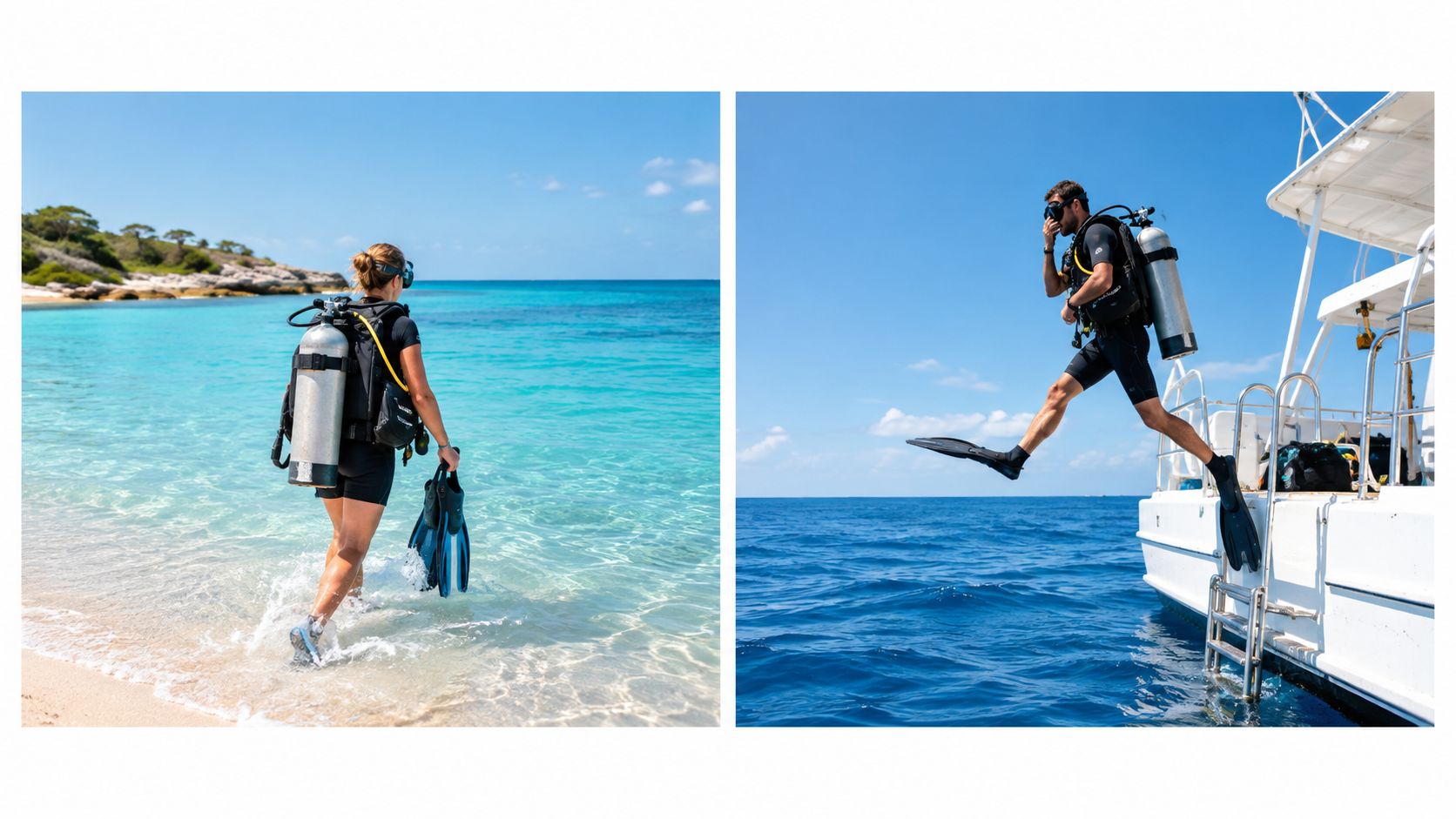
Ka'awaloa Cove in Kealakekua Bay is recognized by Hawaiʻi's Department of Land and Natural Resources as a high-quality dive area with depths from 5 to 120 feet, but the same guidance warns that southern Kona storms and high surf can make conditions hazardous (DLNR guidance for Kealakeakua Bay). Nāpō'opo'o Beach has no lifeguard service. A high-surf advisory is a stop sign, not a challenge.
Use a hard go-or-no-go test
Choose a boat dive when:
- The entry is uncertain: You'd rather use a controlled boat entry than carry equipment over changing lava.
- Your group is mixed: A boat can make it easier to include snorkelers or non-diving companions, subject to the operator's policies.
- You need a specific site: The captain can select a location that fits the day's swell, wind, and visibility.
- You're carrying cameras: Avoiding a difficult shore entry protects both the diver and the equipment.
Choose a shore dive only when you know the entry, understand the exit, and have conditions that support your experience. Check swell direction, surge, visibility, water temperature, bailout options, and how you'll handle an equipment problem away from immediate boat support.
Kona's leeward coast often provides favorable visibility because volcanic topography shelters the coast and the area has limited sediment-bearing river outlets. Independent diving references commonly report visibility exceeding 100 feet, about 30 meters, although rainfall and runoff can cause temporary declines (Kona diving conditions reference). Good visibility helps navigation and photography, but it doesn't cancel depth-related gas concerns, oxygen exposure, surge, or current.
Go-no-go rule: If you wouldn't be comfortable making the same entry while tired, carrying a full kit, and dealing with a failed fin strap, don't enter from shore that day.
Scuba Certification, Refresher Courses, and Skill Progression in Kona
Kona is a good classroom because the leeward coast can offer clear water and accessible reef sites, but clear water doesn't make a new diver bulletproof. Certification should build calm habits: controlled descents, stable buoyancy, air awareness, buddy contact, mask and regulator recovery, and a sensible response to discomfort.
A proper beginner course begins with knowledge development and confined-water practice before open-water sessions. Instructors should explain not only how to perform a skill, but when the skill matters on a real dive. A diver who can remove and replace a mask in a pool still needs practice managing anxiety, visibility changes, and current in the ocean.
Returning divers need honest preparation
The most underused service in diving is the refresher. If you haven't dived recently, schedule time to rebuild weighting, buoyancy, propulsion, and emergency responses before joining a demanding wildlife or night trip. Strong swimming helps, but it doesn't replace recent scuba practice.
A sensible progression looks like this:
- Refresh fundamentals: Recheck equipment, weighting, buoyancy, and basic problem-solving.
- Build local comfort: Use calmer reef sites to understand Kona's lava terrain, surge, and visibility.
- Add complexity gradually: Move toward lava tubes, pinnacles, deeper profiles, or current-dependent sites only when your control is reliable.
- Specialize with purpose: Choose advanced training because it supports a specific goal, not because the label sounds impressive.
Kona's advanced opportunities can include unusual lava structures, deep pinnacles, shark nursery areas, and rare marine migrations, but each demands appropriate experience and a briefing that matches the site. The Big Island scuba certification program is a better starting point than trying to compress learning into a single hurried outing.
Your instructor should notice the small things. Are you over-weighted? Do you kick the reef? Do you lose your buddy while adjusting a camera? Those observations matter more than a fast schedule.
Fleet Quality, Rental Gear Standards, and Nitrox Policy
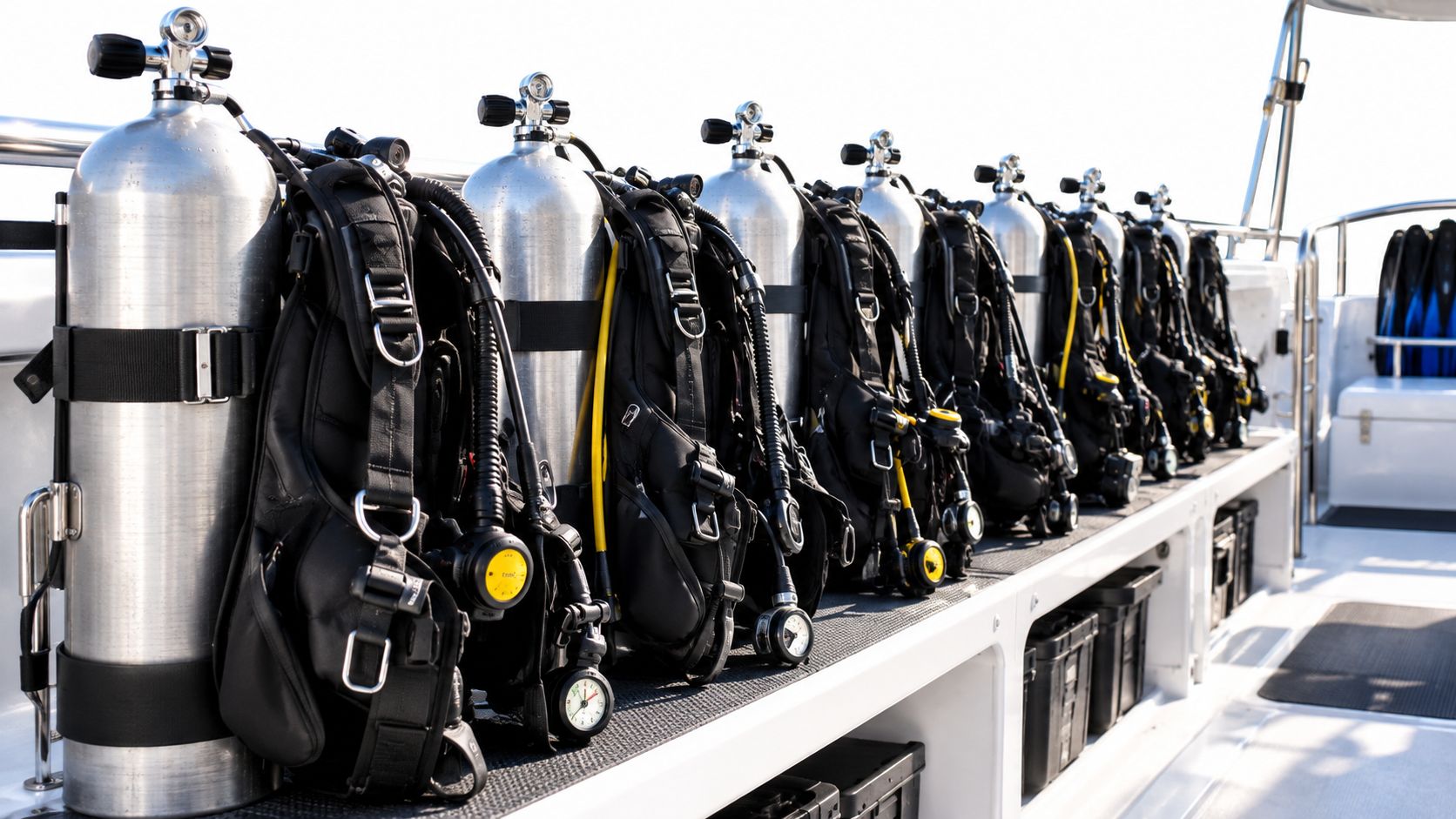
Comfort isn't decoration on a dive boat. Shaded seating, hot showers, storage, and a stable boarding area reduce the small stresses that cause divers to rush. A well-maintained boat also gives the crew more room to separate equipment, assist guests, and manage entries without turning the deck into a pile of hoses and fins.
Kona Honu Divers describes a fleet with spacious boats, hot showers, shaded seating, and ample storage. It also states that rental gear is proactively serviced and that free nitrox is available, with packages for divers planning repeated trips. Those are operational claims from the publisher, so ask how the policy applies to your certification, planned depths, and number of dives.
What to confirm before boarding
- Fit: Arrange equipment fitting early enough to correct mask leaks, fin discomfort, buoyancy issues, or exposure-protection problems.
- Gas: Confirm nitrox analysis, cylinder labeling, maximum operating depth, and whether your planned profile suits the mix.
- Storage: Ask where cameras, dry clothing, and personal equipment will remain during entries and exits.
- Adjustments: Make sure the crew can help with weights and configuration without treating questions as an inconvenience.
Nitrox can be useful for repetitive diving, but it isn't automatically safer at every depth. The diver still needs to respect the mix's oxygen limits, track the profile, and follow the captain's plan.
Booking, Private Charters, and Final Planning Tips
Book the trip that matches your ability, not the one with the most dramatic description. Shared trips are efficient for standard reef diving and manta encounters. A private Kona dive charter makes more sense when your group has different experience levels, a photographer needs a slower pace, or snorkelers and divers need a carefully coordinated day.
Ask four questions before paying: How does the crew handle poor conditions? What is the guide-to-guest arrangement? What equipment and gas options are included? What happens if wildlife doesn't appear or the weather cancels the trip?
If you're prone to seasickness, bring a plan approved for you by a medical professional, eat lightly, hydrate, and keep your eyes on the horizon. Pack warm clothing for the return ride, secure cameras before boarding, and tell the crew about concerns early. A cancellation policy and a captain who respects conditions are worth more than a small discount.
Kona Honu Divers offers guided reef dives, manta ray and blackwater trips, certification, rentals, and private charters for divers who want a carefully managed experience in Kailua Kona. Visit Kona Honu Divers to match your ability and goals with the right crew, boat, and dive plan.